



 Vinatieri Vineyards was founded by vintner Pat Vinatieri when he purchased his nearly 3-acre property south of the town of Yountville in 1978. He later built an impressive Tuscan-styled home in 2004. This western part of the Yountville sub AVA is prime terroir for growing premium wine grapes; nearby neighbors include the Sleeping Lady Vineyard, Elyse Winery, Hill Family Winery and Bell Wine Cellars.
Of personal note, Vinatieri Vineyards was among the very first of the small producers we visited with back in 2007, a year after we began the Napa Wine Project. Other early producers we met with included Amizetta Vineyard and Ruston Vineyard, both also still actively producing. To date we have visited, tasted and extensively written about more than 1,300 Napa Valley wineries or unique wine brands.
The family name Vinatieri literally translates to winemaker, means ‘wine of the earth’ and also refers to someone involved in viticulture. And if the name sounds familiar for those who follow the NFL, Pat is the uncle of Hall of Fame kicker Adam Vinatieri (elected in 2026) formerly of the New England Patriots and Indianapolis Colts.
Pat has visited Italy many times and over the decades, fell in love with the old-world style of wine making. During his time in Italy he would ask to visit the most “well-known” winery and or winemaker in a particular region. He would make the most of these visits, often sitting down with the winemakers and “picking their brains” for ideas and techniques both in terms of winemaking and viticulture. These visits were the inspiration for planting his vineyard and emulating a winemaking style that closely resembles the top winemakers in northern Italy.
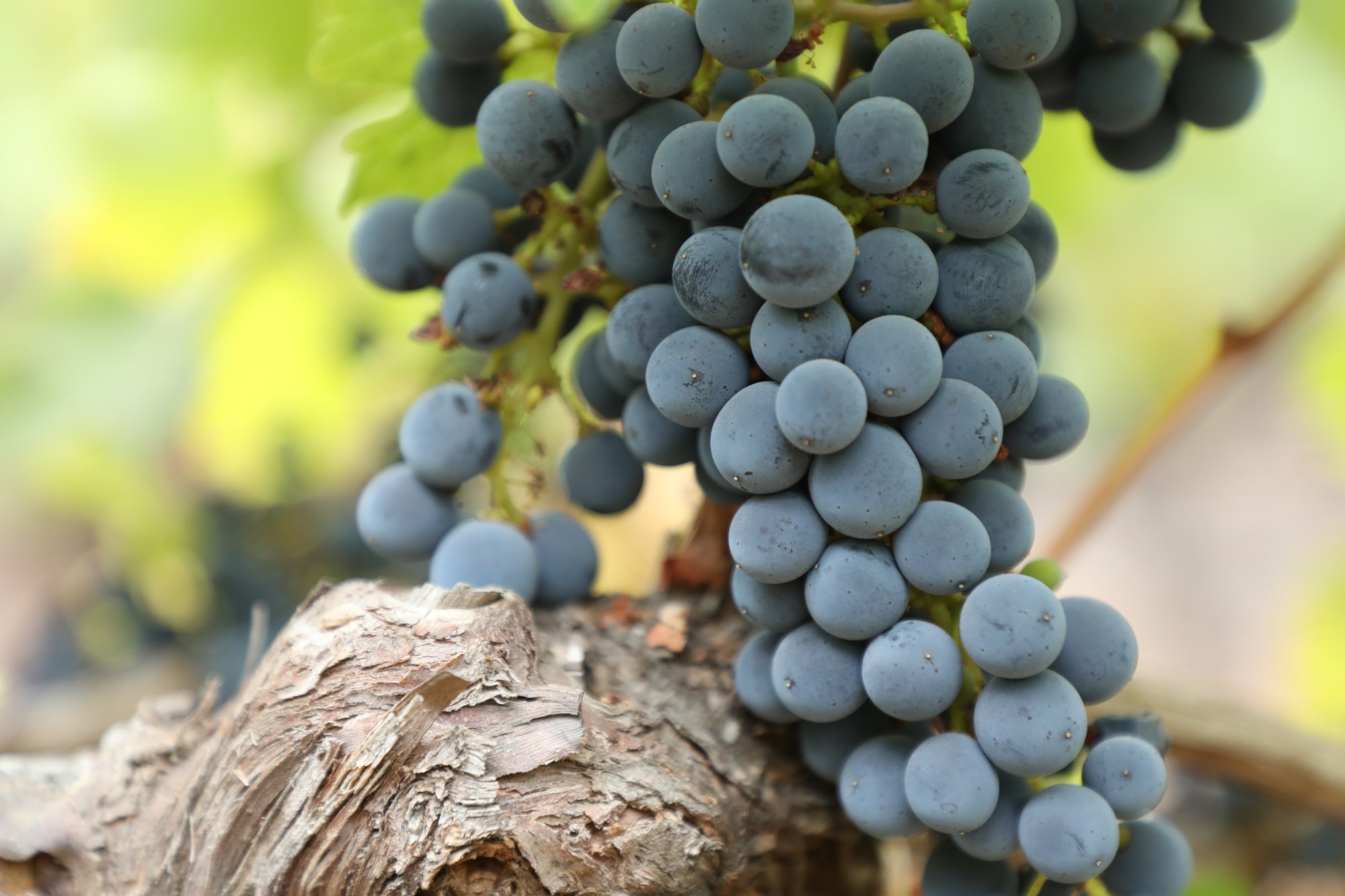
During the early to mid 1990s in Napa Valley numerous vineyards were planting Cabernet Sauvignon exclusively on their most coveted soils and and planting other varieties elsewhere. Instead in 1983, Pat planted a 1.5-acre field blend of Cabernet Sauvignon and other Bordeaux varieties including Malbec, Merlot, Cabernet Franc and Petit Verdot all together on the same property. Each row is planted to a single variety. In 1993 Pat removed his tennis court and planted additional vines. While Napa Valley historically had been planted to field blends, the varieties were often Italian, not a field blend of Bordeaux wine grapes.
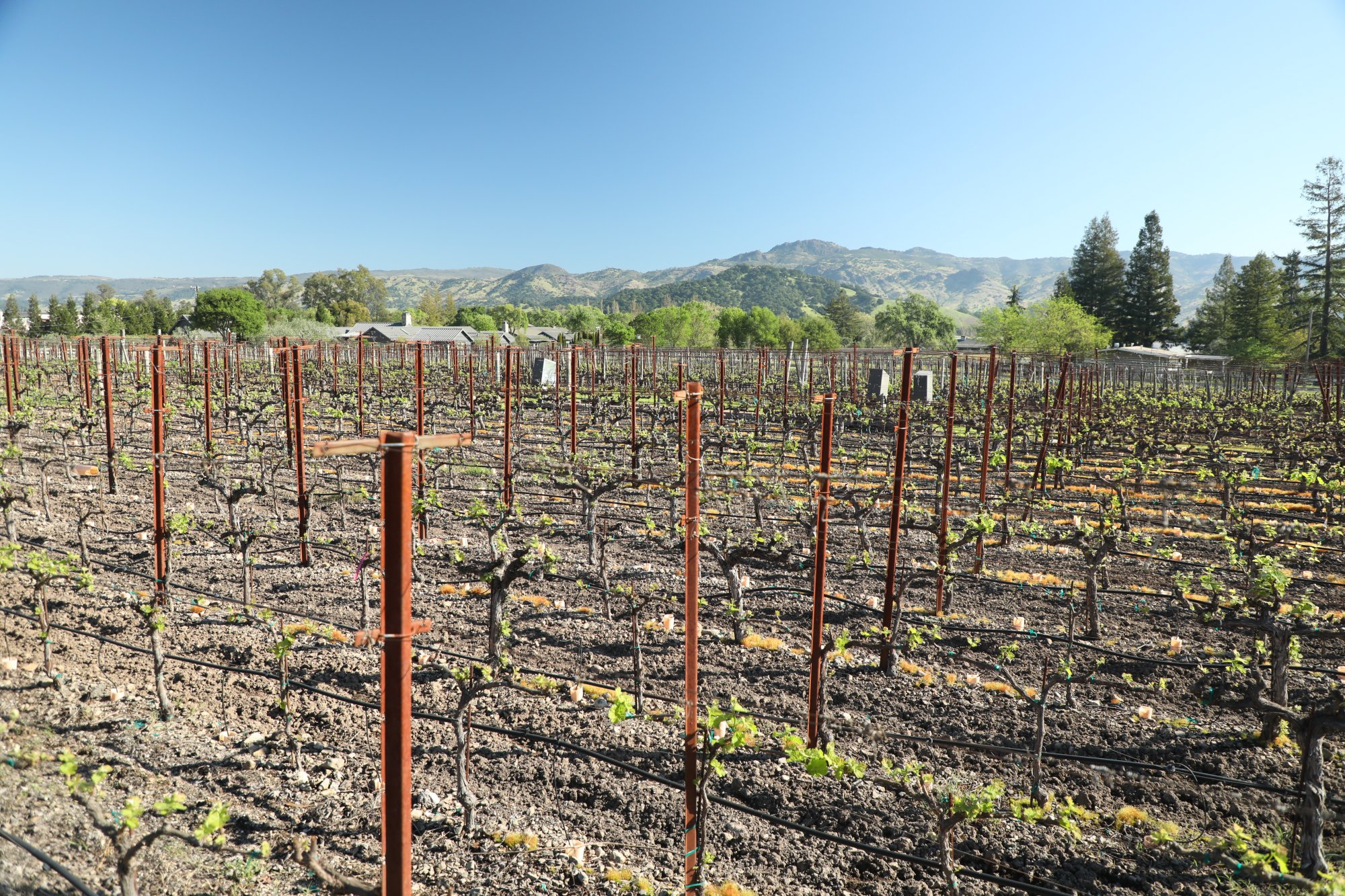
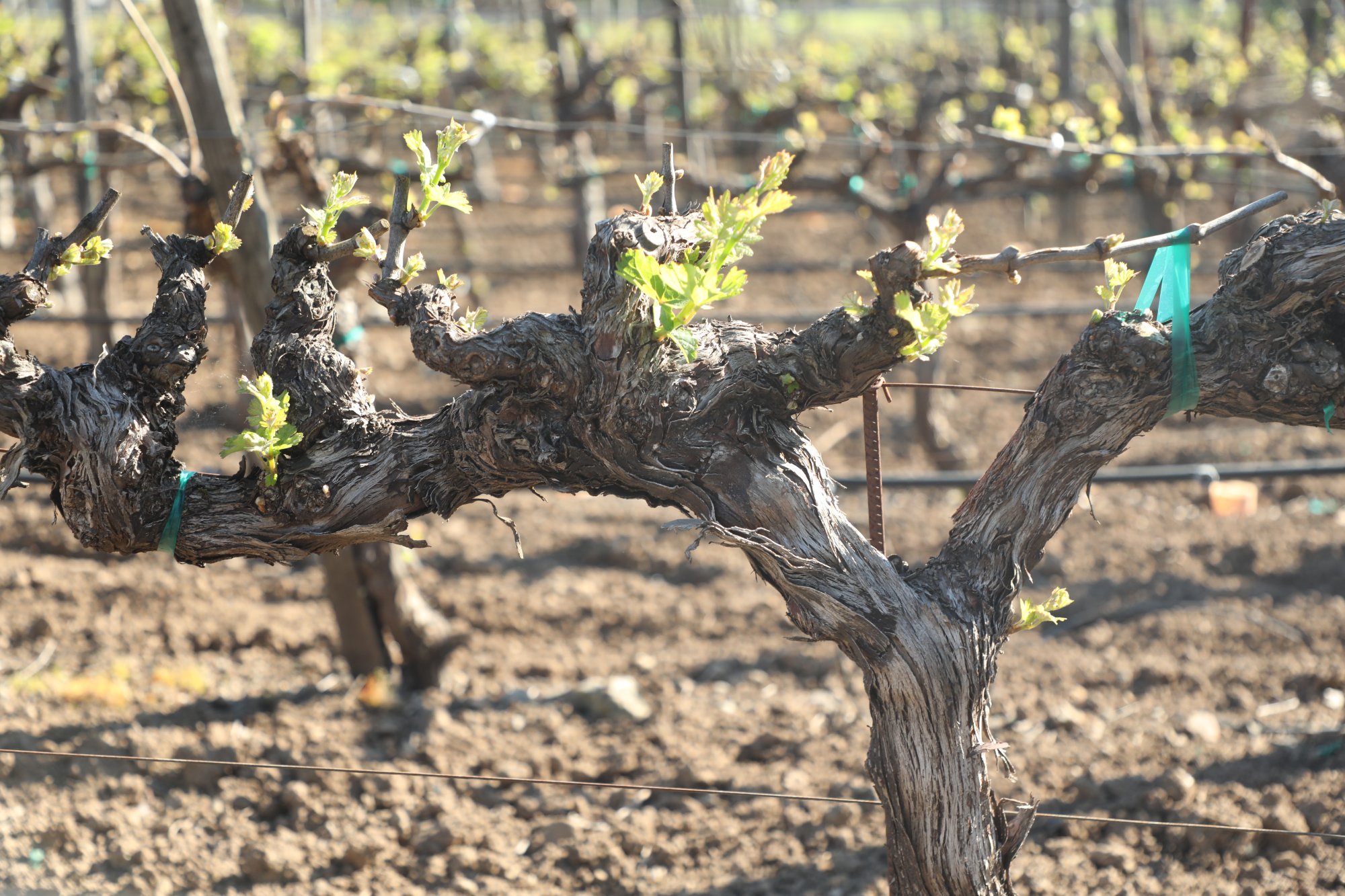
The vineyard was originally ripped up to 12 feet deep with a D9 in 1983. Pat remembers the ripper getting stuck in the hard pan. The soils are primarily alluvial sandy loam that have been washed down from the nearby Mayacamas mountains. And based on the immediate proximity of the vineyard to these mountains, this site receives plenty of water as it flows down from hills to the west.
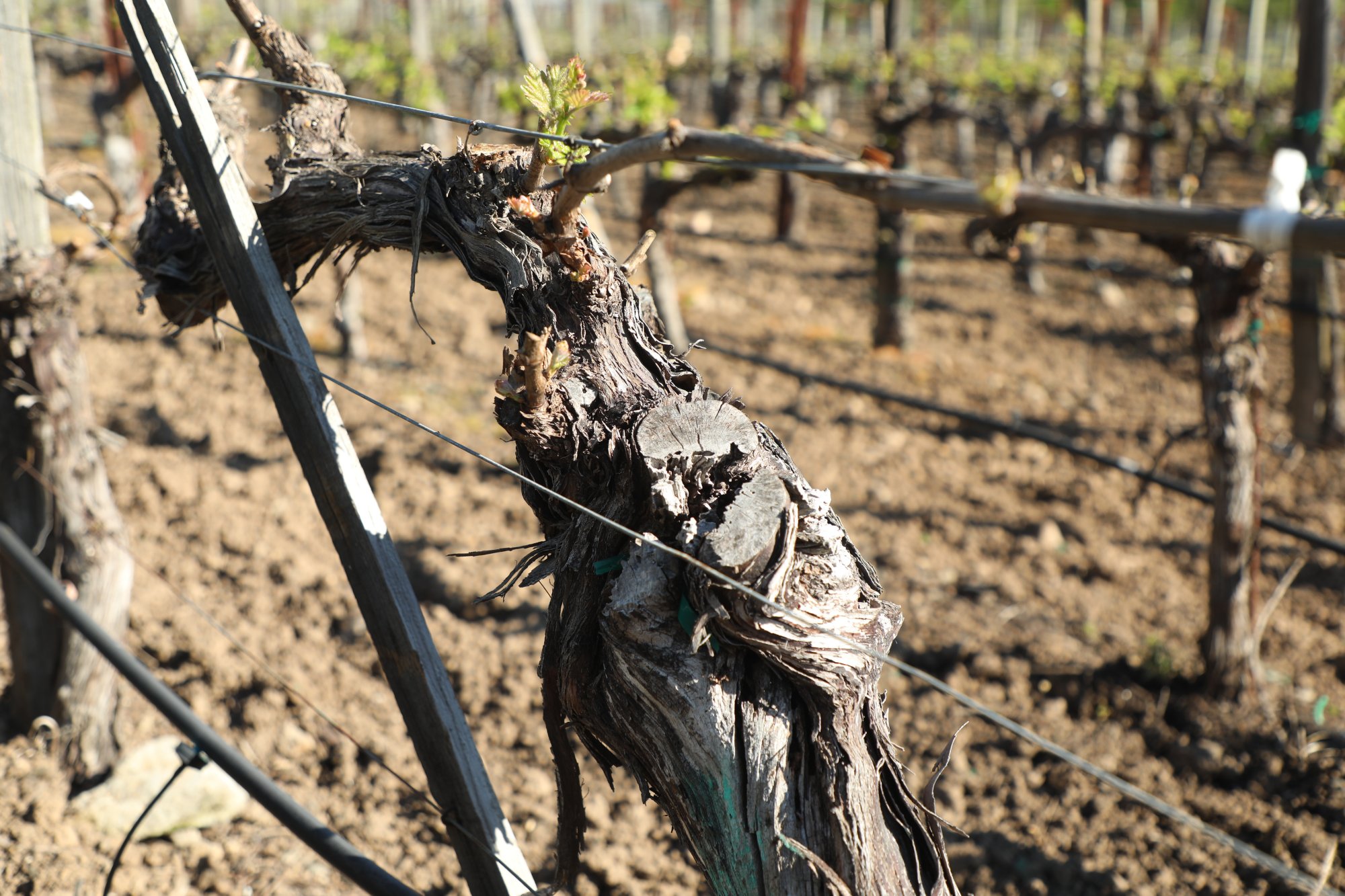
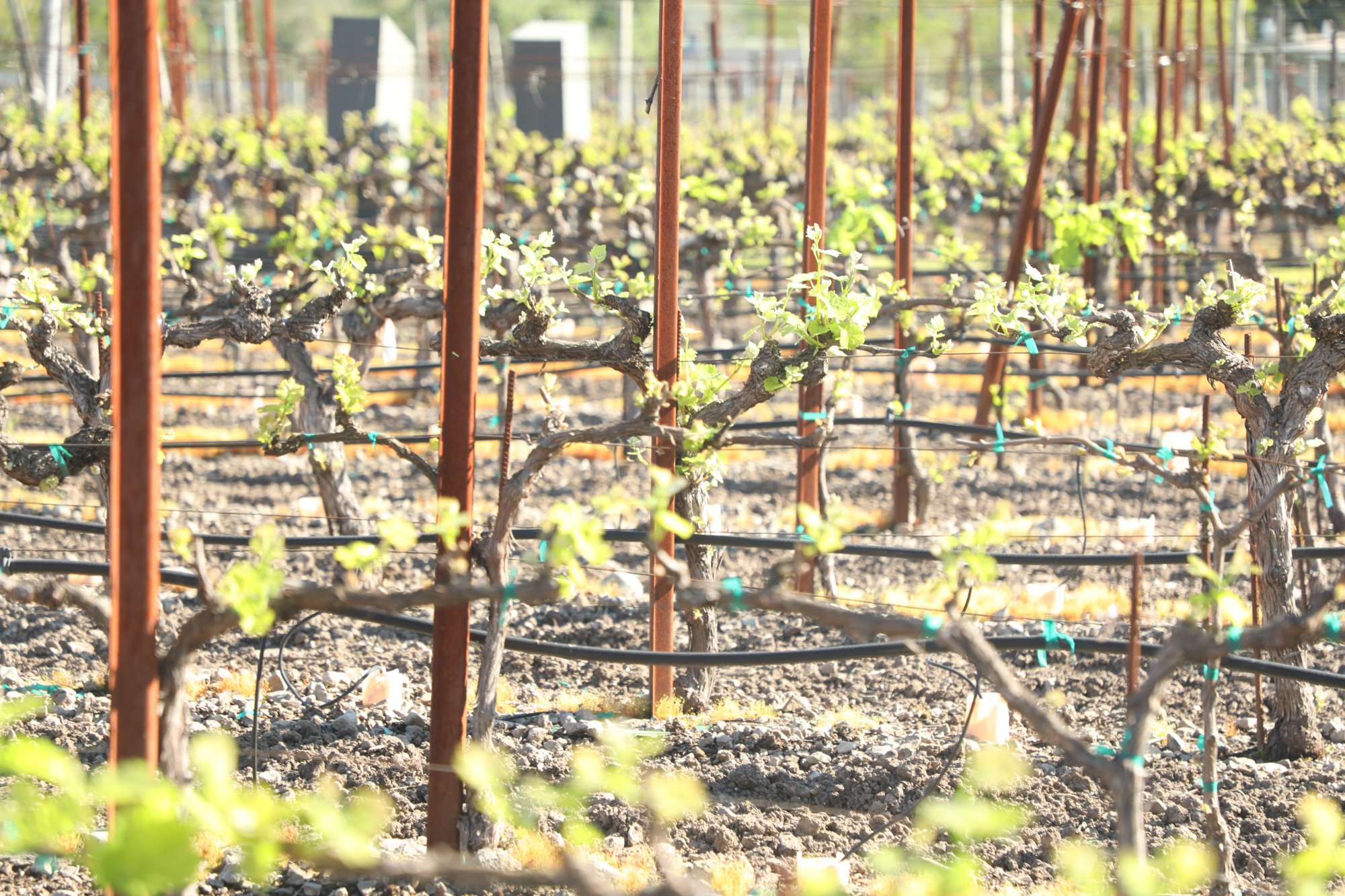
The vineyard was originally planted with vines 7 feet apart. About 10 years later, additional rows were planted between the existing rows increasing the overall vineyard density. Pat and several workers carefully maintain the vineyard year round paying particular attention to each vine’s personality and overall health. They take a vine by vine management approach. Pat walks the vineyard 50-60 times a year and tags any weak vines. Sometimes they recover and sometimes they do not. Diseased or persistently weak vines are rogued and replanted. The vineyard is both cane and cordoned pruned.
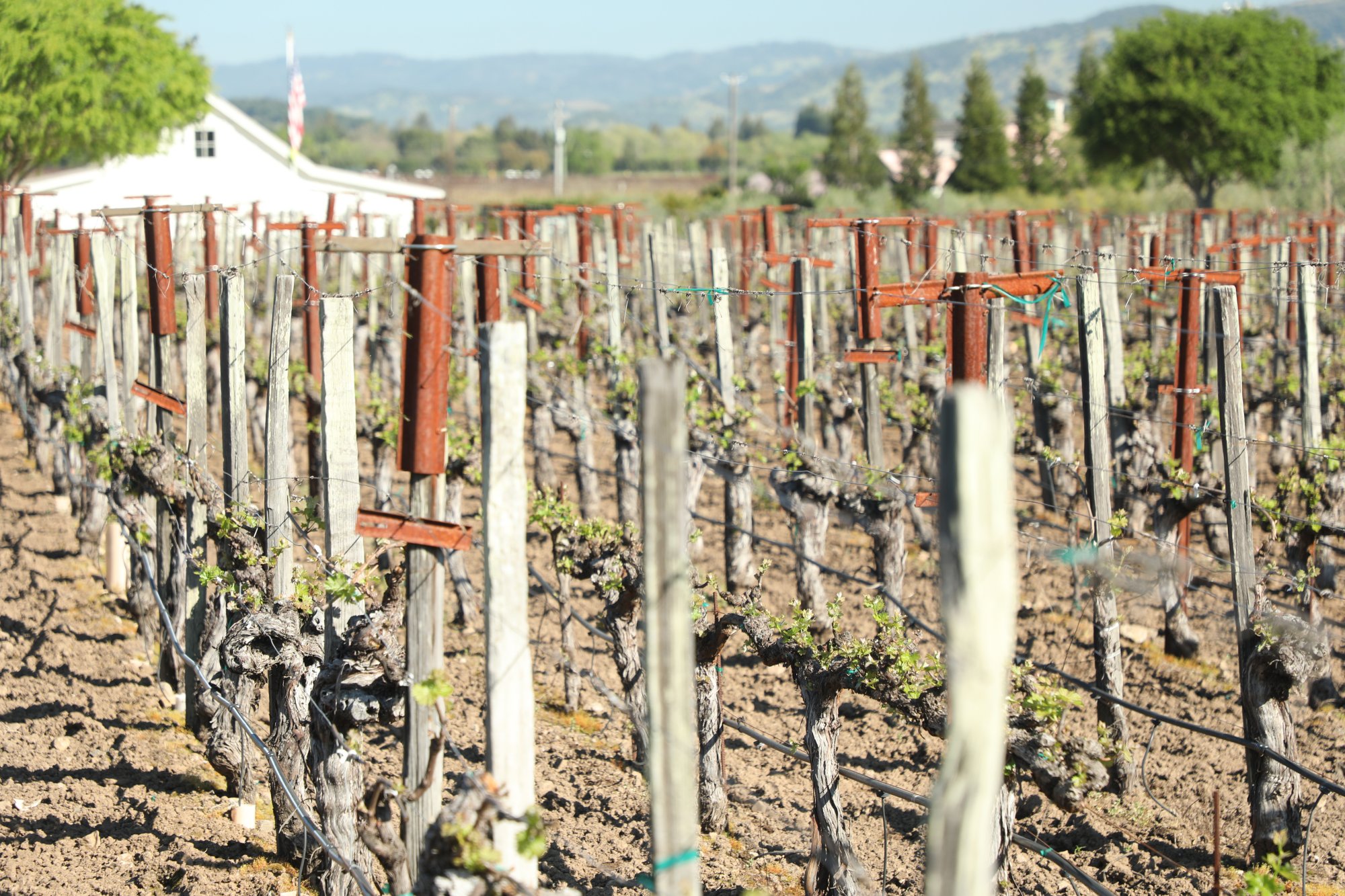
The vineyard rows are oriented in a north/south direction. To maximize morning exposure on the eastern side of the rows, the leaves are removed from this side of the vines following veraison. Pat still helps prune and tills the vineyard rows 6-8x a year using his trusty tiller which dates from the early 1990s. Water is delivered to the roots using drip tubes placed in the soil. And using fish emulsion and mulch helps mitigate their water use.
A large part of the vineyard utilizes hand split redwood posts which were previously used in an ancient vineyard on site of what is now Alpha Omega Winery in Rutherford. They were already well over 100 years old when Pat acquired them; this type of wood is very slow to rot and if one cuts past the weathered exterior, the original color of the wood is still very much present.
Pat’s original intention was to blend all the varieties together into a singular wine, an expression of all the grapes from the best terroir. He hasn’t deviated from this. Prior to producing wine commercially, Pat made home-wine from this property for himself, friends and family. And after receiving much encouragement and praise for his wine from others in the industry including winemakers Dr. Richard Petersen and Marc Mondavi, he transitioned into producing wine commercially.
When we asked Pat his opinion on some of the best wines he has produced, he compared his wines to a race horse; for example one horse might be in the lead but fall back and another horse takes the front position. Wines are consistently evolving and certain vintages might be showing better than others at certain times. But he does consider his 2001 vintage as one of the best wines he ever made. And he also referenced his 2011 – due to the unusually cold and rainy growing season he carefully managed canopy and washed the grapes with reverse osmosis (RO) water to help mitigate mildew pressure.
Pat told us that everything you do in the vineyard matters. He said, “if it’s harder, but it produces better results – we do it.” And this effort clearly shows in the wine.
The first vintage of Vinatieri Vineyards was in 2001; it was called the Grand Meritage. Regardless of vintage, this bottling is always co-fermented including the five varieties from the property, is unfiltered, exhibits plenty of extraction and deep color, is richly flavored and always full bodied. Vinatieri’s wine is highly food friendly and is meant to be consumed with food, friends or family, engaging conversation and in a setting that is never meant to be rushed.
Why Yountville?
 The Yountville AVA serves as the critical “hinge” of the Napa Valley, marking the transition point where the cool maritime influence from the San Pablo Bay begins to yield to the inland heat of the northern valley. Within this district, the western side of the valley floor (where Vinatieri Vineyard is located) represents a viticultural sweet spot. This narrow strip of land, tucked against the base of the Mayacamas mountains, offers a specific set of environmental advantages that produce wines defined by structural elegance and plush fruit. Unlike the center of the Napa Valley, which can sometimes suffer from excessive water retention, the western edge is defined by its superior drainage and unique topographical position. Vinatieri Vineyard is located at an elevation ranging from 20 to 200 feet.
The primary geological advantage of the western valley floor lies in its alluvial fan systems. Over millennia, erosion from the Mayacamas range has deposited a mixture of gravel, silt, and rock onto the flatlands. Because these deposits are coarser than the heavier clays found near the Napa River, they provide exceptional internal drainage. This environment creates moderate vine stress, which is essential for high-quality viticulture. Rather than focusing on canopy growth and leafy green expansion, the vines are forced to direct their metabolic energy toward the development and ripening of the grape clusters. This results in smaller berries with a higher skin-to-juice ratio, leading to deeper color and more concentrated flavors.
Beyond the soil, the western side of the Yountville AVA benefits from a distinct microclimate created by the “Mayacamas Shadow.” As the sun moves across the sky during the peak heat of the afternoon, the towering peaks of the mountains to the west cast an early shadow over these vineyards. While the eastern side of the valley, toward the Silverado Trail, continues to absorb intense direct radiation and heat, the western floor begins to cool down significantly earlier. This cooling effect is crucial for acid retention. By lowering the ambient temperature during the final hours of the day, the grapes preserve their natural acidity, which prevents the resulting wine from becoming overly jammy or “flabby” on the palate. This allows for a longer “hang time,” where the grapes can achieve full phenolic ripeness—maturing the seeds and skins—without the sugar levels skyrocketing too quickly.
The maritime influence in Yountville further enhances this cooling effect. Yountville acts as a funnel for the fog and breezes rolling in from the bay. On the western valley floor, these breezes are constant and refreshing. This airflow is a natural defense mechanism against mildew and rot, as it keeps the fruit zones dry even in humid conditions. Furthermore, the western side sits slightly higher than the riverbed but remains flat enough to maintain the soil depth required for consistent yields. This combination of mountain-influenced drainage and valley-floor water access creates a reliable ripening environment that is less susceptible to the extreme vintage variability seen in more exposed or poorly drained sites.
The resulting wines from this specific pocket of Yountville possess a signature texture often referred to as “silky.” While mountain fruit can produce rugged, aggressive tannins and center-valley fruit can be overly soft, the western floor fruit offers a middle ground of refined, fine-grained tannins. The flavor profile typically leans toward deep red and blue fruits, such as black cherry and plum, accompanied by a subtle minerality or “dusty” quality derived from the alluvial debris. This unique intersection of mountain power and valley floor elegance makes the western side of Yountville one of the consistently parts of Napa Valley for Cabernet Sauvignon and other red varieties.
Select Wines
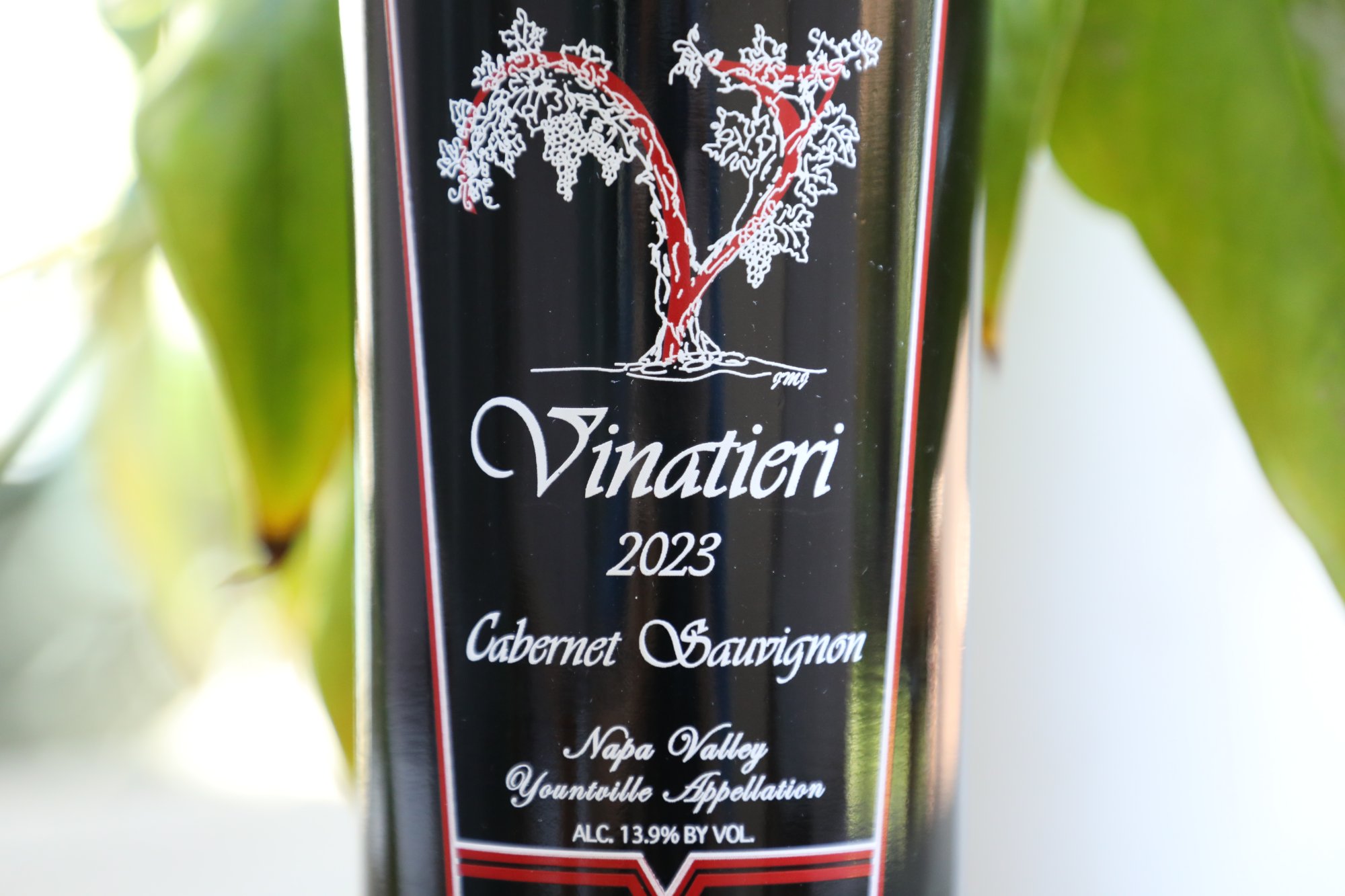
The 2023 Vinatieri Cabernet Sauvignon, Yountville Napa Valley is deep ruby and opaque with purplish hues in the glass; of the three wines we tried, this is by far the darkest in color. We tasted this at 2.5 years post vintage. The aromatics are highly compelling, showcasing ripe and fresh fruit but never crossing into the territory of being over ripe. And a pleasing complement from its time in barrel. This wine smells like dark cherry, Himalayan mulberry, ripe boysenberry, damson plum, cinnamon stick, a hint of cardamom, mocha and milk chocolate. And as the wine opens, it expresses a floral character including of lilacs and liquid violets. Primarily red fruited, this wine expresses layered fruits, vibrant and mouth watering acidity and plenty of textural support. In terms of style and character, what a difference from the 2010 bottling. Deeply layered, this wine is the most cerebral of the three bottlings we tried. It takes some time to open in its youth. It tastes like Satsuma plum, red cherry, boysenberry, blueberry and Persian mulberry. Like all of Vinatieri bottlings, the fruit is the star of the show here with the acidity providing an appealing lifting character. The finish lingers with dusty, chalky, gravelly and grainy tannins which outpace the fruit – but they are never are the dominating layer here. This wine is showing exceptionally well in its youth, but has all the character to age for many years. Finishes fresh and savory. Its ABV is a listed 13.9%.
The 2016 Vinatieri Cabernet Sauvignon, Yountville Napa Valley is deep ruby and opaque; for reference, we tasted this 10 years post vintage. The bouquet is dark and sweetly fruited; the oak is a complement here and remains in the backseat, providing an easy going conversation. The scents include dark plum, dark cherry, boysenberry, blackberry pie and light but supporting layers of dark cocoa powder, cinnamon stick and mocha. Smells fresh. Smells ripe. the bouquet is a perfect union of fruit and barrel. Juicy and still very much youthful across the palate, this wine is showing in a sweet spot at this age. It tastes like Satsuma plum, blackberry, dark cherry, boysenberry and mulberry. The tannins are well tumbled and sport a gravelly texture, which broadly and fully coats the palate. Medium+ acidity. Both texture and flavor continue to parallel each other, with neither drawing away from the other on the finish. We would like to try this bottling again in another 10 years – it still has plenty of life ahead of it. Its ABV is 14.3%.
The 2010 Vinatieri Cabernet Sauvignon, Yountville Napa Valley is deep ruby, opaque with some dark brickish color; this wine is holding its color nicely at 16 years post vintage. Sweetly fruited and very ripe, this wine smells like dark cherry, blackberry pie, boysenberry jam, cherry liqueur and assorted berry compote. And its non fruited aromatics include dark chocolate, toffee, cocoa powder and assorted baking spices, i.e., cinnamon and nutmeg. At this age, despite some bottle bouquet, the nose still smells like the fruit was harvested at the peak of ripeness. Equally as ripe on the palate, this wine tastes like Coral cherry harvested at the end of the season after they have started dimpling, blackberry jam, boysenberry, dark mulberry, and the taste of ripe Santa Rosa plum after a few days after it has dropped from the tree. The tannins are well-tumbled with a rounded character; their presence is seamlessly integrated into the finish with a light dusty attribute. Additional layers of dark chocolate, sweet tobacco, mocha and cocoa powder round out the finish. Lingers with a gentle warmth, but not overtly hot as one would expect from a bottling listed at 15.8% ABV. This wine drinks nicely by itself at this point, but we would love to pair it with an Italian pasta, a winter evening and a warm fire. 2010 was a particularly cold year in Napa Valley, this is a far riper expression of that vintage than normal. We recommend drinking this bottling now or in the next few years rather than any extended cellar aging.
The wine is available primarily through the Vinatieri Vineyards website and contacting Pat directly via phone or email. Production is very small – typically only 150 to 450 cases are produced annually, dependent on each year’s harvests. Select vintages are sometimes available locally; for example, we have seen the wine in the past at Wine Country Connection in Yountville.
In an extremely unusual and rare offering for a small producer, Vinatieri offers a 10+-year vertical of their wines.
For more information, to join their allocation list or to purchase wines including both current releases and library vintages, please visit: www.vinatieriwine.net
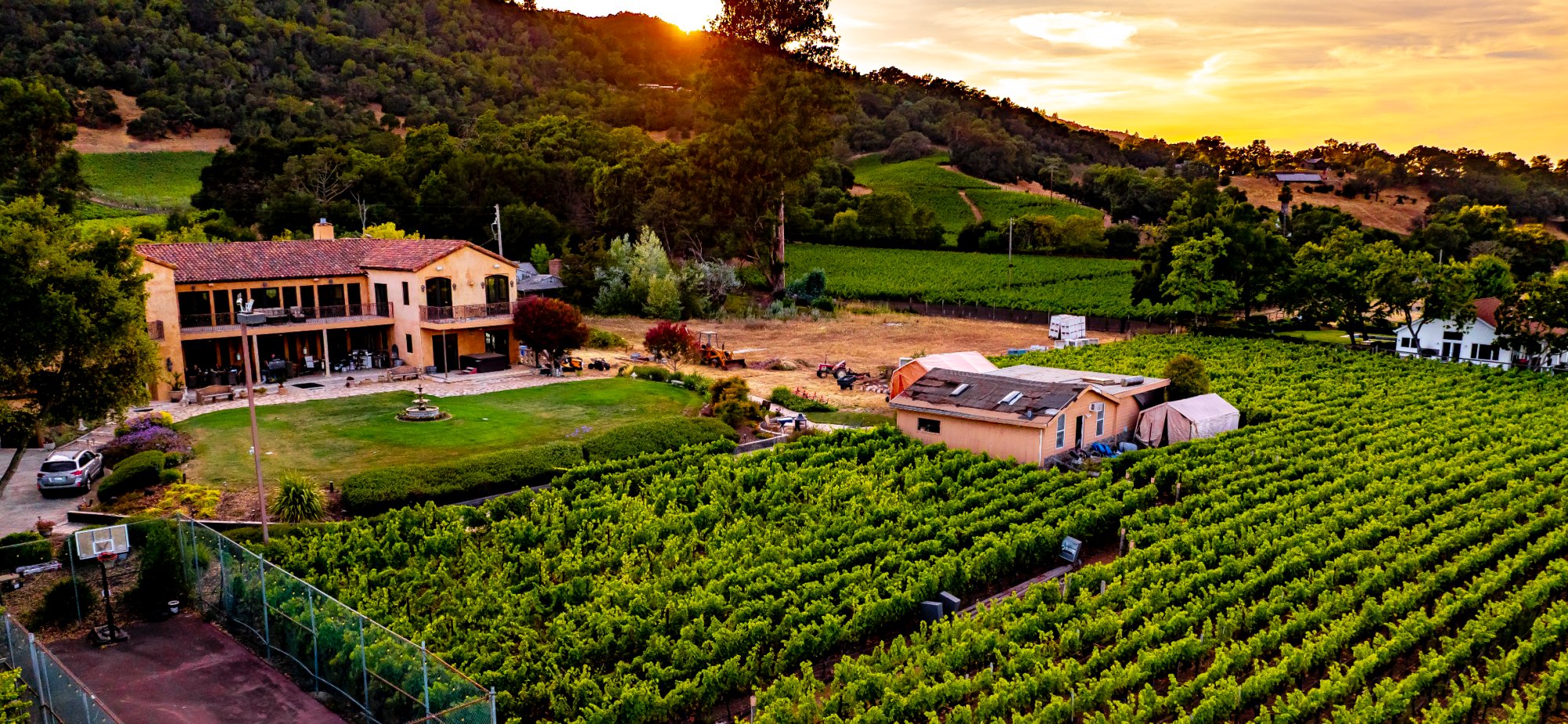
Aerial photo of Vinatieri Vineyard, provided by Pat Vinatieri
Hi Pat
This is Alex (Sandee) Cruden. Would like to purchase some more wine, 6 or 12 bottles however you ship them. You gave the 2011 bottle for our 60th Anniversary and we bought the 2010 and it was very too. Would like 6 bottles of what you recommend and we will run with that. Hope all is well.
Have a good 2020
Sandee & Marti Cruden.
Unfortunately, Pat missed this request. Vinatieri Estates is very much alive and well, bringing to you the best Bordeaux style Napa Valley Cab from the same small vineyard in the Yountville foothills since 1994! I’m sure Pat would love to hear from you! 707-738-5373
Looking forward to my revisit – it has been nearly 20 years since I first meet up with Pat.