



 Sorèlune Wine was founded by Nova Cadamatre with her first vintage in 2024, a Napa Valley Carneros Chardonnay. Outside the box in terms of how the wine is marketed, it is sold exclusively in kegs to restaurants.
Nova began her winemaking career in Pennsylvania in 2003. She moved to New York to pursue a career in horticulture, primarily to explore her passion for growing roses. But her love of cultivating plants translated into working with vineyards and the subsequent enjoyment of producing a product which brings people together. So she decided to become a winemaker. She worked at wineries in 2004 and 2005 in the Finger Lakes region of upstate New York and graduated from Cornell’s Viticulture and Enology program in 2006. She moved to California’s Central Valley followed by a move to northern California in 2009 where she worked at Chateau Souverain in Alexander Valley from 2012-2019.
The first Chardonnay she helped make in California was for the brand, Emma Pearl for Treasury Wine Estates. Among her mentors throughout her career were Ed Killian, Margo Van Staaveren, Ed Sbragia, and Rich Arnold at Robert Mondavi Winery. She learned from each of them, benefiting from their decades of experience in winemaking, and thoughtfully incorporated the elements she felt best suited her own wines. Ed Sbragia in particular often emphasized that Chardonnay requires clear intention. This variety can be manipulated in a number of ways both in the vineyard and in the cellar resulting in dramatically different styles of wines.
Her first trip to Napa Valley was in 2004 with her now husband Brian. His grandmother had a cousin who lived in the city of Napa. Nova remembers the first time she drove up the Silverado Trail and being impressed by the spectacular beauty. She soon discovered how passion and a focus on quality is an integral part of Napa Valley. And noticing how the vineyards are the dominating agricultural crop, while in the Finger Lakes agriculture is more diversified.
Her first harvest in Napa Valley was in 2013. She worked at Robert Mondavi as red wine maker for 2 years and then became Senior Winemaker for all of Constellation’s Napa Valley properties. And she also assisted with the design of the new Robert Mondavi Winery during her time there.
Her journey towards being a Master of Wine began in 2007 after graduating from Cornell. She was attracted to pursuing this because of its intensity and difficulty associated with the program; the challenge lived up to the reputation. Like a number of now MW’s it took her several times before she was able to pass; the one attribute we value higher than almost anything else in the wine industry in particular, is persistence and a drive to never give up. She became an MW in 2017.
She is a bi-coastal winemaker who is often in a plane. Her Napa Valley micro brand, Fiadh Ruadh pronounced as, fay-ah roo-ah, focuses on Cabernet Sauvignon. The name Fiadh Ruadh refers to an untamed red deer in Scotch Gaelic, an appropriate homage to her ‘leaping off the cliff’ and going out on her own. Both she and Brian have Scottish heritage so the name is also nod to their own roots. And recognizing the silent letters in Gaelic cause problems with pronunciation, she conveniently posts how to pronounce the name on the back of every bottle.
And she and Brian own Geneva, NY based Trestle 31, named in homage to a prominent railroad trestle seen from part of their property near the shore of Seneca Lake. The 31 was the name on the original deed for their property. Trestle 31 focuses on premium vinifera wines from the region; the wines both elevate and push the boundaries of what is possible in the Finger Lakes region in terms of both viticulture and winemaking. She calls Trestle 31 her ‘avant garde brand’. Nova pointed out that climate in the Finger Lakes is vastly different than Napa Valley. As a ‘flying winemaker’ she makes wine for her own brands on both coasts which sometimes has advantages. For example when numerous producers didn’t make wine or made less wine during the smoke filled 2020 vintage in Napa Valley, 2020 was a great year in the Finger Lakes. The Trestle 31 tasting lounge opened in Geneva, NY in 2021.
One of the most rewarding aspects of building her winemaking career has been the opportunity to work with a wide range of vineyards and varieties. It has been especially fulfilling to have a hand in both regions—upstate New York and Napa Valley.
Sorèlune was Nova’s first brand that she didn’t already have a name chosen for. So she used ChatGPT for assistance for both the name of the brand and its resulting design. Part of her input to the AI chatbot centered around promoting women in the wine industry. She organized a group of women that meets up several times a year composed of members who have diverse background in the wine industry, ranging from winemakers to sales people. The group allows these women to share ideas and also network. Are you a woman working in the wine industry in Napa or Sonoma and want to join this group? Reach out to Nova directly.
After receiving nomenclatural input, one of ChatGPT’s suggestions was the French word, ‘sorè’ referring to (soror) sisterhood and the word ‘lune’ referring to the moon. ChatGPT combined both words to create a new word which sounds good rolling off the tongue and also sounds marketable. More importantly it was not trademarked.
And the Sorèlune logo was also created using ChatpGPT; Nova initially created a stain glass-esque looking image and then uploaded it to ChatGPT – which cleaned up the overall design.
Nova admits that one has to be creative when launching a brand in a challenging market for wines. Of all her wines this is the most market driven brand; yet it is still very much built around authenticity and is tied into an ethos. And with most of the capital going into grapes and winemaking, she has to take a thoughtful approach in promoting it.
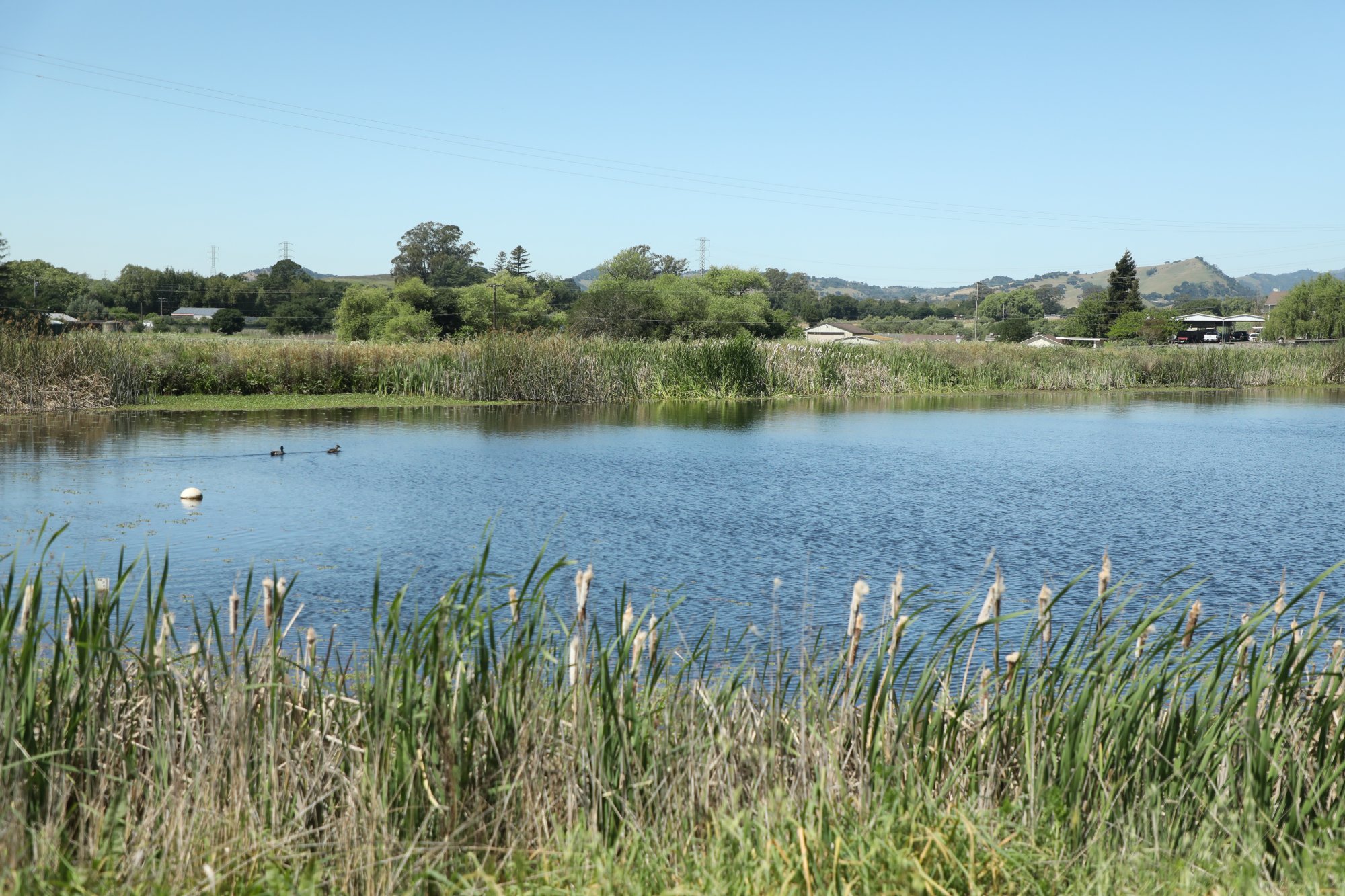
Thomson Vineyard, Carneros Napa Valley
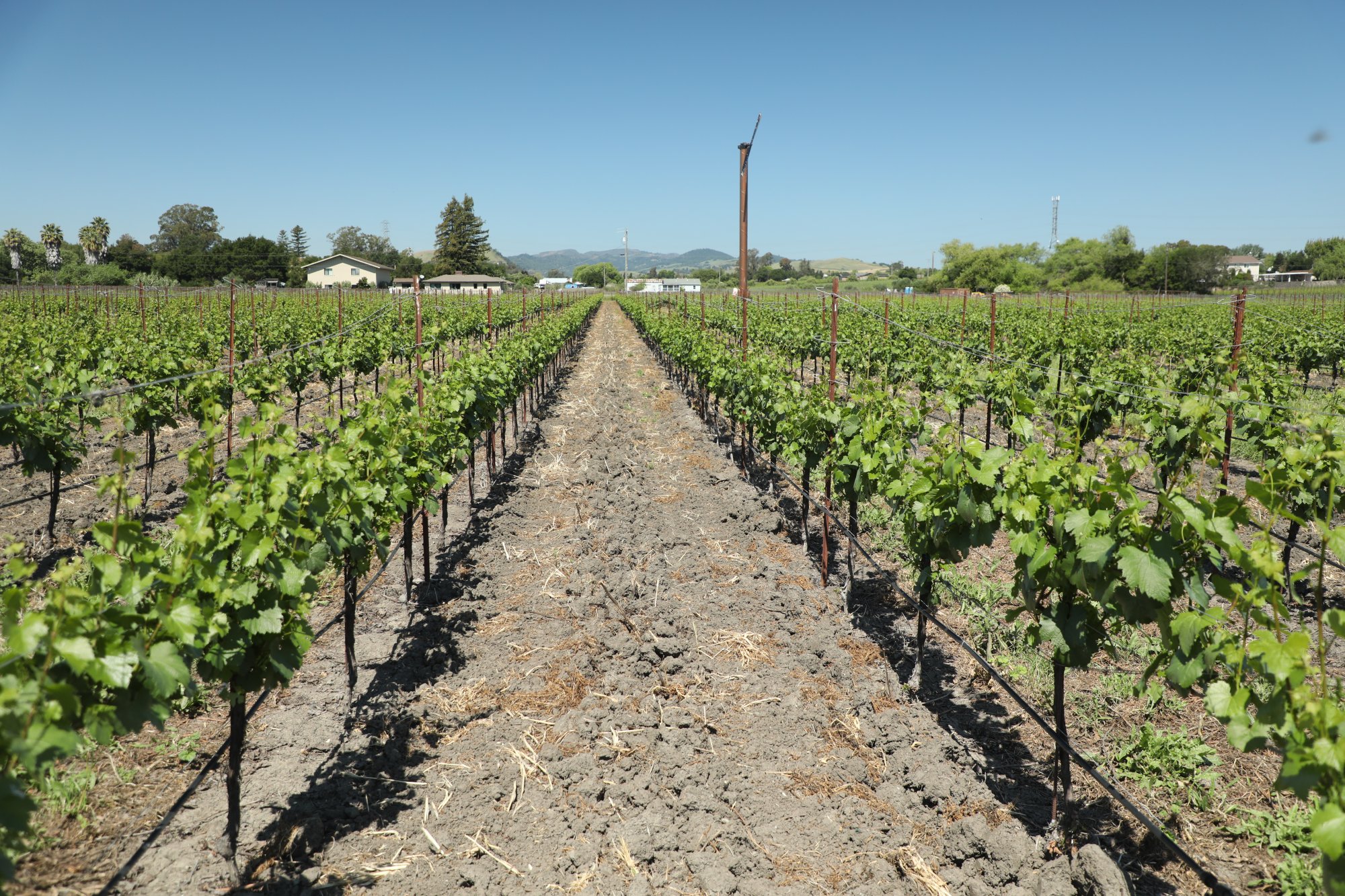
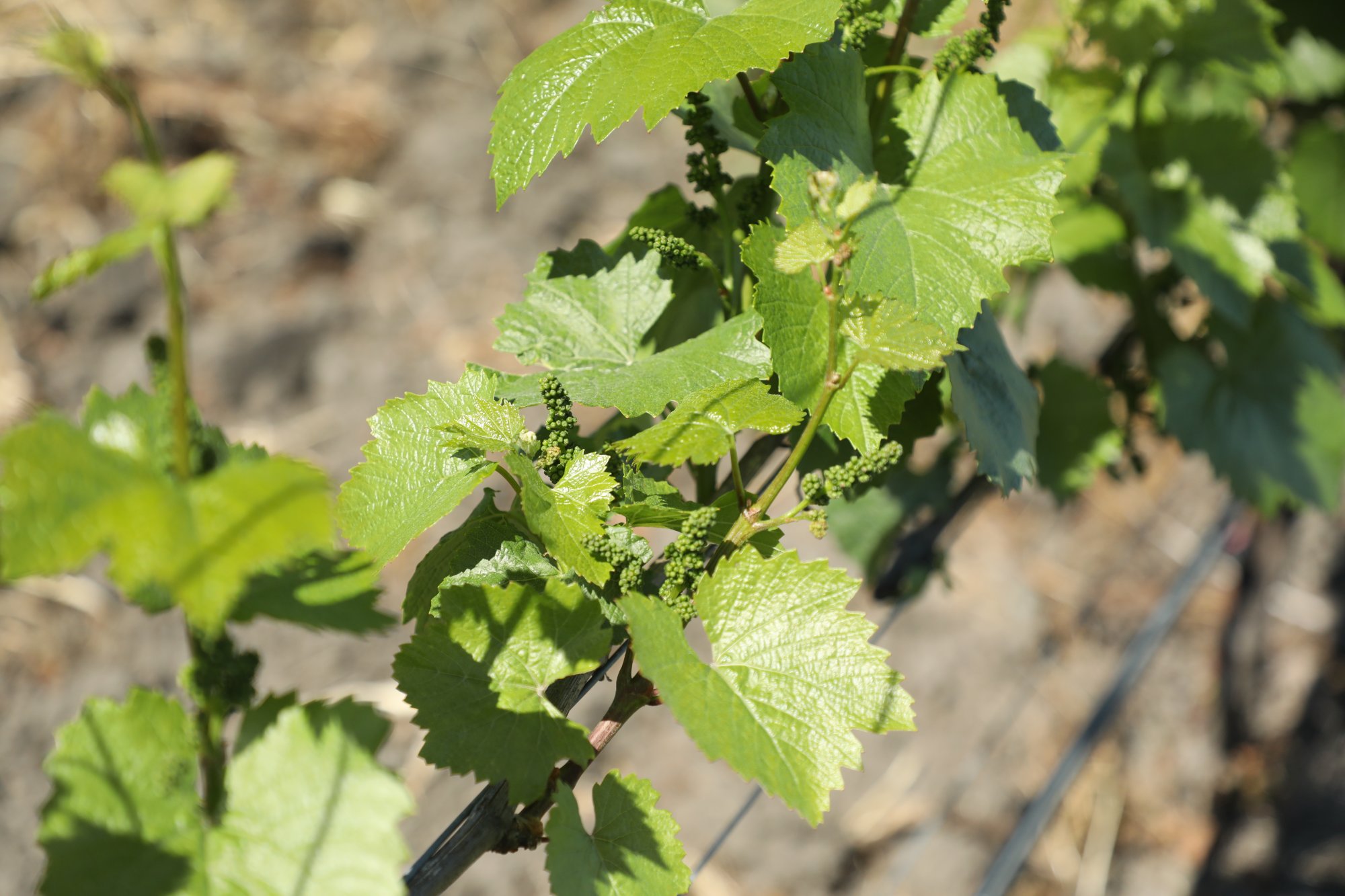
Sorèlune block, Thomson Vineyard
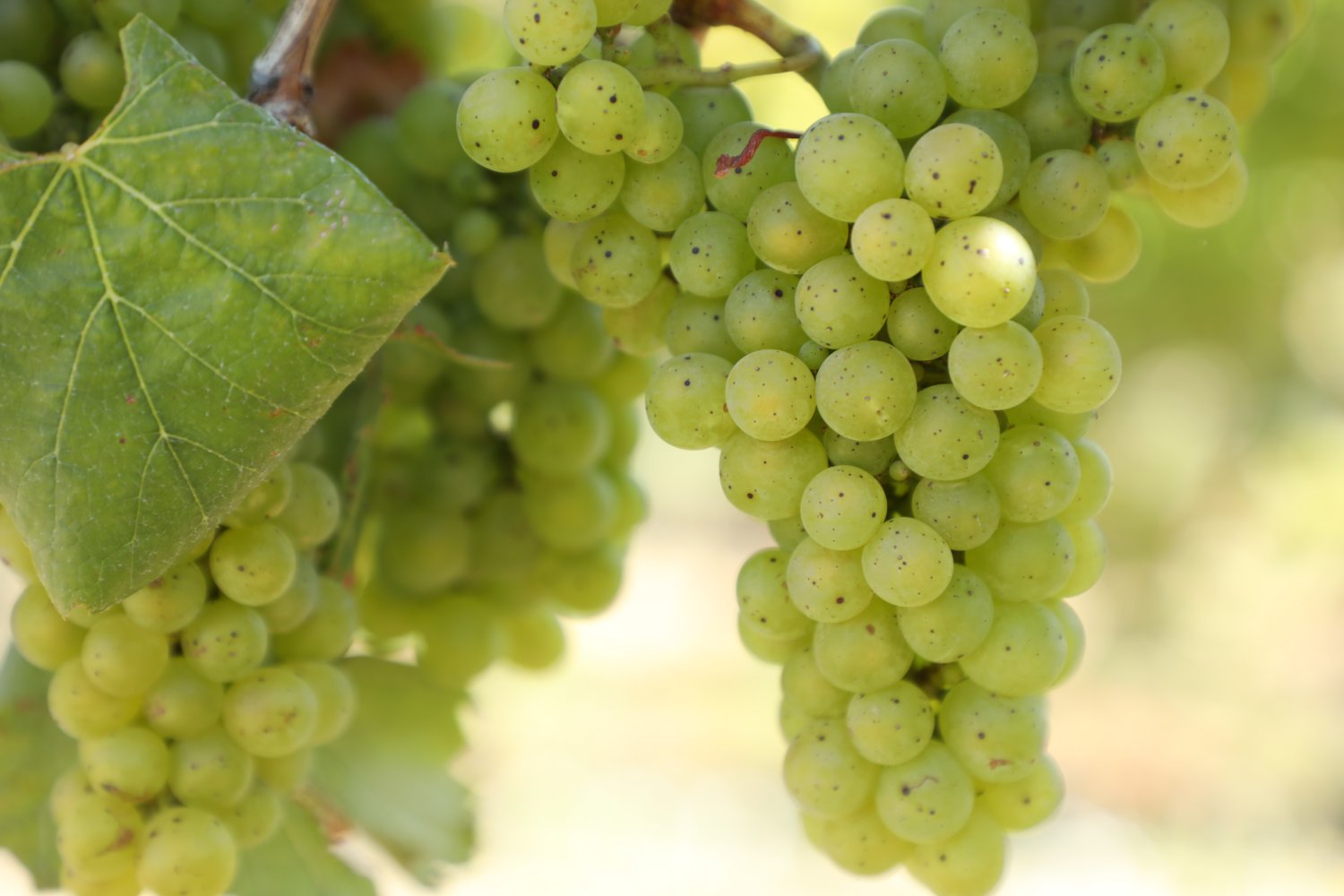
Nova contacted Jennifer when she was ready to purchase grapes for Sorèlune. In addition to growing several clones of Chardonnay, and a small block of Riesling, Thomson is the largest grower of Pinot Blanc in Napa County, with seven acres planted to the variety. Thomson Ranch was originally developed as a sparkling wine site, following early UC Davis recommendations to plant roughly 60% Chardonnay and 40% Pinot Noir, a foundation that still shapes the vineyard today.
The Thomson family history in Napa Valley dates back to 1938, when grower and proprietor of Thomson Vineyard, Jennifer Thomson’s great-grandmother, Jenny Ophelia Barnum Thomson, and her husband, Matthew Alexander Thomson (Sr.) relocated from Oklahoma during the Dust Bowl. Matthew and his two brothers worked on the construction of the Oklahoma City airport before moving west to establish a branch of Thomson, Thomson & Thomson (heavy excavation company) based at the ranch.
Jenny acquired the 30-acre property in 1938 on the steps of the Napa County courthouse from inheritance after her parents passed away in a car accident. Although she initially purchased it in her own name, ownership was later transferred in the deeds to her husband and father-in-law. An aerial photo the family has from the 1920s shows that about 30 acres of the property were already planted to orchards.
 Jennifer, the 4th generation to oversee the property took over ownership of the ranch in 2012. Previously, the family vineyard operations were still run hands-on by her father and uncle, who managed their own crews of up to 40 people in the 1980s and 1990s. Rather than launching a label, she focused on selling grapes, leveraging the family’s heritage, clonal knowledge, and her own hands-on capabilities and found a balance between the old ways of doing things with new ideas and innovations. She successfully sold to respected buyers and negotiated contracts, demonstrating both business acumen and confidence in the vineyard.
And making farming decisions including types of trellising, i.e., implementing a VSP quad cane system with dual fruiting wires and using JR-Clips, a versatile alternative to traditional cross arms. She also embraced mechanization to improve efficiency such as machine harvesting, leafing and mechanically planting all seven acres of Pinot Blanc in 2020 (Napa Valley’s largest grower of this variety). There is no substitute for generational knowledge of the family property including a deep understanding of the site and the unique challenges of Carneros, i.e., weather variability, mildew pressure, and disease risk.
Her first planting in 2011 was a true trial by fire. The land was littered with decades of scrap metal; she removed 17 bins of debris herself, using part of the proceeds from the sale of the metal to help fund the planting of one of her blocks. She became particularly interested in Italian Chardonnay clones including VCR 108 and VCR 10. She chose these over more common selections trusting her instincts rather than following broader industry trends.
Thomson Ranch benefits from long hang times and strong acid retention, especially in the blocks closest to Carneros Creek where temperatures can be up to 10 degrees cooler than the front of the property due to wind patterns and a slightly lower elevation. Today, the ranch has returned to a variety balance similar to the 1950s, with roughly 40% Pinot Noir and 60% white varieties, including Chardonnay and Pinot Blanc but also a small section grafted over to Riesling.
Through all of this, Jennifer has maintained a clear philosophy: trust your instincts, rely on the depth of family knowledge, and resist doing something simply because others are doing it – i.e. find something that is differentiating of value.
—
The Sorèlune is a serious wine, but not one meant to feel untouchable, as Nova puts it. Her goal was to create something delicious that clearly expresses the site, while still remaining approachable and enjoyable for everyday drinkers. And her inaugural vintage certainly captures this spirit and intent.
Select Wines
 The 2024 Sorelune Chardonnay shows a medium golden hue and opens with crisp, fresh aromas of golden apple, pineapple, and a subtle sweetness of vanilla. On the palate, it reveals layered flavors of golden apple, papaya, mango, yellow nectarine, and pineapple, complemented by a light touch of butter, crème brûlée, and vanilla. The finish carries a gentle nuttiness, reminiscent of toasted almonds. This is a distinctly Californian expression of Chardonnay—clearly varietal, yet never heavy, nor overly oaky, or excessively buttery. Bright, vibrant acidity lifts the wine’s supple, rounded texture, carrying it through to a fresh, energetic finish marked by a tangy, lemon-drop note. As Nova describes it, the wine is unmistakably Chardonnay—something especially evident on the palate, where the balance between acidity, flavor, and texture is seamlessly woven together. Versatile at the table, it would pair with a range of dishes. Seafood comes immediately to mind; grilled branzino or lightly seared scallops would be excellent—but it is equally enjoyable on its own, making it an ideal “by-the-glass” keg wine.
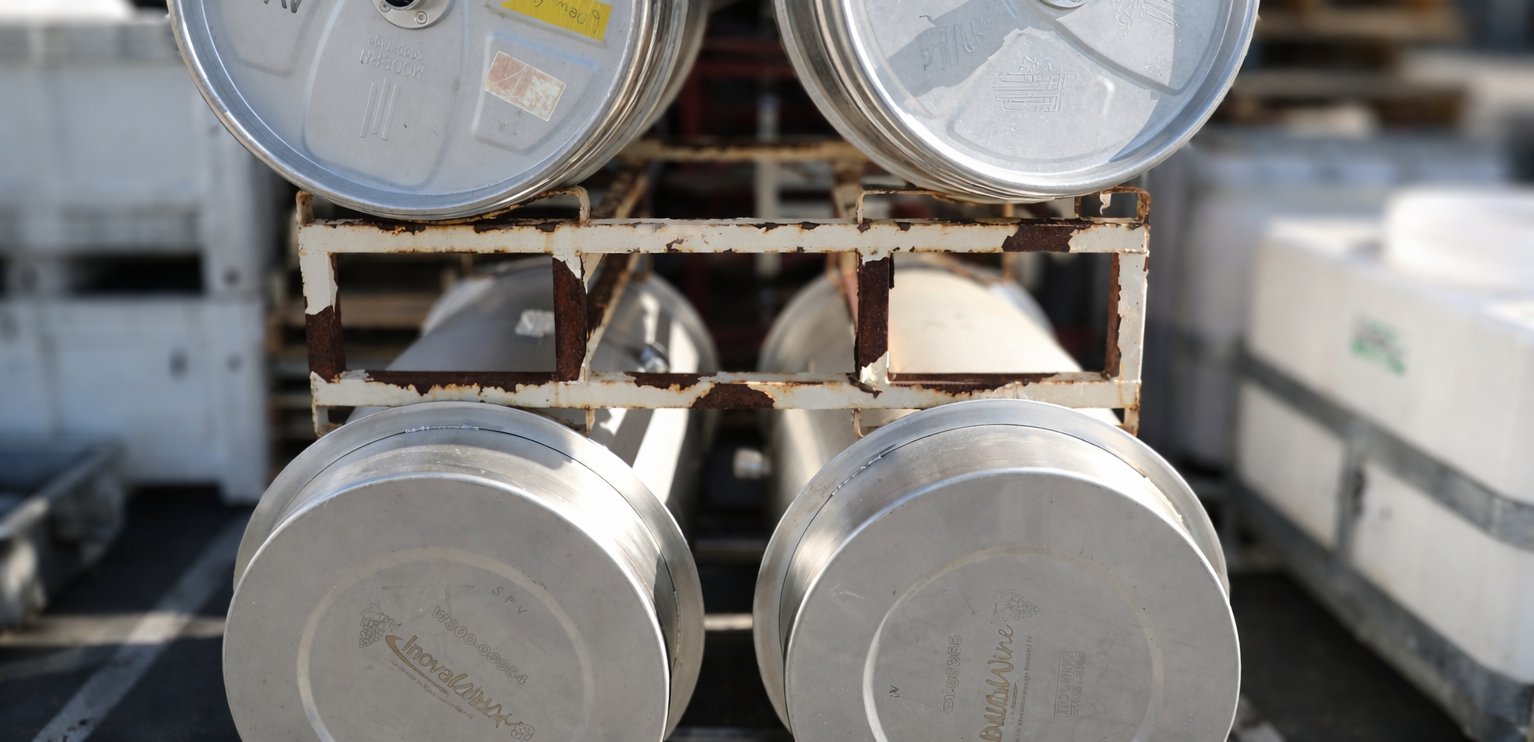
This wine was aged primarily in two new French oak barrels from the coopers Damy and Dargaud & Jaegle. In total, three tons of fruit were harvested, yielding 82 kegs of wine.
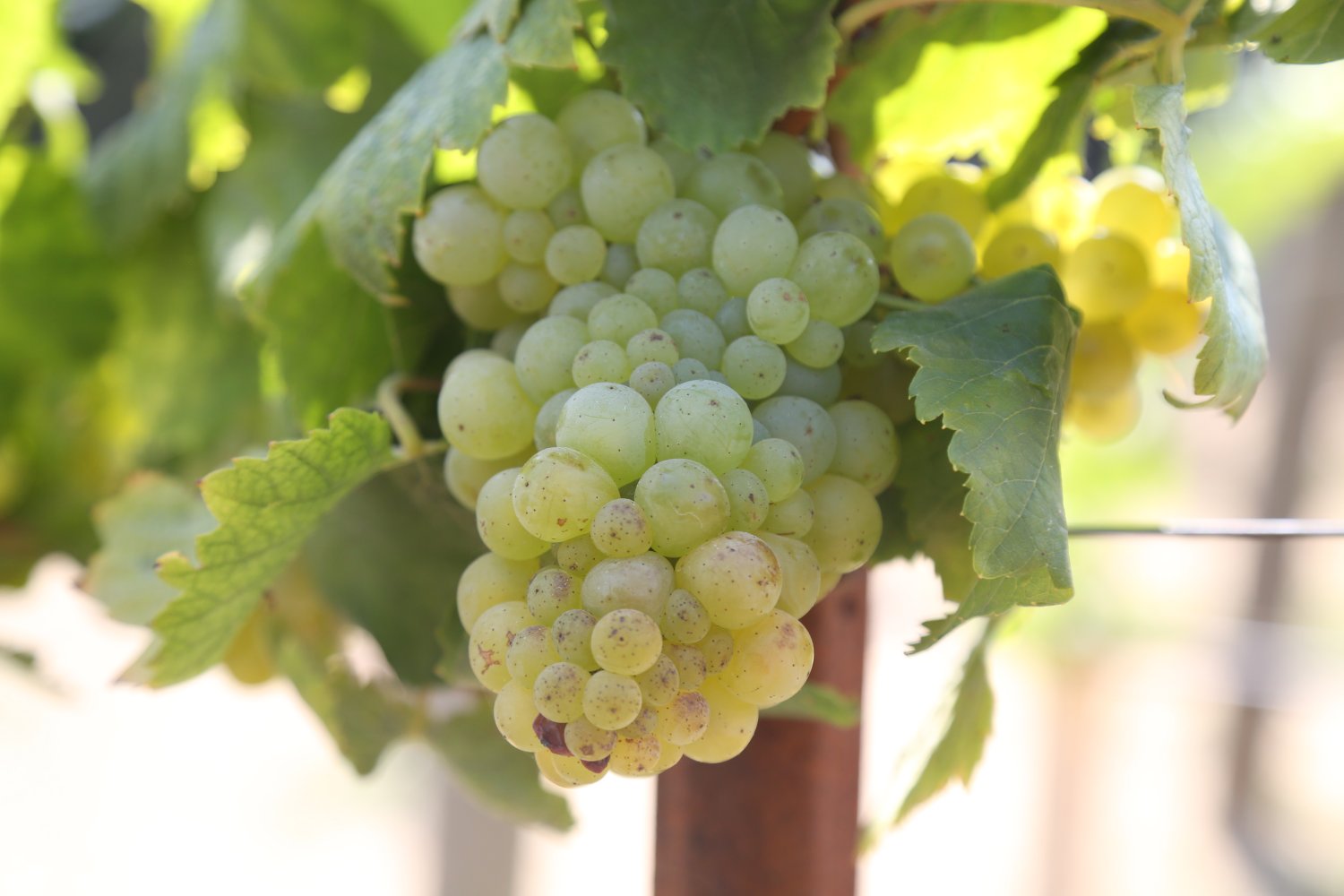
The Chardonnay is clone 76, sourced from a single block within the vineyard, situated alongside a tiny seasonal blue-line drainage and the nearby Carneros Creek. The soils are loamy, and the vines are approximately 25 years old. The wine was aged in a combination of 33% new French oak, 33% once-used barrels, and 33% neutral oak. It underwent partial malolactic fermentation—initially inoculated, then intentionally halted. Lees stirring was minimal, as the wine showed ample volume and richness early on, so a restrained approach was taken in terms of texture.
Taking a careful and slow approach in a challenging market for selling wine, Nova skipped making wines for Sorèlune in 2025.
—
Using kegs significantly reduces the need for glass, which is typically the largest contributor to a wine’s carbon footprint—while also simplifying service for restaurateurs by eliminating the handling and disposal of bottles.
One ongoing challenge, however, is how to provide samples when everything is kegged. With subsequent vintages, Nova plans to produce a limited run of bottled wine specifically for samples, allowing them to share with potential clients, partners, and critics.
This wine is available at Kitchen Door in downtown Napa, with plans for other restaurant distribution including in Los Angeles. For more information on this brand and to order kegs, please visit: www.sorelune.com
Leave a Reply