



 Screaming Eagle Screaming Eagle is arguably the most coveted wine ever produced in California. Emerging from a vineyard in Oakville in the early 1990s, it transformed the economics of luxury Napa Valley wine through a combination of extraordinary critical acclaim, limited production, and unprecedented demand.
Founder of Screaming Eagle, Arlie Jean (Jeannie) Phillips is originally from Bradenton, FL and later St. Petersburg, FL. Her father Wendell Sr. was a religious man; he attended the Moody Bible Institute in Chicago and subsequently, Bob Jones University in Cleveland, TN where his roommate was Evangelist Billy Graham. He became a Baptist minister, practicing for 10 years. He and his wife Esther moved to Florida in 1944 to fill a vacancy at Southside Baptist Church; ultimately they ended up remodeling the church and his career in real estate and construction began at that time. He advertised his business as Wendell Homes. While balancing a career and a family he also continued his ministry work – traveling to the Caribbean and Central America for religious educational outreach.
Wendell’s first visit to Santa Barbara was in 1957 as a side trip from Los Angeles where he appeared on Billy Graham’s, This is Your Life, program. Jean’s sister Anita who later married the Japanese artist Yasu Eguchi was the first of her family to move to Santa Barbara to attend Westmont College. Wendell owned several motels in Florida; in the late 1950s, he owned the Elite Motel at 666 34th Street North (now a Day’s Inn) and the Wendell Phillips 27-unit motel located at 6825 Central Avenue in St. Petersburg, FL. He placed an ad to sell this property in the Santa Barbara News-Press dated November 16, 1958, two years before he and Esther moved the family to Santa Barbara. This hotel was built in 1956; remarkably it is still operating as a hotel, now named Valley Forge Motel.
In Santa Barbara, Wendell was a real estate broker, builder and developer and was the branch manager of Valley View Realty in Isla Vista. He built numerous residential homes and also commercial buildings while Esther designed the structures. One of several siblings, Jean attended high school at San Marcos High School in Santa Barbara followed by several years in the early 1960s at Santa Barbara City College, studying business administration. In 1963 her mother opened Jeannie’s, a retail apparel store catering to young women located at 3437 State Street. Jean was the buyer for the business and her mother ran the store. In 1964, Jean moved to Europe and worked as a secretary for Radio Liberty in Munich, Germany. Moving back to the states, she settled on the east coast and started selling dresses wholesale.
She operated Omlav Dress & Gift Shop in Isla Vista from 1969 until 1971 in a complex that her father owned and built. This was next door to the also Phillips owned and operated Village Market, a convenience store. Jean moved to Santa Rosa in 1971; while actively looking for a place to open a dress shop in the Bay Area, during a visit to Yountville with her mother she discovered the shops at what was known as Vintage 1870 (now known as V Marketplace). She opened The Little Dress Factory in Vintage 1870 in Yountville in 1972, as a retail space for her hand-made dresses but which also served as her wholesale headquarters.
In 1975, with business partner Carl McNabb (a former detective), she moved The Dress Factory from Yountville to 1231 Main Street in St. Helena. The building was already 100 years old at that time and previously housed the St. Helena Meat Market. And with the transition in locations, Jean expanded her product line considerably to include men’s clothing, antiques, baskets, seeds and other gardening supplies. Today this space is home to Carter & Co., the shop featuring products from artist, potter and sculptor Richard Carter.
An article in The Napa Valley Register dated February 8, 1973 noted Jean’s love for flying (she was a private pilot) and her enjoyment of scuba diving.
In 1977 she and McNabb restored the building that used to house The Depot Hotel in St. Helena which was later renamed the Miramonte Hotel. Jean was responsible for the interior decor, both in the restaurant and their suite. Much later this space housed chef Cindy Pawlcyn’s, Cindy’s Backstreet Kitchen. Today this building is home of Charlie’s Napa Valley. Chef Tony Knickerbocker was chef for Miramonte Restaurant at that time; in 1975 Knickerbocker started one of Napa Valley’s first catering companies – Knickerbockers’ Catering. Miramonte served lunch and dinner with an upstairs suite that was rented by the night.
Until early 2019, Jean also owned the building at 1224 Adams Street which formerly housed 750 Fine Wines. Today it houses the offices for Huneeus Vintners.
By 1980 Phillips had transitioned to real estate and worked with Ren Harris at The Valley Realty, incidentally a very similar name of the company that her father had worked at in Santa Barbara. At the time, their Napa office was located at 2815 Jefferson Street, and they also maintained a St. Helena office overseen by both Phillips and Harris. Through her real estate career, she gained a wide perspective of the Napa Valley including its vineyards. Several vineyards she and Ren sold through their business, Phillips & Harris Land Brokers, included in Yountville to Suzie and Paul Frank, which became the home of Gemstone Vineyards and the property in Oakville that became the home of Groth Winery.
Phillips purchased the property that would become home to Screaming Eagle in what is now the Oakville AVA in 1986. At the time, the vineyard was planted nearly entirely to white varieties except one acre that was planted to Cabernet Sauvignon. After her purchase, she oversaw the replanting of the entire vineyard to Bordeaux red varieties including Cabernet Sauvignon clone 7 as suggested by winemaker André Tchelistcheff.
By 1989 she had listed Screaming Eagle as her fictitious business name in the Napa Register. At the time of her purchase, the site was planted with a mix of varieties, and Phillips spent the first few years as a grape grower, selling her grapes to established neighbors like Robert Mondavi. However, a small one-acre plot of Cabernet Sauvignon showed such remarkable potential that Mondavi encouraged Phillips to bottle it separately.
Jean met vintner Gustav Dalla Valle through her real estate career; in fact, she sold the property that is now home to Dalla Valle to him. Dalla Valle hired young winemaker Heidi Peterson Barrett as a consultant. Jean hired Barrett’s father, noted winemaker Richard Peterson, as her consultant; Richard was also a consultant for Dalla Valle Vineyards. It was Dalla Valle who suggested that Heidi Barrett speak with Jean; she did and Jean hired her as her inaugural winemaker.
In 1992 according to an article in The Wine Spectator dated April 30, 2000 and titled The Rise of California’s Cult Wines, Phillips made home wine in a plastic trash can that year. The same article mentions that she drove a sample to Robert Mondavi Winery where some of their staff tasted it and encouraged her to bottle it. But they didn’t like the name Screaming Eagle she was considering using for the brand.
The 1992 debut vintage, of Screaming Eagle released in 1995, was the catalyst for the modern cult wine phenomenon. When wine critic Robert Parker awarded the inaugural vintage 99 points, later upgrading it to a perfect 100, the response was immediate and overwhelming. Phillips had priced the wine at a then-ambitious $75 per bottle, but the secondary market later seized upon the limited production—initially approximately 175 cases—and drove prices into the thousands. This launch established the template for the Screaming Eagle brand: a refusal to compromise on quality, a commitment to tiny production volumes, an aura of exclusivity and a mailing-list-only distribution model that created a long waiting list.
Little known, but also produced in 1992 was a private label Cabernet Sauvignon made by Barrett for Phillips and Harris for their real estate business. It featured a green and white label which read, “Jean Phillips & Ren Harris, Land brokers”. This wine was a blend of 50% grapes used for Screaming Eagle and 50% from Paradigm’s vineyard.
In an interview with Doug Shafer for his podcast, ‘The Taste’, Heidi recalled Jean making home wine with her boyfriend at the time, Tony at their small stone cellar on her property. Jean soon introduced Heidi to Ren Harris, proprietor of Paradigm Winery. For some time, Heidi was making the wines for both Screaming Eagle, Dalla Valle and Paradigm Winery.
Heidi’s winemaking precision and intuitive grasp of the Oakville terroir would prove foundational to the estate’s identity. And her careful harvest decisions based on a vine by vine basis.
 Following Heidi, winemaker Andy Erickson took the reins at Screaming Eagle. Andy continues to consult for premium producers and produces Favia wines with his wife Annie. Other winemakers have worked on the cellar team at Screaming Eagle including Maayan Koschitzky, currently the Director of Winemaking for Atelier Melka, Massimo di Costanzo, owner with his wife Erin of Di Costanzo Wines and Rob Black, partner in Aerika Estate on the upper slopes of Mt. Veeder.
Screaming Eagle’s Estate Manager from 2006 through 2010 was wine auctioneer, Ursula Hermacinski.
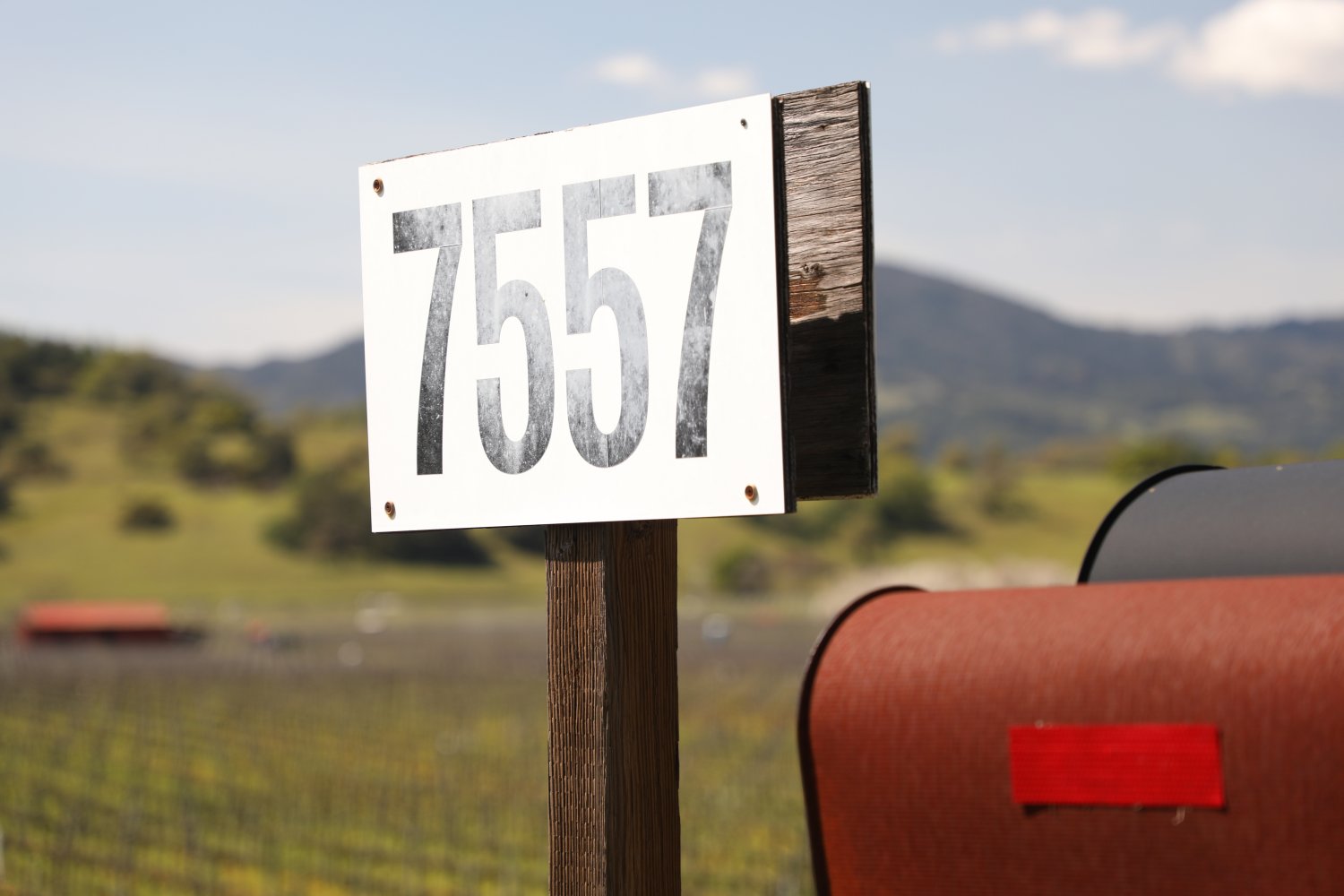
Screaming Eagle is located on the eastern side of the Oakville bench at 7557 Silverado Trail. The property has seen a number of owners over the years. It was originally known as the Bert Rossi Vineyard; we have seen references to wine grapes growing on the property in the 1920s. An article in The St. Helena Star dated September 16, 1927 mentioned grapes from his vineyard were processed by The Calistoga Vineyard Company.
In early 1950s Paul Young purchased this property and renamed it to Pasadena Vineyards. He was the president of the Napa Valley Cooperative. He also represented the investment and banking company, First California with an office at the time located at 1414 Main Street in St. Helena. Paul died at age 63 in 1960 from a heart attack.
In 1957 the property was acquired by John (Jack) and Jean Michels; John was Paul Young’s former colleague when both worked for First California Co., in St. Helena. The Michels lived on this property with their two children John Jr. and Judy. They kept the same name, Pasadena Vineyards. An article in The St. Helena Star dated August 27, 1959 indicates the Michels brought 4 tons of Golden Chasselas grapes from their property to the St. Helena Grape Growers Cooperative for processing that year.
One of Screaming Eagle’s fictitious business names is El Retiro Winery, a reference to the name of this vineyard prior to Screaming Eagle when it was owned by Tony Gomez, a retired airline pilot.
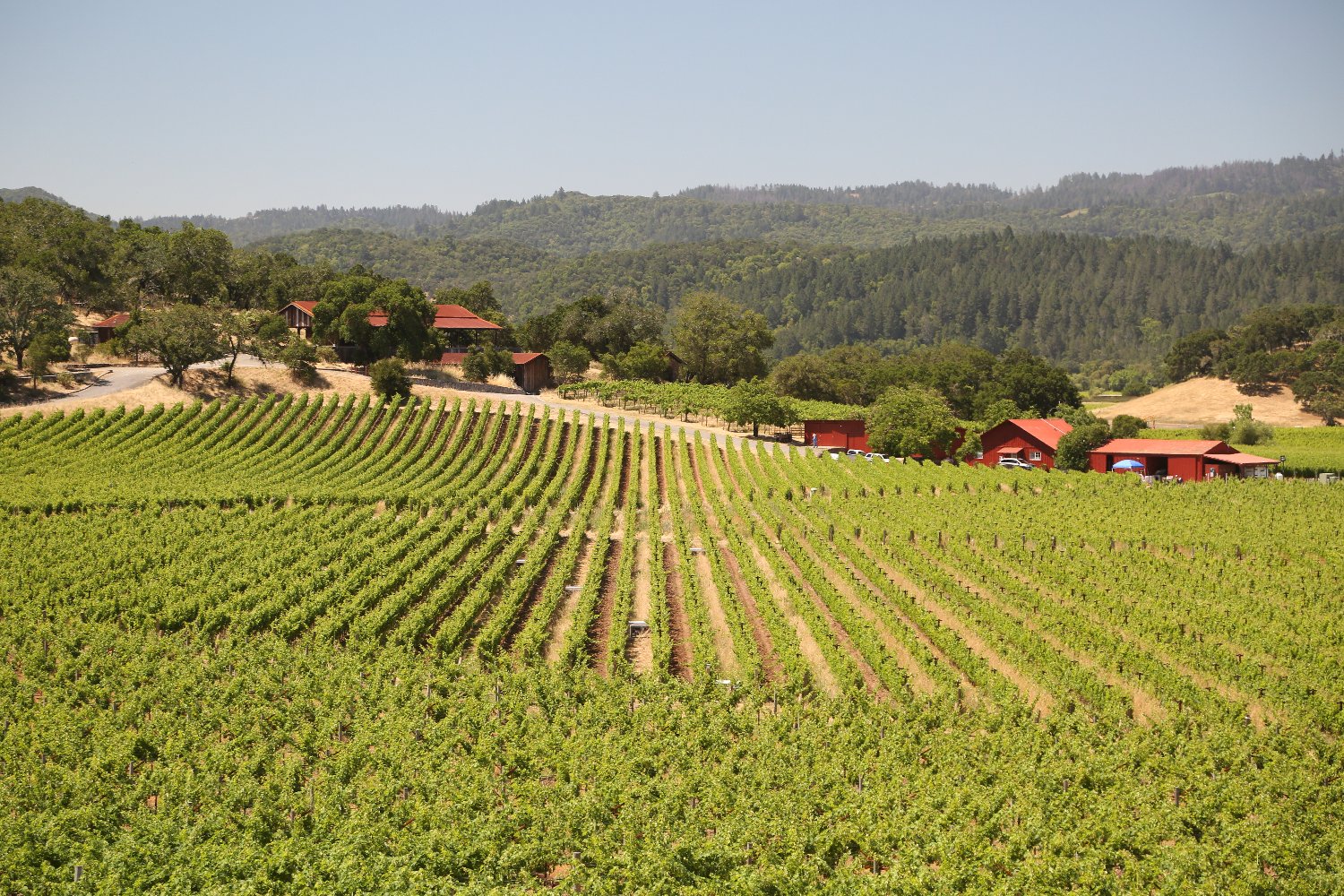
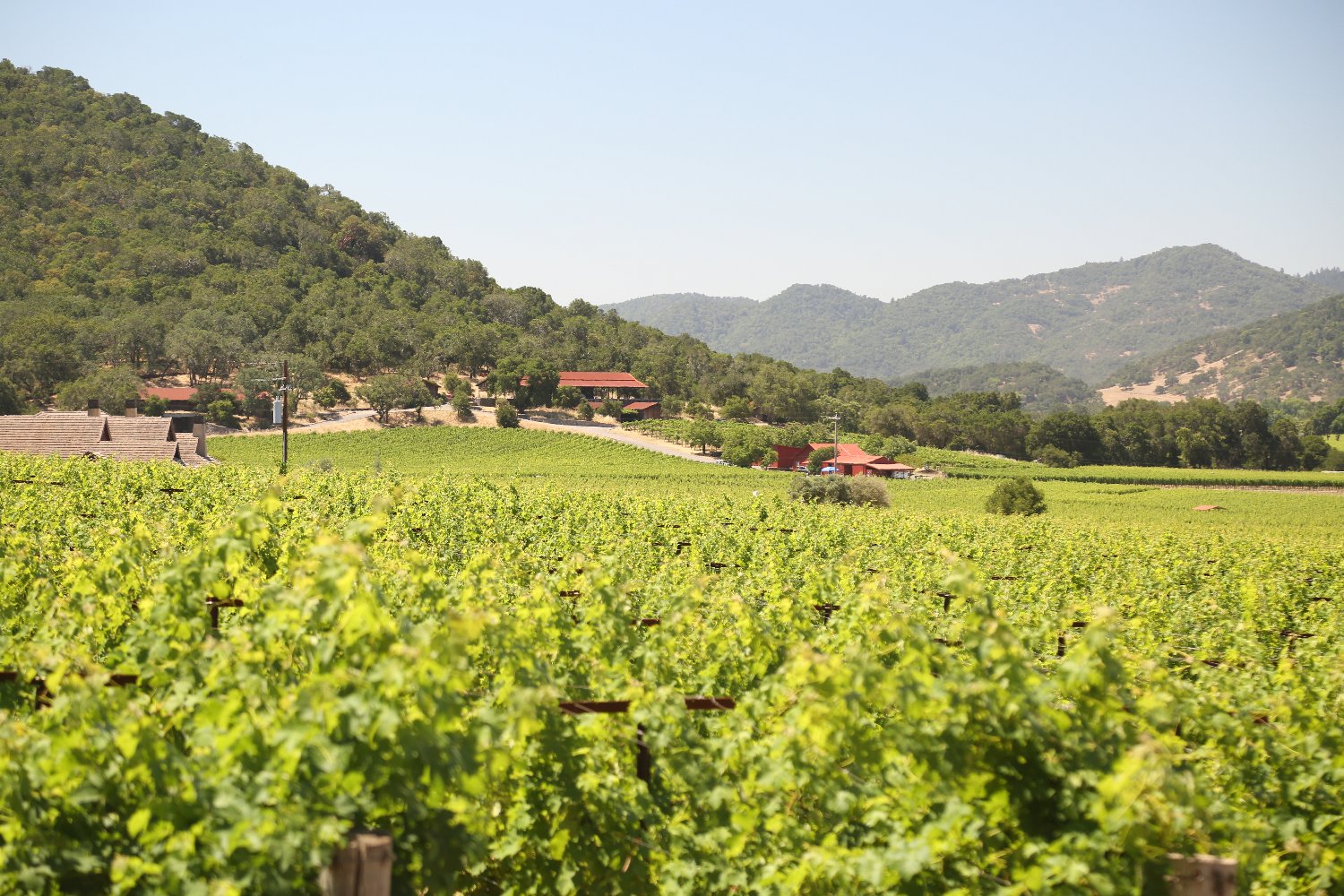
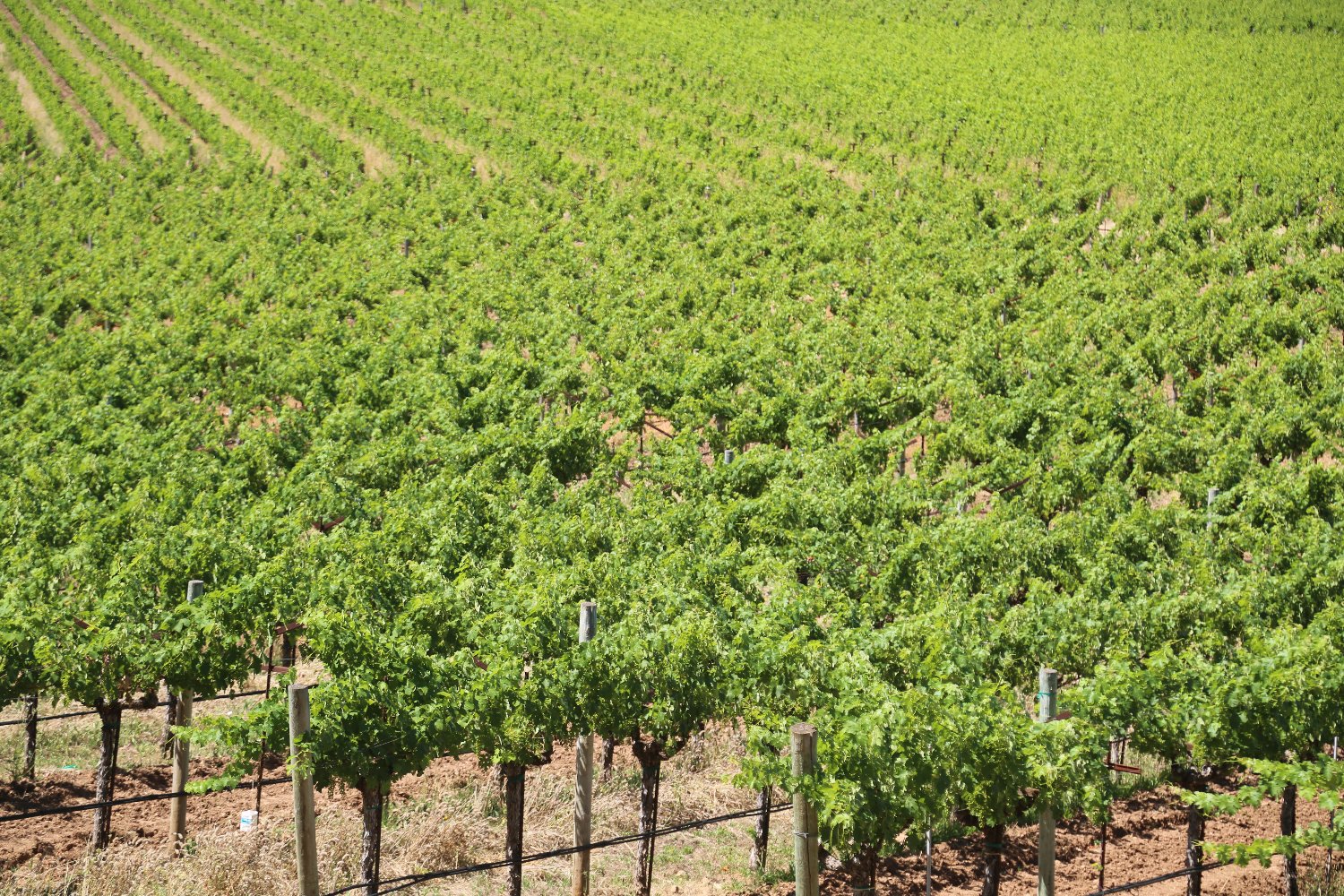
The vineyard sits on a gentle west-facing slope composed of rocky, well-draining volcanic soils and gravelly loam. The red rocky iron rich soils here are characteristic of the eastern Oakville benchlands and higher into Pritchard Hill and to the west. Rocks from this property have been used to build walls along the Silverado Trail. They receive afternoon sun, ensuring full ripeness, while cooling breezes from the San Pablo Bay prevent the fruit from becoming over-extracted.
The property is approximately 70 acres; the vineyard is currently divided into over 50 blocks, allowing the winemaking team to vinify each parcel separately in a variety of vessels, including stainless steel, concrete, and French oak. This detailed approach allows the winemaking team to create a final blend that emphasizes balance and “elegant space” over sheer power.
While neighbors often reference Screaming Eagle, other premium winery or producers in the immediate neighborhood include Harbison Vineyards, Gamble Estates, Tench Vineyard, Gargiulo and Joseph Phelps Bachus Vineyard.
—
In 2006, the estate entered a new era when Jean Phillips sold the rectangular shaped property to billionaire Enos Stanley Kroenke & his wife Ann and Charles Banks. Banks was also owner of Mayacamas Winery; today he is no longer associated with either Screaming Eagle or Mayacamas Winery. Kroenke was born in 1947 and raised in very rural, Mora, MI where his father owned Mora Lumber Hardware.
Kroenke is the largest private landowner in the United States, owning approximately 2.7 million acres. Passion for real estate and sports plays a significant role in his life. Kroenke Sports & Entertainment is his holding company for a number of professional sports teams. In Napa Valley in addition to Screaming Eagle, he is the co-owner with Bill Harlan of Meadowood Napa Valley.
In 2011 Phillips purchased Pillar Rock Vineyard, a 120 acre property located in the Stags Lead District. She sold this to Shafer Vineyards in 2022. She still owns two small properties in Oakville including a 5-acre site planted to a vineyard, both within a couple of minutes drive from Screaming Eagle.
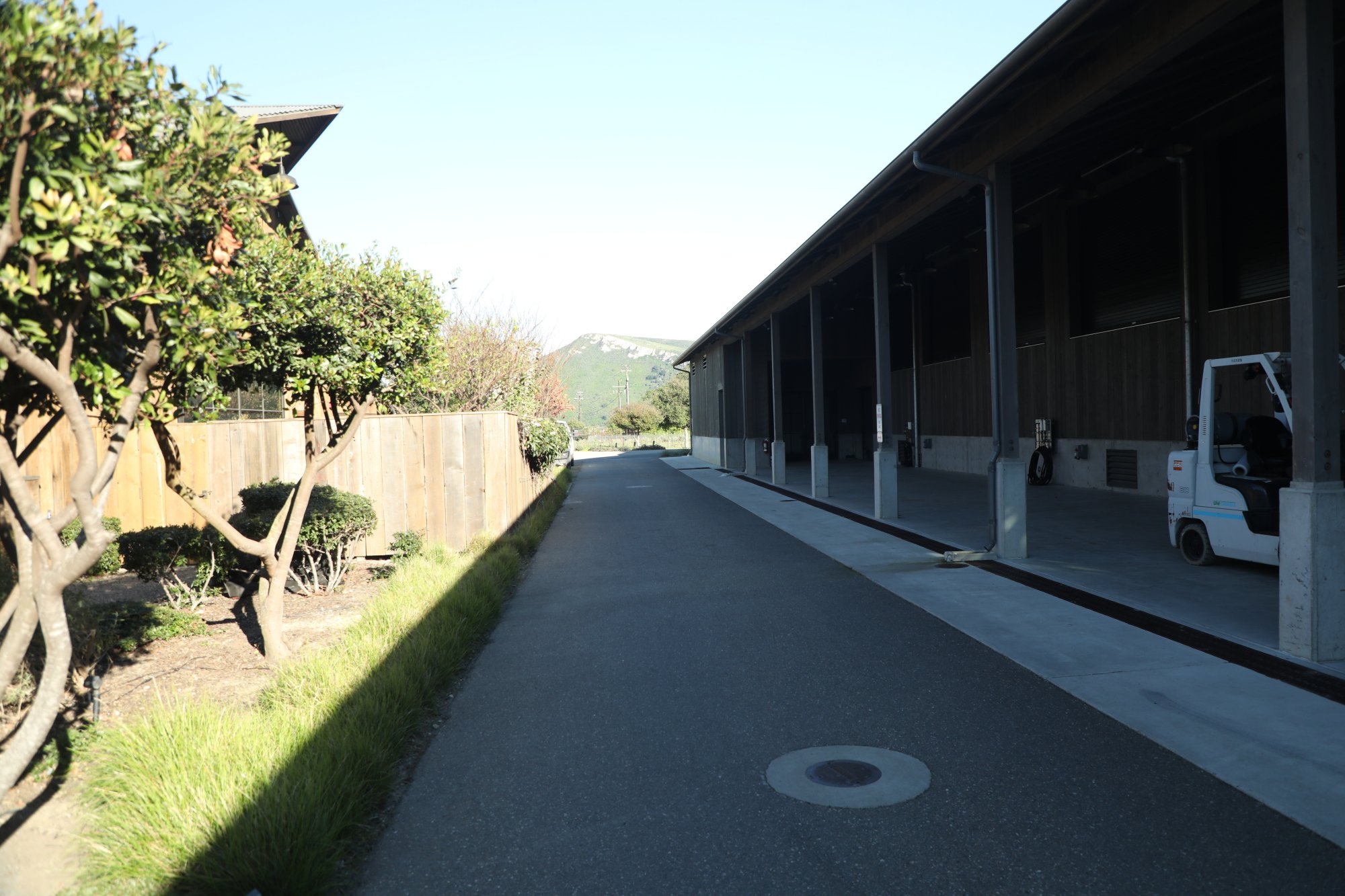
While the transition of such an iconic property perhaps caused some anxiety among collectors, the team doubled down on the pursuit of excellence. They embarked on a significant replanting effort, guided by viticulturist David Abreu, and constructed a modern and discreet winery including a cave. The original stone winery was kept intact, an homage to Screaming Eagle’s early beginnings. The contemporary winery is two buildings next to the hillside with a connecting winery cave. The two-story structure features an open pole barn on the upper level, where grapes are delivered and processed – with wine tanks located below. The architect of record was Backen & Backen.
The production of the flagship Cabernet Sauvignon remains strictly limited, usually hovering between 500 and 850 cases depending on the vintage’s yield.
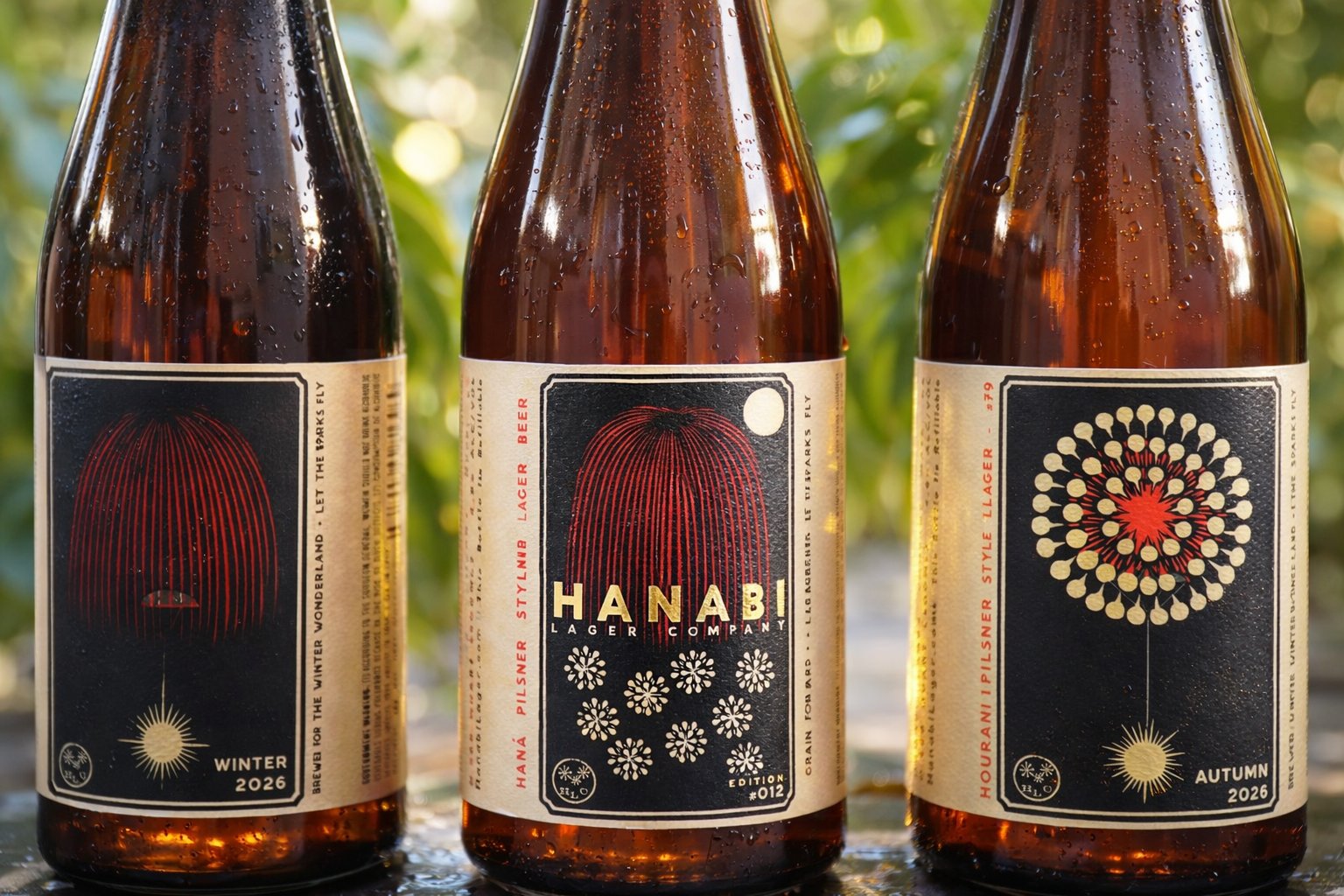 The current winemaking style, led by Nick Gislason since 2011, has moved toward a more refined and nuanced expression of the site. And while Gislason is known for being the winemaker at Screaming Eagle, he is also the founder of Hanabi, a premium beer which he produces at a winery south of the city of Napa.
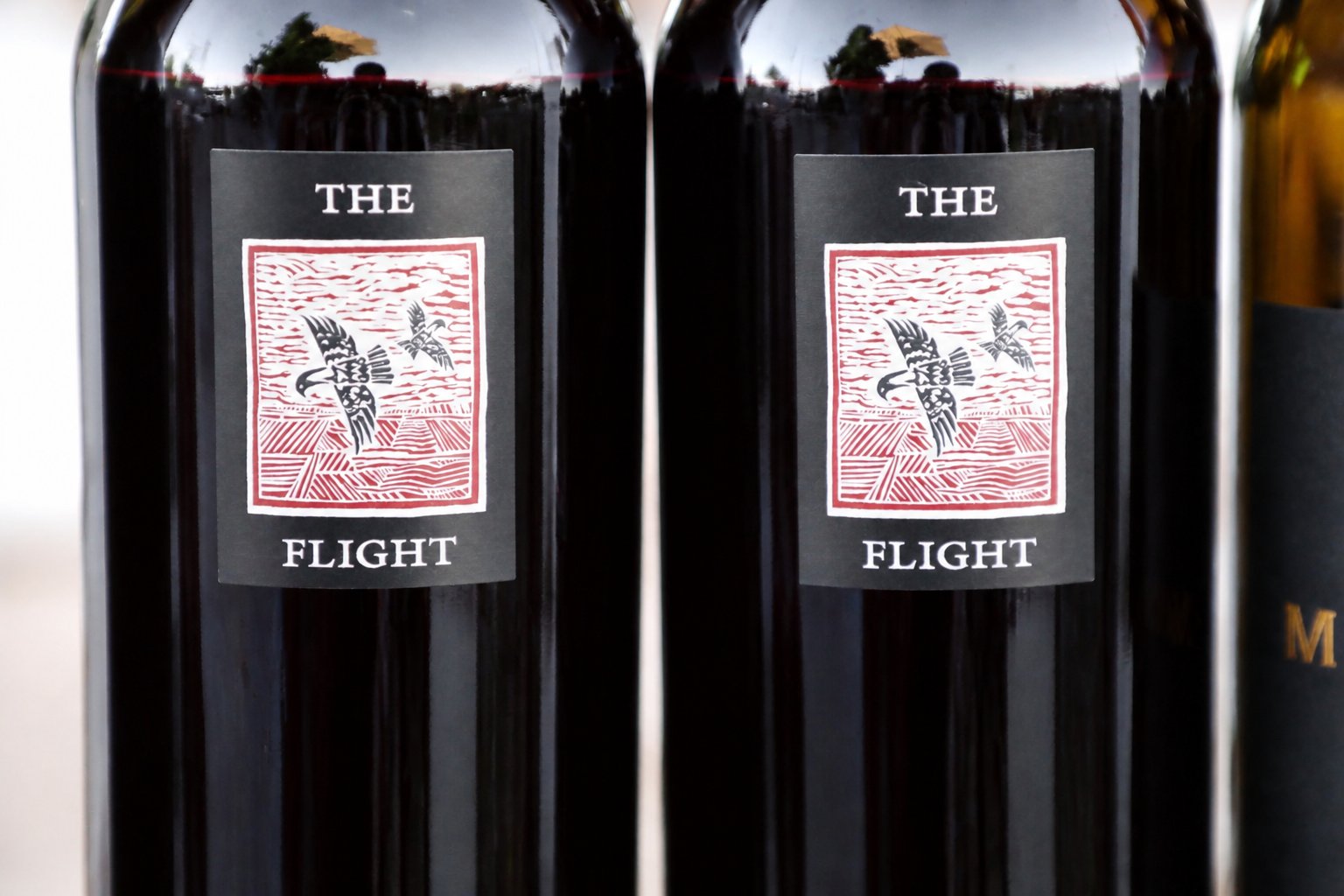
While the Screaming Eagle wines possess the depth and concentration typical of Oakville, the wines are frequently praised for their silky textures, floral aromatics, and vibrant acidity. Since 2012, Screaming Eagle also produces a sister wine called “The Flight,” a Merlot-dominant red formerly known as “Second Flight,” and an extremely rare Sauvignon Blanc that is produced in quantities so small – usually just one or two barrels. This wine is not usually found at auctions and its price (depending on vintage) often rivals or is much higher than that of the primary Screaming Eagle Cabernet Sauvignon.
Today, Screaming Eagle is more than just a winery; it is a benchmark for the global wine industry. The winery maintains its reputation through a combination of impeccable vineyard management, hiring top winemakers, a history of perfect scores, no visitation to the property except for a very limited number of trade and a marketing strategy that relies almost entirely on silence and scarcity, resulting in a pronounced level of mystique. It remains among the most expensive and sought-after wines in the United States, a testament to what can happen when a unique piece of land is combined with a singular, unwavering vision.
Select Wines
Screaming Eagle
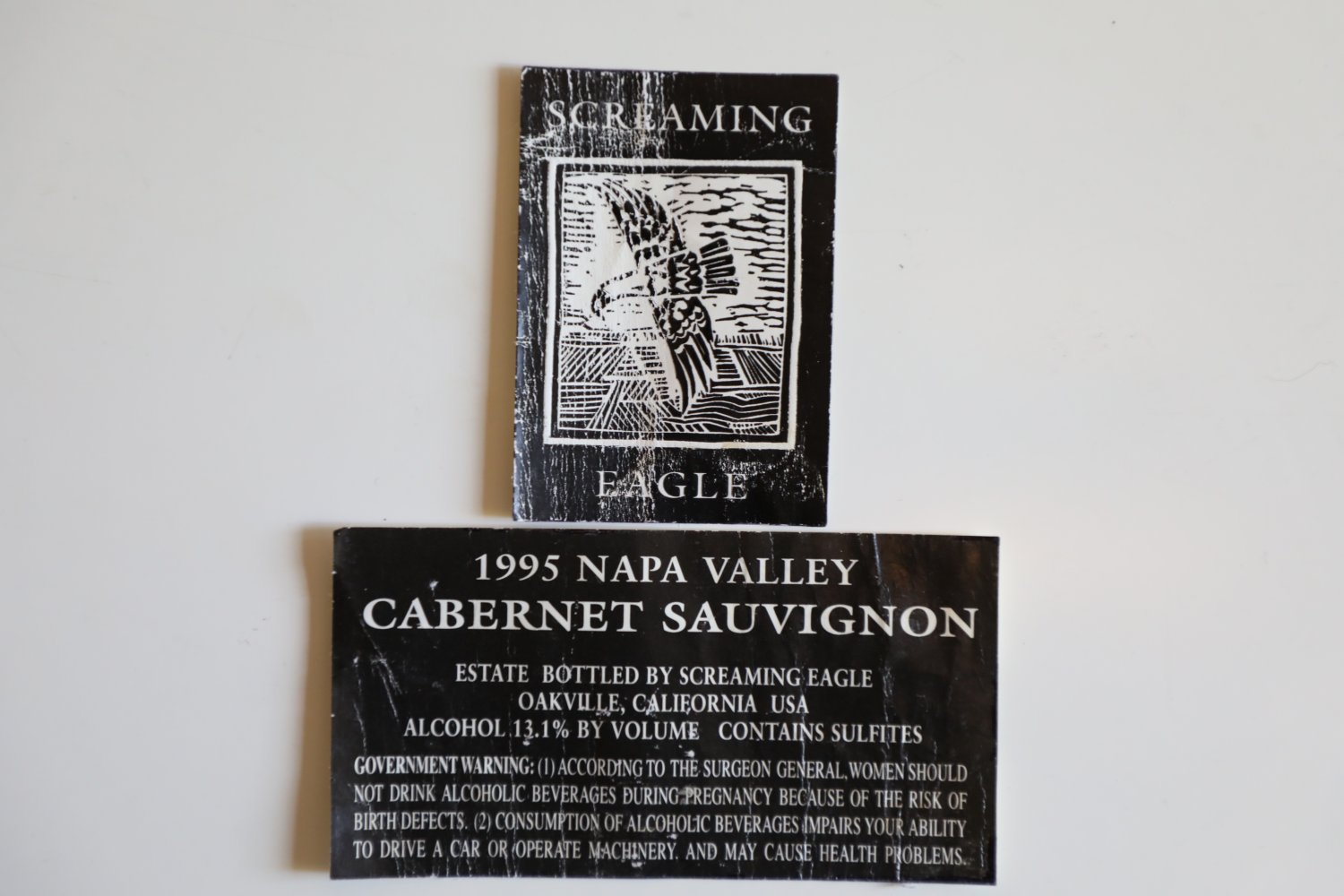 The 2023 Screaming Eagle Cabernet Sauvignon is 80% Cabernet Sauvignon with the balance being Cabernet Franc and Merlot. This wine is deep ruby and nearly opaque; the bouquet is not immediately up front and needs some time for its aromatics to be coaxed out. For reference we tasted this three years post vintage. The bouquet is dark fruited with scents of plum, boysenberry, raspberry, blueberry and cherry. As the wine opens, it reveals a light ferrous character. Like the same vintage of The Flight, the oak is also a complementary character here. Noticeably layered, this wine is dark fruited with flavors of Satsuma plum, boysenberry, and blackberry. And finishes with a savory edge including of dried sage. The tannins are a bit latent, taking some time to fully express themselves. But despite its youth, they are already nicely integrated. Their presence lingers with a gravelly, dusty and chalky character which broadly coats the palate, finishing drying. Yet they already feel well-tumbled.
The 2018 Screaming Eagle is 80% Cabernet Sauvignon and the remainder being Cabernet Franc and Merlot. This wine is deep ruby in color; the bouquet is immediately savory and earthy with notes of damp soils and iron. Give it time to breath and it will express more fruit including dark plum and blackberry. The palate offers primarily dark-fruited flavors including of cherry. The grippy, gravelly textured and still somewhat taught tannins persist beyond the fruit on the savory finish. This wine also lingers with notes of dried herbs and some darker spice notes. This wine has plenty of depth and layering as one might expect from such an iconic producer, but for a wine coming from the eastern part of Oakville, this bottling is surprisingly fresh.
The Flight
The Flight is the younger brother to Screaming Eagle and is always led by Merlot.
The 2023 Screaming Eagle The Flight is 65% Merlot, 27% Cabernet Sauvignon and 8% Cabernet Franc. This wine is medium ruby in color; the bouquet is more red fruited than dark including scents of raspberry, red plums, red cherries, with a minerally chalky vein. The bouquet is a restrained expression of both the variety and the vintage with its oak influence a light complementary character. Balanced with not one element dominating, this wine has early immediate crowd appeal. And perhaps there is a bit more oak felt and perceived on the palate than the bouquet. This wine tastes like dark raspberry, red cherry, boysenberry and red currant. Finishes with a light savory and minerally edge including of chalk. The tannins are seamlessly integrated into the finish with neither flavor, acidity or texture dominating. Nimble. Superbly balanced at this age.
The 2020 Screaming Eagle The Flight is a blend of 64% Merlot and 36% Cabernet Sauvignon. This wine is medium ruby in color. The initial aromatic is of rose petals, accompanied by red cherry, Santa Rosa plum, suede, violets and a light herbal note first described to us as rose stems by Opus One winemaker Michael Silacci. The palate is primarily red fruited with flavors of currant, tart plum, red cherry, cranberry and cran-apple. Tart and mouth watering with an herbal but not green character, this attribute reminded us of Icelandic crow berries; this wine finishes like it starts, red fruited and bright and filled with a vibrant energy. It is exceptionally soft from entry through the finish with seamlessly integrated finely-polished tannins. Their texture lingers with a light gravelly character.
As time and budget allow, we will continue to add tasting notes here.
—
The wines are often associated with premium charity wine auctions and have historically fetched tens of thousands of dollars for single bottles. A 6L bottle of 1992 Screaming Eagle sold in 2000 for $500,000. This price was later eclipsed by another 6L bottle, the 2019 Setting Wines Glass Slipper Vineyard, Cabernet Sauvignon at a charity auction in New Orleans in 2021 made by Jesse Katz which sold for 1 million USD.
At the Davis & Company Auction in Chicago in 1998 a buyer paid $2,000 for three bottles of 750ml 1993 Screaming Eagle. He paid a lot at the time, but in hindsight got a real bargain. At the Napa Valley Wine Auction in 2001 a lot of Screaming Eagle was purchased for $650,000. Three years later at the same auction, the price wasn’t quite as high; three 3L bottles sold for ‘only’ $220,000.
In 2008 at the annual Naples Wine Auction in Florida, a lot included limited edition 2008 Harley Davidson Screaming Eagle motorcycles with side bags filled with magnums of Screaming Eagle wines. At the Jameson Humane’s 11th Annual WineaPAWlooza Wine Auction held at Burgess Cellars in Napa Valley in 2024, the highest grossing lot at this event was a rare signed by Jean Phillips, 1992 Screaming Eagle Cabernet 3L from her personal cellar. This sold for $125,000. In 2026, at the same auction, hosted at Castellucci Napa Valley in Oakville, a 6-liter bottle of 1994 Screaming Eagle sold for $290,000.
One of the strangest stories of how a bottle of Screaming Eagle wine was acquired occurred in early 2001 tied into the dot com bust. According to an article in the Tampa Bay Times dated February 11, 2001, an online contest was held called, ‘whine for wine’. This contest was held to determine the saddest story of an Internet company gone bad. The winner was Scott Bingham from San Francisco who was laid off from eGreetings.com. He wrote, “Now I’m broke and work for a free Porn website. My mother cries when she sees me”.
 Another story from 2014 involved a man at a restaurant in Atlantic City who asked for a wine recommendation for his group of 10. The server recommended the 2011 Screaming Eagle Cabernet Sauvignon and said the price was thirty-seven fifty. Thinking the price sounded fine, the man gave the ok to bring the bottle. The party consumed the wine and then when the bill came, the man was shocked to find out the real price was $3,750. The manager ended up reducing the price to $2200 which the party paid.
In May 2023 Prestige Hong Kong named the 1992 Screaming Eagle Cabernet Sauvignon as one of the world’s most expensive wines.
Screaming Eagle has been featured prominently in numerous publications. Early publicity included an issue of Food & Wine published in 1997 which listed the top 10 most expensive wines in the U.S. The 1993 Screaming Eagle was at the top of that list. An article in The Times-News dated November 26, 1998 quoted a message that Jean Phillips had on the Screaming Eagle answering machine that year. It said, “I’m sorry but the wines are sold out for an indefinite period of time, so please don’t leave your name on the machine”.
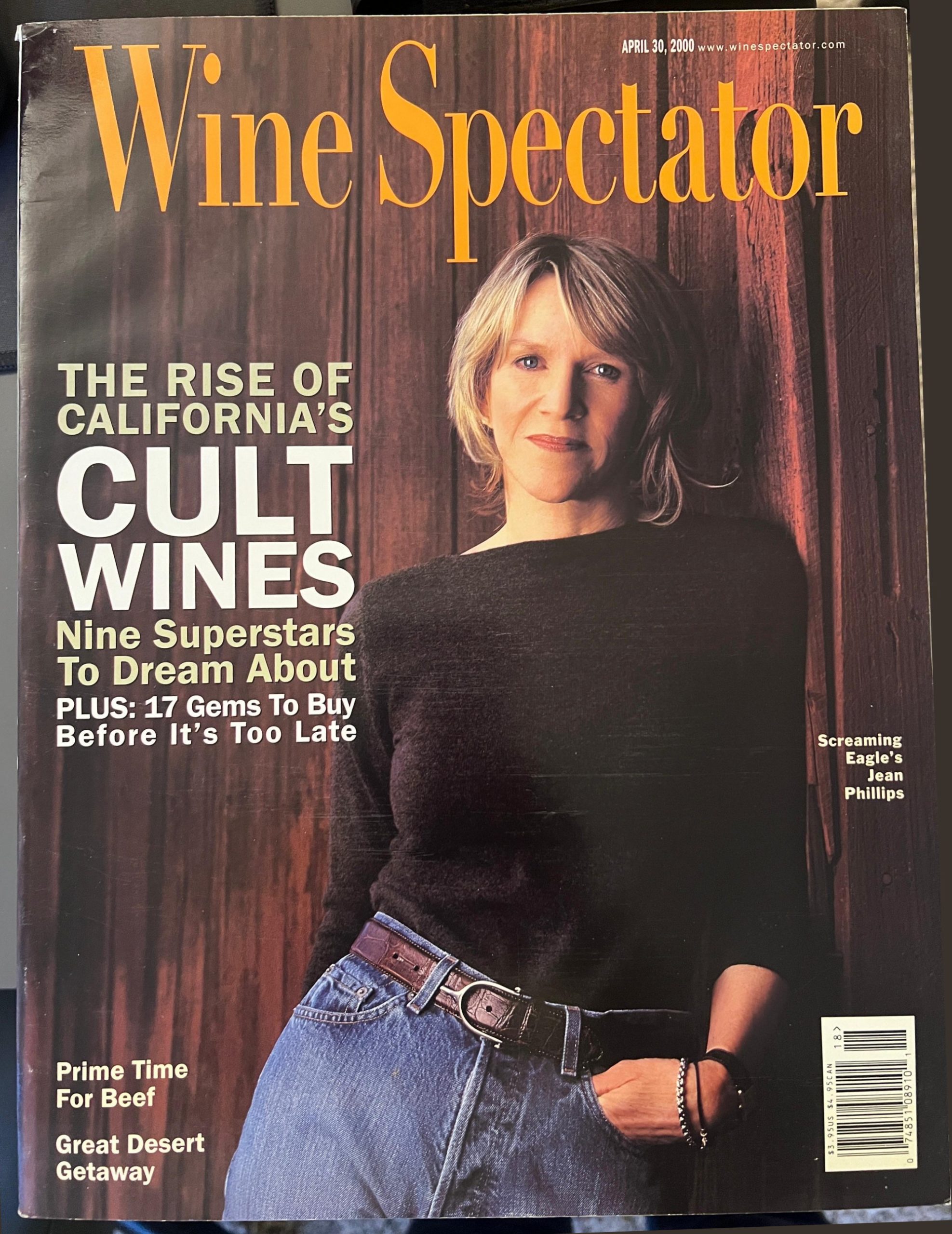
The April 30, 2000 issue of Wine Spectator featured Jean Phillips on the front cover. The article was titled “California’s Cult Wines: Who they are and why they’re red hot” by James Laube.
The name Screaming Eagle is not a reference to the U.S. Army 101st Airborne Division (“Screaming Eagles”). According to wine writer Karen MacNeil, Jean chose the name Screaming Eagle because it had particularly special meaning to her as a young child.
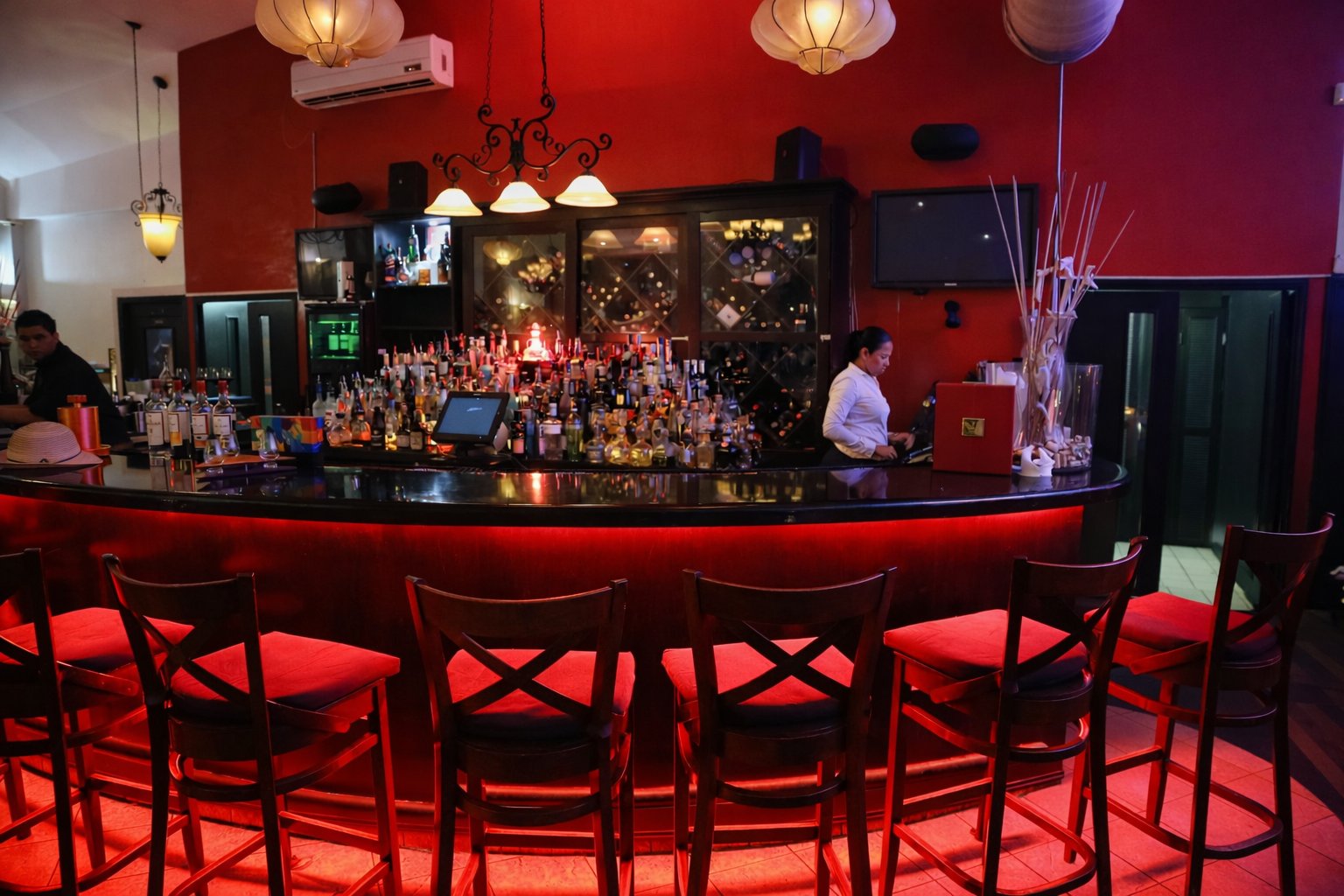
Screaming Eagle Restaurant, Aruba
The Screaming Eagle wait list can be formidable; the mailing list was full by 2000 with the wait list continuing to grow since then. We signed up for the wait list to get access to the coveted allocation list in 2007 and still haven’t been notified of acceptance.
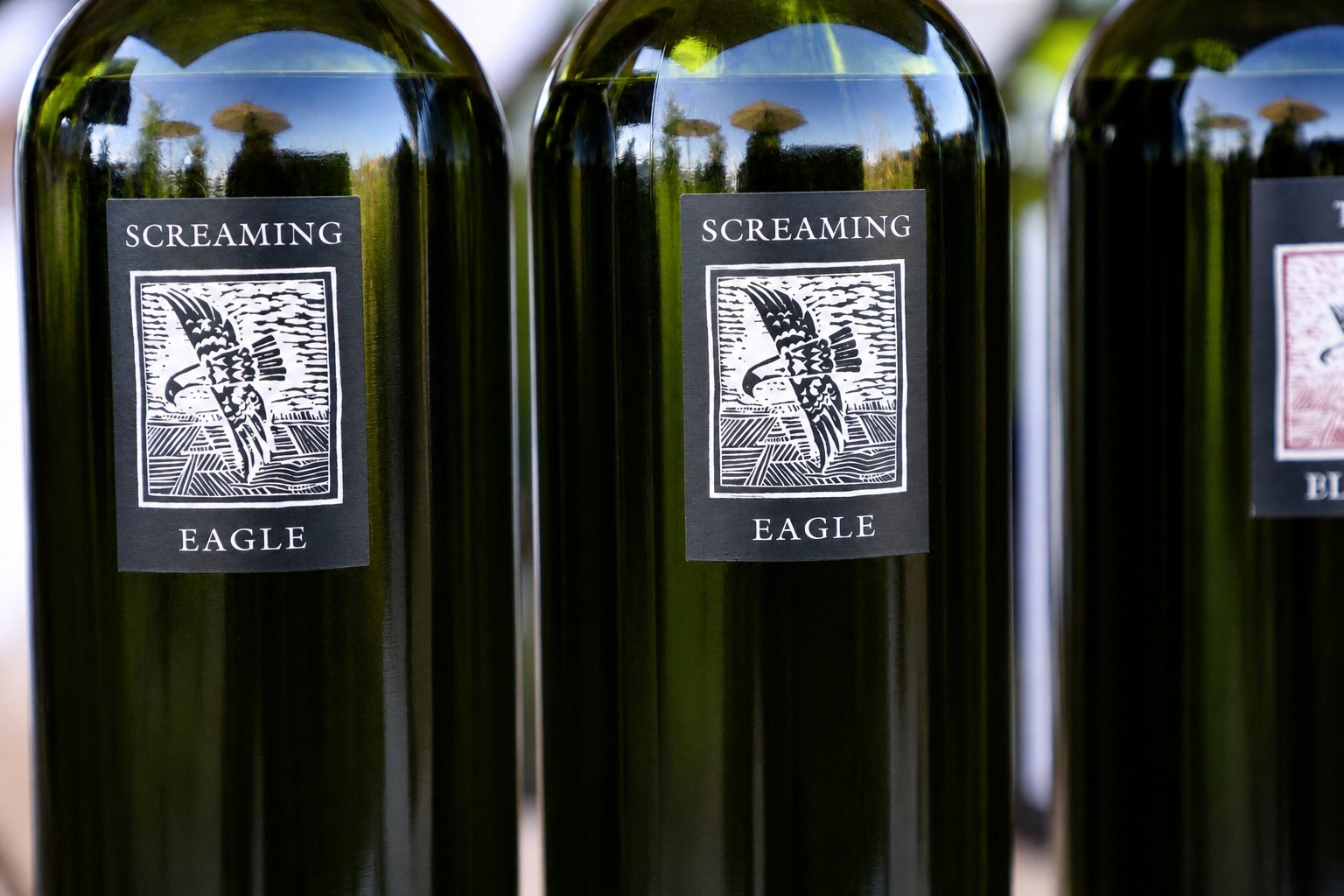
Starting in 2010 all of the Screaming Eagle bottles contain a bubble coded security system, allowing one to verify the authenticity of each bottle. This security label is located between the foil and the bottle. One can enter each bottle code on a page on the Screaming Eagle website for authentication.
Locally the wines are usually poured at a very limited number of events including the One Mind Music Festival hosted at Staglin Winery and at Inspire Napa Valley, a gathering of top wineries to raise awareness and money for Alzheimer’s research. And at the annual Taste of Oakville, a wine trade gathering featuring producers from this prestigious AVA. Of all the fine producers represented at this event, the line for Screaming Eagle is always by far the longest, snaking around for a significant distance. Screaming Eagle always runs out of wines to pour, well before the end of this tasting. Fans swoop in and secure the empty bottles for their personal collections.
The wines are sometimes available for tasting at several locations within Napa Valley including at Oakville Wine Merchant. Pours of Screaming Eagle are available in one of the automatic wine pouring stations behind the counter, built by Nick Moezidis of Napa Technology. And select vintages are available through the ‘Cult’ tasting at K. Laz in Yountville. In terms of restaurants, the wine is on the list at the French Laundry in Yountville.
Screaming Eagle was one of the first five vintner members at the Vintner’s Social Club in Yountville. Vintner members offer members of the club direct access to the people and wines associated with each winery. And vintners members include some of the most recognized and coveted wines in Napa Valley.
If you are determined to get a bottle of Screaming Eagle and you are vintage agnostic and price is no object, it is extremely easy to acquire bottles. A couple of online retailers regularly carry Screaming Eagle including Cult Wine, The Benchmark Wine Group and WineBid.
For more information and to signup for the wait list, visit: www.screamingeagle.com
Editors note: our mission is to visit, taste and extensively profile ALL wineries and brands within Napa Valley; to qualify, each producer must make wine for at least one of their bottlings from grapes grown in Napa Valley and the wine must also be made in Napa Valley. To date we have personally visited and profiled more than 1,300 Napa Valley based wineries and brands.
However, for whatever reasons, there are only a handful of physical wineries in Napa Valley that sadly, we have not been able to secure a tasting with, despite numerous efforts to do so, some of them spanning attempts of 10+ years. And these are some of Napa Valley’s most well-known, most coveted and important producers. Unfortunately we have not yet been able to visit these wineries, including Screaming Eagle to hear their story directly and do a tasting on their property. As a result, this profile was written based on outside research and tastings we conducted on our own.
The following are other wineries owned by Kroenke.
Jonata Estate
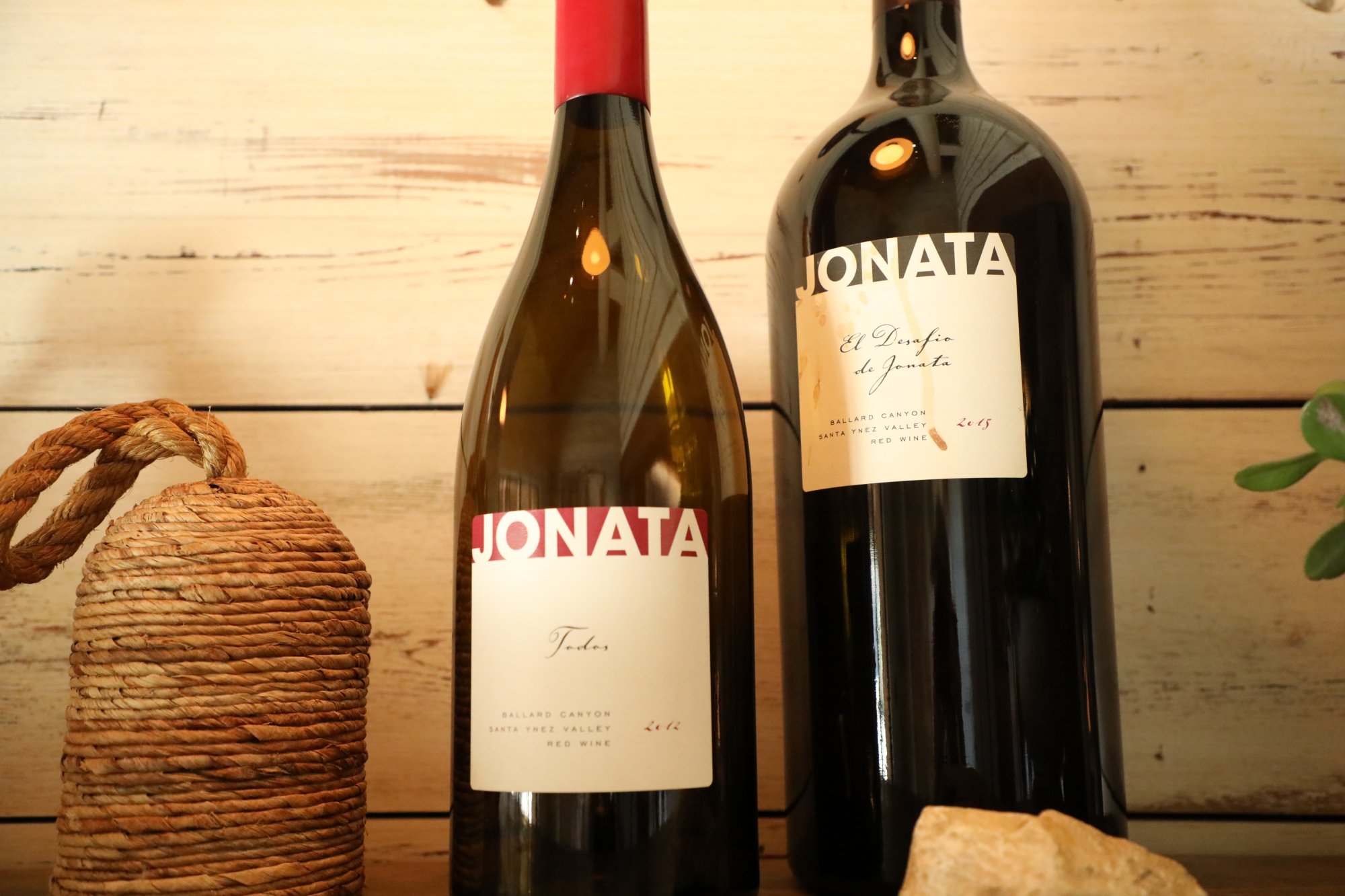
Jonata Estate (pronounced ho-nata) is a premium winegrowing estate and winery in the Ballard Canyon AVA of California’s Santa Ynez Valley, focusing on estate-grown, small-production wines from Bordeaux, Rhône, and Italian grape varieties such as Cabernet Sauvignon, Cabernet Franc, Syrah, Sangiovese, and Sauvignon Blanc. The property is a roughly 600-acre ranch near Buellton, with about 80 acres planted to vines in very sandy soils, divided into many small blocks to capture different microclimates and soil profiles. In fact before grapes were planted here, the advice given was the site was best for growing asparagus. And today, small parts of the vineyard are planted to some grapes on their own roots (no rootstock, i.e., not grafted).
The winery was founded in 2000 by Charles Banks and partner Kroenke with Kroenke later taking full ownership. The first vintage of Jonata was in 2004. The name “Jonata” comes from the 1845 Spanish land grant Rancho San Carlos de Jonata and from a Chumash word for “live oak” or “tall oak,” reflecting the historic and local roots of the site. The winery has a strong emphasis on sustainable farming including mixed agriculture, I.E., livestock, orchards, and gardens alongside the vineyard.
Joining their mailing list will give you immediate allocation access to purchase a limited number of SKUs. For more information, visit: www.jonata.com
Select Wines
 The 2020 Jonata Todos Vineyard Blend is deep ruby and opaque; this wine is led by Syrah fermented with Viognier. It is a blend of 57% Syrah, 24% Cabernet Sauvignon, 10% Petite Sirah, 6% Cabernet Franc and 3% other varieties including Petit Verdot, Sauvignon, Blanc and Sémillon. This wine was aged in 18% new French oak and 82% neutral French oak barrels. On the nose, there are aromatics of violets, lavender, sage, light match stick, a hint of cocoa powder, spicy plum skin, boysenberry, Persian mulberry, and red cherry. Ripe, yet also juicy, the palate is lifted easily by its bright acidity. The fleshy but not heavy tannins fully coat the palate with a well tumbled and gravely texture. The finish showcases layers and layers of fruit, which continue to persist with the gentle texture on the finish for a lengthy amount of time. In terms of a culinary pairing, this versatile wine would go with something ranging from pizza or pasta to steak.
The 2020 Jonata ‘Fenix’ Merlot is 96% Merlot (clones 181 & 314) and 4% Cabernet Sauvignon (clones 4 and 337). This wine was aged in 60% new French oak and 40% twice used French oak barrels. The color is deep ruby and nearly opaque; the first aromatics we noted were of Satsuma plum, spicy plum skin and a darker spice character. It sports a savory edge, including of smoked sage and old cedar wood. This Merlot has both character and complexity across the palate, showing flavors of dark plum, not fully ripe boysenberry, black currant, red cherry and a note of dark chocolate. The present tannins show plenty of texture, with a gravelly and dusty and almost chalky persistence, which out runs the fruit on the finish. Finishes bright and fresh with a medium+ acidity. Not all California Merlots go well with steak; this one definitely does.
The 2019 Jonata Cabernet Sauvignon is 94% Cabernet Sauvignon, 3% Merlot and 3% Petit Verdot; it was aged in 80% new French oak and 20% used French oak barrels. This wine is deep ruby and nearly opaque; the nose smells minerally, there is a light sanguine character at play here, notes of earth/dust, and some savory edges including dried herbs, i.e., sage and bay leaf. The palate offers more fruit than we expected, but in a very restrained fashion. It sports flavors of cherry, boysenberry, mulberry, Santa Rosa plum and currant. The palate is lifted nicely by a fresh and vibrant acidity. The finish showcases tumbled and gravely tannins which are never out of balance with the rest of the wine’s profile. This is a superbly balanced bottling of the variety, and it is also highly age worthy. For reference, we tasted this bottling 7 years post vintage; at this time it shows lots of energy.
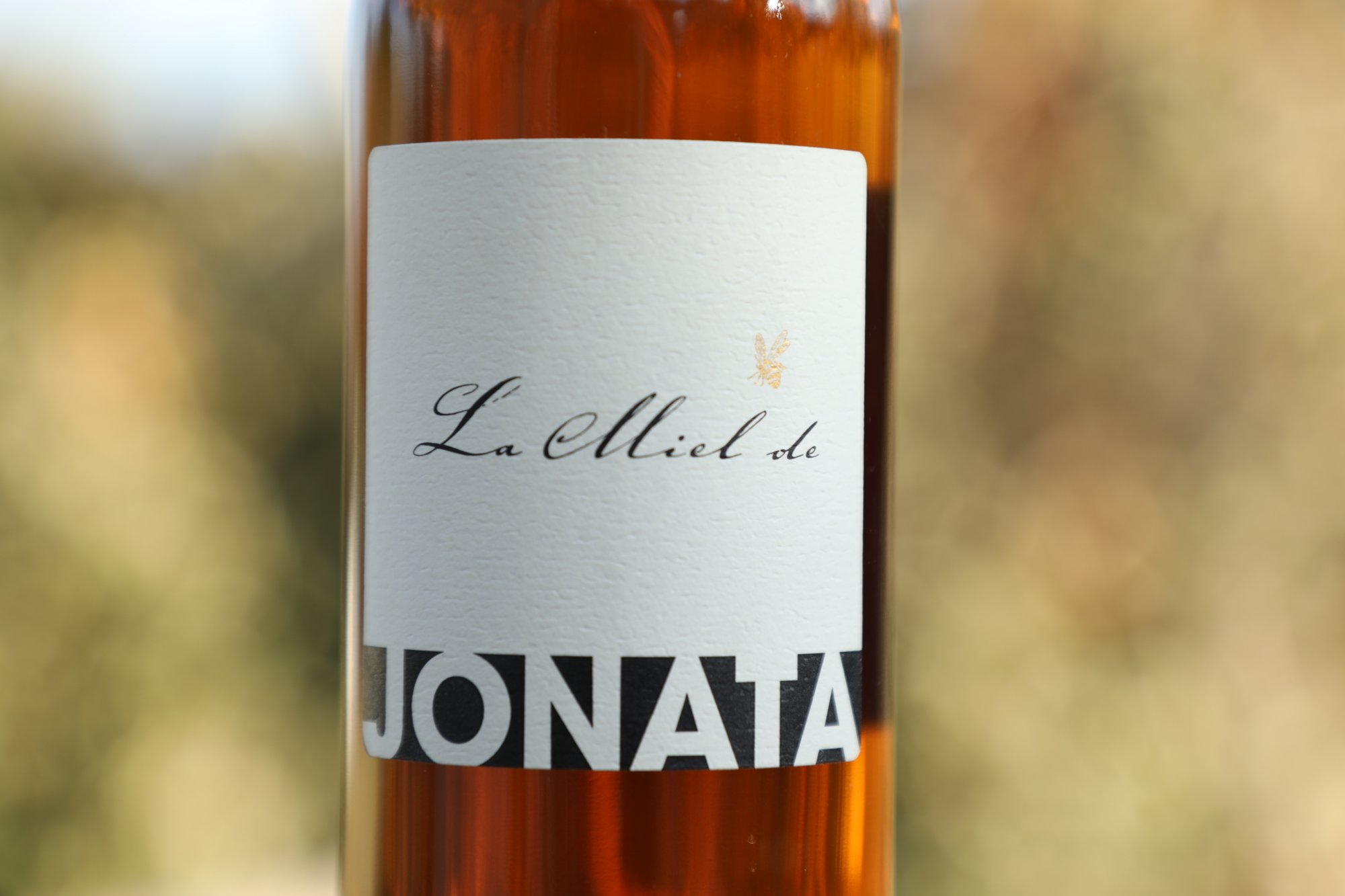
The Jonata Miel Solera style, non vintage (tasted in March 2026) is 80% Sauvignon Blanc, 15% Semillon and 5% Viognier. This wine is deep amber in color. The name of the wine appropriately describes some of its character, both on the bouquet and the palate. The nose immediatley offers a honeyed note with additional scents of caramelized sugars including creme Brule, toffee, pineapple upside down cake, dried figs, apricot jam, dried apricots, baked walnuts, dried orange peel, and assorted dried flowers. For serious dessert enthusiasts, you palate will begin watering as soon as you start sniffing the deeply aromatic layered bouquet. Intensely flavored and sweet, but never even close to ‘weighing’ in terms of texture or sugar, this wine tastes like dried apricots, fig jam, toffee, maple syrup, honey, molasses, almost over ripe peaches, marzipan and a light but lingering note of baked walnuts. This is an expression of pure joy in the glass. The finish continues to give in terms of its extended flavor profile. Rich yet never heavy, the acidity keeps this wine balanced and light on its feet. The more you drink, the more you want it. This might just well be our new favorite California dessert wine. Its listed ABV is 10.6%. Available in 375ml bottles; we would love to also see this in a 500ml bottling. NWP score: 99-100.
The Hilt Estate
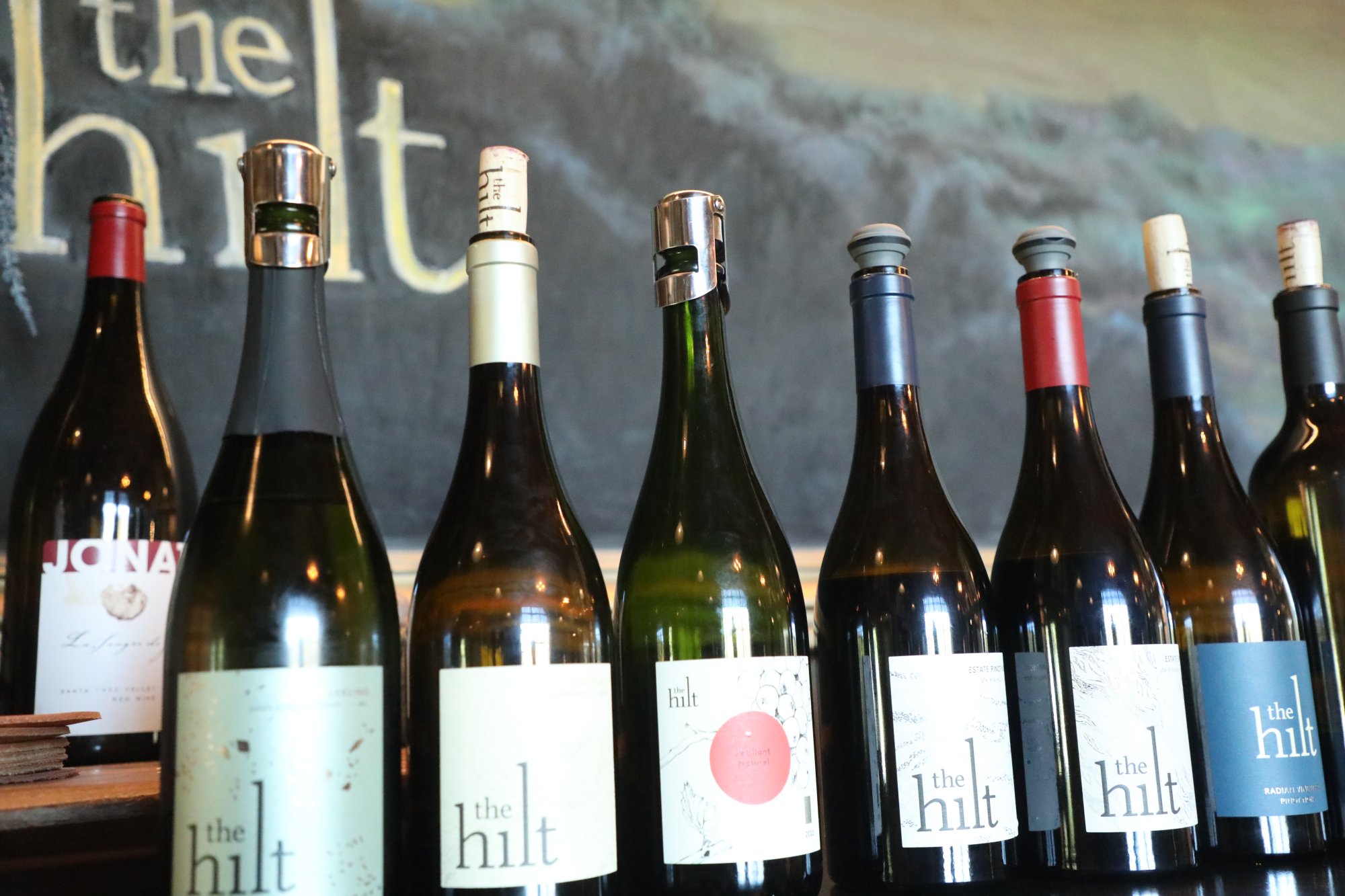
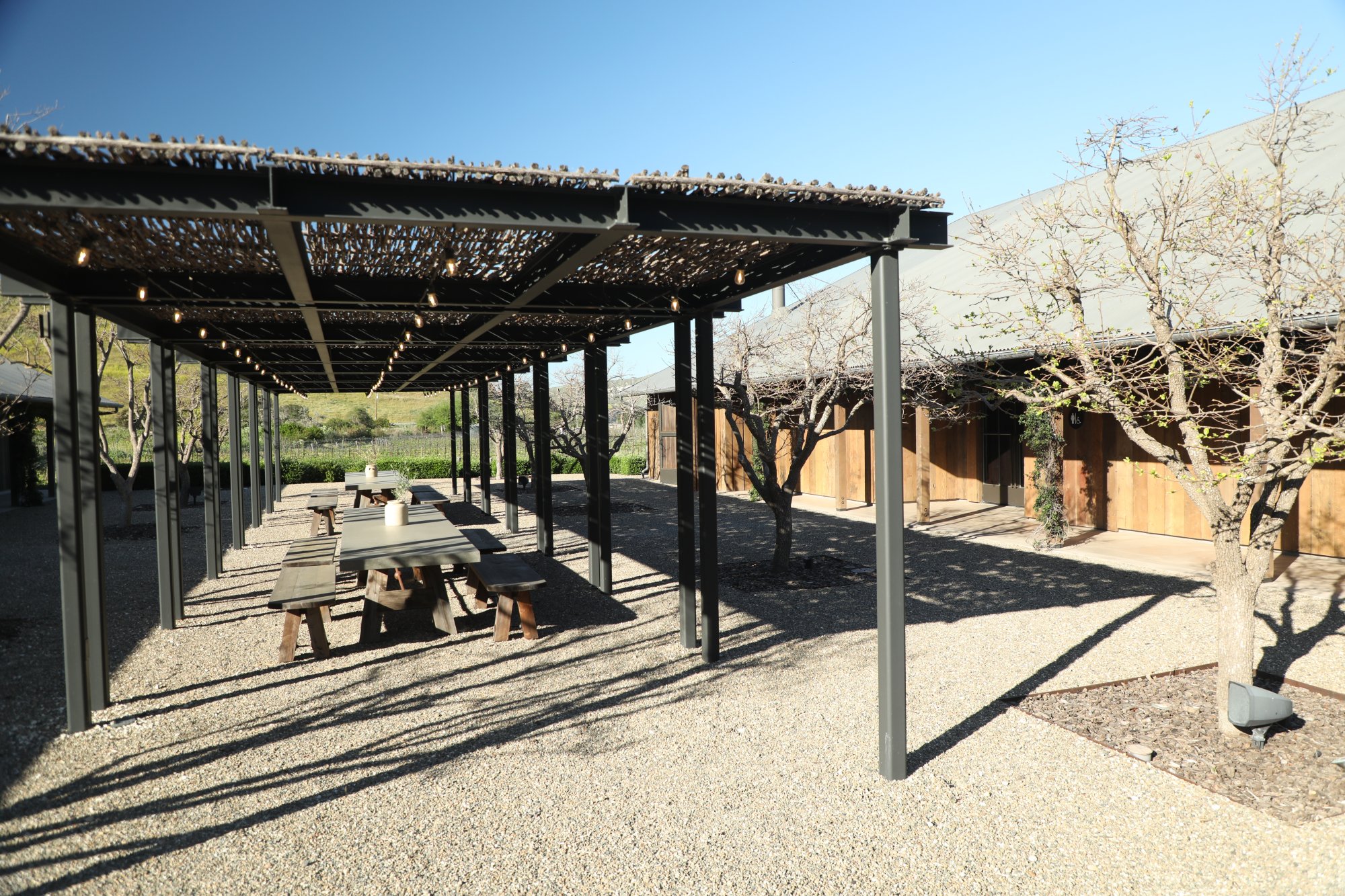
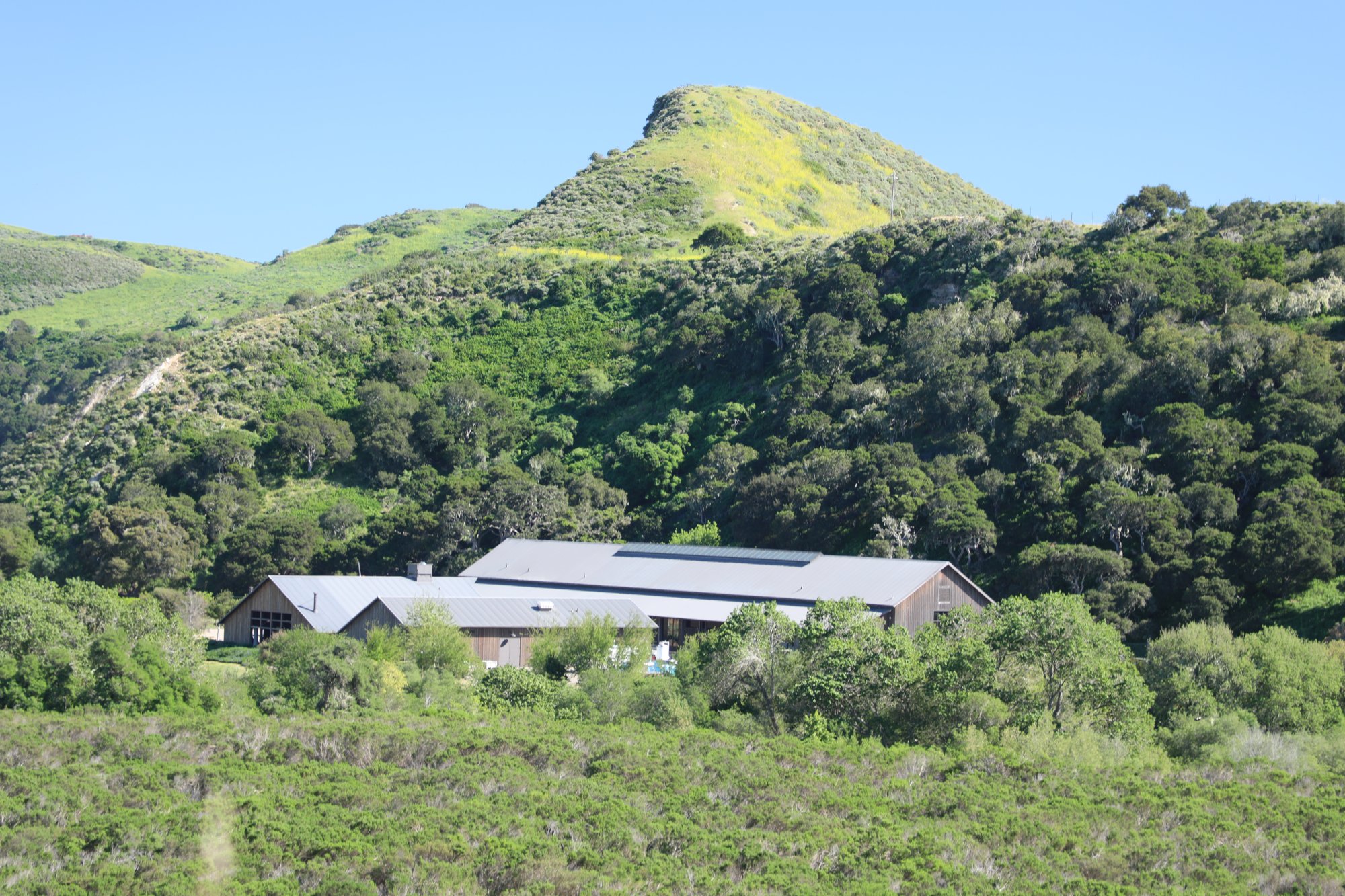
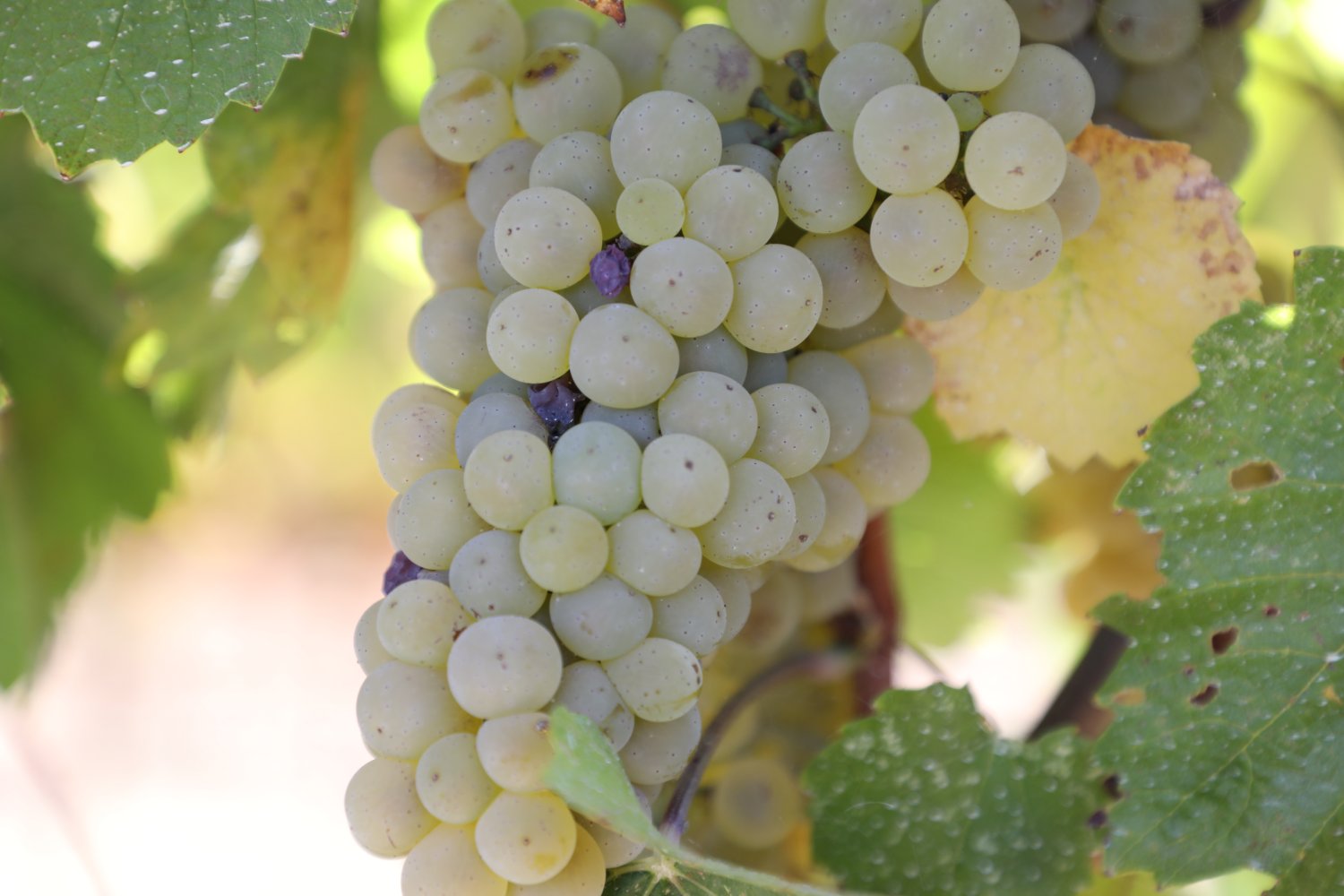
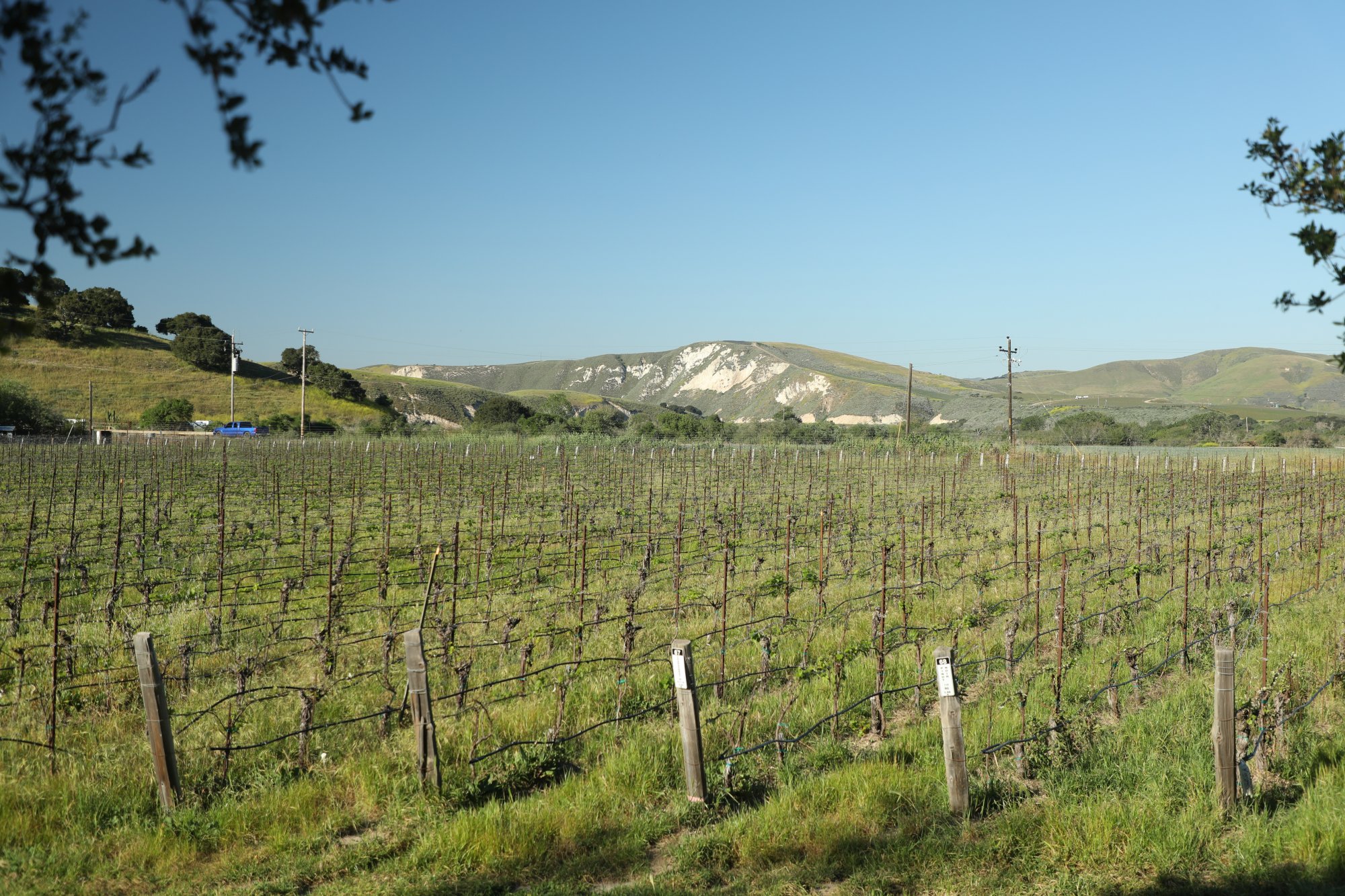
The Hilt, located in the Sta. Rita Hills AVA of Santa Barbara County, California, is best known for producing focused, coastal-influenced Pinot Noir and Chardonnay from cool, wind‑swept vineyards near the Pacific Ocean. Kroenke founded The Hilt in 2008; the three vineyards are under its ownership including Bentrock, Radian, and Puerta del Mar. Puerta del Mar is located on site of The Hilt Winery and hospitality center while Bentrock and Radian are within a several mile drive east on Santa Rosa Road.
The name refers to doing something to the maximum or with a complete commitment.
The estate’s philosophy is to “grow in the margins,” pushing vines in this harsh, windy environment so the wines clearly express site, with winemaker Matt Dees farming organically and using low‑intervention methods in the cellar to preserve precision, tension, and minerality in the wines. Dees calls growing in these conditions, ‘refrigerated sunshine’ referring to plenty of sunshine but in an environment that is consistently cool.
Sta. Rita Hills are located in a rare for the state of California east-west orientation traverse mountain range. We first heard about this mountain range when we were on a field trip here for a plant taxonomy class hosted by California Polytechnic State University professor, Dr. David Keil. Based on the orientation of this mountain range and the proximity of the Hilt’s vineyards to the Pacific Ocean (less than 10 miles as the crow flies, inland – their property sees a significant amount of fog and cooling breezes – ideal conditions for varieties such as Chardonnay and Pinot Noir. One year we visited the region at the end of May; it was about 54 degrees, foggy and extremely windy in the morning – after a tasting we drove about 20 minutes away to warm sunshine and temperatures of around 75 degrees.
Santa Barbara County has a significant and remarkable number of microclimates where some lower lying vineyards need wind fans to mitigate frost during certain times of the year, to the hills directly above the Pacific Ocean near Goleta where farms are commercially growing sub-tropical and tropical products such as coffee bushes for commercial coffee production, dragon fruit, cherimoyas, longans and ice cream beans (inga edulis).
Since SoFi Stadium opened in Inglewood, Los Angeles County (home of the Los Angeles Rams and Chargers football teams), The Hilt Estate and The Paring partnered with Legends Global, the stadium’s culinary operator at SoFi Stadium. Part of this relationship includes the Sip & Stroll experiences hosted occasionally throughout the year in the stadium. This event features wines from both The Hilt Estate, The Pairing and other wines from Santa Barbara County as well as access to places and spaces throughout the stadium.
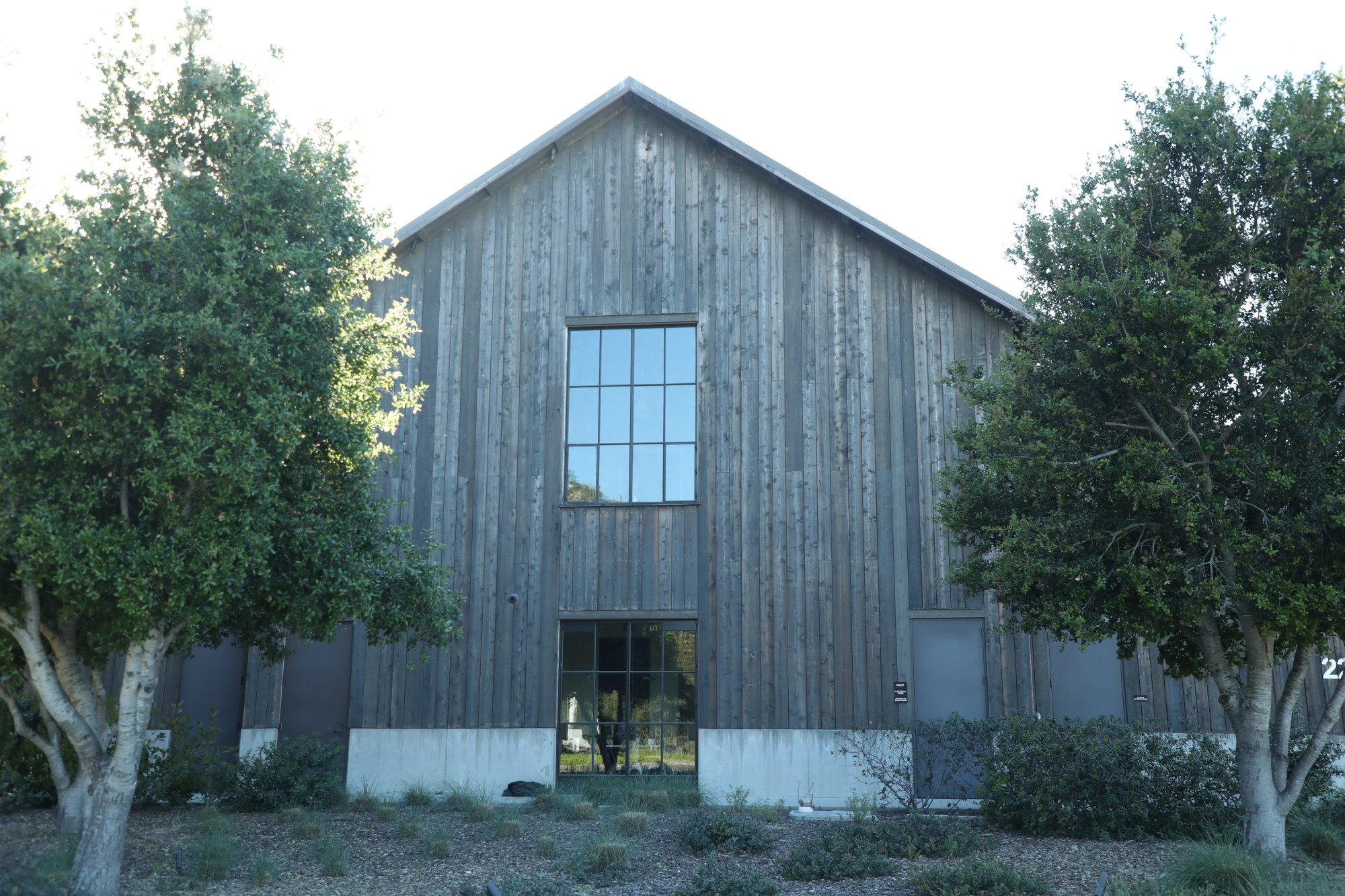
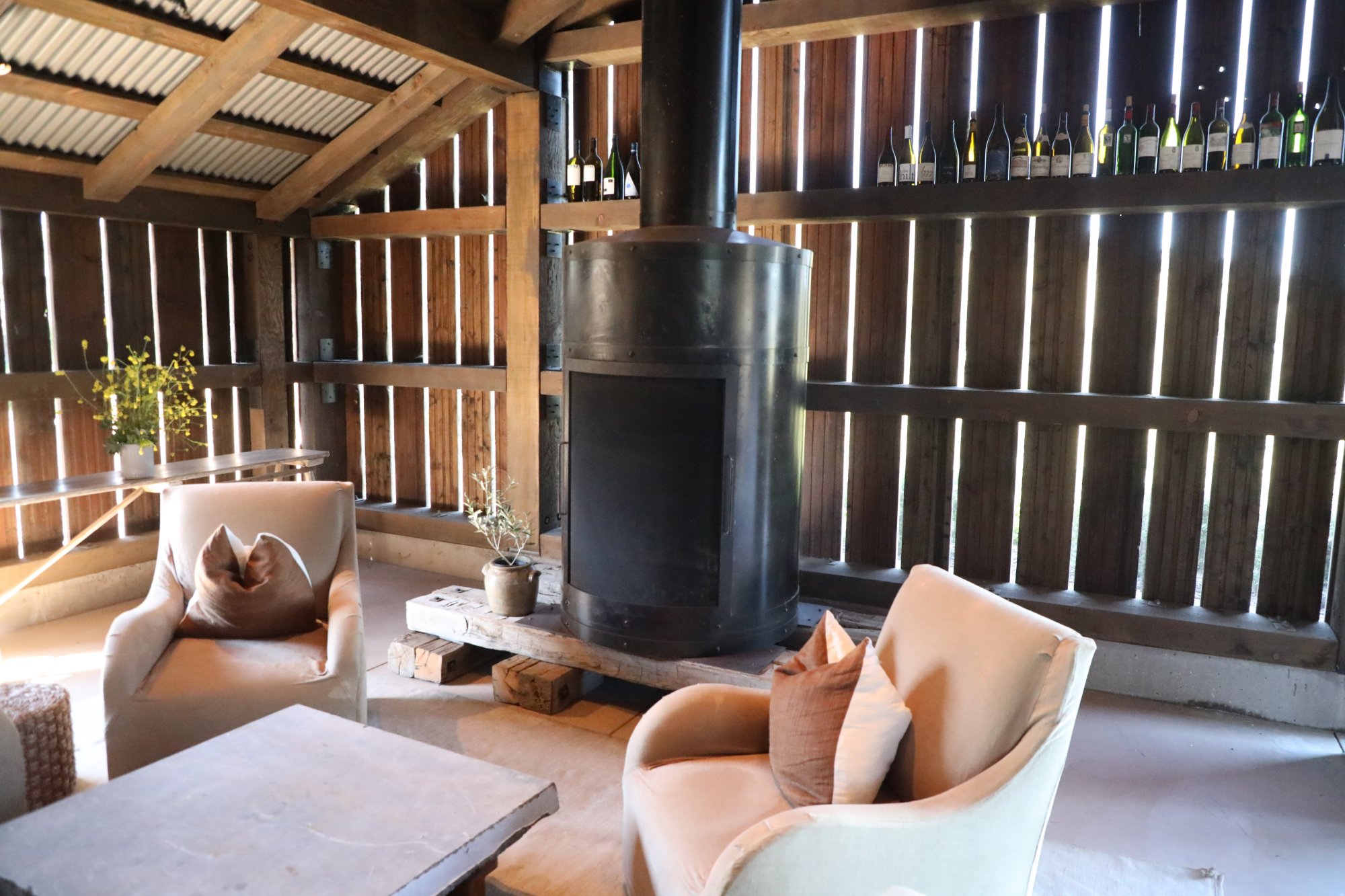
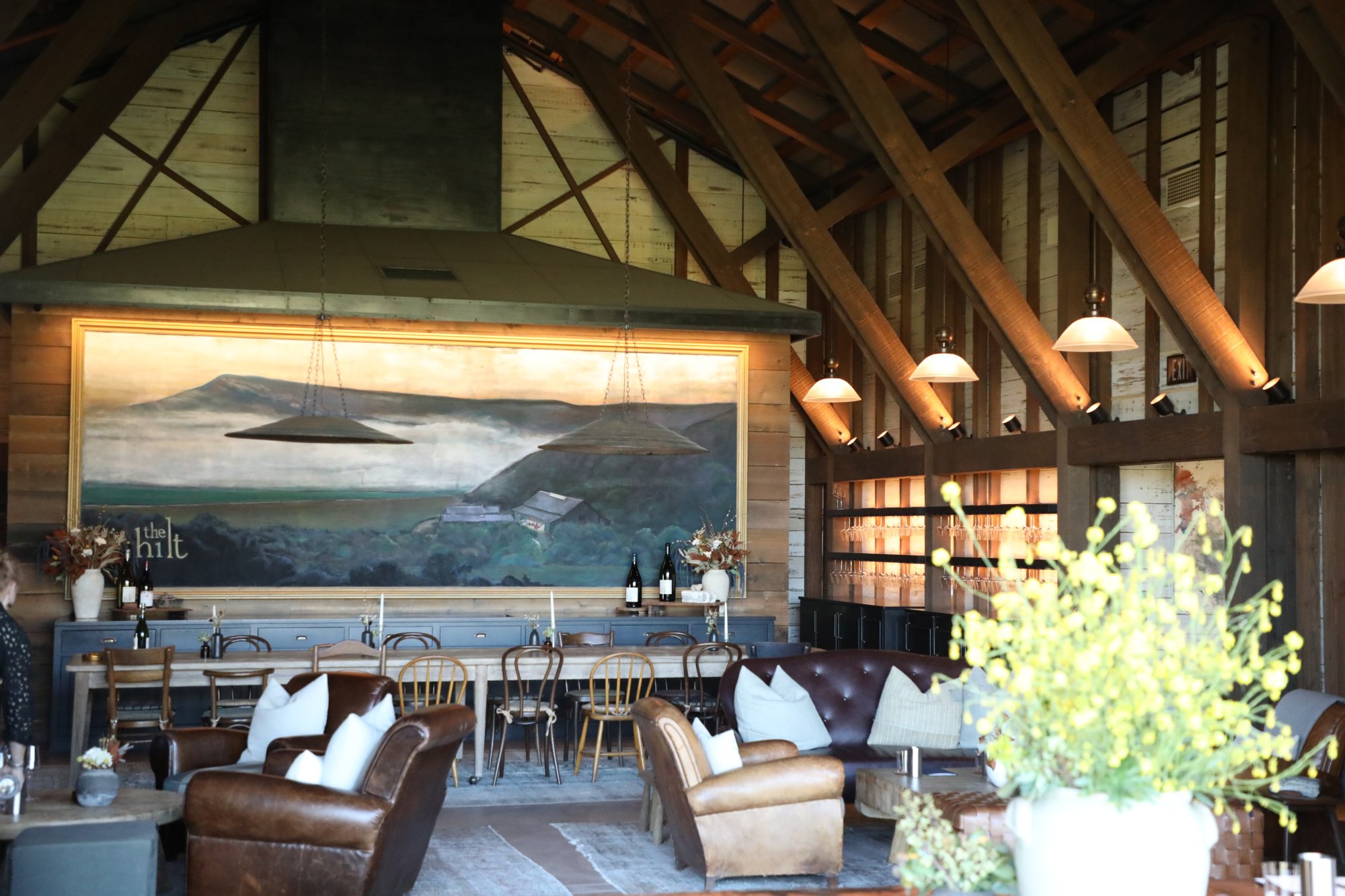
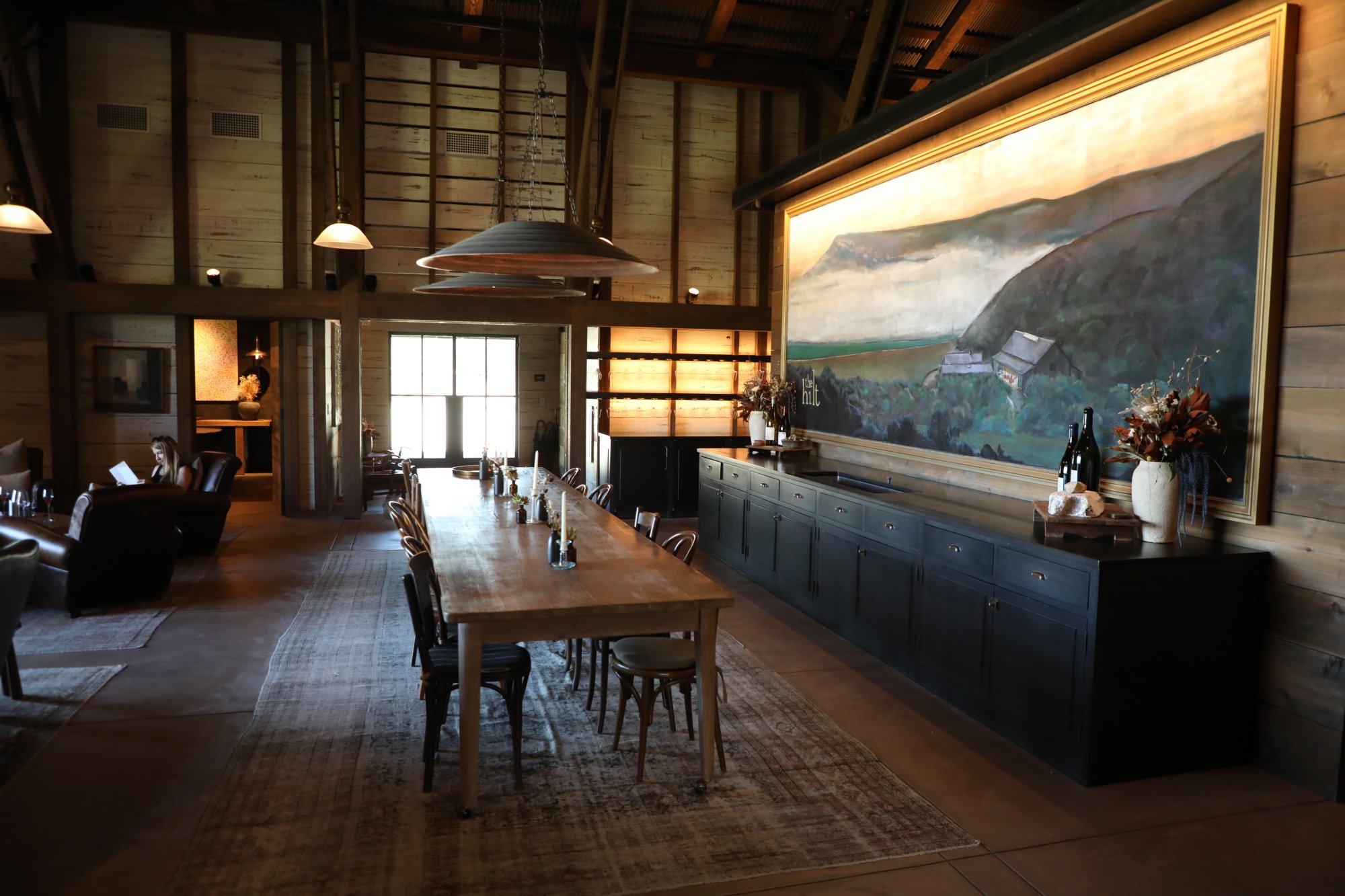
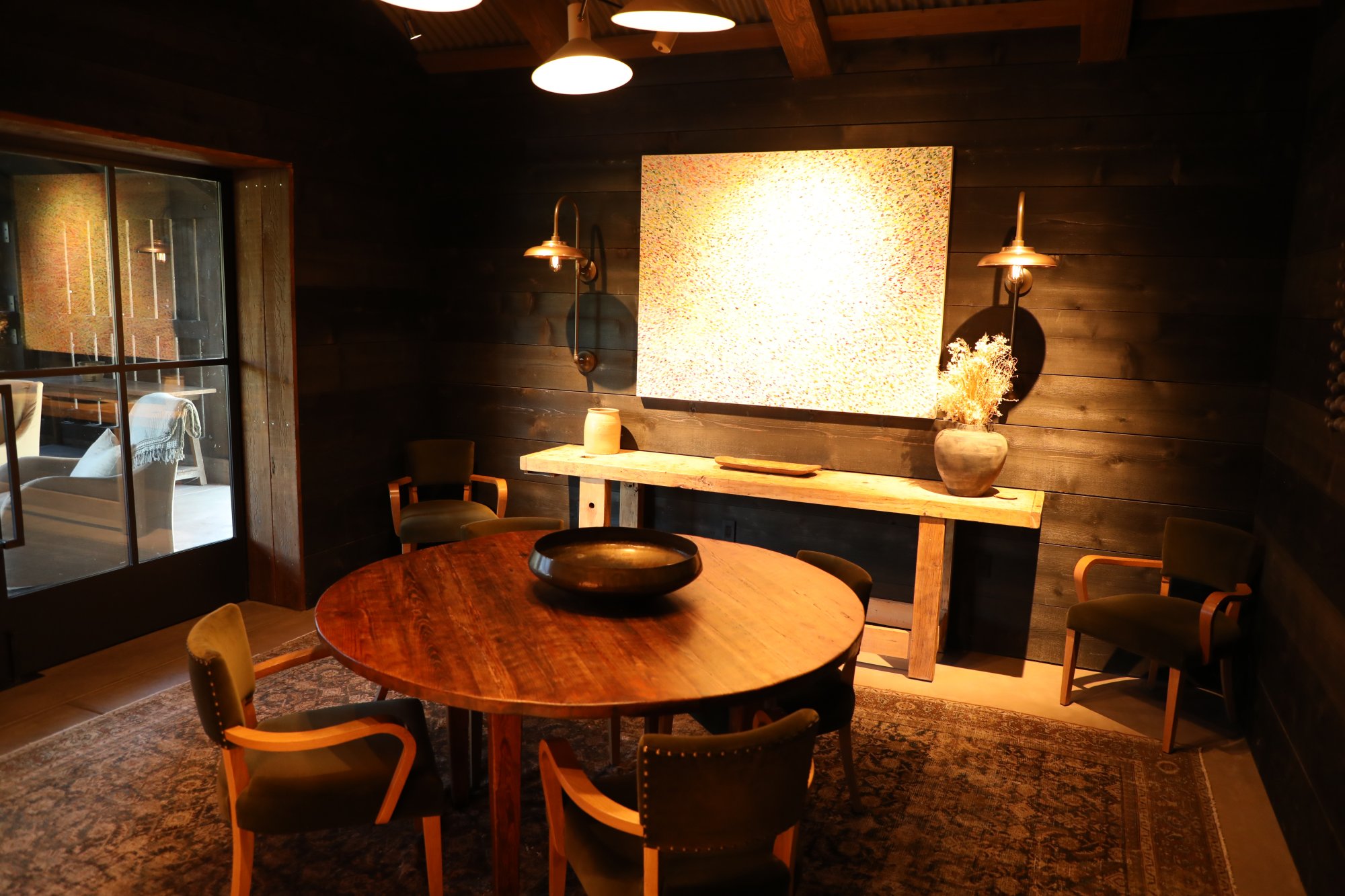
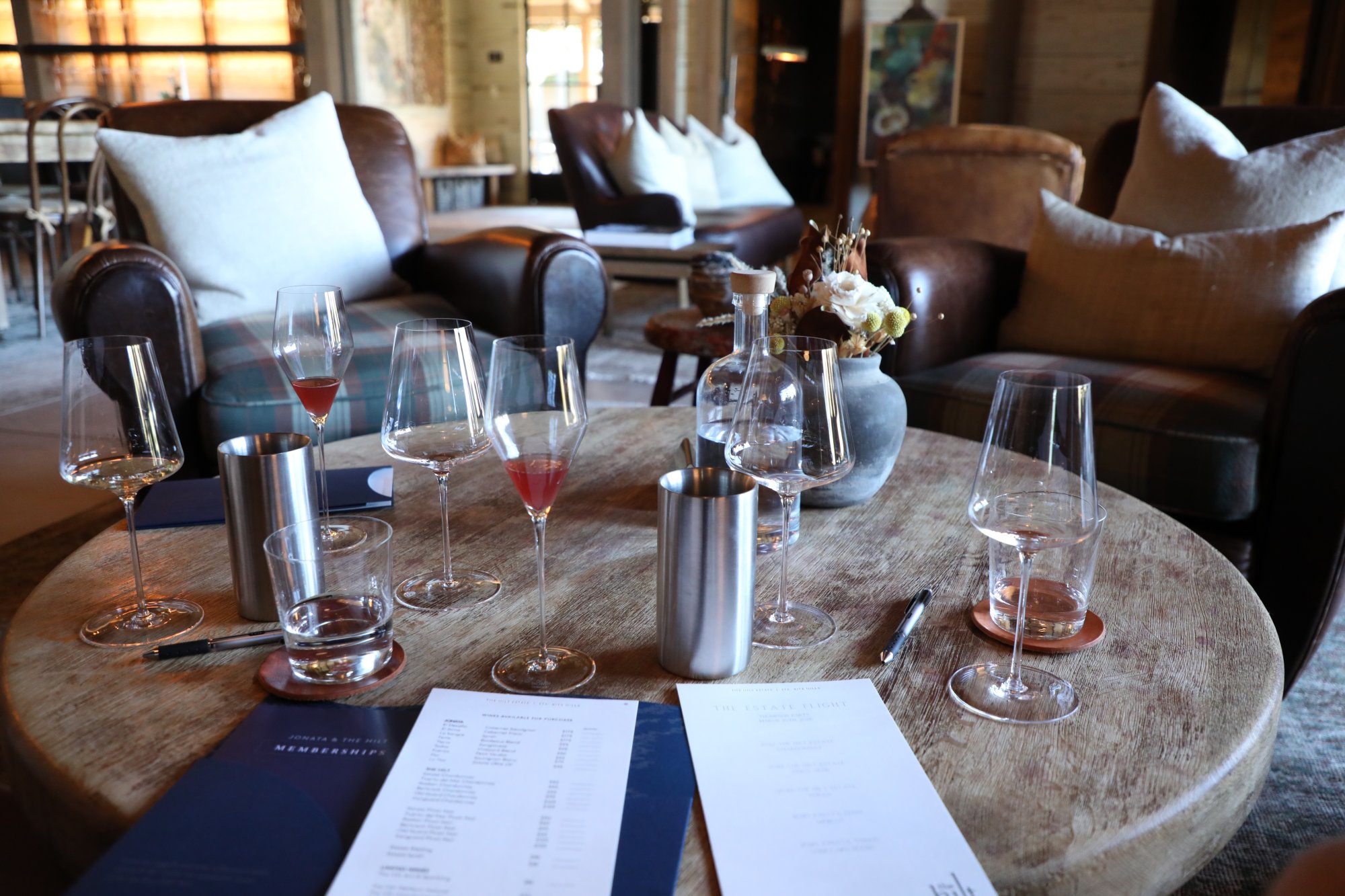
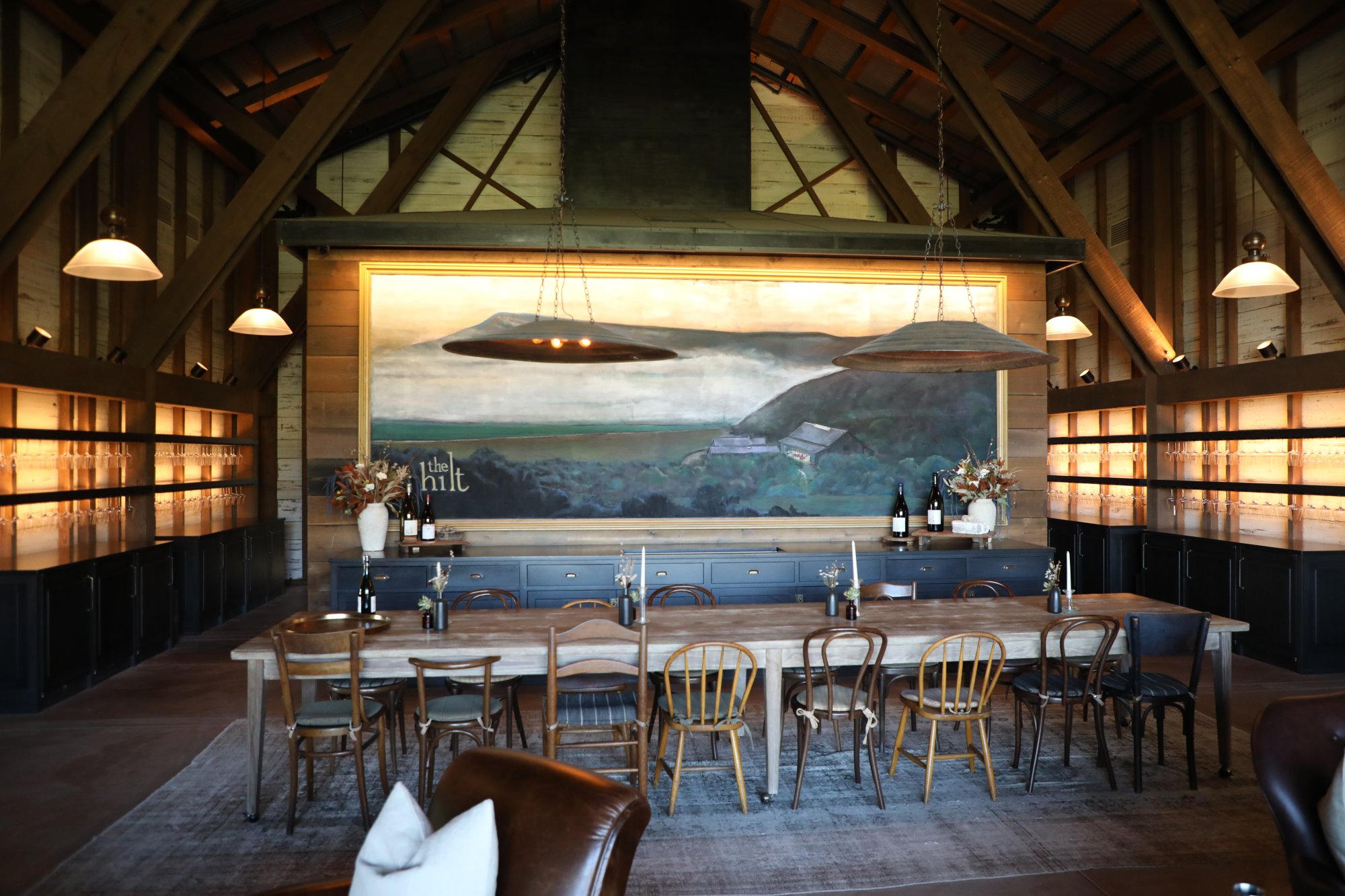
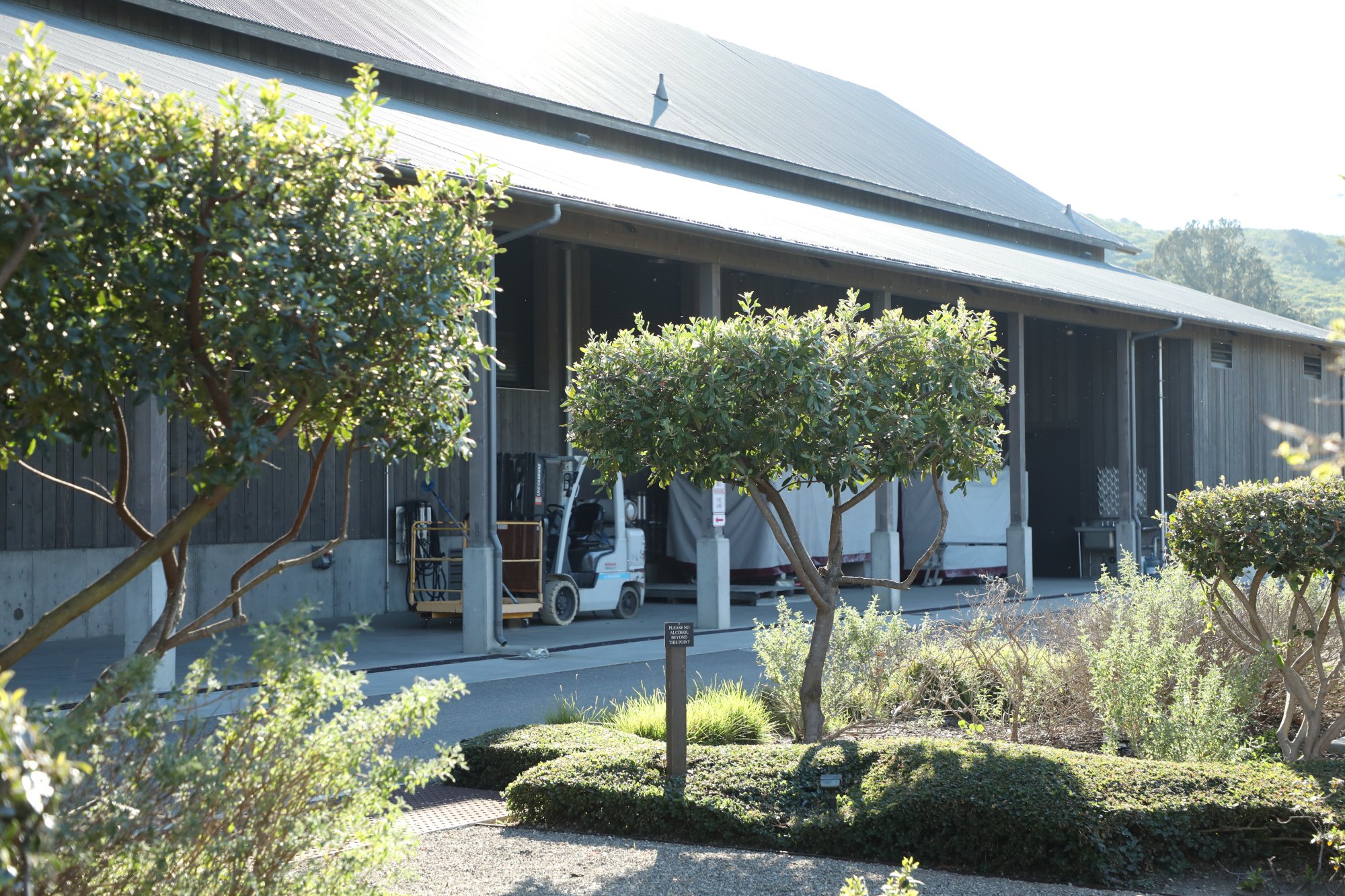
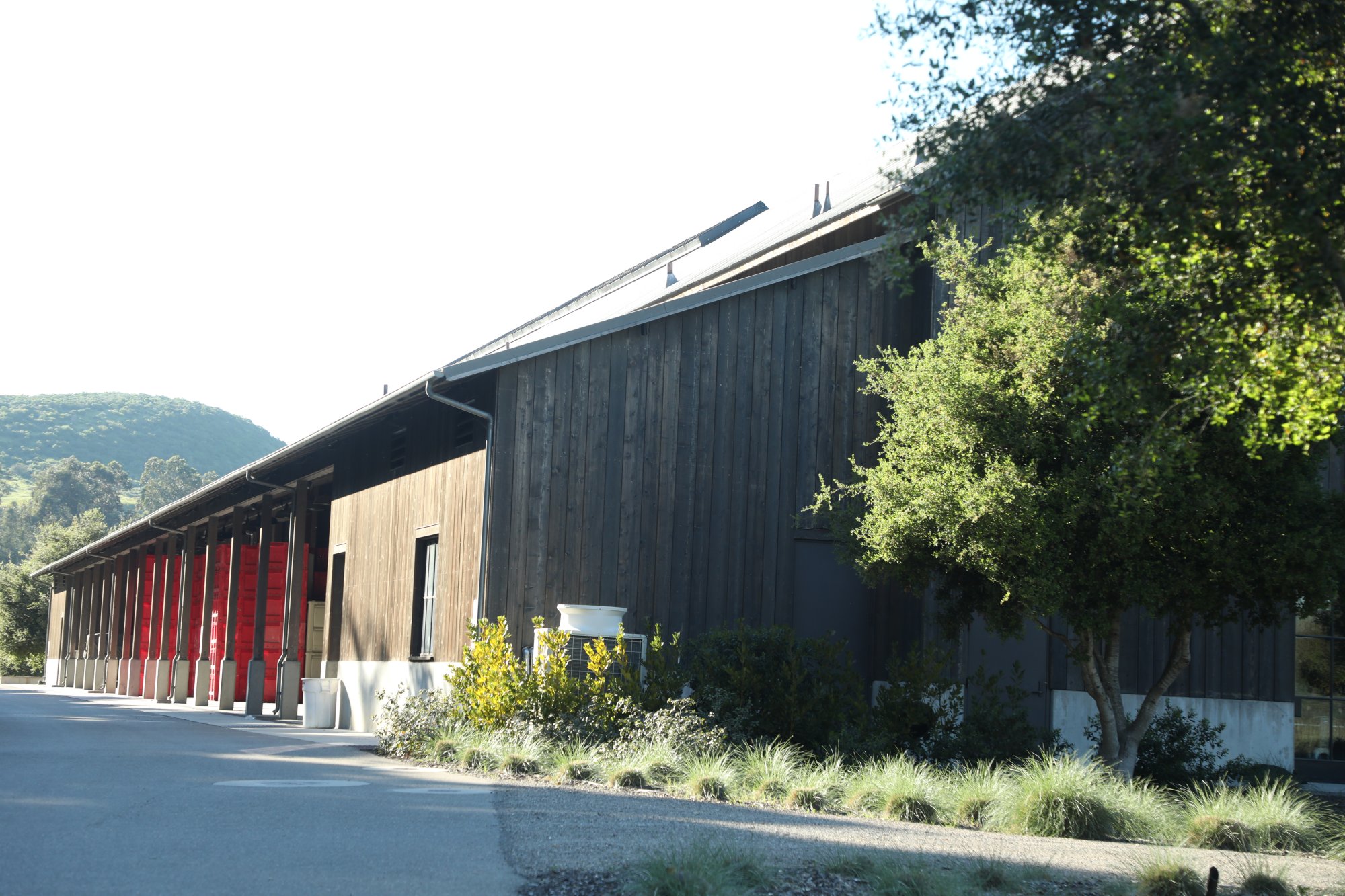
Tastings at The Hilt (2240 Santa Rosa Road, Lompoc) are by appointment are hosted inside the spacious Hilt Barn for both The Hilt and Jonata wines. This masculine looking space was designed by architect Howard Backen and features several spaces for guests including at a long table overlooking the vineyard, the main room and or in several smaller more private rooms. For more information, to reserve a tasting or to purchase wines, visit: www.thehiltestate.com
Select Wines
The 2022 The Hilt Estate Chardonnay is pale to medium gold in color; the bouquet smells floral with notes of honeysuckle, jasmine, honeycomb, walnut skin, chamomile and a light layer of butter. Additional scents include pineapple, yellow nectarine and papaya. First words out of our mouth after tasting this were, “the wines are so good down here”. Bright, balanced and minerally, this is a refreshing expression of a California Chardonnay. On the palate, there are flavors of green apple, pomelo, not fully ripe pineapple and kiwi. We don’t often describe California Chardonnay as having a saline character and briny texture, but this one does. This noticeable weight is complimented nicely by a vibrant and refreshing acidity. Not all Chardonnay from this state goes well with seafood. That’s a fact. This bottling would go well with lightly seared scallops. This wine was aged for 11 months in 35% new French oak, 60% neutral French oak, 5% stainless steel and went through minimal malolactic fermentation. During its élevage it was exposed to the gross lees at specific intervals, helping build mouth feel.
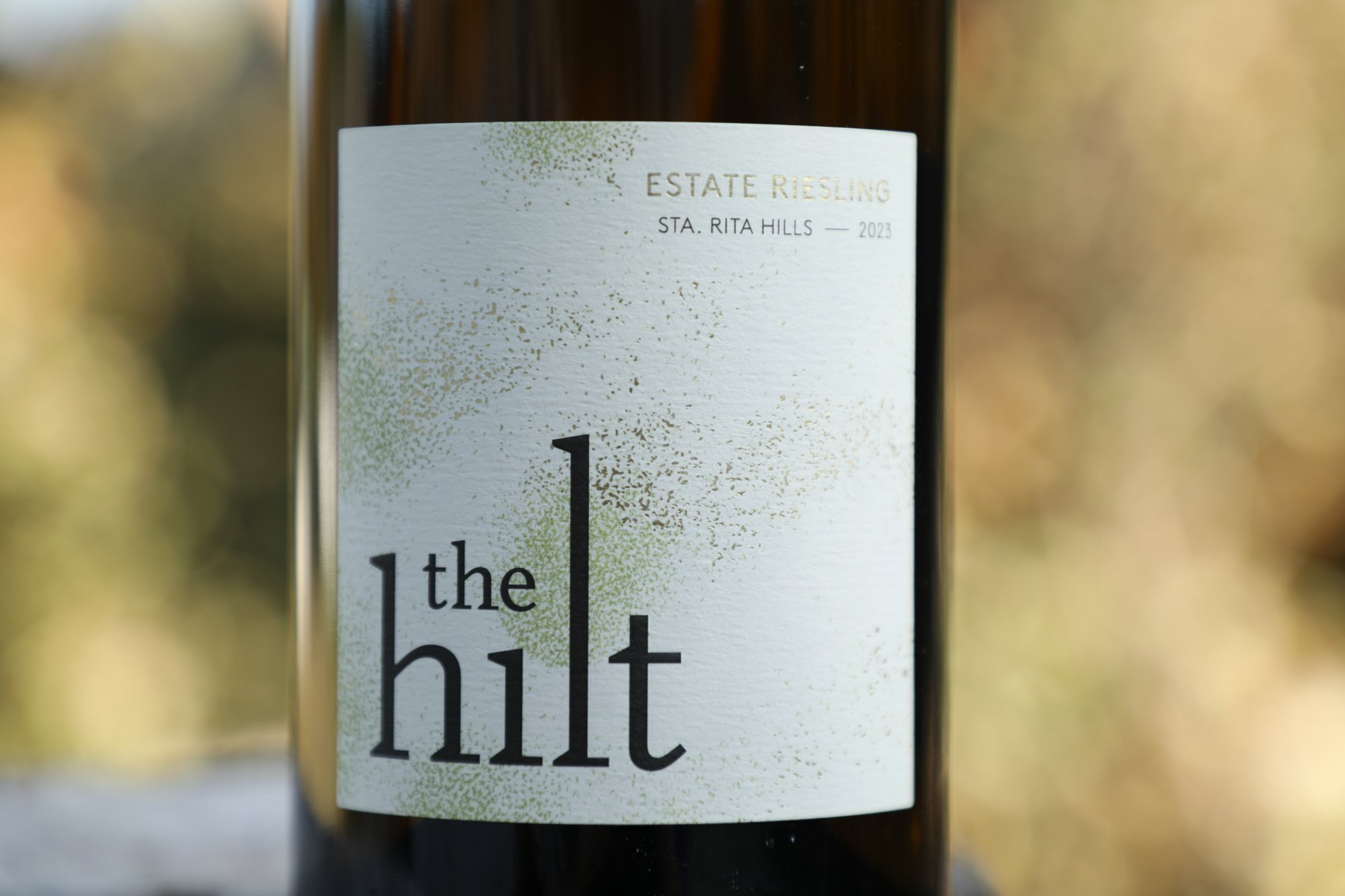
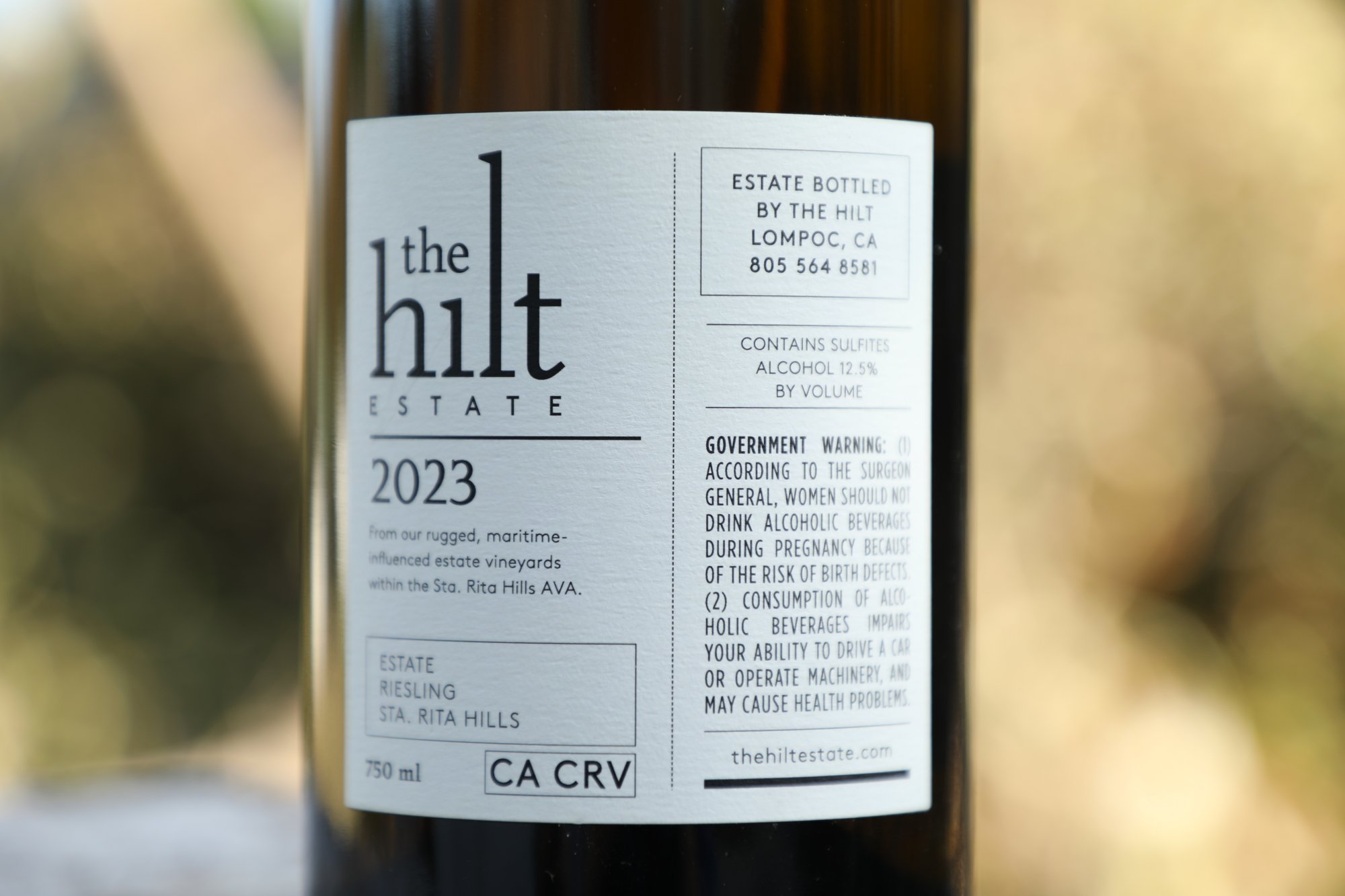 The 2023 The Hilt Estate Riesling is made with 94% grapes from the Bentrock Vineyard (Clone 1 and 23) and 6% from the Radian Vineyard (Clone 1 and 23). This wine is pale to medium gold in color; highly expressive and beautifully layered, the bouquet offers scents of jasmine, honeysuckle, ginger, orange blossom, golden apples, walnut skin, lemongrass, apricot, nectarine, and a lime zest. There is a saline and or minerally aromatic at play here as well. Fleshy with higher toned flavors, this wine tastes like not fully ripe apricot, ginger, lime, thyme, sliced stir-fried artichokes, and a lingering note of light tangerine. Briny. Its supple and velvet-like texture is bounced high by the accompanying vibrant acidity. Finishes refreshing and brightly lit. This is an excellent expression of both variety and site, including it’s proximity to the cold Pacific Ocean. The grapes were destemmed and left on their skins for 7 hours prior to pressing. This wine was aged for 10 months in both a once used 800L oak foudre and a stainless steel tank. Its listed ABV is a refreshing 12.5%. This wine would pair nicely with something that has two shells from the ocean – perhaps scallops.
The 2022 The Hilt Estate Pinot Noir is a 50-50 blend from Bentrock and Radian vineyards. Its élevage was in 20% new French oak and 80% neutral French oak for 11 months. This wine is light to medium ruby in color; the nose smells immediately bright and floral with aromas of violets, lavender and lilac. As the wine opens further, it offers a note of dried sage and a garrigue like quality. The red fruits lift the aromatics high with notes of raspberry, cranberry, pomegranate and red cherry. Bright and balanced, this wine taste like red cherry, not fully ripe red plums, currant, cranberry and pomegranate. And it lingers with a bitter chocolate, dried herbs including sage and bay leaf, and a light fully coating dusty character from the tannins. Savory with plenty a darker attribute to keep this wine interesting in the mouth. Its texture is lightly gravelly and persists beyond the fruit on the finish.
The 2022 The Hilt Estate Syrah is medium to deep ruby in color and nearly opaque. The grapes for this wine are from both Radian and Bentrock vineyards with 60% whole cluster stem inclusion during fermentation and some carbonic maceration. It was aged for 12 months in 90% neutral French oak, 10% new French oak, followed by 4 months in stainless tank before being bottled. Plenty of florals are at play on the bouquet; these include scents of lilacs, violets, rose petals and lavender with a light smoky underlying layer, leather and old cedar box. In fact, this latter aromatic reminds us of the smell of opening the velvet lined cedar jewelry box our grandmother gifted us before she passed This wine straddles very well, a balance between being cerebral and immediately enjoyable. Bright and red fruited across the palate, this wine taste like pomegranate, currant, tart cherry, not fully ripe Santa Rosa Plum. And dried sage. Finishes exceptionally dry with dusty, drying and gravelly textured tannins, which broadly coat the palate and linger in tandem with both fruit and acidity. Its ABV is a lightweight 12.5%.
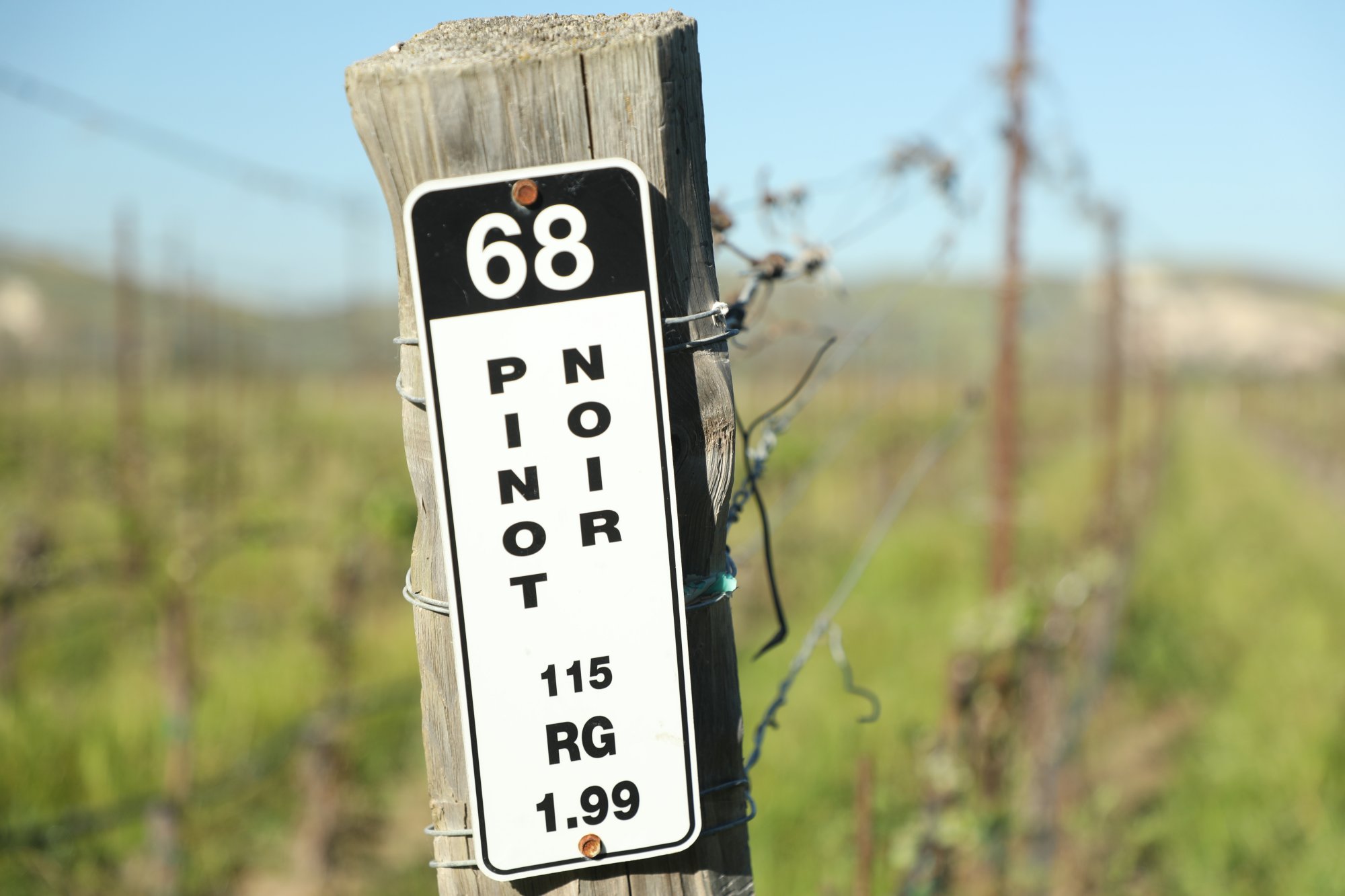
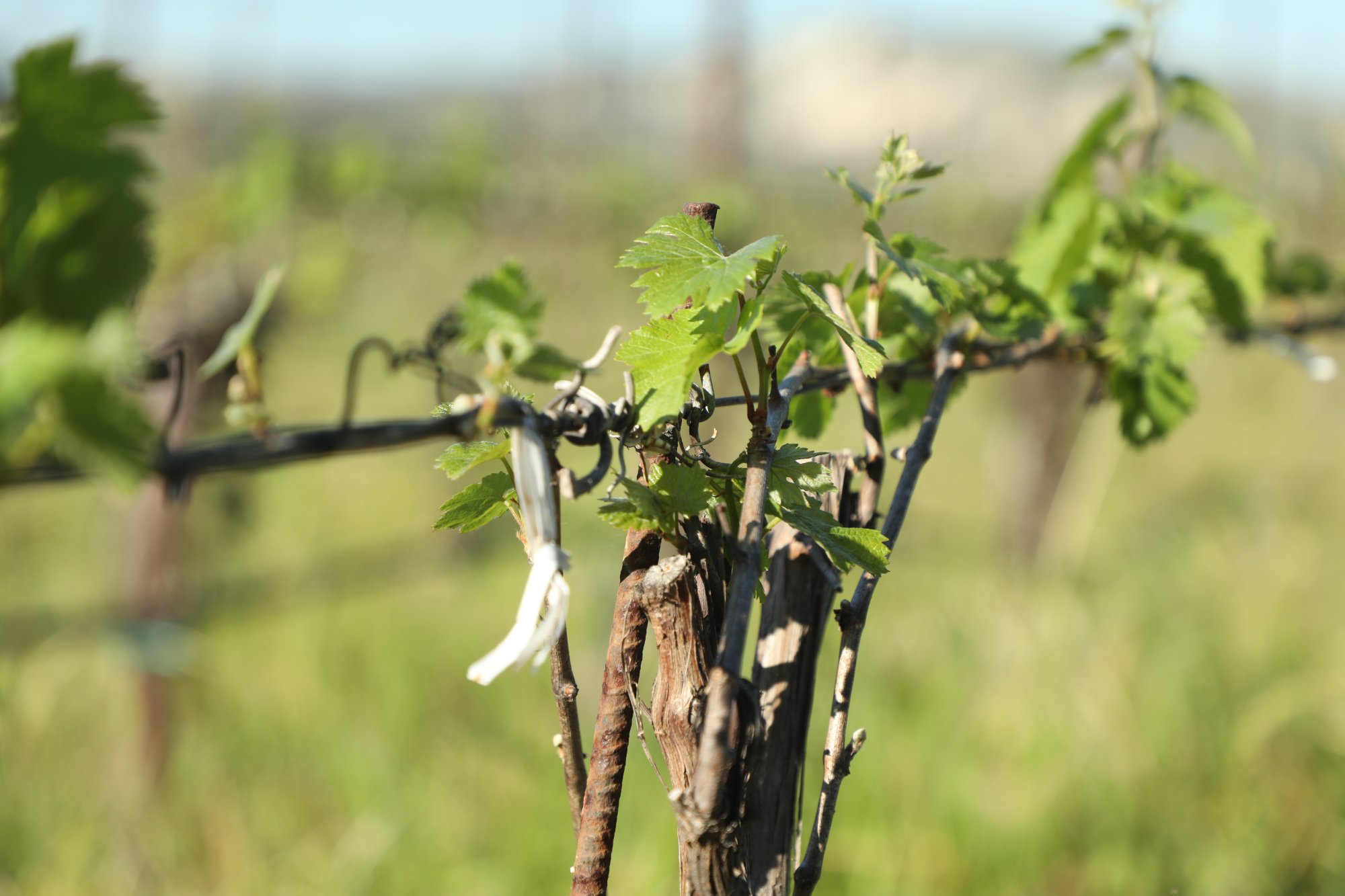
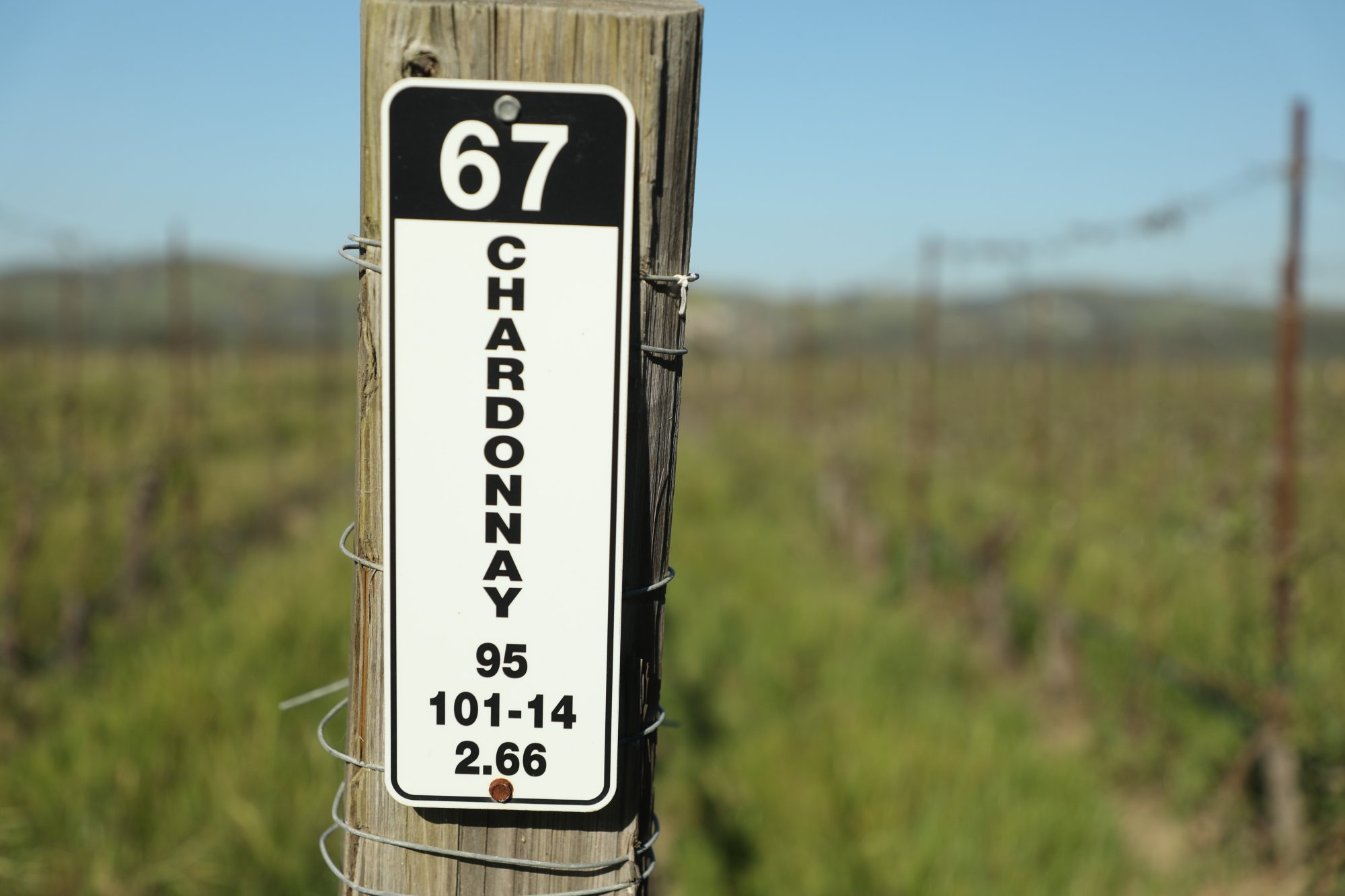
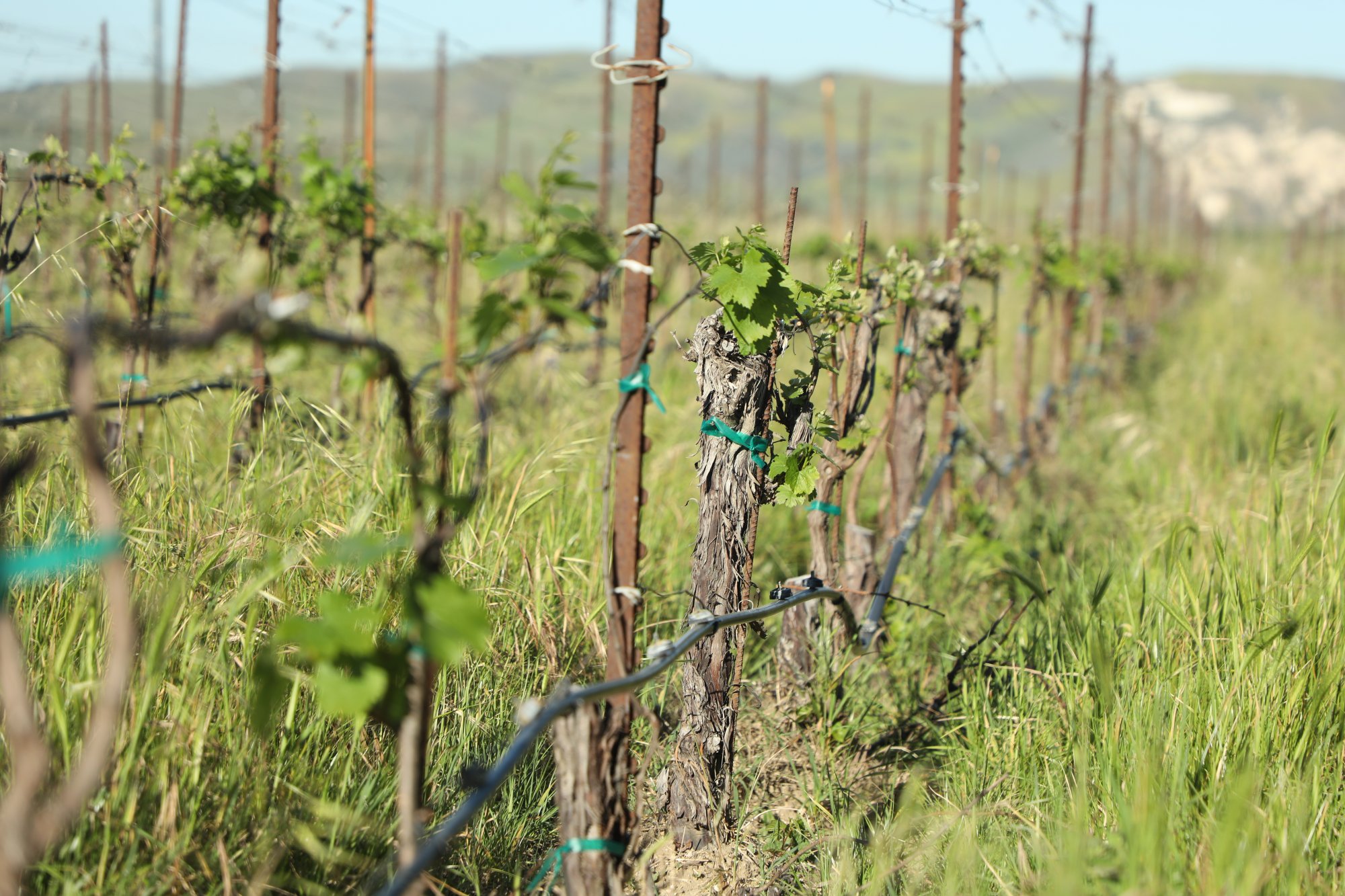
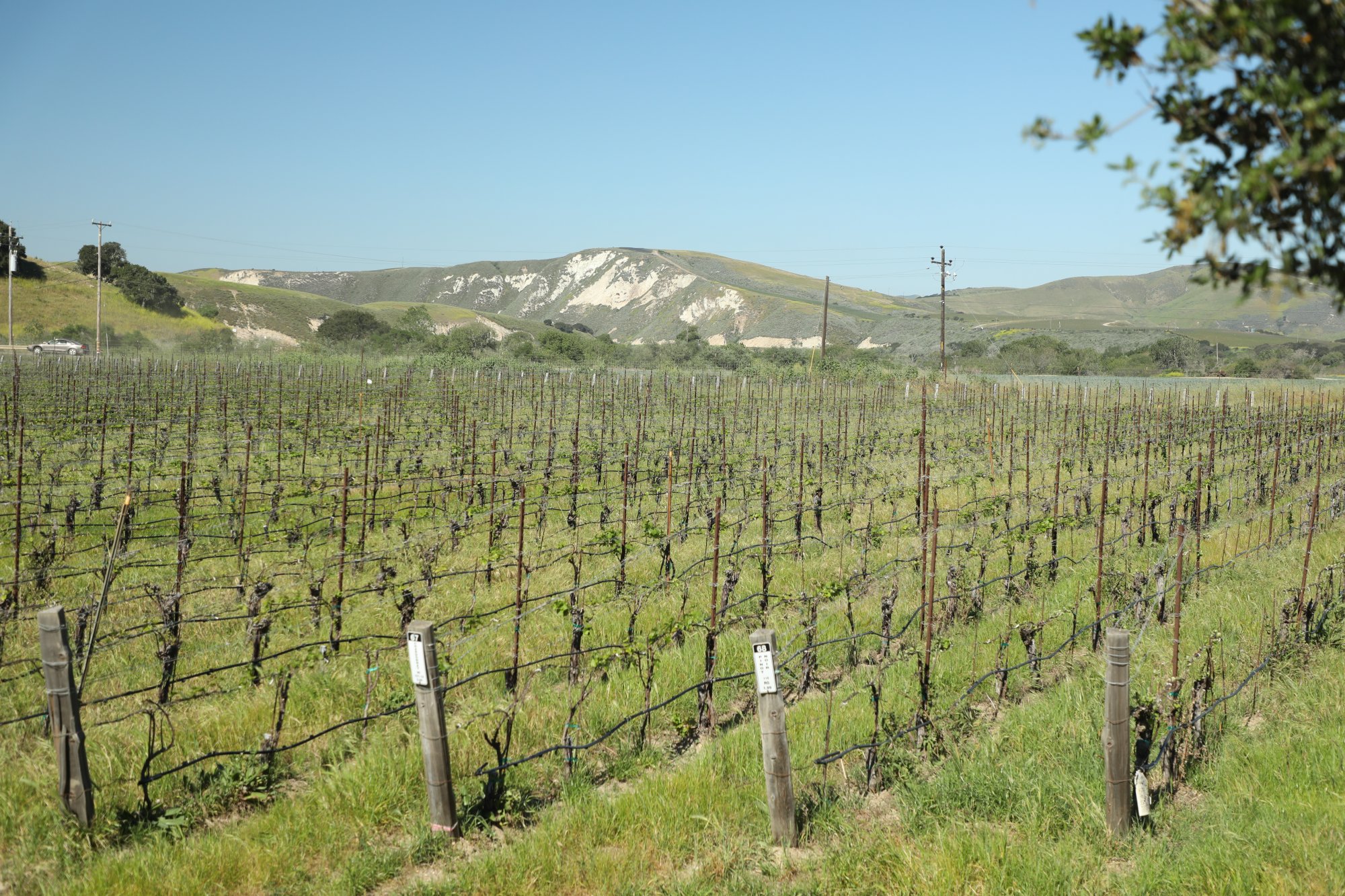
Puerta del Mar Vineyard
The Paring
The Paring was founded in 2006 and produces wines from vines that are still young or do not fit into the portfolio of either JONATA or The Hilt. Grapes for these bottlings are primarily from Santa Ynez Valley, Sta. Rita Hills and Santa Maria Valley. Their focus is on Chardonnay, Sauvignon Blanc, Pinot Noir, Syrah and a Cabernet Sauvignon dominated blend. These wines are available at a pleasing quality to price point ratio. And like for JONATA and The Hilt, Matt Dees also crafts these wines.
Domaine Bonneau du Martray
Located in Pernand-Vergelesses, in the Côte de Beaune of Burgungy, this is the only estate in Burgundy to exclusively produce wine from Grand Cru Vineyards. This winery traces its history tracing back to 775 when Emperor Charlemagne gifted vineyards on the Corton hill to the Abbey of Saulieu. Only two wines are produced each year, a white Burgundy and a red Burgundy. The property was acquired by Kroenke in 2017. We will visit and update our notes as soon as time and budget allow.
And also associated with Domaine Bonneau du Martray and the Screaming Eagle physical address is Karolus Wine Imports, a U.S. importer specializing exclusively in importing wines from Bonneau du Martray into the U.S. market.
Leave a Reply