




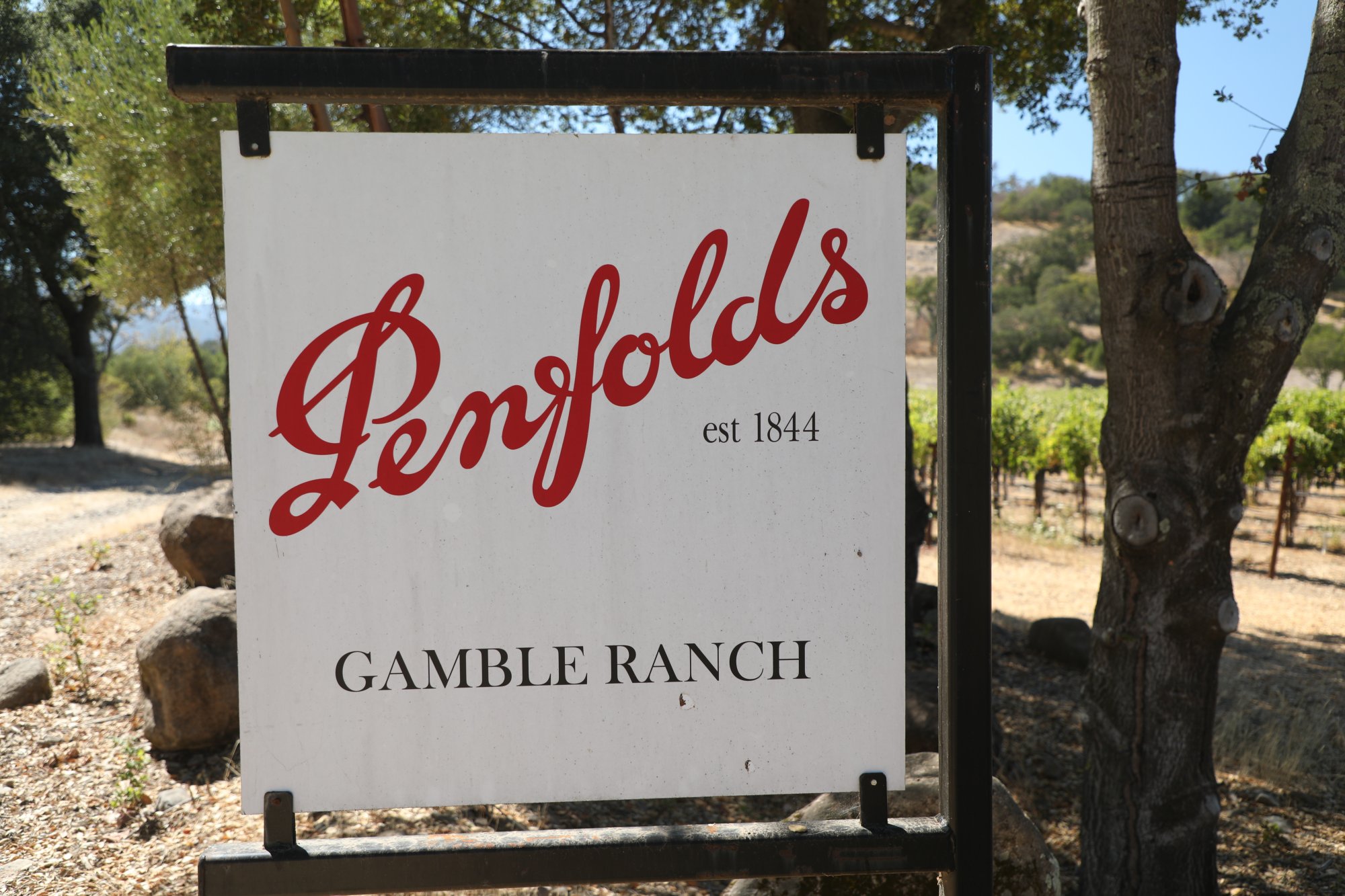
 Penfolds Napa Valley. Penfolds introduced their first California and Napa Valley wines to the market in 2021 from the 2018 vintage. Penfolds currently produces wines on four continents, Australia, Asia (China), Europe (France) and North America (California). Penfolds is synonymous with the Barossa Valley in Australia, although its original roots are at Magill Estate, only about 15 minutes from the Adelaide city center and near the Adelaide Hills. The winery dates from 1844 and is one of Australia’s most historically significant wine producers. Today Penfolds is also among the country’s most internationally recognized wine brands, with a history spanning more than 180 years of Australian winemaking.
Dr. Christopher Rawson Penfold and his wife, Mary, spent nearly three months at sea in 1844 traveling from England to South Australia with their infant daughter, Georgina. They arrived in Adelaide, when the colony of South Australia was only eight years old. Christopher had trained as a physician in England. The family brought vine cuttings with them, including varieties sourced from southern France. They settled at Magill, just outside Adelaide, where they established their home, vineyard and Christopher’s medical practice.
Wine initially had a medicinal connection for the Penfold family. Wines produced from their vineyard were used by Dr. Penfold in treating patients, including those suffering from anemia. What began partly for medicinal purposes gradually developed into a commercial wine business. As Christopher’s medical practice became increasingly demanding, Mary became more involved in managing both the vineyard and winery and ultimately emerged as the driving force behind the growing wine business.
Mary was particularly skilled at blending wines and continually experimented with production methods. By the 1860s, Penfolds wines were already being shipped to other Australian states. Following Christopher’s death in 1870, Mary assumed full responsibility for the winery, working alongside her son-in-law Thomas Hyland and winemaker Joseph Gillard Jr. Under her leadership, Penfolds expanded significantly and began shipping wines internationally. In 1890, Mary received an award for “Best White Wine of Light Character,” and by 1894 Penfolds’ No. 1 Claret and Chablis were regarded among Australia’s leading dry wines.
Mary retired in 1884, turning management over to her daughter Georgina. Mary died in 1895 at the age of 79. The business continued to grow under subsequent generations of the family, and by 1907 Penfolds had become South Australia’s largest winery. Fortified wines were an important part of the Penfolds portfolio during these early decades, reflecting Australian drinking preferences of the era, although the winery was also producing dry table wines.
While Penfolds maintains a global presence in terms of both vineyard and winery ownership and distribution, Magill Estate is Penfolds’ historical home. The original property encompassed approximately 120 hectares, although Adelaide’s urban expansion gradually surrounded and reduced the vineyard. Today only about 5.24 hectares remain, making this one of the relatively rare vineyards located within the boundaries of a major city. The vineyard is planted entirely to Shiraz, with the grapes used for Magill Estate Shiraz, while select parcels may also contribute to Grange in appropriate vintages.
Penfolds also established an important presence in the Barossa Valley. Its vineyard holdings here include Kalimna, home to Block 42, planted to Cabernet Sauvignon in the 1880s. These vines are believed to be among the oldest continuously producing Cabernet Sauvignon vines in the world – with the original vines dating from 1888. For reference, the oldest commercially producing Cabernet Sauvignon vines in Napa Valley are planted at Scarecrow in Rutherford and date from 1945. Barossa grapes contribute to numerous important Penfolds wines, including Grange, Bin 28 Shiraz and Bin 389 Cabernet Shiraz.
Perhaps no individual is more closely associated with the modern history of Penfolds than Max Schubert, the creator of Grange. Schubert joined Penfolds as a young messenger boy and steadily worked his way through the company. By 1948, at the age of 33, he had been appointed Penfolds’ first Chief Winemaker.
In 1950, Penfolds sent Schubert to Europe to study winemaking practices, particularly fortified-wine production in Spain and Portugal. During the trip he made what would become an enormously consequential visit to Bordeaux. There he tasted long-lived Bordeaux reds and became fascinated with the idea of producing an Australian dry red wine capable of aging for decades. He returned to Adelaide determined to create something similarly age-worthy using Australian-grown grapes.
This became the foundation for Penfolds Grange. Schubert initially experimented with several varieties including Cabernet Sauvignon, but Shiraz emerged as his preferred grape. The first experimental Grange was produced in 1951 from Shiraz sourced from Magill Estate and Morphett Vale. Only about 160 cases were produced, and the wine was not commercially released; much of it was instead given to friends, colleagues and wine enthusiasts. Only a few bottles of this wine still exist.
Science also played an important role in Schubert’s work. Penfolds chemist Dr. Ray Beckwith conducted pioneering research involving pH, acidity and microbial stability, helping Penfolds better understand how acidity could protect wine against spoilage. Combined with Schubert’s use of temperature-controlled fermentation, new American oak and other techniques, this research contributed to a much more precise approach to producing Australian wines capable of long-term aging.
Penfolds Magill Estate Cellar Door, South Australia
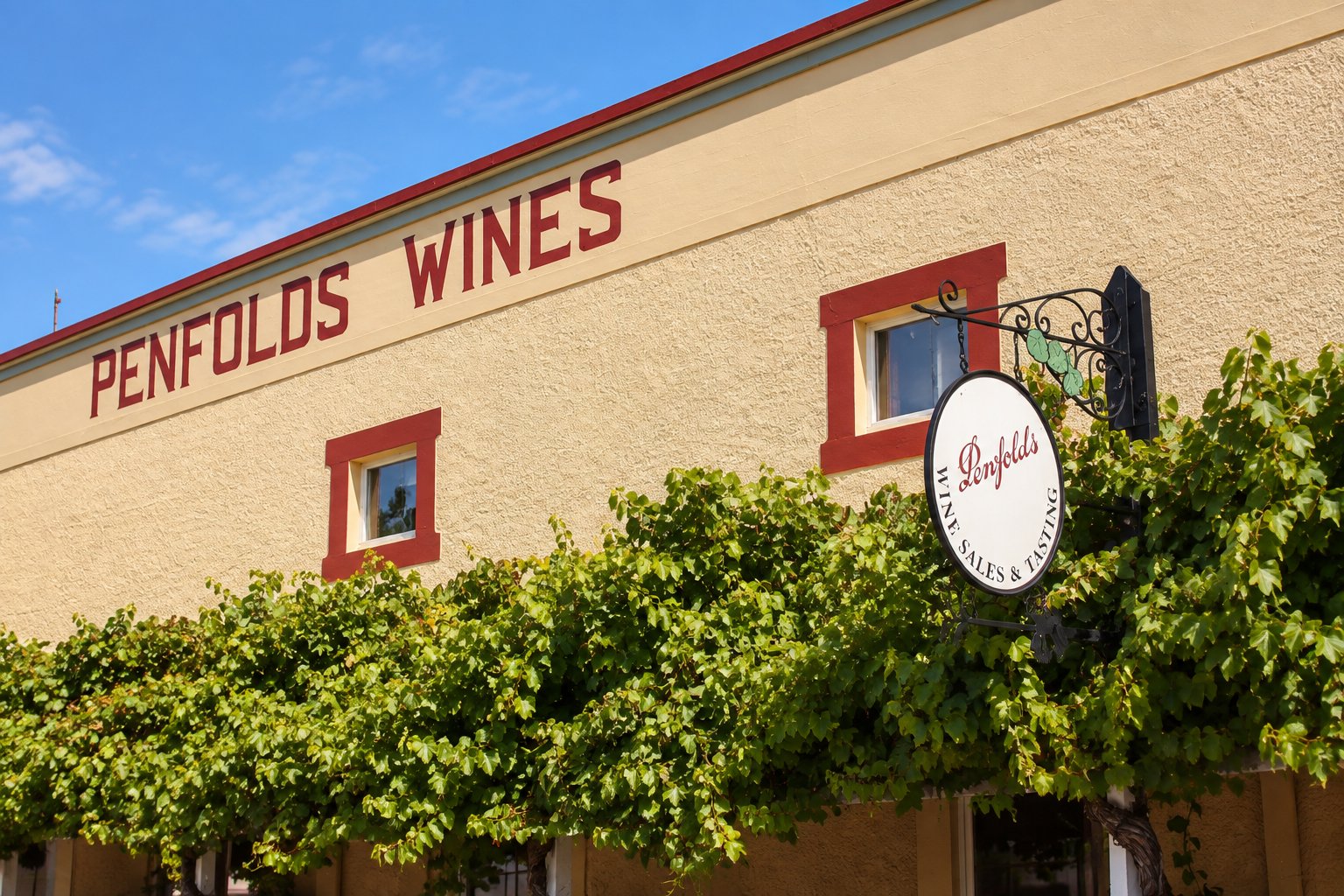
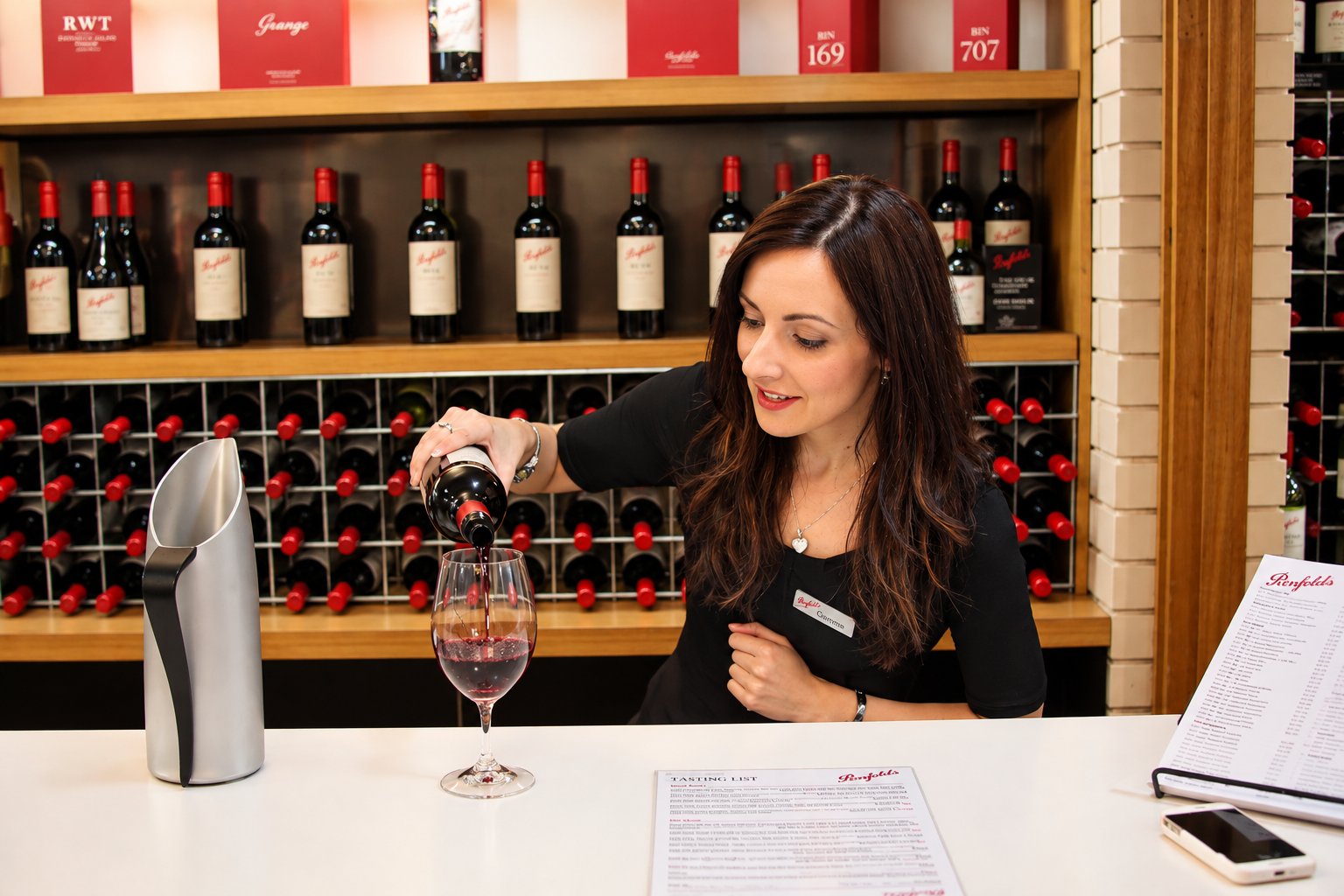
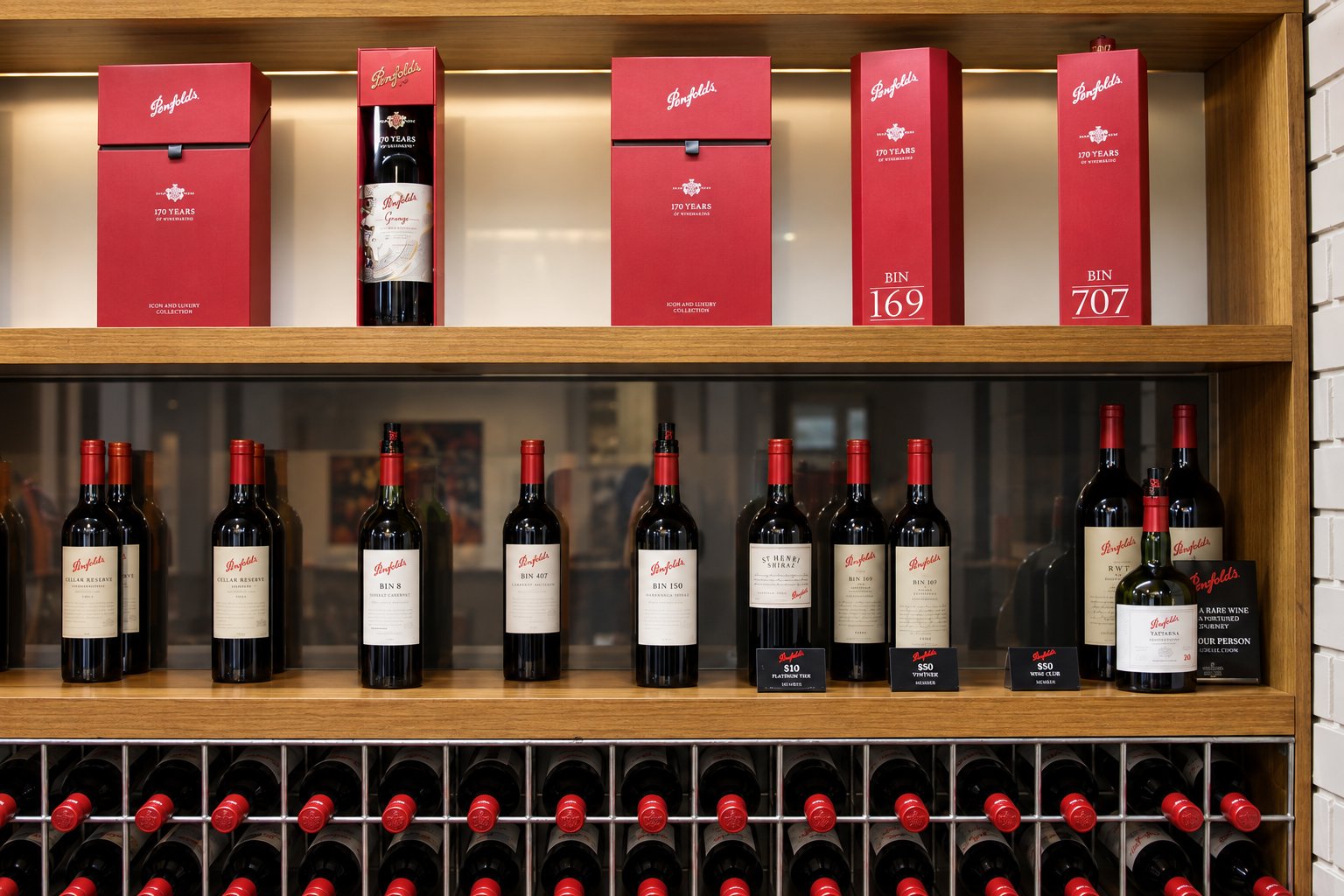
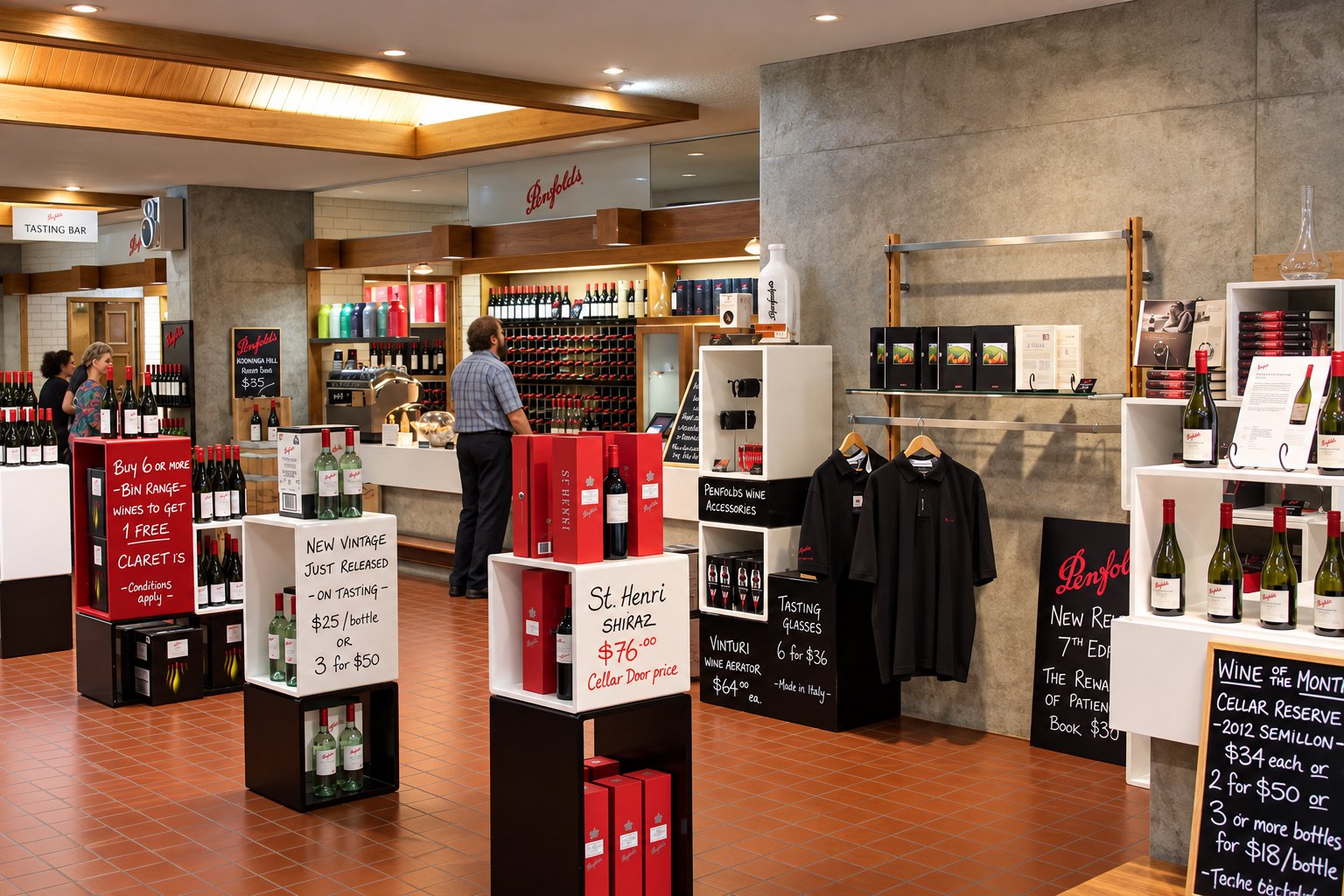
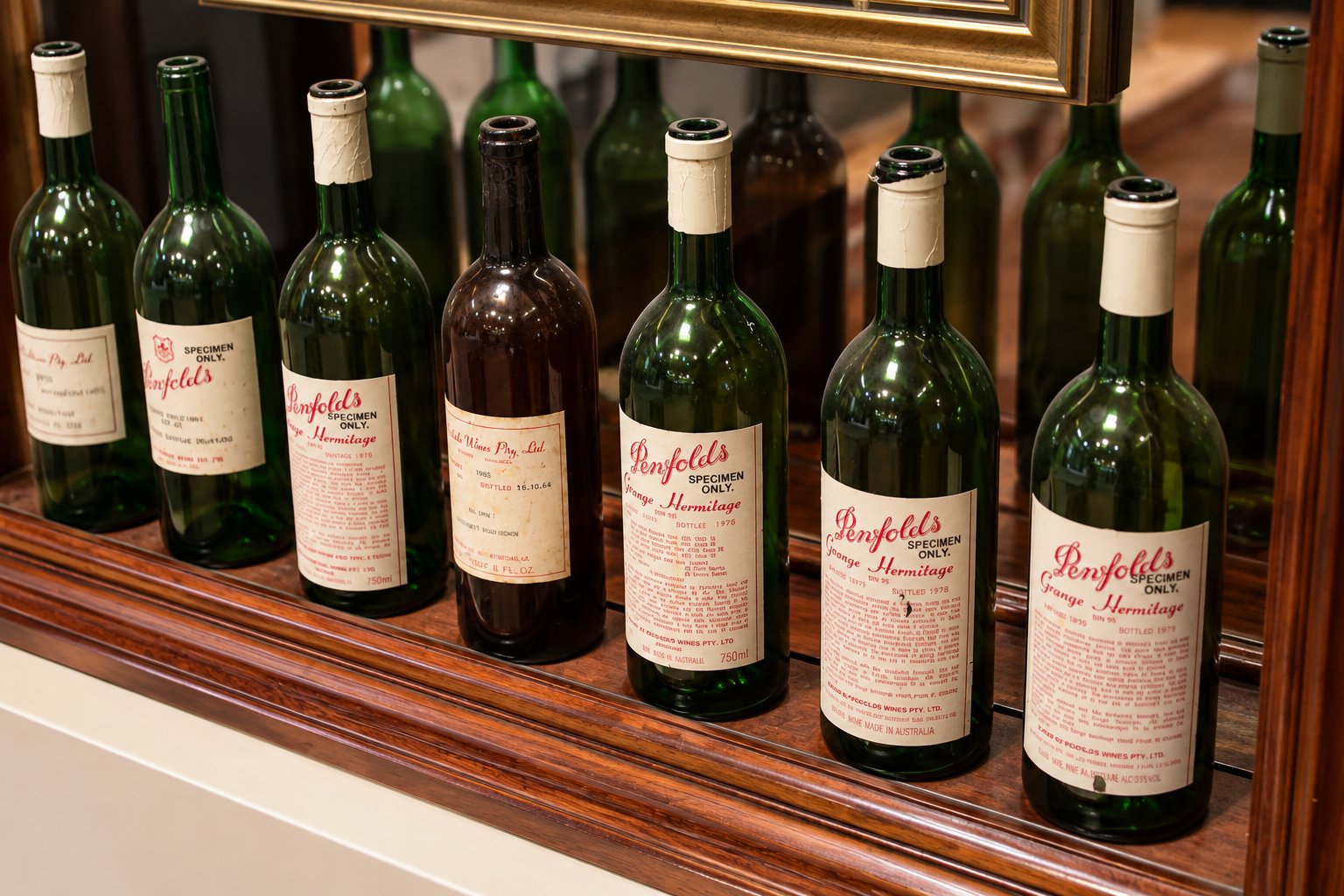
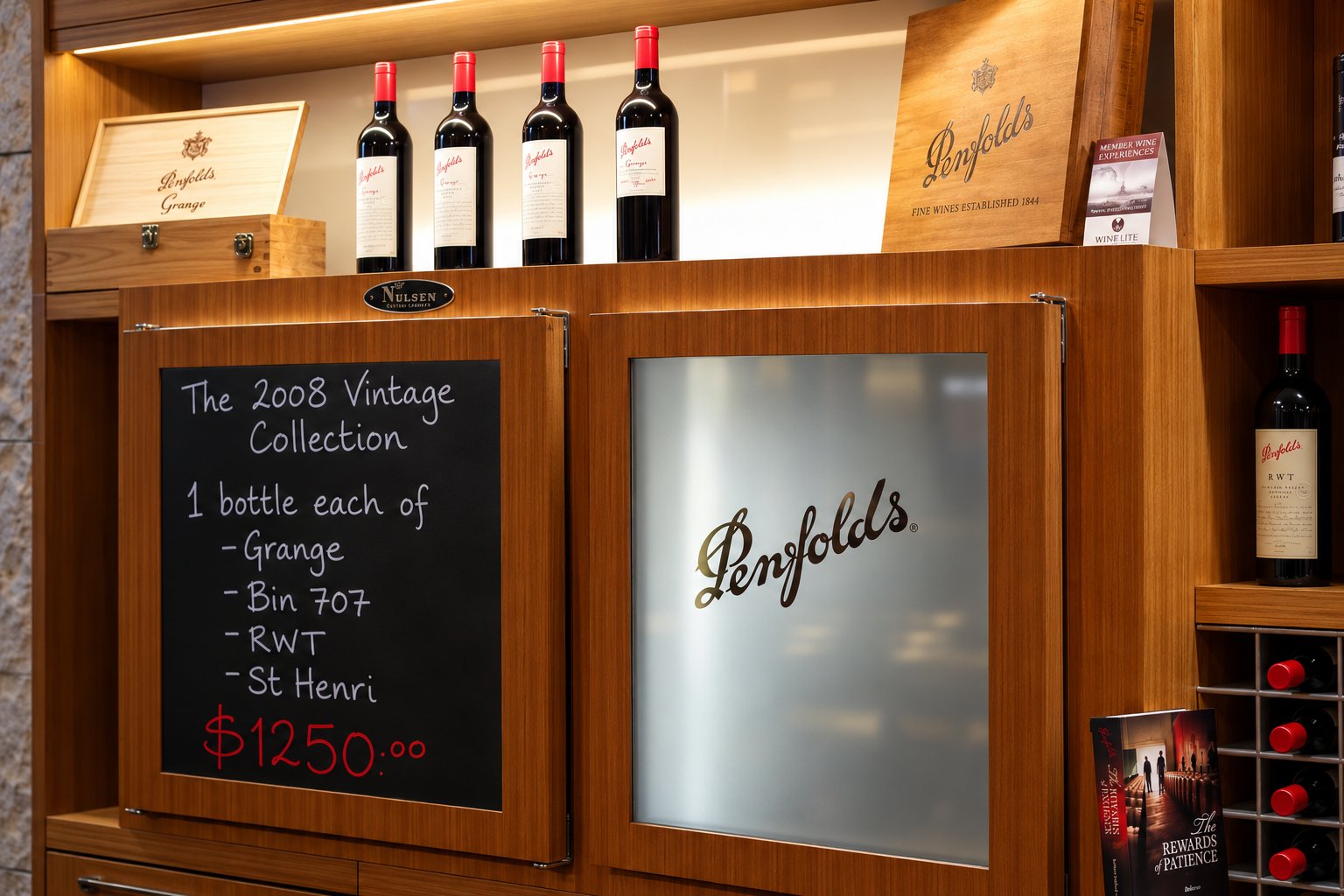
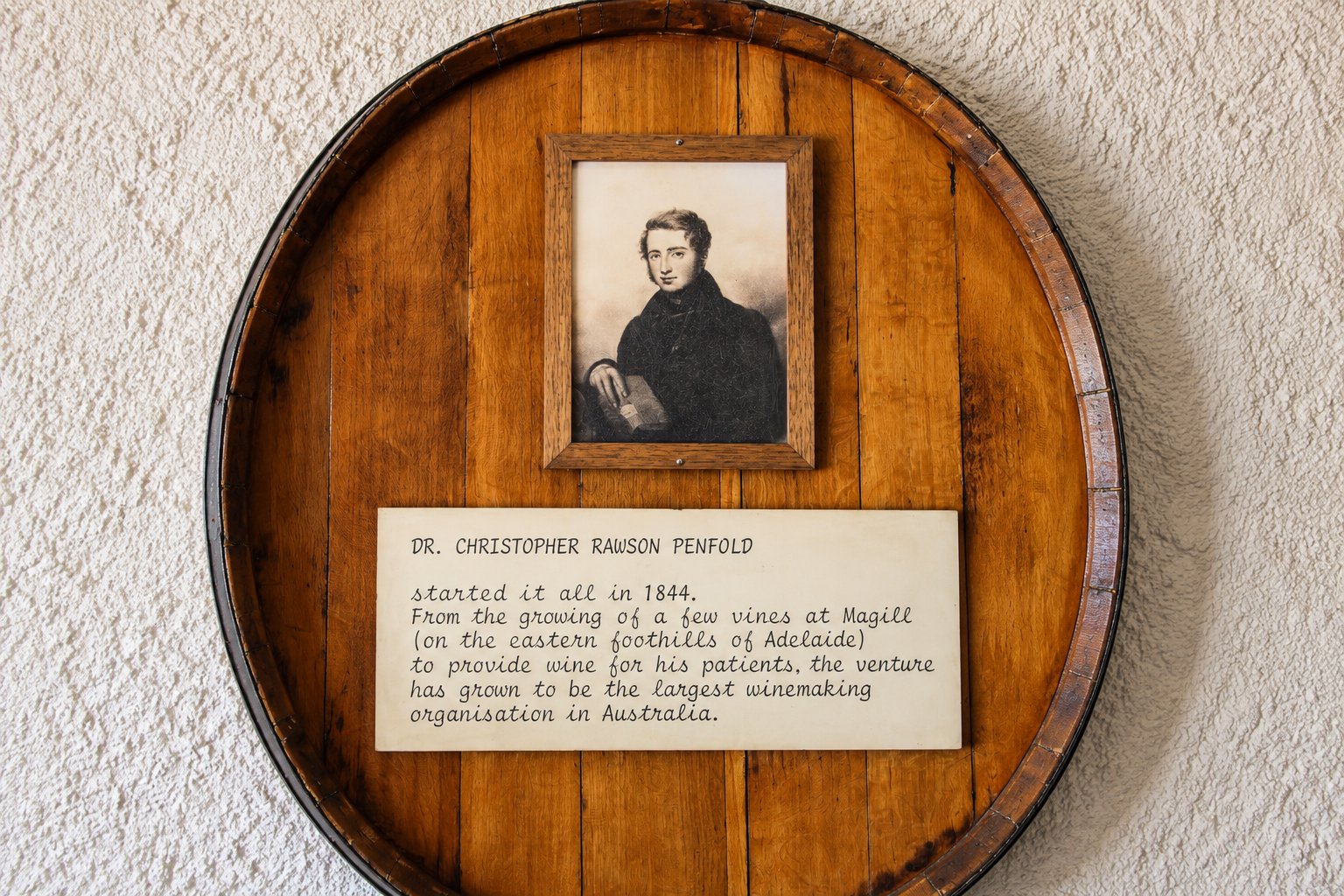
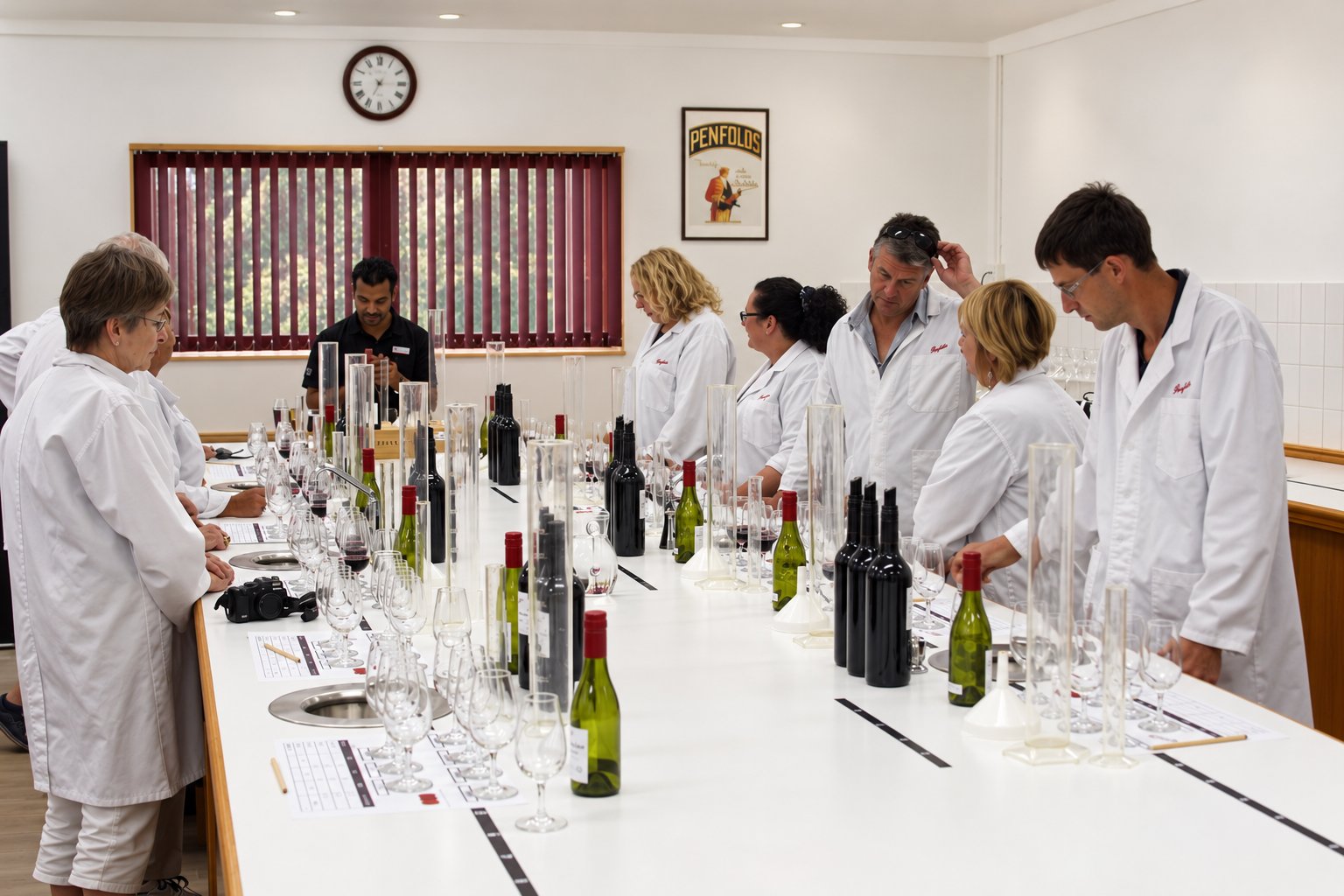
Grange, however, was initially not well received by Penfolds management. The wine was dramatically different from many of the styles dominating the Australian market at the time. In 1957, Schubert was ordered to cease production. He disagreed with the decision and quietly continued making Grange without the knowledge of Penfolds management. The 1957, 1958 and 1959 vintages became known as the “Hidden Granges” or “Secret Granges.” Rather than using new oak, these wines were matured in previously used Grange barrels.
By 1960, the quality and aging ability of the earlier wines had become increasingly apparent, and Penfolds management officially authorized Schubert to resume production. The decision was soon validated as Grange began earning significant recognition; the 1955 Grange, for example, won its first major gold medal in 1962. There has ultimately been an unbroken sequence of Grange vintages dating back to the inaugural 1951 vintage.
Grange also helped establish what became one of Penfolds’ defining philosophies: multi-vineyard and multi-region blending rather than relying upon a single estate or vineyard. Grapes could be sourced from different vineyards and regions of South Australia, with the goal of maintaining the recognizable Grange style regardless of vintage variation. Shiraz has always been the foundation of Grange, although small amounts of Cabernet Sauvignon have been included in numerous vintages.
This philosophy extends well beyond Grange. Many of Penfolds’ best-known wines are not tied to a single vineyard. Instead, grapes are selected from different vineyards and regions to create a consistent house style, with fruit historically sourced from important South Australian regions including the Barossa Valley, Coonawarra, McLaren Vale and Adelaide Hills.
Schubert’s influence also extended to the development of Penfolds’ famous series of Bin wines, with the numbers historically referring to cellar storage locations, or ‘batch identification numbers. Kalimna Bin 28 Shiraz, first produced in 1959, became the first official Penfolds Bin-numbered wine. Bin 389 Cabernet Shiraz followed in 1960 and is sometimes referred to as “Baby Grange,” partly because portions of the wine have traditionally matured in barrels previously used for Grange. Bin 707 Cabernet Sauvignon, first produced in 1964, became another important member of the collection and is Penfolds flagship Cabernet Sauvignon.
Another interesting Barossa wine is Bin 138, based on the traditional southern Rhône varieties Shiraz, Grenache and Mourvèdre, the latter commonly called Mataro in Australia. Penfolds began experimenting with Shiraz and Mourvèdre blends in the 1950s. The company introduced a Barossa Valley Shiraz-Grenache-Mourvèdre wine with the 1992 vintage, and it subsequently became Bin 138 beginning with the 1998 vintage.
Grange itself was originally known as Grange Hermitage, with “Hermitage” then commonly used in Australia as a synonym for Shiraz. The 1989 vintage was the final vintage labeled Grange Hermitage. Beginning with the 1990 vintage, the wine was labeled simply Grange, reflecting changing geographical-indication rules concerning the use of the French regional name Hermitage.
Today the breadth of Penfolds is particularly impressive. Its portfolio ranges from approachable bottlings to highly collectible releases, yet the company’s identity remains closely connected to the pioneering work carried out at Magill Estate and throughout the vineyards of South Australia. For visitors, Penfolds’ cellar-door experiences have included premium tastings as well as interactive blending experiences where guests can learn about individual components before creating their own blend. From first hand experience during our visit to their cellar door, we highly recommend these interactive group blending sessions.
More than 180 years after Christopher and Mary Penfold planted their first vines, Penfolds remains an important part of Australian wine history while maintaining a significant international presence.
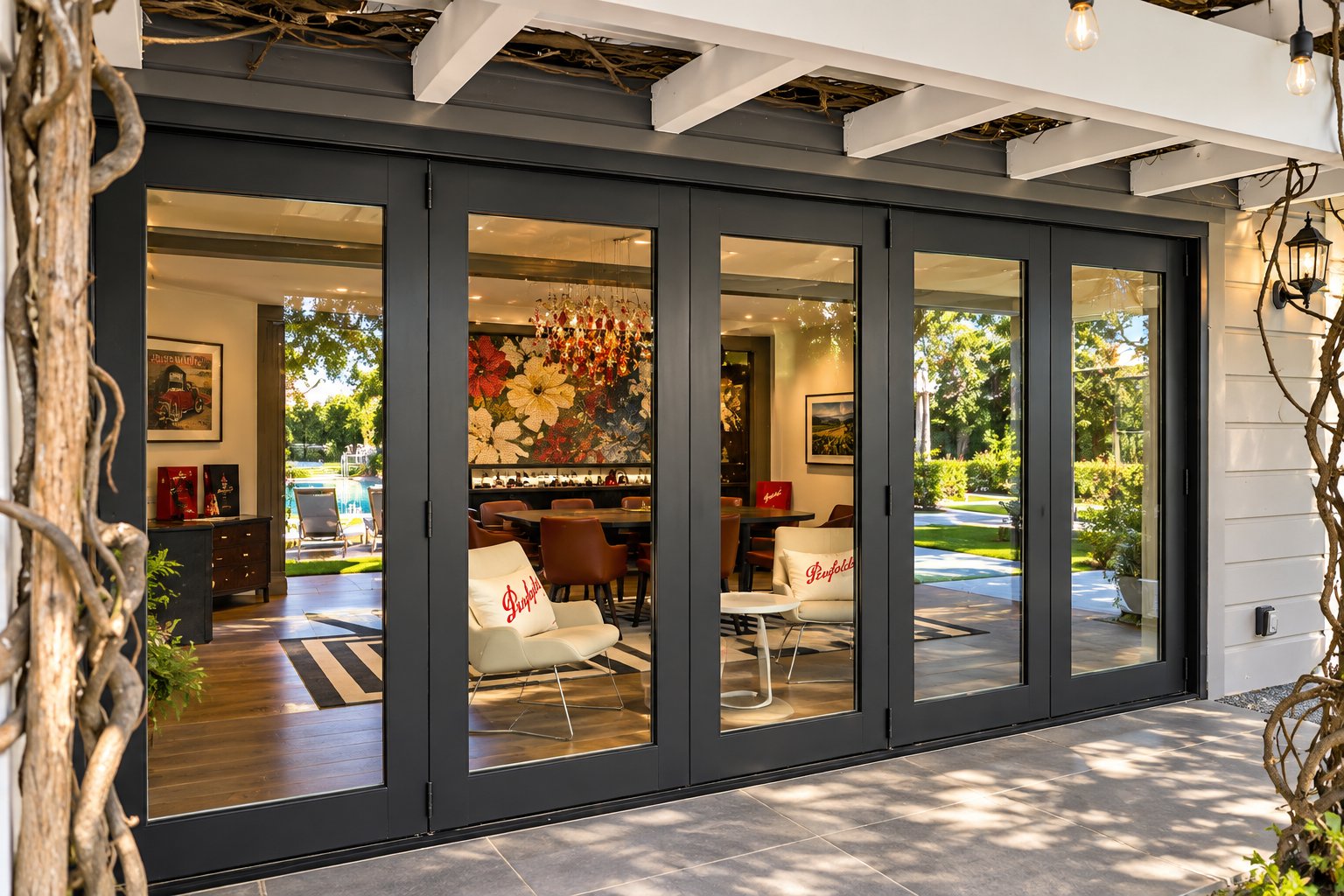
Penfolds Lounge, Napa
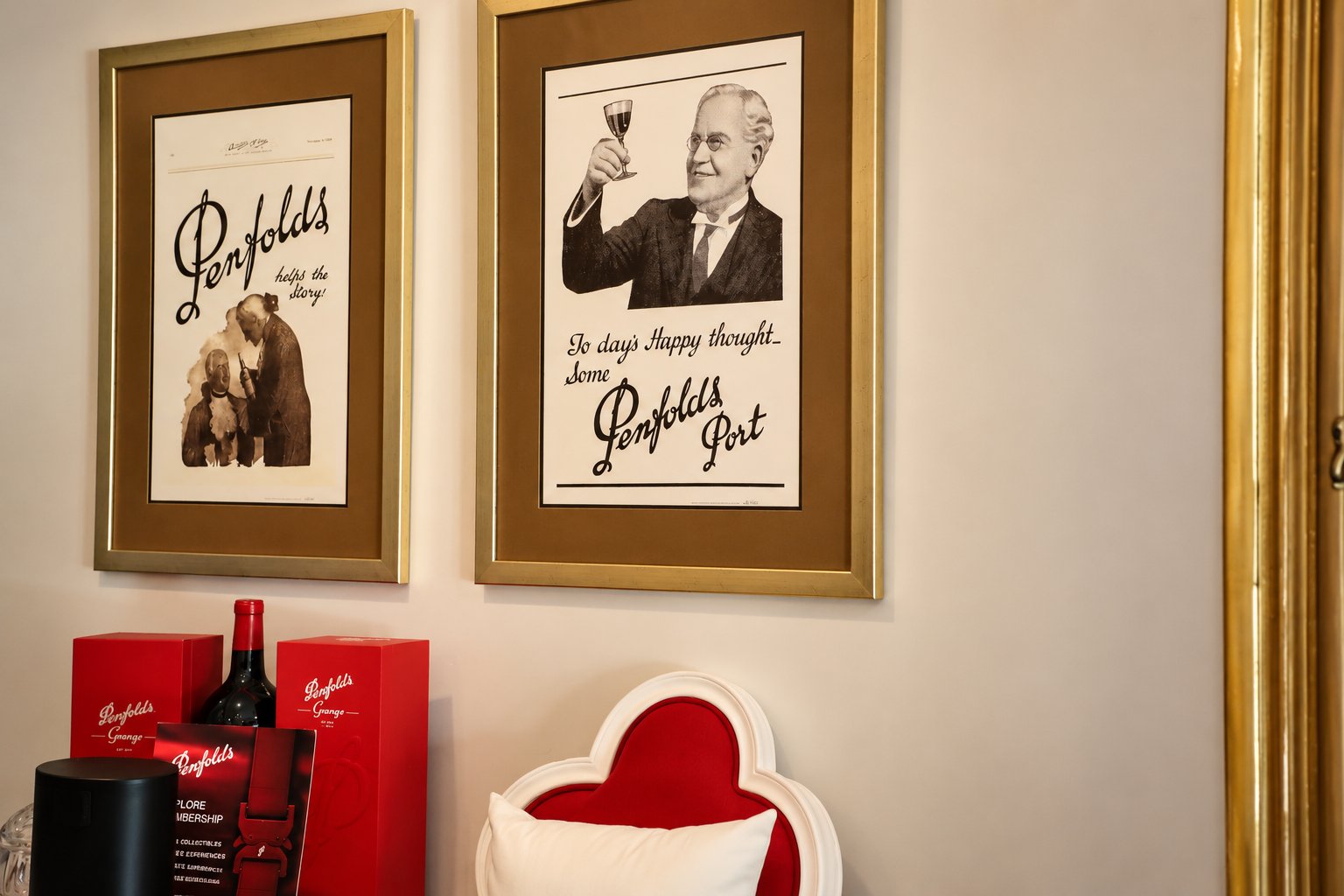
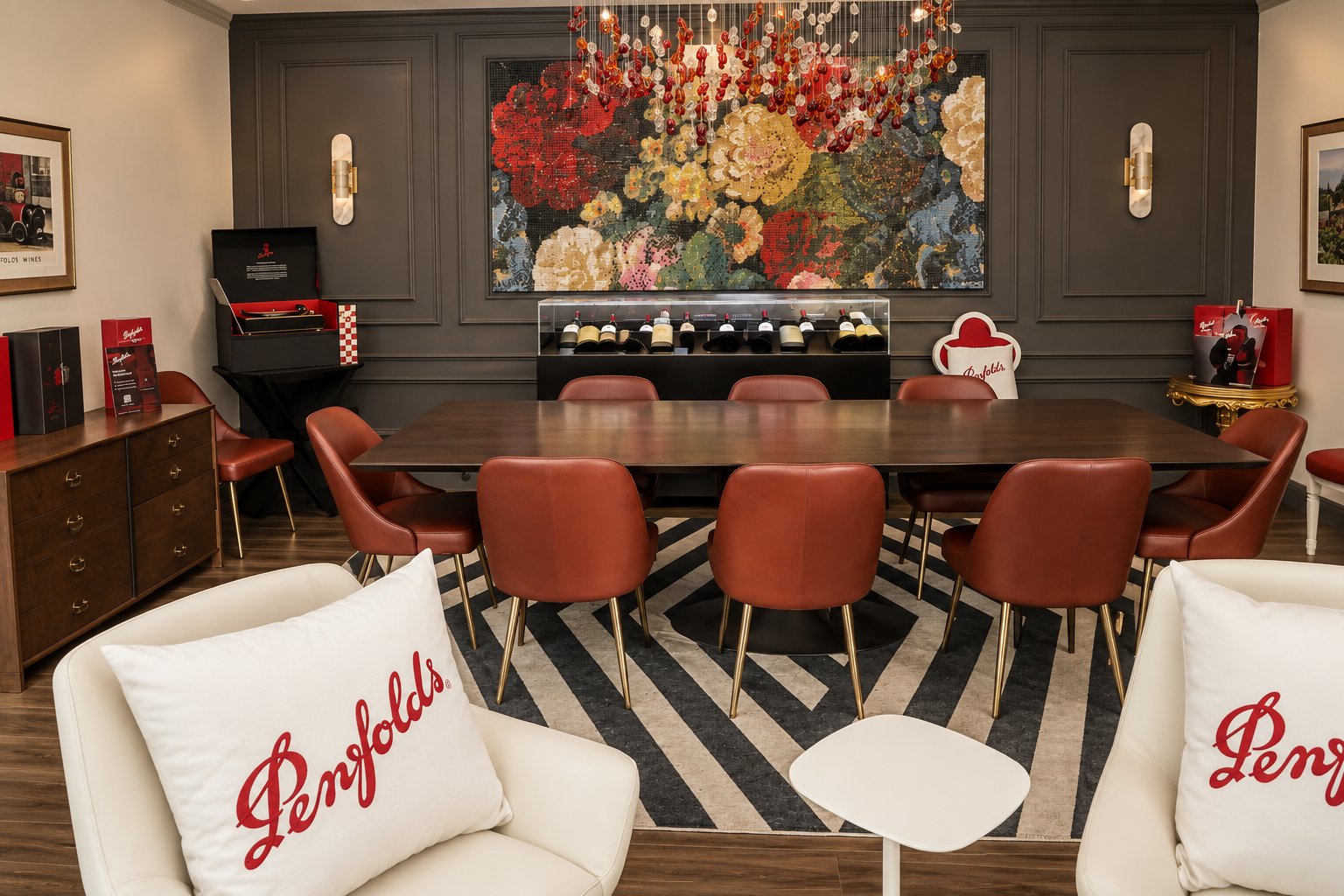
This cute tasting space is located to the rear of White House Napa next to the inn’s pool. On a warm day guests may be tasting wine inside the salon while watching guests of the inn sunbathe and swim.
This tasting salon opened in 2025 in a stand alone space, separate from the inn. It was modeled to roughly resemble the Grange Room at the Magill Estate in Adelaide and is the only Penfolds tasting room in Napa Valley. The colorful centerpiece mosaic is French in origin. The ownership partners of First Street Inn have been long time collectors of Penfolds.
All visits and tastings are private to your party and are strictly by appointment for guests of White House Napa or by private invitation. Tastings include wines from three continents including Europe, Australia and North America (Napa Valley) with several bottles made from grapes grown in both Australia and the U.S. Penfolds occasionally will hold special events at White House Napa including curated food and wine pairings.
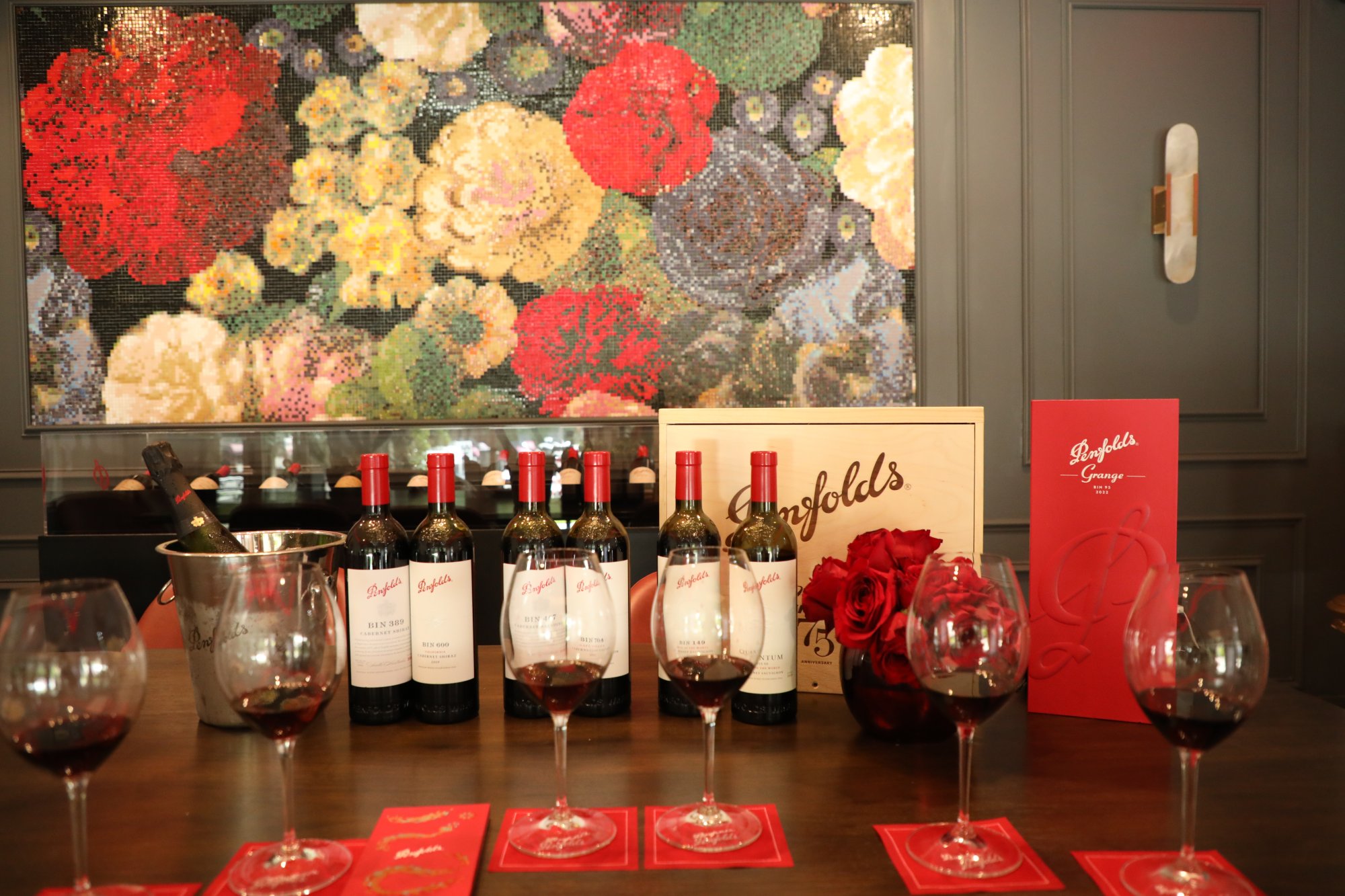
White House, Napa
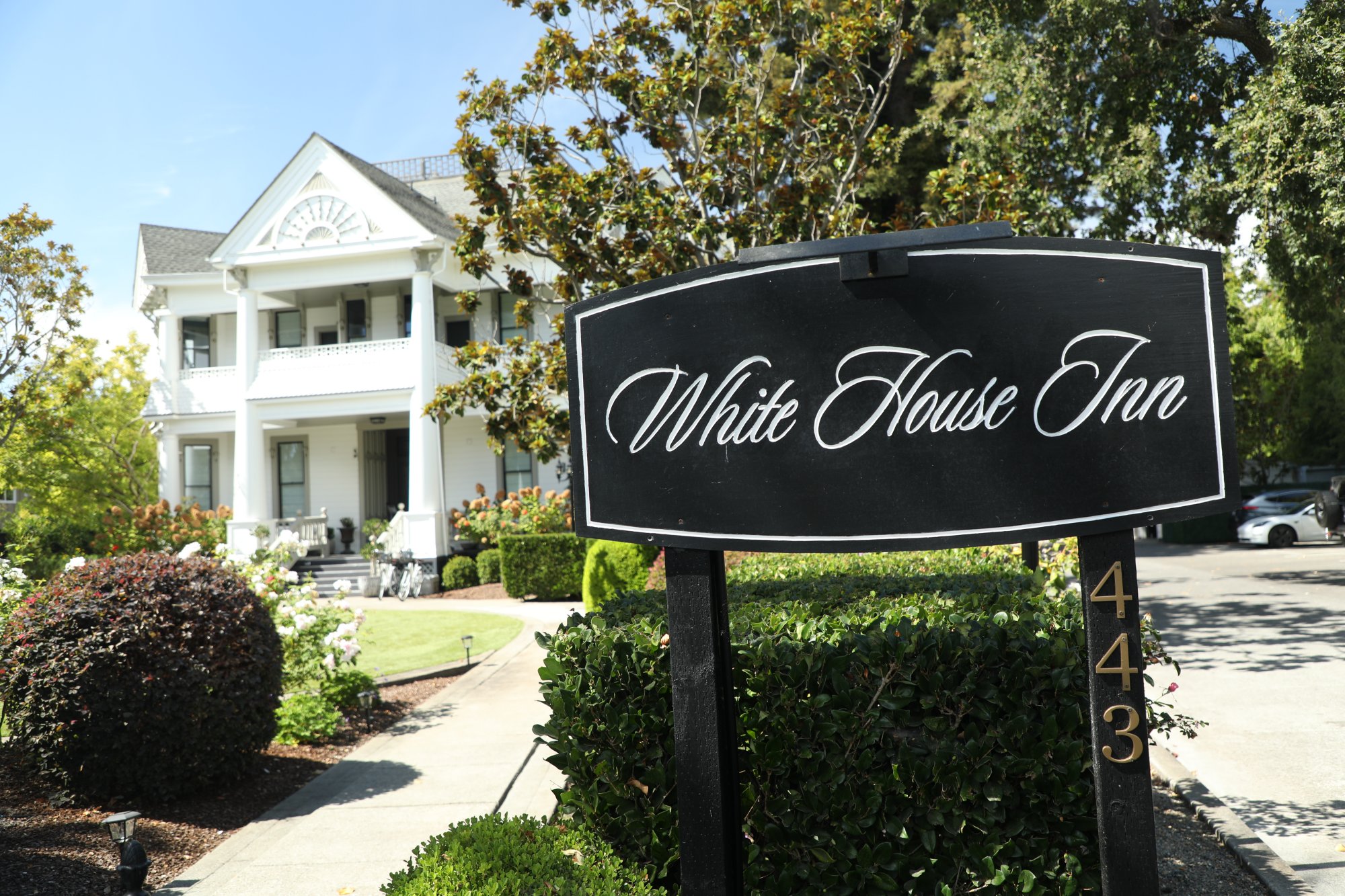
White House Napa is a historic luxury boutique hotel located at 443 Brown Street, within easy walking distance of downtown Napa. The impressive Victorian mansion dates from 1886, when Emanuel Manasse commissioned prominent local architect W.H. Corlett to design a residence for his family. Manasse, a German immigrant who arrived in Napa in 1871, became superintendent of the Sawyer Tanning Company and played an important role in Napa’s once-significant leather industry. The approximately 12,000-square-foot residence became known as the Manasse Mansion.
Following Emanuel Manasse’s death in 1899, his wife Amelia continued to use the property, eventually converting it into a duplex and later, during the 1940s, into six apartments. A significant transition occurred in 1990 when the Morris family converted the former residence into a bed and breakfast known as the White House Inn. The property underwent another major renovation in 2014, preserving elements of its historic architecture while introducing contemporary accommodations.
The property was purchased by its current ownership (Cambridge Lansdowne of Miami, Florida) in 2022 and subsequently reintroduced as White House Napa. Today it operates as an adults-only boutique hotel with 17 individually designed guest rooms. Its historic character remains an important part of the experience, including the mansion’s prominent white-columned exterior, period architectural details and elegant interior spaces.
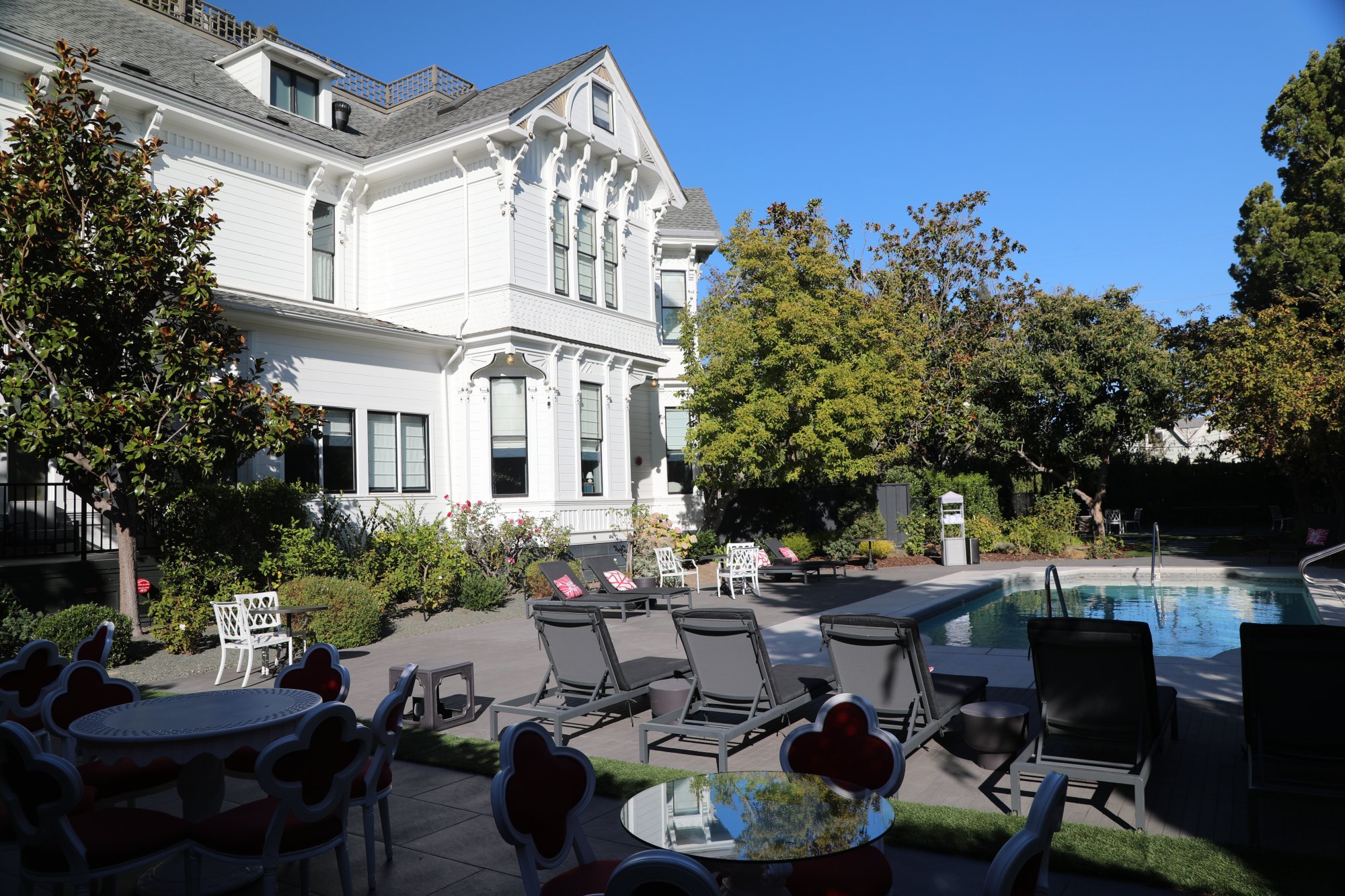
Despite its residential setting, White House Napa is only a short walk from downtown Napa’s restaurants, tasting rooms, shops and the Napa River. Amenities include a heated swimming pool and hot tub, landscaped outdoor gathering spaces, complimentary breakfast, an evening wine hour, parking, EV charging and bicycles for exploring town. Guests also have access to complimentary tastings at select Napa Valley wineries, arranged through the hotel.
The result is an unusual combination for Napa: accommodations within a genuine 19th-century residence, the intimacy of a small boutique property and convenient access to downtown.
Select Wines
Whites
Champagne
Penfolds Champagne program was launched in 2019 and includes a Brut Rosé, Brut Cuvée, Vintage Grand Cru Chardonnay and Vintage Grand Cru Pinot Noir.
From the 1920s through the 1970s, Penfolds produced sparkling wines in Australia. In the 1980s, Penfolds revisited and rejuvenated its sparkling wine program. This ultimately led to an intriguing question: what if Penfolds went to the world’s most celebrated sparkling wine region, worked with the same traditional grape varieties, but produced the wines through the lens of the Penfolds house style? What would the resulting wines look like?
In many ways, this idea traces back to Max Schubert and the philosophy behind the creation of Grange: a willingness to venture beyond established boundaries, regions and even countries in pursuit of something distinctive.
The Penfolds Champagne Brut Cuvée (non vintage and tasted in September 2026) was made in partnership with Champagne Thienot (Penfolds distributor in France. This wine is medium gold in color; it is a blend of Chardonnay, Pinot Meunier and Pinot Noir and was on tirage for four years. The bouquet offers scents of honeycomb, brioche, golden apples, golden kiwi and white florals including honeysuckle and citrus blossom. Bright and refreshing, the palate offers flavors of golden delicious apples, golden kiwi, Asian pear and bright citrus tones including grapefruit and a light but lingering note of toasted almond. Finishes brightly lit with a lively thread of balanced acidity that keeps the palate thoroughly fresh. Lightly creamy, this texture is buoyed high by the acidity. This wine is listed as 12% ABV.
Reds
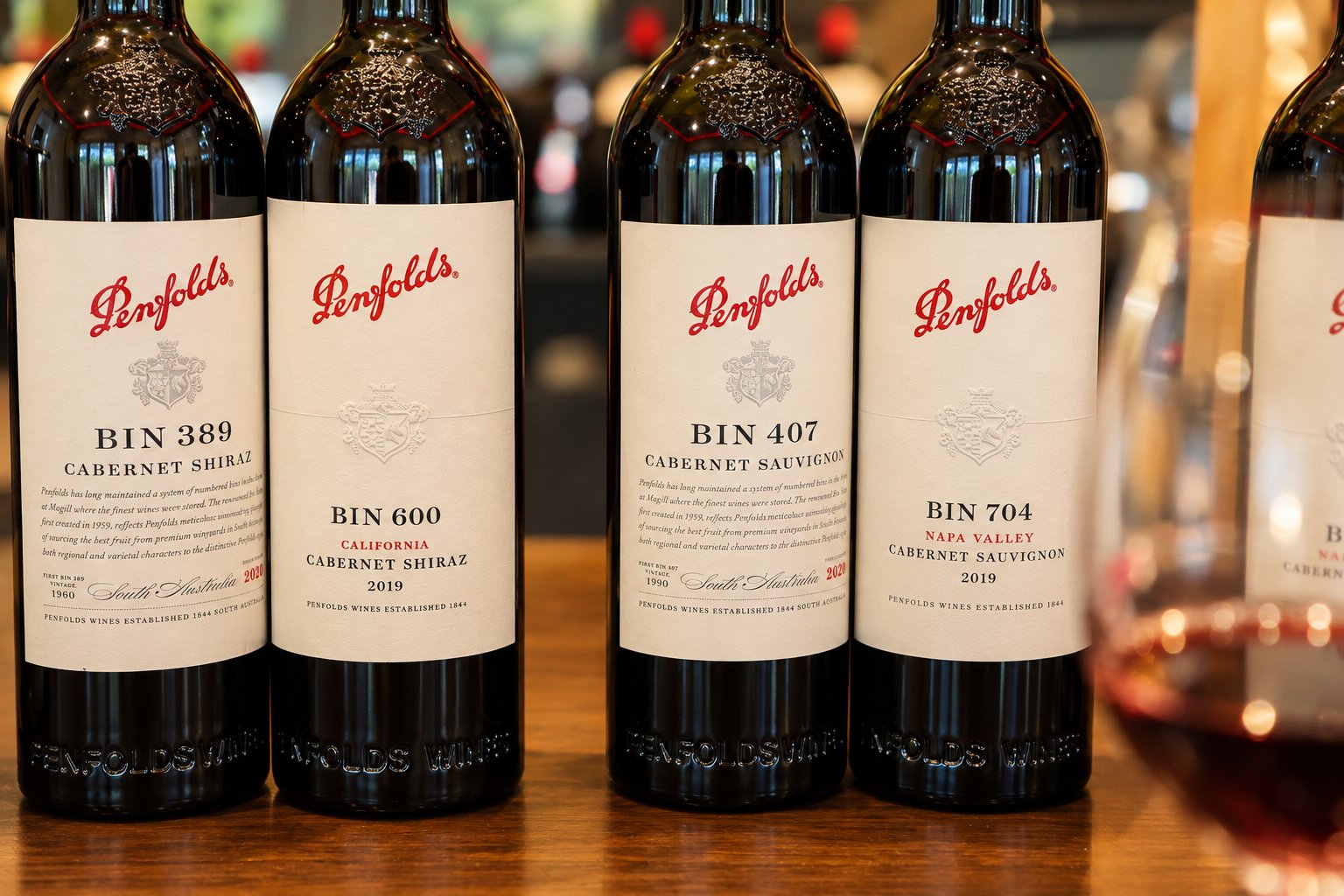
Bin 389
The 2019 Penfolds Bin 389 Cabernet Shiraz is a blend of 53% Cabernet Sauvignon and 47% Shiraz – this wine is often referred to as the Baby Grange, referring to the fact that the previous vintage Grange barrels are used in this wine. This wine is deep ruby and nearly opaque; the bouquet offers scents of dried rose petals, mint, cloves, cardamom and fruit including dark raspberry, cherry and plum. The acidity brings a bright and fresh component to this wine, yet it’s always balanced between flavor and texture. This wine tastes like red cherry, currant, red plums, red licorice, raspberry and boysenberry. And finishes lightly savory with a note of dried sage and cedar. The tannins offer a comforting and pleasant texture, lightly dusty and chalky they linger with a gentle tug. Its balanced character will remain for years to come. Like Grange, this wine was aged entirely in American oak. Penfolds uses a blind classification process when selecting wines, so some lots that were initially identified as being of Grange and Bin 707 quality during blind tastings ultimately ended up being included in this wine.
The first vintage of this wine was in 1960; Bin 389 and Bin 407 are two of Penfolds’ most widely produced wines.
Bin 600
The 2019 Penfolds Bin 600 California Cabernet Shiraz is 83% Cabernet Sauvignon and 17% Shiraz with vineyard sources in Napa Valley including Calistoga, Diamond Mountain, Howell Mountain, Oakville and St. Helena with additional grapes from Sonoma County and Paso Robles. This wine is deep ruby and opaque; shows California sunshine with ripeness, but still with restraint. Offers some light bottle bouquet at 7 years post vintage. The bouquet reveals aromas of dark cherry, dark raspberry, blackberry, roasted coffee and dark chocolate. Rich in terms of flavors, the fruit is front and center here with flavors of boysenberry, blackberry, Satsuma plum and dark mulberry. And a light note of tobacco leaf on the finish. The tannins are seamlessly integrated into the finish with a light dusty and drying character and are gently felt like a kiss from a loved one. Finishes red fruited, with an accompanying brightness from the acidity. Bin 600 refers to Creston 600 Ranch in Paso Robles, the first international Treasury Estates acquired property (in 1997).
Bin 407
The 2019 Penfolds Bin 407 Cabernet Sauvignon, South Australia is 100% varietal; this wine is deep ruby and opaque. A potpourri of sweeter spices immediately shows including cloves, cardamom and cinnamon stick. The fruit includes Santa Rosa plum, blackberry, boysenberry and dark raspberry. This wine tastes like red plums, raspberry, red cherries and a note of mint. And like the bouquet, some of the spices are mirrored on the palate including finishing notes of cloves and cardamom. The acidity is balanced beautifully here – keeping this wine savory and fresh at 7 years post vintage. The tannins are broadly dispersed lingering with a light to moderate dusty tug beyond the fruit on the persistent finish. Savory. Dried herbs including sage. Chalk. Bin 707 in the 1960s was made from Cabernet Sauvignon and has become Penfolds flagship Cabernet Sauvignon. In response to market demand for a lower priced Cabernet Sauvignon, the first vintage of Bin 407 was introduced in 1990. This wine was aged in a combination of both new and used American and French oak barrels.
Bin 704
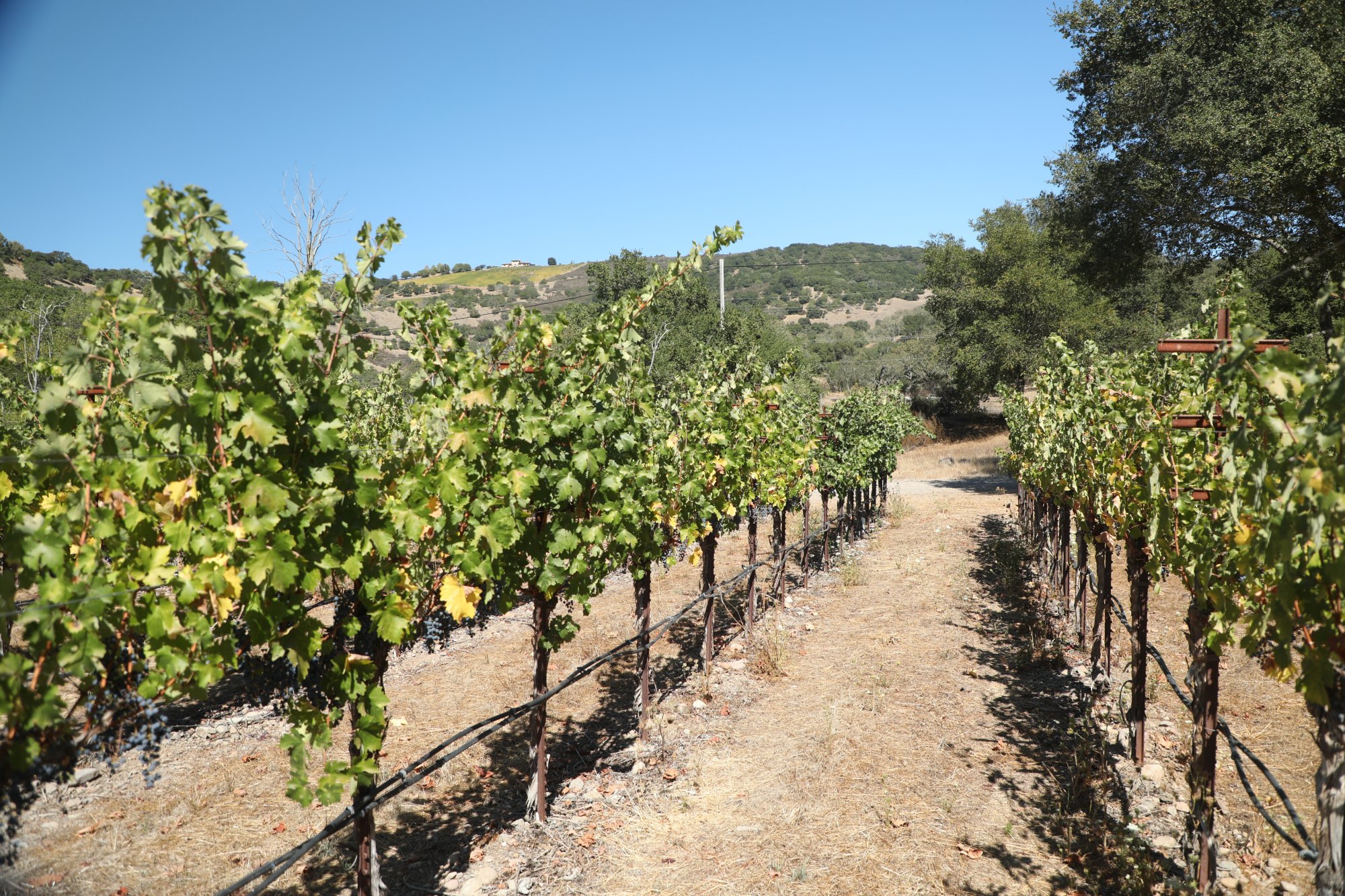
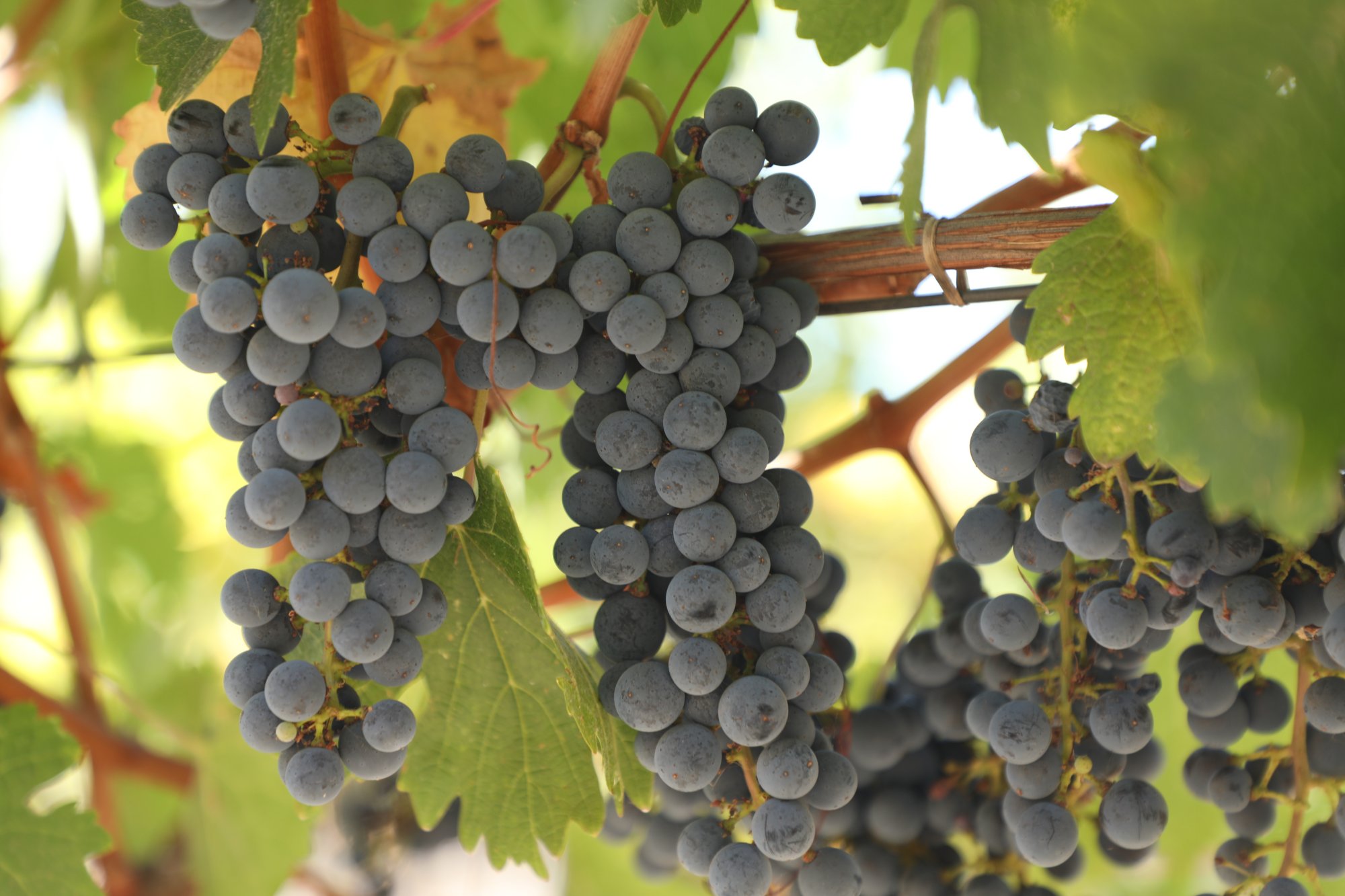
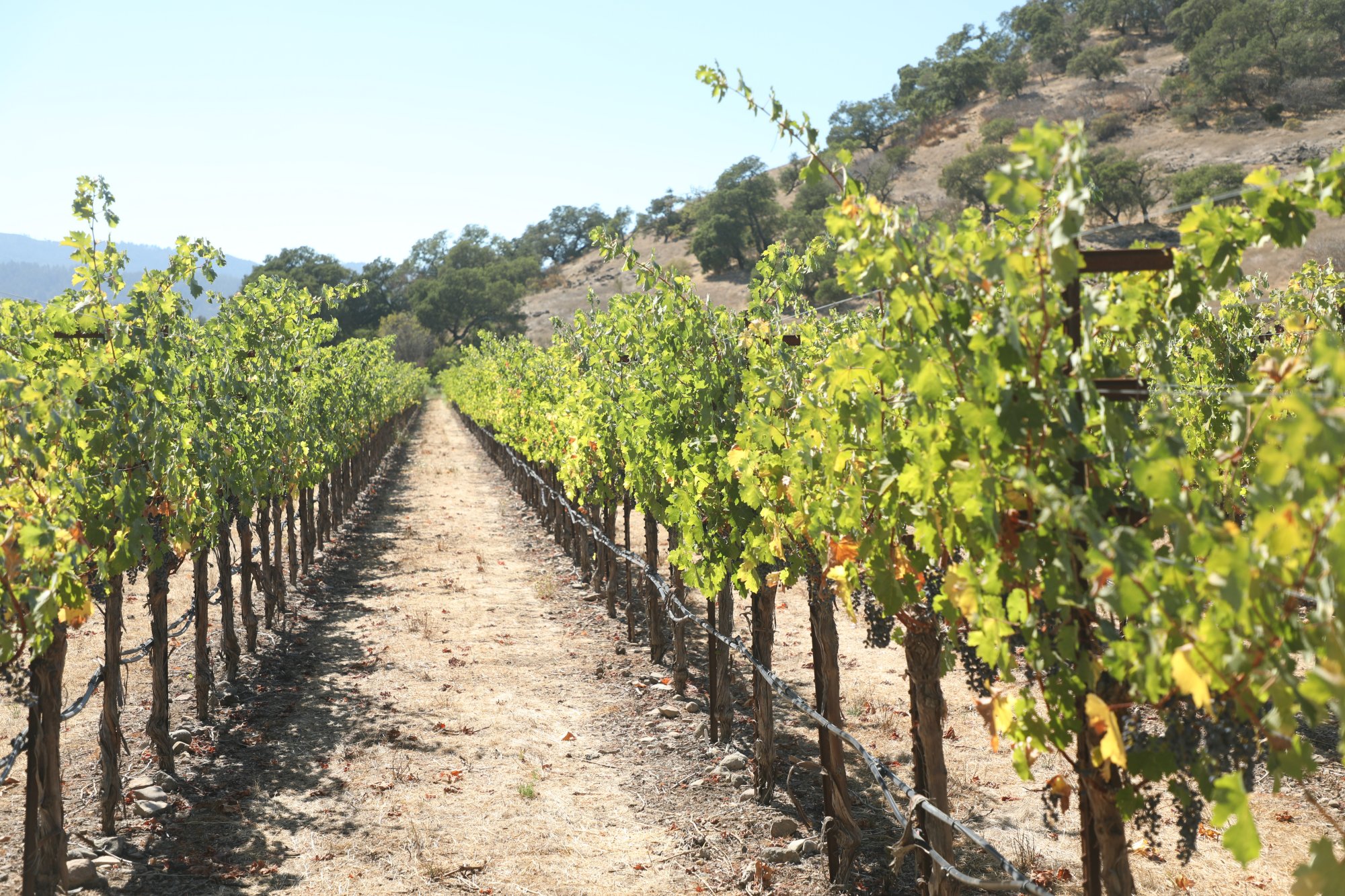
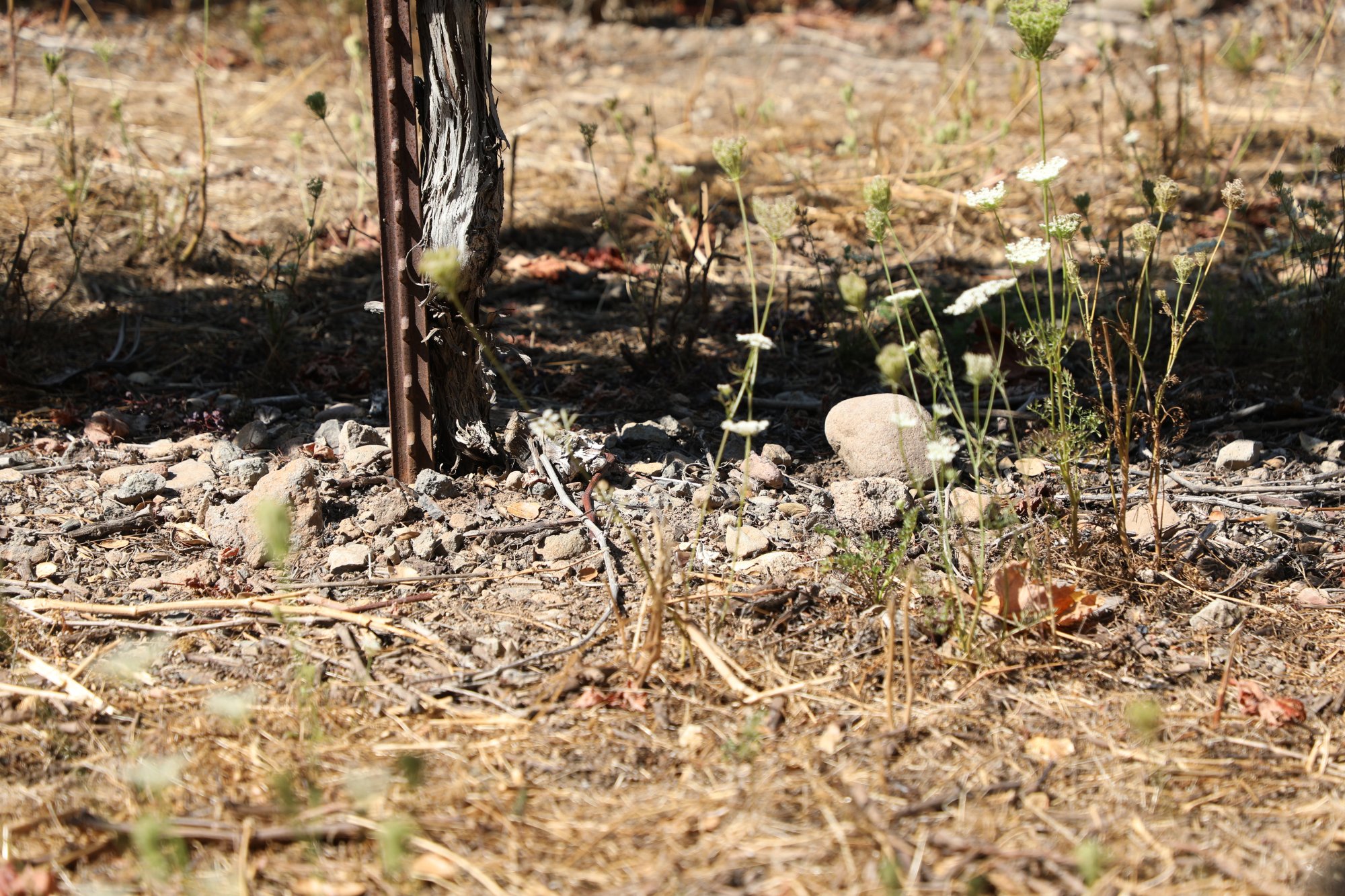
The 2022 Penfolds Bin 704 Cabernet Sauvignon, Napa Valley is 100% varietal. Grapes for this wine are from both mountain and hillside vineyards to create an overall expression of the vintage. This wine was aged for 16 months in 45% new French oak and 55% seasoned French oak barrels. This wine is medium to deep ruby in color; the Penfolds approach is particular expressive in a challenging vintage due to the extreme heat such as in 2022 in Napa Valley. The fruit is the highlight here with the oak offering a supporting role. This wine smells like ripe plum, blackberry, dark cherry, dark raspberry and boysenberry. Its not fruited characteristics are of dark cocoa powder and dark chocolate. Surprisingly bright for the vintage and already balanced in its youth (four years post vintage), this wine tastes like raspberry, red cherry, currant and Santa Rosa plum with finishing notes of cocoa powder. The tannins are ripe, resolved and rounded – on a macro level showing a lightly creamy texture. And on a micro level lightly gravelly. Their presence is well integrated into the bright finish. The sun above and soil below are all Californian. Everything in between is Penfolds. This may be one of Napa Valley’s most age worthy wines from this vintage.
Penfolds also produces single vineyard Napa Valley wines including from Oakville and Howell Mountain.
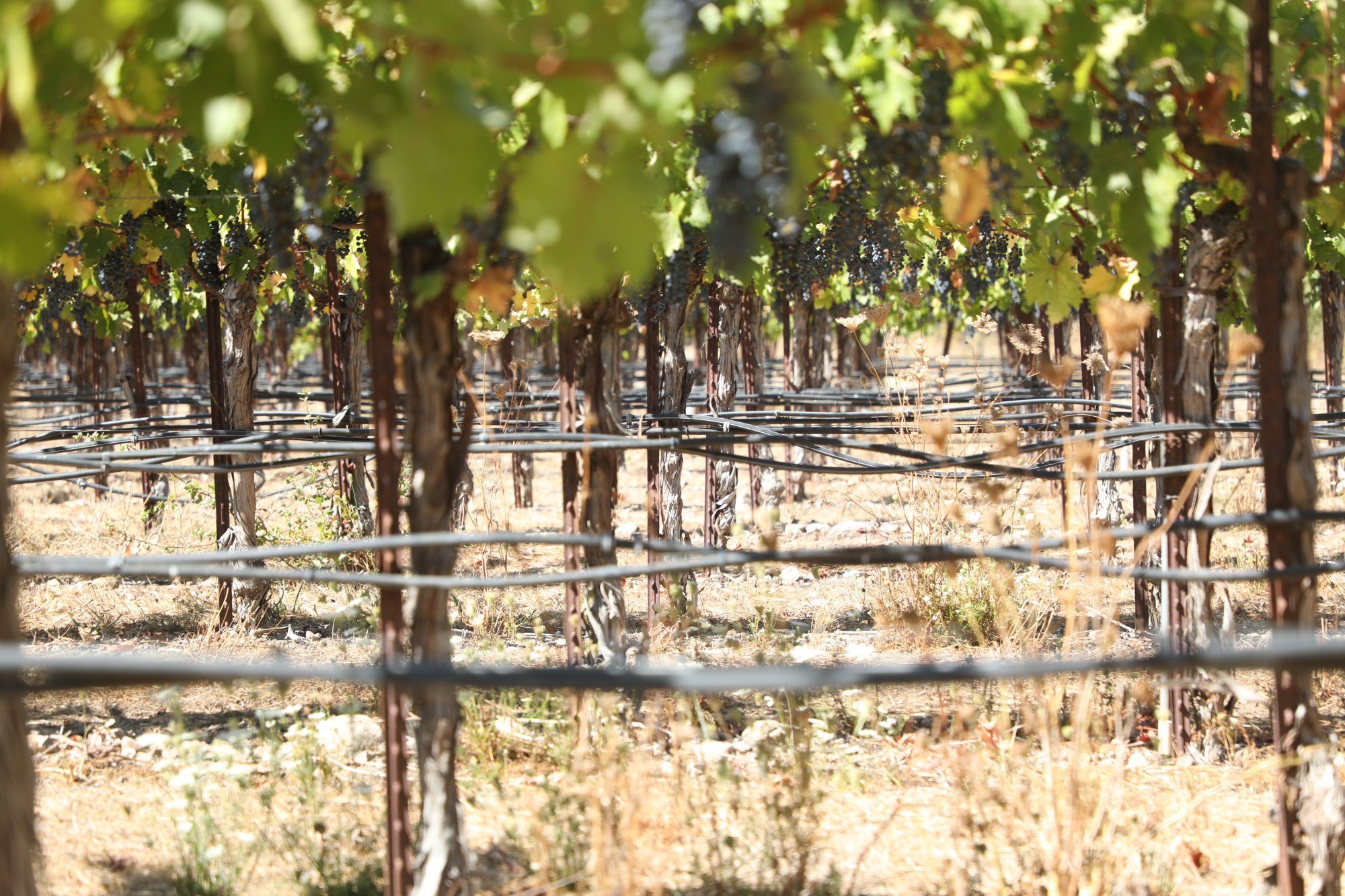
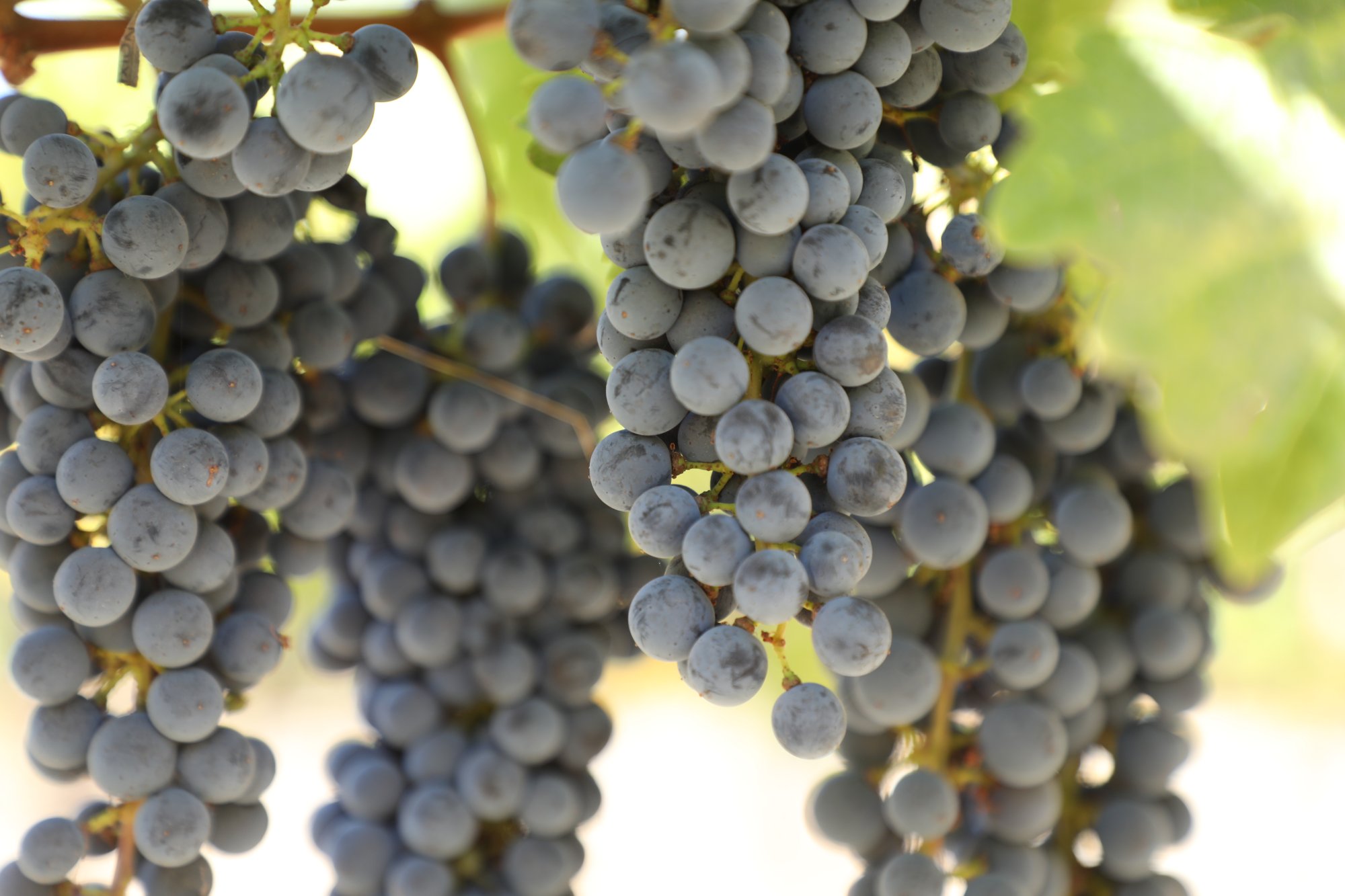
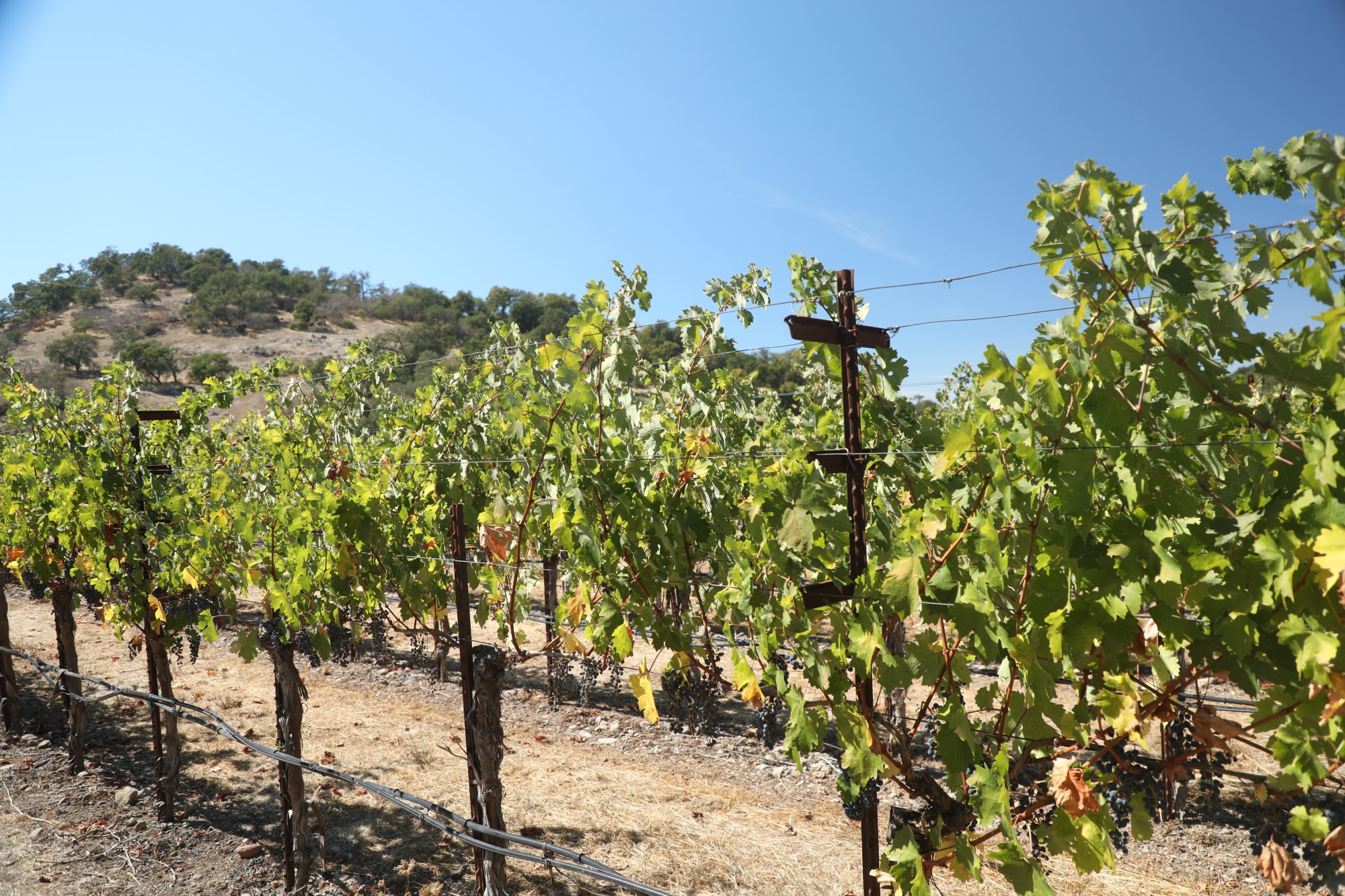
Bin 149
The 2019 Penfolds Bin 149 Cabernet Sauvignon (100% varietal), Wine of the World. Bin 707-quality grapes from South Australia were vinified, with the resulting wine shipped to California and blended with Napa Valley Cabernet Sauvignon. This wine is 90% Napa Valley and 10% South Australia. The blend changes depending on the vintage. This is deep ruby and nearly opaque; the first aromatic we noted is of milk chocolate along with cocoa powder and mocha. Still there is plenty of bright fruited notes expressed including of dark cherry, blackberry, plum compote, boysenberry jam and dark mulberry. The bouquet perhaps smells riper than what the palate expresses. A bright vein of acidity keeps this wine showing younger than its actual age at 7 years post vintage. Its flavors are of dark plum, boysenberry, currant, red cherry and red plums. Fresh. The tannins are broadly distributed across the palate with a grainy and gravelly grip that lingers in tandem with the fruit. This wine was aged for 17 months in 80% new French oak barrels and 20% American oak barrels. It is going to age for decades; we would like to revisit this 10 and 20 years from now. This wine is always sold housed inside a handsome red box.
Quantum Bin 98
The 2019 Penfolds Quantum Bin 98 is 92% Cabernet Sauvignon (Napa Valley) and 8% Shiraz from South Australia. This wine is blended in Napa Valley and is not produced every year. It is deep ruby and completely opaque. This wine smells ripe and sweetly fruited, with aromatics of plum compote, blackberry jam, boysenberry, blueberry, dark raspberry, licorice, fig, cinnamon stick and cardamom. The barrel influence shows more as this wine breathes. The oak complements the fruit here, contributing a layer of cinnamon stick and cloves. Juicy, bright and lively at 7 years post vintage, this wine is thoroughly fresh and should retain this character for years to come. It tastes like currant, red plum, slightly underripe boysenberry, red cherry, and blackberry. And finishes with a light influence from its élevage including cinnamon stick and cloves. Bright and juicy acidity. The tannins are present, but also well integrated – lingering with a lightly grainy, gravelly and dusty character in tandem with the fruit on the finish before finally pulling away. This wine is going to be extremely age-worthy. Bin 98 refers to 1998, the year when Penfolds planted vines based on selections from Australia in Paso Robles.
Two special wines that are only produced during exceptional vintages are the Penfolds Cabernet Sauvignon–Shiraz wines: Superblend 802.A and Superblend 802.B. These wines are created from the premium lots of Cabernet Sauvignon and Shiraz that were originally meant to be blended into Grange and Bin 707.
—
For more information, to schedule an appointment to the Penfolds Napa salon, to purchase current releases or to join one of their membership offerings, please visit: https://us.penfolds.com
Treasury Wine Estates
According to a list published in 2024 by the Wine International Association, Treasury Wine Estates is currently the 3rd largest wine company on the planet. Treasury was formerly the wine division of the Australian based Foster’s Group and was founded in 2011, although its roots can be traced back to the mid 1990s when Foster’s began to build out their wine division.
Treasury Wine Estates owns or manages 22,000+ acres of vineyards in Australia and New Zealand and throughout Treasury Americas, a division of Treasury Wine Estates, nearly 10,000 acres of vineyards in the USA, primarily in Napa Valley, Sonoma County and California’s central coast.
As of our latest update to this review Treasury is the largest controlling entity of vineyards in Napa Valley primarily through leased land. They own several of Napa Valley’s most iconic, historical and storied producers including the following six wineries: Beaulieu Vineyard, Beringer Vineyards, Etude, Frank Family, Stags’ Leap Winery and Sterling. And of the other brands under their ownership, Penfolds in the Barossa Valley, Australia is arguably the most famous.
Headquartered in Melbourne, Australia the company also maintains regional offices in the United Kingdom (Treasury Europe, Middle East & Africa), Singapore (South East Asia) and China (North Asia). Their U.S. headquarters is located in the historic Gordon Building, as part of First Street Napa developed by Zapolski Real Estate in the heart of downtown Napa.
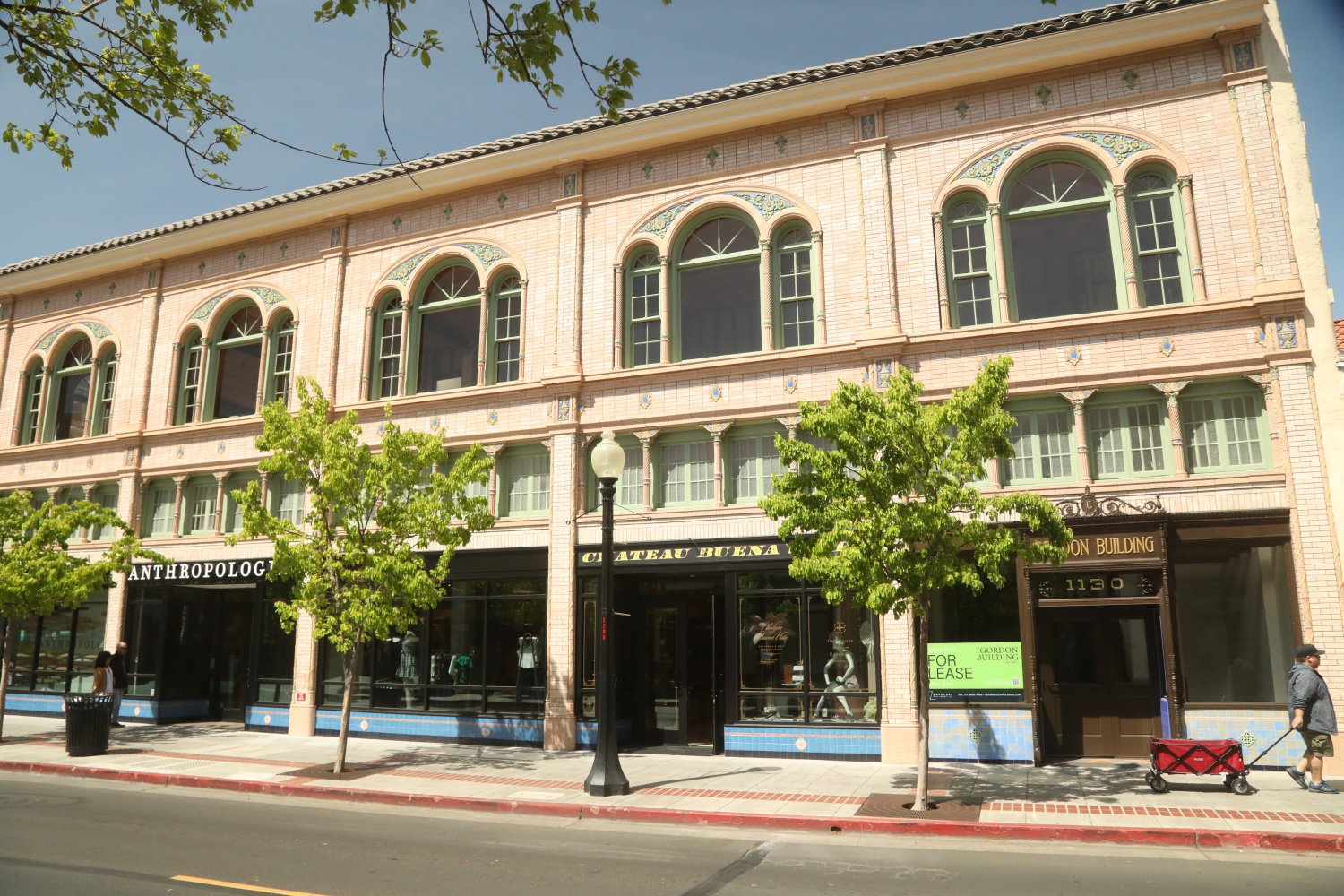
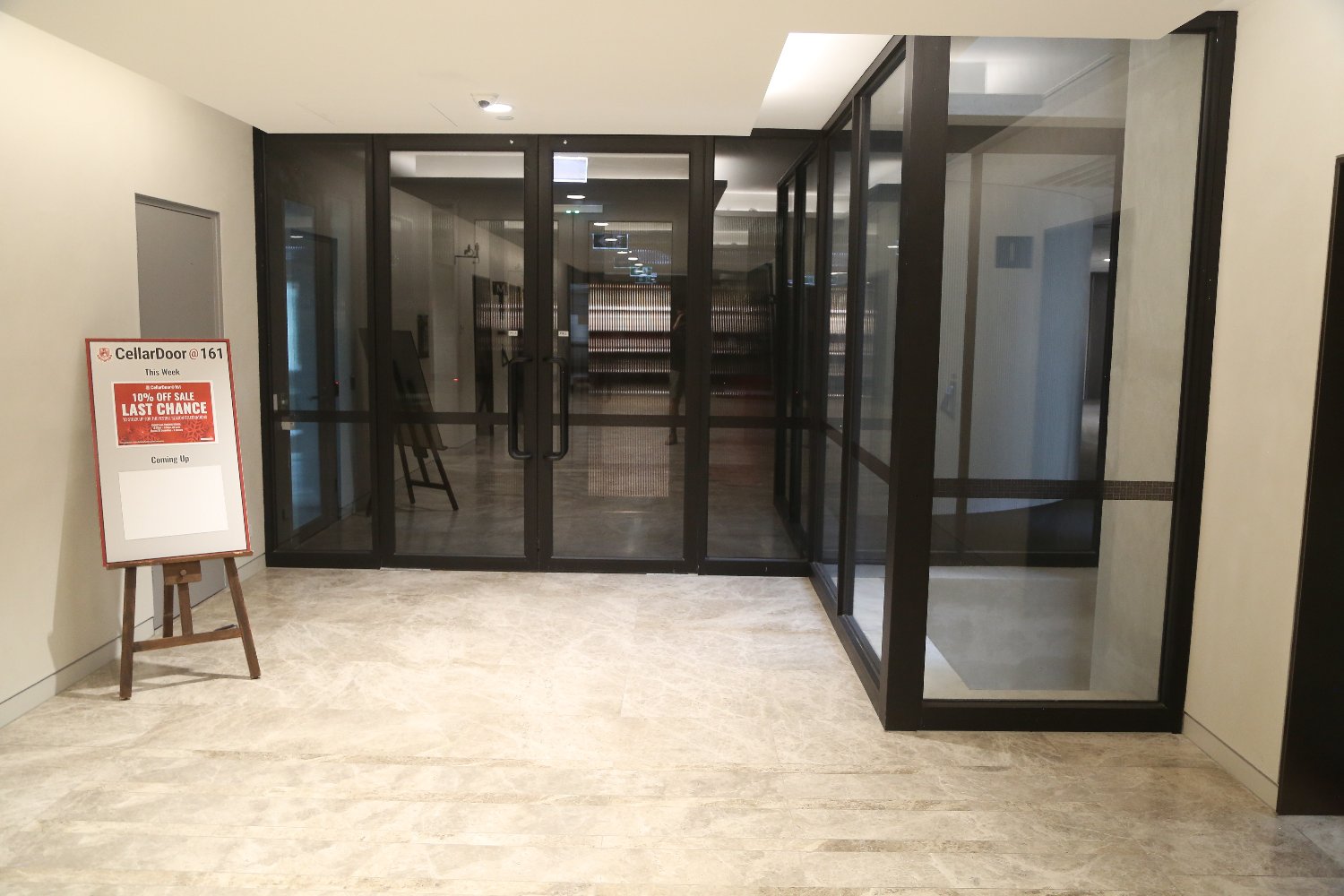
Gordon Building, Napa
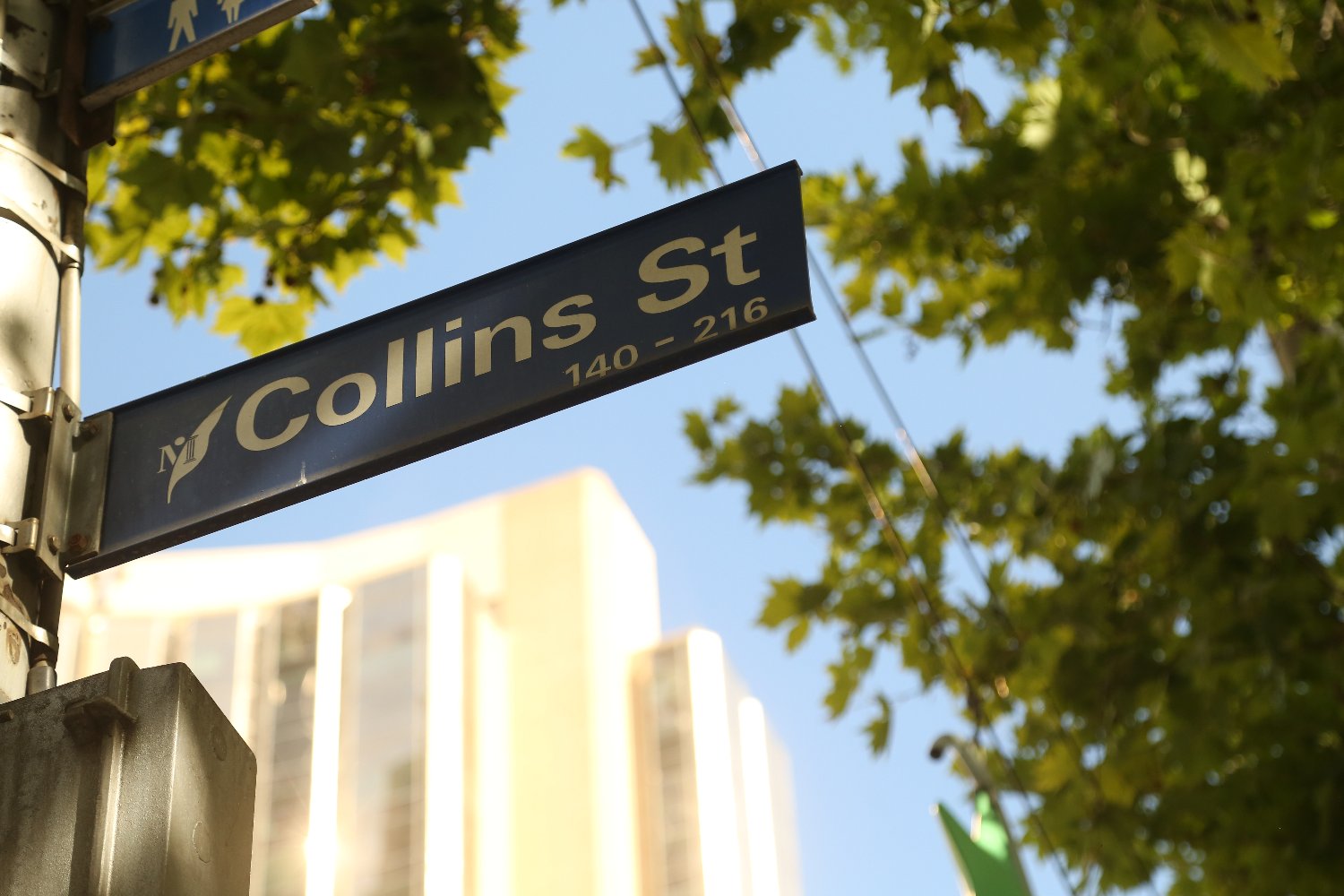
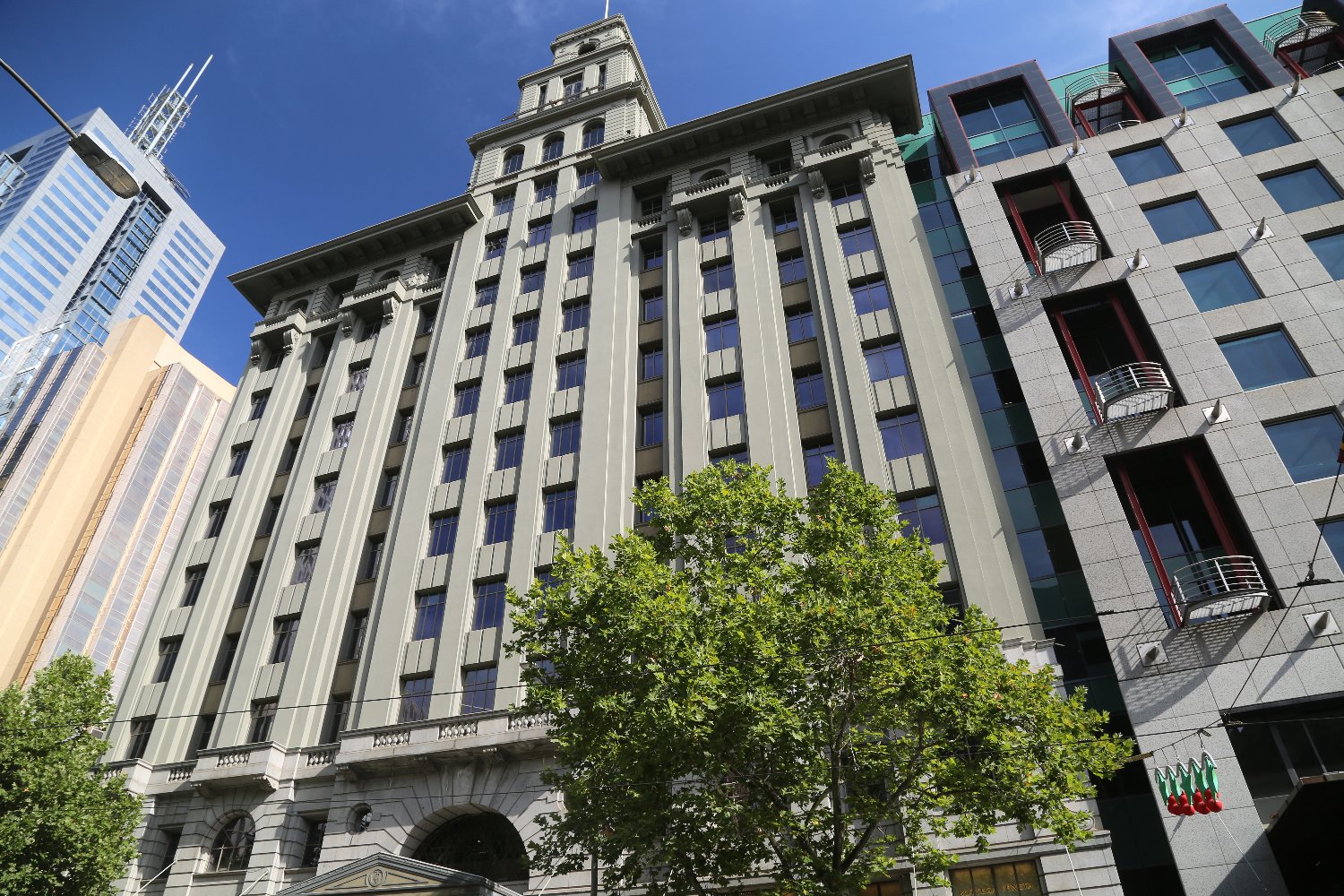
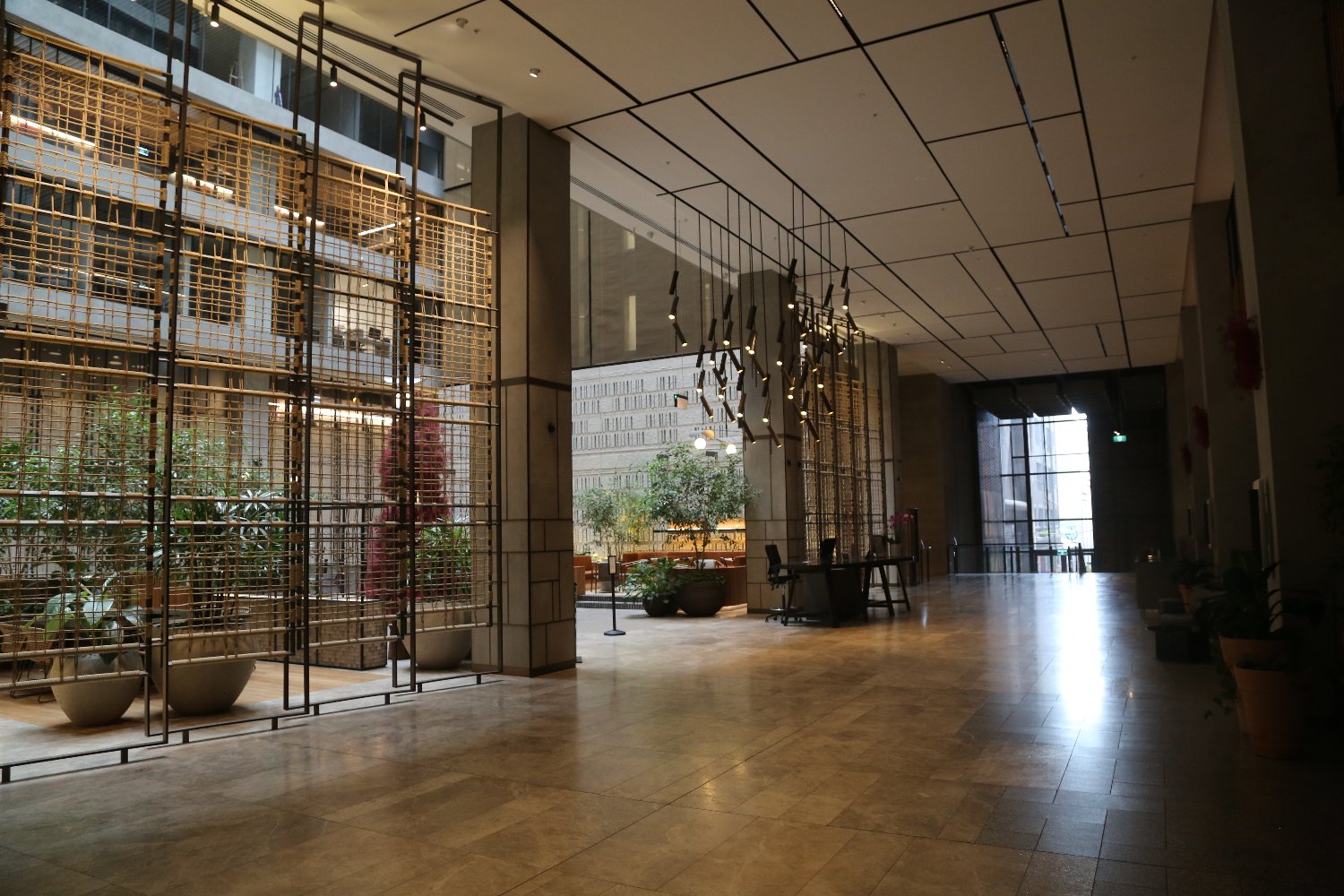
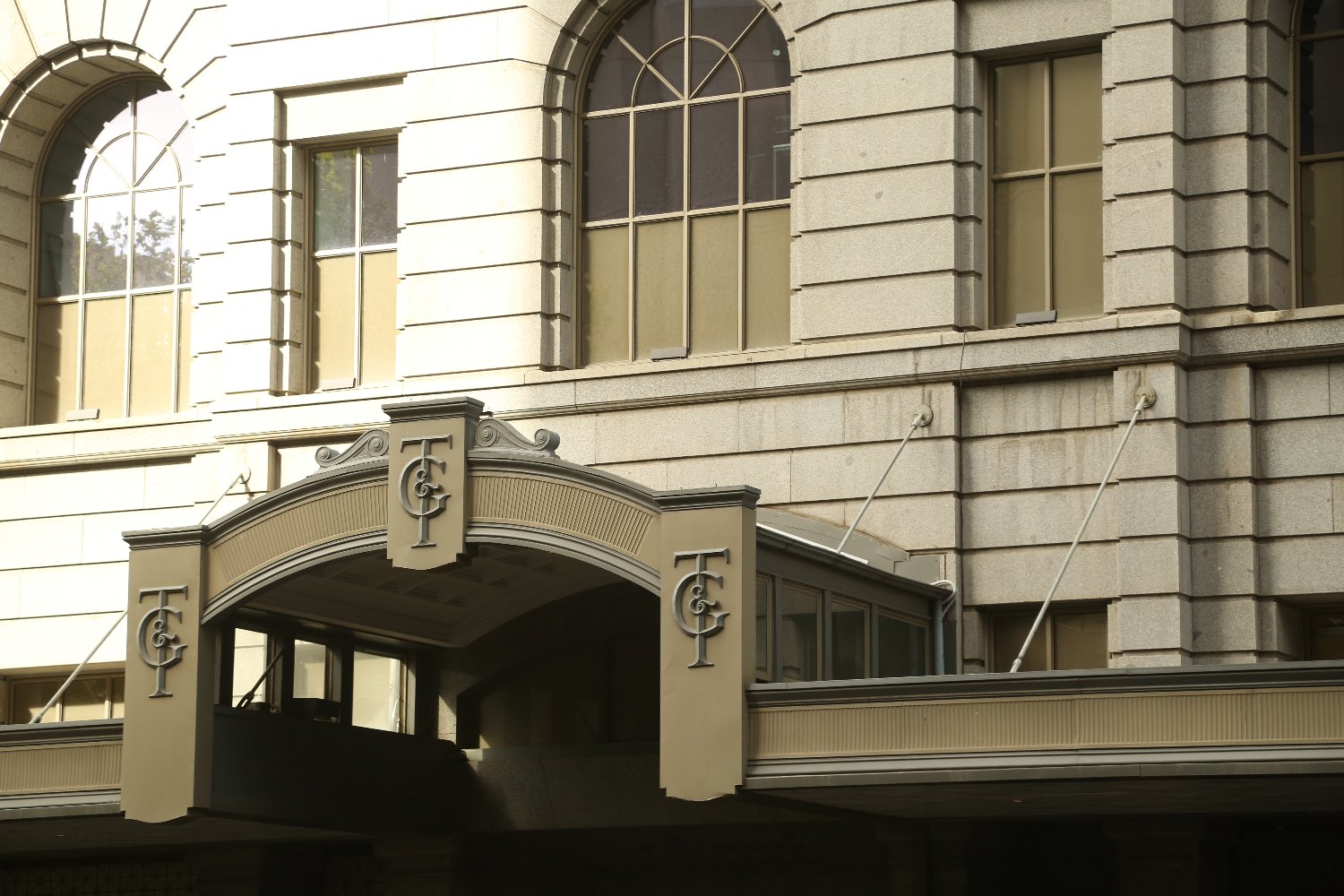
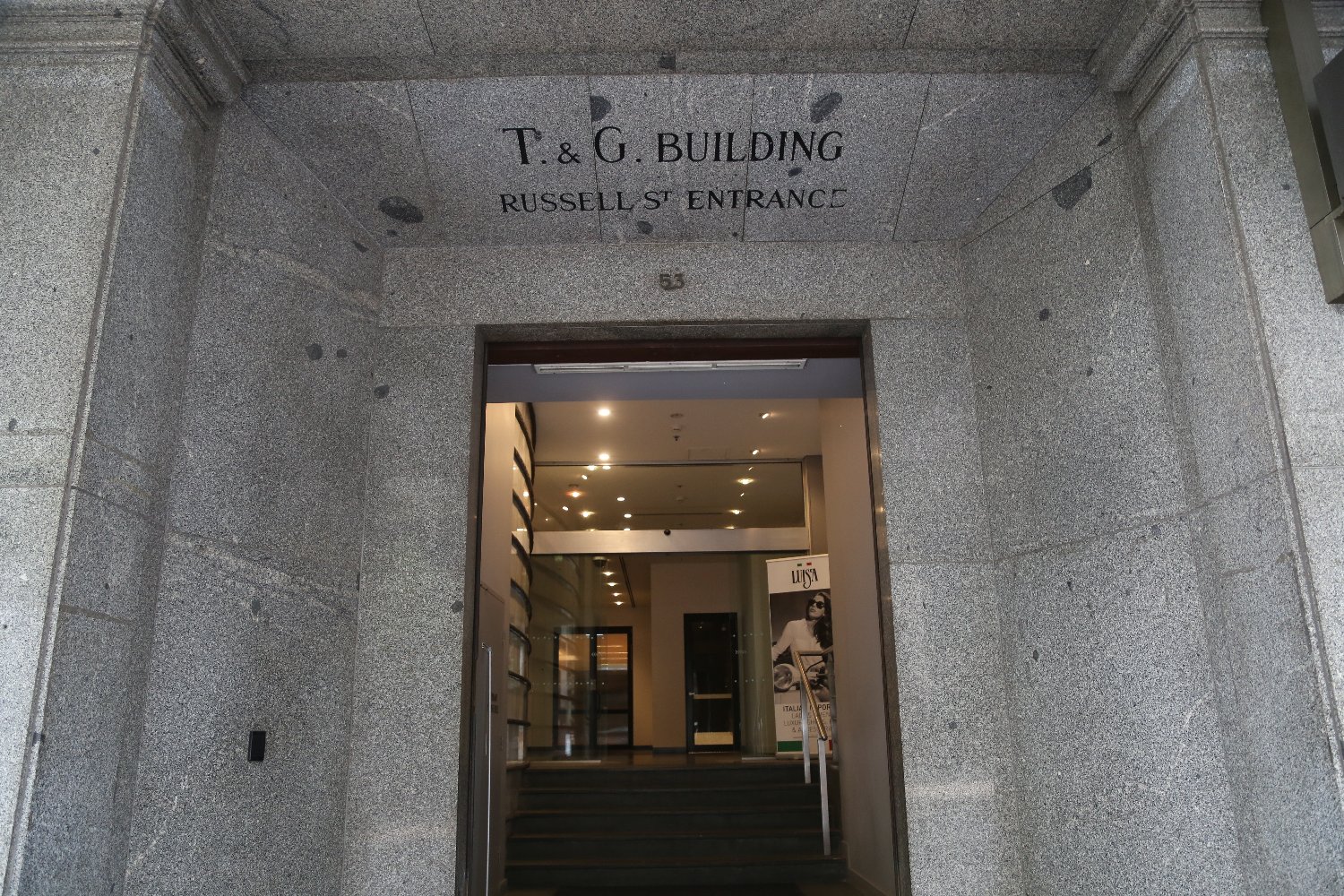
In 2019 the company moved its headquarters to one of the uppermost floors in one of Melbourne’s most iconic buildings, the T&G Building located on Collins Street a few minutes’ walk from the Flinders Street Railway Station. The T&G building, named after the T&G Mutual Life Assurance Society was built in 1928 and features a gorgeous atrium like setting and high-end retail shops on the ground floor as well as 10 floors of office space. This was one of Melbourne’s first large scale office buildings. Despite being one of Melbourne’s prominent and historical buildings, Treasury Wine Estates keeps a very low profile and has no signage.
In 2022 Treasury unveiled a significant winery located in the Barossa Valley with an annual capacity of producing nearly 26.5 million gallons of wine. The property and winery are located next to Wolf Blass Visitor Center in Nuriootpa (Wolf Blass is also owned by Treasury).
In 2023 Treasury purchased Paso Robles based DAOU Vineyards for nearly $1 billion USD.
Solar power. Also in 2023, it was announced that every Treasury Americas winery will generate more than 50% of its electrical needs from on-site solar power. Critical to achieving this goal, approximately 13,000 solar panels were installed as part of more than 29,000 solar modules installed at its properties across the globe. By 2024, Treasury Americas was 100% powered by renewable energy. And in 2024 Treasury announced the Brighter Future Initiative in Napa Valley in partnership with Napa Valley College and Napa Firewise to enhance fire safety in Napa Valley.



Leave a Reply