




 Matthew Dempsey Wines, founded by its namesake Matthew Dempsey, started producing wine in Napa valley in 2016, but started making wine in his early 20s in Michigan in 2012 from both Napa and Sonoma vineyards. For four years, grapes were harvested in Napa Valley and Sonoma, destemmed, put in food grade drums and flash frozen using an industrial freezer from a Richmond based company. The grapes were then trucked to Michigan. Matthew produced the wines at his family’s house in both garage and basement – a true garagiste operation.
Born and raised in Ann Arbor, he attended the University of Michigan, graduating with a Bachelor of Music in Organ Performance, and studied along the way with noteworthy figures in that field, including the primary organist at Notre Dame in Paris and French organist Daniel Roth who was the titular organist of the Church of Saint-Sulpice, Paris, from 1985 to 2023. Matthew’s parents drank a diversity of wines; he remembers older vintages of Plumpjack, Silver Oak, Château Margaux, and other Bordeaux third and fifth growths. He was able to try these wines which helped develop his palate.
Exposure to various styles of wines, ranging from opulent and hedonistic expressions to Old World wines, including New World, but Old World Style, i.e., Arrowood Vineyards & Winery, known for more restrained and higher acid wines gave him perspective on the types of wines he wanted to produce. Ultimately both styles ended up influencing his own winemaking.
In his freshman year, he started teaching himself winemaking on his own. At the University of Michigan, he’d spend hours on the third floor in the library, at a desk in the corner, working his way through thick winemaking textbooks. He started making wine at his parents house, while applying the knowledge he learned from the winemaking books in the library.
Every time a barrel arrived at his parents’ house from a cooperage on an 18-wheeler, his father would give him a certain look. Something that could be perceived as, “oh no, not again”. But now Matthew’s own wines form a large part of his father’s cellar. Over time, he started producing more wines each year, steadily refining the details of his winemaking in the cellar — studying cold soaks across different grape varieties, and different fermentation temperatures based on specific yeast strains. He would zero in on what he liked in other wines, gather information about how they were made, and apply that to the wines he was producing himself.
His first vintage was in 2012, when he started with Pinot Noir from Mahoney’s Las Brisas Vineyard, Caldwell Block 9 Cabernet Sauvignon, and a 13-acre Cabernet Sauvignon vineyard at the top of Moon Mountain, farmed by viticulturist Phil Coturri. Those were the first three vineyard sources for the first couple of years. In 2018 he transitioned from his previous wine brand, Château Grand Chœur, to Matthew Dempsey.
At the time, Matthew was managing a 40,000-bottle retail wine cellar at Wine Barrel Plus in Livonia, Michigan, stocked with gems like 1960s and ’70s Mondavi and large-format 1970s Caymus. He met a distributor who tasted the wines he was making in Michigan and liked what he found — enough to tell him he should be in Napa. He moved to Napa in 2016; his first job was at Trinitas Cellars, both assisting with direct-to-consumer sales and spending time in the cellar learning hands-on winemaking.
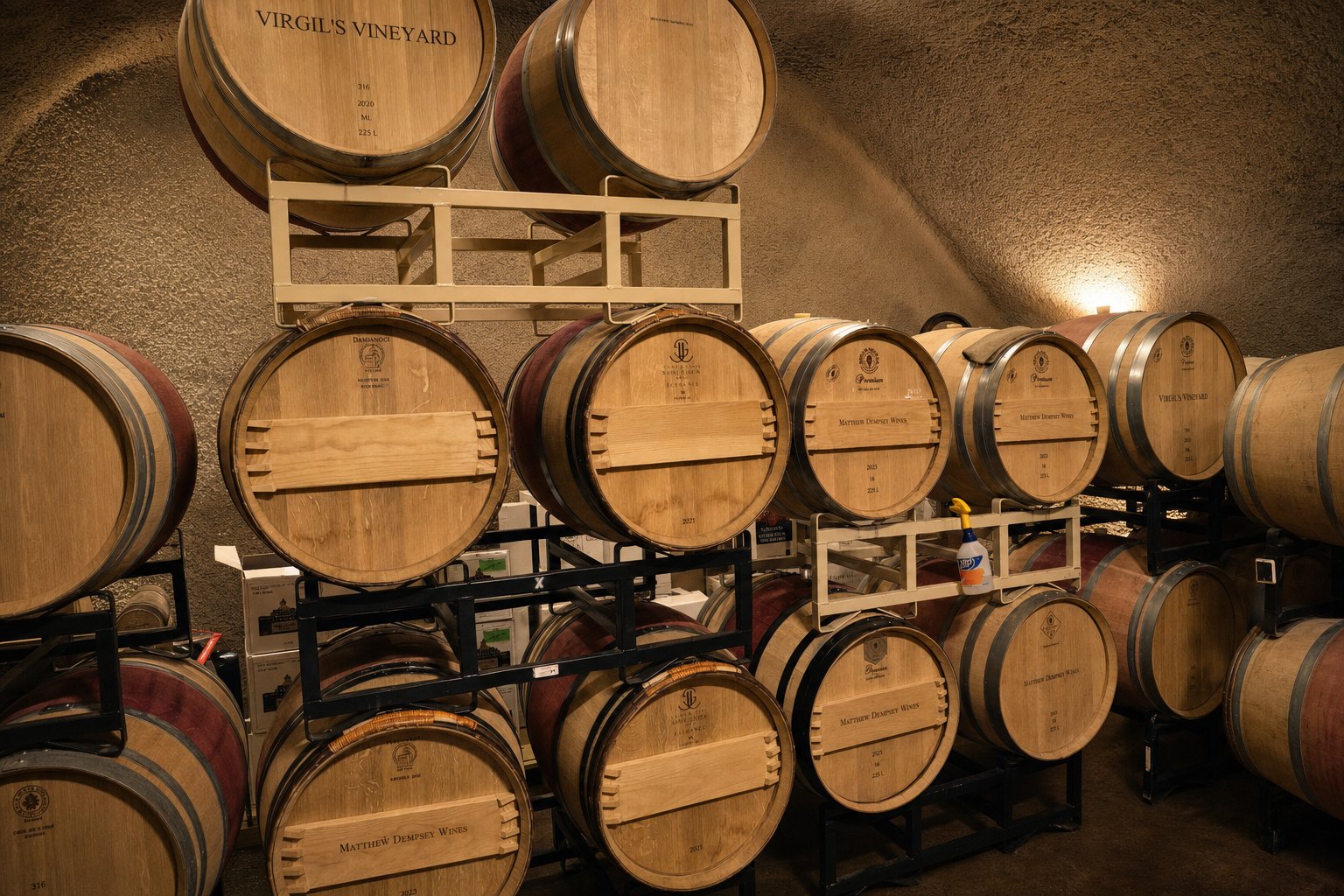
And this same distributor in Michigan introduced him to the Kipper family, the owners of Virgil’s Vineyard & Winery near the city of Napa. The Matthew Dempsey wines have been produced at Virgil’s Vineyard since 2018. This cave winery was built in 2005 into the hillside, with soil covering part of the cave; this is one of the smallest commercially producing physical wineries in Napa Valley. The total bonded space within the cave is only about 25′ x 25′, room enough for a limited number of barrels and some case-goods storage.
Despite its diminutive size, the cave is fully set up for premium winemaking, with reverse osmosis capability inside and out, and all fermentation, filtering, and bottling conducted on site.
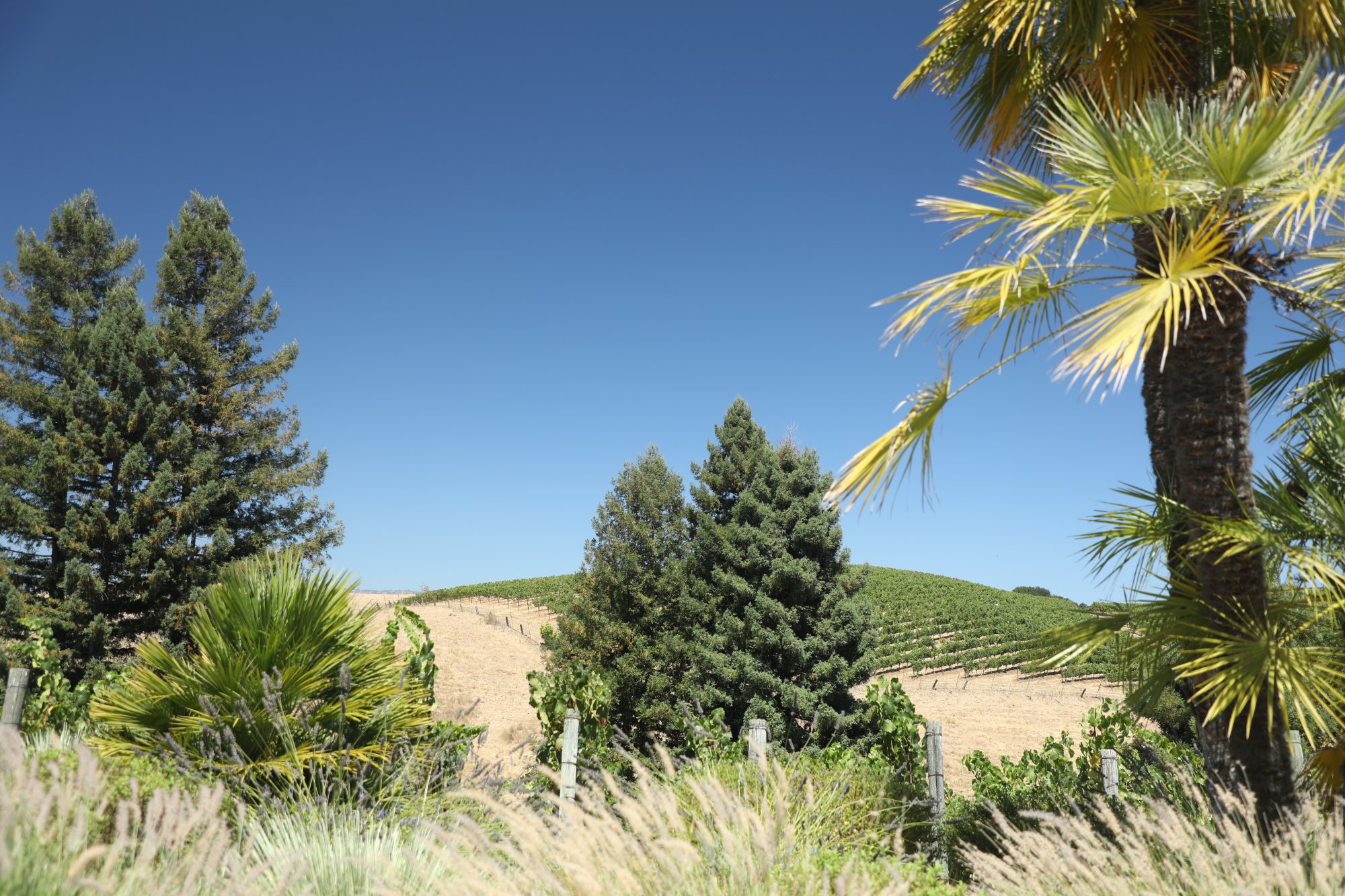
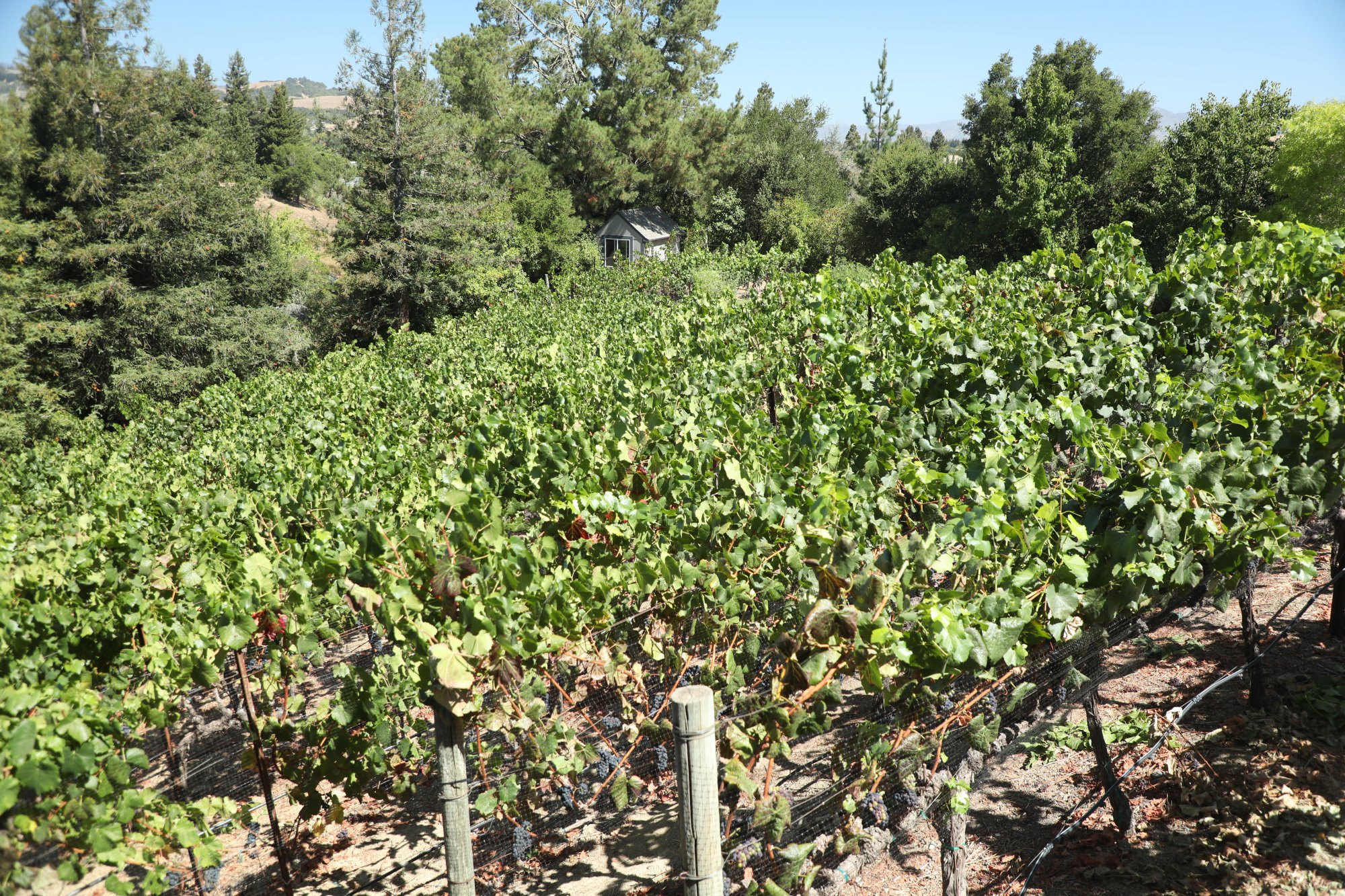
The property is 2 acres, of which 1.3 acres are planted to three distinctive blocks of Pinot Noir clones 667, 123 and 191 all ripening at different times and resulting in staggered harvest dates. Matthew Dempsey bottled several vintages of Pinot Noir from this vineyard. This hillside property offers a diversity of exposures and is the northernmost vineyard on the Napa side of Carneros, sitting in a part of the sub-appellation that people don’t often associate with the appellation. The soils are rocky and thin, resting on bedrock, but like the rest of Carneros, breezes constantly move through the property. A vineyard slightly to the north, owned by Beaulieu Vineyard, sits within the Napa Valley appellation. And the vineyard is surrounded by residential neighborhoods.
Matthew deeply cares about sharing his wines with others and is quick to admit, “These wines are meant for the palate, not the shelf”. Managing tannins thoughtfully and carefully is an important part of his winemaking. He likes tannins plush — never edgy or chewy.
He’s looking to produce wines that are ready to drink now but also carry an extended aging window — and as he noted, it all starts with good chemistry, letting the grapes and the vineyard dominate the conversation, with the oak playing a supporting role.
Boutique refers to small producers, but it also refers to being very much hands on with one’s craft and resulting product. Matthew is highly involved in viticulture for the vineyards he sources grapes from, and does all the winemaking and related cellar work himself. And he also oversees both marketing and sales.
Select wines
Whites
Sauvignon Blanc
The 2025 Matthew Dempsey “Érin go Blánc!” Sauvignon Blanc, St. Helena (Helena’s Crown Vineyard) is medium gold in color, with distinctive aromatics that unite tropical, stone fruit, and floral notes – i.e., pineapple, jasmine, honeysuckle, golden delicious apples, golden kiwi, and comice pear. Some of its aromatic contributions are a result of both skin contact (10 hours on the skins cold soaking prior to pressing) and the musqué clone. On the palate, it shows flavors of pear, golden delicious apples, golden plum, golden kiwi, pineapple, and papaya. The mouthfeel is rounded and silky, but never heavy, with a flavorful finish that lingers with real persistence, closing with a subtle, light spicy note from the barrel fermentation. Its texture and overall profile is perhaps best paired with seafood; Matthew recommends a fattier type of fish such as Chilean sea bass, a pairing suited by the higher glycerol production from the yeast used. Matthew’s favorite question when pouring this wine for consumers to ask them to guess the ABV is; no one has ever come close. In reality this wine is 16.1% ABV but is not perceived as that high. Tasted blind, we guessed its ABV was 14.6%.
The grapes were harvested in early September 2025 from Helena’s Crown Vineyard, located on the north side of Deer Park Road. The grapes were fermented cold at 53 degrees over four weeks, with both primary ultimately happening alongside malolactic fermentation. The wine is 50% clone 1 and 50% musqué, barrel-fermented, split between 50% new oak and 50% stainless steel drums. It was then aged for two months in 100% new French oak barrels — with bi-monthly bâtonnage throughout — including the portion originally fermented in stainless steel, before being racked to stainless steel drums for seven months.
This was the first white wine that Matthew had ever produced. His mother Erin was a strong influence on this wine; while she didn’t force him into making a white wine, exactly, but as he recalls, she used a lot of four-letter words to strongly convince him. He didn’t want to make a Chardonnay, so he told her that if he could find a premium Sauvignon Blanc vineyard, he’d make one for her. And he also remembers some of his mailing list members requesting a Sauvignon Blanc.
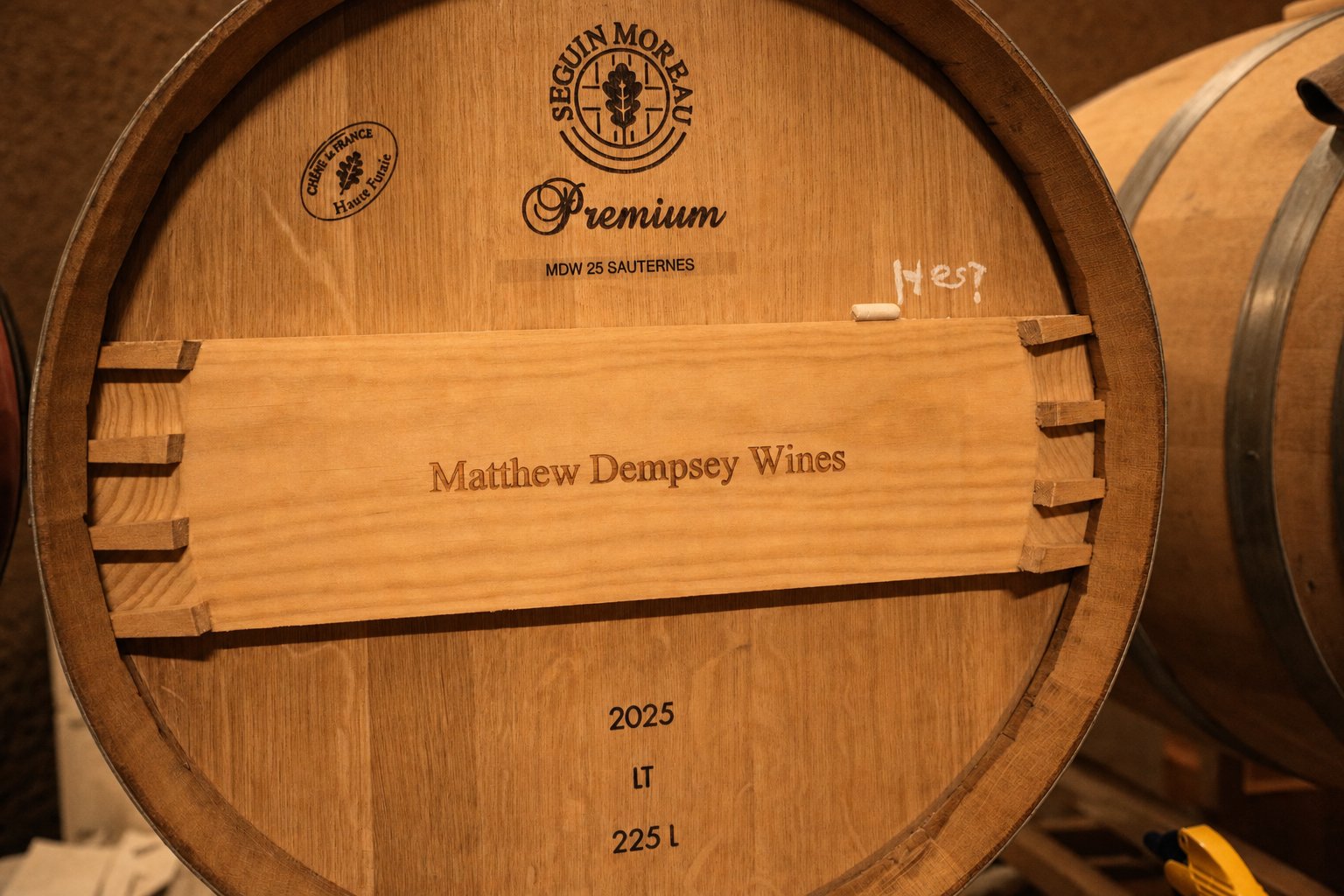
 The 2025 Matthew Dempsey The Two Headed Whippet Late Harvest Sauvignon Blanc Musqué, St. Helena, Napa Valley was tasted as a barrel sample from a Seguin Moreau barrel, light toast, with the staves seasoned for three years. This wine is deep gold in color, with aromatics of apricot, golden delicious apples, pineapple guava, a light note of bruised apple, and honeycomb. This marks the inaugural vintage of a late harvest white from Matthew Dempsey, and it’s loaded with an intensity of flavor including stone fruits showing as peach in light syrup and ripe apricot, accompanied by honeycomb, baked apples, and baked pears. The texture is sexy and silky, like running one’s fingers over the fur of a young miniature schnauzer, with bright acidity offering a pleasing balance. The finish carries a lengthy persistence of both sweetness and flavor, with neither one outrunning the other. Memorable in terms of its taste, the bright, lively acidity holds up beautifully against the intensity of flavor and sweetness.
The grapes were harvested in late October with about 30% botrytis, hand-sorted at the winery, and given roughly 12 hours of cold soak before pressing. The grapes were harvested at 32 brix, the wine was tasted at a residual sugar of 156 g/L, with 13.8% ABV and 0.64 VA. It will be bottled in May 2027, in both 375ml and 750ml formats.
Matthew enjoys wines from Tokaji and Sauternes, and before making this wine he tasted wines from at least a dozen producers from both regions. He decided that if he was going to make a late harvest Sauvignon Blanc, he was going to do a certain way. He enjoys how wines from both regions showcase depth, yet also subtleties. Napa is well-suited to producing this style – yet there are very few producers due to the economics of planting and producing these wines and the limited consumer base. Matthew plans to produce this wine every couple of years.
Reds
In most cases his red wines spends two to 3 years in barrel before bottling.
In 2020 he harvested just a few hours after the fire started. Rather than crush outside, they crushed inside the cave, avoiding the smoke in the air outside, including using additional HEPA filters.
Pinot Noir
The 2021 Matthew Dempsey Mezzo Piano Pinot Noir, Kipper Family Estate, is an equal union of grapes from all three blocks on the property, with each block contributing ripeness, acidity, and a savory character. This wine was fermented entirely whole-berry after hand sorting in open-top one-ton T-bins covered with screen, using pump-over only — a snorkel device working underneath the cap for a more gentle style of extraction. It was then aged for 17 months in 75% new French oak barrels, sourced from two cooperages. Medium ruby in color, the bouquet offers fruit, spice, and earthy characteristics. Its savory scents include old tobacco, white pepper, dried rose petals, damp potting soil, and mushroom, alongside fruited notes of strawberry and red cherry. This wine smells like Pinot Noir, as an elegant and more restrained expression of the variety. On the palate, it tastes of red cherry, raspberry, strawberry, and blueberry, finishing with a savory note of white pepper and a hint of dried sage. Balanced and food-friendly, it drinks easily in its youth at five years post-vintage, though interestingly, the spice present on the bouquet isn’t necessarily as noticeable on the palate. The tannins are gentle and seamlessly integrated. Its ABV is 12.82%.
For Matthew, Pinot Noir wasn’t initially captivating as a lot of the wines he was tasting back in Michigan weren’t high-end examples of the variety. He wasn’t introduced to premium Pinot until he moved to Napa Valley, and that’s when he started developing a real appreciation for it including working with top vineyards in Carneros such as Stanley Lane Vineyard and Mahoney’s Las Brisas Vineyard. Matthew told us, “you can’t hide behind a curtain with this variety, and if you do, it’s a wax curtain”. He loves the fruit, the earth, and the sense of place it carries and refers to his Pinot Noir as a love child between Napa Valley, Willamette, and Burgundy.
Organist
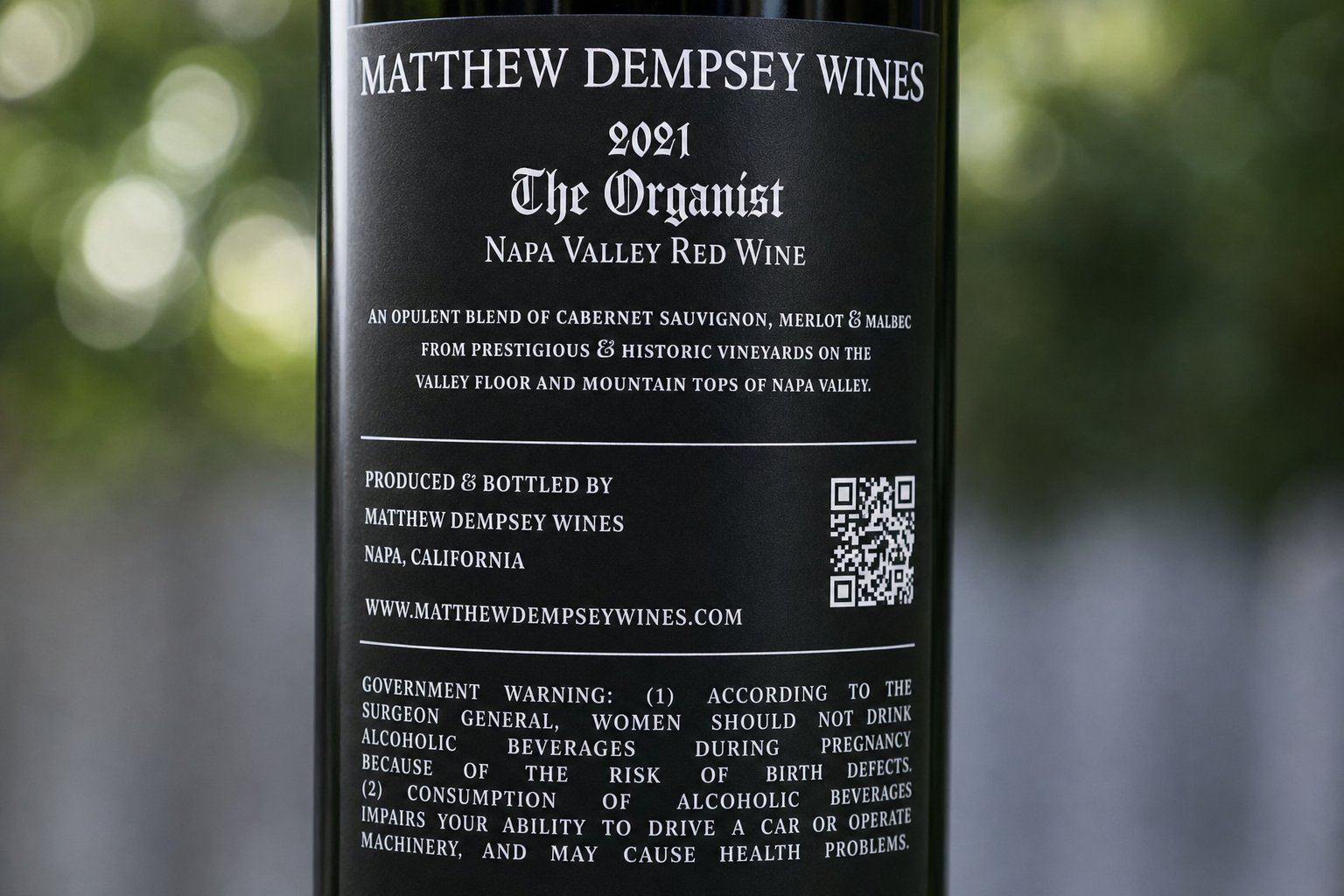
The 2021 Matthew Dempsey “Organist” Proprietary Red Wine. Starting with this vintage, it’s always a Bordeaux blend, meant to be a partner to the signature Cabernet Sauvignon. The grapes include Merlot from Oak Knoll District, Cabernet Sauvignon from Beckstoffer Georges III Vineyard in Rutherford and a skosh of Malbec from Mt. Veeder. This multi-AVA, multi-varietal wine is built as an expression of Merlot and meant to be enjoyed as a table wine. Its élevage was 75% new French oak for 24 months. It’s deep ruby and nearly opaque; forward-fruited but also with freshness in both aromatics and flavor, this wine smells of dark cherry, cassis, and blackberry alongside equally dark baking spices including clove and nutmeg, and a light note of old cedar box. Bright, balanced, and approachable in its youth, it tastes of dark cherry, boysenberry, blackberry, and blueberry, finishing with a note of light toasted oak from its time in barrel. At five years post-vintage, the tannins are remarkably refined and integrated, fitting seamlessly into the finish, with medium-plus acidity. This wine spent two years in barrel; in general, their red wines are aged in 80-90% new French oak and one year in bottle prior to release.
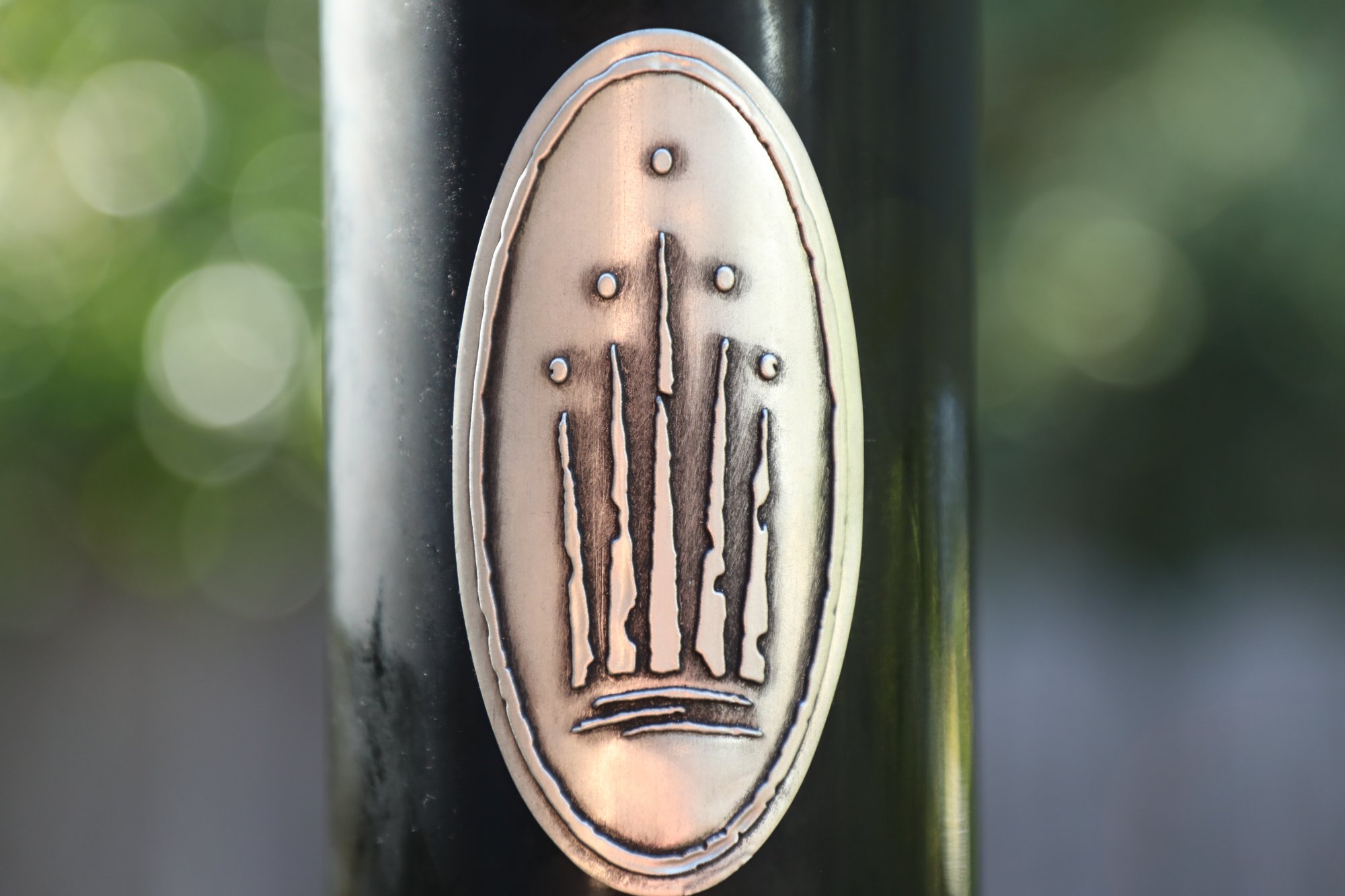
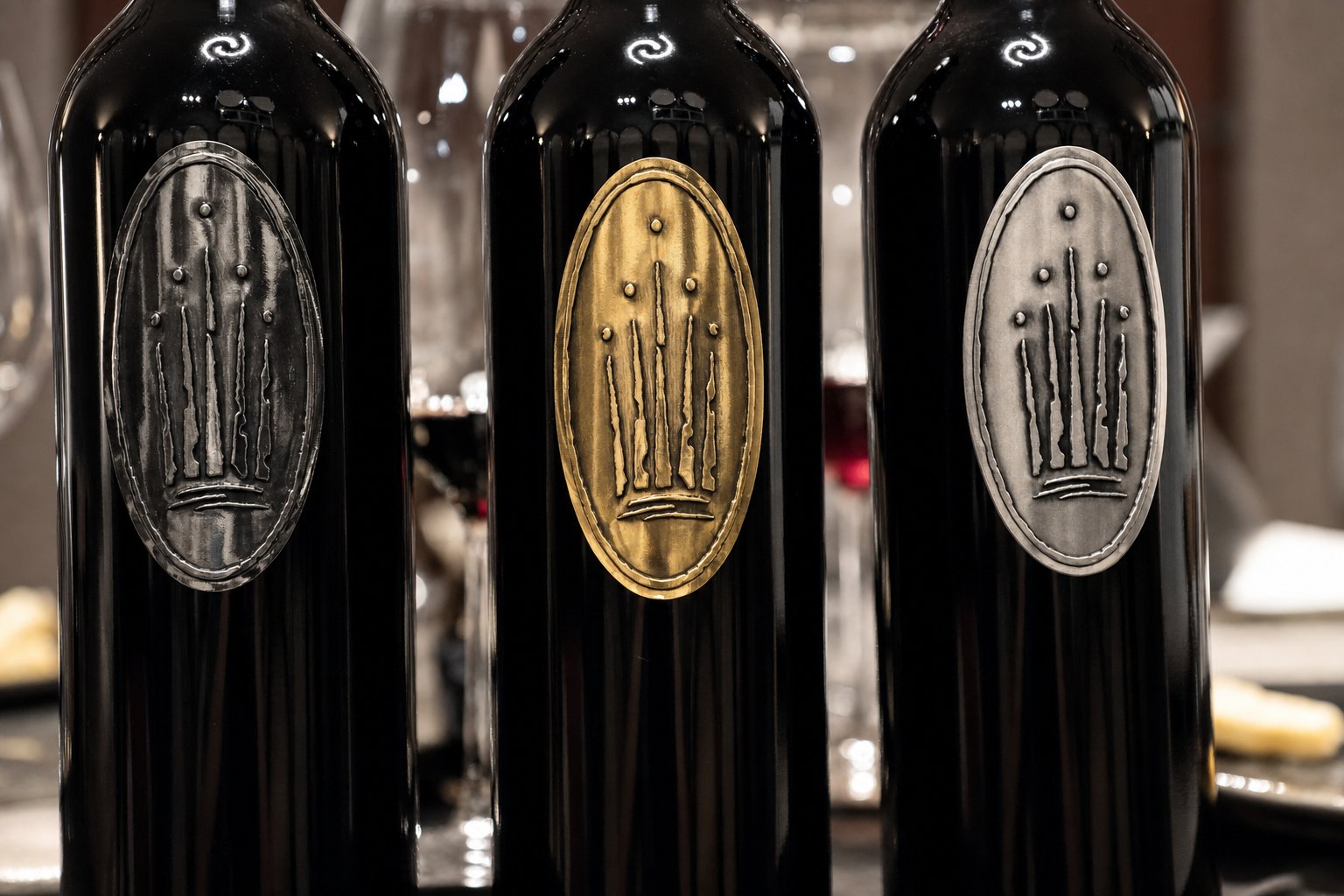
When he was studying pipe organ, one quote stood out in particular, from Wolfgang Amadeus Mozart and was the inspiration for the design of the Matthew Dempsey wine label, a crown that he sketched in 2017. In a letter to his father in 1777, Mozart wrote, “To my eyes and ears, the Pipe Organ will ever be the King of Instruments.” Its roots trace back to around 300 BC, to the hydraulis, a water- and air-powered organ spanning just a few octaves. Today’s pipe organ are generally built into buildings and, in most cases, never moved. Their range is impressive, as quiet as a church mouse or as loud as a full orchestra.
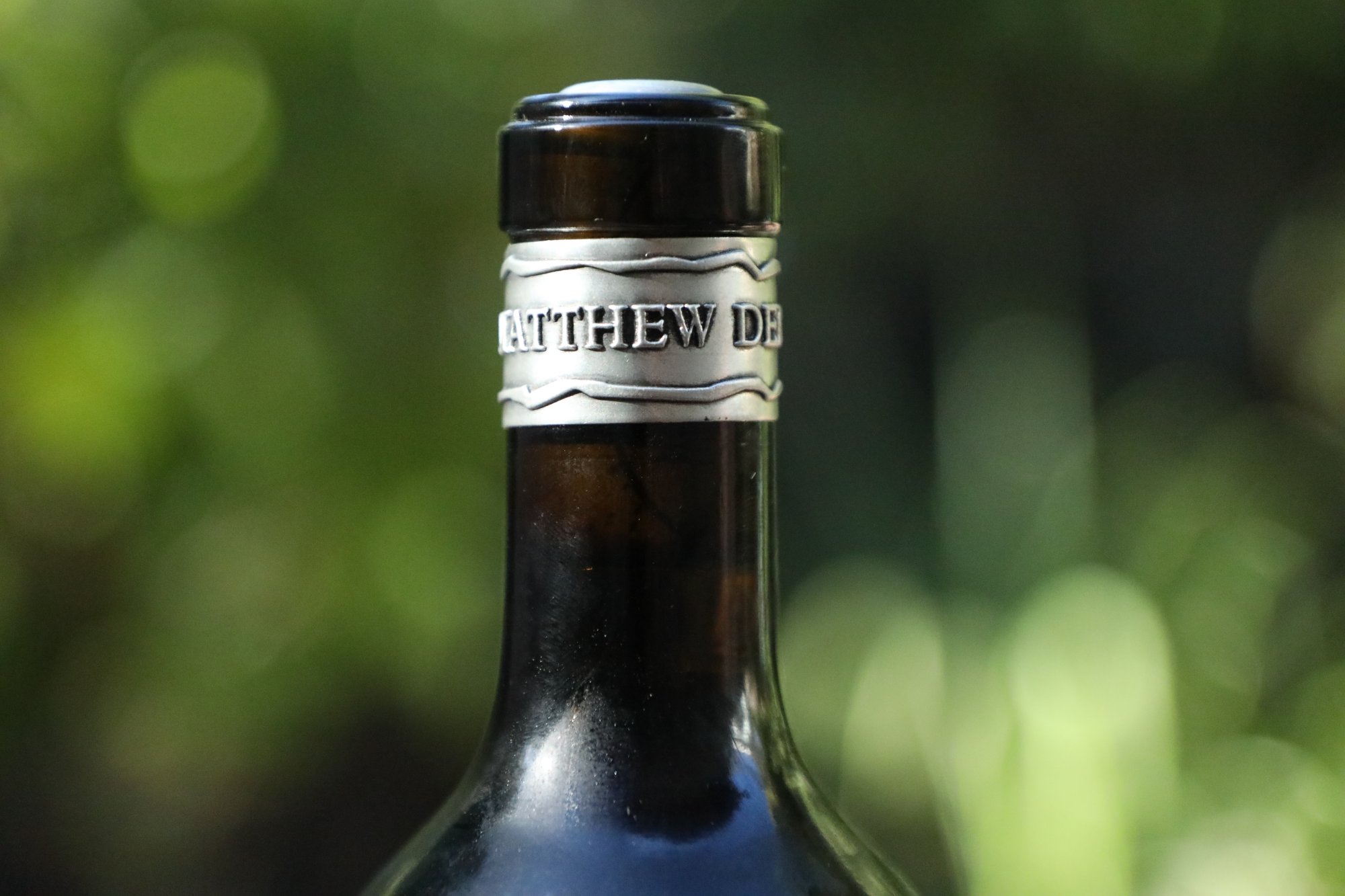
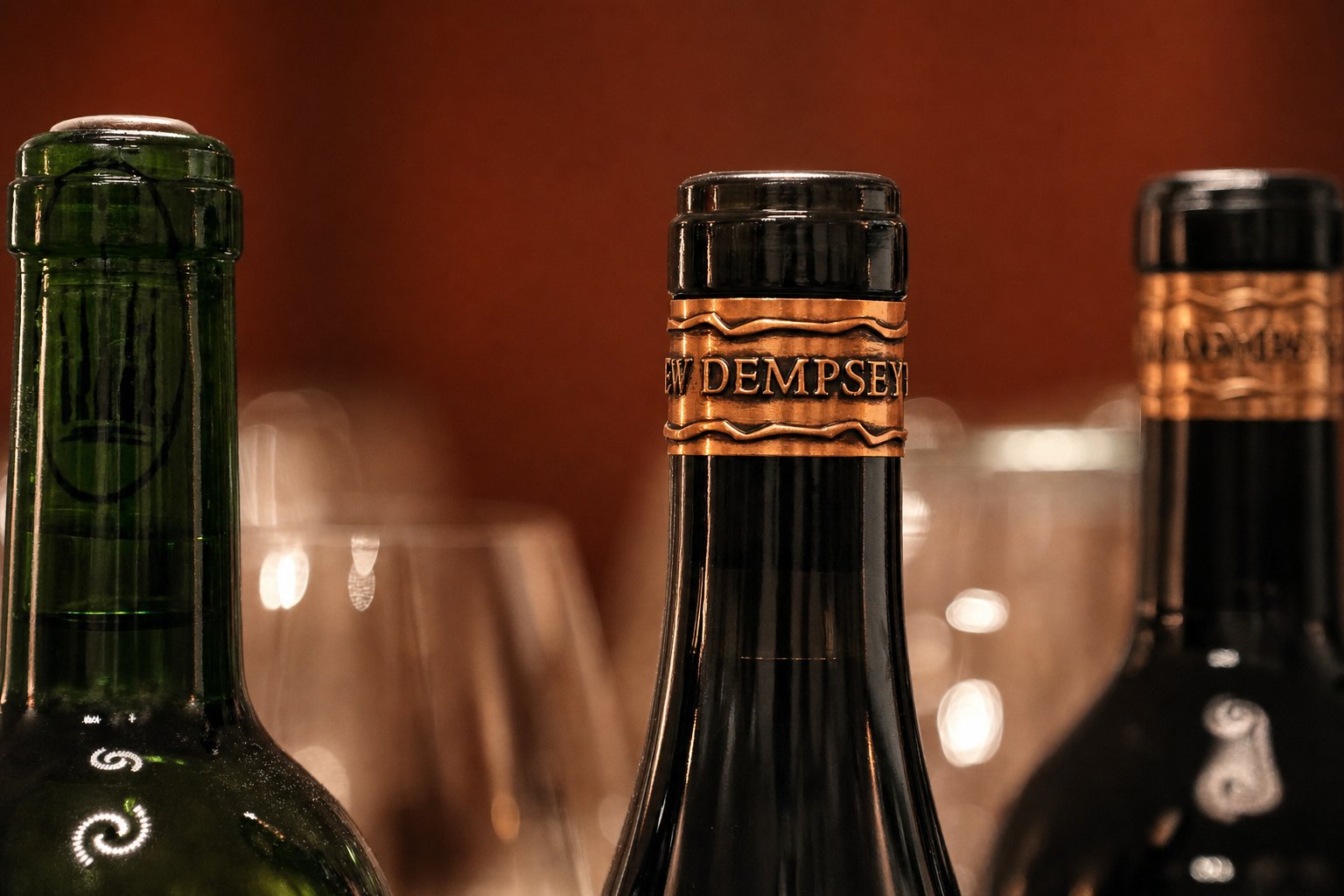
The label is made in Bordeaux, of pewter — the same metal used in the pipes of a pipe organ, with a pewter-silver or golden color and a design that is very tactile.
Cabernet Sauvignon
For Matthew, the most important element of winemaking is quality of grapes; there’s no acidulation or manipulation involved in the winery. His reds generally land in the low-14% ABV range. He consistently works with Darnajou oak barrels, noting its power to retain fruit and freshness while adding weight and depth to the wine.
The 2021 Matthew Dempsey 1895 E. Rutherford Vineyard Signature Cabernet Sauvignon comes from Block F, the oldest planted block at the time in a 300-acre vineyard, at roughly thirty years old. That block has since been replanted. This wine is 90% Cabernet Sauvignon and 10% Merlot from Oak Knoll, aged 26 months in 100% new Darnajou oak. Deep ruby and opaque, the bouquet is an expression of dark fruit, dark spice, barrel, and floral notes including old cedar box, dried herbs, i.e. sage, purple florals including violets and lilacs, dark plum, blackberry, boysenberry, and baker’s chocolate. The brightness and freshness of its acidity keeps the wine lifted and lively. An approachable expression, it tastes of Satsuma plum, dark cherry, blackberry, and boysenberry, finishing with notes of dried herbs, sage, cured meats, and a light touch of pepper. The tannins here are an accompanying character, never a dominating one, and the texture carries a lightly gravelly, well-integrated quality.
 The 2021 Matthew Dempsey Reserve Cabernet Sauvignon, Beckstoffer GIII Vineyard is 100% varietal, clone 337 from Block F, a particular block that features alluvial soils with sediment and silt from the nearby Napa River. This wine was aged in 100% new Darnajou oak barrels for 32 months. Deep ruby with purplish hues and quite opaque, the distinctive nose offers plum compote, blackberry, dark raspberry, and blueberry, with a savory element from the oak that balances out the darker fruit – notes of toast, dark chocolate, and coffee grounds. It’s layered, with plenty of depth in terms of both dark fruit and texture. On the palate, it tastes of dark plum, blackberry, blueberry, boysenberry, and dark mulberry, finishing with a savory note of dried herbs. The tannins take a step up here from the signature Cabernet Sauvignon, with a broader presence and a gravelly grip — but, like all the Matthew Dempsey wines, never a dominating one. This wine isn’t produced every year and is always a barrel selection. One barrel during this particular year stood out; Matthew kept tasting it blind with others in the industry over time, and all agreed it was a standout expression of the variety. Only 278 bottles were produced; this wine, like the most premium of the Matthew Dempsey wines is bottle numbered.
The 2015 Château Grand Chœur is 84% Cabernet Sauvignon and 16% Syrah from two vineyards located on Sonoma Mountain and both farmed by Phil Coturri. This wine was made a year before Matthew moved to Napa. He racked it to barrel and moved it to his grandfather’s home, where his grandfather checked the temperature and humidity daily – referring to him as, “The best cellar master I have ever had”. The grapes were open-top fermented with manual punch-downs, using four different yeast strains, then pressed and barreled into 100% new Demptos oak for 22 months. This wine is deep ruby and opaque, with a slight dark brickish hue at 11 years post-vintage. The nose shows dried tobacco leaf, the most prominent aromatic at this age, alongside dark chocolate. As on the bouquet, the palate carries a layer of dried tobacco, especially noteworthy on the finish, with additional flavors of blackberry, dark cherry, boysenberry, and dark plum. It shows some fruit maturity, but the fruit is still very much the star of the show, with plenty of tension remaining between fruit, acidity, and texture. The acidity is bright, while the tannins still show a bit of tightness, fully coating the palate with a dusty, drying grip that currently outpaces the fruit. This wine still has life ahead of it.
“Grand Chœur” translates from French as “great chorus” or “large choir”. This label features the Dempsey family crest, with a griffin, crown, keys, and swords, in wax — a label that proved difficult to apply, requiring gorilla glue and double-sided vinyl adhesive to make it stick.
—
Production is typically 450 to 500 cases produced annually and sold direct to consumers via their website and allocation list. For more information or to join the allocation list, please visit: www.matthewdempseywines.com
Leave a Reply