



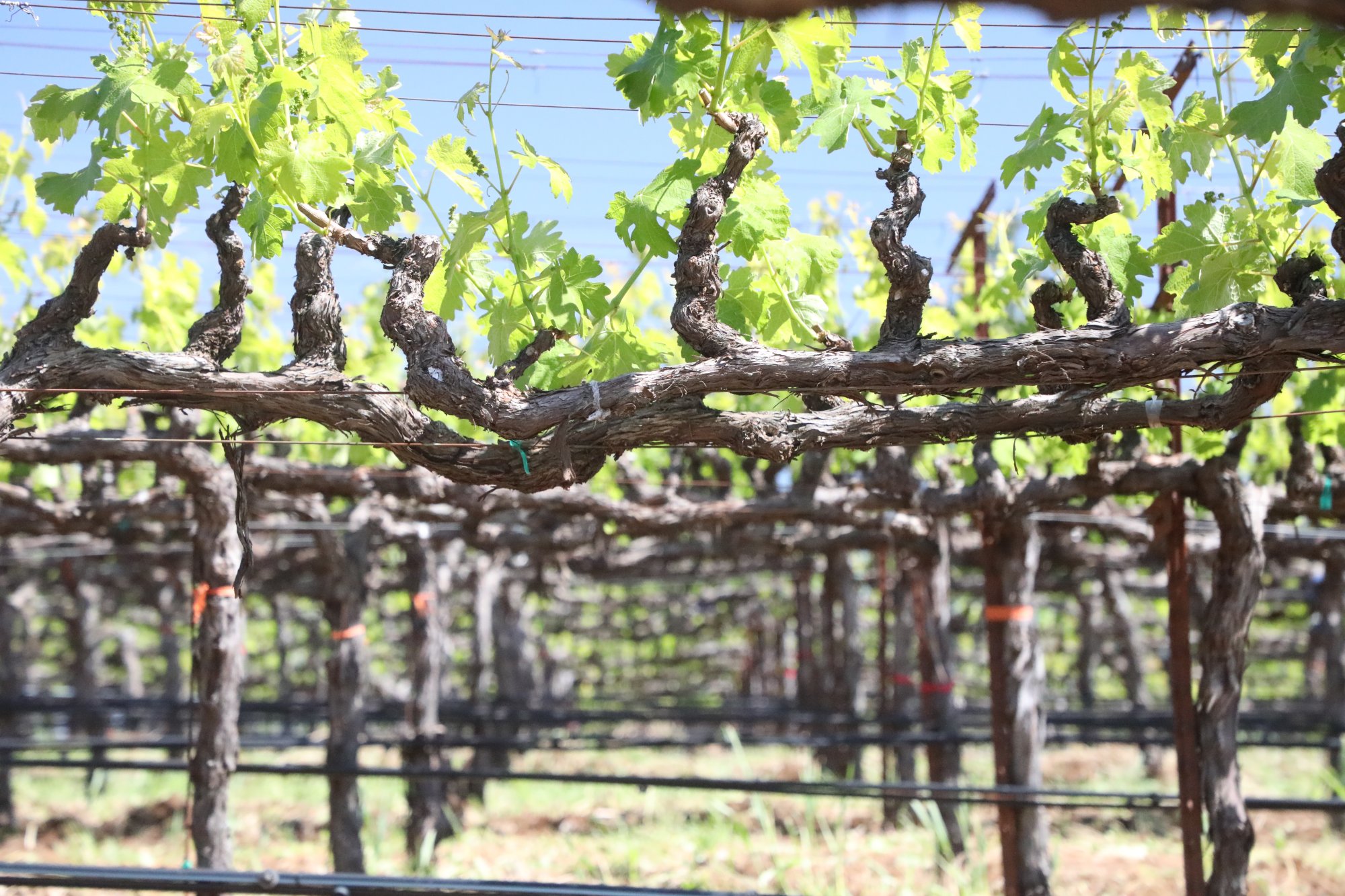
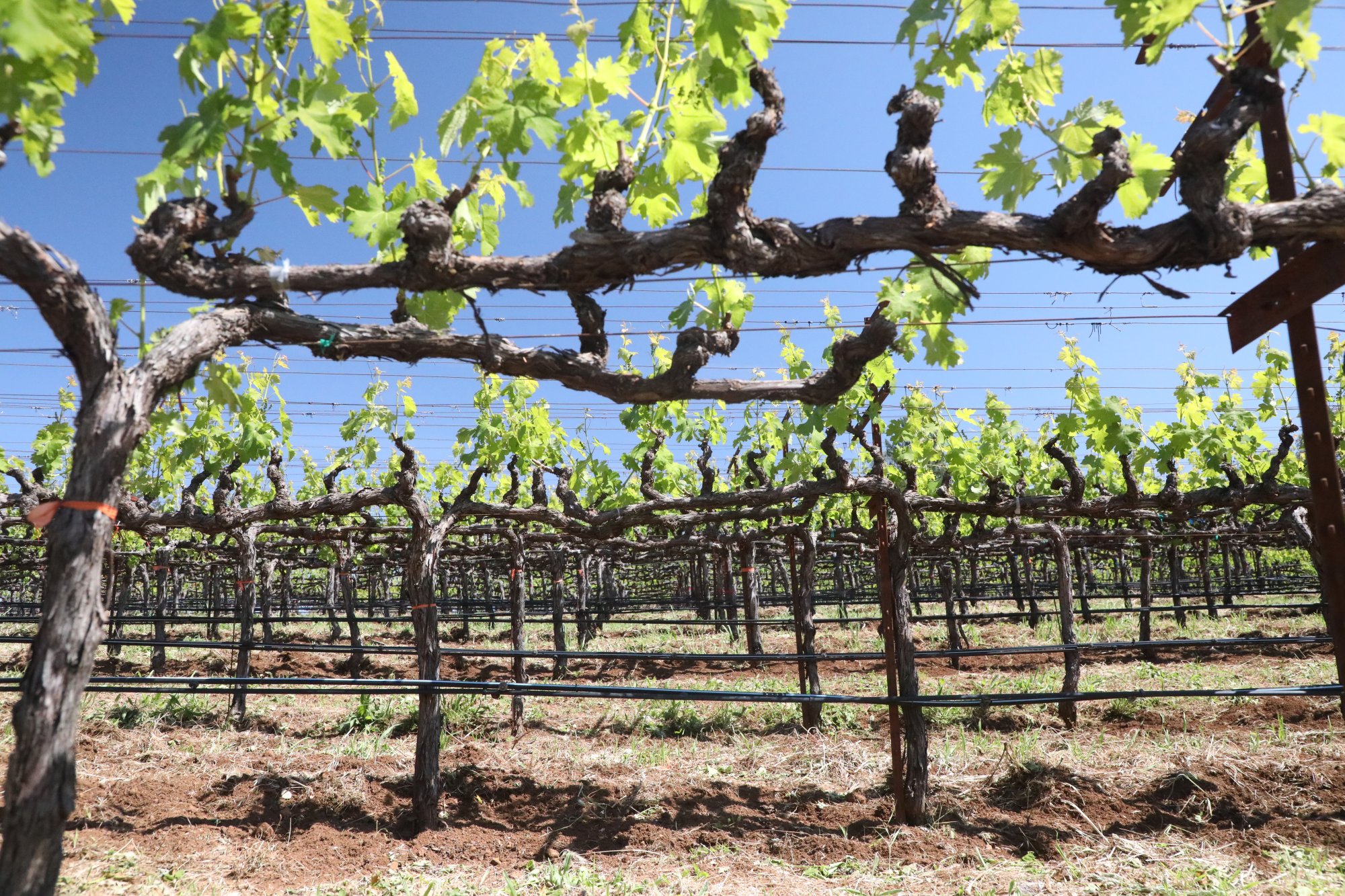
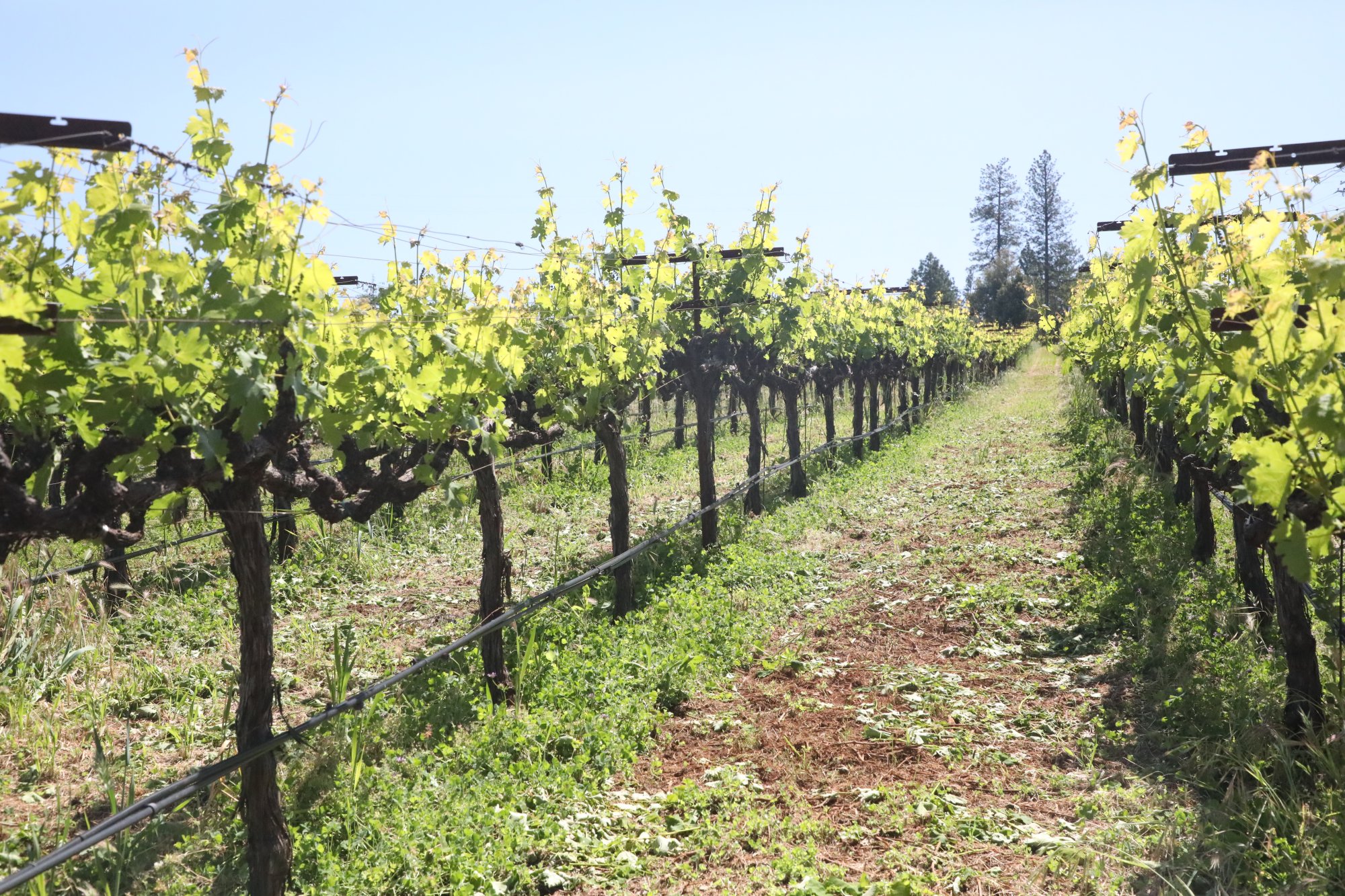
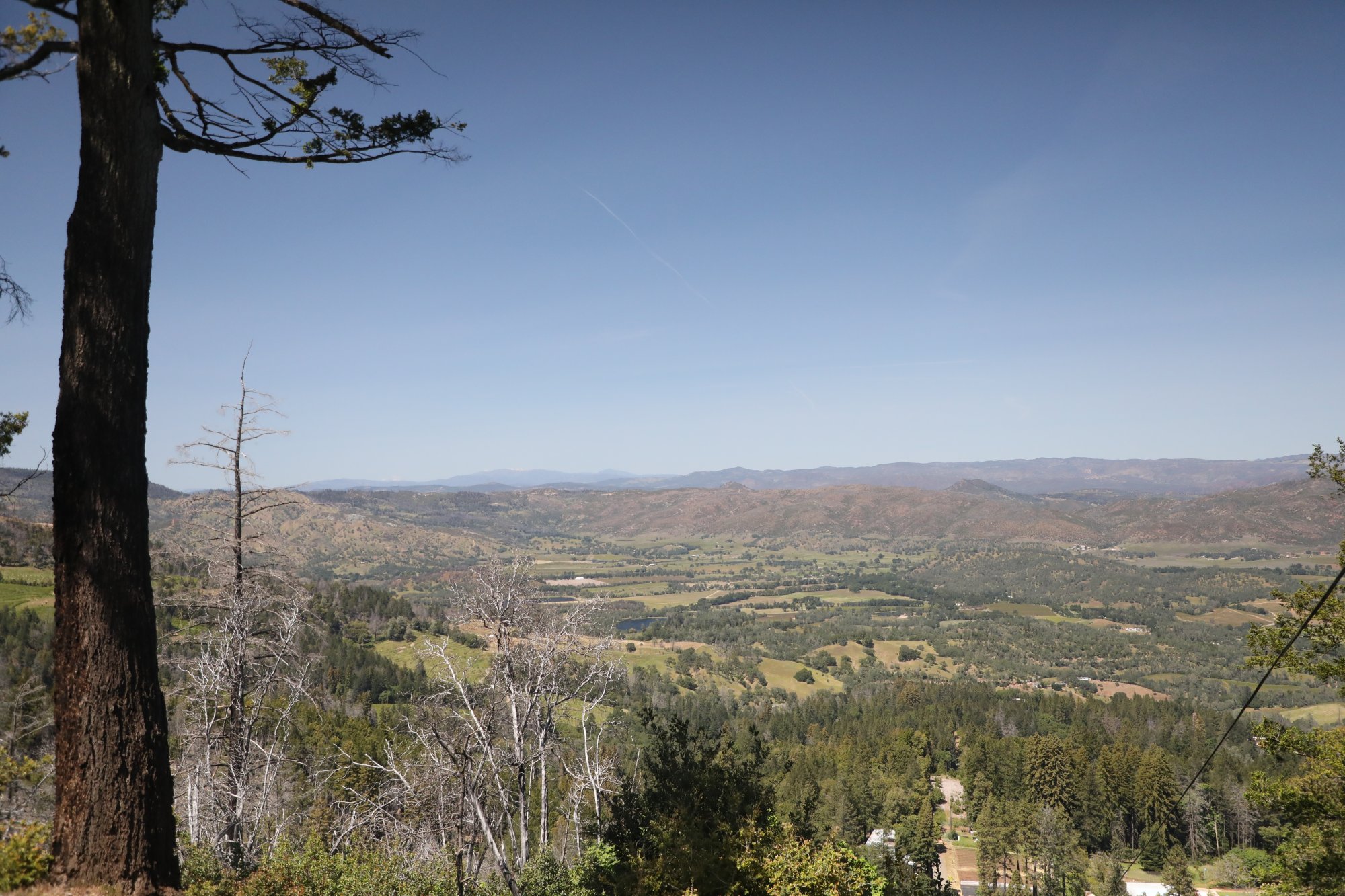
 Mars Estate is located high on Howell Mountain on a “ridge peninsula” overlooking Pope Valley to the east. On an extremely clear winter’s day one can even see parts of the Sierra Nevada mountains far in the distance, which is one of several locations on Howell Mountain and on Atlas Peak where one has such views. This very scenic location is reminiscent of some of the foothills in California’s Sierra Nevada, including the red soils, similar vegetation and even some of the same smells. The vineyard sits at 2,200 feet; this location is unique in that there is a 50-degree drop-off on three surrounding sides falling off dramatically over 1,000 feet down to Pope Valley.
Originally from Singapore, Mars Yuan joined HaiDiLao Hotpot in 1999, when the company was less than five years old; the company started from a single restaurant in Jianyang, Sichuan. A high school dropout, he began as a dishwasher before steadily working his way up through the company as a busser, store manager, and eventually a leader overseeing new restaurant expansions throughout China.
Today, HaiDiLao operates more than 1,300 hot pot restaurants across Asia, Europe, the United States, and Australia. The company has become the largest hot pot chain in China and is publicly traded on the Hong Kong Stock Exchange. Yuan now serves as CEO of HaiDiLao USA, where he helped guide the brand’s American growth following the opening of its first U.S. restaurant in Arcadia, California, in 2013.
Haidilao Hotpot is particularly known not just for its food, but for its highly distinctive service model. The company emphasizes hospitality as a core differentiator, offering amenities uncommon in the restaurant industry such as complimentary snacks, manicures, children’s play areas, and even entertainment like noodle-dancing performances and celebratory events for guests. And expanded waiting areas. Customers can customize their meals extensively, selecting multiple soup bases in a single pot and mixing their own sauces from a wide range of condiments. While the quality of food is consistently worth noting between locations, it is also the overall experiences that people also come for.
It was after Mars moved to the U.S. that he began to become interested in wine and became a serious collector. His son Colin describes his interest in Napa Valley.
“He was drawn to the boldness, power, and elegance of its wines — qualities that, to him, mirrored something essentially American: a sense of freedom, a willingness to be ambitious, an openness to innovation. A piece of land that could produce wines of such intensity and grace felt almost like a metaphor for the country itself. He began collecting, and over the years the idea slowly took root that he wanted to see the whole process through — from the farming to the bottling — with his own hands.
Howell Mountain felt, to him, like a corner of Napa that hadn’t been fully discovered yet — quieter, a little wilder, still carrying a sense of possibility. He was captivated almost immediately by the elevation. His favorite Howell Mountain producer for years was Dunn Vineyards, whose wines became a kind of reference point for what the mountain could do.”
The Mars family acquired this property in 2022 from the Lamborn family who had purchased it in 1973. This land had never been planted to vines before; the Lamborn family spent several years clearing and planting the land (the first Zinfandel vines were planted in 1979) and released their first commercial vintage in 1982 with the help of renowned Howell Mountain winemaker, Randy Dunn.
Mars Estate has assembled an A-team for their vineyard and winemaking. Winemaker Heidi Petersen who began making the Lamborn wines in 1997 continues to work with this site and makes the wines for Mars Estate. Her decades of working with grapes from this property and intimate understanding of its nuances, ensures continuity in the winemaking. Viticulturist Steve Matthiasson (of Matthiasson wines) oversees viticulture with vineyard manager, Nicholas Antignano of Silverado Farming providing their vineyard management.
Immediately after graduating UC Davis in 1980 with a B.S. degree in Fermentation Science, Heidi went to work for Justin Meyer at Franciscan Vineyards and Silver Oak Cellars (back when Franciscan was under the same ownership as Silver Oak).
By age 25 she was the winemaker at Buehler Vineyards (a well-established winery located in the hills east of the valley floor). By 1988 she decided to become consult and became and independent winemaker. By the mid 1990s her wine making abilities and knowledge were much in demand. Today she continues to selectively make wine and consult for a select group of clients. And along with her husband, Bo Barrett, the proprietor of Chateau Montelena, produce a single Cabernet Sauvignon each year bottled under the wine brand, Barrett & Barrett (see our notes on this site for more details about that brand).
Heidi has worked more than 40 harvests in Napa Valley.
—
Steve Matthiasson is one of Napa Valley’s most respected voices in sustainable viticulture and balanced winemaking. He has worked with numerous vineyards, helping guide farming practices toward greater environmental responsibility and long-term health. His influence has been instrumental in promoting dry farming, cover cropping, and reduced chemical inputs across Napa Valley.
Alongside his consulting work, he and his wife Jill established Matthiasson Wines, producing wines that emphasize freshness, moderate alcohol, and varietal character. Rather than following trends favoring opulence and ripeness, Steve’s wines are known for their restraint, acidity, and food-friendly nature, often drawing inspiration from classic European styles. He has also championed lesser-known varieties such as Ribolla Gialla and Refosco, helping diversify Napa’s vineyard landscape.
Matthiasson’s work has earned widespread recognition, including being named Winemaker of the Year by San Francisco Chronicle. Through both his farming and winemaking, he has played a key role in shaping a more thoughtful, sustainable future for Napa Valley.
—
The name “Mars” is derived from Colin’s father’s first name; it can also allude to the site’s reddish soils, which could be construed as being a terrestrial connection to the ‘red’ planet Mars. The 3-parcel property is approximately 34 acres in total, with 7 acres currently under vine.
The Yuan family first came to know the Lamborns through wine, and over the course of several visits to Napa Valley, a relationship developed. Colin recalls their first visit with the Lamborns in 2022, “We brought the dog, my siblings came along, and what could have been a transactional visit turned into something else entirely — two families sitting together, talking openly about the land and the wine, the way families do. What made the acquisition feel right wasn’t the property itself, as beautiful as it was. It was that the Lamborns were quietly proud of what they had built over so many decades and genuinely wanted it to pass into hands that would care for it the same way.”
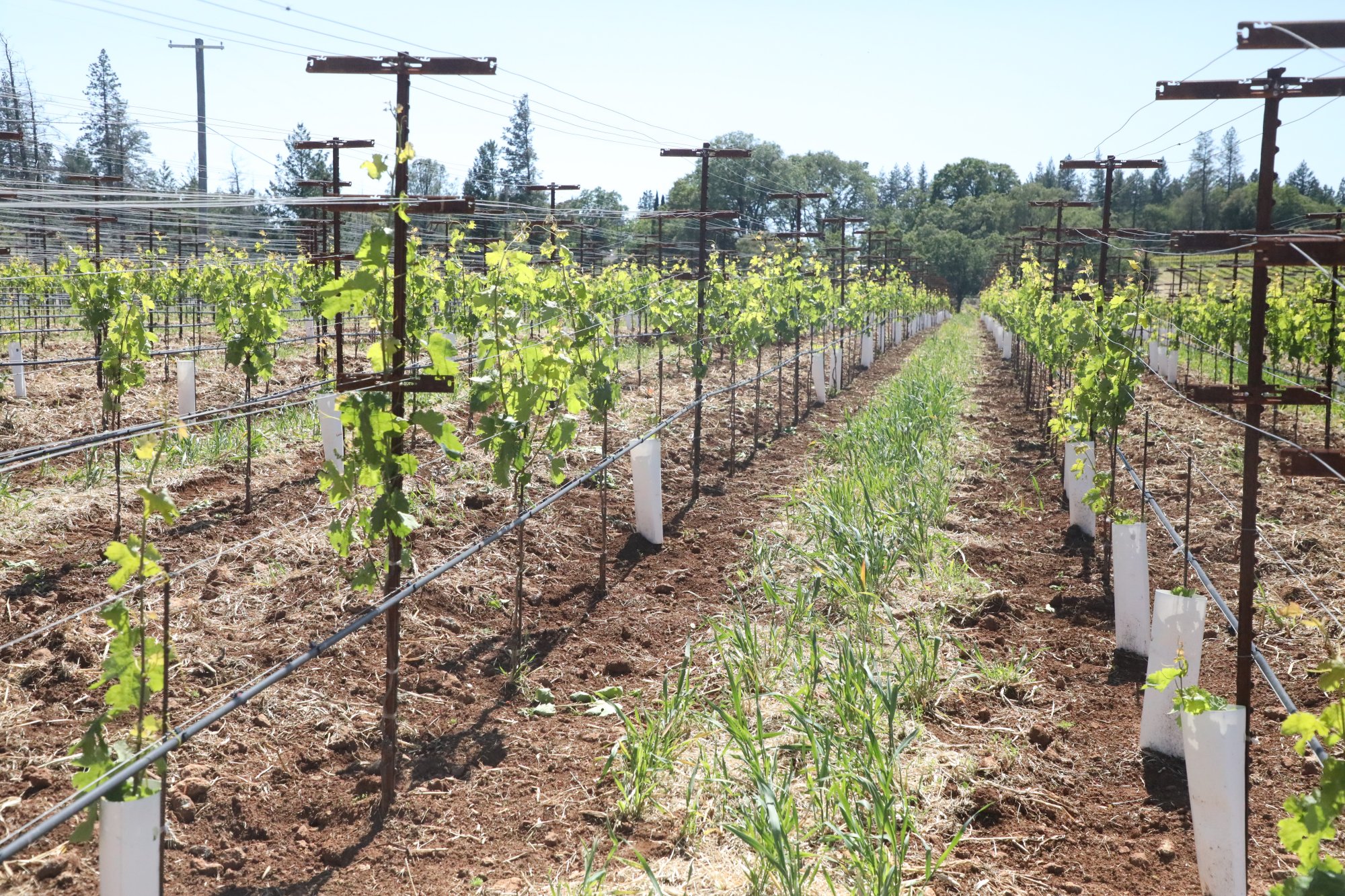
The change in ownership aligned with the vineyard’s need for a reset and refresh, as it was not farmed organically at the time. Since taking over, the family has transitioned the farming to biodynamic practices, with organic certification expected in late 2026. They now utilize cover crops, composting, and integrated pest management, and since 2023 have observed a marked improvement in overall vineyard health. And the two acres of old-vine Zinfandel was pulled and replanted to Cabernet Franc, Cabernet Sauvignon, and Petit Verdot, blending varieties for the estate wine.
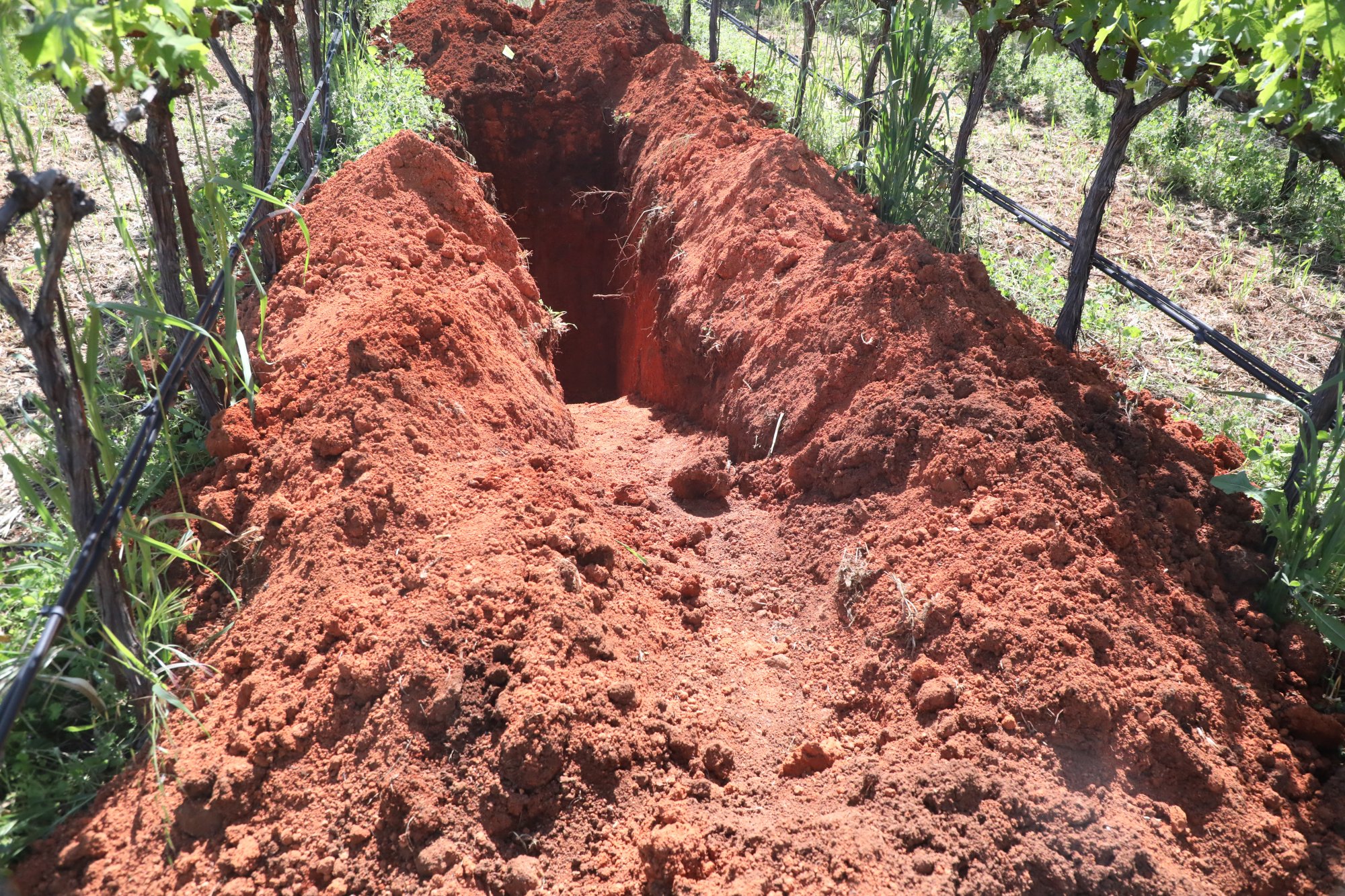
The focus is on producing terroir-driven wine, supported by high-quality grapes, utilizing Heidi’s deep familiarity with the site. The vineyard itself is divided into three main blocks. The easternmost block features clay loam soils approximately four feet deep over bedrock, while the interior block contains more reddish clay with higher iron content and a notably rocky composition. Although portions of the vineyard are clay-heavy, the site as a whole is well-drained. The blocks do not ripen uniformly, with variations occurring consistently from year to year. The vines are planted on a northwest-facing aspect.
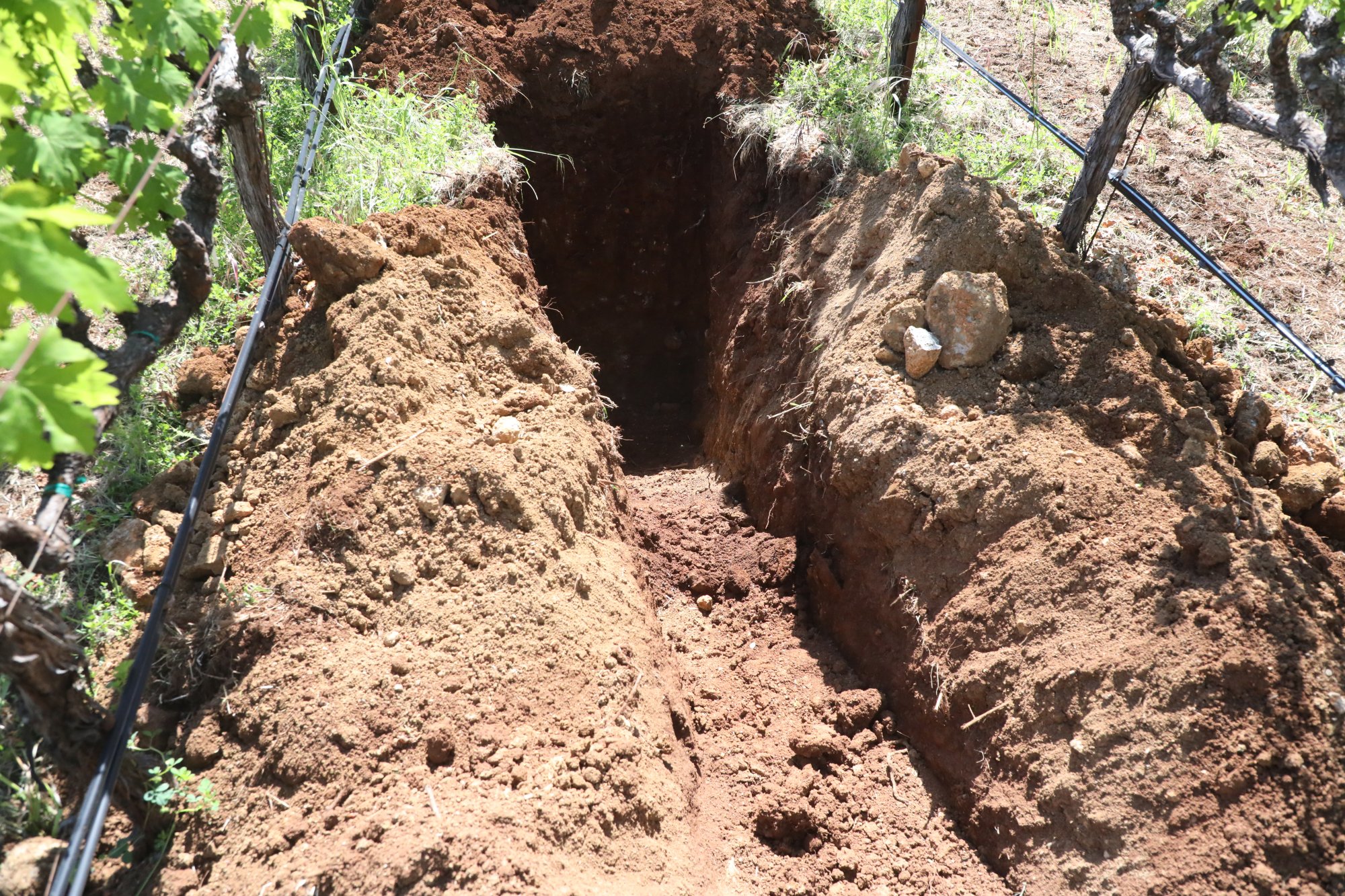
 The soils across the majority of the property are relatively shallow, consisting of volcanically derived clay. Soil pits reveal a gradual transition between the topsoil and underlying bedrock, rather than an abrupt boundary. Even at depths of five feet, the vine roots are notably still present, extending down into fractured bedrock and taking full advantage of these fissures. Soils expert, Brenna Quigley describes the soils at this site as particularly impressive, a key factor in the vineyard’s character and resilience.
The winemaking remains consistent from year to year, typically involving three pump-overs per day followed by approximately 22 months of aging in 60% new French oak barrels from Taransaud and Radoux. During a barrel tasting of the 2023 vintage, Harry Chanpaiboonrat, Director of Hospitality noted that the wine was already showing a remarkable sense of completeness. With the removal of the Zinfandel, the estate is now focused on producing a single estate wine.
On his first visit to the vineyard, Chanpaiboonrat was struck by the site’s raw, untamed energy—particularly the sound of the winds, the views and the wildlife. That sense of wildness and rustic character may ultimately find its way into the wines, shaping their personality and expression. The philosophy of Mars Estate centers on a collaboration between nature and human intention.
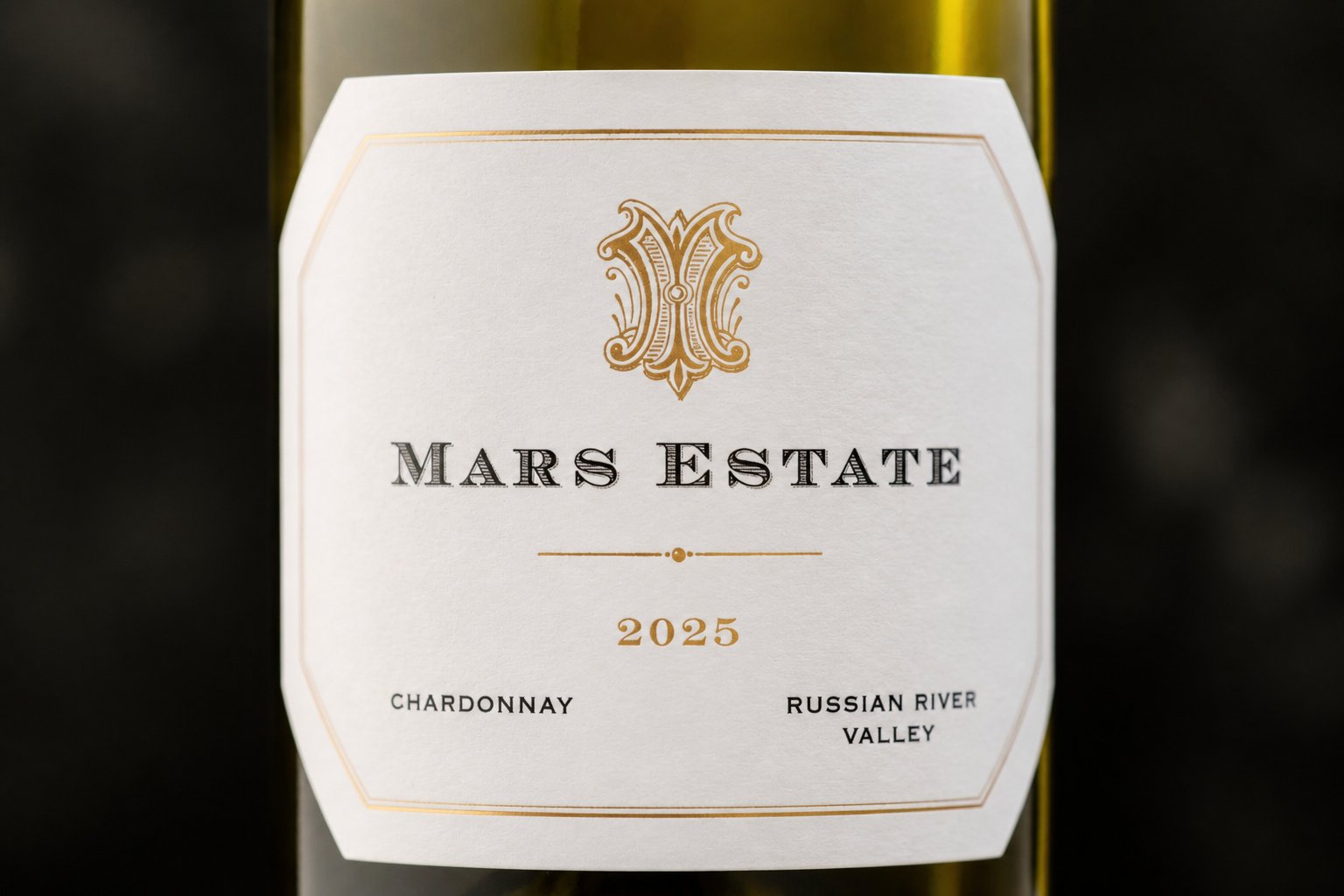
And in 2025 Mars Estate produced their first white wine, a Chardonnay from the Lafranchi Ranch in Russian River Valley in neighboring Sonoma County.
Label design
The label was created by Santa Rosa, CA based designer Chuck House, whose work includes iconic wineries like Masseto, Maya, Stag’s Leap, Spottswoode, Heitz Cellar, and the original Frogs’ Leap label now in the Smithsonian. At the center is the ornate “M,” discovered by Chuck in a 19th-century Paris type catalog from the famed Fonderie Deberny & Cie. The foundry itself traces back to Honoré de Balzac, who founded a printing operation in the 1820s to support the enormous output of La Comédie Humaine. Over time, the press evolved into a true Parisian atelier of artists, engravers, and craftsmen in the tradition of Hermès and Vuitton. The monogram likely passed through many anonymous hands — artist, draftsman, engraver — before becoming the elegant mark it is today.
Chuck believed the monogram needed “somewhere to land,” so the design is grounded by a fine horizontal line beneath the “M.” Within it, two small dots and a larger center dot subtly reference Mars and its stars. The typography went through countless variations before settling on a copperplate-inspired face with soft gray shading that complements rather than competes with the monogram. On the back label, illustrator Mike Gray’s pencil sketch of the vineyard echoes the same refined, engraved feel. Together, the elements create something timeless and understated — a label that feels both historic and contemporary, carrying generations of craftsmanship without ever having to say so.
Howell Mountain
Howell Mountain is one of the most distinctive sub-appellations within Napa Valley, defined by its elevation, rugged terrain, and unique growing conditions. Rising above the valley floor on the eastern side, vineyards here typically sit between 1,400 and 2,500 feet, often above the fog line that blankets much of Napa in the mornings. This elevation creates a markedly different climate: warmer days with abundant արև sunshine, paired with cooler nights that help preserve acidity in the grapes.
Unlike the valley floor, where temperatures can be moderated by fog intrusion, Howell Mountain experiences more consistent sunlight and less diurnal fluctuation. The growing season tends to be slightly longer, allowing grapes—particularly Cabernet Sauvignon—to develop thick skins, concentrated flavors, and firm tannic structure. The winds can be persistent, contributing to smaller berries and naturally lower yields, both of which enhance intensity and depth in the wines.
The soils of Howell Mountain are another defining feature. Predominantly volcanic in origin, they are typically shallow, rocky, and well-drained, composed of tufa, red clay, and decomposed volcanic ash. These soils are less fertile than those on the valley floor, encouraging vines to struggle and send roots deep into fractured bedrock in search of water and nutrients. This stress often results in lower vigor and smaller crops, but with greater flavor concentration and a pronounced sense of site expression.
Viticulture on Howell Mountain can be challenging due to the terrain and limited water retention of the soils, but the rewards are significant. Wines from this appellation are known for their structure, age-worthiness, and distinctive minerality, often showing dark fruit profiles, earthy undertones, and a signature firmness.
Historically, Howell Mountain holds an important place in Napa Valley’s development. It was one of the first areas in Napa to be planted to vineyards in the 19th century, with early pioneers recognizing the value of its elevation and well-drained soils. It was officially established as an American Viticultural Area (AVA) in 1983, making it one of Napa’s earliest designated sub-appellations. Today, it remains a benchmark for mountain-grown Cabernet Sauvignon, offering wines that are both powerful and expressive of their rugged origins.

Select Wines
Cabernet Sauvignon
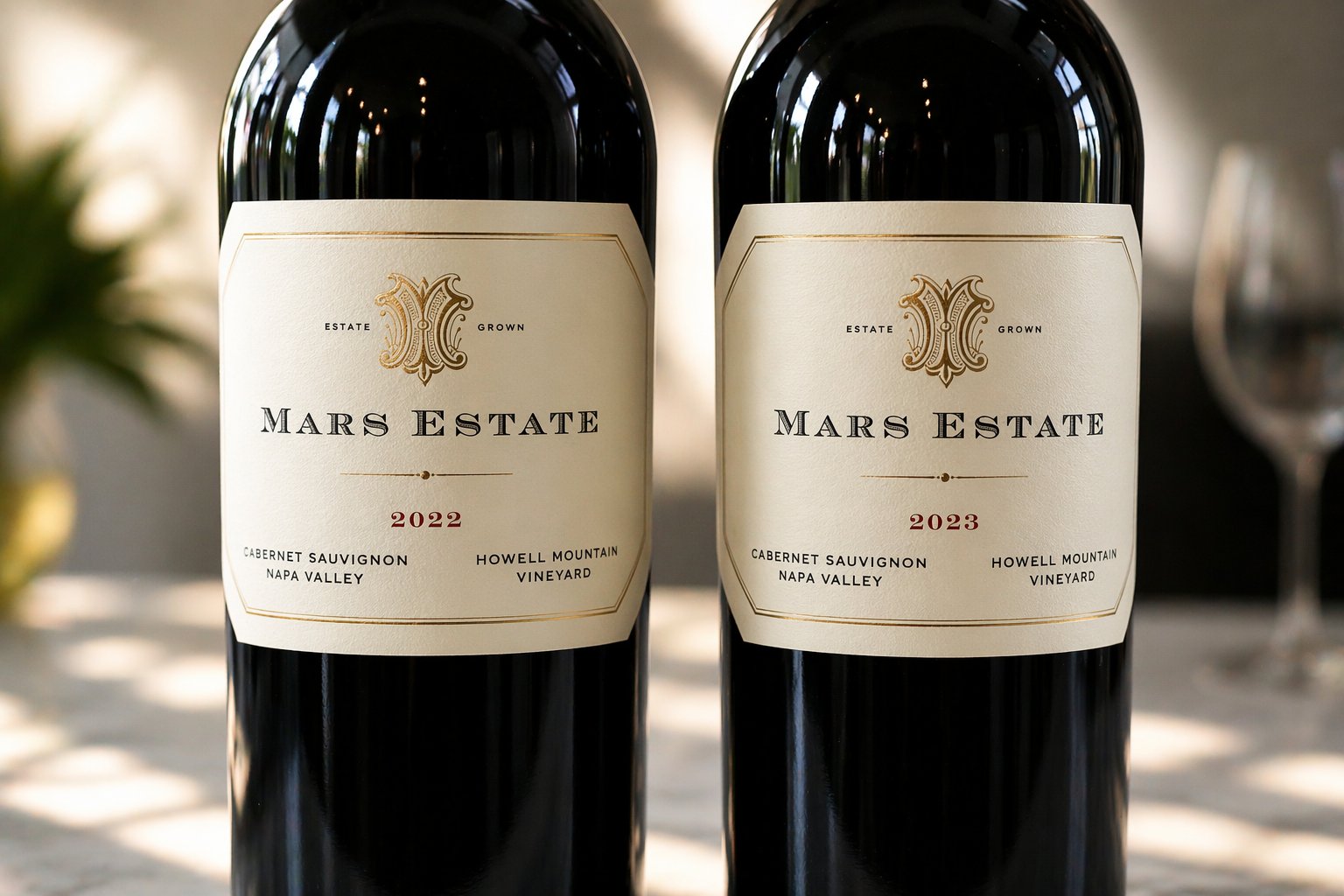
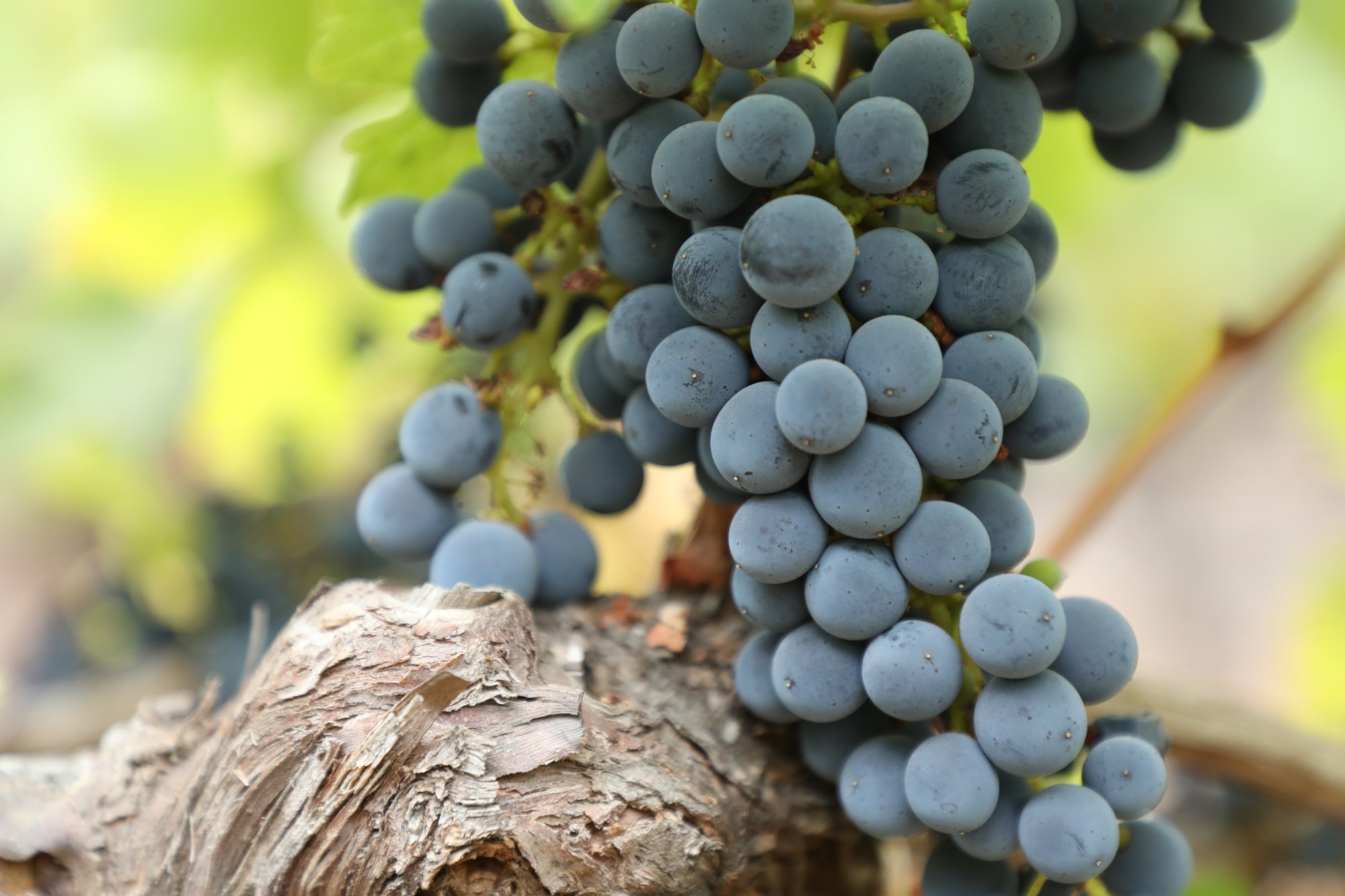
The 2023 Mars Estate Cabernet Sauvignon is deep ruby; this wine smells like blackberry, dark cherry, fig and purple mulberries. In addition to the fruit, the scents include chocolate, cocoa powder, chalk and light baking spices. On the palate, this wine tastes like blackberry, dark cherry, more mature fruits rather than fresh – with plenty of non fruited influence including chocolate, cocoa powder. This bottling expresses loads of laying, both in terms of texture and darker flavors. The tannins here feel denser than the 2022 bottling, yet they are never edgy. They persist in tandem with the fruit on the extended finish before finally pulling away. And their presence continues to persist with a dusty and chalky character. This is a very textural expression of both vintage and variety. Texturally, this is a different animal to the 2022 vintage. This is a complete wine from an exceptional vintage.
The 2022 Mars Estate Cabernet Sauvignon is deep ruby and opaque; the ripe but elegant nose offers more varietal complexity beyond just fruit. Its scents include dark plum, blackberry, boysenberry, dark mulberry, fig newton, lolliberry jam (a characteristic that Heidi has used to describe the flavor profile from this vineyard) and dark chocolate. With a chalky, light ferrous character, dried tobacco leaf and a note of old cedar. Bright across the palate, the ripeness of the vintage is tempered well by a supporting lively acidity; this wine tastes like dark cherry, red plums, boysenberry and mulberry and a light finishing note of cocoa powder. The tannins are ripe and gravelly, well tumbled they integrate with a powdery texture, nicely into the finish. This wine is remarkably fresh for the vintage, known for an extended Labor Day heat spike. And lingers more red fruited than dark with fruit and texture running in tandem with each other.
Chardonnay
The 2025 Mars Estate Chardonnay, Russian River Valley is medium gold in color; the bouquet is an immediately lifted and bright expression of the variety, staying seated far on the side of restraint in terms of its ripeness. Its scents are saline, almost briny and from these attributes alone, when smelling this one can visualize standing at the edge of Bodega Bay in Sonoma County on a warm late fall day and the associated smells coming from the water. These scents are accompanied by additional notes of citrus blossom, Meyer lemon, lime and green apple with some finishing herbal notes including chamomile, lemongrass and lemon verbena. The palate is not as herbal as the bouquet, yet like the bouquet, it also retains plenty of bright and fresh characteristics. This wine tastes like not fully ripe honeydew melon, green apple, kiwi, ground cherries, lime, lemongrass and a lingering note of dill and tarragon. Finishes with uber bright but not bracing acidity, framed by a polished, silky and slightly saline texture. We don’t always come across California Chardonnay that is grown and made to pair with a diversity of foods ranging from fresh oysters to well marbled steak – yet this wine is expressed as such. And it will be a very age-worthy bottling. Lovely. For reference, we tasted this slightly more than a year post vintage. NWP: 96-98.
—
For more information, visit: www.marsestates.org
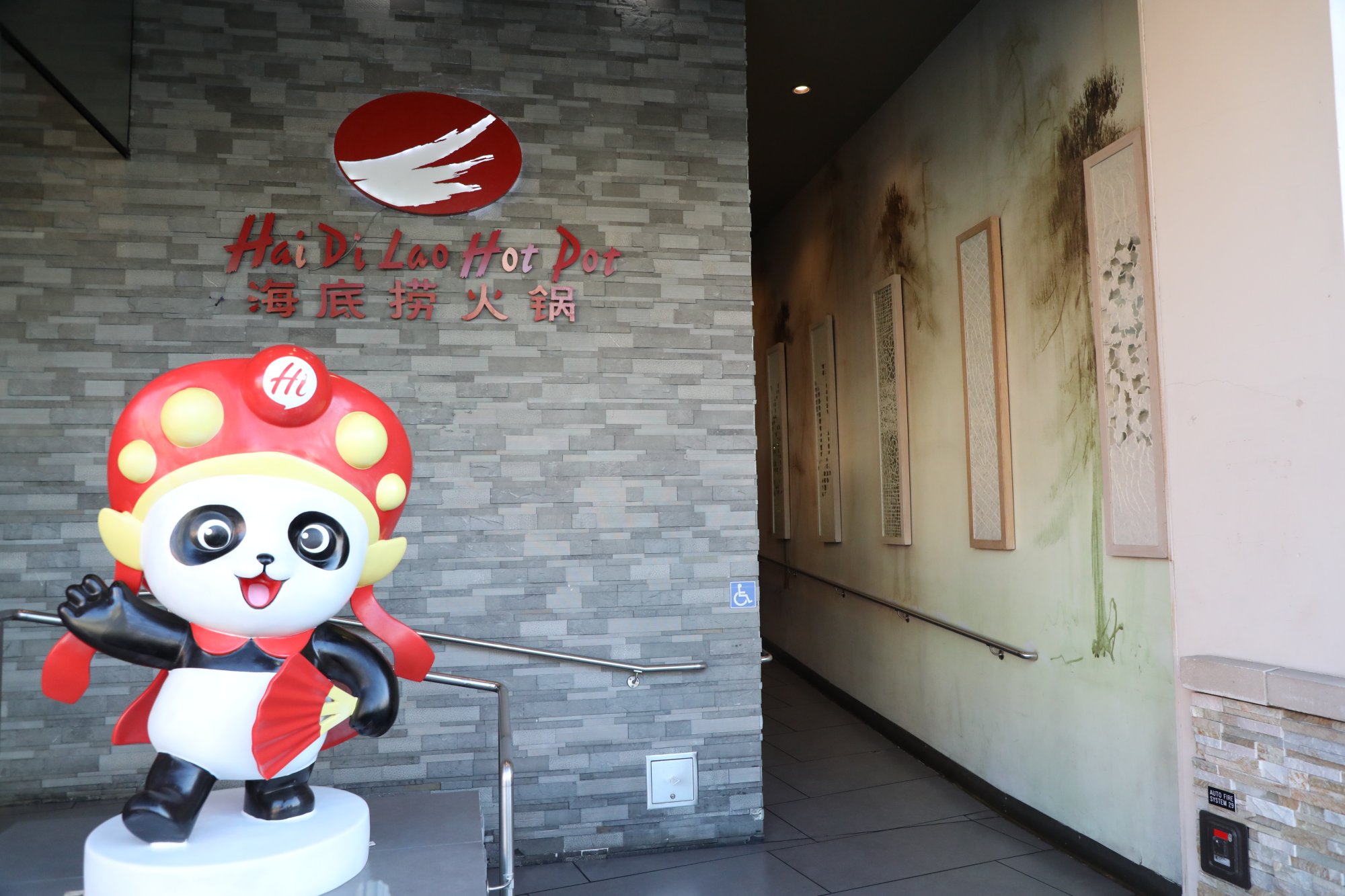
Haidilao Hot Pot, Arcadia
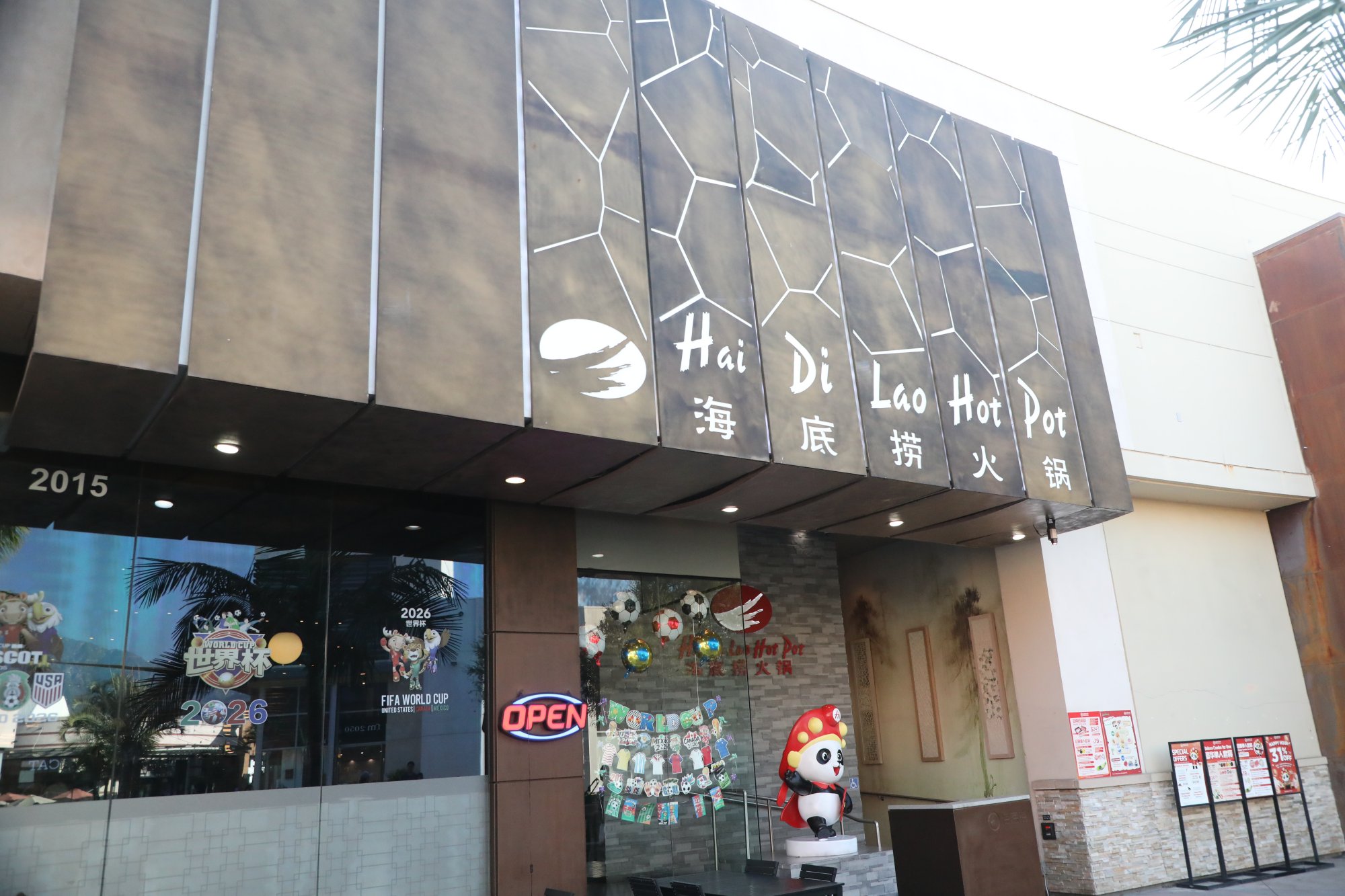
Haidilao Hot Pot in Arcadia opened in 2013; this was the first Haidilao Hot Pot to open in the U.S. This is located in the Arcadia Westfield mall, within a short drive from the Los Angeles Arboretum, Santa Anita Raceway, the 626 Night Market and the location of the first Din Tai Fung to open in the U.S.
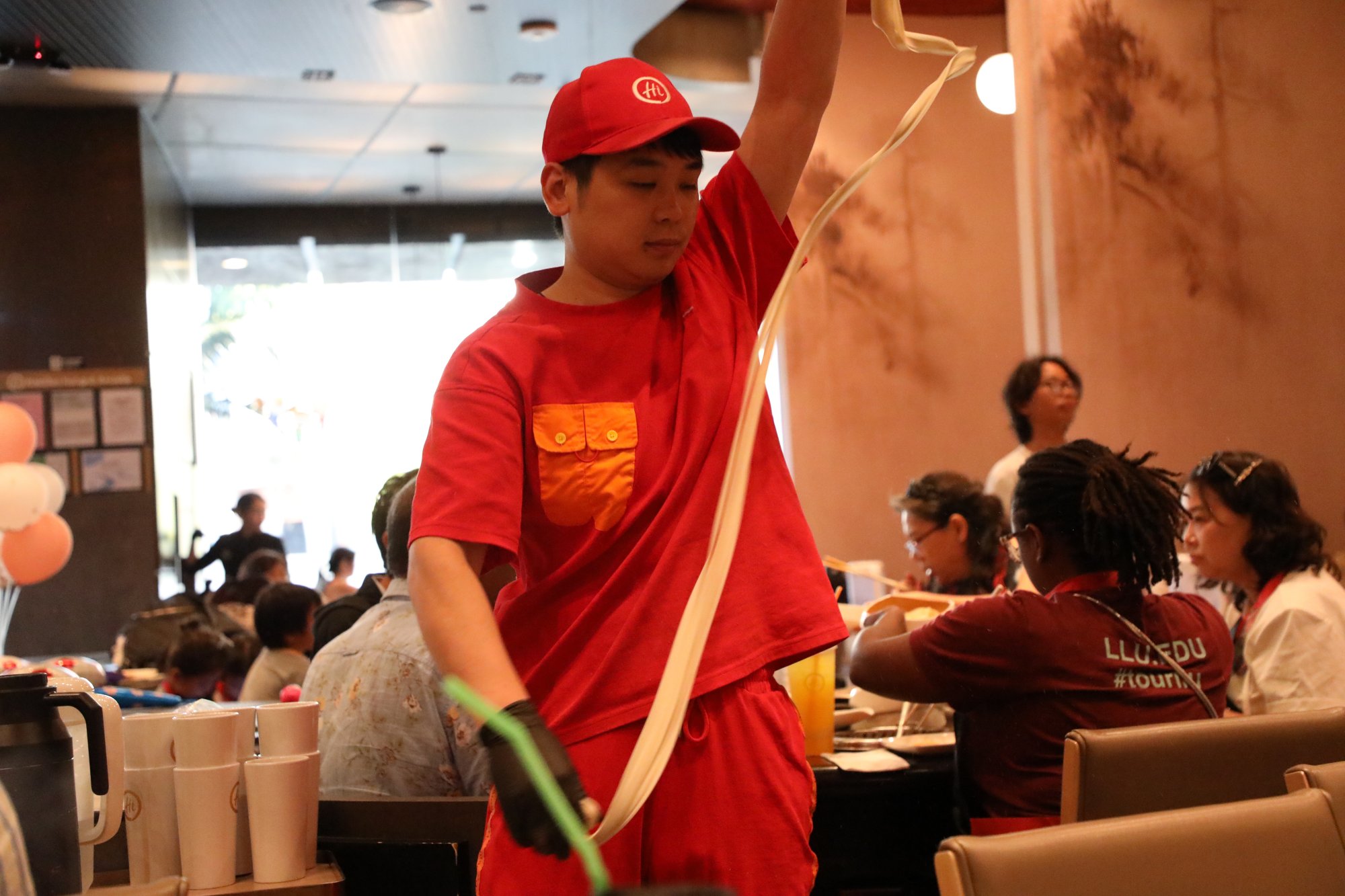
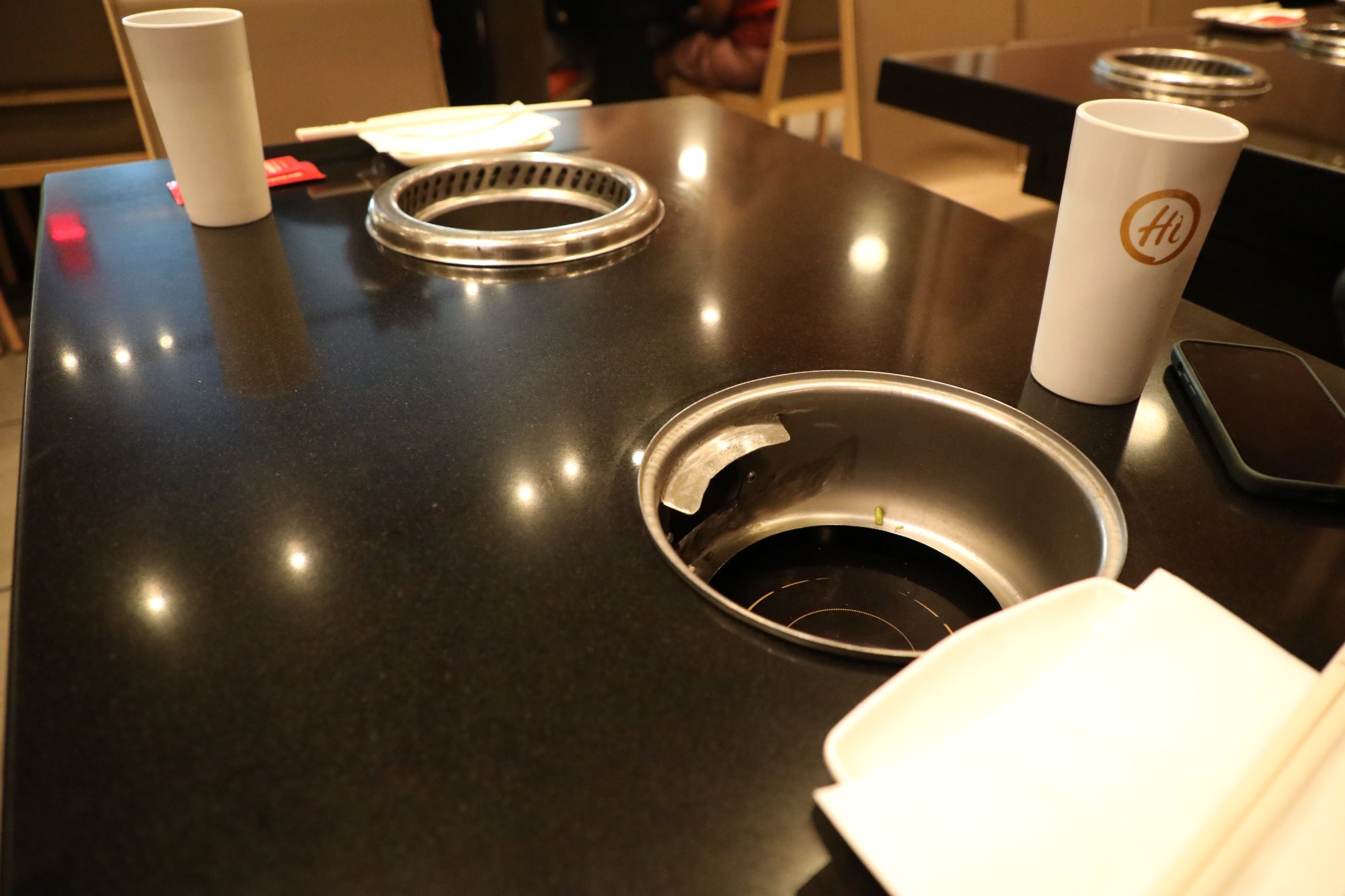
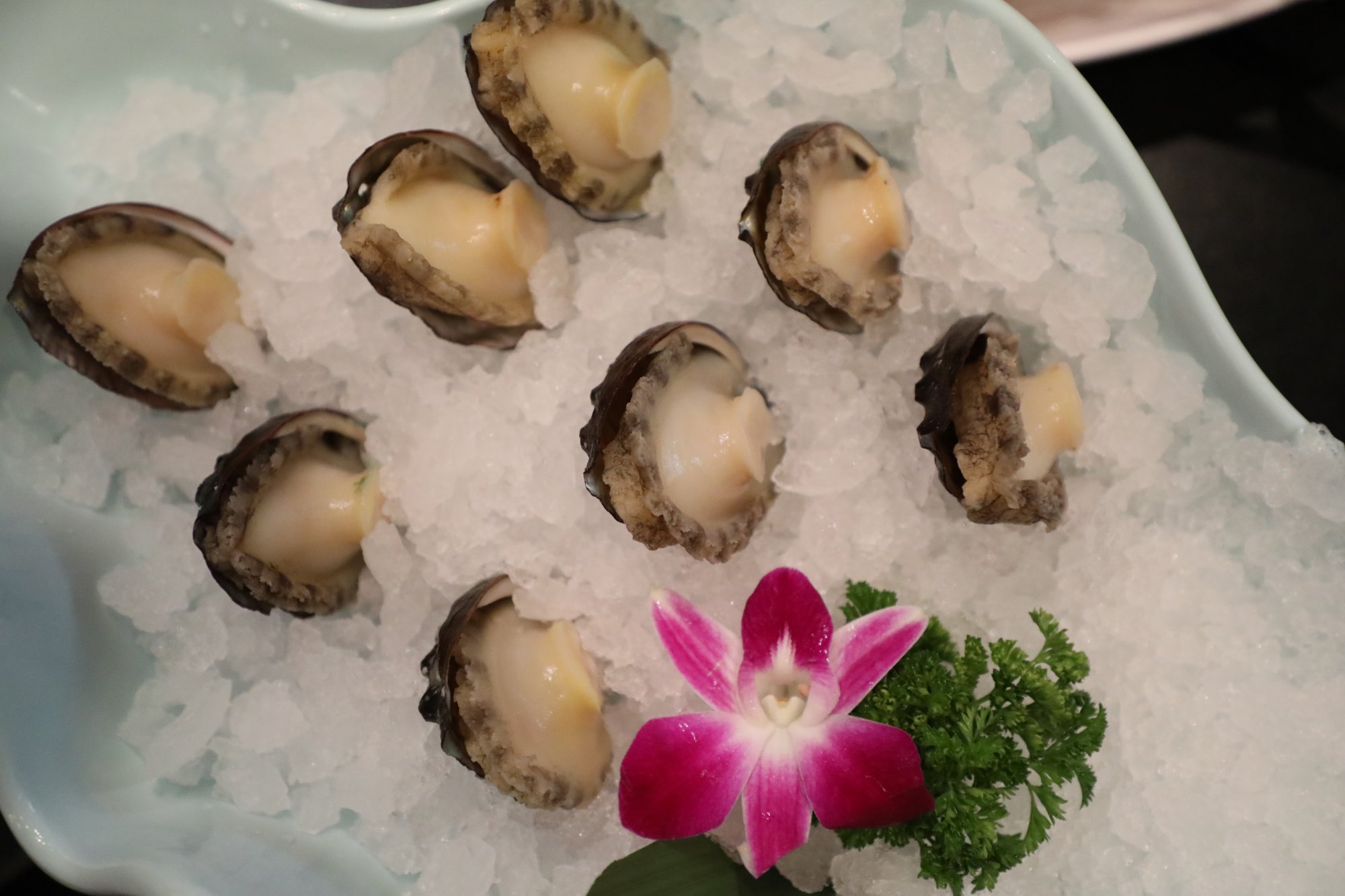
Dining here is quite the experience; the menu can be a bit intimidating at first with a large diversity of items to choose from ranging from several types of tripe, to fresh duck blood to abalone in shell. All items are ordered from touchscreen tablet, with items delivered to your table almost immediately once you click the ‘order’ button. And for first time visitors, be sure to order the Kung Fu Noodles. This will activate the Haidilao Noodle Dance, where a live “noodle master” stretches and twirls a single piece of dough into a 10-foot-long noodle before eventually cutting and dropping it into the hot pot. This performance takes place directly next to your table.
The interior of this location differs from other Haidilao Hot Pot locations in that the interior was partly designed to roughly mimic The National Stadium, a.k.a. the Bird’s Nest in Beijing.



Leave a Reply