




 Kinsman Eades. For winemaker Nigel Kinsman, winemaking is a highly personal pursuit and is strongly tied to vineyard sites that inspire him. He was not born into a winemaking family, rather he discovered his passion on his own. He was studying music at the University of Adelaide in Australia and simply needed a job. Through his mother’s connection with a store manager at Bailey and Bailey’s (a small number of fine-wine stores in Adelaide) he was given an entry level position. He thought it was just going to be working at a liquor store as he didn’t realize at the time the reputation of these stores and the diversity of their wine selections.
He quickly discovered he was the only employee with no background in wine, as Bailey and Bailey’s had a policy of hiring viticulture and enology students from the University of Adelaide. After three months of working at two of their stores, an assistant manager approached him one day and said they needed to let him go. Nigel was surprised as he was one of the hardest workers at the store – always on point when it came to unloading deliveries and physically moving product. But what the assistant manager told him next, would ultimately change his career path.
He said while the store appreciated all the hard work Nigel had been putting in, ultimately this was a fine-wine shop, and he needed Nigel to talk to customers about wines and have some knowledge about wine when doing so. Fortunately, Nigel asked for a second opportunity, one that the assistant manager agreed upon but with a stipulation. Every Friday he would send Nigel home with a bottle of both a red and a white wine. By Monday Nigel needed to produce a single page report on each wine, including tasting notes, information about producer, vintage and region among other attributes. It was during these three months that Nigel truly built a personal appreciation for wine and developed his palate. He also joined several tasting groups and participated in the stores’ trade tasting events – estimating at one point he was tasting through some 300 wines a week.
After finishing his bachelor’s degree of Music, Solo Performance he then decided to continue his education and apply for the Agricultural Science program at the University of Adelaide – the path leading to either a degree in enology or viticulture. He applied twice and was rejected both times – eventually realizing that as a music major, he did not have the prerequisite science and chemistry background. An arrangement was made; start as a general science major and then if successful the first year, transition into Agricultural Science which he ultimately did, graduating in 2002 with a Bachelor of Agricultural Science, Oenology.
But one aspect of his wine resume was missing: working in a cellar and in vineyards. He took a job at Nepenthe and also assisted at Petaluma Wines, both in the Adelaide Hills, and later worked at Cullen Wines in the Margaret River and Mount Langi Ghiran in Victoria. Eventually he decided he needed some winemaking perspective oversees and accepted a job at Tolaini Societa Agricola in Tuscany. Nigel recalls being on a shoestring budget in those days, taking 5 flights from Australia just to get to Italy. One of the consulting winemakers picked him up at the airport and Nigel immediately informed him he needed to go to sleep, but the winemaker replied that the previous winemaker had just been let go and Nigel was now their winemaker, followed by, “we will go to work right now”. And so, they did.
He stayed for two harvests at Tolaini Estate; later, while at a viticulture seminar, Nigel heard Bruce Dukes, the founding director of Naturaliste Vintners in Western Australia, mention a possible job in the Napa Valley. Three weeks later Nigel was on a plane to California; his first job was at Krupp Estate on Atlas Peak. Then winemaker Françoise Peschon called and said Araujo Estate needed a new winemaker. He took that job, remained on as a consultant for a short while after the Araujos sold and then became the project manager for Wheeler Farms (where he currently makes the Accendo Cellars wines, Kinsman Eades and wines for several other clients).
 Nigel’s career philosophy has not been to chase a particular winery or initially a particular variety but rather find people he would learn from and work at places he could further his education. He considers several Napa winemakers as mentors including Françoise Peschon, Celia Welch and Aaron Pott. And Bordeaux based Michel Rolland (died 2026) who he first worked with at Tolaini Winery in Tuscany.
Nigel and his wife Shae have grown the brand organically. There are no outside investors, their hands and personalities touch everything relating to the wines from the vineyard to the cellar, to interactions with their customers.
Kinsman Eades produces premium wines from exceptional sites, focusing primarily on Cabernet Sauvignon. These are wines with the spinal fortitude to last but can certainly be consumed in their youth; each wine is distinctive and representative of its respective site. The first vintage of Kinsman Eades was in 2016.
Select Wines
Whites
Sauvignon Blanc
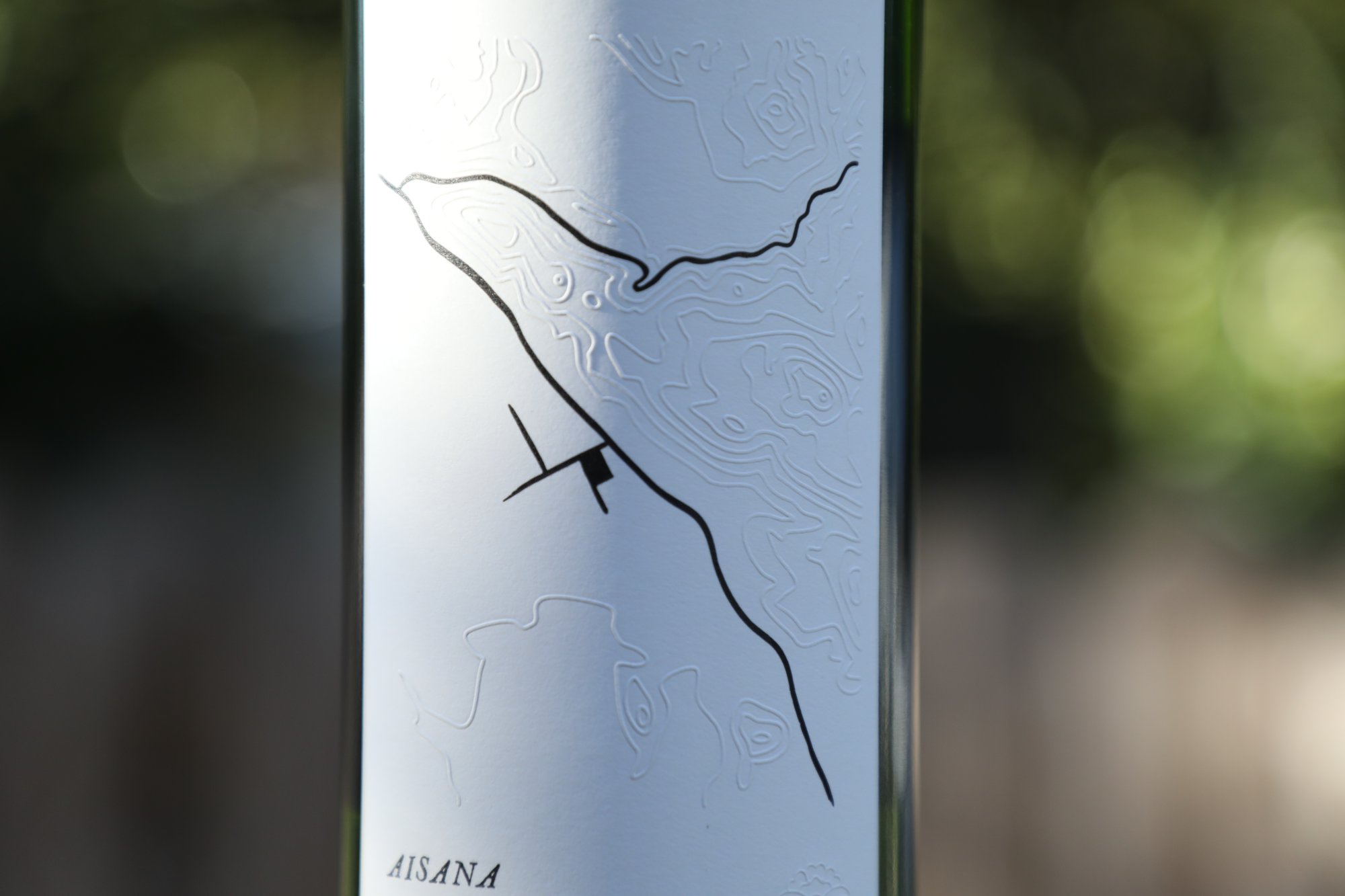
The 2022 Kinsman Eades Aisana Sauvignon Blanc, Rancho Pequeño Vineyard, Oakville Napa Valley is blend of 75% Sauvignon Blanc (barrel fermented in French oak) and 25% Sémillon (fermented in stainless steel drums). Total new French oak is about 25%. This wine is medium to deep yellow in color; the aromatics are immediately intense, but are neither overtly tropical or green or grassy. This wine smells like golden plums, honeycomb, pineapple with plenty of citrus influences including orange blossom and lemon zest. Additional notes are of apricot, yellow peach, mango, papaya and a light layer of lemongrass. And there is a briny and almost saline character at play here. The bouquet offers loads of aromatic depth. This wine tastes like golden apples, pomelo, walnut skin, apricot, pineapple, yellow peach, mango and papaya. And a subtle layer of star anise, especially noticeable on the finish. This wine lingers with a super silky soft and weighted textured mouth feel. But the texture never feels heavy as it is supported nicely by a bright and balanced acidity. This wine is built to age and will continue to develop additional layers over the next 5-10 years. Serious Sauvignon Blanc enthusiasts will be pleased by this bottling. We tasted this 4 years post vintage. 13.7% ABV. The name Aisana is Turkish referring to one who is like the moon, and also meaning beautiful or radiant.
Reds
Cabernet Sauvignon
Hierothesion

 The 2022 Kinsman Eades Hierothesion is a blend of 84% Cabernet Sauvignon, 12% Cabernet Franc and 4% Petit Verdot. This wine is deep ruby and opaque; like all the Kinsman Eades red wines, this bottling is not lacking in terms of its color intensity. Multi-layered, the bouquet expresses an intertwined presence of both ripe, yet fresh fruit and an assertive barrel influence at this age three years post vintage. This wine smells of dark raspberries, boysenberry, Santa Rosa plums, red cherries, dark mulberry, dark chocolate, cocoa powder, pipe tobacco, pencil shavings and smoked cedar. And like on the bouquet, both fruit and barrel are strongly vying for presence. Its flavors include red plum, dark raspberry, boysenberry, blueberry, pipe tobacco, toasted cedar and a dusty character. The widely dispersed and fully coating but well tumbled tannins linger beyond the fruit on the finish with a dusty and gravelly character. Features a balanced acidity. This wine is best enjoyed solo at the end of the afternoon, reflecting on all the intricacies and personal interactions of the day, while listening to Marc Cohn’s, Walking in Memphis.
Hierothesion refers to a monument or royal mausoleum in Greek. In this case it is a tribute to the royal tomb near the summit of 7,001 foot Mount Nemrut in Turkey. A number of sculptures and other stone works still exist here, indicating the tomb of Antiochus. It was Antiochus who oversaw the construction of Hierothesion, as a monument to his own greatness. Kinsman Eades crafts this wine as an homage to Cabernet Sauvignon sourced from multiple sub appellations within Napa Valley. And this is not the only tie-in by a winery in Napa Valley to Mount Nemrut. Reference M.S. Torun Winery near Lake Berryessa; the proprietor of that winery, Mehmet Sıdık Torun is in the process of building a mini Mount Nemrut on the top of one of the hills on his property.
Käännös
The 2022 Kinsman Eades Cabernet Sauvignon, Käännös is 100% varietal from Vine Hill Ranch in Oakville. This wine is deep ruby and nearly opaque; we tasted this four years post vintage. The nose smells the ripeness of the vintage, but the aromatics never cross into the territory of being jammy or over ripe. Its scents are of blackberry, boysenberry, Santa Rosa plum, dark cherry and dark mulberry. There is a subtle note of mint at play here along with dark chocolate. And as the wine breathes further, it opens to a light ferrous character. The palate perhaps shows riper than the bouquet, generous in terms of its fruit, but a softer play in terms of the supporting texture. Oak lets the fruit dominate the conversation with ripe raspberry, blackberry and dark cherry. Still there is a vein of medium acidity that helps balance out the ripeness. The lightly dusty and gravelly textured tannins are felt more on the front of the palate here – sitting there for some time after the fruit as dropped off, but are never overtly grippy or drying.
Käännös is the Finnish word for translation, referring to how Kinsman Eades translates the terroir and variety from this particular vineyard in this particular bottling.
Rhadamanthus
The 2018 Kinsman Eades Rhadamanthus (the same site that was formerly known as Reverie Vineyard at about 800 feet on Diamond Mountain) is 80% Cabernet Sauvignon, 17% Cabernet Franc and 3% Petit Verdot. Nigel harvested these grapes simultaneously and co-fermented them. The bouquet offers a diversity of aromatics including darker fruits (blackberry and ripe plum) and black licorice as the bouquet continues to evolve. One can also almost smell the decomposing volcanic soils of the site. Additional aromas include notes of truffle oil and dark chocolate. The texture is a hallmark characteristic of this wine with dusty, earthy and robust tannins – which show plenty of density but are rounded in their textural feel. Slightly chewy finish. This is a very impressive bottling.
Nigel has full control over this site and spent significant time redeveloping parts of the vineyard in conjunction with vineyard employees who have been working this vineyard since the 1990s during Norm Kiken’s ownership of the property. The vines for Rhadamanthus are more than 30 years old and are extremely healthy. They are planted on St. George rootstock. In Greek mythology, Rhadamanthus refers to the king of Crete – the root word ‘adamas’ refers to invincible and untamed’. Each of their wines features a label designed by a specific artist. Rhadamanthus is an ink pen drawing of the vineyard site by United Kingdom based artist, Lee John Phillips.
Anjea
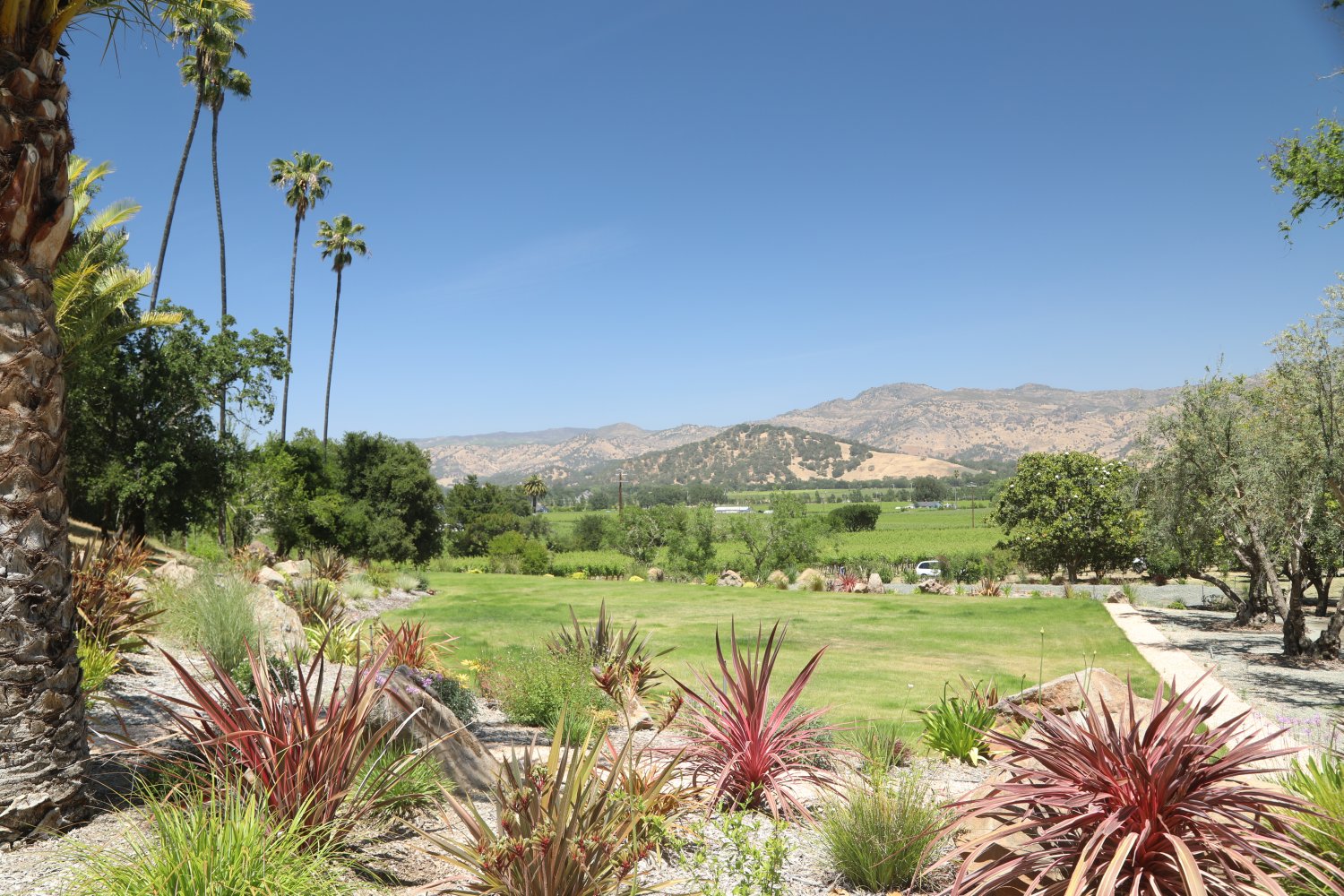
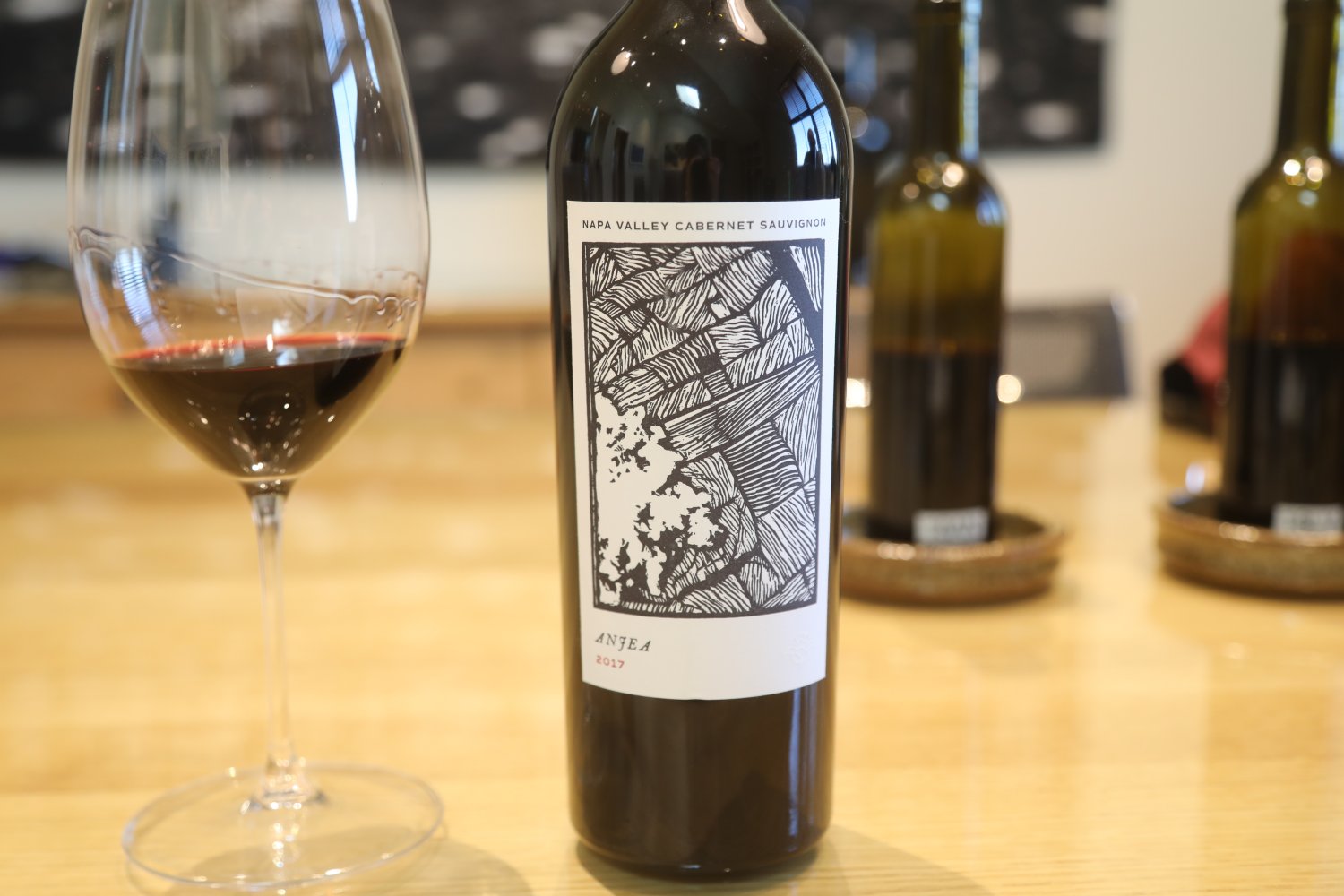
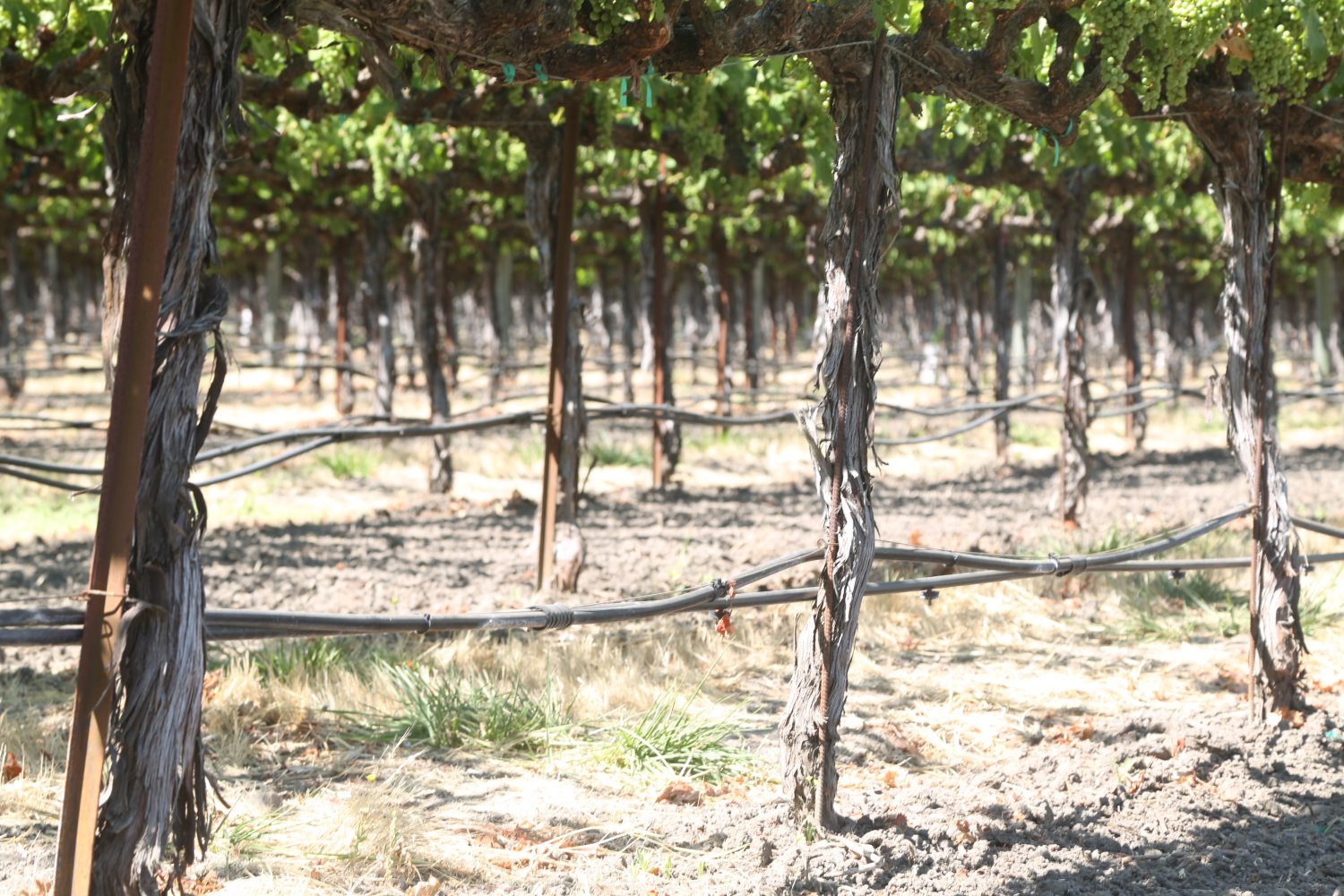 The 2018 Kinsman Eades Anjea (Sleeping Lady Vineyard in Yountville, farmed by the Bettinelli family) Cabernet Sauvignon is 100% varietal of clone 22. Nigel enjoys working with this clone because the berries are inherently tannic, and its aromas are decidedly floral. He describes this wine as very hands off with no acid or water additions needed. Interested in seeing if adding another clone would add complexity – one year he introduced Cabernet Sauvignon Clone 7. It was a case of ‘more is not better’ and he went back to focusing this wine entirely on the one clone. The bouquet offers a diversity of aromatics including violets, a dusty minerality nuance, dark chocolate, blackberry and spice notes including cardamom, cacao and expresso. It also shows a hint of dried tobacco leaf deeper into the aromas. The finish is mouthwatering – lingering with a brightness of fruit and dense but not course tannins, with rounded and finer grained edges that glide across the palate. Very long finish. Very satisfying.
Anjea refers to a fertility goddess in Australian Aboriginal mythology. And that name ties in with the visual used as the name of this vineyard; it is named after a feature in the foothills of the Mayacamas mountains to the west of the property that somewhat resembles a sleeping lady. Although we have been told its easier to see this feature from the air than from the ground. The label for this wine was produced by artist Sylvia Waters.
La Voleuse
The 2018 Kinsman Eades La Voleuse du Chagrin Cabernet Sauvignon (inaugural vintage) is from the tiny 1.38-acre Geeslin Vineyard bordering the iconic Eisele Vineyard in Calistoga. This wine is 100% varietal, made from the Eisele clone of Cabernet Sauvignon. It is dark ruby in color, offering a sweetness of blackberry showing at the peak of ripeness but is not overripe. The bouquet shows the purity of fruit exceptionally well without a lot of other distractions. Also, aromas of violets and a sweet fig note. Lingers with broadly distributed tannins showing a noticeable density and muscle in their textural feel. Very long lasting. Juicy. And it features a lively and bright finish.
Geeslin Vineyard is special to Nigel; he became familiar with it while working at Eisele Vineyard as its grapes went into the Araujo Estate wines for years. After Bart & Daphne Araujo sold Eisele Vineyard, Nigel lost access to the grapes for several years until the vineyard owner Keith Geeslin approached him about using the grapes once his contract with Eisele Vineyard ended. He and Shae came up with a clever name for this wine, La Voleuse du Chagrin, which translates in French to, ‘thief of the grief’ referring to the relieved feeling after Keith’s offer. And the dot stifling drawing representing the label was done by a South African artist. The diminutive vineyard site is also depicted on the label, giving one a visual of its tiny size in comparison to the surrounding vineyards.
Syrah
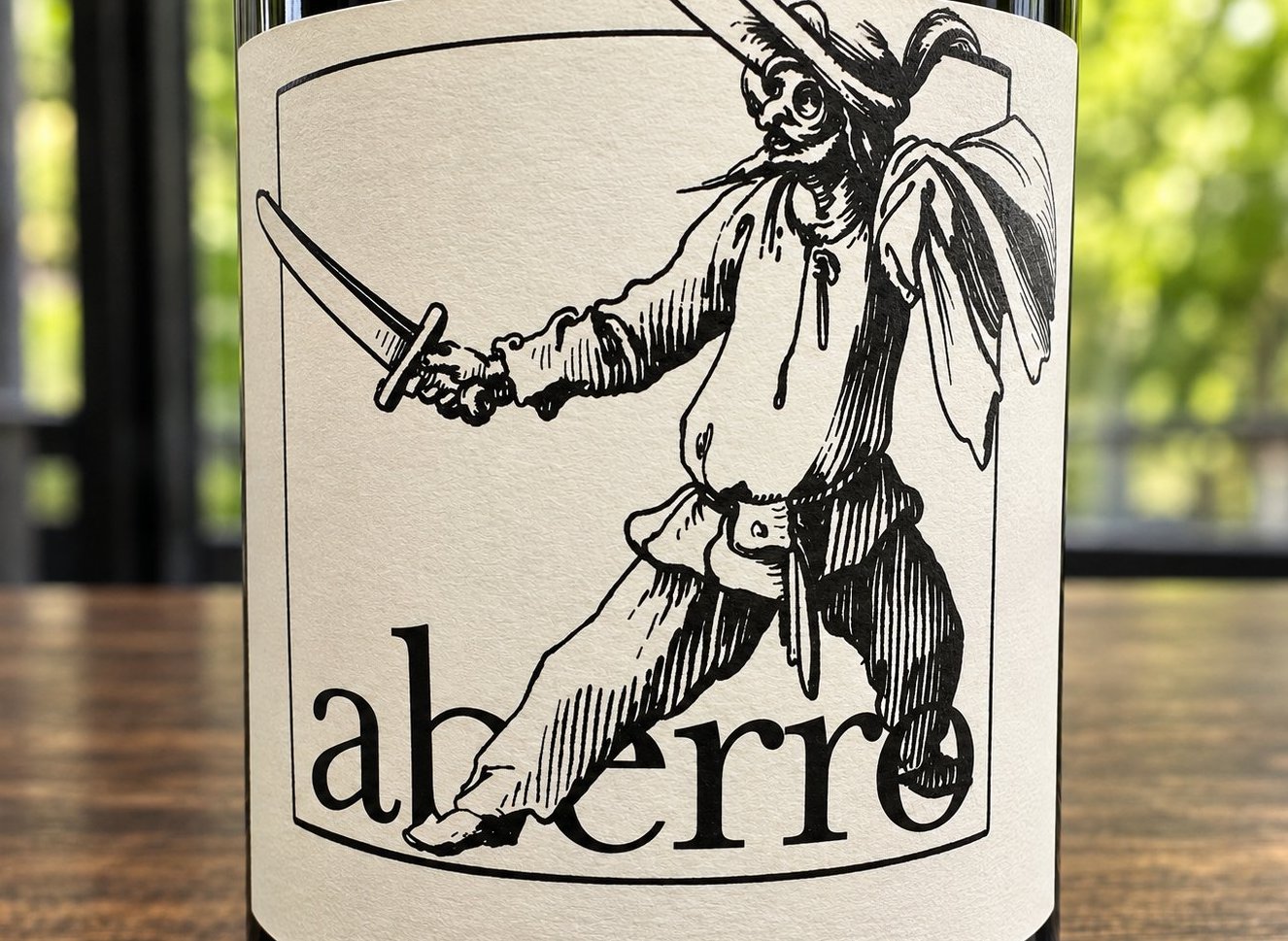
The 2023 Kinsman Eades Abbero Syrah, Le Mani Vineyard is deep ruby with amaranthine hues and completely opaque; this wine smells dark fruited with accompanying darker and sweet notes from its time in barrel. Its aromatics include blackberry, Satsuma plum, boysenberry, dark cherry and Pakistani mulberry. The non fruited notes include toast, cocoa powder, coffee grounds and dark chocolate. As dark fruited on the palate as the bouquet, this wine leads with flavors that mimic the aromatics to some extent including ripe blackberry, cherry pie, boysenberry, Santa Rosa plum and finishes with a note of dark chocolate and dark cocoa powder. The tannins are ripe and rounded, lingering with a well-integrated lightly gravelly texture. This is a mouthful of deliciousness – and an expression that will be favored by Syrah enthusiasts who enjoy ripe but layered wines from this variety.
—
 A dark thin outline of a flower is located in the lower right hand white corner of every label – easily missed if one does not observe the label closely. This flower is highly personal and relates to an old house they used to live in, in St. Helena with very dated wallpaper including of the flower represented on the label. Nigel and Shae chose to subtlety depict this flower in homage to their early and perhaps simpler days of living in Napa Valley.
Production is extremely limited; in 2018 it was 500 cases, 2019 was about 650 cases. Due to the worst smoke we have ever experienced in our life in either Sonoma County or Napa Valley due to the forest fires in 2020, no wine from Napa Valley was released that year. However Nigel was able to secure several tons of Syrah from Santa Barbara County and produced a limited production 2020 Syrah.
Nigel also began working with two blocks in Vine Hill Ranch in Oakville in 2020, one of Oakville’s most coveted sites. Vine Hill Ranch is one of what we have termed, Napa Valley’s ‘first greats‘, a coveted collection of vineyards that stand out because of certain attributes including an established quality of production, history and location.
Nigel and Shae ultimately would like to reach a production of around 1,000 cases per year. The wines are primarily sold direct to consumer but select wines are often available from a limited number of online retailers. Locally, the only retail space we have seen their wines for sale are ACME Wines in St. Helena. To join the wait list for future access to the allocation list, please visit: www.kinsmaneades.com
Leave a Reply