



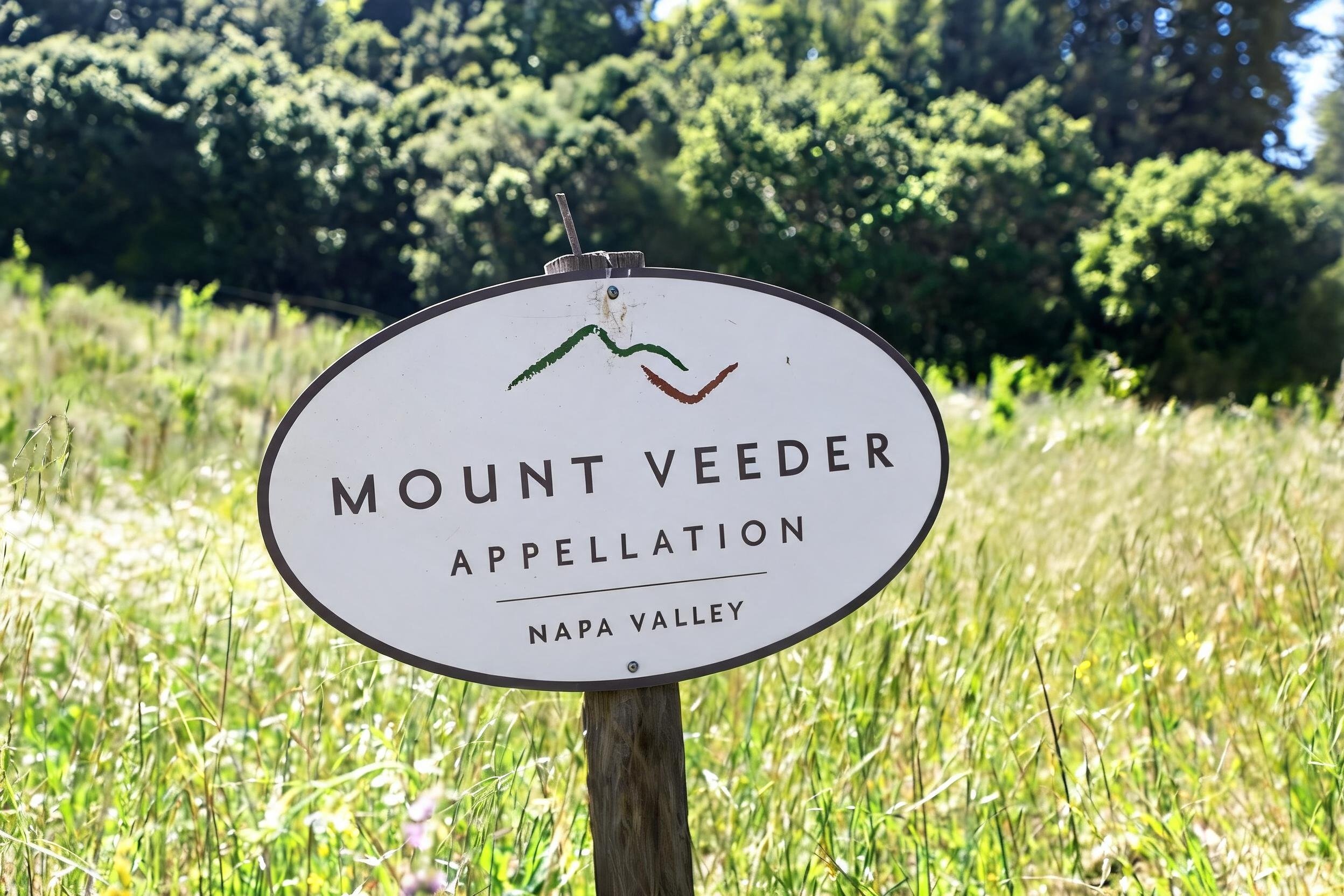
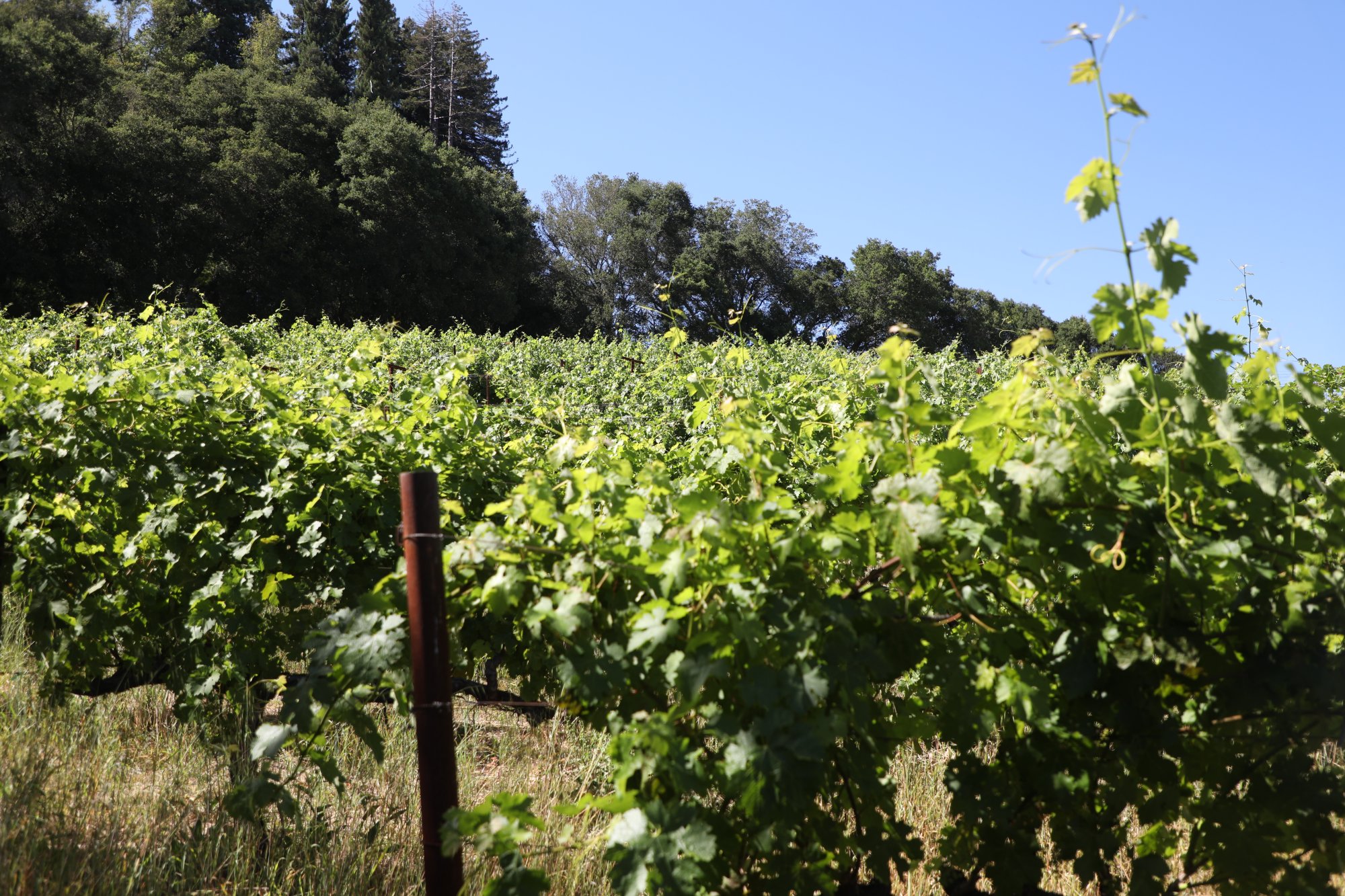
 Hillwalker Vineyards is a tiny Mt. Veeder estate where dry farming, minimal intervention, and regenerative practices converge to produce just 150 cases annually from 4.5 acres of mountain vineyards. The winery was founded by banker and Michigan native Kevin Morrison following his purchase of 25 acres at 1,000 feet ASL on Mt. Veeder in 2017 soon after the Tubbs Fire. In fact this property was used by fire fighters during that fire, utilizing the pool and 40,000 gallons of stored water on premise. This property is planted to Cabernet Sauvignon and Merlot.
During his search for vineyard property in Napa Valley, Kevin focused on hillside sites. Despite all the warning signs including its remote location and a vineyard in bad shape, there was something special and unique about this piece of land—and over time, it has not disappointed him. For Kevin, the harder the challenge, the greater the intrigue. And farming this site has certainly been challenging.
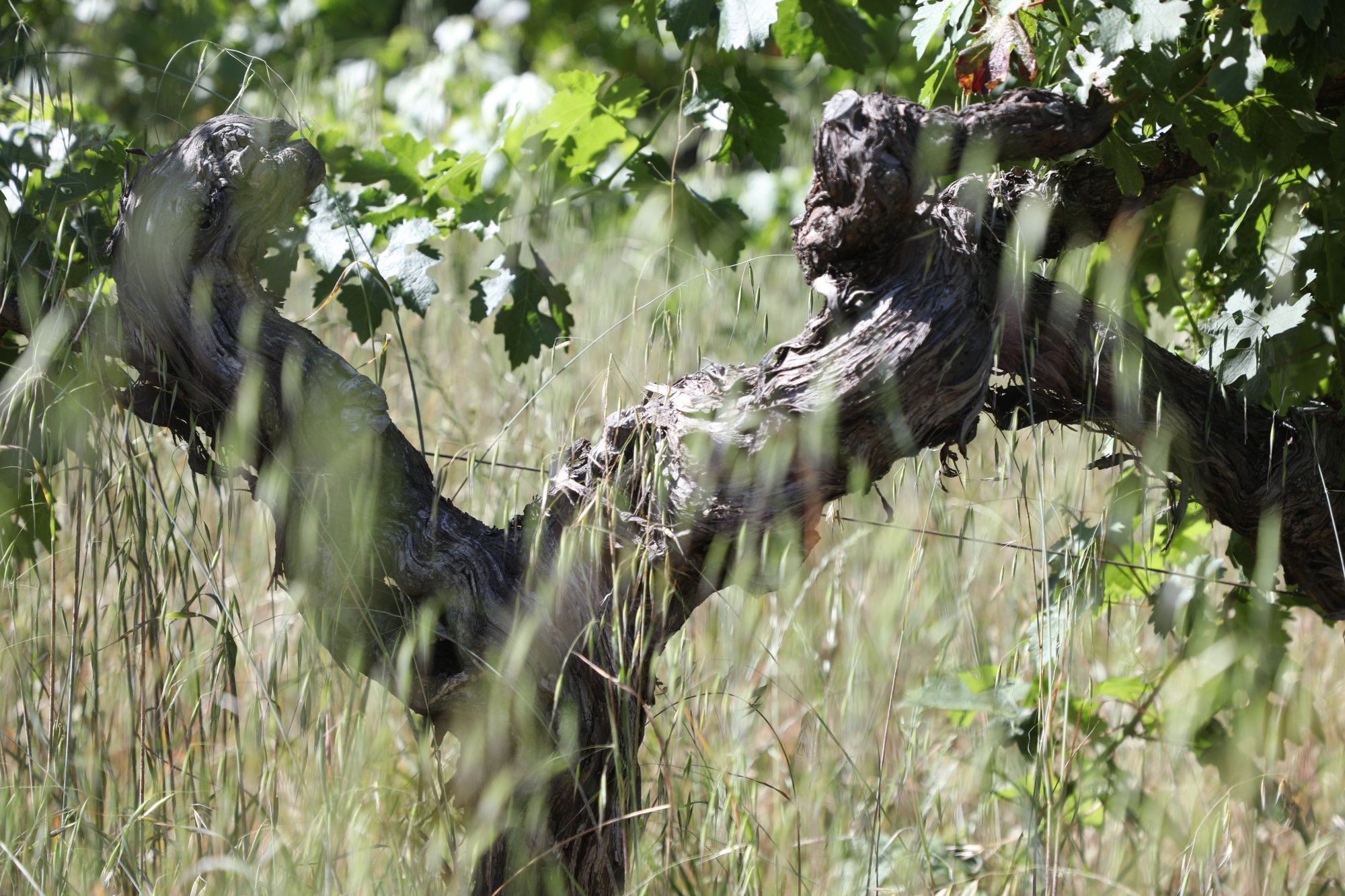
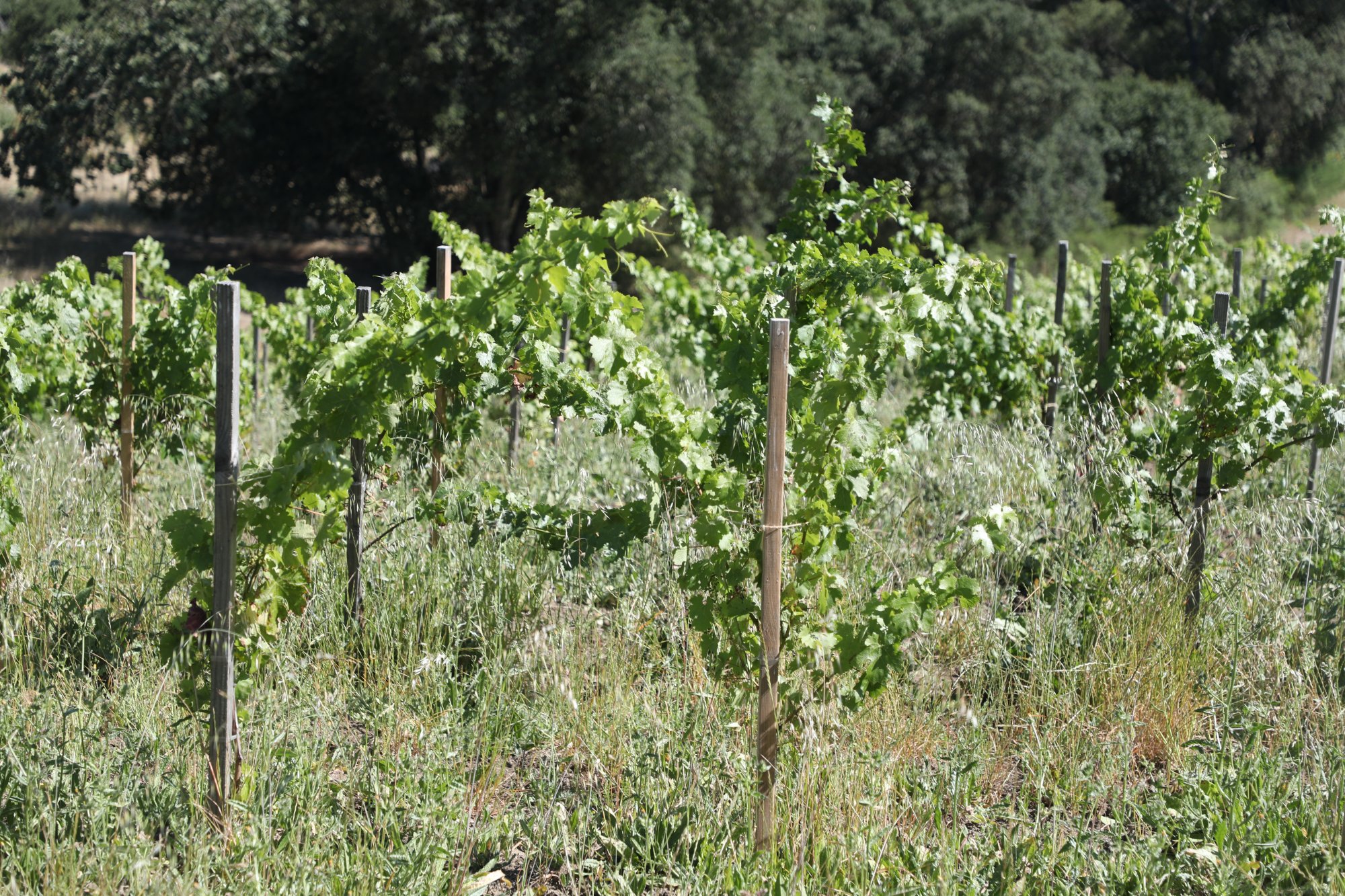
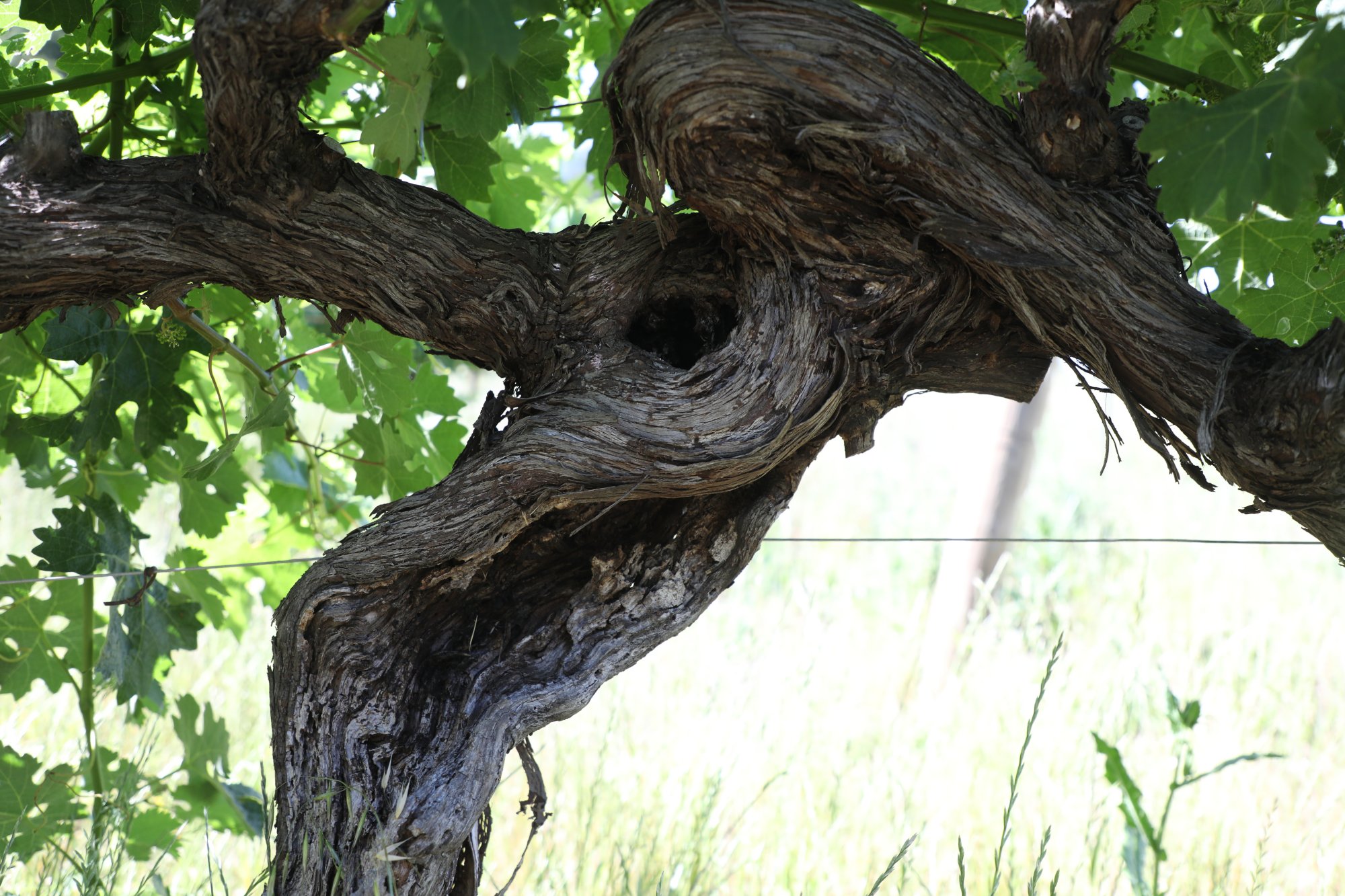
This property has been planted to vines since the 1970s; There are approximately 10 original vines planted on St. George rootstock still growing from these original plantings. Any future vineyard expansions will utilize this same rootstock. And in a historical connection to Domaine Chandon, a still standing building, now serving as a garage was the original office for Chandon in the early 1970s.
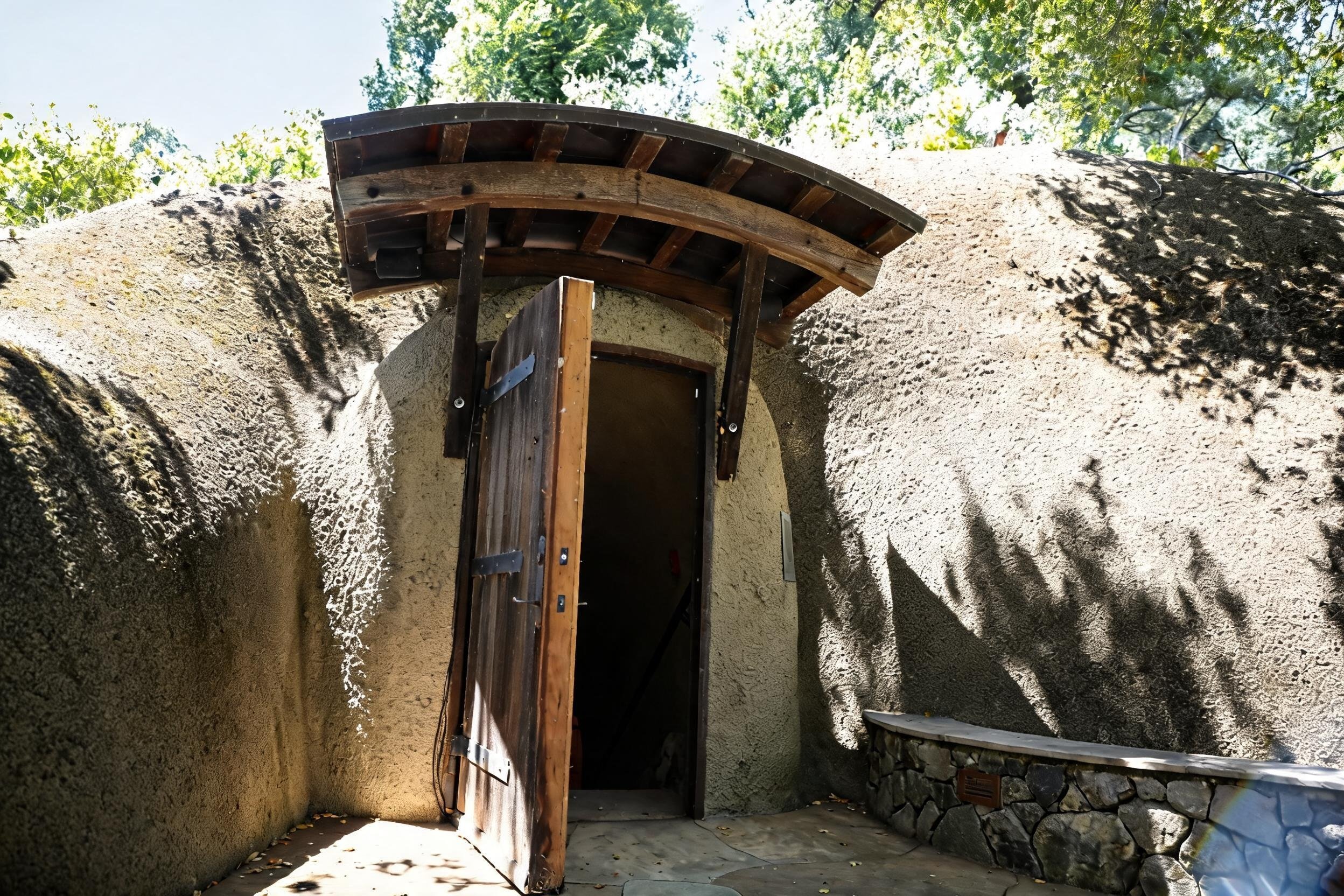
The previous owners acquired the property in 2001 and redeveloped the vineyard in 2003; in 2009 they built a small wine cave approximately 1,500 square feet. They sold the majority of their grapes to Constellation.
After he acquired the property, Kevin met one of his neighbors. She in turn connected with a couple who were scouting Mt. Veeder for grapes for their own brand. The couple asked his neighbor if she had any leads. She introduced Kevin to the couple and he explained his vision for Hillwalker Vineyards. The couple told him, we have a winemaker you need to meet. That person was Thomas Comme, the former winemaker for Pym-Rae and whose father Jean-Michel Comme made wine at Château Pontet-Canet in Bordeaux for 3+ decades. Today, Kevin and Thomas are partners in both winegrowing and winemaking.
In 2019, they began transitioning their farming practices. They don’t believe there is one right way to farm a vineyard; rather, there is a right way to farm each individual site. Their first priority was re-establishing the vineyard’s biome by removing all chemical inputs and stopping the interruption of the vines’ natural growing cycle. Then they shut off the water in 2019; the irrigation piping was removed and today the entire vineyard is dry-farmed.
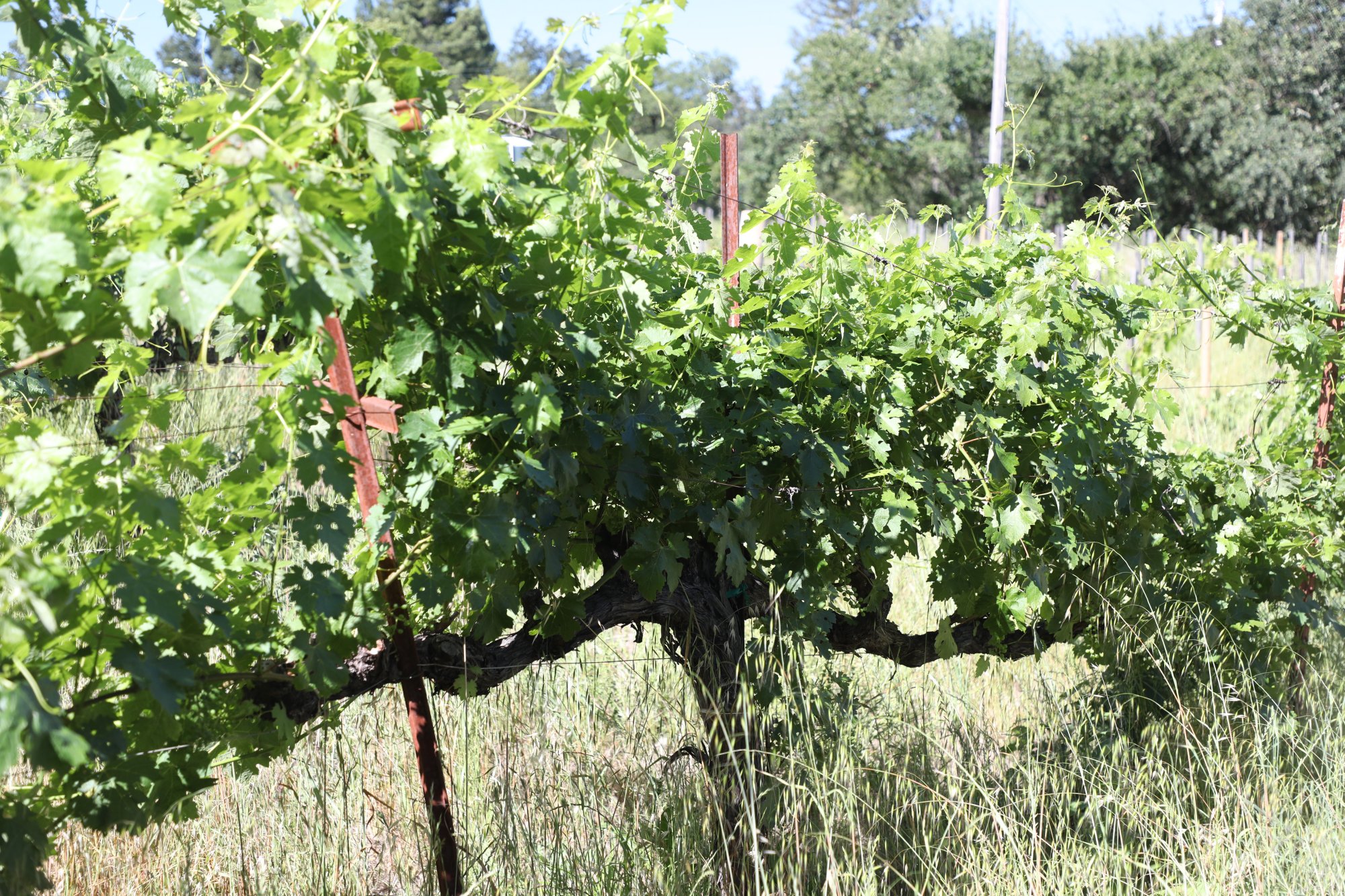
Many of the existing vine trunks were cut back, training shoots near the graft junction to develop into new trunks. As the new trunks matured and were trained, this has resulted in higher yields. The focus has been on supporting the vineyard’s natural growth cycle and allowing this site to express itself as clearly as possible.
Today, they use no herbicides or pesticides and do not follow a rigid checklist in pursuit of organic certification. Their approach is guided more by observation than doctrine. Farming inputs are minimal, including applications of whey protein sourced from a dairy in Sonoma County. The goal has been simple: get out of the way and allow the vineyard to function naturally, with a little help when needed.
Cover crops are flattened rather than mowed, helping build organic matter while protecting the soil surface. After the spring growth period, the primary canopy on each vine is trained into a circular shape. This process, known as bridging the canes, begins in late spring once the shoots are long enough to be carefully woven together. And it is a practice employed at both Pontet-Canet in Bordeaux and at Pym-Rae, Tesseron Estate, also on Mt. Veeder.
The resulting canopy provides excellent shading for the grapes while allowing the vine to continue its natural growth cycle with minimal intervention. It is another example of their broader philosophy: working with the vineyard rather than imposing unnecessary practices upon it.
The vineyard had been conventionally farmed for 40 years including using Roundup and no cover crops – an overall unhealthy relationship with the soil. When Kevin and Thomas began farming the vineyard, there were no earthworms in the soil. Within a year or so of changing their farming practices, earthworms had returned—a visible sign that the soil ecosystem was coming back to life. They do not mow the cover crops nor hedge the vines. By mid- to late summer, the shoot tips naturally die back; they prefer not to interfere with that process. Their philosophy is that every time you cut a shoot or pull a leaf, the vine expends energy trying to replace what was removed.
Today they are not simply farming a vineyard; they are participating in its restoration and repair. They are creating a contained environment built around doing things a certain way, and that work ultimately manifests in the quality of the wine.
The results have been significant. Harvest dates that once fell in mid- to late October now occur in the first or second week of September. The fruit ripens more naturally and evenly, while alcohol levels have declined from roughly 15% to the mid-13% range. As the vineyard finds balance, the wines increasingly reflect the mountain terroir.
Nothing worth having comes easily. Farming here means constantly adapting to whatever challenges nature decides to throw your way. The terrain is rugged, the slopes are steep, and the work is demanding. Yet those challenges are also part of what makes the place special. Kevin told us that, “Mt. Veeder asks a lot of the people who farm it.” And to that we can add, “expect the unexpected on Mt. Veeder”.
—
 Kevin sees three distinct phases in modern Napa Valley winemaking. The first was the Bordeaux emulation era of the 1970s and 1980s, when producers looked to Bordeaux as the benchmark and attempted to recreate those wines in Napa. Over time, however, the region learned an important lesson: Napa is not Bordeaux, nor should it try to be.
The second phase emerged during the 1990s with the rise of Robert Parker’s influence. Parker favored a particular style of wine, and Napa demonstrated that it could produce those wines at an exceptionally high level. A symbiotic relationship developed between critics and producers, with wineries increasingly tailoring their wines toward the styles that were being rewarded. Stylistically, many Napa wines moved in a similar direction during this period.
His view is not that Napa should return to the wines of the past. Rather, he believes the region is entering its next phase—one that builds on the lessons learned from both eras. The goal is a return to elegance, balance, and site expression, but not a return to trying to be Bordeaux. Instead, it is about creating wines that are distinctly Napa Valley: wines that embrace refinement while remaining true to the character of the region.
Kevin’s intent from the beginning was not to continue selling grapes, but rather to produce wine. His vision was to make this property about a set of ethos and ideals, and everything they do here is in alignment with that. The goal is to produce a wine that stands for something. The first vintage of Hillwalker was in 2019.
Those who meet Kevin will quickly realize his role with the mountain and his vineyard is an integral part of his life. The degree of seriousness about what he is doing is next level, but he never takes himself too seriously. He always keeps a healthy amount of space for humility in his work. He is also the first to admit that his happy place is being outside, and this project has given him the opportunity to return to what he loves doing most: working the land and practicing stewardship.
Kevin strives to be part of the community, to be a positive force, to be a good steward, and to be respectful of people and place. He is focused on finding his place and following his own path in terms of both farming and winemaking. He is not trying to push limits for the sake of pushing limits. And for him, part of the joy is in the manual labor required to do all of this.
—
All winemaking and bottling is done on site. Grapes never pass through a traditional crusher-destemmer. In fact, the grapes never go through rollers at all, but rather go through a gentle bladder press. Fermentations take place in small stainless steel tanks using only indigenous yeasts. Time in tank is determined by what the grapes need in a given vintage rather than by a preset schedule or tank availability.
Extended maceration is always part of the program, typically lasting into the low 20-day range on the skins. Extraction is managed through pump-overs and air sparging, using a wand pushed into the tank. Every decision is dictated by tasting and by the stage of fermentation. The goal is to flatten the perception of alcohol through extraction while gradually expanding what Kevin describes as the phenolic sphere—like inflating a balloon. If done correctly, the sphere expands to its full capacity, unlocking the wine’s phenolic potential while creating greater aromatic complexity and nuance.
The philosophy in the cellar is straightforward: no watering back, no acidification, and no manipulation. Get it right in the vineyard. If there is something they don’t like in the tank, the answer is not to fix it in the cellar; the answer is to go back to the vineyard and address it there.
Beginning with the 2021 vintage, the winery transitioned to larger-format concrete vessels for aging, a move intended to further preserve freshness, texture, and site expression while allowing the wines to evolve with minimal intervention. For Kevin, maintaining phenolic intensity and integrity is paramount. The first evidence of that is always the bouquet.
—
Kevin often draws a comparison to music and wine. During our visit, he mentioned Miles Davis and the album Birth of the Cool. Released at the end of the bebop era, it arrived at a time when technical proficiency and complexity were highly valued. Many of the bebop musicians questioned what Davis was doing. He was moving in a different direction, one that emphasized space, mood, and expression rather than simply showcasing virtuosity.
For Kevin, the lesson is not about rejecting what came before. Miles Davis could only push the music forward because he thoroughly understood the traditions and techniques that preceded him. He had the perspective to appreciate the past while still having the confidence to pursue something different.
That idea resonates deeply with Kevin’s approach to farming and winemaking. Progress does not come from ignoring history; it comes from learning from it. The goal is not to recreate what previous generations did, nor is it to be different merely for the sake of being different. Rather, it is about understanding what came before, taking the best of it, and then finding your own path forward.
In that sense, innovation is built on perspective. You have to know where you’ve been before you can decide where you’re going.
Select Wines
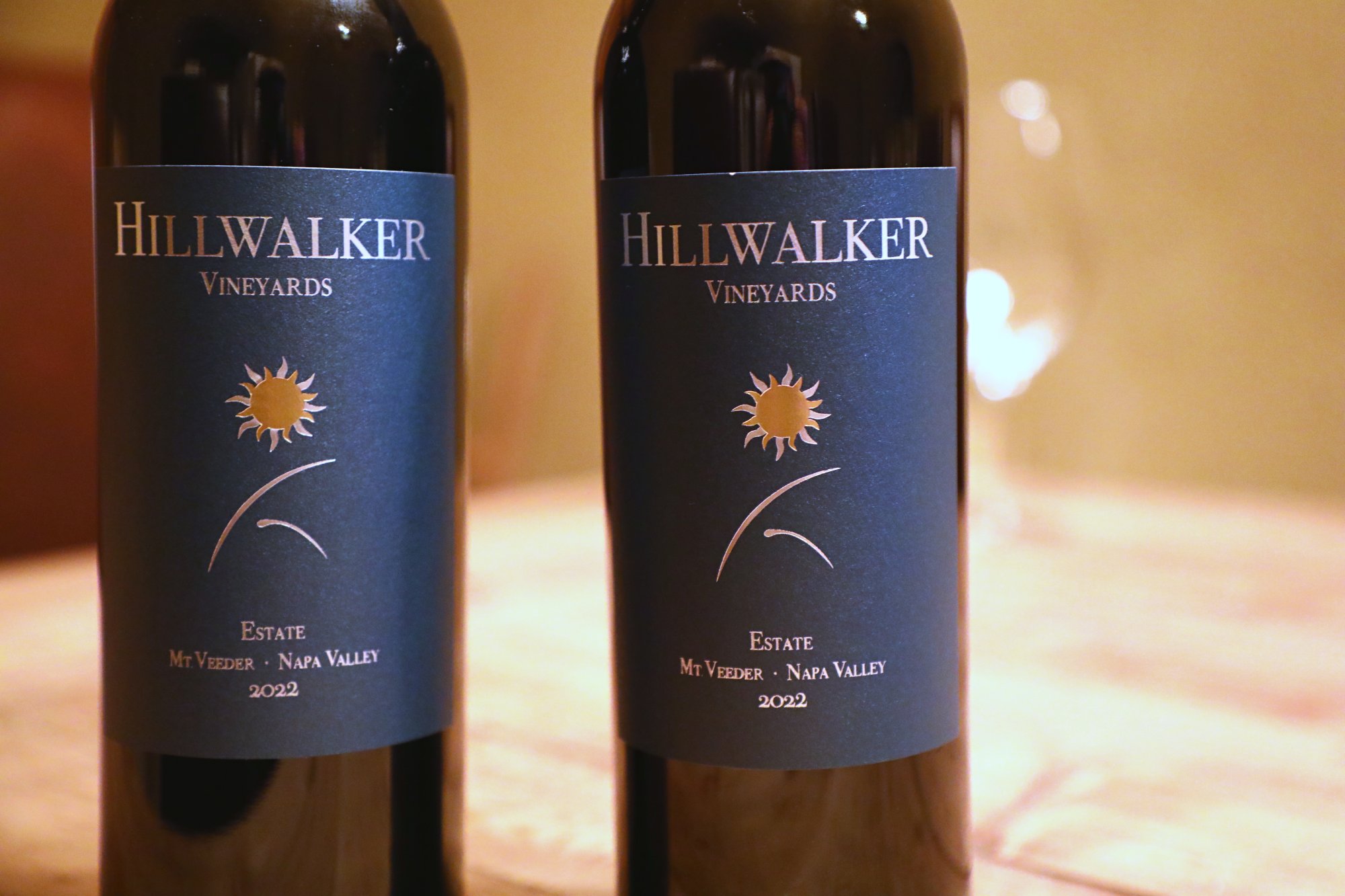
 Hillwalker is un-mistakably a mountain grown wine from Napa Valley with a distinct sense of place. But what it also has, is elegance, finesse and lightness that perhaps consumers may not expect from Napa Valley wines, especially from hillside. This is a result of a cooler site, the way they farm and their gentle support in the cellar. These wines are drinkable upon release – but have been described by numerous individuals in the industry as being potentially age worthy up to 20-30 years.
During a conversation with Comme prior to making any wine from the property, Kevin mentioned that he doesn’t favor fruit-forward wines. He prefers minimal oak influence and places particular importance on bouquet, structure, and phenolic elegance. That conversation took place well before they had produced a single wine from this vineyard. As it turns out, the site naturally yields the style of wine he was hoping to make.
He wants wines that continue to develop in the glass—wines that reward patience and reveal themselves slowly over time. These are not wines that tell their whole story with the first sip. Rather, they evolve, shift, and unfold, creating a kind of cat-and-mouse game in the glass. The longer you spend with them, the more they have to say.
He referenced Wayne Shorter’s Infant Eyes, particularly the opening saxophone note. Shorter was known for using exceptionally thin reeds, allowing him to play with extraordinary softness and nuance. That opening note still gives Kevin chills every time he hears it. For him, great wine operates in much the same way. It is more than flavor or aroma; it is a complete sensory experience that transports you somewhere you otherwise would not have gone.
Kevin told us about an observation made by his daughter, perhaps one of the best compliments he has received about his wine. She said something like, “This wine smells like Mt. Veeder itself—like everything I noticed while driving up the mountain, especially the native vegetation.”
The 2022 Hillwalker Cabernet Sauvignon is 90% Cabernet Sauvignon and 10% Merlot. It is deep ruby and nearly opaque. This wine was aged for 20 months in 75% concrete and 25% new French oak barrels. The bouquet smells elegant, with not one aspect dominating at any time as it evolves. This wine offers a union of floral, fruit, savory and light but supporting barrel influences. These scents include violets, lavender, purple lilacs, sage, boysenberry, Persian mulberry, smoked cedar and menthol, mint, a minerally/ferrous component and dark chocolate. As the wine opens, it offers a sweeter aromatic fruit tone including licorice. The olfactory hide and seek that Kevin spoke of regardless of vintage is clearly evident in this bottling. Be patient. Some of the savory tones on the bouquet are also mimicked on the palate, including of dried herbs including sage and bay leaf, a light dusting of pepper and its fruit including red cherry, dark raspberry, boysenberry, red plum and dark currant. Yes, these are mountain tannins, they are dense and they are very much felt across the palate at this age, 4 years post vintage. But they are not course or overtly edgy. Their texture is broadly dispersed with a persistent dusty and chalky grip which far outpaces the fruit on the finish. Its ABV is 14.5%. NWP score. 97-98.
—
Visits are by appointment only, private, and intended for serious wine enthusiasts.
Kevin recalls hosting a young couple who were already familiar with Hillwalker. During their visit, they asked him what he enjoyed most about what he does. His answer was simple. He pointed to the vineyard and explained that they are committed to farming it a certain way, guided by a clear philosophy. From there, the winemaking is intentionally minimalist and gentle. The goal is not to get in the way of the grapes, but to allow the site to express itself as honestly as possible.
Then he told them, “You’re drinking this wine, and you’re enjoying it with me. That’s the coolest thing.”
He is quick to acknowledge that he is not curing cancer. But at the end of the day, what they are doing is more akin to creating art or playing jazz. It is about creating something authentic that can be shared with others. The wine becomes the vehicle for a unique experience, one that connects the vineyard, the people who farm it, and the people who ultimately enjoy it.
Kevin wants people to leave with more than just a memory of the wine. He wants them to remember their time on the property and to feel a connection to something larger than themselves—centuries of wine making that came before, the land, and the responsibility of stewardship. And he wants to impart his own experiences on the property, seeing the constellations overhead, noticing mountain lion footprints in the dirt, and hearing coyotes calling across the canyon.
There is an energy on Mt. Veeder that Kevin felt from the moment he first stepped foot on the mountain. In his view, this is the most unique place to produce wine in Napa Valley. And we won’t argue with that.
—
Total production each year is around 150 cases. The wines are primarily sold direct with some distribution in Texas, Illinois and Michigan with potential distribution in New Jersey and Florida. For more information visit: www.hillwalkervineyards.com
Leave a Reply