



 Farang Wine was founded by Jim Penella and his wife Kittinee with their first vintage in 2022. Long before owning a vineyard, Jim was already making wine in his backyard in Fremont. He had always dreamed of getting into the wine business. At one point, when he was considering planting vineyards at their home near Wente Vineyards near Livermore; he even hired a winery consultant to visit the property and evaluate the possibility.
In the spring of 2021, Jim and Kittinee traveled to Burgundy. During the trip, Jim casually told her, “Maybe we’ll get a vineyard when we return to the U.S.” That idea quickly became reality. So while still in France, Kittinee reached out to her friend Susan Snyder, who lives in Coombsville (she and her husband, plastic surgeon Brett, have a small vineyard at their home). Susan immediately told her she would “get on it,” and while Jim and Kittinee were still in Burgundy, she texted Kittinee every day with a list of vineyard properties for sale. Then one day after they returned to the U.S., and while Jim was at work, Kittinee called and told him they were going to buy a property and vineyard. Jim’s first response was, “We can’t afford this.” Kittinee simply replied, “Too late, we already have it.” She had only ‘toured’ the property via Facebook messenger video and Jim never even saw it.
Kittinee had always wanted to come to the United States for college. She remembers children of her mother’s friends were planning to move to and study in the U.S. Eventually she also made the move,, first living in Riverside before later attending college in San Francisco. That is where she and Jim met. After some time, she moved back to Thailand, while Jim briefly explored the idea of living there himself. Ultimately, they realized the only practical way for them to be together was for her to return to the United States permanently and for the two of them to get married.
Jim admits that he is the dreamer, while Kittinee is the doer.
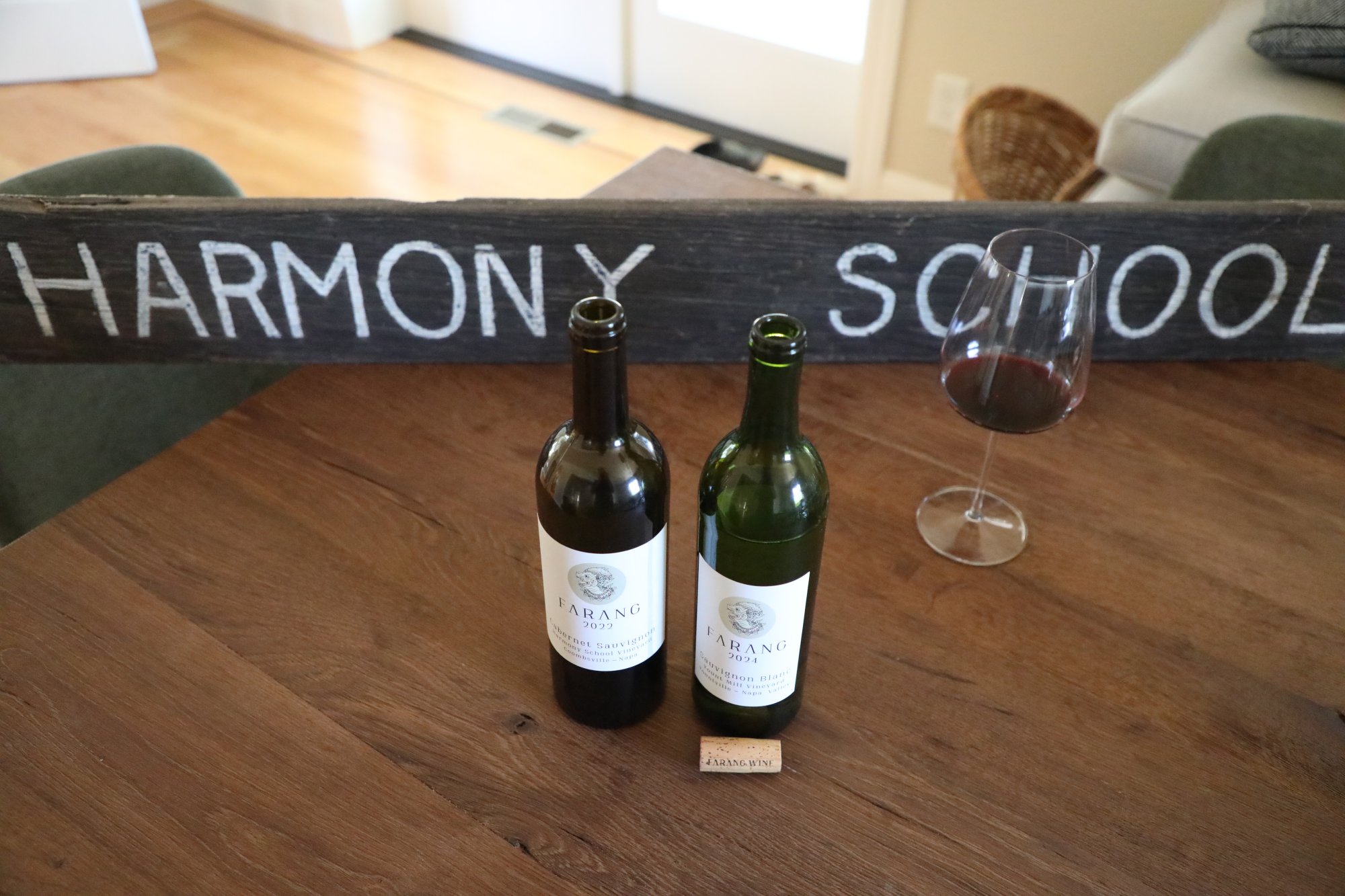
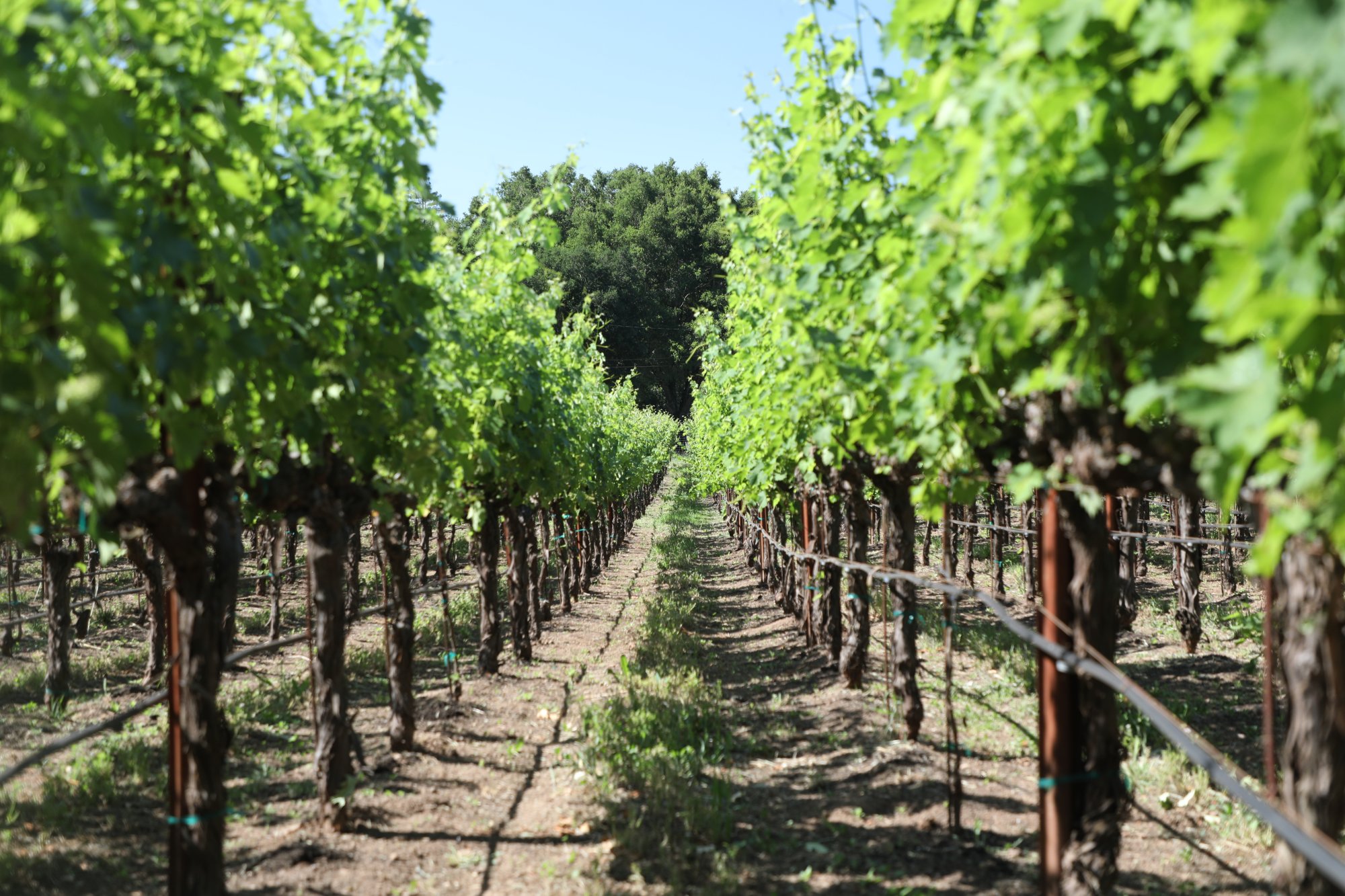
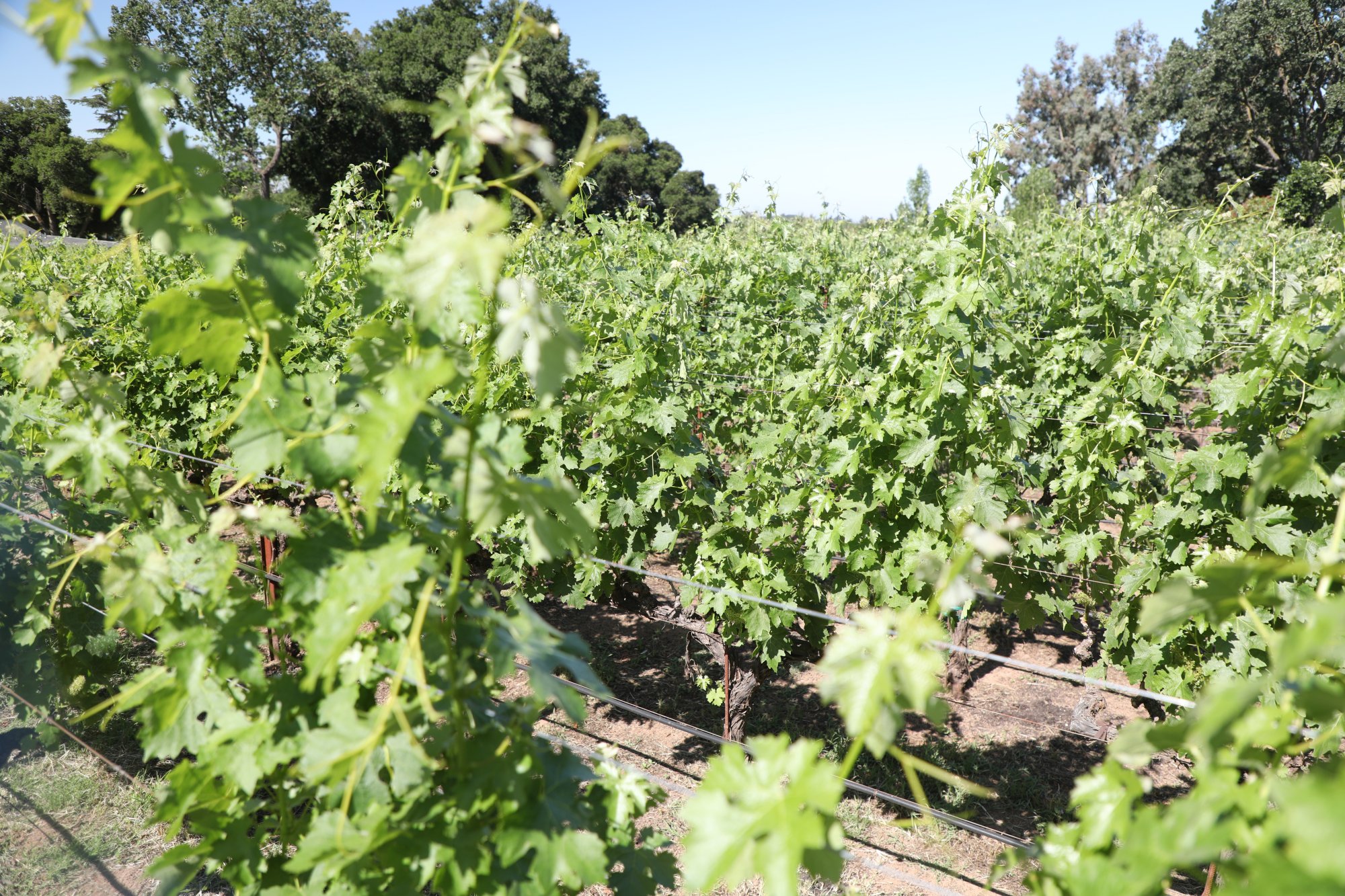
Their approximately one-acre vineyard is named Harmony School Vineyard, in homage to the Harmony School House which was built in the 1880s but was relocated to their property sometime in the 1920s. This vineyard was planted in 2003 by the Alvarez brothers, entirely to Cabernet Sauvignon, all clone 6. Even a neighboring vineyard has a small amount of clone 6 that was planted at the exact time. Previously the grapes were being sold, including to Crosby Roamann who bottled a Harmony Vineyard designated Cabernet Sauvignon in 2019 and in 2020. Grapes from this vineyard are no longer sold – rather all are used for their one estate bottling. This site has been certified organic (CCOF) since 2023.
The Napa Register dated Friday July 6, 1888 in the Notes from Coombsville column had this to say about the Harmony Schoolhouse in reference to needing more spaces in rural Napa County to accommodate religious gatherings, “Harmony school house is large enough to accommodate quite an audience. So if there is a superannuated preacher, or one without a flock, in Napa who wants to engage in his Master’s service, why not come to Harmony once a month anyway? Over the decades, this school house has been used for social gatherings including dances, 4-H club meetings, Harmony Euchre club meetings (trick-taking card games), and holiday festivals. A roll of honor published in the Napa Register dated December 11, 1886 lists several students whose family’s have deep roots in Coombsville including Simpkins (Simpkin’s Ranch) and Carbone (now home to Favia wines).
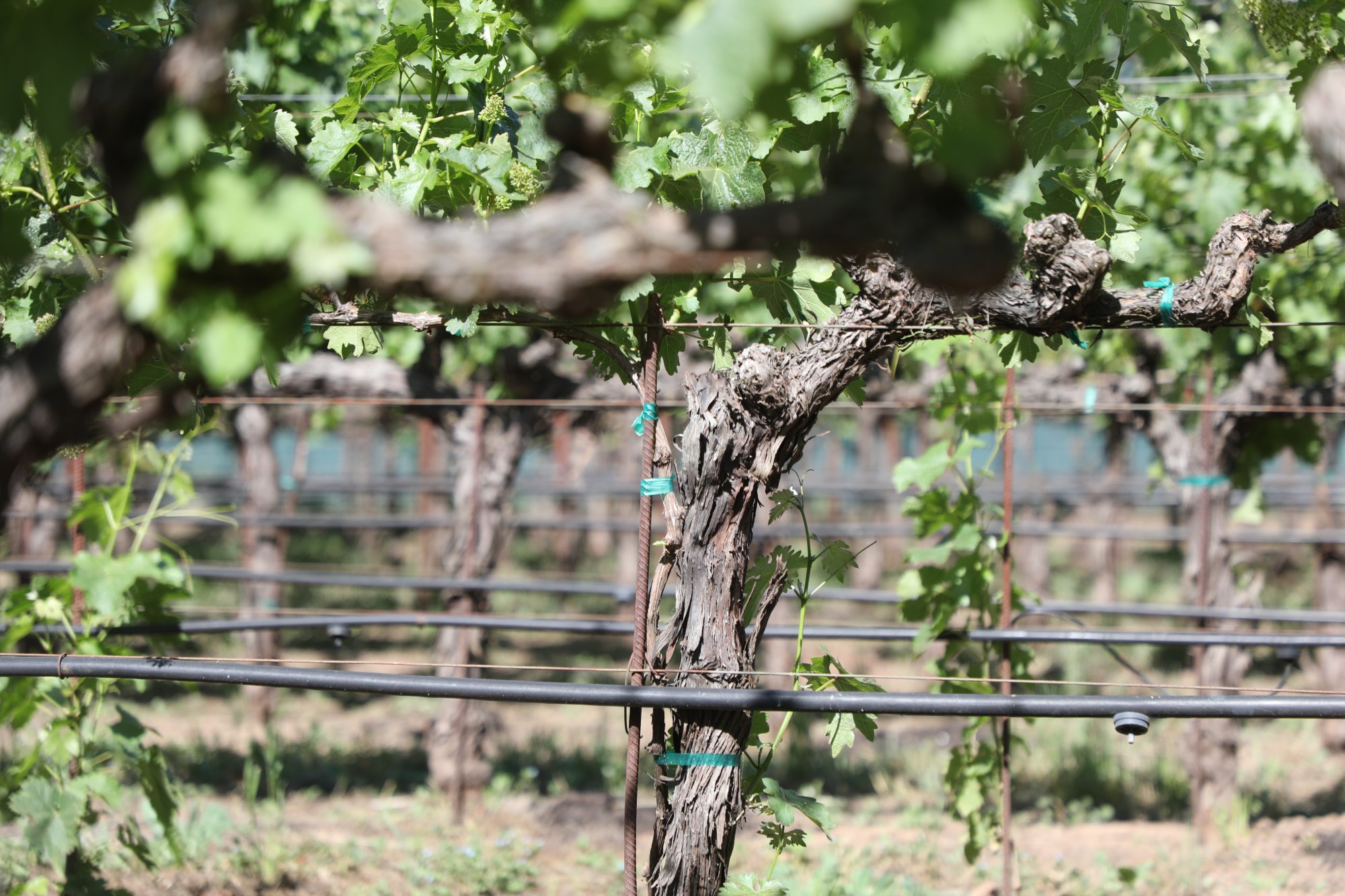
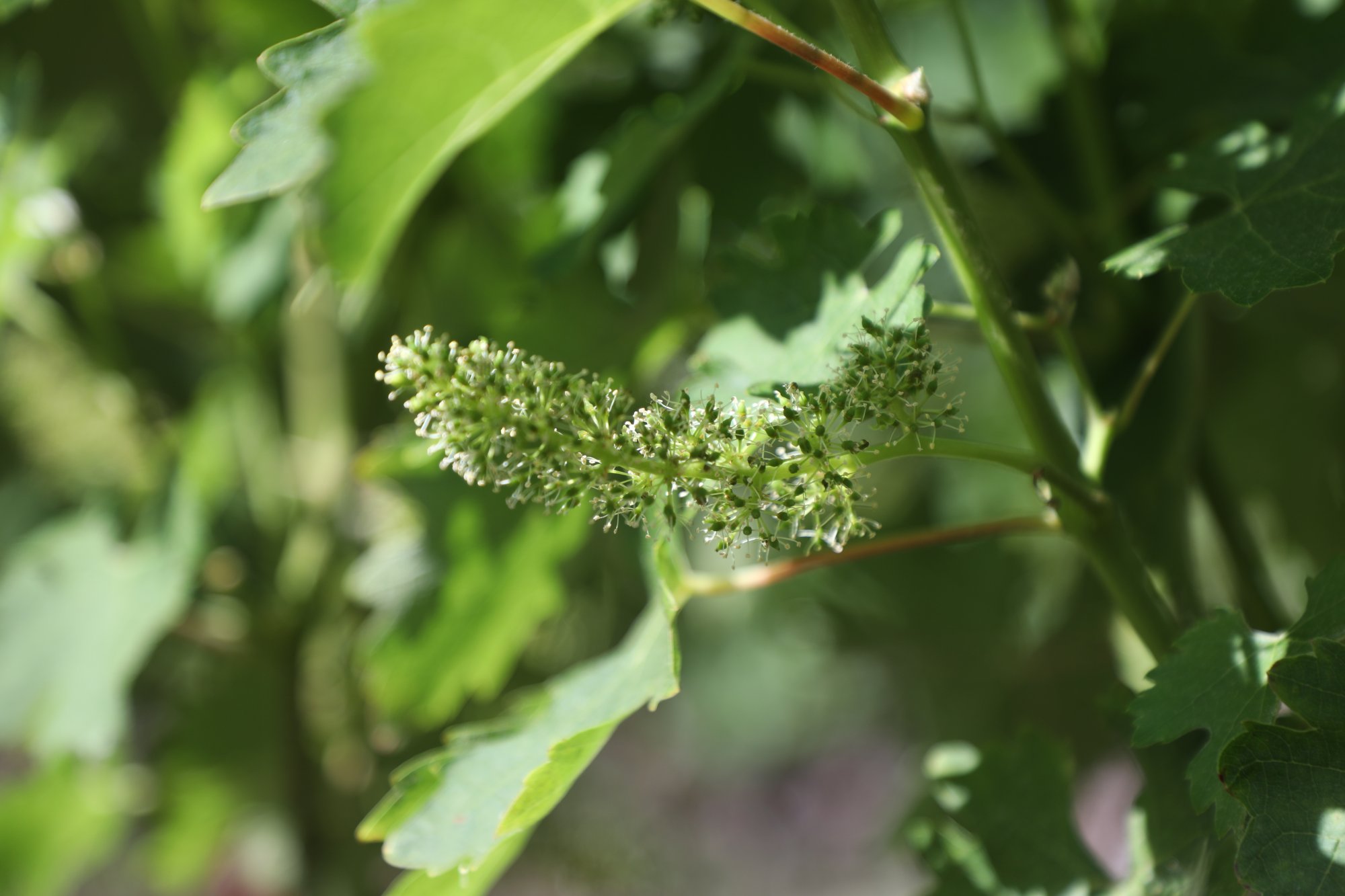
This is quintessential Coombsville, known for its small front, back or side yard vineyards. The property is within the Coombsville Caldera; the rocks are primarily volcanic in origin but with hard sedimentary layers as at one time this caldera was flooded with water. The vineyard is on slightly sloping land with the upper part featuring very shallow soils while the lower parts are deeper. After purchasing this property Jim graduated from one of the UC Davis viticulture and enology extension programs. He continues to learn his vineyard; for example after challenges with air flow and powdery mildew, spacers were introduced among the trellising to help open the canopy to both sunlight and airflow.
Through the Coombsville Vintners and Growers he met winemaker, Tom Sherwood (BXT Wines). Tom has made their wines since 2022. Both men are on the same page when it comes to making wines; they should be fresh, representative of the variety and the site. And designed to be shared rather than collected. Jim talks about the post luxury customer and the evolution that Napa Valley needs to embrace, evolving from prestige and scarcity buying to people seeking approachable, affordable and food friendly wines. Jim refers to these as connection wines, or wines that speak to one’s soul. Proceeds from the sale of their wines are being used to improve how their vineyard is managed, resulting in a continued incremental improvement in the quality of the wines.
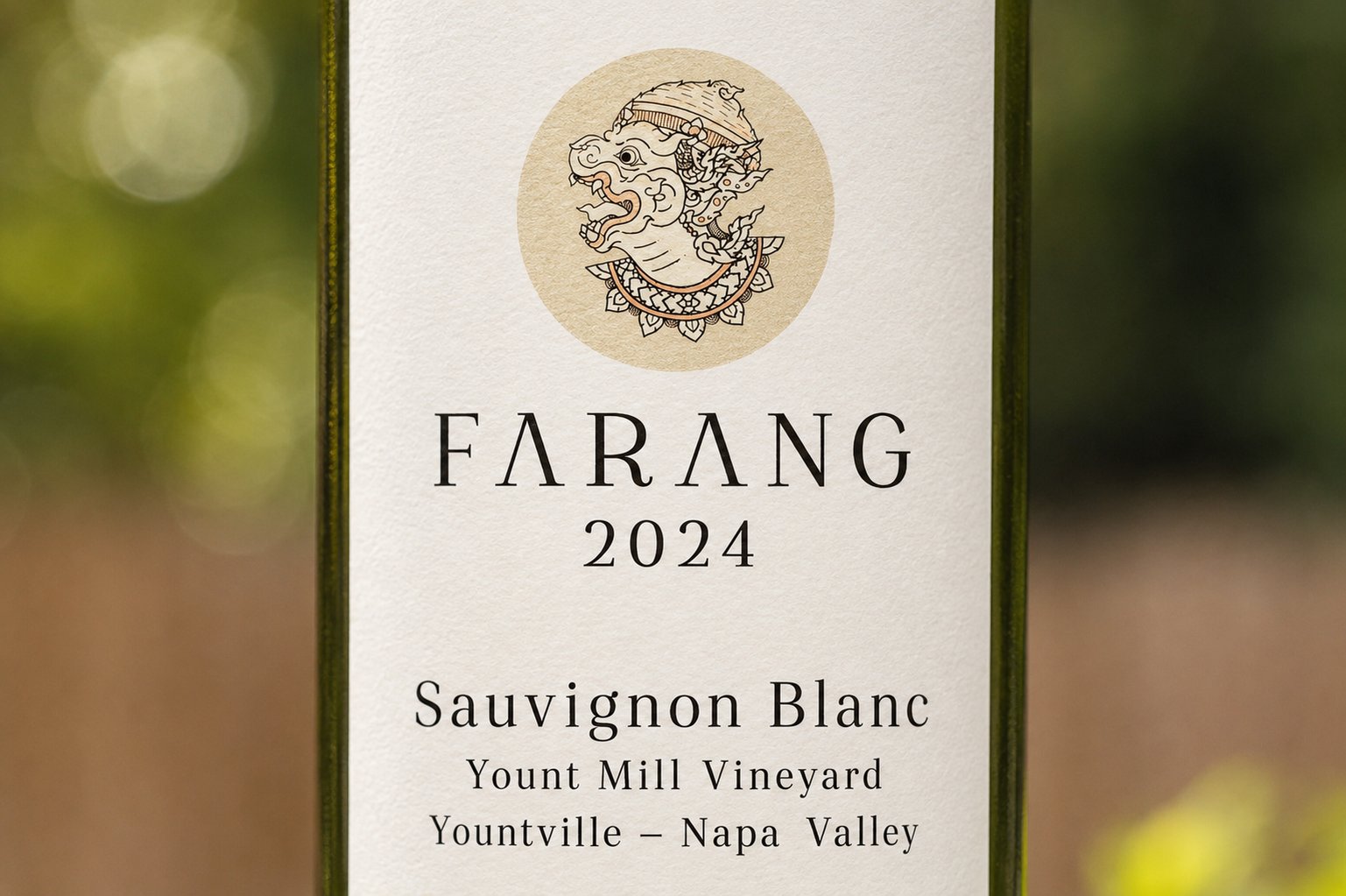
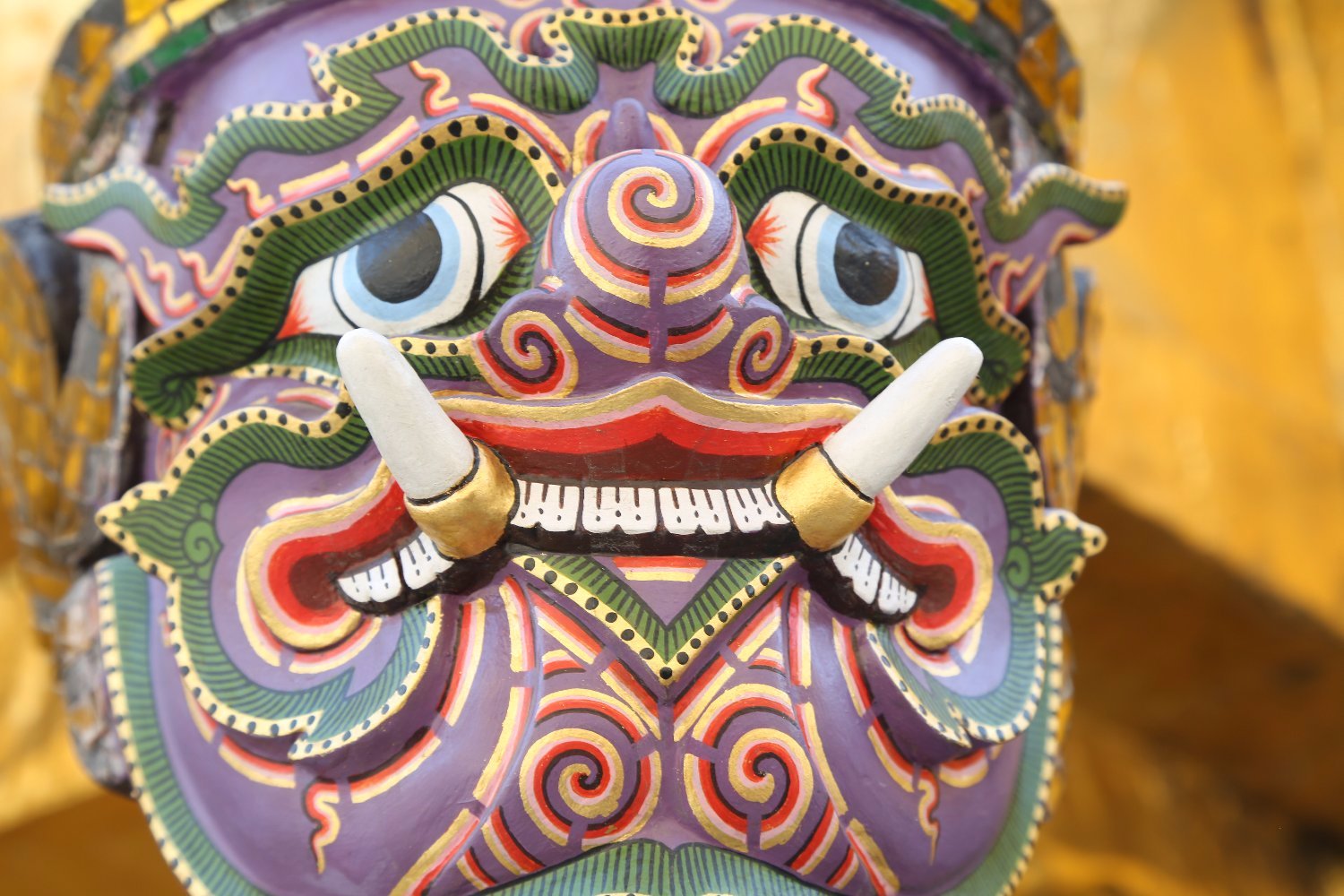
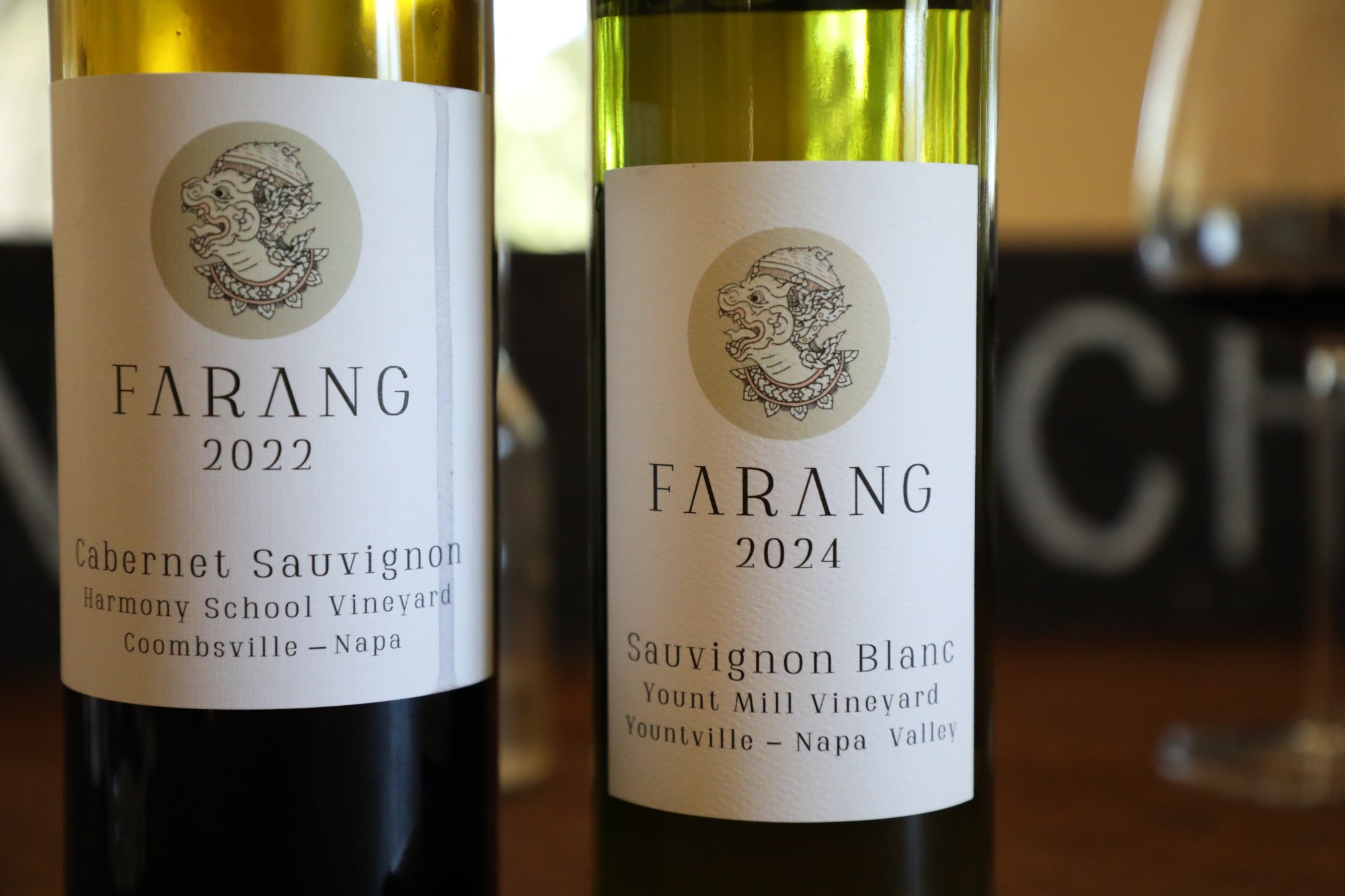
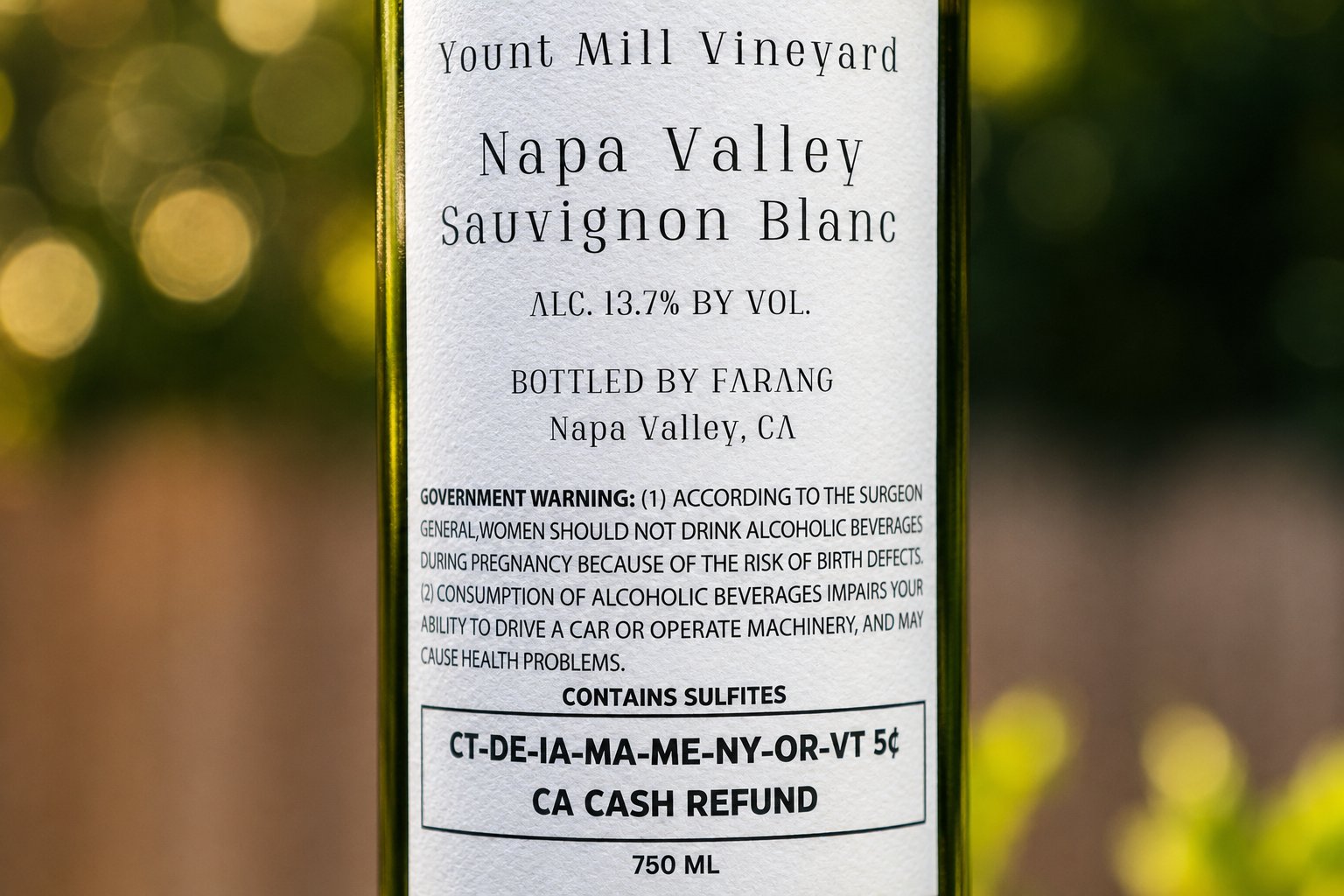 The image on their wine bottle is that of the monkey god, Hanuman. This god holds a deeply important place in Thai culture and mythology, where he is celebrated as one of the central figures of the Ramakien, Thailand’s national epic. The Ramakien is derived from the ancient Indian Ramayana, but over centuries Thailand adapted the story into its own distinct cultural tradition. In Thai interpretation, Hanuman is portrayed as a white monkey warrior known for his courage, loyalty, intelligence, and playful spirit. He serves the hero Phra Ram and leads the monkey army in battles against evil forces.
Unlike some versions of the story in India where Hanuman is more restrained and spiritual, the Thai Hanuman is charismatic, energetic, and often humorous. He is also known for his romantic adventures and magical abilities, including the power to fly and transform himself. His character represents bravery, devotion, and perseverance, qualities highly admired in Thai culture.
Hanuman’s image appears throughout Thailand in temple murals, classical Khon masked dance performances, sculptures, tattoos, and modern art. The character remains one of the most recognizable symbols in Thai storytelling and continues to connect generations through history, performance, and cultural identity.
While Thai is a tonal language, the sounds and inflections of the words can be quite challenging for those who do not speak Thai. But one word most visitors will hear and can easily say, during their visit to Thailand is that of ‘farang’, a word that that refers to foreigners of western European descent.



Both Jim and Kittinee embrace the idea that when you travel, you are a foreigner and things are meant to feel different, and that those differences should be celebrated and explored. Their philosophy is centered around connecting people to the land and the changing seasons, while their wines are meant to express the unique character of each vintage. At the same time, they hope their wines inspire conversation and create opportunities to learn about other cultures and perspectives.
Clone 6 Cabernet Sauvignon
Clone 6 Cabernet Sauvignon in Napa Valley is originally rooted with one individual, winemaker Anthony Bell. In late 1979 Bell began what became instrumental research on clonal variations of Cabernet Sauvignon while working at Beaulieu Vineyard. He is most known for introducing Clone 6 to Napa Valley; in 1980 he oversaw the planting of 14 unique clonal selections of Cabernet Sauvignon for Beaulieu Vineyard and then after several years, harvested, fermented separately and produced an individual wine from each clone.
One of the clones caught his attention; this was clone 6 Cabernet Sauvignon also called the Jackson clone. It had come to California originally from Bordeaux sometime during the gold rush years and was taken as a cutting from a single vine in an abandoned field station near the town of Jackson in the Sierra Nevada foothills. His propagation of this clone was the first time it has been planted in California since after the Gold Rush. Unlike other clones of Cabernet Sauvignon in which the bunches of grapes are tightly packed, these grapes grow in loose clusters and as a result, visually are fairly easy to identify. And this clone is known for its low yields.
After tasting through all the separate wines in multiple blind tastings it was clone 6 Cabernet Sauvignon that repeatably stood out – a wine that kept eliciting the word ‘wow’. In the 1980s, grape grower John Baritelle worked with Bell and Beaulieu Vineyard to grow Cabernet Sauvignon clone 6. In 1991 Anthony harvested and produced the first single-vineyard single-clone Cabernet Sauvignon from Napa Valley.
Several quick definitions are in order relating to clones. A variety is a specific type of grape with its own overall inherent characteristics; IE Cabernet Sauvignon is a variety and is a different grape versus Malbec. A clone refers to plant material from a variety that displays unique and or distinctive characteristics as compared to other clones from that variety. Clones are created through genetic mutations over periods of time. This can be shape of clusters, flavors, grape size, drought tolerance, differences in times of ripening or resistance to disease among other attributes. And another related word is ‘selection’ – this term refers to cuttings taken from an existing vineyard (regardless of variety or clone) which are then propagated in a new vineyard: IE a Cabernet Sauvignon selection from Eisele Vineyard.
Select Wines
Through their winemaker, they were connected to the Hoxey family, the owners of Ghost Block Wines, Napa Wine Co. and the Yount Mill Vineyard. Their Sauvignon Blanc grapes are sourced from the Yount Mill Vineyard in Yountville.
Sauvignon Blanc
 The 2025 Farang Sauvignon Blanc Yount Mill Vineyard (with a skosh of Sauvignon Musque from Bedrock Vineyard) was barrel sampled just prior to bottling; this wine was aged in 1/3 neutral oak puncheons, 1/3 new Austrian oak Stockinger puncheons and 1/3 stainless steel vessels. Hazy (prior to being filtered) and pale gold in color; the bouquet offers aromas of golden delicious apples, pineapple guava, jasmine, comise pear, citrus lychee. And as it evolves, it offers a light note of lime, white grapefruit and lemongrass. This is not an overly tropical or green or grassy expression, but saddled right in between. Bright, fresh and exciting across the palate, this wine is already in a sweet space in its infancy. It tastes like pineapple, apples, golden plum, guava, white pear and honeydew melon. Lightly fleshy, the rounded texture is lifted high by the bright acidity. Finishes with some phenolic dryness, possibly a result of more battonage during this particular vintage, and herbal lift including a note of fennel and tarragon,
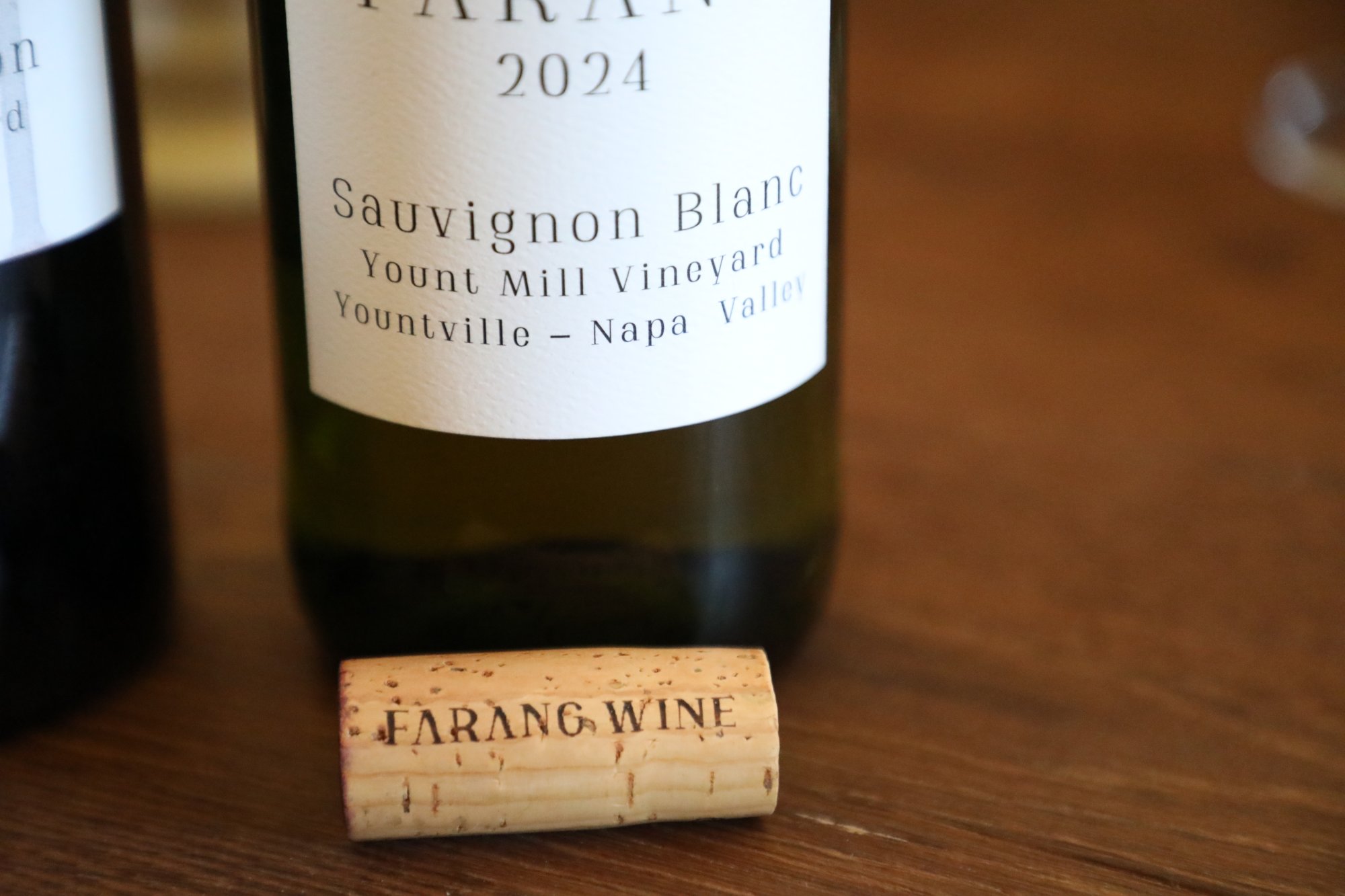
The 2024 Farang Sauvignon Blanc is 100% varietal; this wine is medium gold in color. The first aromatic we noted is apple-y, reminding us of coring golden delicious apples – and the resulting juice that pooled around the apple corer. Additional scents including honeycomb, honeysuckle, baked pineapple, apricot, ripe papaya, yellow nectarine and peaches in light syrup. Lightly tangy. Ripe. This is a totally different expression than the 2025 vintage. As ripe on the palate as on the bouquet, this wine tastes like pineapple, honeycomb, white nectarine, apricot, pineapple guava, golden delicious apple. On the ripe end of the spectrum, but also simultaneously bright and like the bouquet, with an accompanying tangy character. Finishes with an intensity of fruit accompanied by a vibrancy of acidity. Both parallel each other with persistence on the finish. No herbal notes here.
Cabernet Sauvignon
The 2022 Farang Cabernet Sauvignon, Harmony Vineyard is deep ruby and opaque; the focus is on the purity of the variety here with the oak a complementary influence. There is an element of freshness and savory on the bouquet, which is not always the expression we find from the 2022 vintage in Napa Valley, a warm season that featured an extreme heat spike centered around Labor Day weekend. The nose smells dark olive, dried sage, old cedar box, bramble, raspberry, red cherry, red plums, and boysenberry. Minerally across the palate, this wine is red fruited with a balanced acidity. And there is an approachability here in its youth. Its flavors include red cherry, not fully ripe boysenberry, Santa Rosa plum, currant, cranberry and chalk. The tannins are integrated nicely with a well-tumbled and lightly dusty texture persisting in tandem with the fruit. Finishes with a chalky character, and brightness, fueled by a vibrant acidity. This bottling shows the character of Coombsville well, both on the bouquet and the palate. Its ABV is 14.4%. The wine was cold soaked for a few days prior to fermentation; its élevage was 18 months in new French oak barrels with a blend of medium to medium plus toast. Wine from only the best showing barrels was selected for this bottling. Total production this year was merely 115 cases.
After Jim finished the last picks of the 2022 harvest after being up most of the night, he headed for breakfast at Black Bear Diner. He said he had never felt so completely and almost spiritually exhausted in his life. It was an unforgettable feeling after all the hard work that had gone into the vineyard. From firsthand experience, we will add that one’s first harvest is always among the most satisfying.
Additional wines will be released in the future including a Gamay noir and eventually a sparkling Pinot Meunier from the Vander Kamp Vineyard in Sonoma Valley in Sonoma County.
—
 Farang Wines is a member of the Coombsville Growers and Vintners association. That organization’s President, Jim Erda, after hearing about what Farang hoped to accomplish, introduced Jim and Kittinee to Elise Nerlove and George O’Meara at the Micro Winery Guild. Farang Wines is a member of this local organization which brings together the voices of smaller producers and helps define how those wineries can better work together.
The Assembly Bill 720 (AB 720), passed in 2021 is different from the Napa County Micro-Winery Ordinance. This bill created the Type 93 “Winegrower Estate Tasting Event Permit” under the California Department of Alcoholic Beverage Control (ABC). Restrictions relating to this bill have been implemented at both the state and as a pilot program by Napa County. A couple of the key restrictions are: a state mandated annual renewal and a maximum of 36 events per year, and Napa County mandated that events must be outdoors during daylight hours only, have 14-foot emergency access roads to the site and never be hosted on parcels with winery production facilities.
This ordinance allows growers to convert part of their property into an area for at least a partial winemaking facility (not all of the winemaking needs to be done there); examples are a shed or a garage. The costs of building a full winery (even a small one) can easily run into the millions of dollars. And this is important as Napa Valley is home to numerous small family-owned vineyards who prior to this ordinance had no legal path to host visitors for tastings.
The Micro Winery Guild promotes small family owned wineries (under 5,000 cases a year). At its core, the members of the Micro Winery Guild foster a deep connection to the land and to the people behind each brand. In an organization defined by the word “micro,” Farang in terms of production, is among one of the smallest members.
Total production varies from year to year, but is usually around 500 cases with the intent to grow production up to 2000 cases from purchased grapes.
Their wines are carried locally by Out Space Wines in downtown Napa and at Honor Market in Yountville. And selectively in Florida. For more information, and to purchase wine, visit: www.farangwines.com
Leave a Reply