



 D. Vines Estate. Proprietors Steve and his wife Anne Dunn founded D. Vines Estate on Howell Mountain with their inaugural vintage in 2024. Steve’s interest in the outdoors is rooted in his uncle’s purchase of 800 acres of farmland in Lone Jack, Missouri when he was a child. He would often fish and hunt on his uncle’s property. He also remembers that his uncle put him to work with no shortage of chores to do. Later, Steve purchased 100 acres from his uncle; he still owns this property and uses it as a place to relax. Steve began working for his family’s construction company, Kansas City based JE Dunn Construction in 1975. The company was founded in 1924. Today Steve serves as Chairman of the Board for the company.
Steve began building an interest in wine later in life through his children. One of his seven children, Joe Dunn, the managing partner of D. Vines Estate, has taken the lead in overseeing their wine sales. Joe recalls that his first wine tasting was in Margaret River, Australia, followed by tastings in the Willamette Valley while he was attending college in Portland. Joe’s oldest brother, Jeff, started visiting Napa Valley; he is the one who introduced the family to the wines from the region.
On Steve’s 60th birthday he visited Napa Valley for the first time. He remembers that back in college, he drank very average wine. He attended Rockhurst University in Kansas City. Decades after Steve graduated, Jeff found a college yearbook photo of his father sitting in front of a fraternity house with a bottle of wine in hand.
The ‘D’ refers to the first initial of their last name, but within their immediate family Steve is simply referred to as D. This is also his middle initial. After much debate over a potential name for the wine brand, Joe’s sister-in-law suggested the family call it D. Vines. The family liked the simplicity of this name.
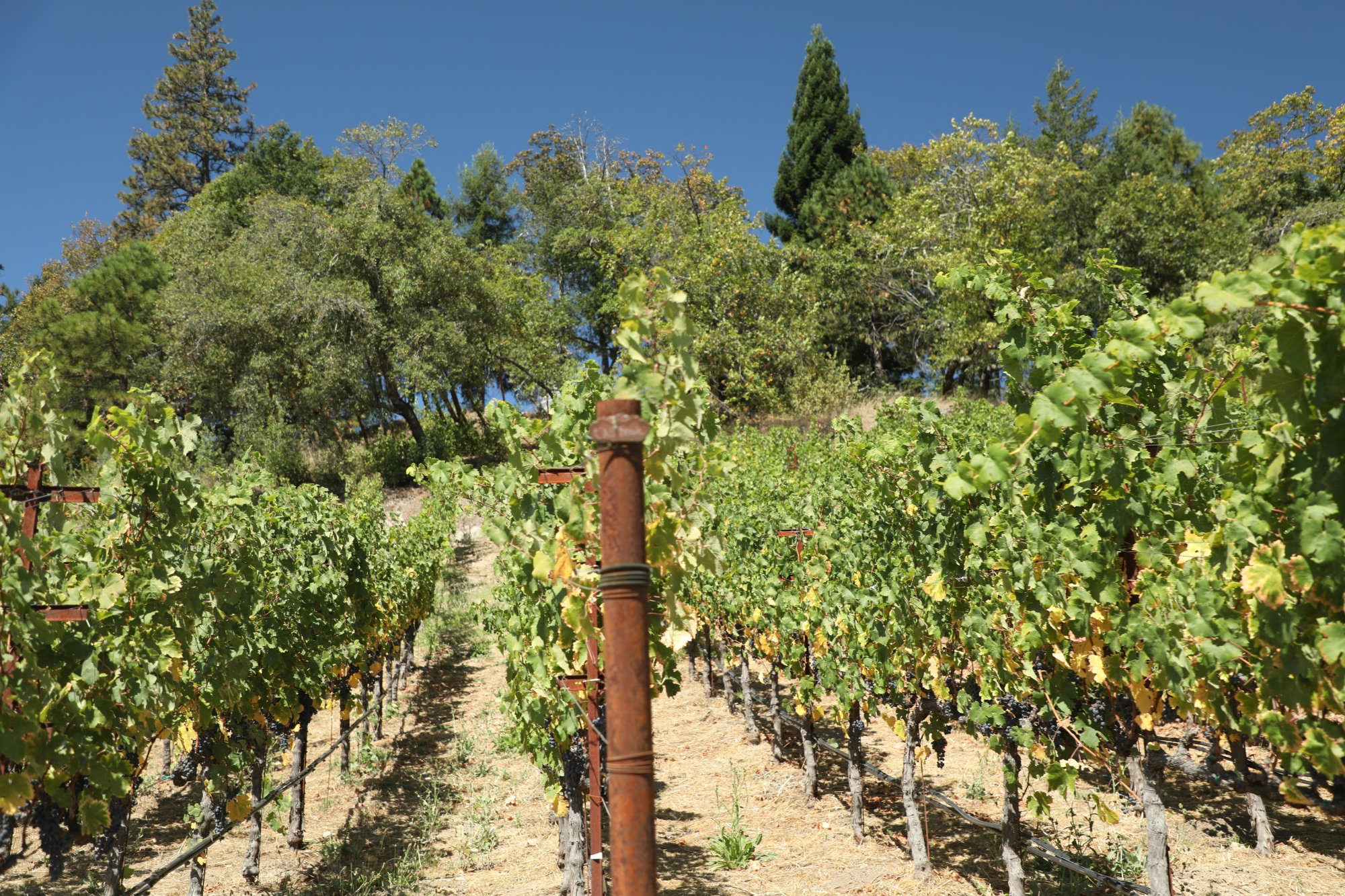
Their initial interest was in a property on Moon Mountain in neighboring Sonoma County. However, they were later told about a picturesque property high up on Howell Mountain in Napa Valley. This property had been on the market for some time, primarily because of the long term grape leases and the age of the vineyard. The oldest vines on the property were planted in 2000.
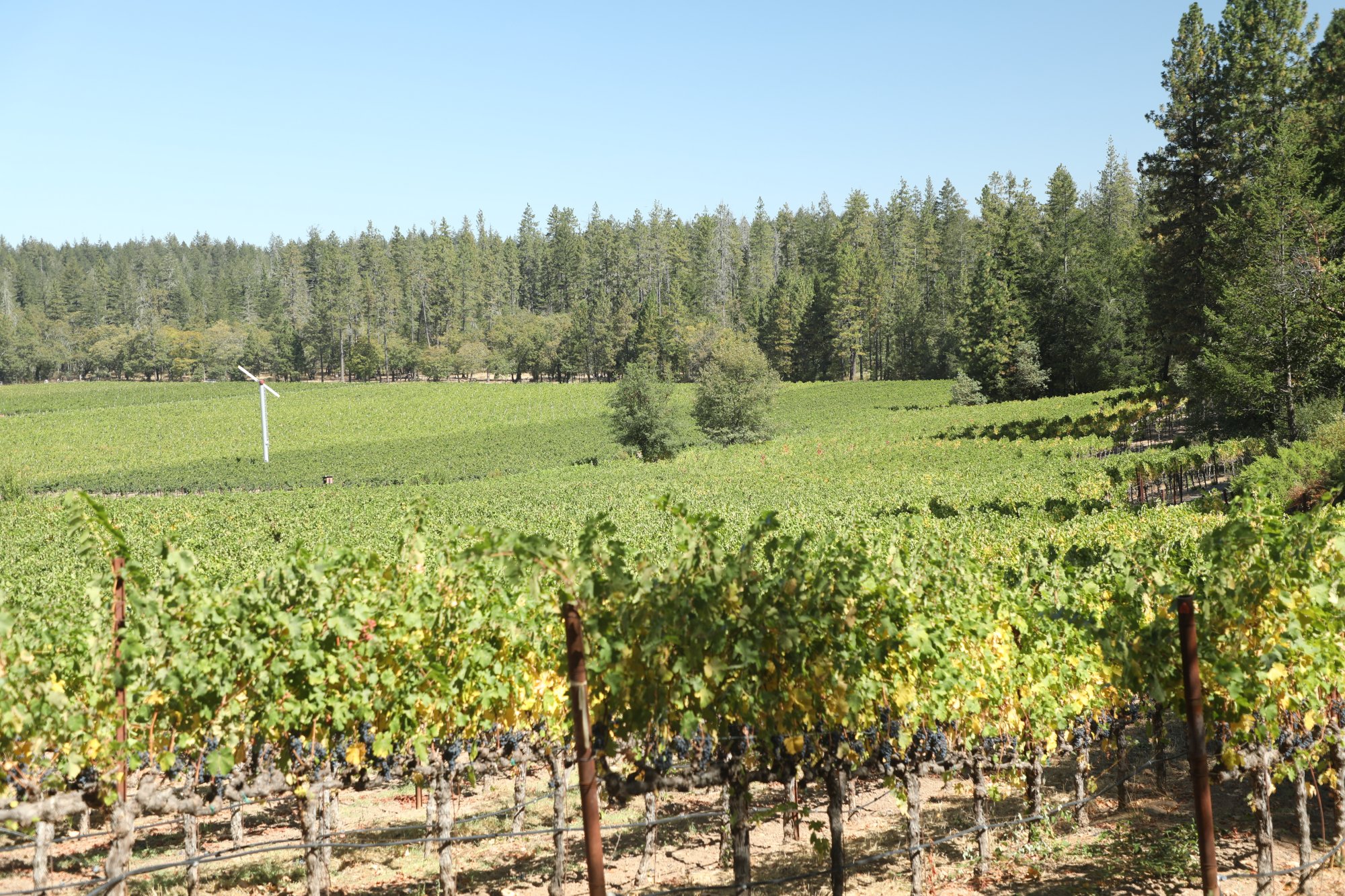
Many of the grapes in the vineyard are still sold to other wineries. The vineyard tops out at about 1,800 feet and features 13 different soil types with numerous exposures. The soils include loam, gravel and various volcanic materials. The vineyard transitioned to organic farming in 2024. The property encompasses 40 acres, with 24 acres planted to vines. The family eventually plans to build a 14,000-square-foot wine cave.
After noticing that their parcel report listed a spotted owl as one of the species on the property, they decided to name their vineyard Spotted Owl.
The family connected with winemaker Jonathan Walden through a mutual friend who was working at Lokoya Winery. Jonathan grew up in Napa Valley, surrounded by vineyards, although his family was not involved in the wine business. He remembers looking at vineyards as a child – noticing row orientation and other details that most people without a background in wine might overlook.
His brother Christopher, owner of Vinedresser Vineyard Management, encouraged him to take a winemaking class at Napa Valley College. Jonathan was intrigued by the combination of science and art, along with being able to work outdoors – and creating an enjoyable product to share with people. At the end of the day, he was attracted to winemaking because it allows you to develop your own style and create wines that are not only an expression of place but also a reflection of one’s own personality.
 Jonathan’s first job was at Laird Family Estate, an ideal winery for meeting numerous winemakers and becoming connected to what we call the ‘guts of the valley,’ based on the winery’s numerous custom-crush clients. One winery connected him to O’Shaughnessy Winery where he worked on their winemaking team for several years. He later worked a harvest in Australia’s Mornington Peninsula before becoming an overseeing winemaker at Melka Estates and assisting with Atelier Melka. Most recently, he worked at Elusa Winery in Calistoga. Today his career focuses on consulting for winery clients.
Jonathan’s approach to winemaking is to represent the vineyard while building wines around texture and mouthfeel, with the structure and balance to age.
Vinedresser Vineyard Management farms the estate and oversees its viticulture.
Howell Mountain
Howell Mountain is one of Napa Valley’s most distinctive mountain appellations, located in the Vaca Mountains northeast of St. Helena. Established in 1983, it was Napa Valley’s first sub-appellation and is defined in part by its elevation, with vineyards situated at 1,400 feet or higher. The appellation encompasses approximately 14,000 acres, although only a portion is planted to grapevines.
Unlike vineyards on the valley floor, much of Howell Mountain sits above the marine fog that regularly blankets Napa Valley during the growing season. This results in greater exposure to sunlight, generally cooler daytime temperatures and warmer nighttime temperatures than the valley floor. The extended growing season allows grapes to develop flavor and phenolic maturity while retaining acidity. And there is no other appellation that smells like this, a result of its location, elevation and types of vegetation. Whenever we are on Howell Mountain, it always reminds us of the vegetation at a similar elevation in the Sierra Nevada.
The mountain’s soils are predominantly volcanic in origin, including reddish, iron-rich soils and volcanic ash deposits. These soils are often rocky, shallow and well-drained, limiting vine vigor and encouraging smaller berries with a higher skin-to-juice ratio. Vineyard sites vary considerably in slope, aspect and soil composition, creating differences in ripening conditions even across relatively short distances.
Cabernet Sauvignon is Howell Mountain’s signature variety, although Cabernet Franc, Merlot, Zinfandel and other varieties are also grown here. Cabernet Sauvignon from the appellation is often characterized by concentrated dark fruit, firm tannins and savory, earthy characteristics. These wines can be structured in their youth and often benefit from extended bottle aging.
Farming on Howell Mountain presents challenges, including steep terrain, variable exposures, limited water availability and the potential for spring frost. Careful vineyard management, including canopy management and irrigation decisions, is essential to achieving balanced ripeness while preserving the distinctive character of this mountain appellation.
Select Wines
Whites
Sauvignon Blanc
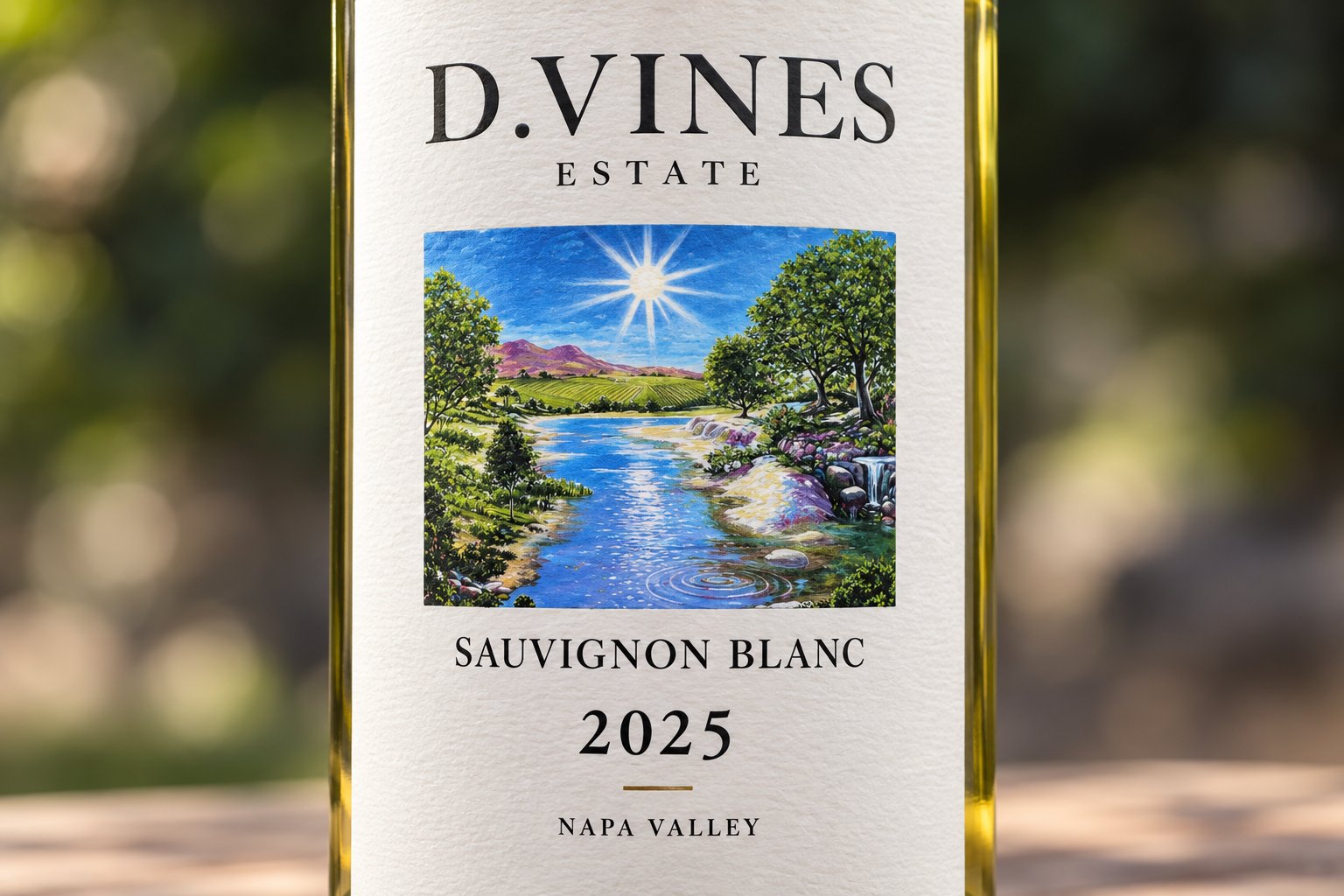 The 2025 D. Vines Sauvignon Blanc Milliken Creek Vineyard. These quad trellised vines were planted in the mid 1990s – careful canopy management is required to ensure the grapes fully ripen. Two harvests were made, including an earlier pick for higher acidity and lower Brix (21 Brix), followed by a second pick for greater ripeness and a more fruit-forward expression. Both picks were direct pressed, settled in tank for one day and then racked into barrel for fermentation. This bottling was aged in 18% new French oak barrels (light toast) for 9 months. Fermentation was cold and slow, and the wine remained on its gross lees until being racked prior to bottling. This wine is medium gold in color; the bouquet is bright and lifted and highly aromatic. Its scents are floral including honeysuckle, jasmine and citrus blossom with additional notes of lychee, grapefruit and pomelo. There is a light herbal edge but no greenness, including lemongrass and thyme. As bright on the palate as the bouquet suggests, this wine tastes like golden apples, not fully ripe pineapple, kiwi, and pomelo. It finishes fresh with both flavor, texture and acidity paralleling and tugging on each other on the persistent finish. The mouth offers a saline and silky texture – but never feels heavy as it is buoyed high by the vivid acidity. 125 cases were produced of this bottling.
Reds
Cabernet Franc
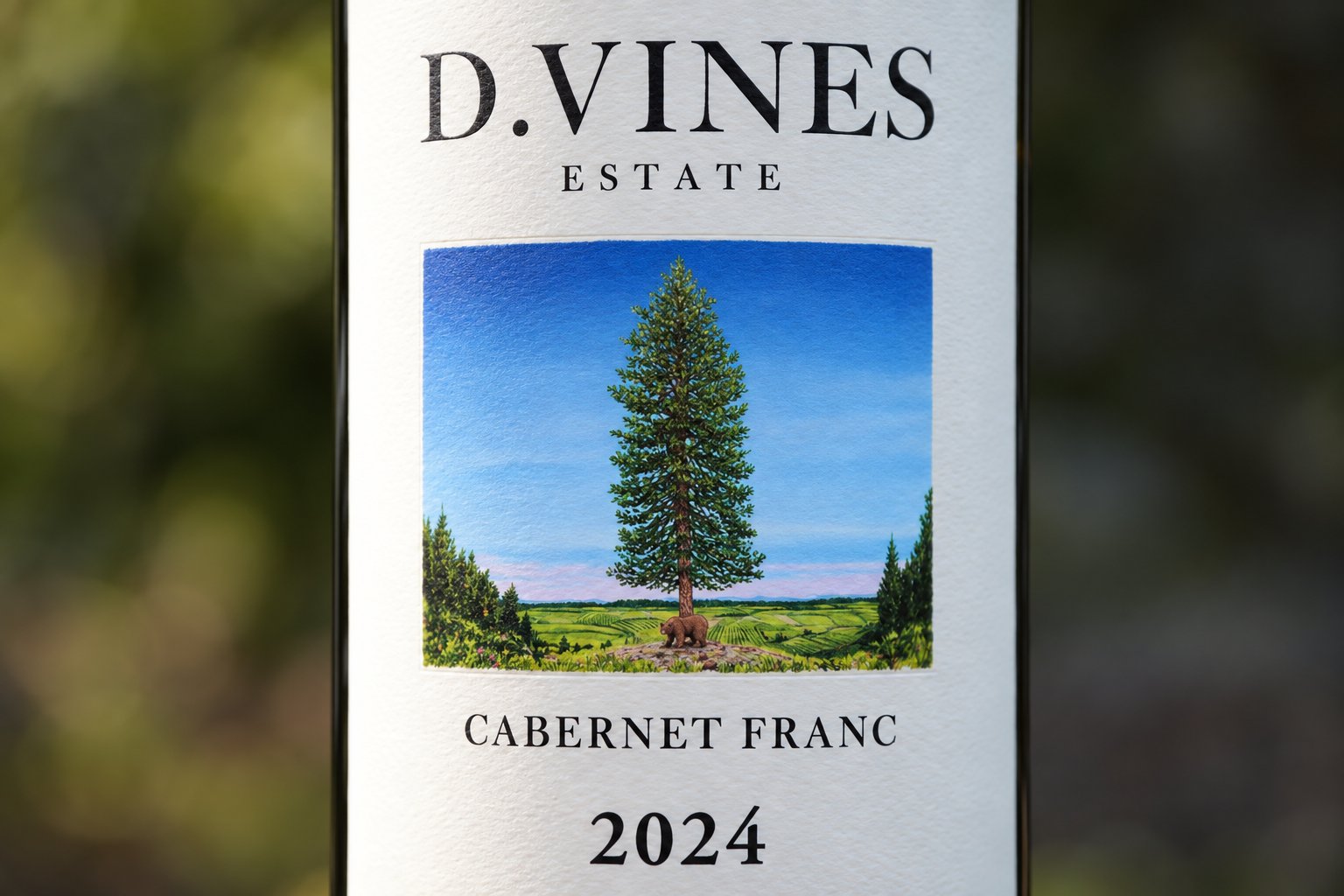 The 2024 D. Vines Cabernet Franc (clone 327) is from a tiny slice of their vineyard resembling the shape of an eyebrow. Appropriately named for its shape, the Eyebrow Block contains only 13 rows of Cabernet Franc. Compared to the rest of the vineyard, these vines are fairly young, having been planted in 2017. This wine is deep ruby and opaque. Both dark fruit and barrel influences speak in tandem on the bouquet. Floral up front, its aromatics include violets, lavender, old leather, old cedar box, dark olive, and dark fruits including dark plum, boysenberry, dark cherry and blackberry. The bouquet opens to sweeter barrel influences with time including dark cocoa powder. On the palate, there are brambly fruit characters include of blackberry, along with boysenberry, dark mulberry and cherry. Finishes with a light toast from the oak, dried herbs including sage and well-tumbled, gravelly textured tannins. Both oak and grape tannins are managed nicely, especially considering the mountain site. A light dusty nuance persists. This is fully ripe expression of the variety, but retains a freshness, balanced acidity and a savory edge, especially noticeable on the finish.
Only one barrel was produced of this wine; prior to fermentation, the grapes were cold soaked for 3-4 days followed by approximately two weeks of fermentation in a 1-ton tank. Tannin management and extraction was done by utilizing pump-overs. This wine was aged in aged in a single Sylvain Grand Réserve barrel of medium toast. Jonathan has noticed this barrel makes its impact early in its aging, but becomes more integrated with patience in the cellar. And he looks for the mouth feel in particular, contributed from this particular barrel.
Cabernet Sauvignon
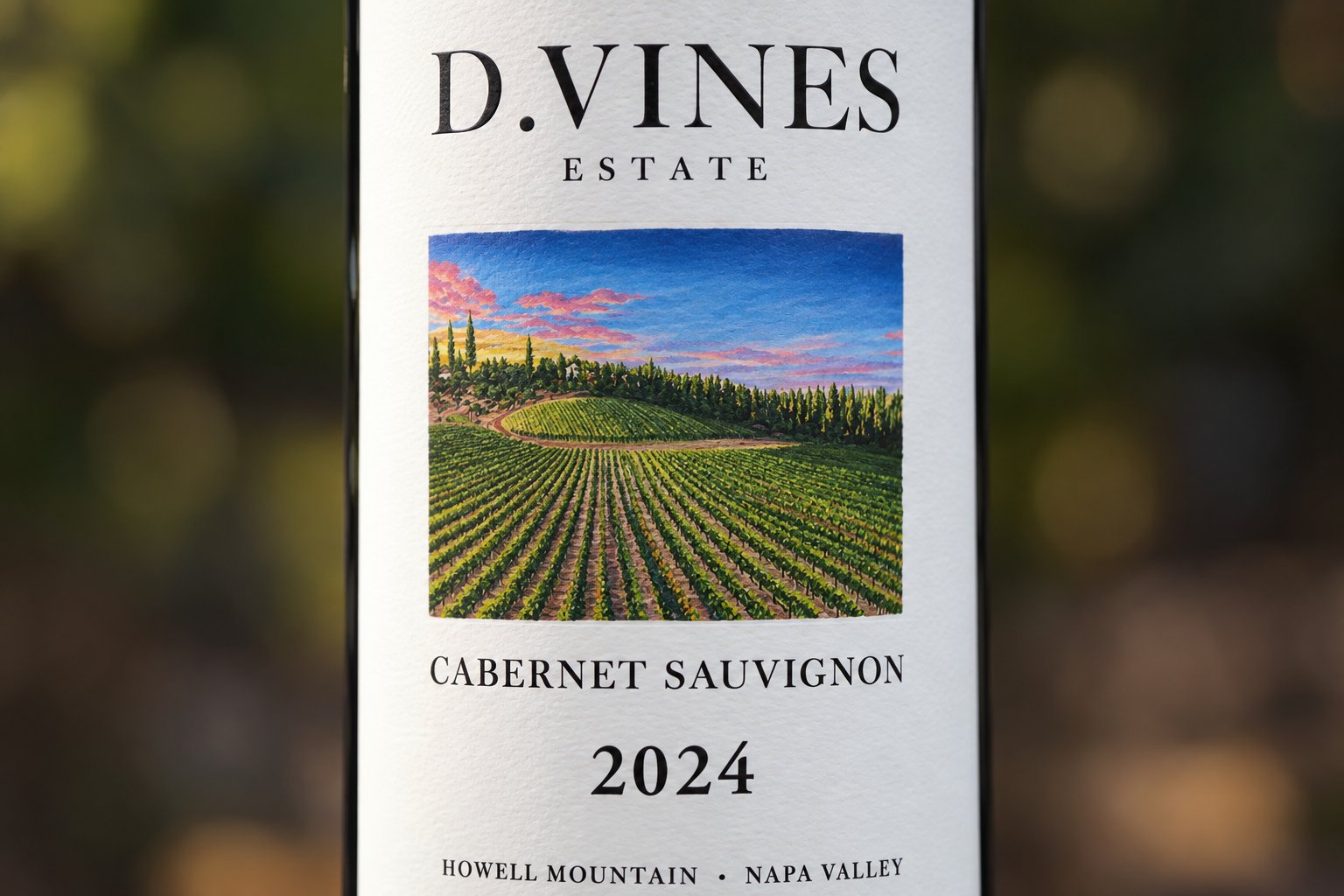 The 2024 D. Vines Cabernet Sauvignon is from clone 412 planted on 110-R rootstock. This wine is deep ruby and opaque; deeply layered in terms of its aromatics, the bouquet is a union of floral, dark fruit and barrel influences. This wine smells like violets, lavender and lilacs, with blackberry sherbet, boysenberry, leather, sweet tobacco spice, toast, dried herbs including sage, and a mineral component with a light ferrous/iron character. There are also notes of dark chocolate and cocoa powder as the wine continues to breathe. This wine tastes dark fruited with brambly characteristics; these flavors include Satsuma plum, blackberry and dark cherry. As layered on the palate as on the bouquet, the flavor profile speaks to the intensity of this mountain site – with mountain tannins present, but never feeling edgy or course. Rather their texture is gravelly with a distinctive grainy feel at this age, only two years post vintage. Still, they are a bit tightly woven, not surprising considering the wine’s youth. Nonetheless, this wine is built to age. Bright acidity.
The grapes spent 3-4 days cold soaking prior to fermentation and were on the skins for a total of 14-16 days. The cooperages used include Ermitage, Sylvain, Darnajou and Alain Fouquet.
—
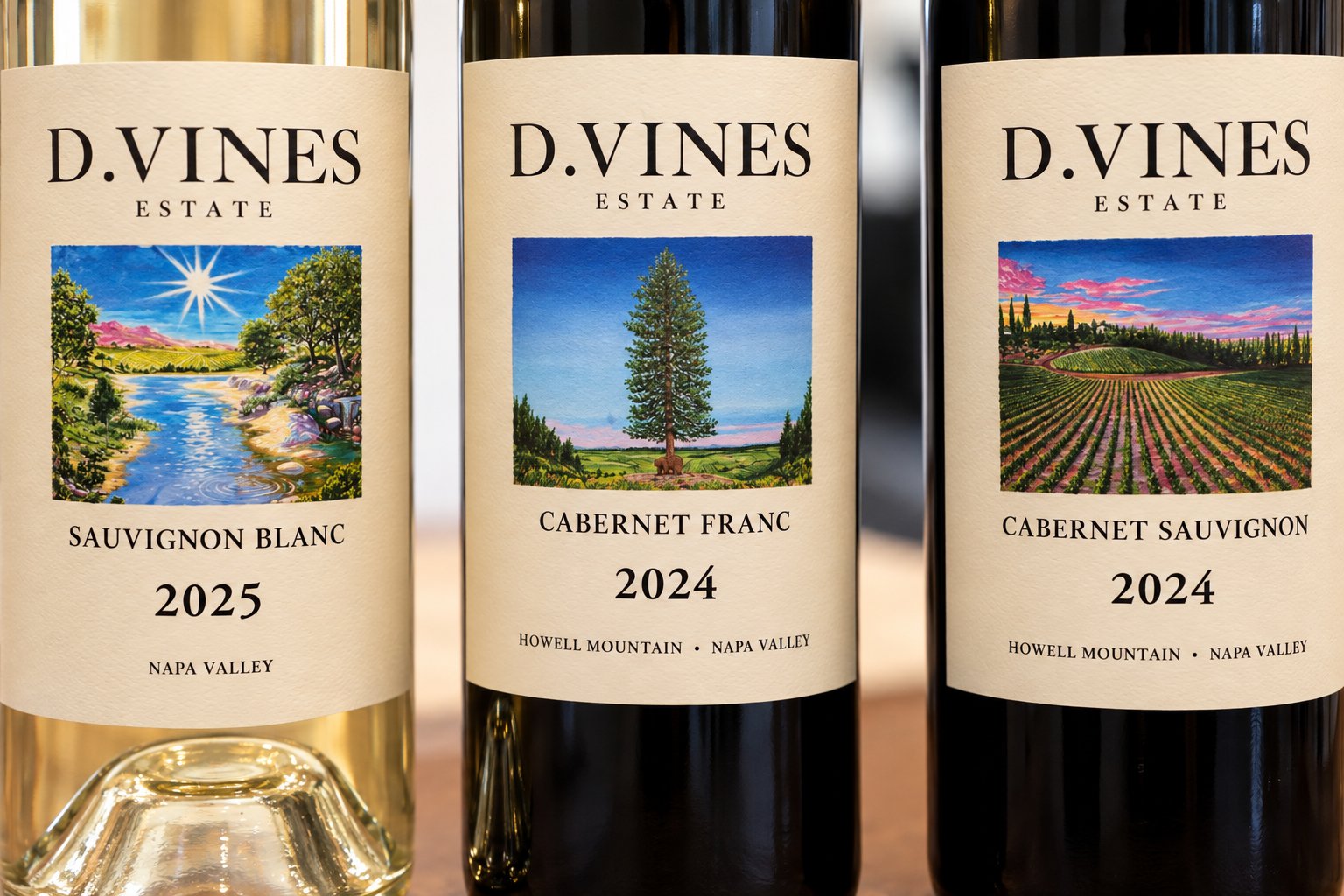
The family worked with Carrie Nelle Burgin on the overall label design, along with Wes Benson, a Kansas City-based artist who specializes in oil painting.
Each piece of label art began as an original 48-by-60-inch painting by Wes, depicting a defining feature of the estate and inspired by photographs taken around the property. The exception is the Sauvignon Blanc label, which features a view from the Charles Tamagni Bridge on Deer Park Road. This painting depicts the Napa River crossing at Deer Park Road, near Milliken Creek Vineyard, where the family sourced their Sauvignon Blanc.
Through the labels, the family wanted to evoke a strong sense of place, particularly the estate’s setting across from Las Posadas State Forest.
Total production in 2024 was approximately 325 cases. The wines are primarily sold direct-to-consumer, with limited distribution in both California and Missouri. The wines are also introduced to consumers through private gatherings, including events at country clubs. For more information or to join their mailing list, visit: www.dvines.estate
Spotted Owl Vineyard
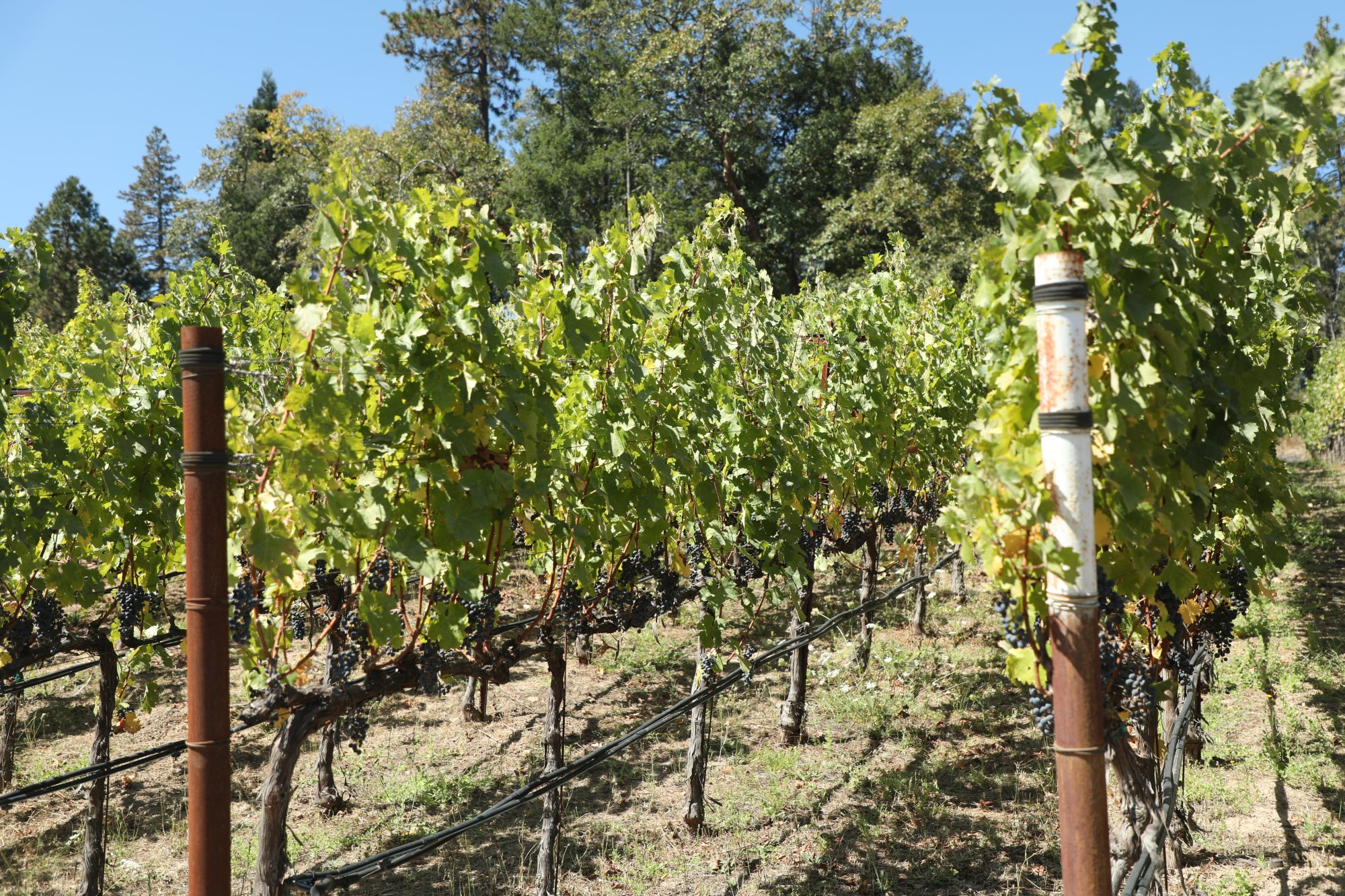
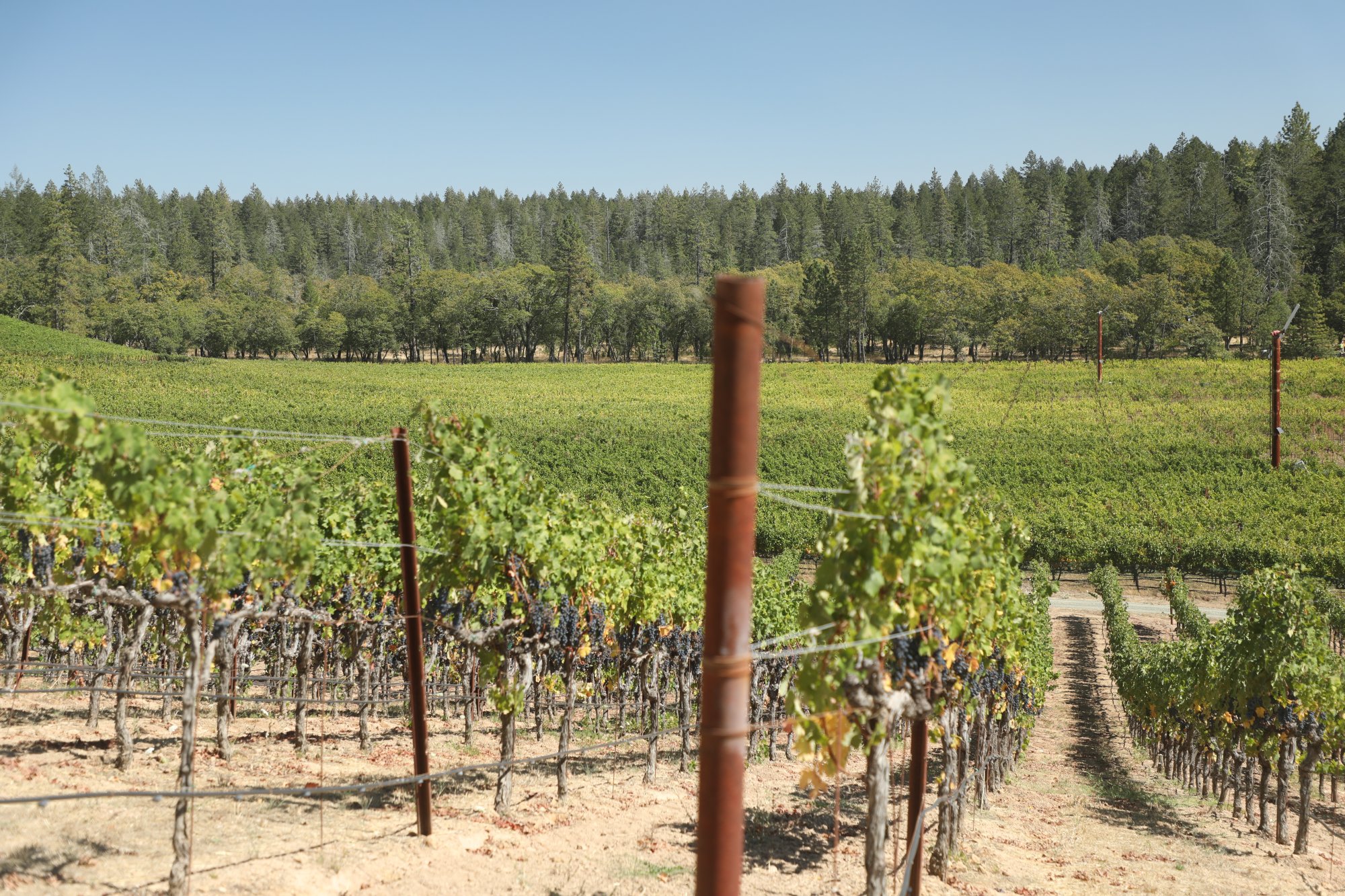
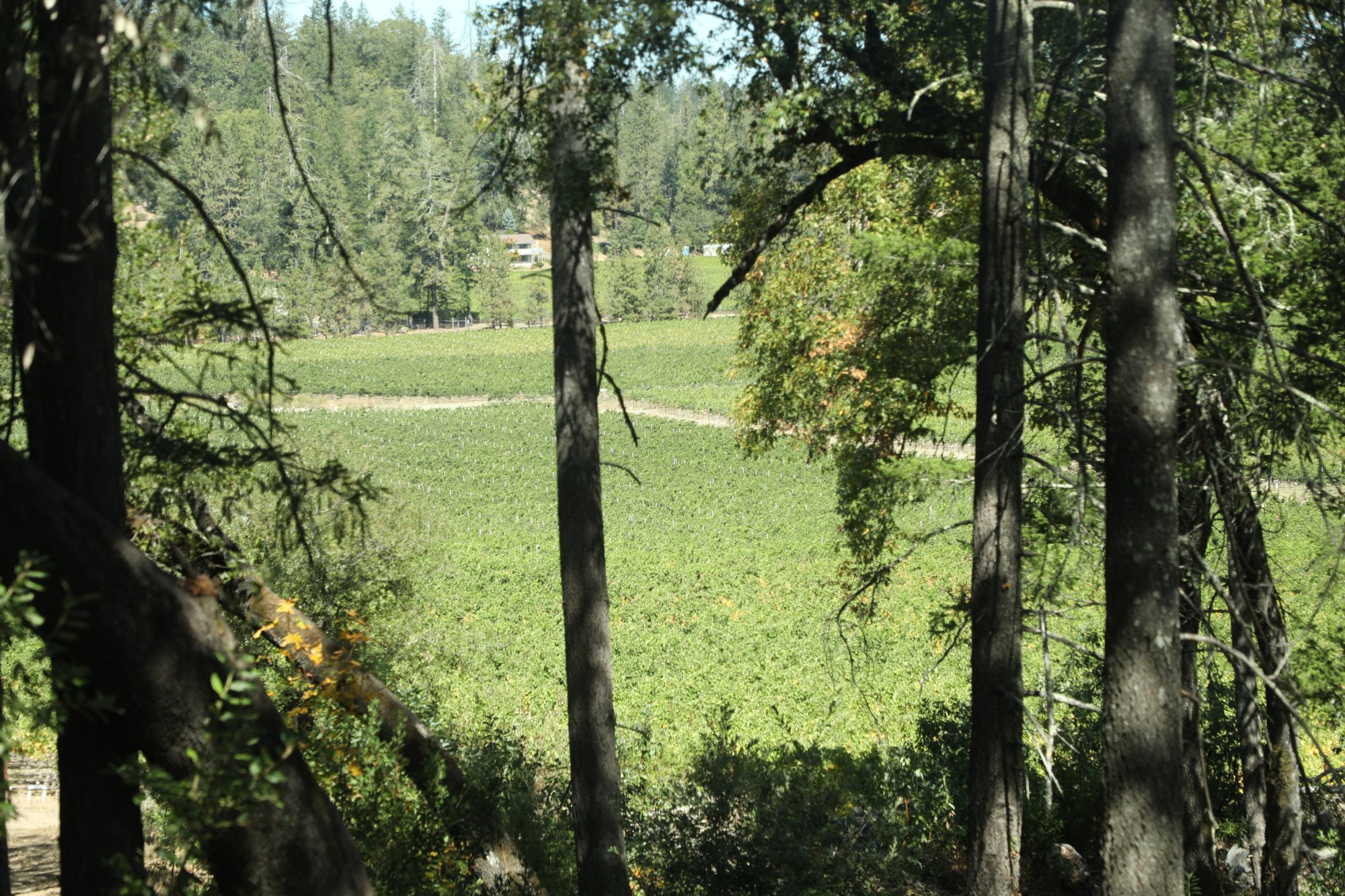
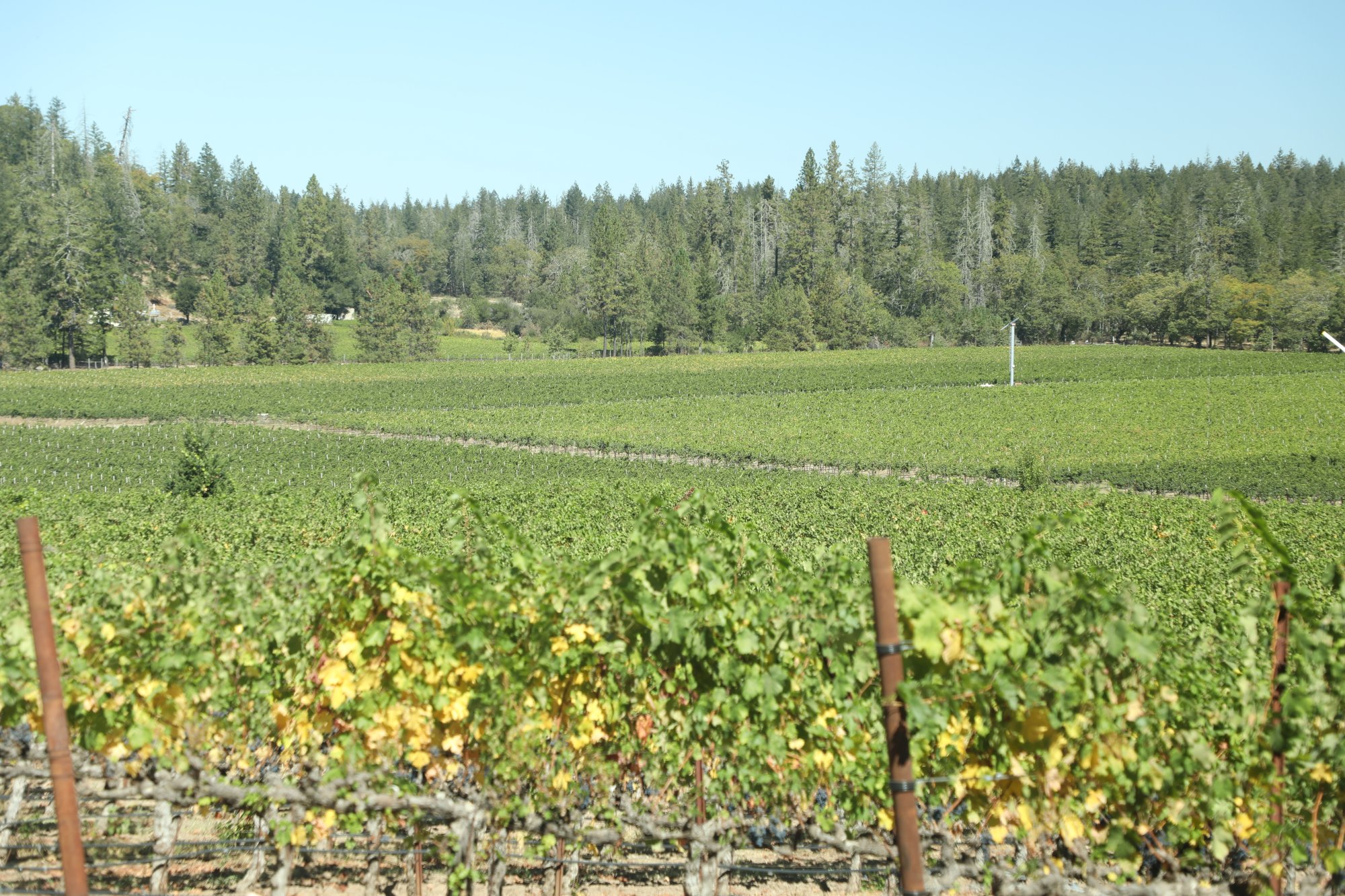
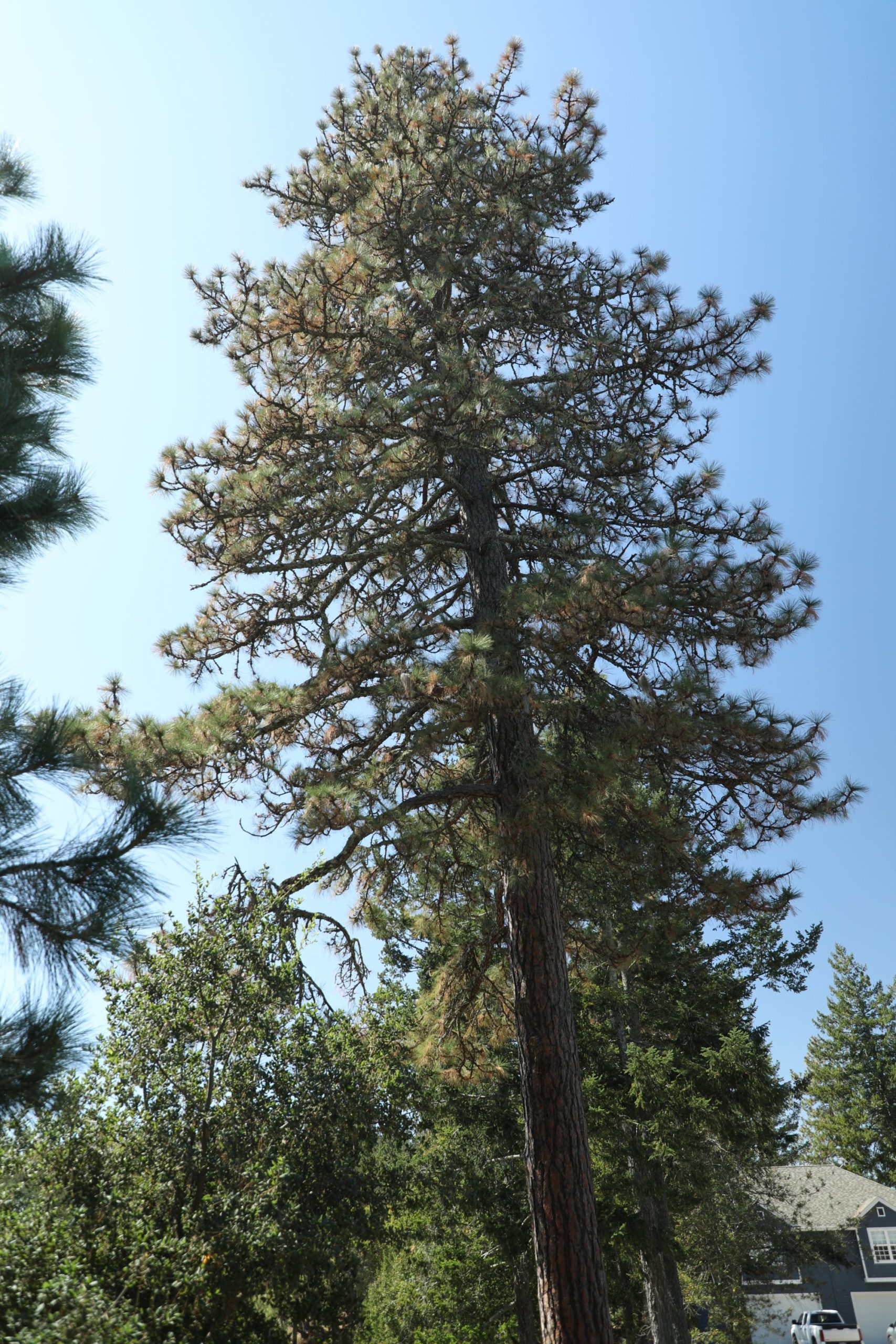
Ponderosa pine on the property used for the image on the front label of the D. Vines Estate Cabernet Franc
Leave a Reply