



 Campbell Cellars was founded by Tim and Carol Campbell. Both attended and graduated from UC Berkeley and met in one of the co-ed dorms. They used to visit Napa Valley while in college in the late 1970s. Tim remembers that tastings were free in those days. At the end of each visit, tasting room staff would ask if he wanted to purchase a bottle, but as a college student he often had to reply, “We spent all our money on gas getting here.” By our count, there are 67 Napa Valley wineries or stand alone brands still active who were producing in the late 1970s or prior. Wineries that Tim remembers visiting back then include Beaulieu Vineyard, Pine Ridge, Robert Mondavi.
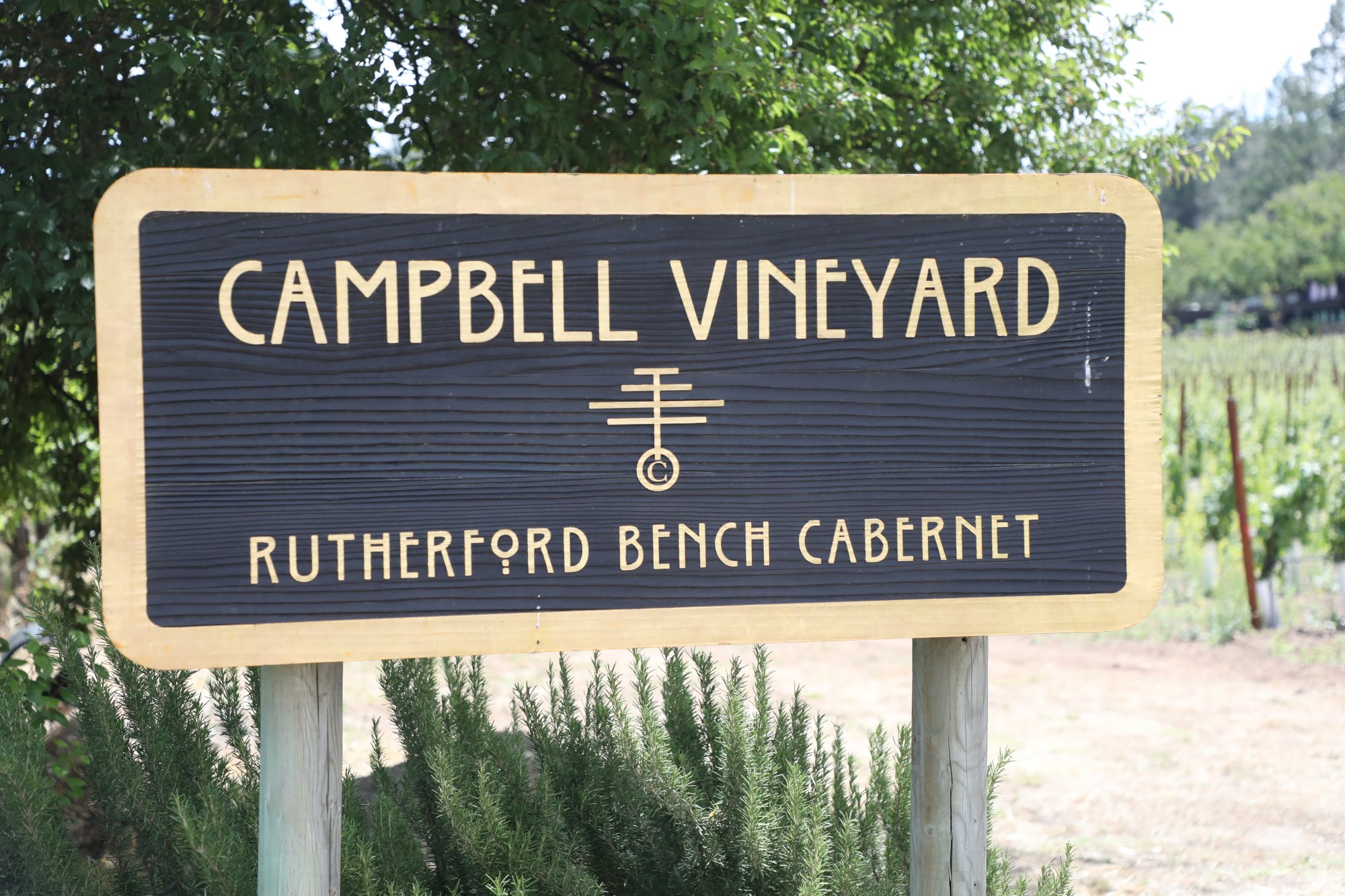
He and Carol purchased their 10-acre property on the edge of the Mayacamas mountains in western Rutherford in 2008; despite looking at some 30 other properties, this property was the first property they looked at after Tim found the listing online. The property’s Craftsman-inspired residence was designed in 1965 by architect John Marsh Davis for a physician owner. Davis was also the architect of record for Sullivan Winery, Rutherford Hill and Joseph Phelps.
Davis was based in the San Francisco Bay Area; his work became closely associated with California organic architecture. A graduate of the University of Oklahoma, where he studied under architect Bruce Goff, Davis moved to Sausalito in 1961 and developed a practice known for designing distinctive residences and winery buildings throughout Northern California. Davis often worked with natural materials such as redwood and was influenced by Frank Lloyd Wright, Bruce Goff, and traditional Japanese design. He referred to his architectural style as “Forgotten Modern.”
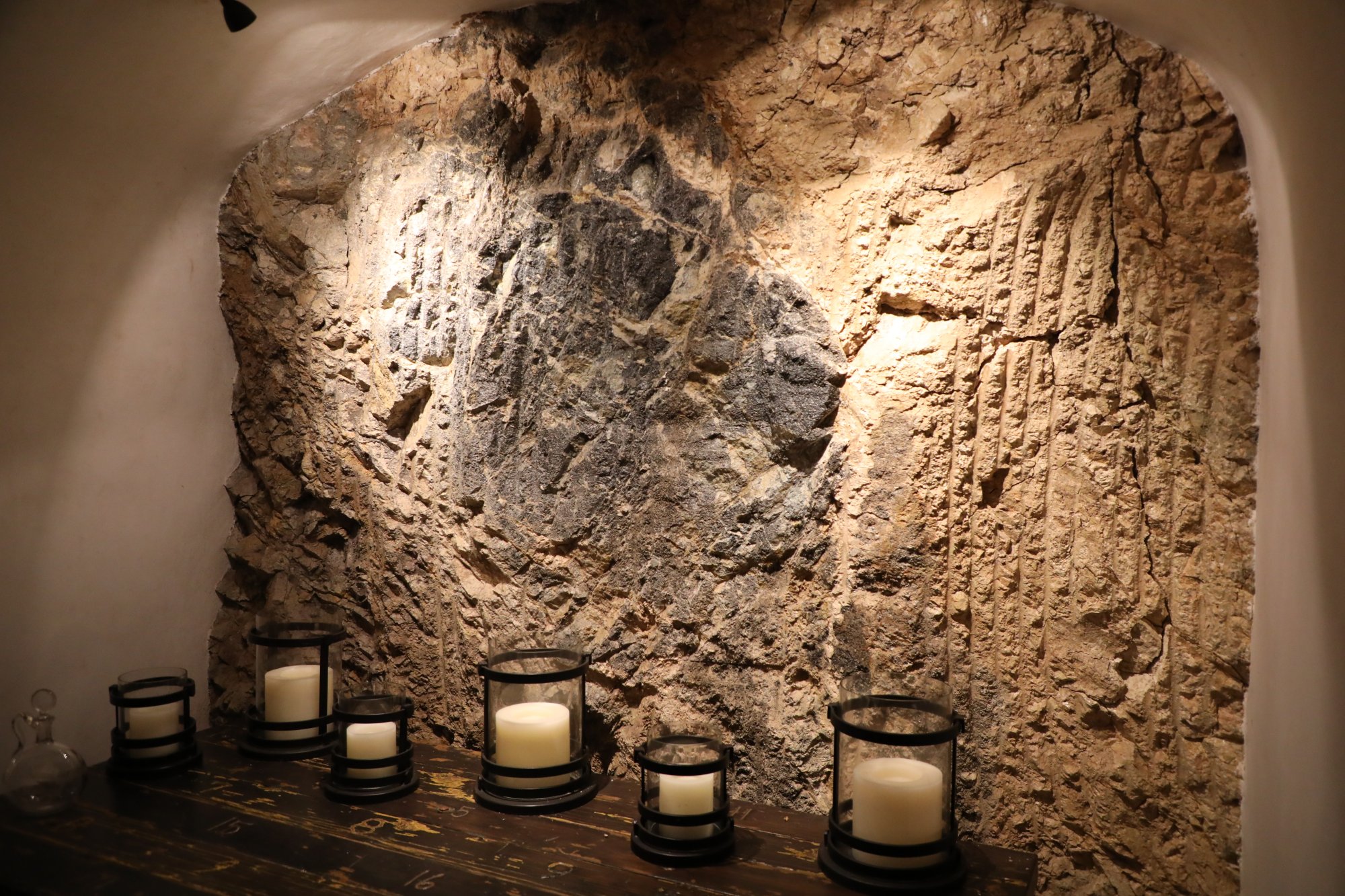
He designed only two homes in Napa Valley including the house on the Campbell property and the home next to Sullivan Winery, also in Rutherford. After the Campbells purchased the property they hired a cave driller who drilled a 3,000 square foot cave – not with the intent for wine production, but a personal space for family use. And during the cave construction, two openings in the walls were left open to be able to see the raw rock located below their topsoil.
Tim wanted to preserve the home; he was hoping to work with Davis but met him just before he died in 2009. He then met architect Andrew Batey who lived on nearby Niebaum Lane. But then Batey passed away as they were working through the renovation of the home. As luck would have it, out of the blue, Tim received a call from architect Hans Baldauf who informed him he had written a book about John Marsh Davis called, Design Legacy Of John Marsh Davis EARLY CAREER WOOD EXPRESSIONISM 1961-1979. And he asked Tim if he would be able to visit the house.
When they met, Tim told him he was in a quandary about how to preserve the home. And as it turns out, Hans was working with Joseph Phelps Winery during the renovation of their winery. Tim and Hans ultimately worked together and finished a three year remodel of the Campbell home in 2025.
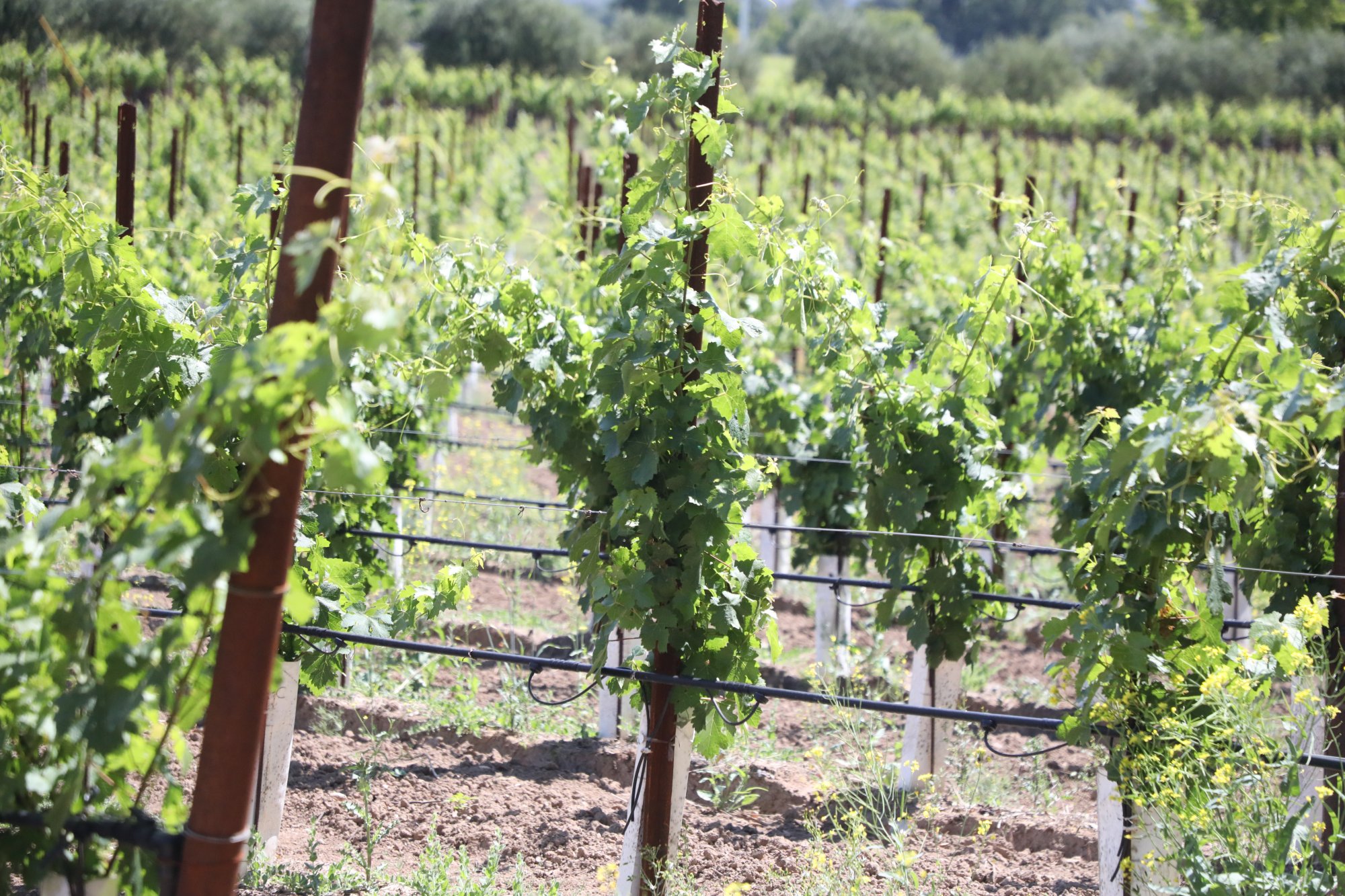
Prior to purchasing the property, Tim invited viticulturist Jim Barbour to look at the property. Jim walked the vineyards and told him the top (hillside) block was going to produce the best wine while the lower block would express classic Rutherford terroir.
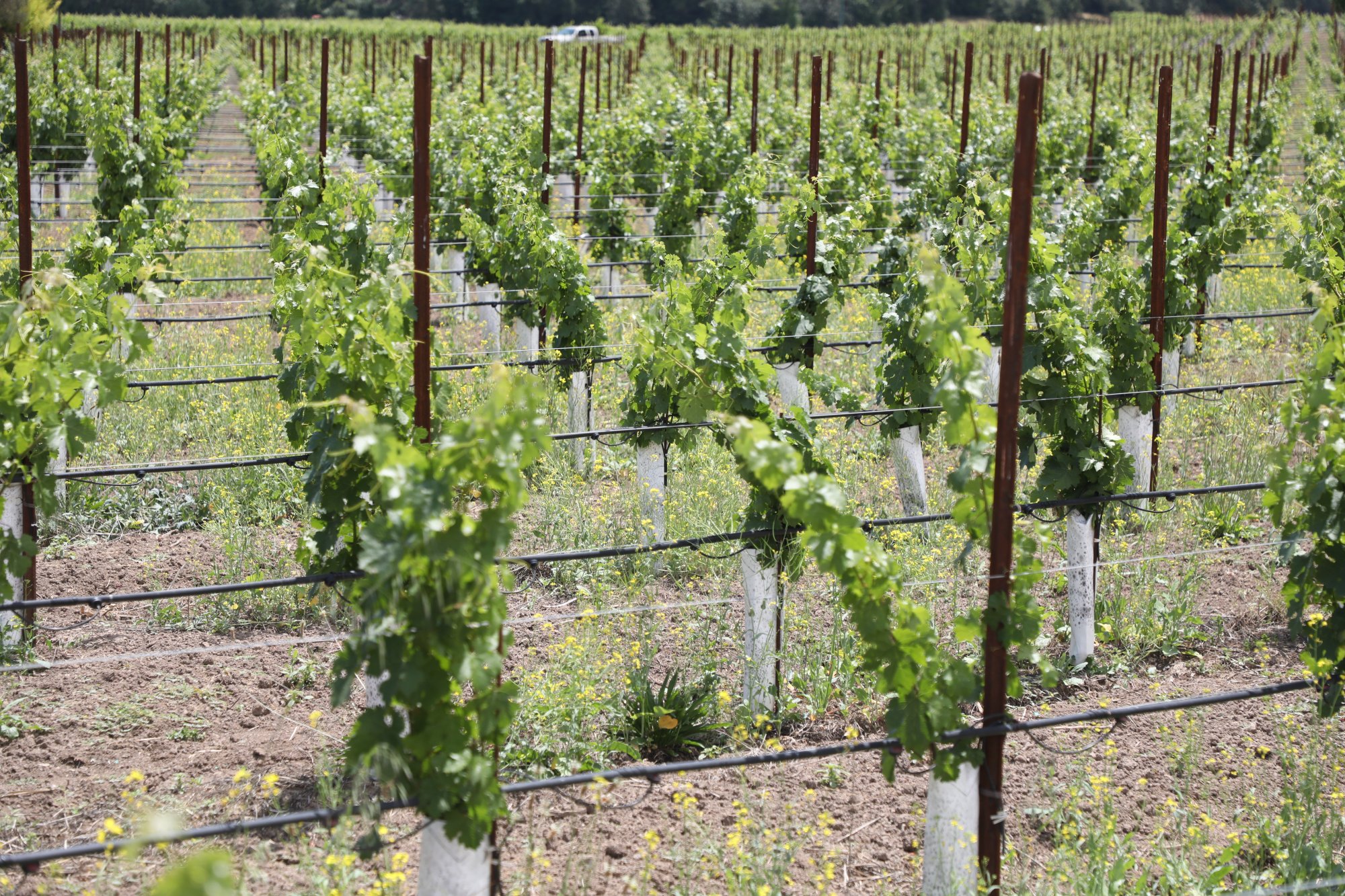
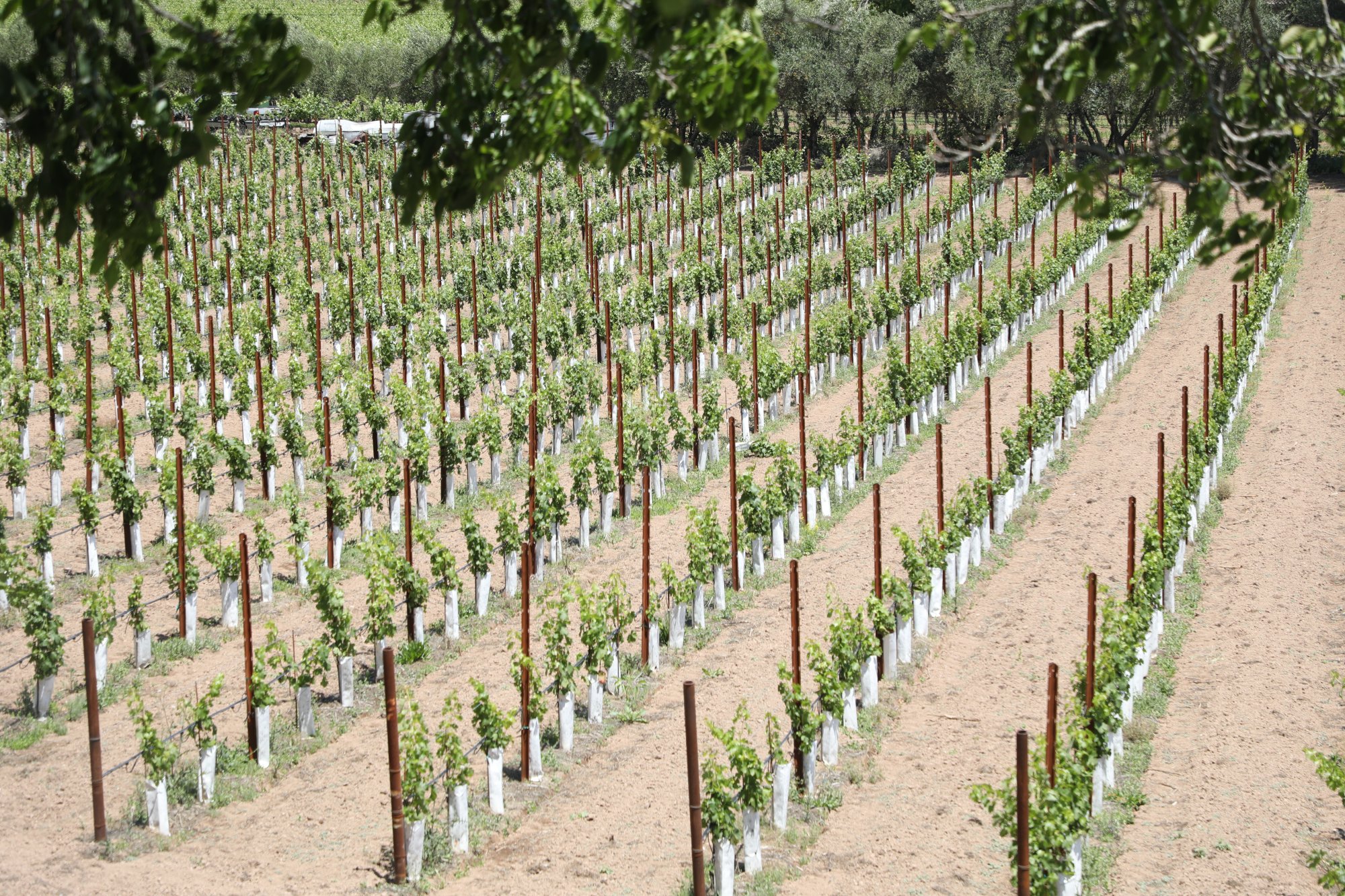
Previously, the grapes were being sold to Honig Winery who was vineyard designating their wine as Mitchell Vineyard Cabernet Sauvignon, named for the previous owners of the property. Their first vintage was in 2004 – and later they transitioned to designating it Campbell Vineyard after the Cambells purchased the property and continued to sell them grapes. Honig’s last vintage from Campbell Vineyard was in 2019. Yields were dropping and the vines were over 30 years old, as a result, the primary block on the valley floor was replanted in 2025, entirely to clone 4 Cabernet Sauvignon on 3309 rootstock. The row orientation and spacing was also changed. Regardless, they always farm for quality and low yields resulting typically in 2.5 to 3 tons per acre.
Prior to their purchase, the vineyard was managed by Dave Pirio, who was also farming for Chappellet Winery. After Tim and Carol acquired the property, Dave’s nephew, Andrew Pirio of Opatz Vineyard Management, Inc., took over farming responsibilities and remained in that role under the new ownership. It was also Andrew who introduced Tim to winemaker Charles McKahn.
Charles knew at age 15 he wanted to pursue winemaking. He recalls, that of his friends, he was the only one who was interested in winemaking. He worked his first harvest at McManis Family Vineyards in Ripon in 2007 (California’s Central Valley). He graduated from California Polytechnic University in San Luis Obispo, California with a degree in fermentation science. While attending college he began to associate fine wines with Rhône varieties, so commonly grown on parts of California’s Central Coast, and worked harvests at Tolosa Vineyard near San Luis Obispo (same owners as Alpha Omega in Napa Valley) in 2009 and 2010.
After graduation in 2011 he knew he wanted to move to Napa Valley to pursue winemaking. His first job in the valley was as a harvest intern for Chappellet Winery where he eventually was promoted to Assistant Winemaker. At age 26 he became winemaker at William Harrison Winery in Rutherford. And in 2022 he was named one of the North Bay Business Journal’s 40 Under 40 for those under the age of 40 making valuable contributions in Napa, Marin or Sonoma counties.
A block planted on the edge of where the Mayacamas mountains begin to rise in elevation is referred to as the Terrace Block. A tiny planting referred to as the Upper Block was never well-cared for by the previous owners. Noting Barbour’s advice, they carefully nurtured that block back to life.
 And while selling to Honig Winery Tim and Carol began thinking about producing their own wines. Fortuitously Tim met Elise Nerlove who was working with George O’Meara in running Save the Family Farms, an organization formed to help promote small wineries in Napa Valley and find a path towards legally allowing tastings on their properties. Campbell Cellars became a member during the organization’s formative years, when it consisted of only a small number of members.
Their efforts, and others, paid off in early 2021 when the Napa County Board of Supervisors unanimously voted to develop a Micro-Winery Ordinance. However, that is not the end of the story. Due to California road and street standards, many of the wineries that qualify for the Micro-Winery Ordinance would need to get their driveways up to code which depending on the length of the driveway could be prohibitively expensive.
This ordinance allows growers to convert part of their property into an area for at least a partial winemaking facility (not all of the winemaking needs to be done there); examples are a shed or a garage. The costs of building a full winery (even a small one) can easily run into the millions of dollars. And this is important as Napa Valley is home to numerous small family-owned vineyards who prior to this ordinance had no legal path to host visitors for tastings.
The Assembly Bill 720 (AB 720), passed in 2021 is different from the Napa County Micro-Winery Ordinance. This bill created the Type 93 “Winegrower Estate Tasting Event Permit” under the California Department of Alcoholic Beverage Control (ABC). Restrictions relating to this bill have been implemented at both the state and as a pilot program by Napa County. A couple of the key restrictions are: a state mandated annual renewal and a maximum of 36 events per year, and Napa County mandated that events must be outdoors during daylight hours only, have 14-foot emergency access roads to the site and never be hosted on parcels with winery production facilities.
Save the Family Farms has since transitioned to the Micro Winery Guild; Campbell Cellars is a member of this organization.
—
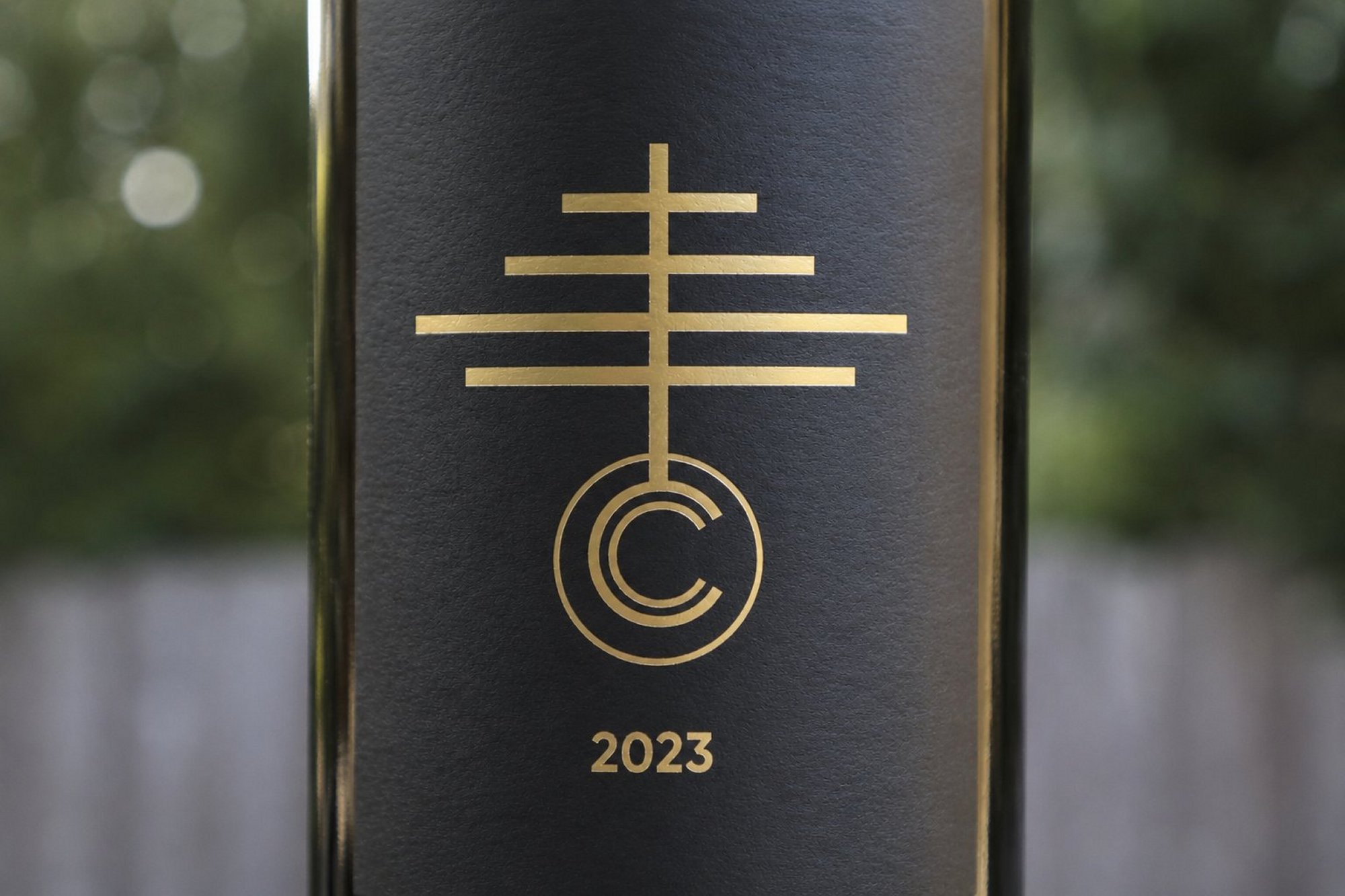
Tim and Carol’s daughters, Amanda and Christina & her husband Bill are equal owners in the brand. It was Amanda who first penciled out the idea for their label design. Ultimately it took a form of four horizontal lines anchored by a vertical line with the four horizontal lines representing the four family members. And it has evolved over the years from a more simplistic looking label to its current sophisticated and elegant visual.
Select Wines
Cabernet Sauvignon
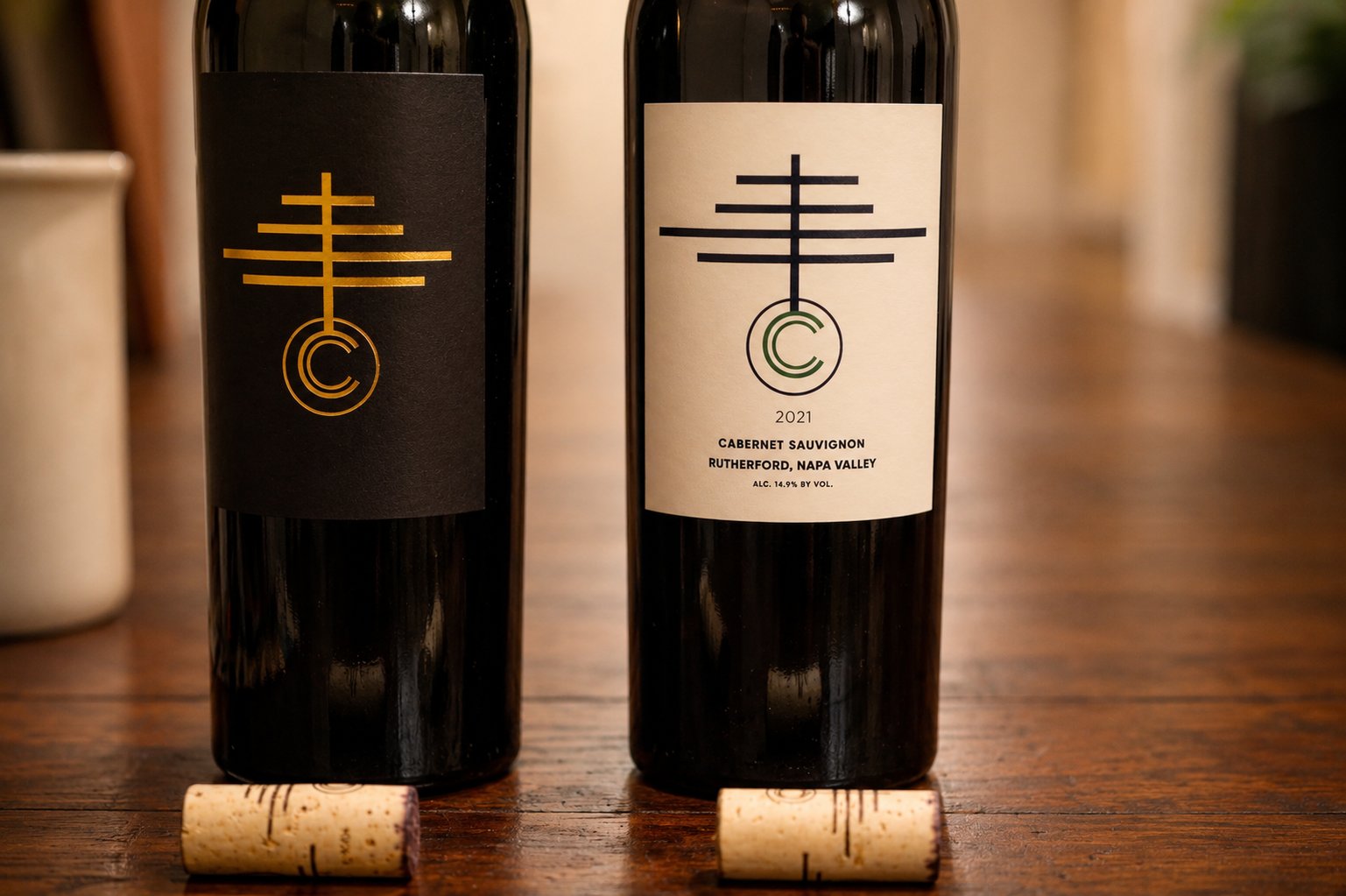
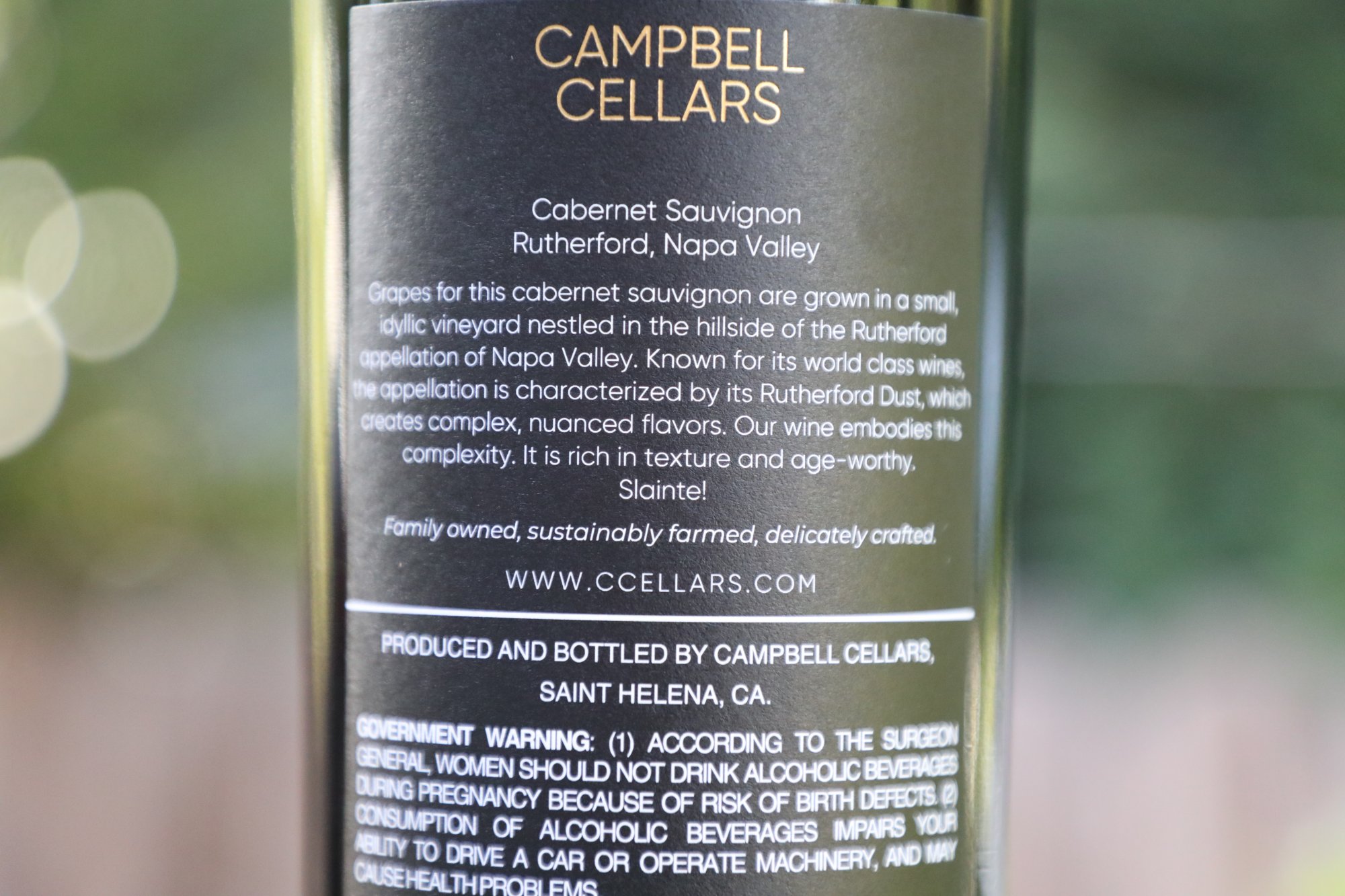
 Campbell Cellars produced wines from 2021 through 2024 before replanting the primary vineyard block in 2025. Production is expected to resume around 2028. These wines typically age in barrel from 18-23 months depending on the vintage.
The 2023 Campbell Cellars Cabernet Sauvignon, Rutherford Napa Valley is deep ruby, very much opaque and sports amaranthine hues – its depth of color is certainly a contribution from the Petit Verdot and its high concentration of thick skins and anthocyanins. Be especially patient with this in its youth; for reference we needled and nosed this less than 3 years post vintage. The bouquet evolves wonderfully with time in the glass, offering a harmonious union of dark fruits and supporting barrel influences. This wine smells like blackberry pie, boysenberry, ripe Santa Rosa plum, dark mulberry, dark cherry and notes of toasted cedar, dried sage, dark cocoa powder and dried tobacco leaf. Minerally. Mouth filling fresh fruit shows its infancy – with loads of depth in terms of both fruit and texture. This wine tastes like Satsuma plum, boysenberry, blackberry, dark cherry and Persian mulberry with a light and finishing note of dried tobacco leaf. Densely packed in terms of both wood and grape tannins, their texture sports a gravelly, grainy and persistent dusty grip, broadly coating the palate, before eventually pulling away from the fruit on the persistent finish. Of the three vintages we tried, this is clearly the most age worthy.
The 2022 Campbell Cellars Cabernet Sauvignon, Rutherford Napa Valley; for this bottling, the Cabernet Sauvignon was co-fermented with their Petit Verdot. It is 80% Cabernet Sauvignon with 20% Petit Verdot; this wine is deep ruby and nearly opaque. One can quickly nose that this is a very different aromatic expression of the vineyard than in 2021. The nose is riper, showing the warmth and the heat of the challenging vintage; the nose is sweetly fruited from both fruit and barrel – but never crosses into the territory of being jammy. It sports scents of dried rose petals, cherry liqueur, blackberry pie, red licorice, baker’s chocolate and vanilla. The nose smells more like the heat of the vintage, while the palate is surprisingly fresh and balanced. Red fruited, it tastes like plum, raspberry, cherry and mulberry and cocoa powder. This bottling is not as minerally as the 2021 vintage. The tannins are broadly dispersed, lingering with a gravelly and persistent dusty character which outpaces the fruit on the finish by far. This wine earned a double gold medal at the Orange County Fair wine competition in 2026.
The 2021 Campbell Cellars Cabernet Sauvignon, Rutherford Napa Valley is 90% Cabernet Sauvignon and 10% Petit Verdot. This wine is deep ruby and opaque; the bright and brambly bouquet offers scents of raspberry, blackberry, Santa Rosa plum, boysenberry and some floral elements including of rose petals. And a hint of dried herbs. Give it some time, a minerally almost ferrous element starts to show that wasn’t overtly present early on in the glass. The barrel influence is subtle here, letting the fruit and the site do most of the conversing. The palate offers a balanced expression of the variety, minerally with a light ferrous and dusty character, this wine tastes more red fruited than dark, with flavors of red plums, boysenberry, red mulberry, raspberry and cherry. Features a bright acidity which counters ripeness, finishing with gravelly and lightly dusty textured tannins running in tandem with flavor on the finish. Its ABV is listed as 14.9%. This is a wine that delivers plenty of immediate enjoyment but can also be cerebral, especially given time in the glass, if you want it to be.
Red Wine
A very limited amount of wine was produced in 2020, a one time only bottling of a red wine.
The 2020 Campbell Cellars Red Wine is a blend of 51% Cabernet Sauvignon and 49% Petit Verdot. This wine is deep ruby and opaque; red fruited and ripe with a fun aromatic vibe, it smells like raspberry, cherry pie, currant, red plums, boysenberry and additional layers of dried herbs including sage and bay leaf, old cedar box and as the wine opens, a layer of cocoa powder. Light bodied, this wine mimics the bouquet to some extent and stays red fruited with flavors of cherry, not fully ripe boysenberry, Persian mulberry, currant and red plums. Lingers with a light note of smoked cedar, dried tobacco leaf and assorted dried herbs. Brightly lit, the acidity keeps this wine fresh, balanced and still very youthful at 6 years post vintage. The tannins are rounded, sans of any edges and linger with a gentle and light gravelly grip felt primarily on the front of the palate. Shows a subtle warmth deep in the throat. This is not a bottling that should be aged for an extended period of time, but rather should continue to show a similar existing already plateaued profile over at least the next several years.
—
The word Sláinte (pronounced slan -ja) is written on the back of each bottle, an homage to Tim’s (Gaelic) Scottish heritage. Sláinte is a traditional Irish and Scottish Gaelic word which translates to “health”. When you are in Ireland or Scotland, you will invariably find yourself drinking at a pub. You can use this word as a drinking toast, the equivalent of “cheers”.
Total production each year is usually 60-80 cases making Campbell Cellars one of the smallest commercial producers in Napa Valley – and certainly the smallest producer with both a vineyard and a wine cave. The wines have not been distributed as of our latest update to this profile. Although the 2021 vintage was included in the V Wine Cellars Wine Club as well as a few cases sold at their shop based in Yountville.
For more information, or to inquire about purchasing wines, visit: www.ccellars.com
Leave a Reply