



 Bartlett Family Vineyards. Originally from Michigan, proprietor Ron Bartlett’s introduction to wine was through his work connections. In 1995 he became a new partner at Price Waterhouse Coopers; management asked him to move to New York and help with product development. And his wife Mary had recently taken on a CFO role for one of her clients. They maintained an apartment in Manhattan and for two years commuted between the coasts.
In 1997, the partner responsible for product development invited Ron and Mary over for dinner and opened a 1993 Opus One. The wine was a revelation for Ron. He had first visited Napa Valley in 1991, which marked his introduction to wine, and he had also begun exploring restaurant wine lists in New York.
One of the most memorable outcomes of that dinner came shortly after. His partner had tickets to a New York wine auction hosted at the New York Athletic Club but was unable to attend, so he gave the tickets to Ron and Mary. At the auction, Ron found himself holding a paddle, feeling like a kid in a candy store. He enthusiastically raised it throughout the event, winning several bids—primarily on Bordeaux wines. This experience marked the start of his interest in collecting wines.
Ron moved from Michigan to California in 1988; as his career progressed, he worked with clients headquartered in Amsterdam and used those business trips as opportunities to visit wine regions such as Saint-Émilion and Pauillac. He would often extend his stays, purchasing and shipping bottles back home. His collection focuses largely on Bordeaux wines, Napa Valley Cabernet Sauvignons, and Tuscan wines. He also made frequent trips to Napa Valley.
Among his favorite Napa Valley producers are Dalla Valle, Araujo (now Eisele Vineyard), Spottswoode, and Togni Vineyard.
He had been traveling far too much for work, so he began dialing the trips back. Around 2015, he started thinking seriously about retirement, and in 2017—after his daughter Elena left for college—he officially stepped away. He began considering how he would spend his time in retirement. As he puts it, “this wine thing could be a good way to keep me out of trouble.”
From 2014 through 2017, he and Mary searched extensively for both a home and a property suitable for a vineyard, evaluating more than 100 properties. Eventually, they visited a site in Angwin that stood out. In 2017, they purchased a second home along with several acres of land that had never been planted to grapes. Between 2017 and 2020, he worked through the approval process to clear the land and plant several acres of vines. The property sits high on a hillside, offering spectacular views across the valley all the way to Diamond Mountain. Nearby neighbors include the Haber Family Vineyard and Bravante Winery.
Ron was introduced to Doug Hill through a connection tied to his real estate agent, who recommended Hill to help develop and manage the vineyard. After conducting soil and water analyses, Hill answered “yes, yes, and yes” to Ron’s three key questions: 1. could he develop and plant the vineyard, 2. could he manage it, and 3. would he be able to assist with winemaking when the time came.
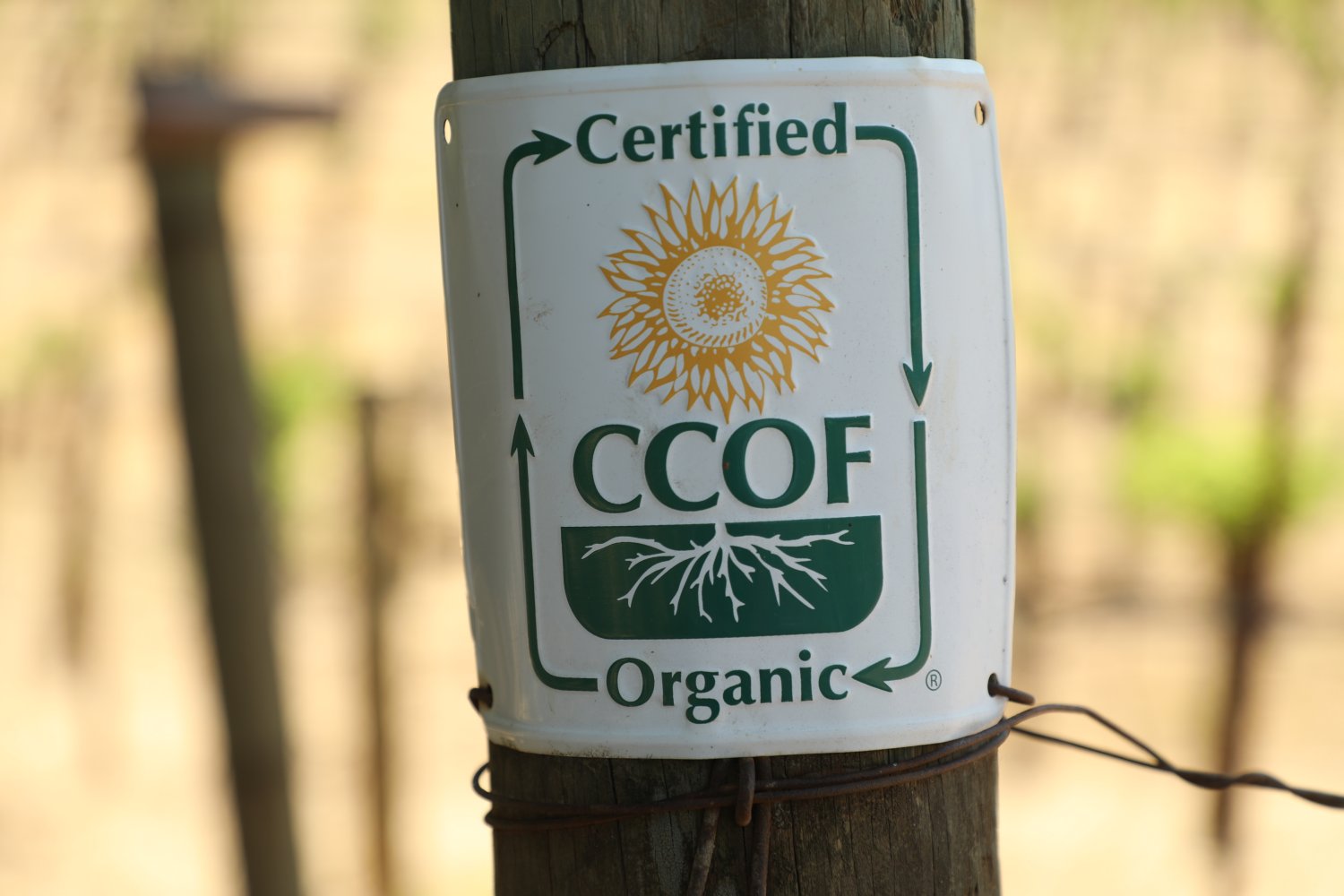
The vineyard is planted entirely with Cabernet Sauvignon, clone 15, on 110R rootstock—both selections made by Hill. The vineyard is bisected by the driveway resulting in two blocks simply called north and south. The vineyard has been certified and farmed CCOF since it was planted.
In 2020, Doug’s primary vineyard assistant left and he needed to offload the day-to-day management of the vineyard. He recommended several viticulture professionals, including Paul Saviez. Around that time, Ron and his wife were walking through St. Helena when they happened to pass vintner Tor Kenward’s house. Parked outside was a truck that belonged to Paul; they took this as a sign. So Ron soon called Paul and he flew down from Idaho to visit the property. Shortly thereafter, in early 2021, Paul took over farming operations. And he already managed several vineyards in nearby Deer Park.
As they became more immersed in the region, Ron and Mary set out to meet their neighbors, organizing informal tastings and tours focused on smaller producers across Howell Mountain. Through this outreach, they connected with Jon Jones, who would become their winemaker. What began as a retirement hobby gradually evolved to a more serious endeavor as friends and family started tasting and enjoying wines from their property.
Ron told us that his his vineyard and grapes have a specific character and profile. And to let it express its best self and personality. And he certainly has the right winemaker to curate this.
Winemaker
Jon Jones was born in Fairfield, CA but raised in South Lake Tahoe. Jon was not always surrounded by the wine business; while studying music (the Trombone) at the University of California Santa Barbara he was introduced to wine through his roommates’ father who worked at Robert Mondavi Winery. He and his roommate visited Napa Valley and took a tour of Mondavi where his roommate’s father was a senior wine educator. Jon remembers inquiring about working here and the reply was something like “if you want a job here, let me know”.
Jon eventually took him up on the offer and his career in Napa Valley began by answering phone calls relating to the winery’s annual Summer Concert Series. This wasn’t exactly the job he had in mind but then he quickly discovered the winery lab; soon he was working here several days a week. Hands on experience in the business soon became his ally; Merryvale hired him for oenology work in their lab which was followed by several years working at Opus One and later, a position as winemaker for Lava Vine Winery.
He makes wines slowly, preferring a style that balances drink-ability young with the capacity to age. His wines have both of these characteristics. He prefers lower temperature open top fermentation, which tend to take longer to ferment to dryness. Barrel selection is key; he learned about the nuances of barrels while working at Opus One. And conveniently Jon makes wines at a small winery a few minutes’ drive from where he lives including the wines for Bartlett Family Vineyards.
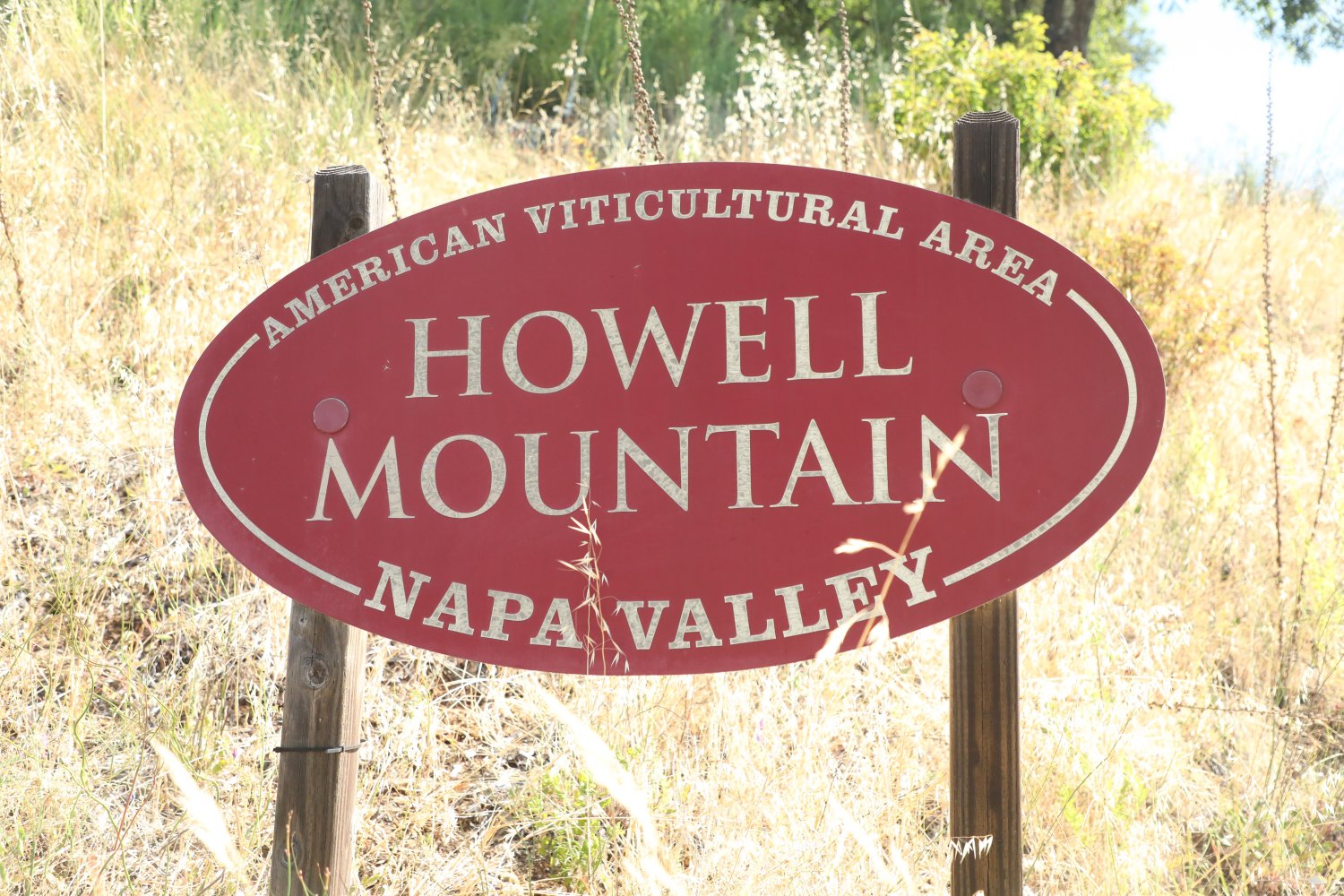
Howell Mountain
 Perched above the fog line on Napa Valley’s eastern flank, Howell Mountain is defined as much by what it is not as by what it is. Unlike the valley floor, where morning fog lingers, this elevated appellation typically enjoys earlier sunlight and more consistent daytime temperatures, contributing to a long, steady growing season. Vines here are not rushed; they develop slowly, often resulting in wines of depth, structure, and age worthiness.
The topography is rugged and varied, with elevations ranging from roughly 1,400 to over 2,500 feet. Slopes, ridgelines, and undulating plateaus create a patchwork of exposures, each influencing ripening patterns. This diversity allows growers to match specific sites to varieties—though Cabernet Sauvignon dominates, thriving in the mountain’s well-drained soils.
Those soils are among Howell Mountain’s defining features. Primarily volcanic in origin, they are typically rocky, shallow, and low in fertility. Red clay, decomposed tufa, and fractured basalt force vines to struggle, naturally limiting vigor and concentrating flavors. Unlike the alluvial soils of the valley floor, these mountain soils drain quickly, reducing berry size and enhancing tannin structure.
Rainfall is often higher here than below, yet the porous soils mitigate excess water retention. Combined with cooler nights, this contributes to balanced acidity and firm structure in the resulting wines.
Howell Mountain wines are often recognizable for their intensity including darker fruits, mineral undertones, and a certain ruggedness that reflects the terrain. They are generally not delicate wines, but typically are balanced with plenty of complexities.
Select Wines
Bartlett Family Vineyard produces two wines a year, their Howell Mountain estate bottling and a Napa Valley Cabernet Sauvignon. Both are balanced bottlings meant to be enjoyed with food. In fact, the inspiration for these wines comes from Ron’s enjoyment of wines from Bordeaux which in general are often more restrained than contemporary Cabernet Sauvignon from Napa Valley. About 300 to 400 cases are produced of each SKU. Their inaugural vintage for the Howell Mountain estate bottling was in 2022, while the first vintage of the Napa Valley Cabernet Sauvignon was in 2023.
The inception for the Napa Valley Cabernet Sauvignon occurred while Ron was dining at Charter Oak Restaurant, incidentally, this is where we first met him. He recalls someone at Charter Oak mentioned a source for Cabernet Sauvignon on the valley floor, straddling the border between St. Helena and Rutherford sub appellations. There were 8-10 tons of grapes for sale from a vineyard that normally was used for the vineyard owners own wine.
Unfortunately this vintage was only available for one year; in 2024 and 2025, Ron sourced his Napa Valley Cabernet Sauvignon from a vineyard on Howell Mountain. The Napa Valley expression typically shows more red fruit character than the estate wine; regardless of site, it is distinctive enough to warrant its own bottling.
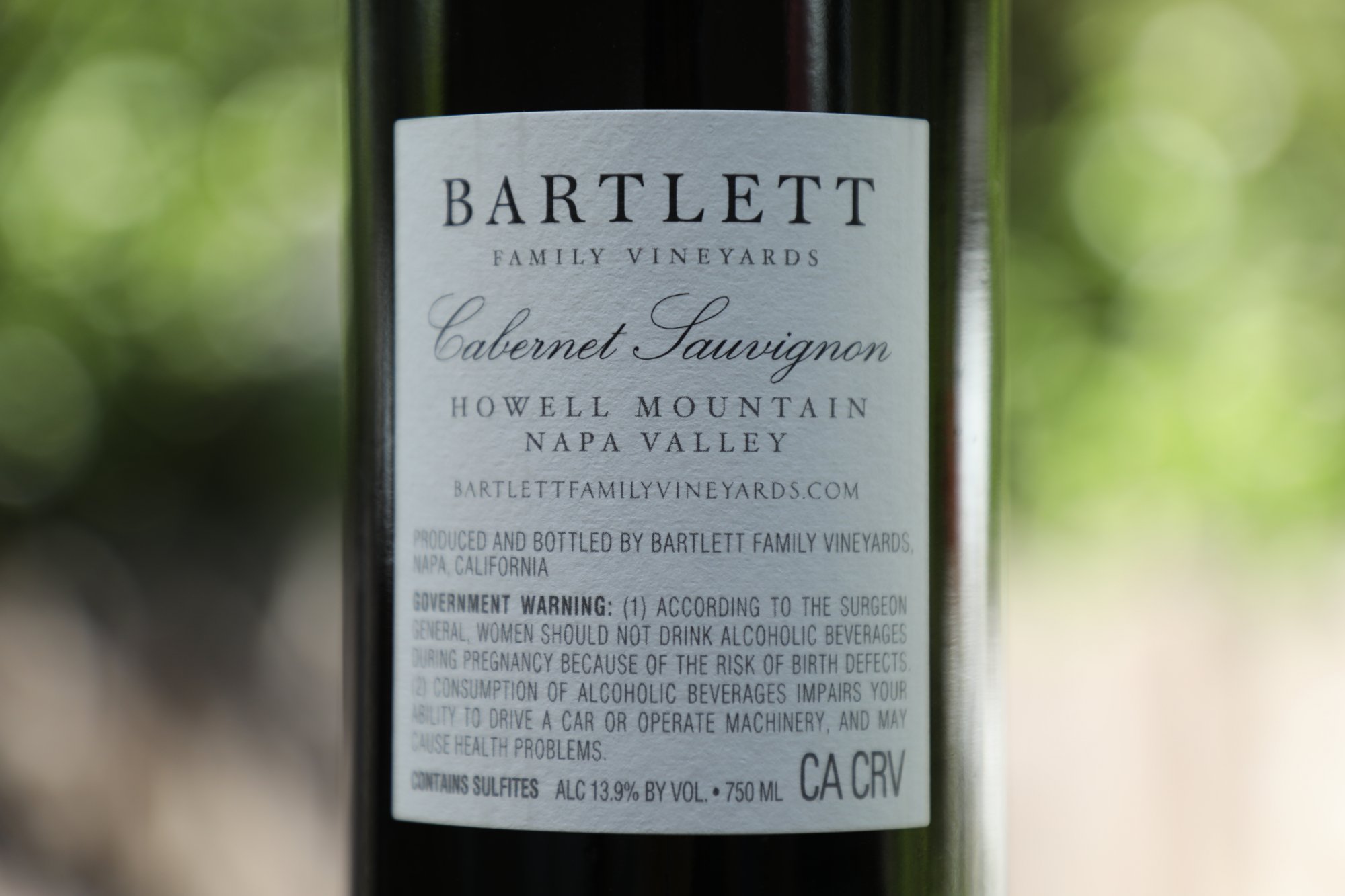
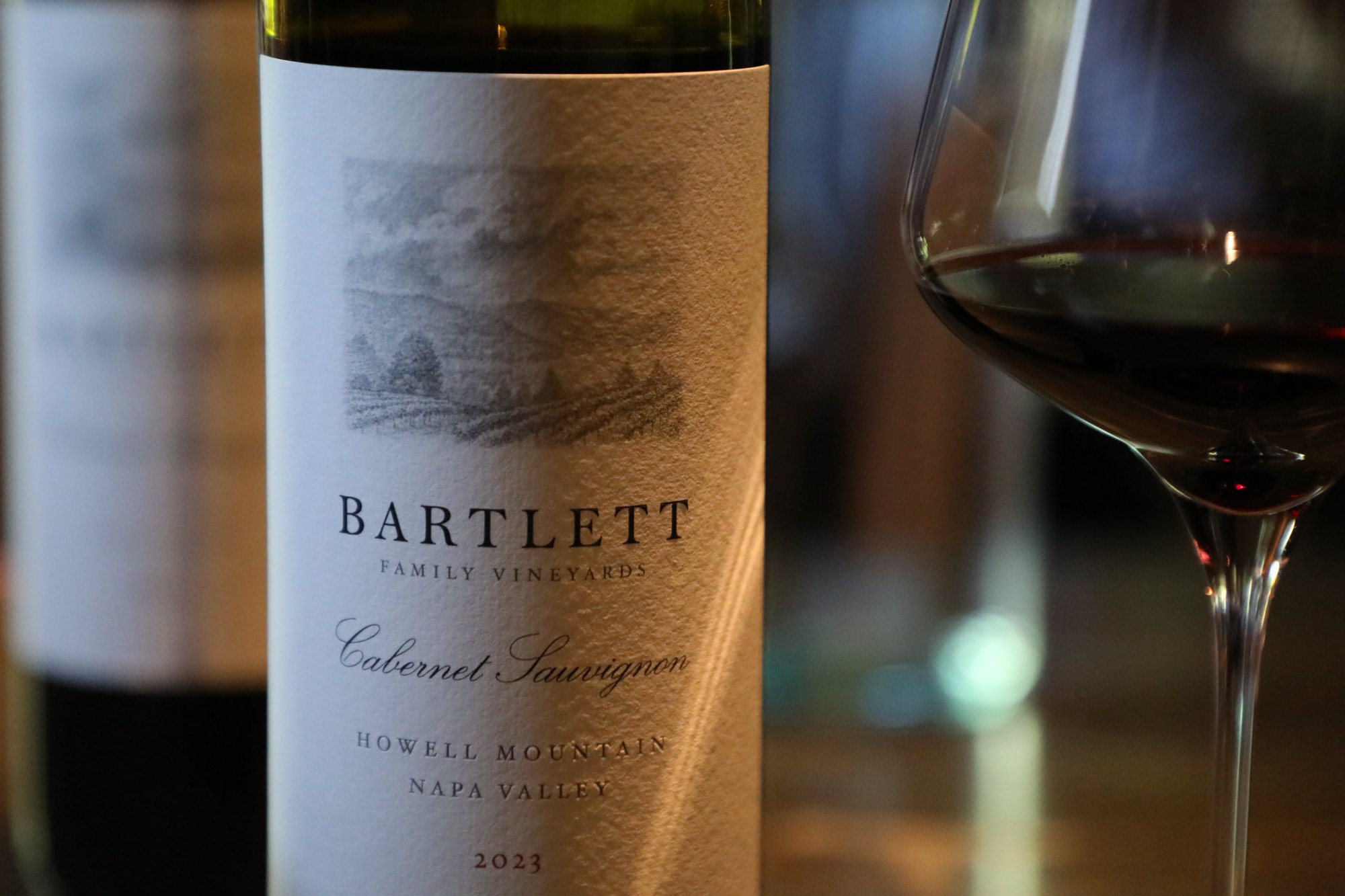
The 2023 Bartlett Family Vineyards Cabernet Sauvignon, Napa Valley is blended with 91% Cabernet Sauvignon, 6% Cabernet Franc Howell Mountain and 4% Petit Verdot from Calistoga. This wine was aged 21 months in 50% new French oak and 50% used French oak barrels. And then 3 months in bottle prior to release. This wine is deep ruby and opaque with some purplish hues in the glass. The nose offers a floral edge including of dried rose petals, liquid violets and lavender. We enjoy the aromatic restraint here; a union of both fruit and non fruited aromatics. On the palate there are flavors of fully ripe blackberry, dark raspberry, red cherry, licorice, boysenberry, Persian mulberry and menthol. And lighter supporting layers include smoked cedar, dried herbs, i.e., sage and bay leaf and a hint of cinnamon stick rounding out the finish. Ripe but also importantly, fresh and savory, this wine is a balanced expression of the site and variety early in its youth. A bright acidity tugs at the flavors with a gentle tension, supported by well-tumbled and rounded tannins. Their texture lingers with a gentle dusty and or chalky character on the finish which ultimately outpaces the fruit. This wine is showing nicely at this age, but we would be comfortable cellaring it for another 10-15 years. 13.9% ABV
The 2024 Bartlett Family Vineyards Cabernet Sauvignon was blended with 5% Cabernet Franc and 5% Petit Verdot. We will taste this once its released.
 The 2023 Bartlett Family Vineyards Cabernet Sauvignon, Howell Mountain is always an expression of what the estate gives. It is never blended; this wine was aged for 22 month in 50% new French oak and 50% used French oak barrels. And then aged for another 6 months in bottle before it was released. The only difference between vintages is the amount and type of oak used during élevage. This wine is deep ruby; the bouquet is a balanced union between fruit and barrel, showing on the elegant side of the variety. Its scents include dark raspberry, blackberry, boysenberry, dark plum – accompanied by other characteristics including of mocha, cocoa powder, old cedar, dark olive and dried herbs. On the palate, this wine tastes dark fruited, like the bouquet, but with a brambly note. Its flavors express boysenberry, dark cherry, damson plum, blueberry, and mulberry. Several layers of baking spices support the fruit including of cloves and cinnamon stick. The tannins are already well resolved for both the youthful age of this wine, this particular vintage, and the young age of the vines; they persist with a dusty, chalky, earthy, and gravelly character. This wine finishes, fresh, savory and with plenty of energy from its vibrant acidity.
This wine was aged for 22 months in 50% new French oak and 50% once-used French oak, followed by an additional six months of aging.
—
CF Napa Brand Design designed the label, featuring an image of the vineyard. When Ron engaged them, he provided a few label examples from other wineries as inspiration. They commissioned an artist who visited Ron’s vineyard and created a sketch of the property. CF Napa Brand Design also built the Bartlett Family Vineyards website.
The wines are sold primarily direct-to-consumer, leveraging a network of clients, colleagues, staff, and friends. Ron initially launched the brand within this circle, building early momentum through their referrals. From there, he expanded to include neighbors and collector friends, as well as a broader audience through social media. In fact, we connected via Twitter—perhaps the only Napa Valley vintner we’ve met through that platform.
Plans call for limited distribution at restaurants in California. And they occasionally will host wine dinners as demand dictates.
Mary oversees sales, primarily in several beach communities in Southern California. Their daughter Elena also spreads the word about her family’s brand, introducing wines to friends and others in their mid 20s.
Bartlett Family Vineyards is a member of the Howell Mountain Vintners & Growers Association. For the first time, they poured their wines at the annual Taste of Howell Mountain at Charles Krug Winery in June 2026. For more information, to join the mailing list visit: www.bartlettfamilyvineyards.com
Leave a Reply