




 Baker Canyon is purposefully and thoughtfully built by proprietor Basil Enan and his wife Robin. Their focus is long term and generational. They entered the wine business in their late 30s, at an age where they have the time to develop something meaningful. And their children will develop ‘roots in Napa Valley, building a connection to their land.
Basil was born in Montreal, Canada. His grandmother on his mother’s side was an importer in Quebec and his uncles still run the family business. Basil has fond memories of Christmas when cases of wine arrived; wine was an important part of family gatherings. And his parents were wine consumers; his father opened and operated La Reserve Restaurant in San Mateo for several years. The wines housed in the cellar that was built for the restaurant eventually were transported to his parents’ home when the restaurant closed.
His parents would often entertain at their home and they would ask Basil to go into the cellar and pick out something nice. He remembers early 1990s bottlings of Far Niente, Nickel & Nickel, Jordan and Heitz. And French wines. His father loved great wine and would sometimes visit Napa. Basil and his family became fractional owners at Calistoga Ranch and were among the first buyers there. Tragically, this resort burned down in 2020.
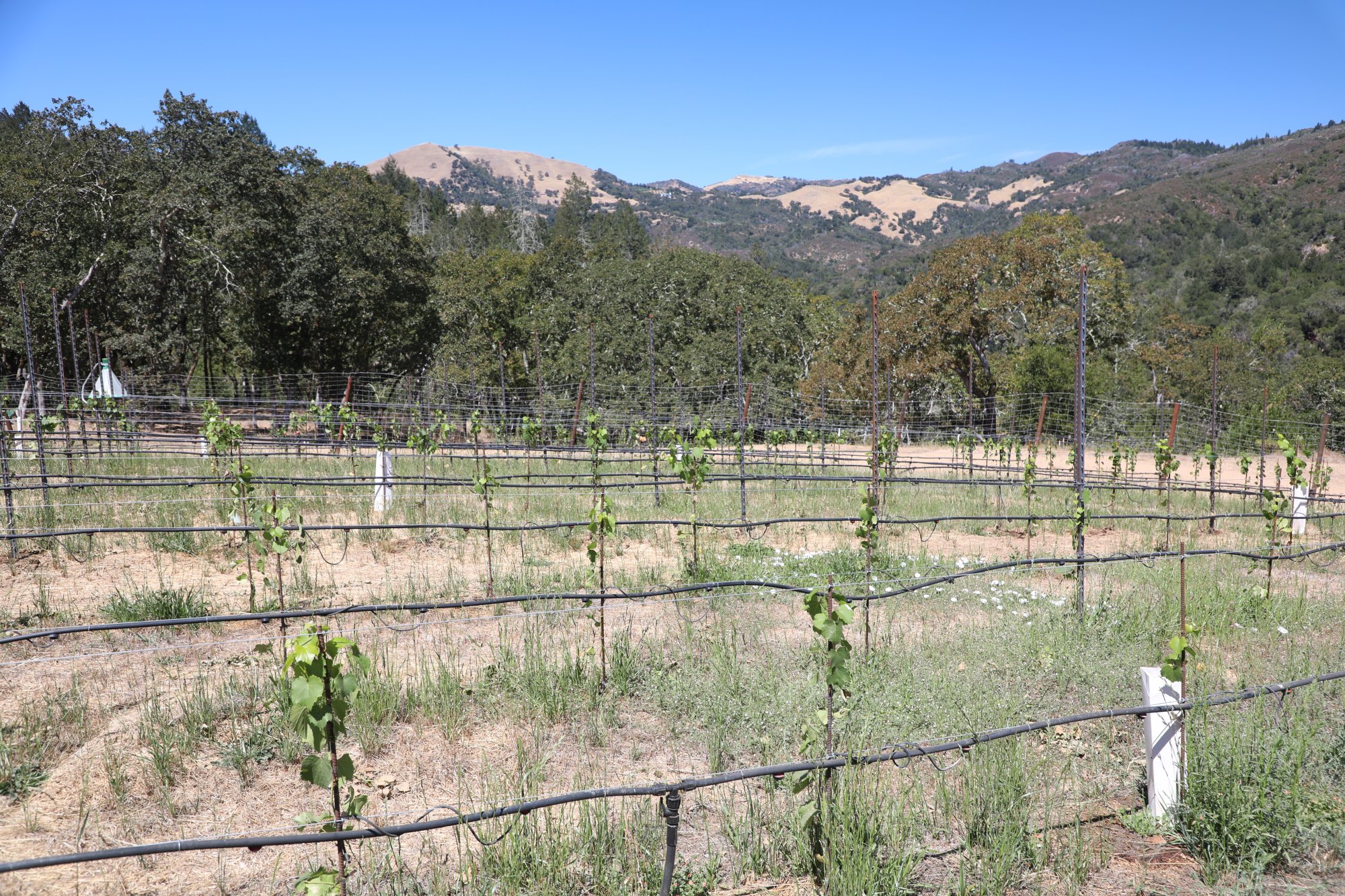
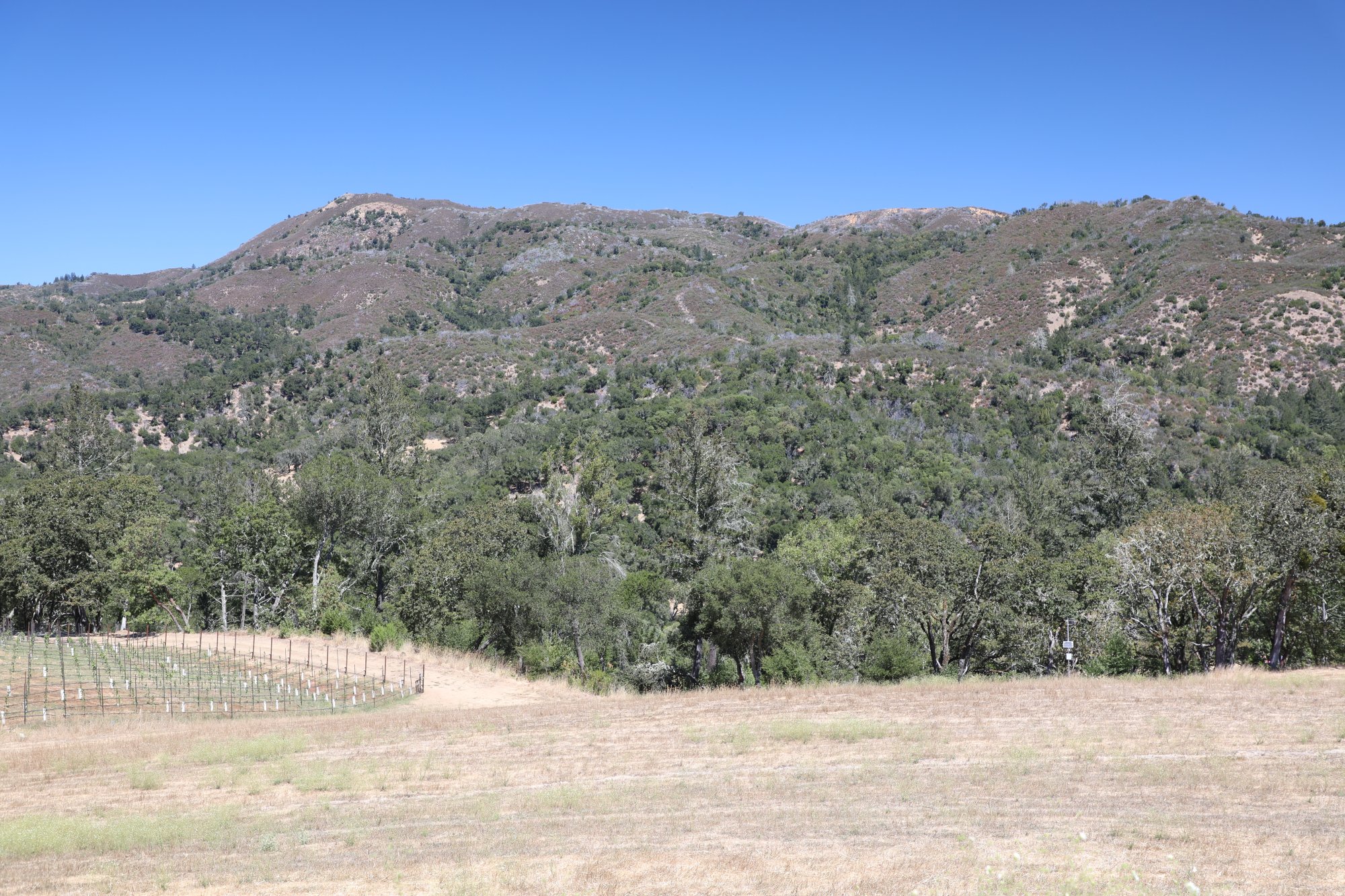
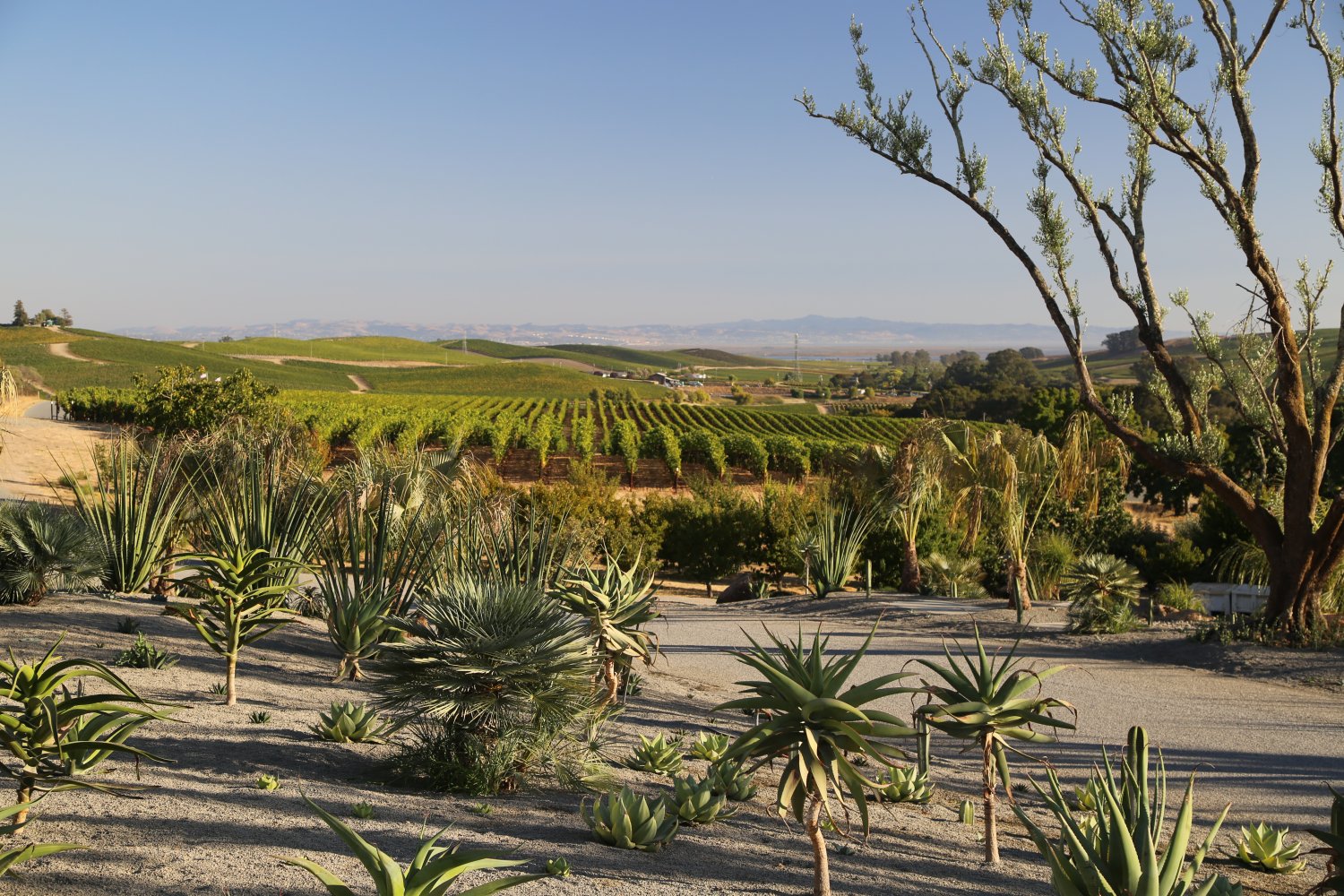
Looking to invest in his favorite sub appellation within Napa Valley but with no plans to build a winery or plant a vineyard, Basil purchased a 51 acre property on November 1, 2019 from the previous owners, the Wilsons. The winery is located at about 1,000 feet ASL in Mt. Veeder, only a 10 minute drive from Highway 29 and the valley floor. The views from the property are inspirational and overlook a very rugged terrain. The 2,339-foot Mt. St. John is easily seen from its ‘backside’. In terms of physical orientation, this mountain rises directly above Rutherford.
Think this is a part of Napa Valley where grapes dominate the landscape – think again. Views from the winery are of chaparral lined slopes with very few neighboring vineyards visible. Nearly 500 acres owned by members of the Baker family immediately border the property. Doctor Glenn Baker, a veterinarian and his wife Karen moved to Napa Valley in 1970. His first veterinary clinic was run out of his home near St. Helena. Later he operated Twin Oaks Veterinary Clinic at the corner of Mee Lane and Highway 29 (near Alpha Omega Winery). The Baker family still own that property.
Dr. Baker had three daughters; two of them, Melissa and Mercedes, are based in Napa Valley and run their Baker Sisters business out of a private studio space called the Ehlers Society on Ehlers Lane, north of St. Helena. Their studio is in a 1920s hay barn on a 6-acre ranch. Their business is focused on art, music, film, performance and fashion. And their other sister, Anna, is also a local artist. The family used to run cattle in parts of Northern California including in Napa Valley and housed emus at their Rutherford property. Basil named his winery Baker Canyon in homage to this family, who for decades have been an important part of the fabric of Napa Valley’s community.
Over time, Basil began to meet neighbors and others in the wine industry. He decided to learn more about the business and took classes at U.C. Davis, completing a Certificate in Winemaking.
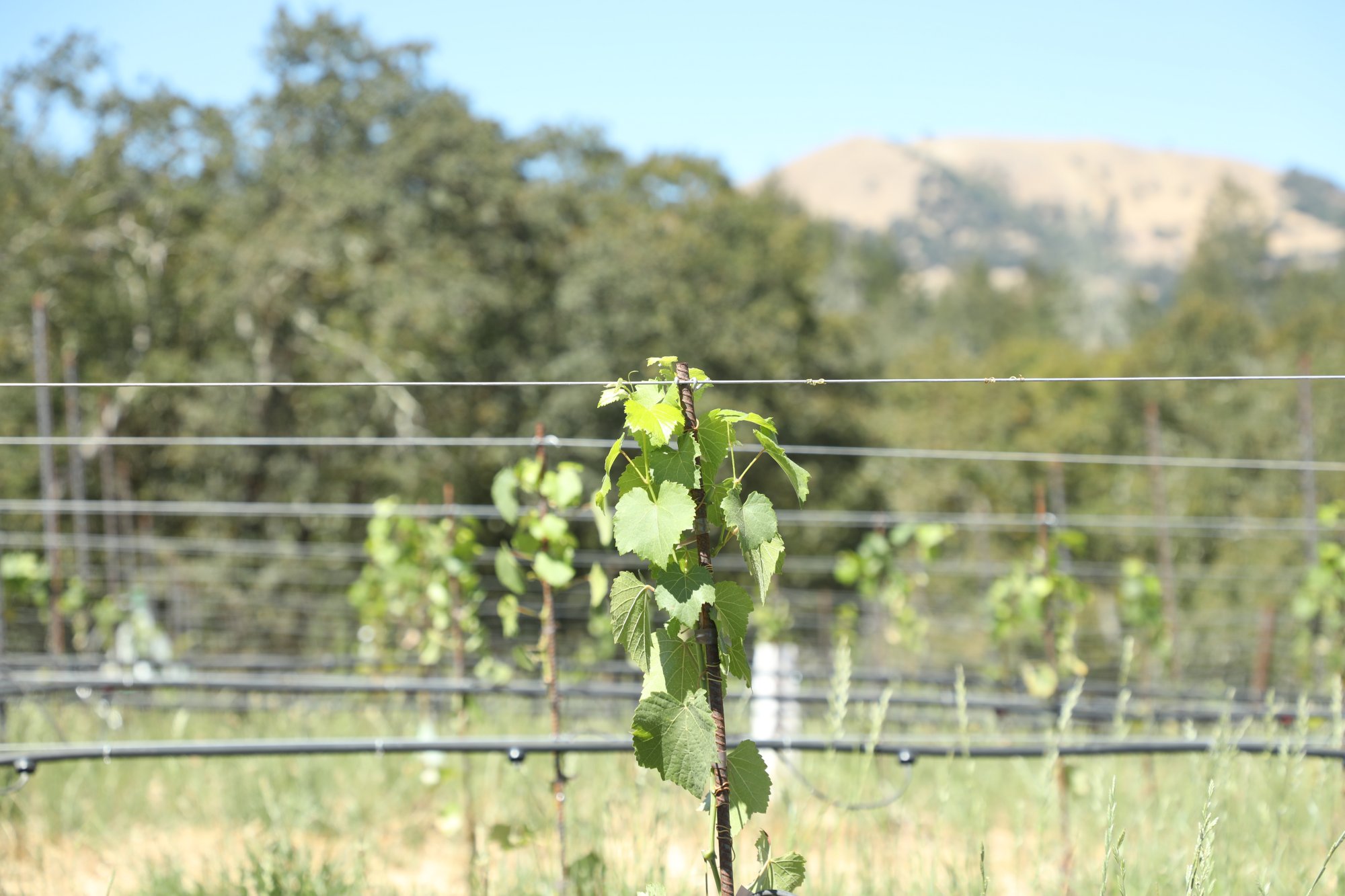
The first vines planted at Baker Canyon were approximately an acre of Albariño in spring 2026. Basil’s reason for planting this variety here is simple, and in his own words, “I wanted something delicious”. Makes sense. And in spring 2027 another 2+ acres will primarily be planted to Cabernet Sauvignon with plans to plant Cabernet Franc and Merlot at a later date. Previous ownership used to keep animals on the property, parts of the property were already cleared and were logical places to plant small vineyard blocks. As a result, no trees needed to be removed for the vineyards.
After spending many hours on this property, he decided he wanted to share it with others. His hopes are that his family will be stewards of the land for decades to come. He has long gravitated towards Mt. Veeder, his favorite AVA in Napa Valley. His wine journey in this AVA started with wines from Lokoya.
When he first started applying for winery permits he met architect Silvia Nobili, formerly of Backen & Backen Architecture. She introduced him to winemaker Andy Erickson. Basil had first met Andy while tasting at Ovid Winery. Andy drove up to the property and became excited about Basil’s vision. And he said if they were going to start designing a winery, they should also start making wine with a focus on Mt. Veeder. That was in 2021. He and Andy drove to numerous vineyards on Mt. Veeder looking for potential grapes for their first harvest with an eye out for similar terroir.
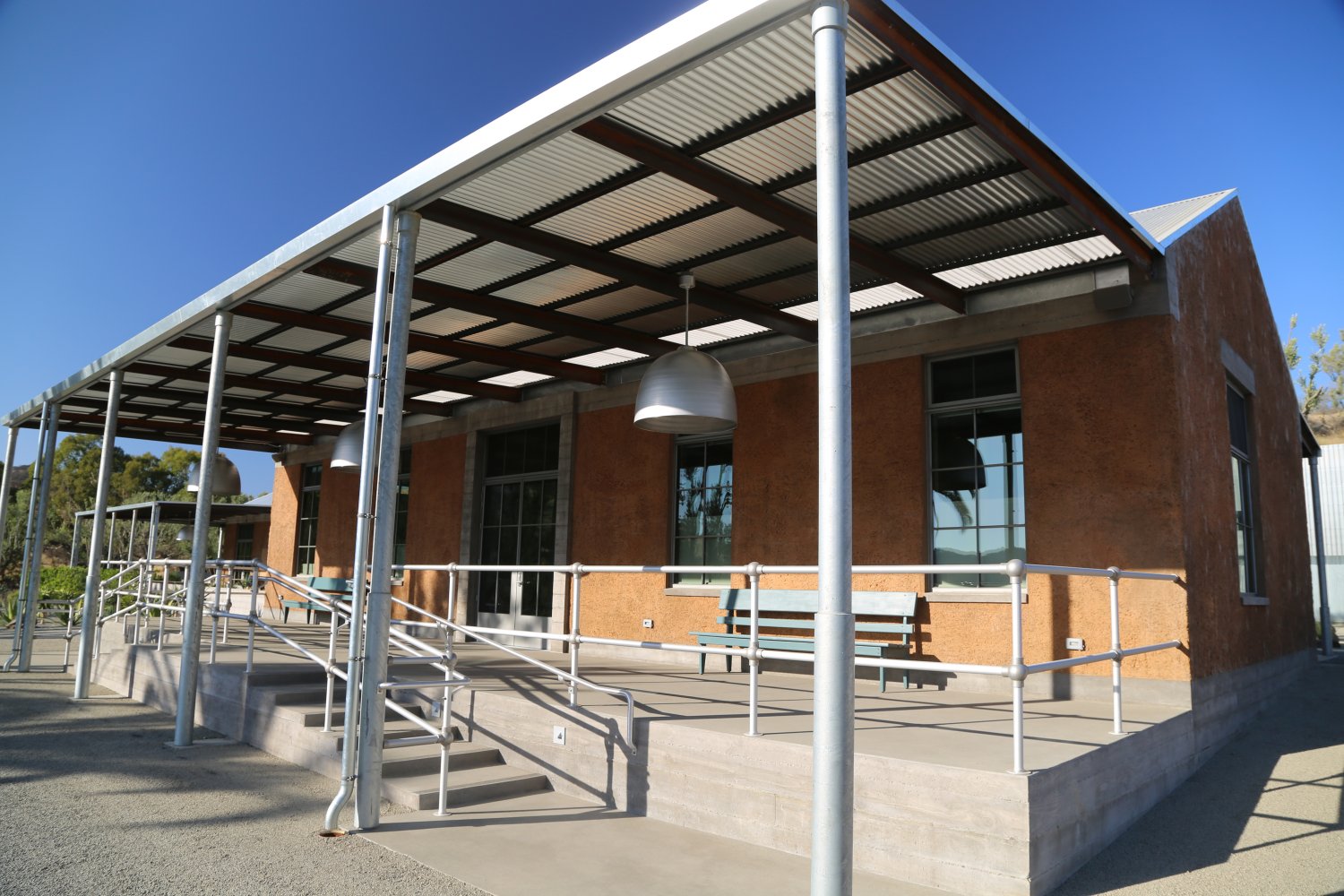
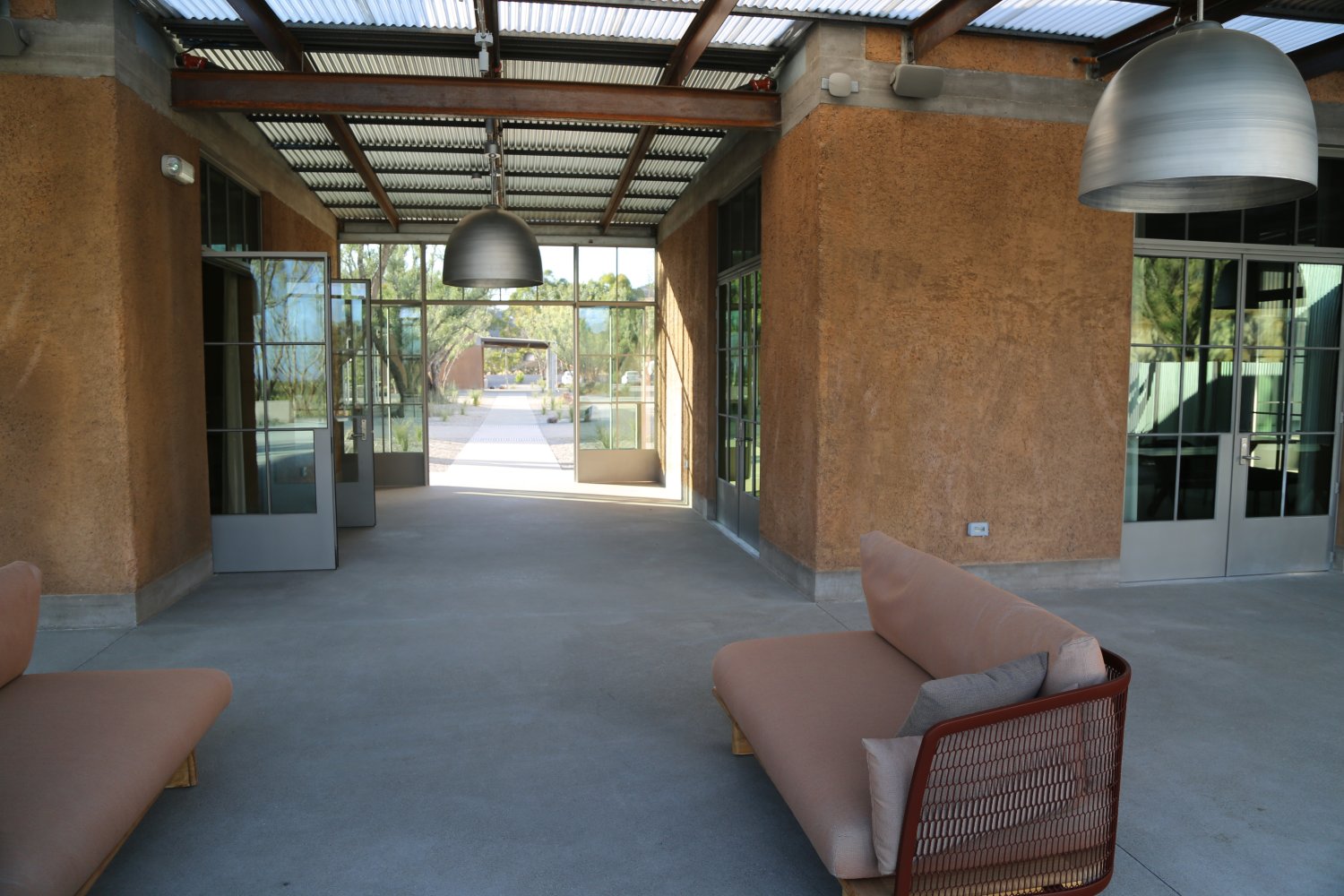
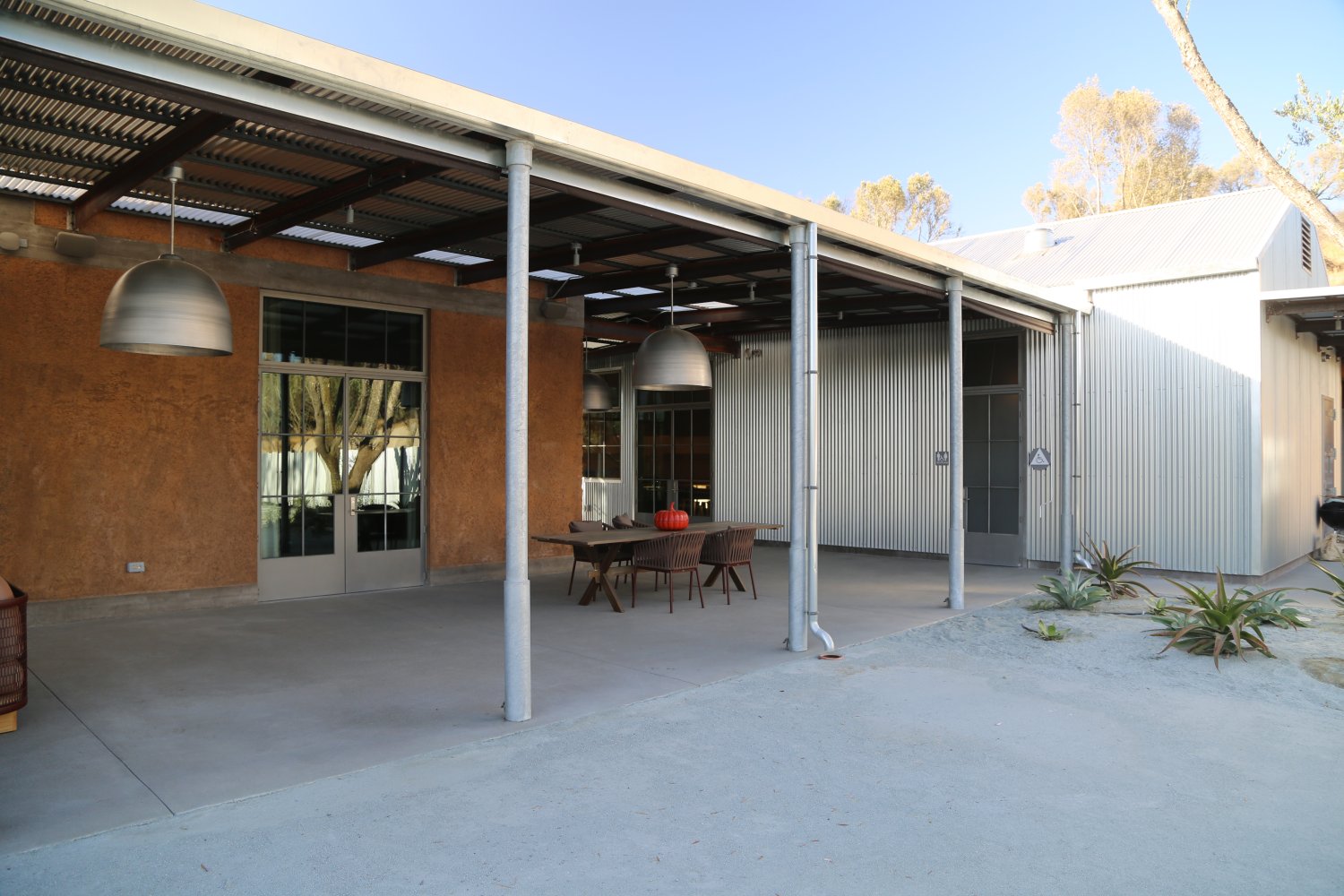
Basil’s original intent wasn’t to build a winery on site. The winery was designed by Nobili Marqués Arquitectura, led by their two principals, Silvia Nobili and Marta Alabau Marqués. While at Backen & Backen Architecture Silvia worked on a number of premier Napa Valley wineries including on Mt. Veeder, Mayacamas and Promontory. The winery is permitted for 5,000 gallons; a comfortable production will eventually be between 1,000 and 1,200 cases. And the winery is permitted for a commercial kitchen, which will allow for food and wine pairings when they start seeing visitors. The winery should be ready for production by harvest 2028.
At an elevation of 1,000 feet, the vineyard often sits above the fog line. In the early morning, fog settles into the canyon and valley below before gradually burning off. This allows the vineyard to receive more early warmth than the valley floor. At night, temperatures consistently cool, with a lovely breeze blowing through the vineyard and helping preserve the acidity in the grapes.
Mt. Veeder
The Mount Veeder American Viticultural Area (AVA) is a rugged region located on the eastern slopes of the Mayacamas Mountains, serving as one of the western boundaries of the Napa Valley. Established as a formal appellation in 1990, it remains one of the most physically demanding and viticulturally distinct regions in Napa Valley. While much of Napa Valley is associated with the sun-drenched, manicured valley floor, Mount Veeder represents the extreme side of mountain viticulture. It is a place where vines must struggle against precipitous slopes, shallow soils, and a unique maritime-influenced climate to produce very age-worthy wines.
 The history of Mount Veeder is a narrative of persistence and pioneering spirit. Long before it became a prestigious wine region, the mountain was a wild expanse of redwoods and Douglas firs, with part of the region often referred to in the mid-nineteenth century as the Napa Redwoods. The AVA takes its name from Reverend Peter V. Veeder, a Presbyterian pastor who settled here during the Civil War era. Commercial viticulture began in earnest in the late 1800s, spearheaded largely by German immigrants. Captain Stalham Wing is credited with the earliest documented wine production on Mount Veeder; his grapes and wine were exhibited at the Napa County Fair in 1864. Following him, German pioneers like Ernest Streich and John Henry Fisher established vineyards. Notably, Fisher’s property would transform decades later into Mayacamas Vineyards, which remains a benchmark for the region. The modern era of the mountain was solidified in the 1960s and 70s by visionaries like the Bernstein family, who were the first to plant all five classic Bordeaux red varieties on the mountain, and Donald Hess later established The Hess Collection at the historic former Christian Brothers winery property on Mount Veeder.
Topographically, Mount Veeder is defined by its verticality and isolation. It is the only Napa mountain AVA that directly adjoins the cool Los Carneros district to the south, a location that heavily influences its character. The terrain is characterized by steep, jagged ridges and narrow canyons, with vineyard elevations ranging from 500 feet to approximately 2,600 feet at the summit. These slopes are steep – often reaching inclines of 30 degrees or more. The steep terrain makes mechanization difficult in many vineyards, requiring a significant amount of vineyard work, including harvesting, to be performed by hand. Of the AVA’s 16,000 total acres, only about 1,000 are planted to vines, representing only 1.3% of Napa Valley’s total wine production. This scarcity is a direct result of the difficulty of farming such a rugged landscape.
The climate of Mount Veeder is a study in contradictions, as it is cool to moderate. Its southern position places it in the direct path of the cooling marine breezes and fog that pull off the San Francisco Bay and San Pablo Bay. While the valley floor in St. Helena or Calistoga may experience scorching afternoon heat, Mount Veeder remains moderated by this maritime influence. The mountain also benefits from a phenomenon known as temperature inversion; because it sits above the summer fog line, the vineyards are bathed in clear mountain sunlight during the day while the valley floor is shrouded in mist. Conversely, the air at night remains warmer on the mountain than in the valley. This lack of extreme diurnal temperature swings allows for an exceptionally long, slow growing season. The combination of elevation and cooler conditions can extend the growing season, and Cabernet Sauvignon from Mount Veeder is often among the later-harvested fruit in Napa Valley. This extended hang time can allow tannins to mature while the grapes retain desirable natural acidity.
Geologically, Mount Veeder is an anomaly in the Napa Valley landscape. While most of the surrounding mountains are of volcanic origin, Mount Veeder is composed primarily of ancient seabed. The soils at Baker Canyon are primarily sedimentary shale and are very well drained. Eventually Basil plans to dry farm the vines as much as possible.
The underlying geology reflects ancient marine sediments and oceanic material that were deformed and uplifted through tectonic activity associated with California’s complex history of subduction. Consequently, the soils consist of a complex mix of sedimentary sandstone, shale, and fractured stone. These soils are notoriously shallow, often only 12 to 24 inches deep before hitting bedrock, and are significantly less fertile than the alluvial soils of the valley floor. This limited availability of nutrients and water forces the vines into a state of perpetual struggle. The roots must penetrate deep into the rocky substrata to find sustenance, which naturally limits the vine’s vigor and leads to the production of very small, thick-skinned berries with a high skin-to-juice ratio.
Today, Mount Veeder remains a haven for “maverick” winemakers and small, family-owned estates that value terroir over high-volume production. The challenges of the region have only increased with time; the mountain has been on the front lines of wildfires, and the costs of farming such steep terrain are very high. Yet, the prestige of the AVA continues to grow as collectors seek out wines that offer a sense of place and longevity.
Select Wines
The 2022 Baker Canyon Cabernet Sauvignon, Mt. Veeder is 100% varietal. This wine is deep ruby and opaque; the well-layered bouquet features a pleasing union of both darker fruits and complementary barrel influences. This wine smells ripe, representative of the vintage but it never comes close to crossing into the territory of being over ripe. Shade cloths and elevation helped mitigate to some extent the extreme heat centered around Labor Day weekend. The bouquet smells dark raspberry, boysenberry, blueberry, sandalwood and assorted dried herbs. The focus here is on the fruit, with the oak far in the back seat in terms of its contributions. This wine tastes savory and dark fruited with flavors of boysenberry, dark raspberry, red cherry and blueberry. And there is a savory mountain character with lingering notes of dried herbs and a minerality along with sage. The tannins are seamlessly integrated at 4 years post vintage – and probably were right upon release. Their texture is gentle, felt with a well tumbled and rounded feel. This wine was aged in 50% amphorae, 45% neutral oak and 5% new French oak. The grapes were harvested September 15th.
 The 2023 Baker Canyon Cabernet Sauvignon is deep ruby and opaque; this wine smells fresh with both red and dark fruits and some floral influences. The nose offers blackberry, boysenberry, blueberry, rose petals, lilacs and a sense of minerality. As the wine opens it reveals a light note of an old cedar box. In terms of descriptions of a bouquet, this is a crowd pleaser. The palate is minerally, with a light ferrous/iron element. This wine tastes like blackberry, boysenberry, dark cherry, blueberry, dark plums and tea. The tannins are highly expressive and densely packed, broadly coating the palate and lingering with a rounded, persistent dusty and chalky texture. This is a completely different wine than the 2022 bottling, a more cerebral expression and certainly an age-worthy one. This wine was aged in 25% new French oak barrels – with the remainder in amphorae from both Italy and Oregon. The grapes were harvested a month later than in 2022, on October 15th. 300 cases were produced.
Both wines were made from free run juice; while each year a light press was also made, wines from the press cuts were not used in the final bottlings. Baker Canyon is very deliberate about the amount of oak used during élevage – preferring to use less new oak. Basil describes their use of oak as a podium to lift and highlight the fruit but to always take a complementary role. And he hopes the Napa Valley as a whole starts looking at a more judicious use of oak.
Amphorae are used from two manufacturers including Manetti Gusmano & Figli furnace in Tuscany and from Oregon based Novum Ceramics, owned by potter and winemaker Andrew Beckham. His company is the first commercial producer of terracotta amphorae for winemaking in North America. Baker Canyon uses amphorae that differ in material composition based on location of both companies, size, shape, and porosity.
Both of these early vintages are from the same vineyard off of Mt. Veeder Road at a similar elevation to Baker Canyon.
Additional wines are coming, including a Cabernet Franc dominated bottling and a Cabernet Sauvignon, both sourced from a Gamble family-owned vineyard higher up on Mount Veeder. And a Hudson Vineyard Chardonnay, their first white wine, was produced in 2026 after Basil, Andy and Andy’s assistant winemaker, Patrick Nyeholt, tasted through numerous Chardonnays, helping identify the wines they favored stylistically.
—
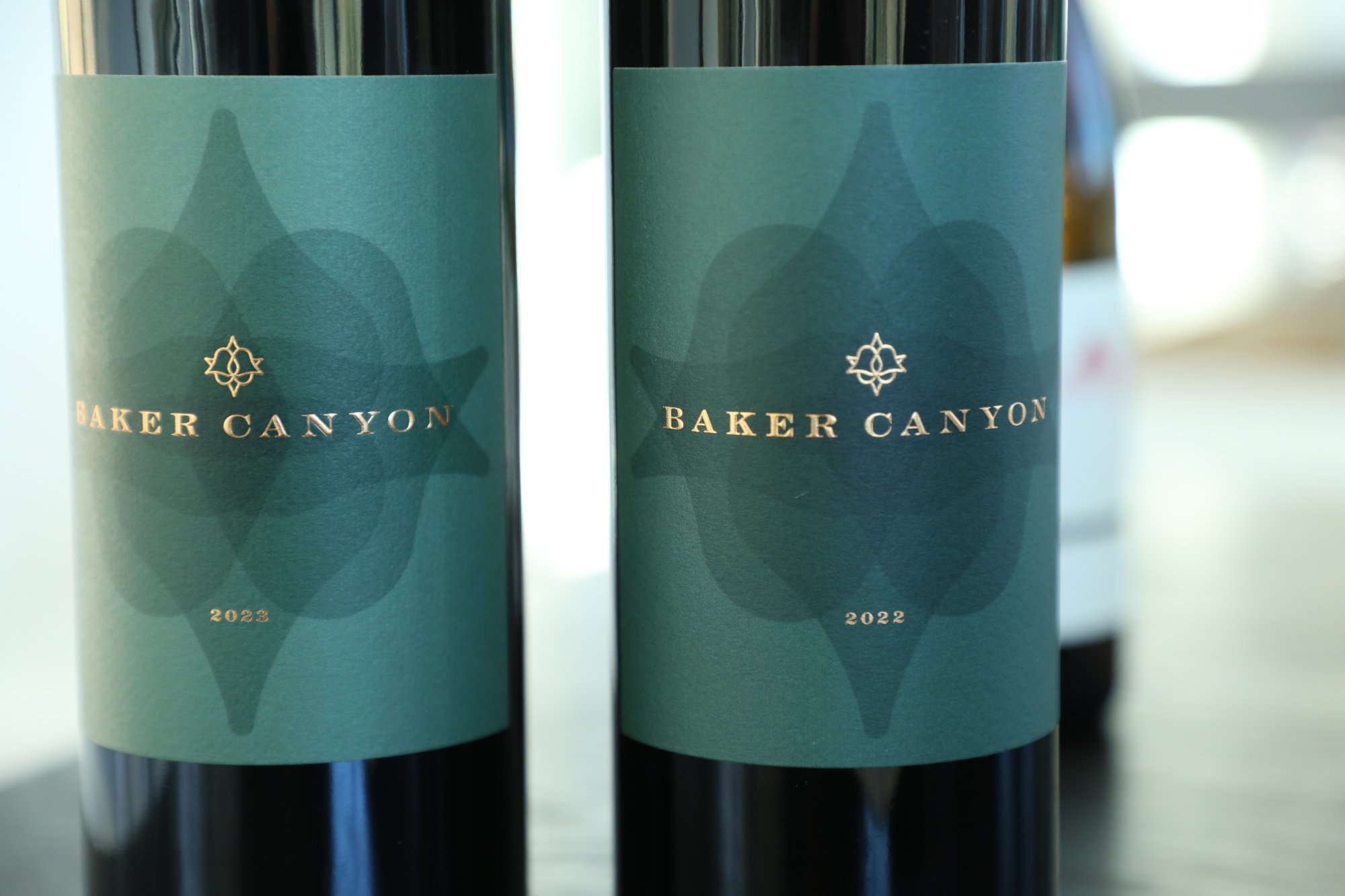
The label was designed by Chanda Williams of Chanda Williams Design. This talented artist has worked on brand development for numerous wine brands including many in Napa Valley such as Brandlin, Peter Franus, Progeny and Scaggs Vineyard. Basil first came across her artwork while drinking winemaker Celia Welch’s personal wine brand, Corra. For Baker Canyon, he wanted a label that speaks to simplicity and restraint. The mark is a stylized version of the shape of their vineyards, and it also resembles a lotus, an homage to his Egyptian heritage. The parent company of Baker Canyon is Harcross Wine Company, an homage to the street he grew up on in Woodside, CA.
Hospitality
Until most likely early 2028, all visits are hosted at Hudson Vineyards, a 2,000 acre ranch located on the Napa side of Carneros – about a 10-minute drive from Napa and a 12-minute drive from Sonoma. Allow 90 minutes for the tasting.
Baker Canyon often hosts pop up events and tastings, primarily in the San Francisco Bay Area.
—
The wines are primarily sold direct to consumer, with a concentration of customers in the San Francisco Bay Area. Select restaurant placements include Hawks in Granite Bay, where the wine is offered by the glass and as a sommelier selection, and Zola in Palo Alto. Their primary focus remains the DTC market. Baker Canyon is a member of the Mount Veeder Appellation Council (MVAC) and participates in the annual Mt. Veeder tasting. For more information, to purchase wine and to join their membership list, visit: www.bakercanyon.com
Leave a Reply