



 Barbour Vineyards is owned by long time Napa resident and vineyard manager Jim Barbour and his daughter Fiona. We originally met with Barbour Vineyards General Manager, Kathy Simpson who is also Jim’s wife. Jim first moved to the Napa Valley with his family from San Francisco when he was a young boy in 1962.
He graduated from St. Helena High School where he excelled at both baseball and football. His family-owned property was called Rancho de Los Ojos Azules in the 1960s and is where Sequoia Grove winery is currently located (Rutherford). This is where Jim was raised. His father William was very active in the local community having been a volunteer for the Rutherford Fire Department and a member of a number of organizations including the Lions Club, Elks Club and the Odd Fellows. He sold their property in Rutherford to Sequoia Grove founder Jim Allen in 1978.
Barbour remembers Highway 29 when he was growing up as a place you could freely ride your bicycle; it certainly did not have the traffic it does today. This was before most of Napa Valley was planted to wine grapes and his family grew prunes and apples but also assorted grapes. Some of the varieties on their property at the time were Gamay, Mondeuse and Petit Bouschet; the grapes were sold to GALLO.
Jim convinced his father to plant 5 acres of Chardonnay grapes and when the demand for these grapes outpaced their production, they converted over their entire farm to wine grapes. Jim has been growing grapes in the Napa Valley for over 40 years with a focus on hillside vineyards.
Jim wasn’t always sure he wanted to work in the wine industry. Prior to college he was leaning towards being a parole officer and actually attended Chico State in their criminal justice program. Learning about the low pay and tough job conditions, Jim then transferred to UC Davis.
At UC Davis he completed his studies and upon graduating with a degree in plant science, returned to Napa Valley. He worked for Napa vineyard management pioneer Frank (Laurie) Wood from 1975 to 1989 helping control 1200 acres of area vineyards. After Laurie retired in 1990, that same year Jim branched out on his own and began Barbour Vineyard management company; word of mouth spread about his vineyard expertise; today his company manages over 500 vineyard acres in Napa and he has been responsible for either planting or maintaining some of the top vineyards in the valley including Blankiet, Fantesca, Grace Family (while working for Laurie, Jim planted the original vines on this property in 1976 for Dick and Ann Grace), Chiarello, Casa Piena, Hundred Acre and many more. And over the years Jim has worked with some of Napa Valley’s brightest winemakers including Aaron Pott, Heidi Peterson, Philippe Melka, Celia Welch and Martha McClellan, among many others.
Some of Jim’s first clients were referred by Laurie or through connections he had made working with Laurie including the Snowden’s (Peter & Linda) who used to run Rockledge Vineyards. Today his focus is managing organic, biodynamic or sustainably farmed vineyards for premium wine brands.
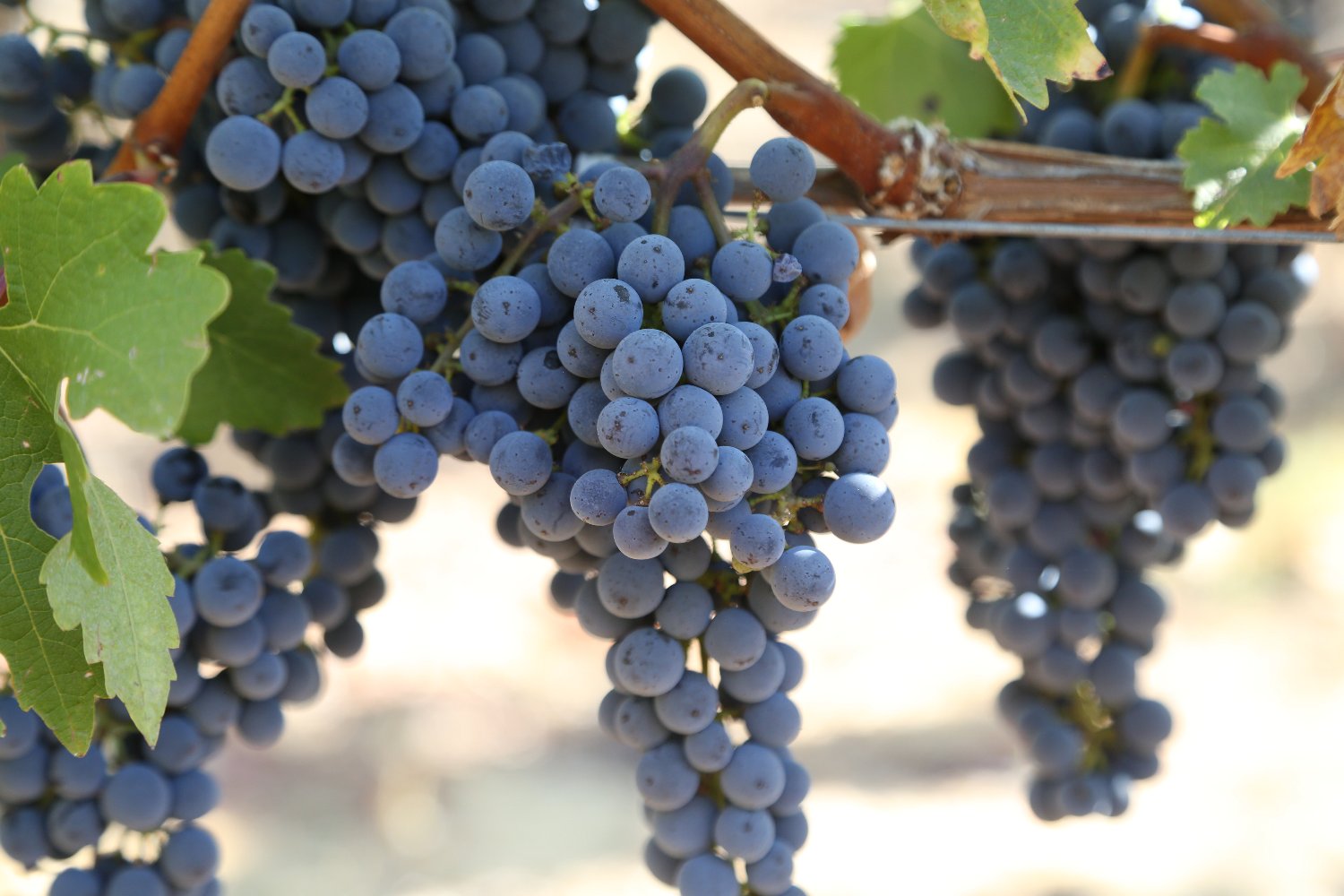
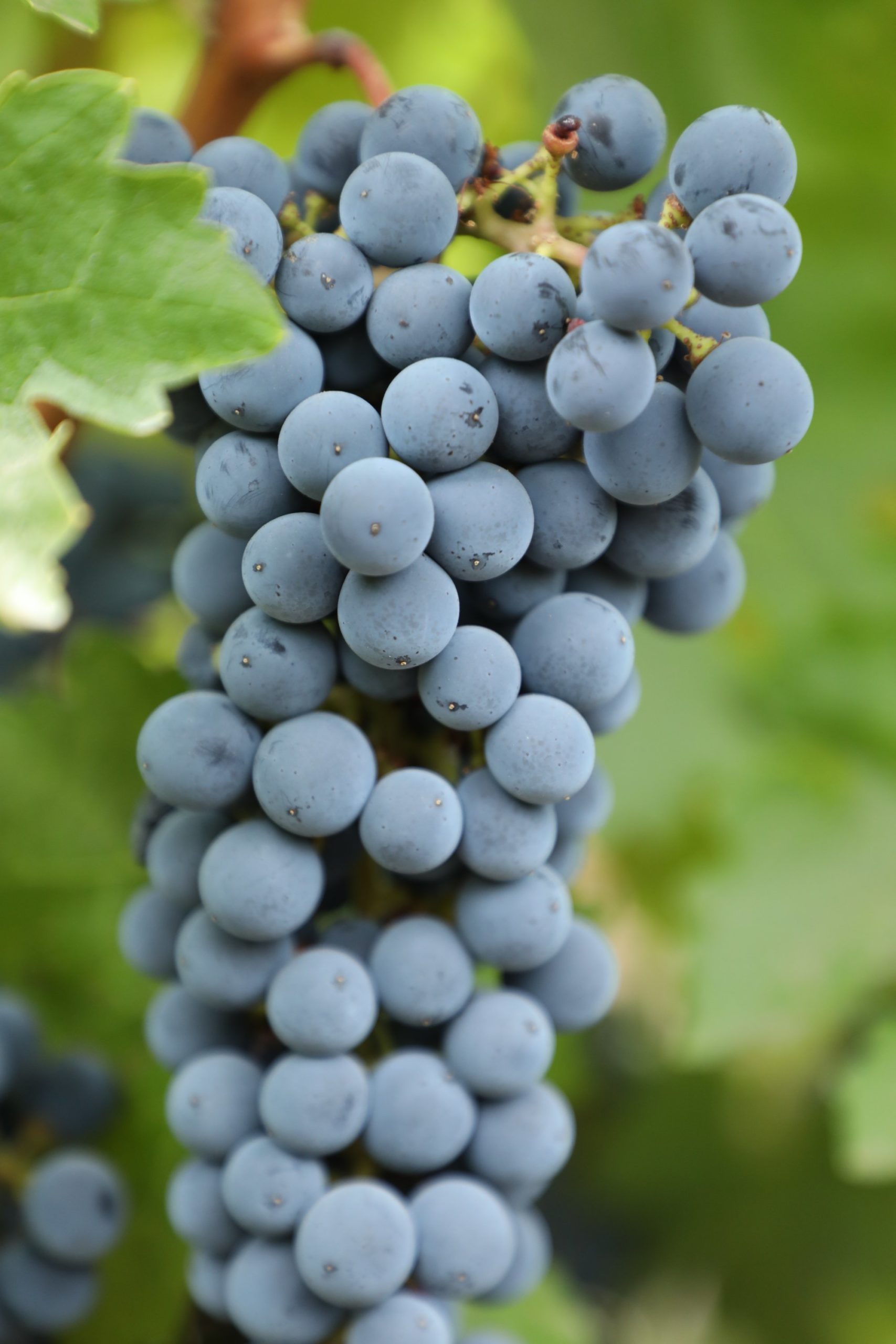
In 1992 Jim purchased a 7-acre piece of property in the St. Helena AVA, just south of the town of St. Helena (Tokay Lane) and planted 4 acres of this to Cabernet Sauvignon. This is a historical vineyard neighborhood; one of the oldest continuously planted properties to grapevines, Lewelling Vineyard is nearby as are wineries, Corison and HALL. The soils are loamy with lots of gravel; the vineyard is situated fairly close to the base of the Mayacamas mountains. Barbour sourced the original bud wood from the Grace Family Vineyard to the north of St. Helena. Jim keeps the production low, usually merely 1 to 2 tons per acre (certainly low for valley floor fruit). In addition, his vineyard is dry farmed each year unless their is a significant heat event. His first commercial vintage dates from 1995, merely 50 cases of Cabernet Sauvignon and every year since has produced a single vineyard Cabernet Sauvignon. Their annual production is usually around 300 cases. And Jim’s first few vintages were made at Grace Family Winery inside the diminutive winery on the Grace family property.
The St. Helena AVA represents the narrowest point of the Napa Valley floor, a geographical “waist” that creates a unique pressure cooker for world-class Cabernet Sauvignon. This hourglass shape is fundamental to its success, as the proximity of the Vaca and Mayacamas mountain ranges funnels heat into the center of the appellation while simultaneously providing diverse alluvial fans that have washed down from the heights over millennia. Unlike the cooler southern reaches of the valley, St. Helena benefits from significantly higher temperatures during the peak of the growing season. This trapped heat is essential for ripening Cabernet Sauvignon to its fullest potential, ensuring the development of plush, ripe tannins and the opulent fruit profiles that have made the region a global icon.
The soil composition of the St. Helena floor is perhaps its greatest asset. The region is characterized by deep, well-drained gravelly loams and volcanic debris. These “benches” and alluvial fans provide excellent drainage, which is critical for controlling vine vigor. When Cabernet vines are planted in these rocky, porous soils, they are forced to work harder for water, resulting in smaller, more concentrated berries. This concentration is the hallmark of St. Helena Cabernet, providing a density of flavor and a structural backbone that allows the wines to age gracefully for decades. Because the soils vary from the western benchlands to the gravelly eastern edges, winemakers can achieve a complex spectrum of fruit expressions within a single appellation.
Another defining factor of this AVA is the protection it receives from the mountains. The steep hillsides shield the valley floor from the winds, creating a calm, warm environment that promotes even ripening. While the days are hot, the region still benefits from the evening “drainage” of cool air coming down from the mountains, which helps the grapes maintain enough acidity to remain balanced. This combination of intense solar radiation and specialized soil creates a “sweet spot” for the variety. The resulting wines are often described as having a seamless, “iron fist in a velvet glove” character—possessing the immense power and dark fruit typical of Napa Cabernet, but with a refined, supple texture that is less aggressive than the tannins found in the northern high-altitude mountain AVAs. This accessibility, combined with profound depth, cements St. Helena’s reputation as the historical and viticultural heart of Napa Valley.
 Jim has worked in conjunction with a number of Napa winemakers over the years but none closer than Heidi Peterson Barrett. He currently or has managed vineyards for a number of producers where she is or was the winemaker; for 15 vintages, Heidi was the winemaker for Barbour wines.
Today winemaker Celia Welch crafts the Barbour wines; she has been making wine in the valley for more than 30 years and has consulted for select premium clients over the years including Scarecrow. She also produced her own small label here called Corra until its final vintage in 2019.
Born and raised in Medford, Oregon – her introduction to wine came early through her father’s passion for wine. He was a home winemaker and collector, and she grew up helping him make wine. Her first introduction to the Napa Valley was in the 1960’s during trips with her family. She graduated from UC Davis in 1982 with a degree B.S. degree in Fermentation Science at a time when a number of now prominent women winemakers were enrolled including Pam Starr and Heidi Peterson Barrett and others who work in Napa and beyond.
Continuing her education after graduating, she embarked in extensive travels through a number of wine regions including domestically in the Pacific Northwest, the East Coast and then New Zealand – finally working in the Barossa Valley in Australia. She then moved to the Napa Valley and worked at a number of wineries including Silverado Vineyards in 1987, was assistant winemaker at Robert Pepi Winery (now the home of Cardinale) and began her consulting career in 1992 for Staglin Family Winery.
Her focus of consulting is generally for premium producers who own their own vineyards (rather than labels who source fruit) – often (but not always) from hillside locations in the valley. And her work has been highly recognized throughout the industry – in 2008 she was named Winemaker of the Year by Food and Wine Magazine and has been inducted into the Winemakers Hall of Fame through the organization, Women for Winesense.
Select wines
The 2023 Barbour Cabernet Sauvignon, Napa Valley (100% varietal of clones 7 and 685) is made from grapes from two vineyards-Jim’s own vineyard in St. Helena and Silver Fox, located next to the St. Helena Cemetery. This wine is deep ruby and nearly opaque; the compelling bouquet offers plenty of fruit but also an admirable restraint. Its scents include dark cherry, blackberry, boysenberry and dark plum. The oak is here, but complements the bright fruit rather than detracts. Its contribution is a light note of old cedar box, cocoa powder and pipe tobacco. The expressions of Barbour, regardless of vintage are always superbly balanced. And perhaps even more so in this exceptional year. This wine tastes both red and dark fruited with flavors of plum, blackberry, boysenberry, dark raspberry and red cherry. Finishes with both grape and oak tannins, sporting a gravelly and chalky textured grip. The acidity is bright, balanced and keeps this wine fresh on the finish. This bottling is both built to be highly enjoyable in its youth but has the characteristics to be highly age-worthy. This vintage in particular, is well worth seeking out and cellaring. Fermentation occurred for three weeks before the wine was pressed off for its élevage in 65% new French oak barrels for 22 months. It was bottled unfined and unfiltered.
The 2022 Barbour Cabernet Sauvignon is 100% varietal; this wine was aged for 22 months in 65% new French oak barrels and was bottled un-fined and unfiltered. Ripe, layered and aromatically lifted high by its fruit, this wine smells like boysenberry, blackberry harvested earlier in the summer rather than late, blueberry, dark raspberry, red plum and with additional notes of mocha, dark cocoa powder, chocolate, cinnamon stick and sweet tobacco spice. Oak friendly and oak supporting, rather than dominating. Already balanced its youth showing a softer acidity and ripe fruits, both products of this abnormally hot growing season in Napa Valley. Its intense flavors include blackberry, dark plum, boysenberry, Pakistani mulberry (a flavor we are highly familiar with and is one of our favorite fruits), dark cherry and lightly toasted cedar. The tannins are dispersed evenly across the palate, lingering with a light to moderate handshake, their gravelly and dusty presence persisting beyond the fruit in the finish. And there is a light but lingering warm hug deep in the throat. This wine is a listed ABV of 14.9%. This bottling is ready to drink, welcoming and crowd friendly, right out of the gate.
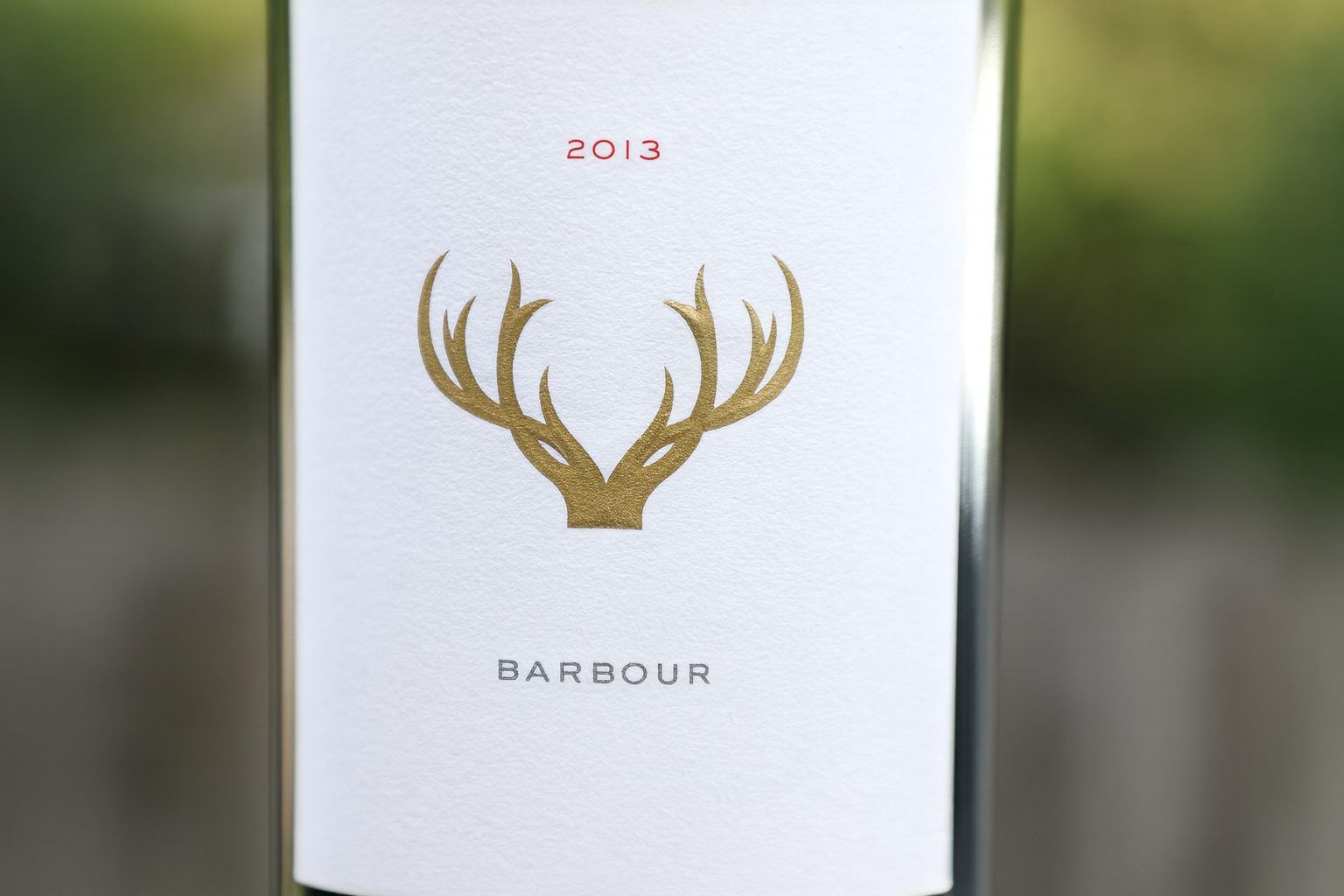
The 2013 Barbour Vineyards Cabernet Sauvignon is 100% varietal; at 12 year post vintage, this wine is holding on to its color remarkably well. It is deep ruby and opaque; in a blind tasting from color alone we would not have identified this as a decade+ old wine. The bouquet is ripe, sweetly fruited and still very much primary in its aromatic expression. This wine smells like freshly harvested blackberry, boysenberry jam, dark mulberry, Santa Rosa plums, dark cherry, blueberry, dark raspberry and some barrel influenced sweeter tones including of mocha, dark cocoa powder and cloves. And a light but finishing note of a old tobacco box and red chili spice. The palate is a combination of ripe, bright and still very much fresh flavors. This wine tastes like blackberry, Persian mulberry, boysenberry, red cherry, Satsuma plum and a finishing note of tobacco and toast. The texture has certainly been softened with time; the tannins are fully ripe, well-tumbled and resolved, lingering with a light to moderate tug. Finishes juicy and still filled with loads of energy like a coiled spring. This wine has plenty of life ahead of it but is showing in a particularly sweet spot right now; our curiosity is piqued to see how it shows in another 10 years.
 The 2006 Barbour Vineyards Cabernet Sauvignon is 97% Cabernet Sauvignon and 3% Cabernet Franc. Jim tries to find a balance between picking the fruit so that the grapes are not extremely high in sugar at the time they are harvested. This is an elegant wine that drinks very well by itself but certainly will pair with a number of foods. It has lively natural acidity and an exceptional taste profile that holds its own even without food. The bouquet is appealing with its refined aromas of toffee, mocha, Asian spices and plum. The palate is soft, elegant and shows both plum and red cherry and is layered in flavor. Notes of espresso from the barrels complement the long clean finish, anchored by fine-grained delicate tannins. This wine is most definitely in balance.
—
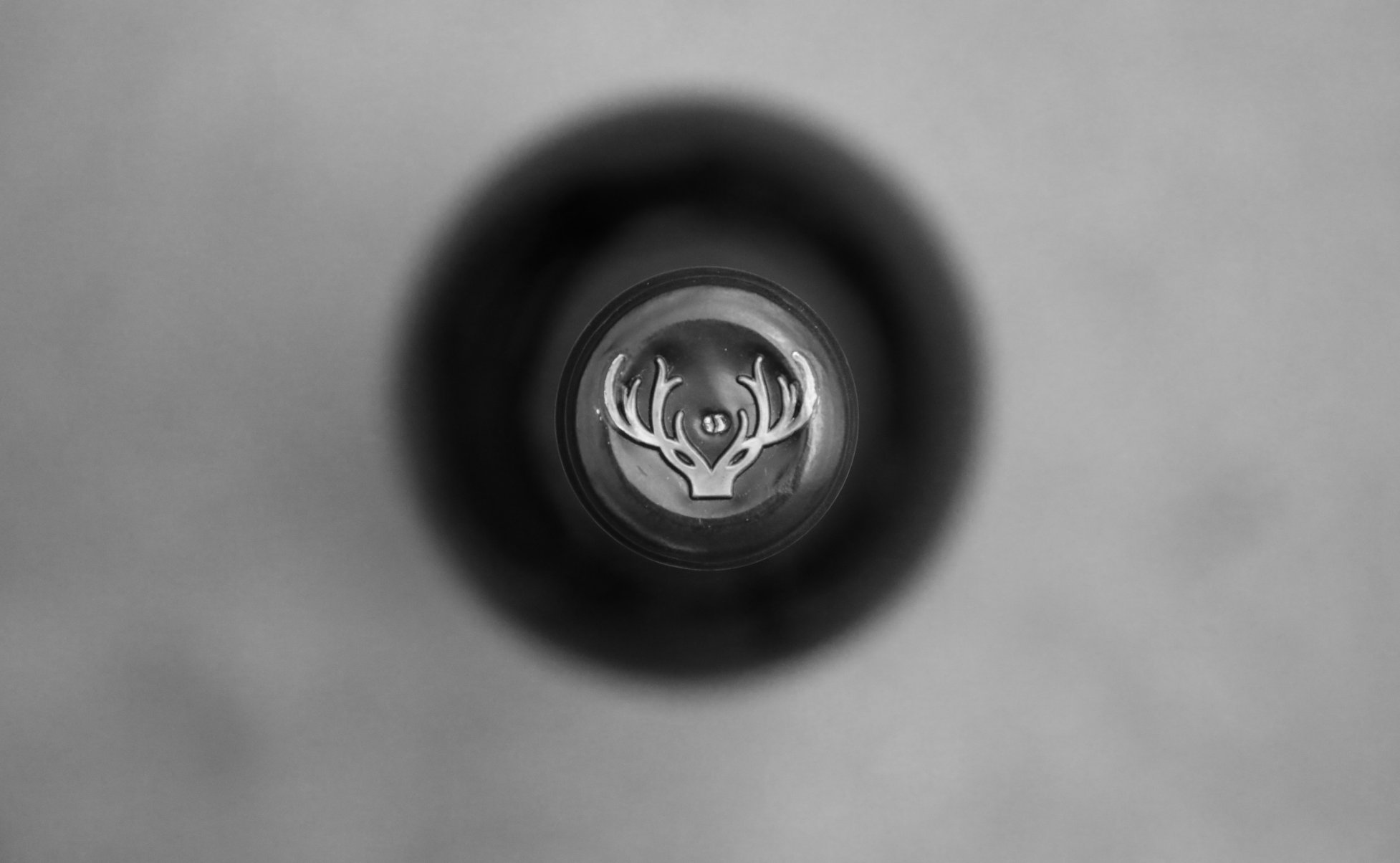
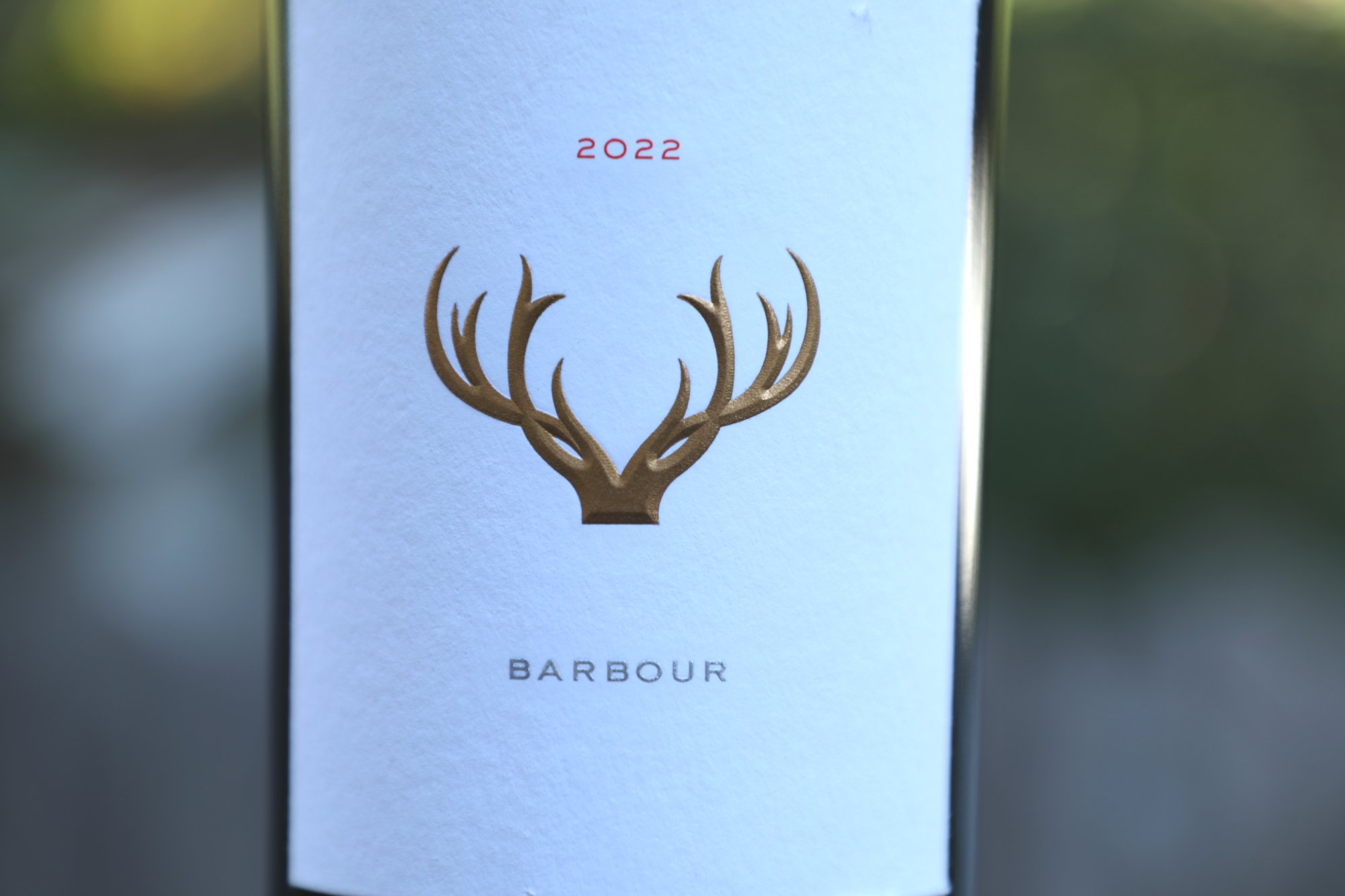
The simple yet eye-catching and beautiful wine label for Barbour Vineyards was designed by the acclaimed San Francisco-based design firm Vanderbyl Design. The label is widely recognized for its elegant, minimalist aesthetic that features a distinctive illustration of a vine intertwined with an elk horn. This imagery was intentionally chosen to reflect the dual passions of proprietor Jim Barbour, viticulture and the outdoors.
Michael Vanderbyl is a heavyweight in the design world—a recipient of the AIGA Medal and a member of the Interior Design Hall of Fame. His firm has shaped the visual identities of several other high-end Napa estates, most notably providing the packaging and website design for Scarecrow Wine.
Barbour Wines are distributed direct through their mailing list and their website. You can find their wines locally sometimes at ACME Wines in St. Helena. You may taste Barbour’s current release, by prior appointment only. And tastings at the K. Laz Wine Collection in Yountville often include a vintage of Barbour. Select vintages are sometimes available through a variety of online retailers including Wine Spectrum, WineBid and K&L Wine Merchants. For more information or to join their mailing for access to purchase wine, please visit: https://barbourwines.com
Leave a Reply