



 Sown Estate was founded by Andrew and Alexis Greenhalgh with their inaugural vintage from 2023. Both are from Sacramento; Andrew is an art major from UC Berkeley, while Alexis is a graduate of Loyola Marymount in Los Angeles. While in college, Alexis became interested in wine; it was her beverage of choice. Her father was inspired by his early visits to Napa Valley during the 1980s and later introduced her to Napa Valley Cabernet Sauvignon.
Alexis decided to pursue wine education and enrolled in WSET courses while living in Los Angeles. She soon became interested in viticulture and wine production. They both moved to Napa Valley in 2015 and she took a harvest intern position at Robert Craig Winery. Continuing to pursue her passion, then they moved to New York where she worked as a sommelier at Maialino Restaurant and also at Brooklyn Winery. But she soon realized that neither sommelier work nor wine production was the direction she wanted to pursue in the wine industry.
In the meantime, they purchased an 8-acre former hay ranch located in California’s Sierra foothills within the Eldorado AVA. Their intent was to plant wine grapes. While attending a wine dinner in New York hosted by winemaker Martha Stoumen, they asked her for advice on what to do with the property they had recently purchased. She introduced them to viticulturist Grayson Hartley, formerly of David Girard winery and currently winemaker at Preston Farm & Winery in Dry Creek Valley (Sonoma County).
Andrew remembers attending the RAW Wine Festival in New York, hanging out in the California section talking to young winemakers and or vineyard owners about their Sierra foothills property and collecting ideas for varieties of wine grapes to plant. This is where they first met Marty Winters and Alex Pitts, the proprietors of Berkely based Maître de Chai winery. Eventually Andrew and Alexis planted their property to Nero d’Avola, Grenache, Mourvèdre, Cinsault, Chenin Blanc and Vermentino. While they have made a small amount of Vermentino themselves, they sell the rest of the grapes.
They decided to move back to California; a realtor whom they had previously worked with called and mentioned a property on the slopes of Mt. George east of the city of Napa was for sale. It included a cave and a winery permit. They purchased this nearly 19-acre property in 2018 and renamed it to Gala Mountain Vineyard. From 2019 through 2022 they sold the grapes to Maître de Chai winery who made a Gala Mountain Vineyard designate Cabernet Sauvignon fermenting with indigenous yeasts and aging exclusively in neutral oak barrels. Through Maître de Chai, they met Julia van der Vink and Rob Black, proprietors of Aerika Estate on Mt. Veeder. In fact Julia came up to their property in 2019 at the request of Winters and Pitts to approve the quality of the grapes they were going to be purchasing that year from Andrew and Alexis.
Julia called one day, mentioning she and Rob had won a stainless steel wine tank in a raffle and needed somewhere to store it. She asked if Andrew and Alexis could keep it in their cave. They agreed. Subsequently, she told them, “you can’t keep an empty tank at your vineyard during harvest – you have to make some wine”. So they produced two barrels as a learning experience in 2022 from block 3, their uppermost block.
—
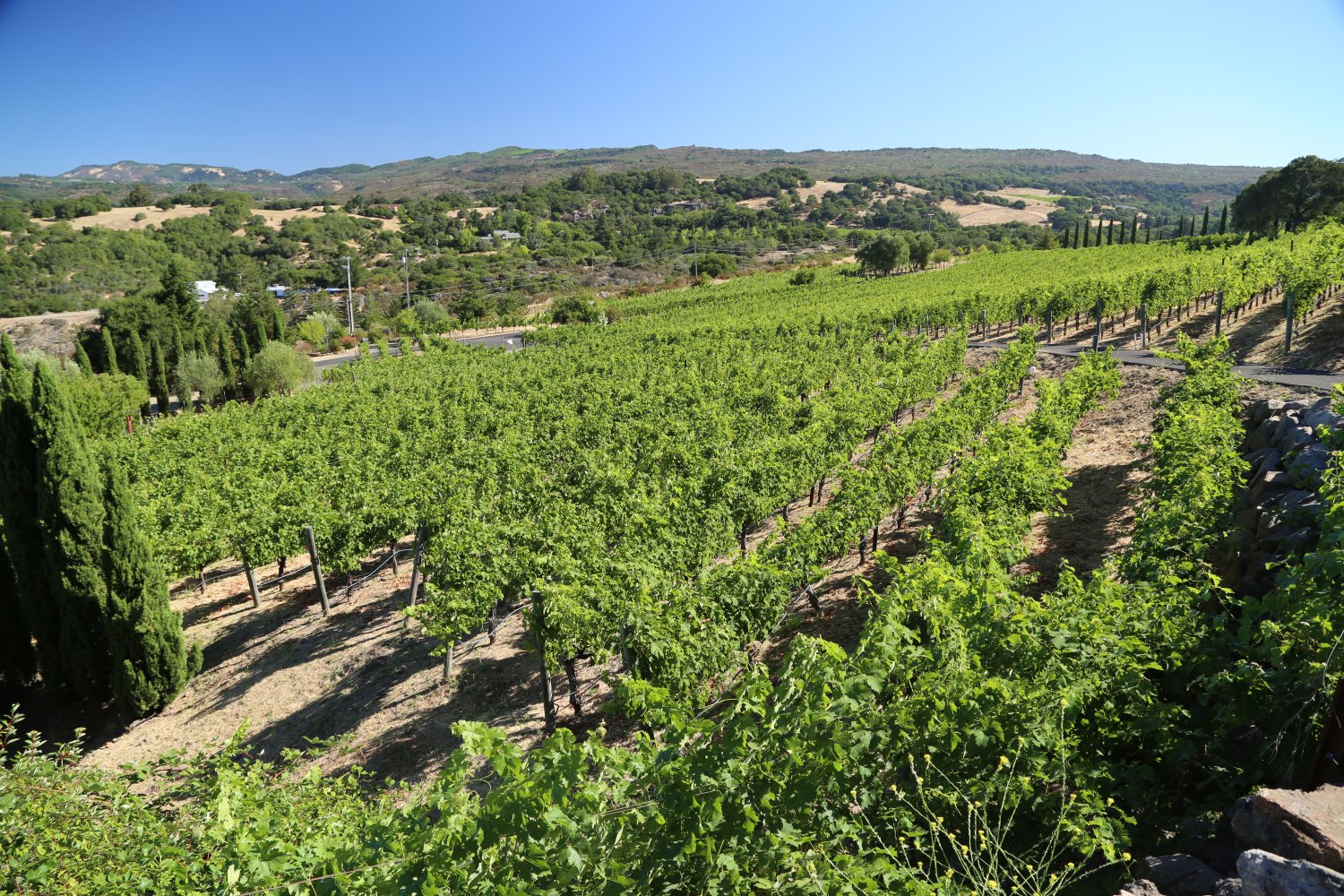
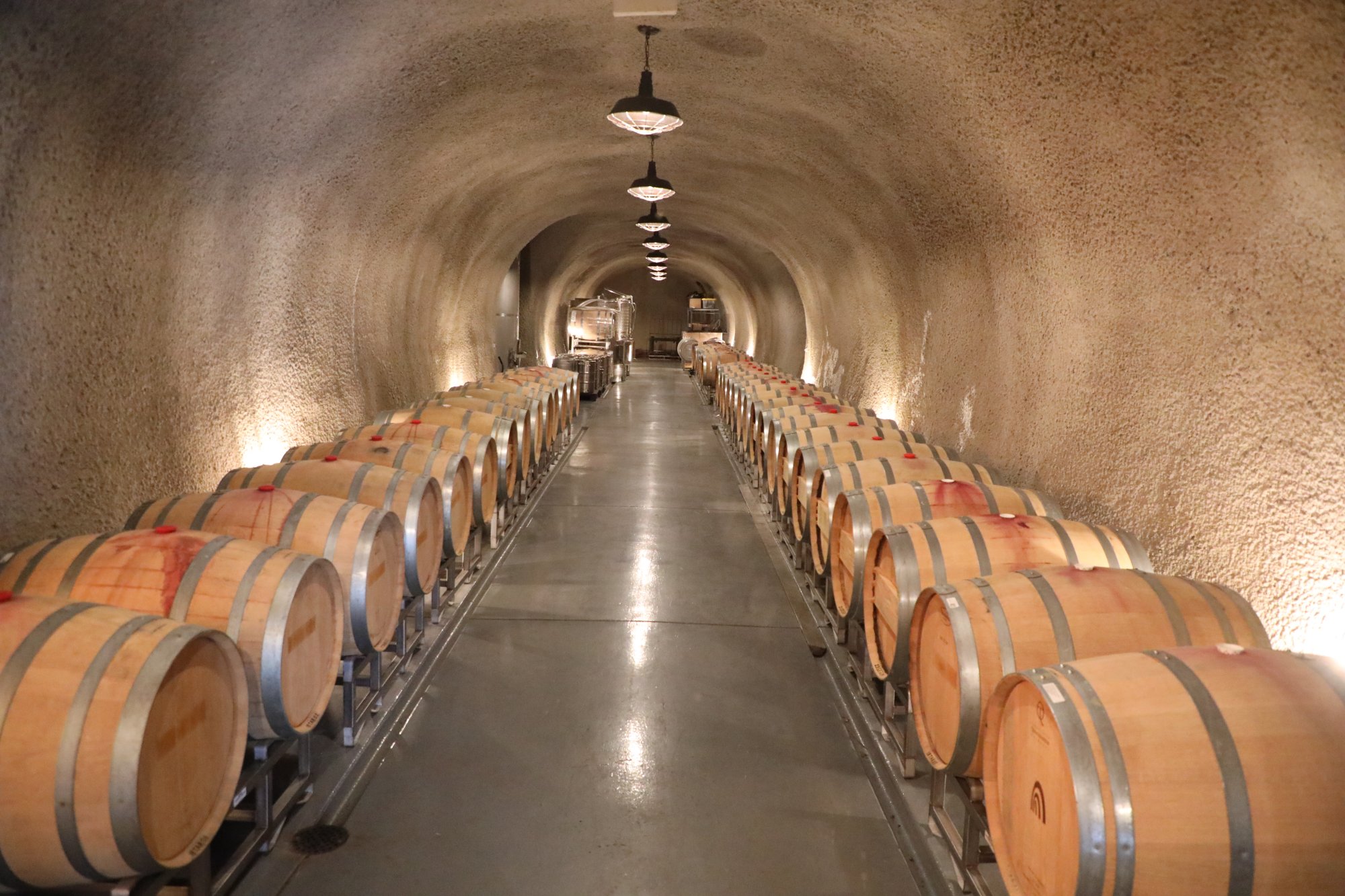
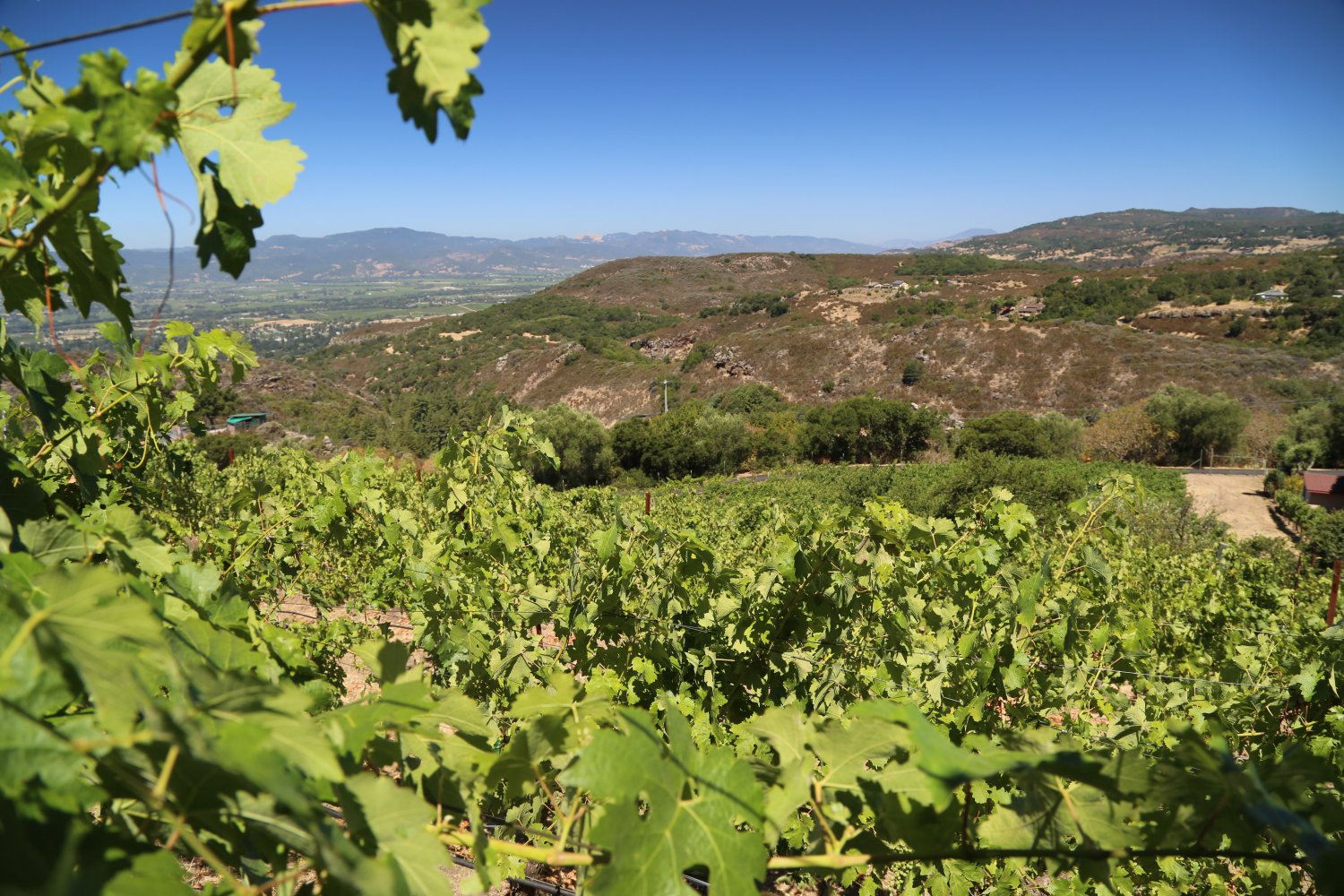
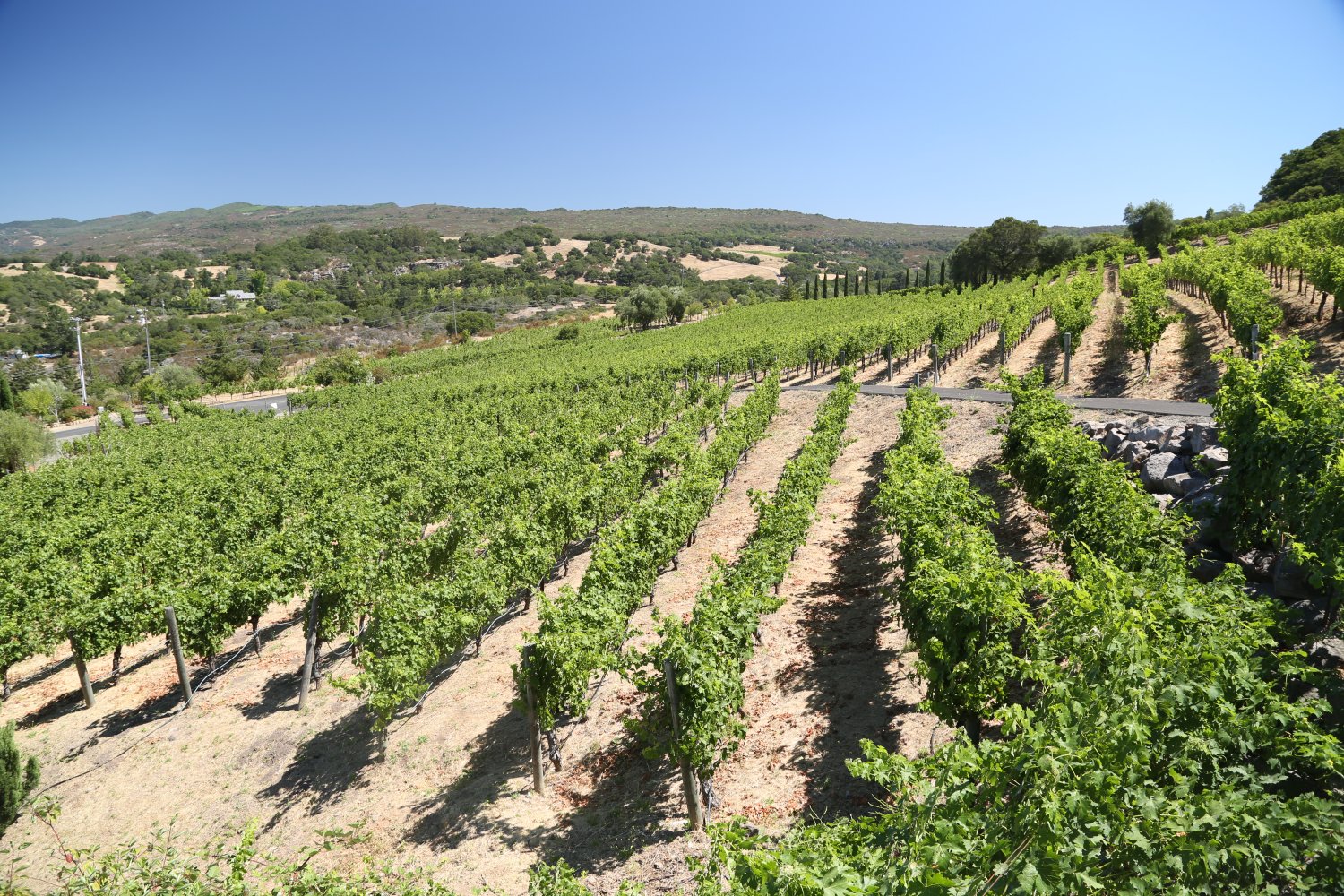
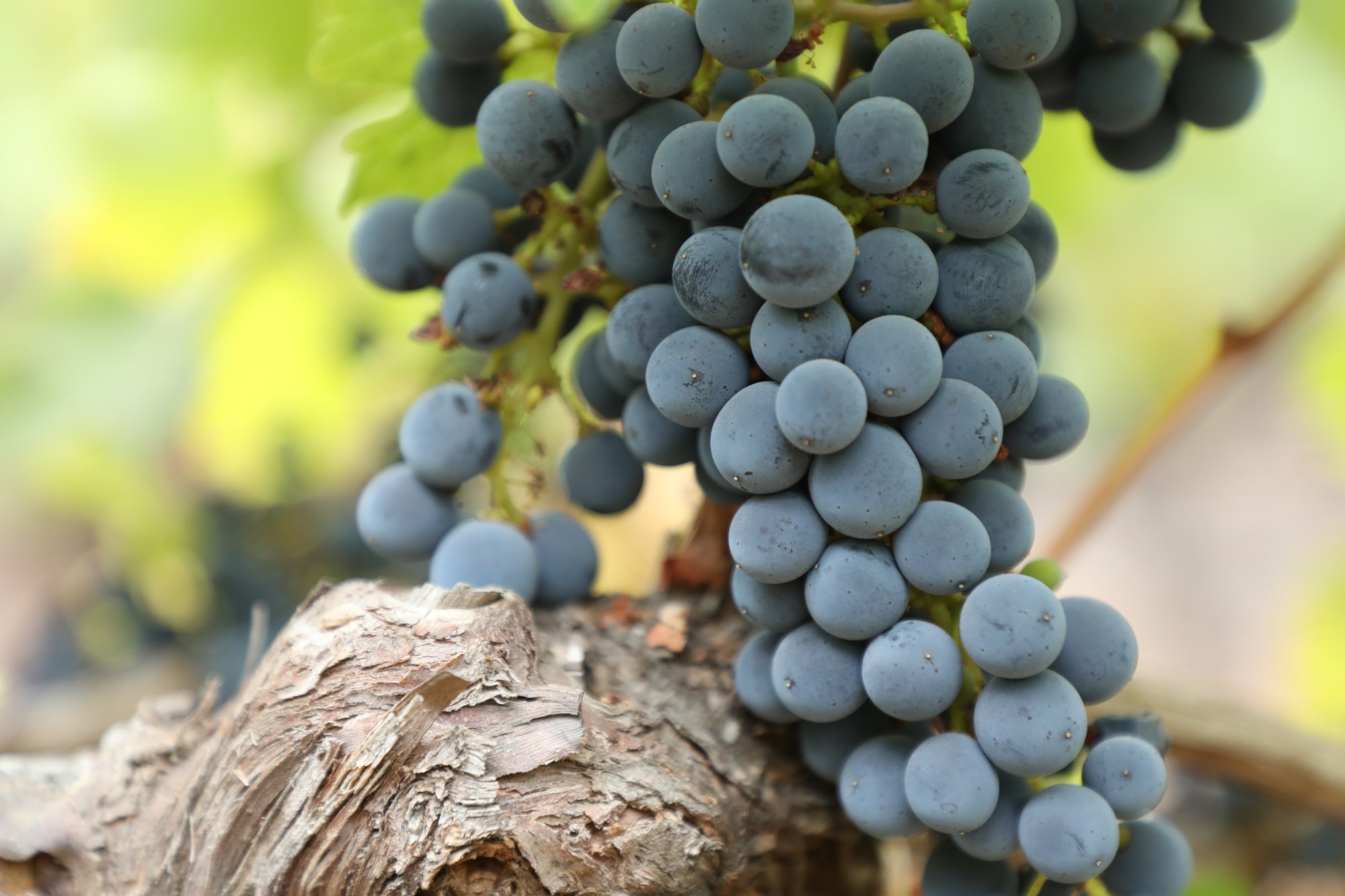
The property is planted entirely to Cabernet Sauvignon and is separated into four unique blocks based on soil type and exposure. The smallest and rockiest block on the property, called block 4, is located just below their driveway. The vineyard is farmed organically with some biodynamic practices – both introduced by Rudy Zuidema when he was the winemaker for a previous owner of this property. Cover crops are planted including a variety of legumes to bring nitrogen back to the soil each year and compost teas are utilized within the vineyard to improve soil structure, enhance plant nutrition and help with management of diseases. Water from a permanent spring is in part used to irrigate the vines. Each of the blocks is often picked separately and always fermented and aged independently until the final blends are created. The wine is made on site and aged in the small cave.
This vineyard sits on steep, rocky and well-drained hillsides at about 1,100 feet on the side of Mt. George in the southern part of Napa Valley. Because of the location, it receives cooling breezes from the San Pablo Bay which protects against mildew and due to their elevation; this site is generally above the fog line. This combined with their east and south hillside exposure ensures plenty of sunshine and even ripening conditions.
We first visited this property with the owners at the time, Arlene & Gerry Phelan. Arlene purchased part of the current vineyard property in 1969 but did not plant it until 1991; their first commercial vintage was released in 2000. Initially the grapes were sold to several premium local area wineries including Silver Oak. After a few years of wineries purchasing their grapes, the Phelan’s decided they wanted to make their own wine. They hired Bob Egelhoff as their winemaker.
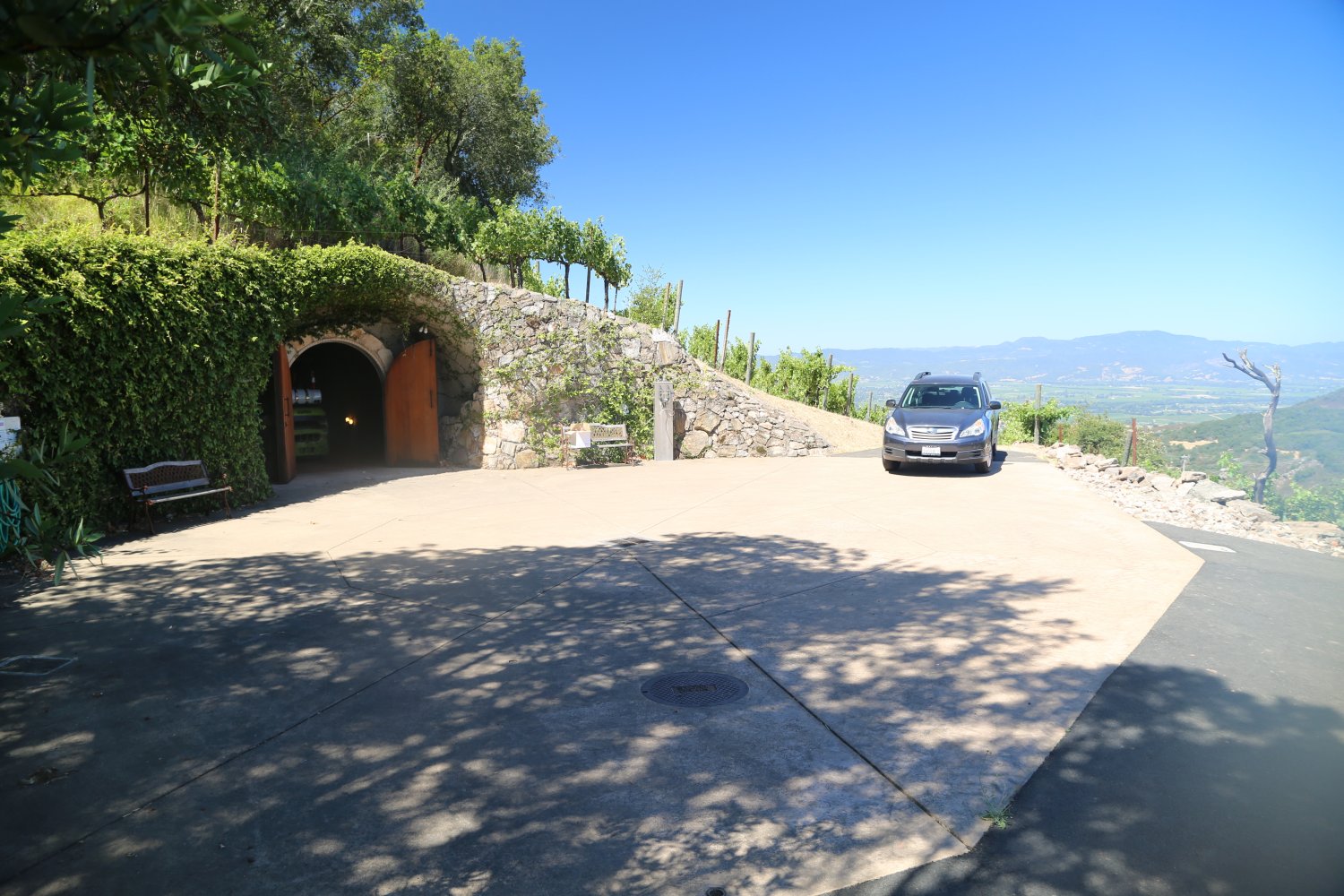
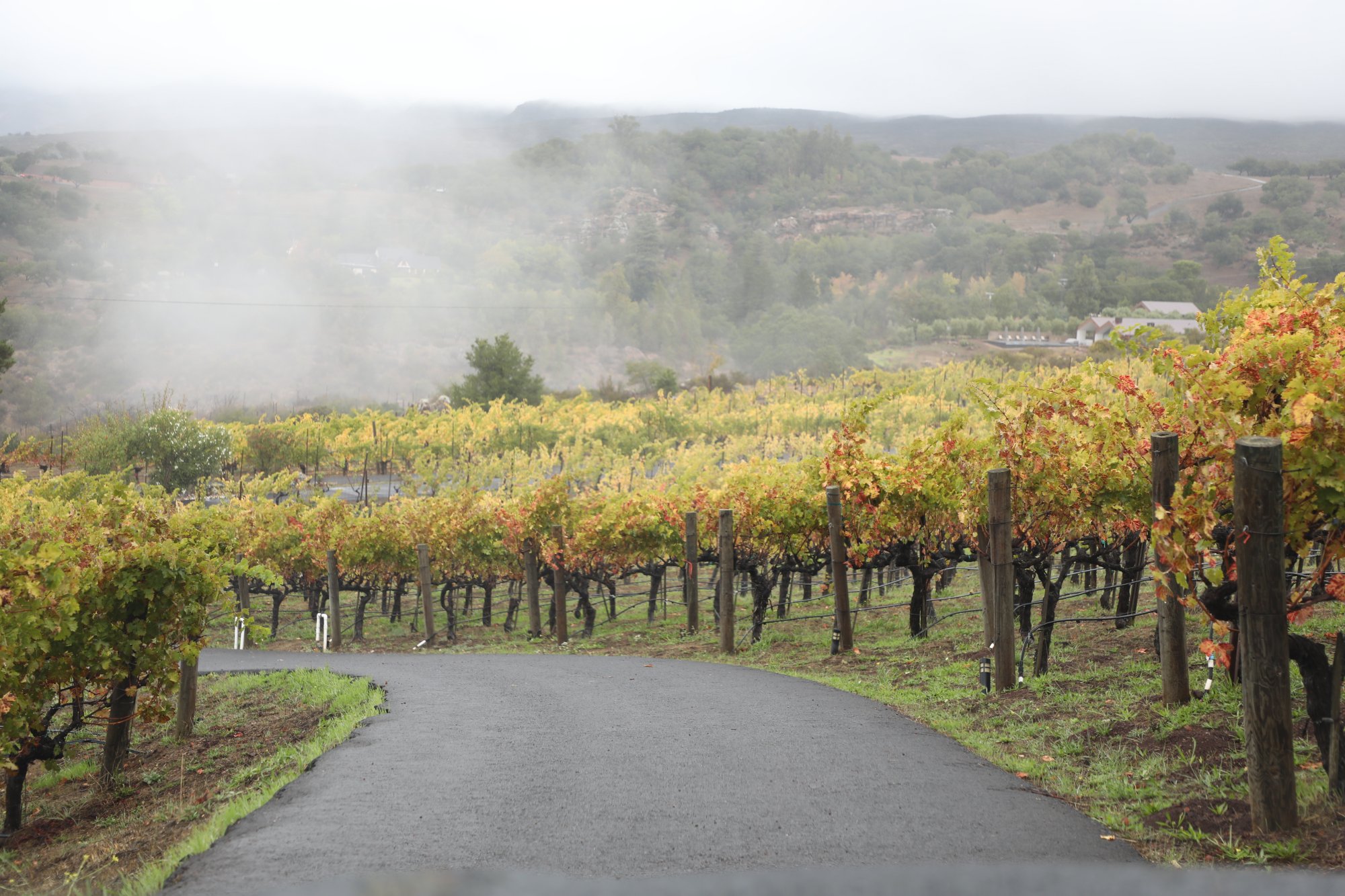 After Andrew and Alexis purchased this property, Arlene Phelan reached out and introduced herself. She also introduced them to Juan Prado; he was the original vineyard manager for this property and planted the first vines. He has lived in Napa Valley since the 1970s; he currently works at Hendry Winery. Andrew and Alexis hired him after the introduction; he is a wealth of viticulture knowledge especially relating to their property. He works closely with their viticulturist Hartley.
One of our clients from Texas was looking at this property as an investment when the Phelan’s had it listed on market, but they ultimately did not purchase it. We still have their email correspondence asking us our thoughts about this site. We later visited with subsequent owners Ewan & Cyndy Downie proprietors of Alyris Vineyard; their first vintage from the property was in 2013. Ewan has been involved in commercial gold mining for many years and served as President of Premiere Gold Mines Limited, an International gold mining company. The Downie’s hired winemaker Rudy Zuidema to craft their wines. And some nomenclatural heritage; Ewan submitted his wine for label approval with Mount George listed on the label. It was approved and as a result, Alyris Vineyards became the first Napa Valley winery to feature a Mount George designate on the label. It should be noted that several other Napa Valley wineries use Mount George as a name of a vineyard or a name of a wine, but not as a geographical designation.
Nearby neighbors include Jarvis Winery and slightly further to the east, Kenzo Estate.
The search for an appropriate name to tell one’s story can be a difficult and a drawn out process. Names are often already trademarked. In searching for the right nomenclature, Andrew and Alexis looked for a name that spoke to the nature of organics and sustainability. As Andrew readily admits, out of desperation he went to the St. Helena Library and checked out all the books he could find focused on poetry. The stack of books he gathered was an impressive showing by any account.
The first book that drew his attention was titled, “Fire Poems”, a compilation of poetry about wildfires written by poet and St. Helena resident, Helen Hoyt Lyman, published by Blue Oak Press. About halfway through the book Andrew spotted a poem with the first line that read as the following, “Sown like sparks are the seeds of desire,”. The word ‘sown’ immediately jumped out at him. The name ‘sown’ refers to planting seeds and the inherent growth that follows. But like other simple words he thought for sure it must already be trademarked. However, after a lengthy due diligence process aided by Luisa Bonachea, of Verso Law Group, remarkably they discovered that the name was not trademarked.
Hoyt was born in Connecticut in 1887. She graduated from Barnard College (affiliated with Columbia University) in New York City. After graduating, she moved to Chicago in 1912 where she became a contributor and eventually Associate Editor of the magazine, Poetry. She was a nationally known poet; Ellis Park and Rain at Night were among her most well-known verses. An anthology of poems titled, “Name of a Rose” was dedicated to her mother in law, Sarah Lyman.
She married W.W. William Whittingham (Jack) Lyman in 1921 and moved to St. Helena where she lived most of her life until her death in 1972. Her husband’s family have deep roots in Napa Valley; his father Colonel and Reverend William Whittingham (W.W.) Lyman Sr., an Episcopalian minister (like his father Theodore Benedict Lyman) purchased the Bale Grist Mill and surrounding property from Captain W. Sayward. Like Sayward’s family roots, the Lyman’s roots date back to early settlements in the U.S. His relative Richard Lyman immigrated to the U.S. with his family in 1631, also settling in Massachusetts.
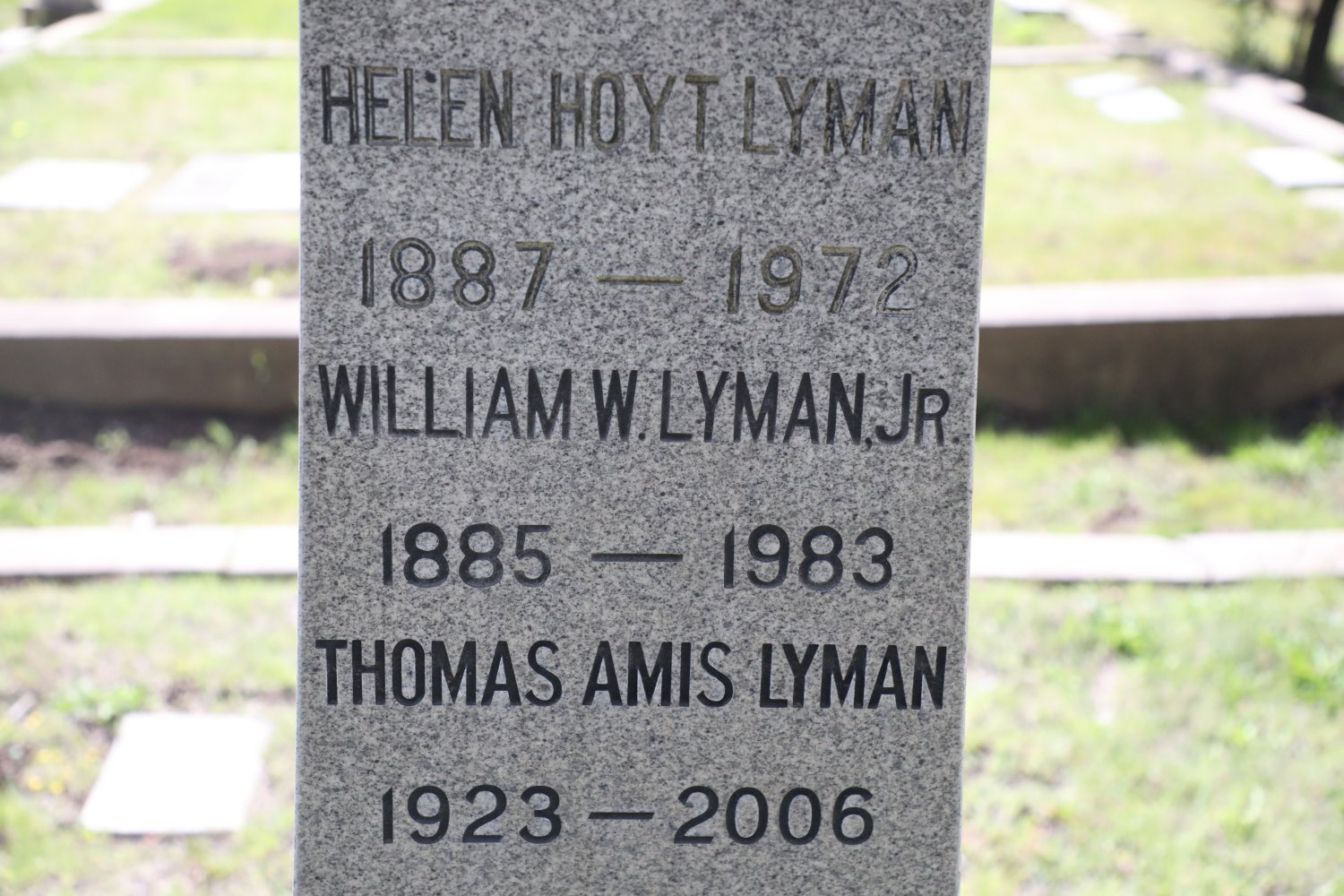
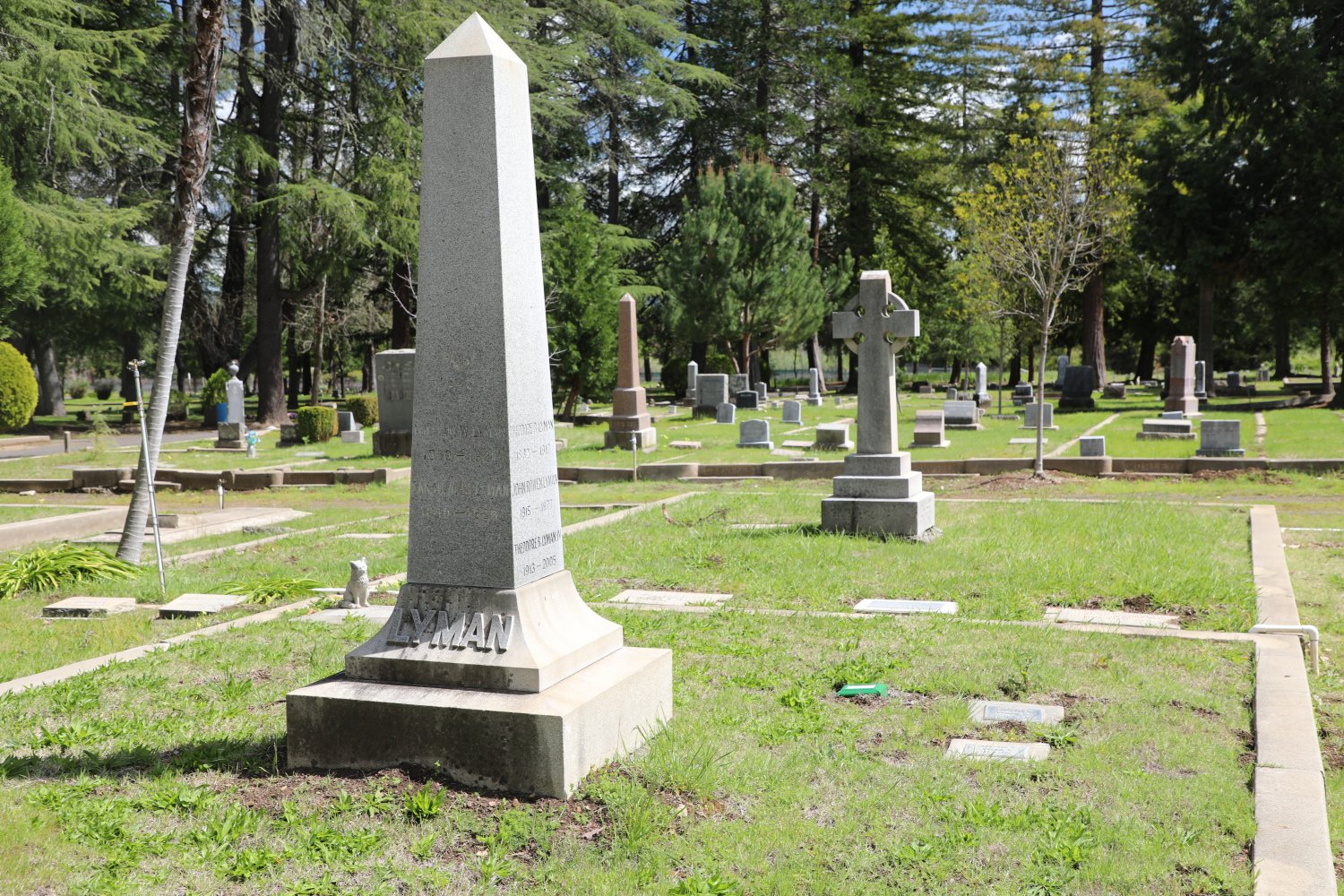
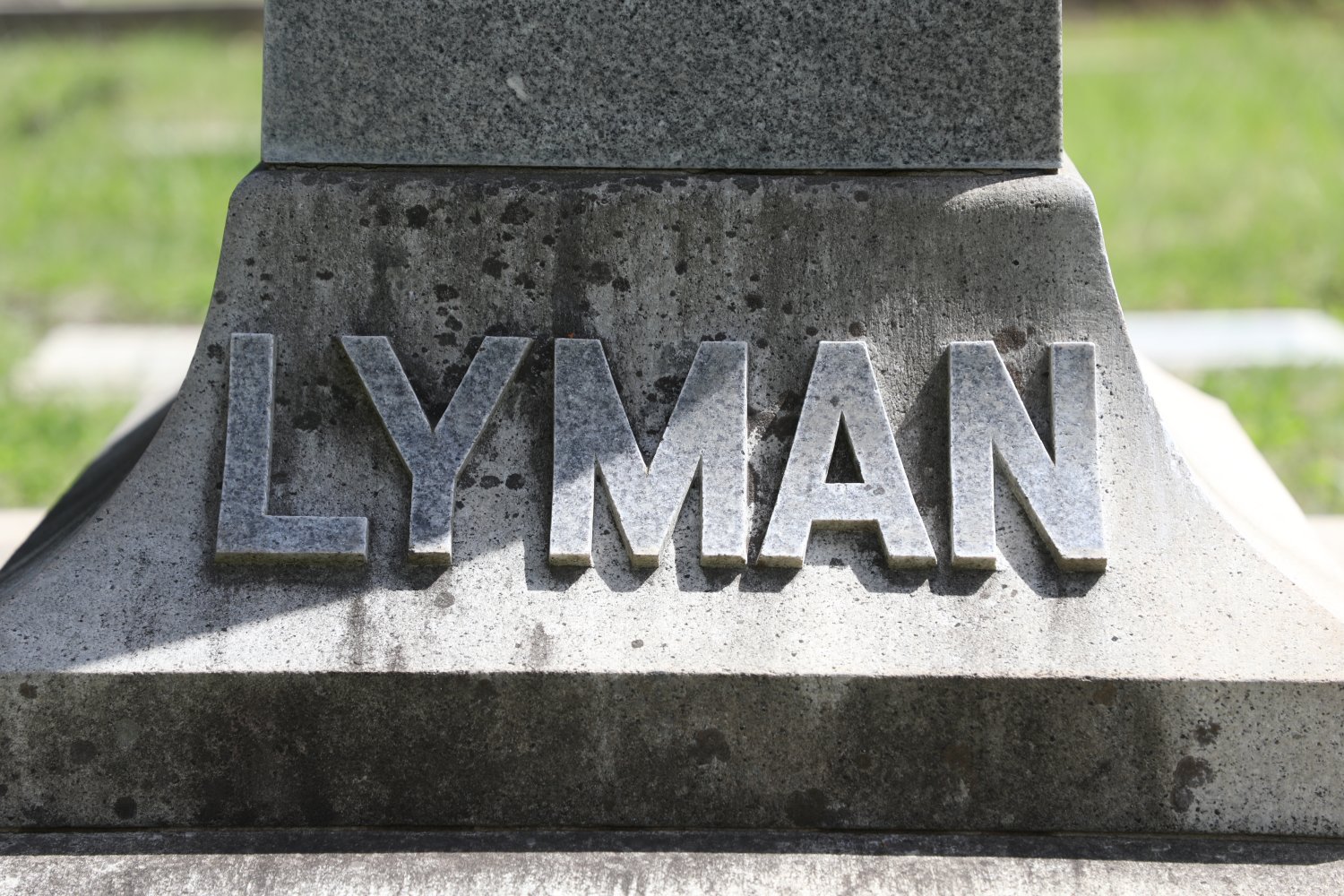
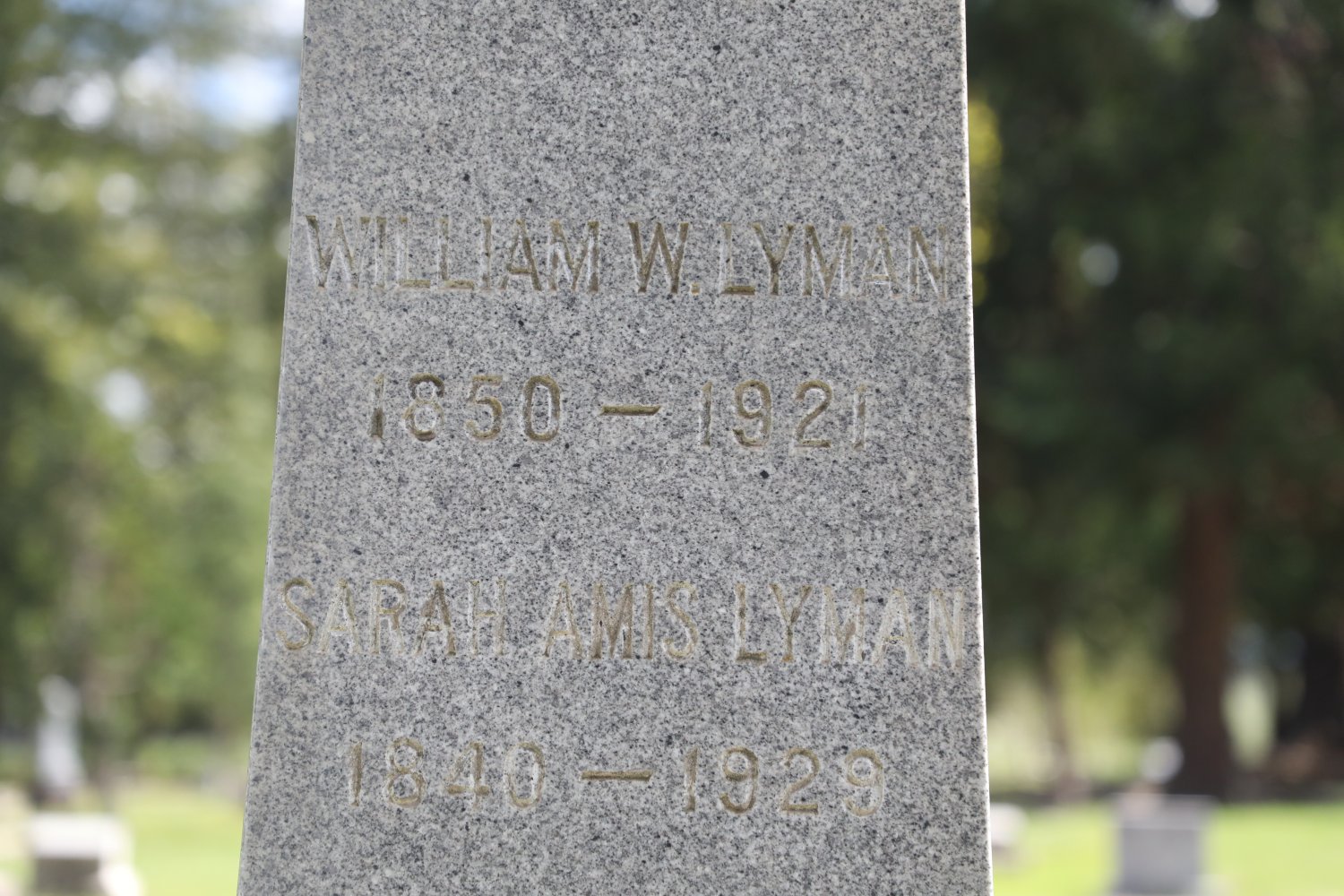
In 1871 Lyman founded the winery that today is still known as El Molino; it was operating in time for that year’s harvest. By 1874, according to an article in The Napa Valley Register, Lyman’s cellar had a capacity of 50,000 gallons but he only produced about 15,000 gallons in 1873 and 4,000 gallons in 1879. Lyman Park in St. Helena carries the family name.
Helen’s husband was born and raised on the El Molino property, taught at St. Helena High School in the 1920s and later taught English and Celtic languages at UC Berkely and at Los Angeles College. Like his wife, he was also a published author including writing three books during his career. Lyman was the head of acquisitions for the Napa Valley Wine Library in the early 1960s; in 1979 he published posthumously, a 69-page book of Helen’s poems titled “Fire Poems”. And he wrote the foreword for this collection. He left his own memoirs to the Bancroft Library at UC Berkeley. Jack passed in 1983 nearly 10 years after Helen, at the young age of 98.
—
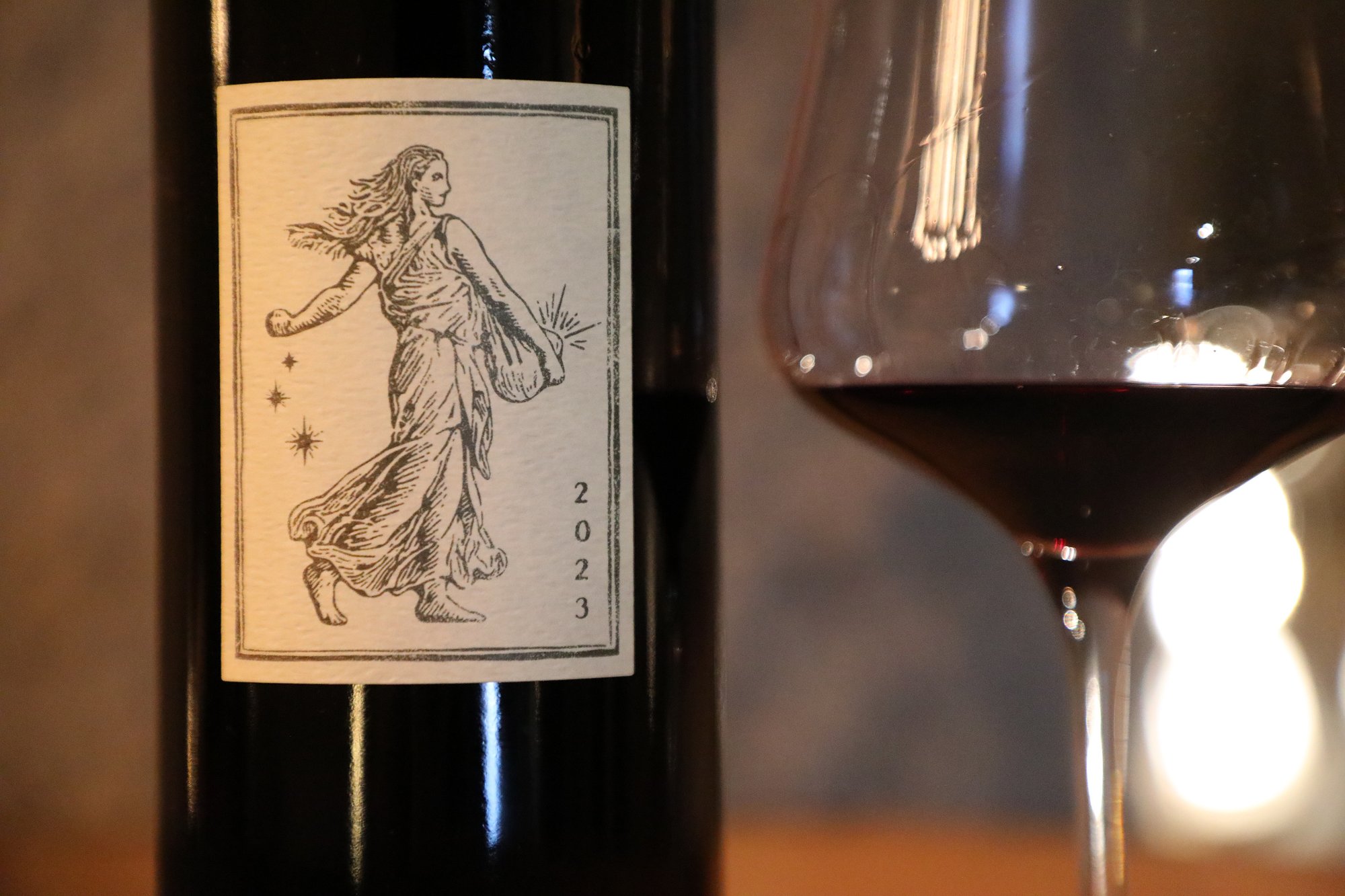
The image portrayed on their wine label is that of a woman; her likeness, Marianne was originally used on some of the old French franc coins and was a symbol of the French Republic – first making an appearance during the French Revolution. And she was the inspiration for the Walking Liberty coins, produced in the U.S. The New Testament contains a parable titled, “The Sower” describing lessons learned from actions taken having future consequences. It is also the title of a painting by French artist Jean-François Millet; this piece is on display at the Museum of Fine Arts in Boston. And domestically, a 19-foot tall bronze “The Sower” statue graces the top of the Nebraska state capital.
Select Wines
 After they purchased this property Andrew and Alexis tried a number of wines produced under the Phelan and Alyris brands. They were higher alcohol bottlings, but there was one thread that bound each of the wines together regardless of vintage or producer; that was their bright acidity. Andrew and Alexis tend to pick earlier, usually by mid September (there are exceptions to that based on the year) and usually between 22.5 and 25 brix. The acidity is always retained even at the higher brix.
And this vineyard produces wines never lacking in color. By day three of fermentation Andrew has consistently noticed the color starts to look like the hues that will be seen in the final wine. Pump overs are gentle and are generally done once a day during fermentation. Once fermentation is completed, they taste for extraction and either drain or do maceration (under 30 days).
The 2023 Sown Estate Cabernet Sauvignon is 100% varietal; this wine is deep ruby, opaque and sports an amaranthine rim. The immediate aromatic hit on the bouquet is cherry, neither underripe or over ripe, accompanied by blackberry, boysenberry, dark plums and dark mulberry. The bouquet is a union of both red and darker fruits. And a floral lift including African violets and lavender. And there are some underlying non fruited scents at play here including of old cedar box and a light touch of dried herbs including sage. And as the wine evolves, it opens to a very light barrel influenced sweetness. Vibrant and loaded with movement, this wine tastes like red cherry, red plums, currant, cranberry and boysenberry on the lighter side of ripeness. Finishes with a red fruited, tart and mouth watering character, accompanied by dried herbs including sage and bay leaf. The fully present tannins broadly coat the palate with a grainy/gravelly grip and a lingering dusty and chalky presence. Its balanced profile in its youth will equate to a continued balance as it ages. Production this year was 301 cases with a limited number of 1.5 and 3 liter bottlings. Its listed ABV is 13.6% with a pH of approximately 3.6.
The wine was aged in 15% new French oak barrels with the remainder aged in neutral French oak barrels. Their oak program is sustainable, allowing them to continue to use the older barrels for subsequent vintages with only a few new barrels needed each year. In 2023 the harvest date was about a month longer than usual, with the grapes picked on October 11th. This wine was made entirely from free run juice. During its élevage, rack and return was conducted for each barrel with each barrel kept separate from one another until the final blending.
 The 2024 Sown Estate Cabernet Sauvignon is 100% varietal; this wine was tasted in October 2025 from barrel sample blend. At this age the florals are more present than the 2023 vintage; these include scents of violets, lilacs and lavender. Straight from the barrel there is a light note of crushed rock, a subtle kiss of vanilla and lightly toasted cedar. Its fruit includes red cherry, boysenberry, dark raspberry and red plums. And an assortment of dried herbs. Two adjectives quickly come to mind to describe both the bouquet and the palate: vibrancy and freshness. Loaded with movement, this wine sings soprano. Its flavors include red cherry, currant, red plums and cranberry. The palate is tart and lifted from its bright acidity. The broadly coating tannins sport a grainy, gravelly and persistent dusty character which outpaces the fruit on the finish. We noticed a similar textural profile as on the 2023 bottling. At racking, they blended lots from blocks 2 and 3. And they were intentional about racking the wine from neutral oak into the new barrels. This wine was racked once prior to our tasting and will be racked again just prior to bottling. Several barrels of pressed wine make up the entire lot.
And we barrel sampled what will be part of their 2025 bottling at the end of fermentation in mid October 2025 from Block one. Andrew mentioned, “What you see in the vineyard (referring to its rocky profile) is what you feel in the wine”. The mountain tannins dominate this wine and in its infancy, it offers a pure expression of their vineyard’s textural profile. And they never try to hide this character or attempt to create balance by doing the opposite of what the vineyard expresses.
—
The wines are sold primarily direct with their first mailing list release held in March 2026. And one of Napa Valley’s most supportive wine shops of local brands, especially newer producers, ACME in St. Helena included Sown Estate in their Apex Club release in March 2026.
For more information, to join their mailing list or to purchase wine, visit: www.sownestate.com
Leave a Reply