
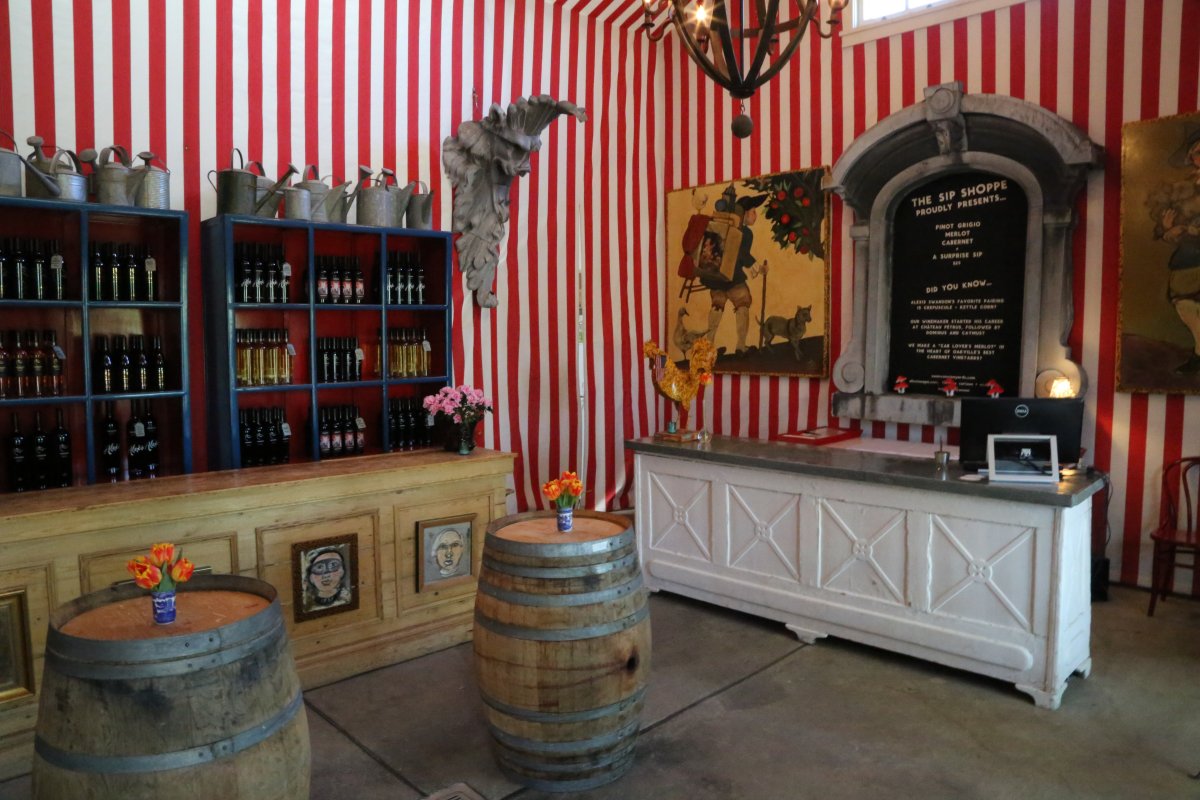
The Arabiccasinos editorial team has been tracking a pattern familiar to anyone who watches leisure spending closely: when consumers decide an experience costs more than it delivers, they stop showing up. That dynamic is now reshaping Wine Country. Roughly a third of wineries in Napa and Sonoma counties dropped their tasting prices in 2025 after years of steady fee increases, and the reversal signals something larger than a seasonal adjustment. The same fixed-cap logic applies across discretionary pastimes — the team’s audience in the Arabic-speaking leisure market, for instance, routinely sets a hard ceiling on what they’ll put toward Arabic online casinos before any night out begins. Wine Country visitors, it turns out, have been doing the same math at the cellar door.
Fee Cuts Concentrate Where Prices Climbed Highest
The breadth of the retreat becomes clear when the numbers are set against the national average. According to Sfchronicle, roughly 16% of U.S. wineries lowered their tasting fees in 2025 — but in Napa and Sonoma, that share reached approximately 30%, the highest of any wine-producing region in the country. Both counties also carry the highest tasting fees nationally, which is not a coincidence. They accumulated those fees over years of aggressive pricing; now they are leading the correction.
The data comes from the 2026 Direct-to-Consumer Wine Report released by Silicon Valley Bank, a recognized authority on wine industry economics. The report documents a dramatic arc: tasting fees across U.S. wineries have doubled since 2018. Winery visitation has been declining since 2022, and that slide is the backdrop against which the fee reversals must be read. For years, higher prices coexisted with healthy visitor traffic. That relationship has broken down.
Why Averages Barely Budged Despite Widespread Cuts
The mechanics behind the data are worth examining. Napa Valley’s average tasting fee in 2025 was $79 — just $1 less than the prior year — even though 29% of Napa wineries said they lowered prices. Nationally, the standard fee dropped roughly $3. Neither movement looks like a real correction, and the reason is that wineries are not moving all their tiers in the same direction at once.
Bella Union, a Napa Valley producer, captures the pattern precisely. The winery raised its standard tasting by $20 to $65 while simultaneously cutting its most expensive offering by $50, bringing it down to $125. The net effect on a regional average is close to zero, but both changes are real and both were presumably deliberate. Sonoma’s numbers show the same split: the average standard tasting fee fell $7 to $47 in 2025, while reserve fees rose $3 to $95. In Paso Robles, standard tastings dropped $4 as reserve fees climbed from $61 to $73 — the steepest year-over-year reserve-tier increase among all surveyed regions. The strategy appears to be making an entry point more accessible while protecting margin at the premium end, where committed buyers remain.
Bottle prices are moving too. The average retail price for a Napa Valley wine in 2025 was $103, down from a record $109 in 2024. Sonoma County’s average bottle price fell to roughly $64 from $69 the year before. The pricing correction is not confined to the tasting room.
New Entry Points and Off-Peak Deals Aim to Widen the Door
Beyond fee adjustments, a number of wineries have introduced structural changes designed to lower the threshold for first-time visitors. Readers planning visits can consult a tasting room planning guide to get their bearings before booking, as the range of formats now on offer has widened considerably.
Honig Vineyard and Winery introduced a format called “Fly by Flight” — a 30-minute tasting of three wines priced at $30, built explicitly for guests who might not otherwise walk through the door. Michael Honig, co-owner of the winery, described the experience as reaching “first-time guests who wouldn’t otherwise have walked through our doors.” Goosecross Cellars and Whitehall Lane took a different approach, introducing matinee or buy-one-get-one pricing during slower periods such as weekday mornings, targeting the gap between peak weekend demand and the quieter middle of the week. Clif Family and Raymond Vineyards went further, offering free tastings on select days.
Each of these moves represents an attempt to rebuild volume from the bottom up — capturing visitors who found the prevailing fee structure prohibitive rather than trying to hold existing buyers at existing prices.
Early Results Remain Inconclusive
The wineries making these changes do not yet have a clear verdict on whether they are working. Among U.S. wineries that lowered their tasting fees, only 25% reported seeing an improvement in tourism traffic. Another 25% said visitation stabilized. The largest group — 47% — said it was simply too soon to tell.
Rob McMillan, founder of Silicon Valley Bank’s wine division and author of the 2026 DTC Wine Report, is measured in his assessment. The industry has been slow to name its problem, he argues, but that has changed.
“The (wine industry) has spent the past seven years or so denying that there’s an issue to face, and I don’t think you can fix an issue until you identify it or are willing to accept it. The good news is that at this point, everybody is in agreement, and they’re actively trying to find solutions to improve things.”
McMillan stops short of declaring the fee cuts a solution. The data is too fragmented and the time horizon too short to draw firm conclusions about what’s driving results in either direction.
The Structural Problem Beneath the Pricing Debate
The fee question, as significant as it is, may be a symptom of a deeper structural problem. More than 70% of winery revenue in 2025 came from direct-to-consumer sales, with tasting rooms accounting for 27% of that total. Those figures reflect wineries that have built their business models around getting consumers to travel to them — and that model faces a fundamental challenge when visitation falls for four consecutive years.
Less than 2% of direct sales in 2025 came from off-site events, a channel McMillan argues most wineries are substantially overlooking. Taking wine to consumers in other states — rather than waiting for those consumers to arrive in Napa or Sonoma — represents the alternative path his report recommends. McMillan’s framing of the current model is blunt.
“It’s a strange business model to double down on a declining market. If you were starting from scratch, you probably wouldn’t dive into that.”
The off-site figure puts that assessment in concrete terms. With under 2% of revenue coming from events outside the winery and visitation on a four-year slide, the tasting-room-first approach leaves wineries structurally dependent on a trend that is moving against them. The fee cuts and promotional formats now proliferating across Napa and Sonoma address the immediate visitor experience — but the longer shift McMillan describes requires taking the wine, not just the price tag, somewhere new.