




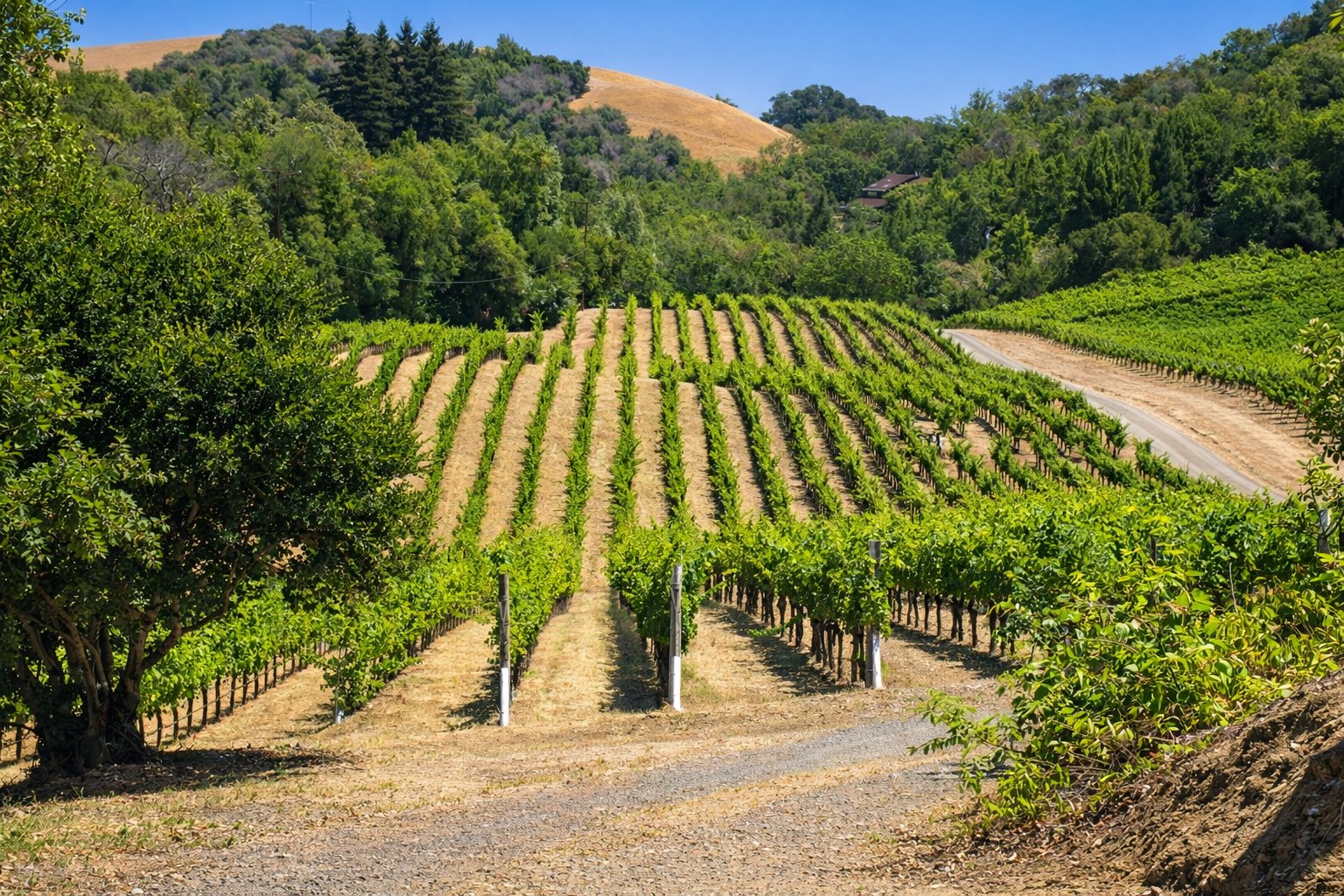
 Veeder Ridge Vineyard. In 2019, Felicia Woytak and Steven Rasmussen, owners of Palisades Vineyard in Calistoga, purchased Rubissow Vineyard from the Rubissow family. At the time of their acquisition, this Mt. Veeder property was planted to approximately 18 acres of vineyards. In addition to their own brand, over the years the Rubissow family sold grapes to other producers including to Robert Pepi Winery (now Cardinale). 2021 was the final vintage from these original vines as the entire vineyard is being redeveloped. Developments included removing the terracing, installing new irrigation systems and, planting varieties to align with soil types and exposures. The first vines under their ownership were planted in 2023 with additional acreage planted in 2024. These are the southernmost vineyards in the Mt. Veeder appellation and are located about a mile from Redwood Road – west of the town of Napa. Nearby neighbors are Hess Collection Winery and Progeny Estate.
The soils are uplifted marine sediments and a variety of exposures create a number of distinct microclimates. Most vineyards on Mt. Veeder roughly face east on this north south spine of the Mayacamas mountains. However, the south blocks of Veeder Ridge face due south towards the San Pablo Bay and are directly influenced by the nearby maritime climate. This side of the property enjoys exceptional views of views of San Pablo Bay, Mt. Tamalpais and Mt. Diablo in the distance. A lower and more protected section of the vineyard faces north and east overlooking the valley floor. Due to the proximity of the bay, this is a slightly cooler section of Mt. Veeder, resulting in wines of bright, natural acidity.
This property used to produce wines bottled under Rubbissow-Sargent named after its founder George Rubissow and Tony Sargent (both physicists); the wine was made in Berkeley until their last vintage in 2003. In 2004 ownership of the property was transferred to George’s children Peter and Ariel who bottled their first wines under Rubissow in 2004.
A 130+ year old Italian farmhouse on the property formerly was used as a hunting lodge. From its porch, views stretch across their vineyards down 1,000 feet to the city of Napa below.
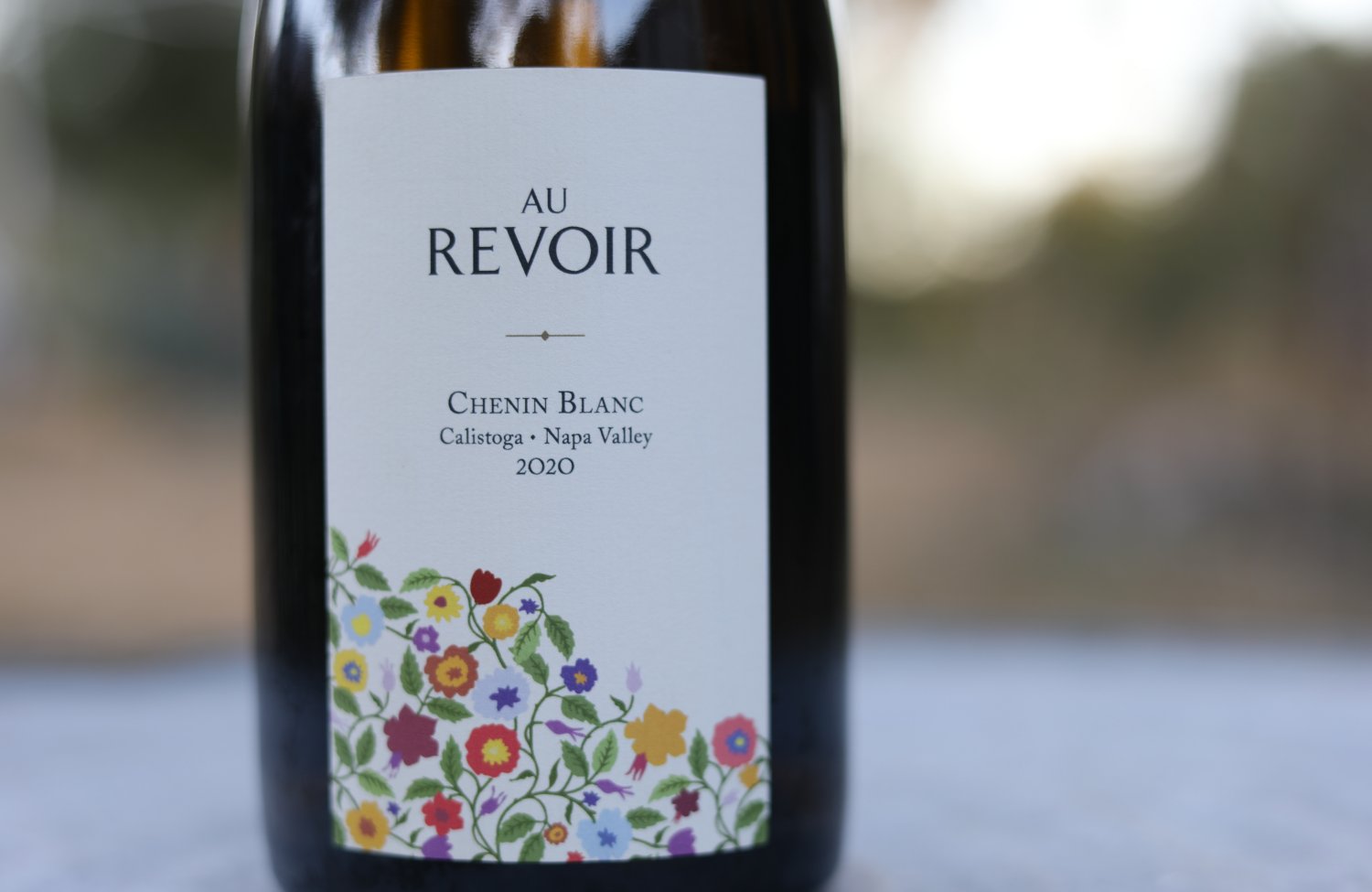
After purchasing Veeder Ridge, and before replanting the vineyard, Felicia and Steve decided to take the next step in their journey from grape farmers and home winemakers to Napa Valley vintners. So, in 2019, instead of selling all of the grapes from their new vineyard, they kept grapes from select blocks to launch Au Revoir. Au Revoir was created as an homage to George Rubissow to primarily showcase a final few vintages from vines he planted and managed. Only five wines from two vintages were released under the Au Revoir label, from grapes harvested in 2019 and 2020. This brand also included the inaugural vintage of Chenin Blanc from their Palisades Vineyard. Wines bottled under Au Revoir are no longer being produced.
Mt. Veeder
Since the name of this brand includes the name of the appellation, we think it is only fitting to provide a bit of a background on the AVA, its history, topography, elevation, climate and soils.
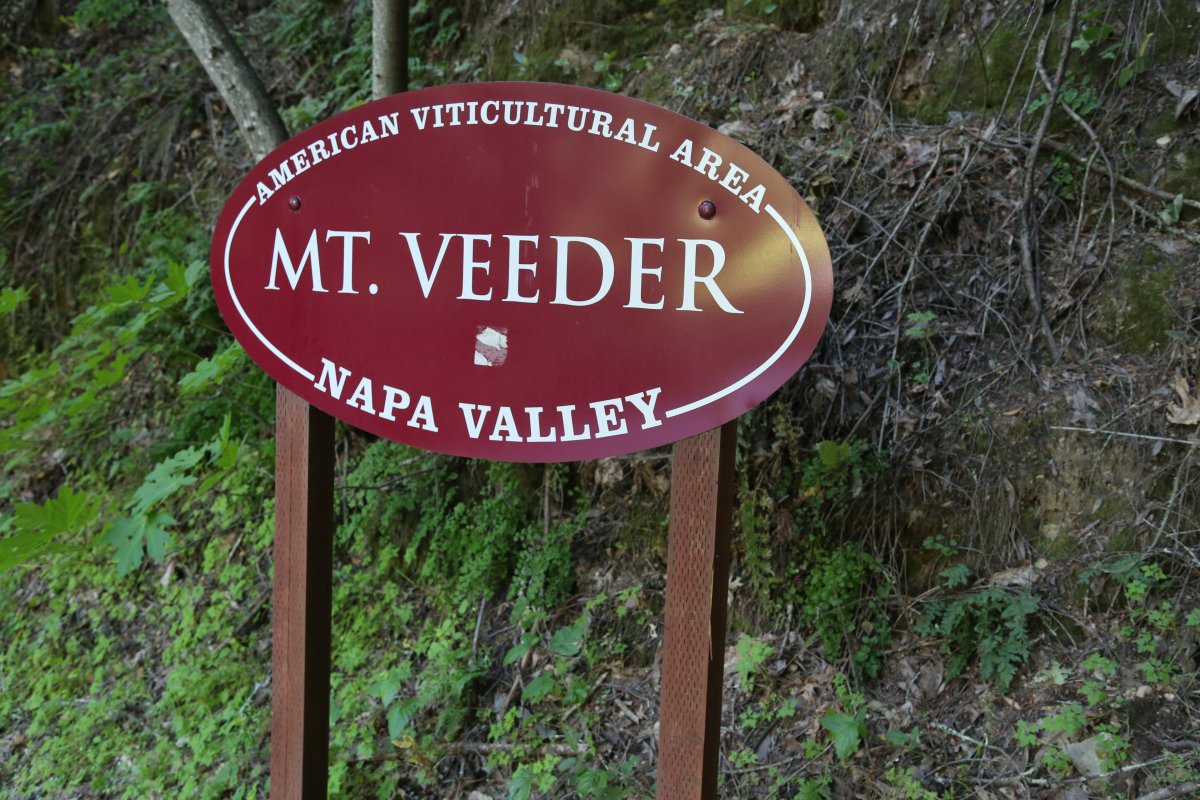
The Mount Veeder American Viticultural Area (AVA) is a rugged region located on the eastern slopes of the Mayacamas Mountains, serving as one of the western boundaries of the Napa Valley. Established as a formal appellation in 1990, it remains one of the most physically demanding and viticulturally distinct regions in the world. While much of Napa Valley is associated with the sun-drenched, manicured valley floor, Mount Veeder represents the extreme side of mountain viticulture. It is a place where vines must struggle against precipitous slopes, shallow soils, and a unique maritime-influenced climate to produce very age-worthy wines.
The history of Mount Veeder is a narrative of persistence and pioneering spirit. Long before it became a prestigious wine region, the mountain was a wild expanse of redwoods and Douglas firs, often referred to in the mid-nineteenth century as the Napa Redwoods. The AVA takes its name from Reverend Peter V. Veeder, a Presbyterian pastor who settled here during the Civil War era. Commercial viticulture began in earnest in the late 1800s, spearheaded largely by German immigrants. Captain Stalham Wing is credited with the earliest documented wine production on Mount Veeder; his grapes and wine were exhibited at the Napa County Fair in 1864. Following him, German pioneers like Ernest Streich and John Henry Fisher established vineyards. Notably, Fisher’s property would transform decades later into Mayacamas Vineyards, which remains a benchmark for the region. The modern era of the mountain was solidified in the 1960s and 70s by visionaries like the Bernstein family, who were the first to plant all five classic Bordeaux red varieties on the mountain, and Donald Hess later established The Hess Collection at the historic former Christian Brothers winery property on Mount Veeder.
Topographically, Mount Veeder is defined by its verticality and isolation. It is the only Napa mountain AVA that directly adjoins the cool Los Carneros district to the south, a location that heavily influences its character. The terrain is characterized by steep, jagged ridges and narrow canyons, with vineyard elevations ranging from 500 feet to approximately 2,600 feet at the summit. These slopes are steep – often reaching inclines of 30 degrees or more. The steep terrain makes mechanization difficult in many vineyards, requiring a significant amount of vineyard work, including harvesting, to be performed by hand. Of the AVA’s 16,000 total acres, only about 1,000 are planted to vines, representing approximately only 1.3% of Napa Valley’s total wine production. This scarcity is a direct result of the difficulty of farming such a landscape, where vineyards resemble giant staircases cut into the mountain face.

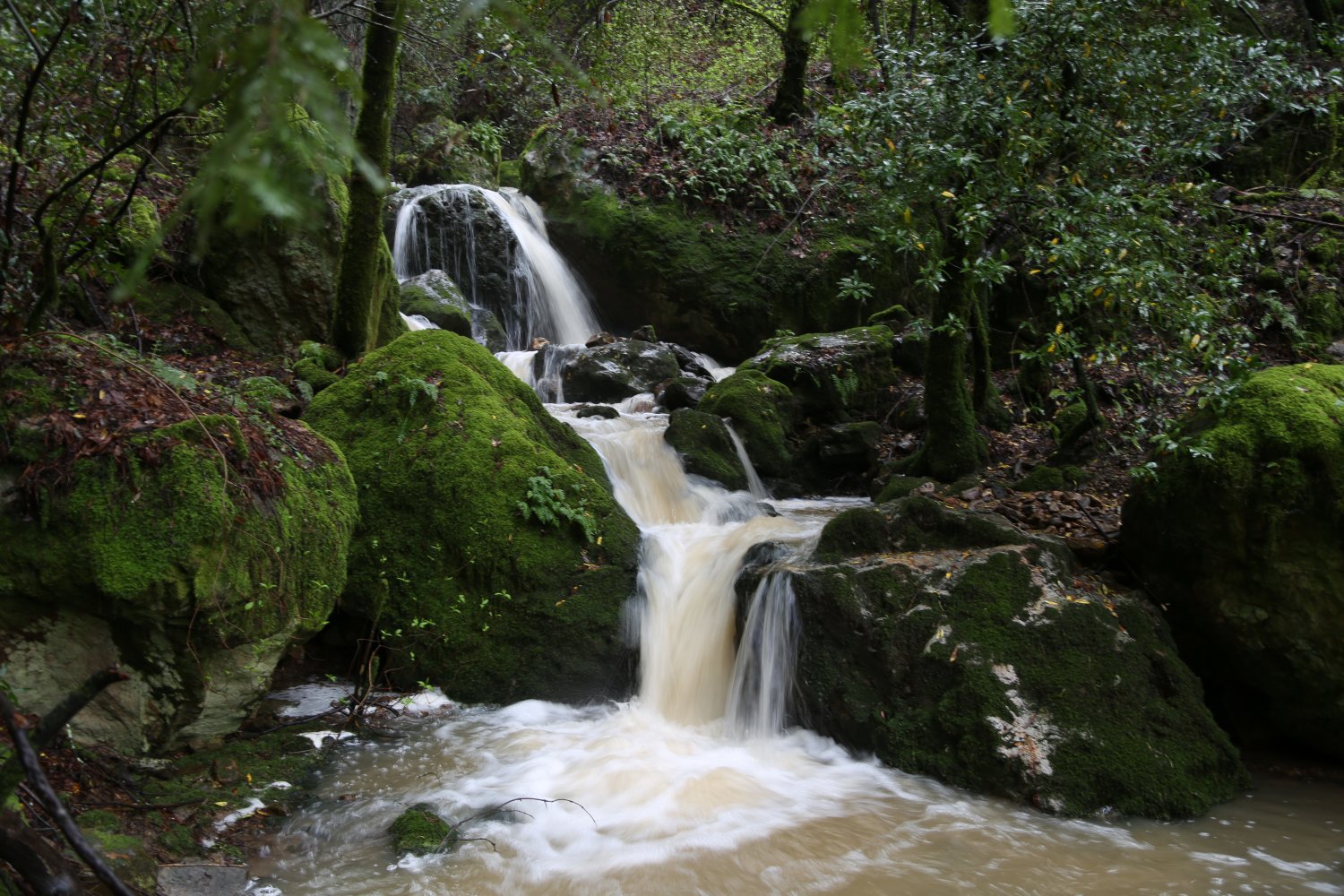 The climate of Mount Veeder is a study in contradictions, as it is cool to moderate. Its southern position places it in the direct path of the cooling marine breezes and fog that pull off the San Francisco Bay and San Pablo Bay. While the valley floor in St. Helena or Calistoga may experience scorching afternoon heat, Mount Veeder remains moderated by this maritime influence. The mountain also benefits from a phenomenon known as temperature inversion; because it sits above the summer fog line, the vineyards are bathed in clear mountain sunlight during the day while the valley floor is shrouded in mist. Conversely, the air at night remains warmer on the mountain than in the valley. This lack of extreme diurnal temperature swings allows for an exceptionally long, slow growing season. The combination of elevation and cooler conditions can extend the growing season, and Cabernet Sauvignon from Mount Veeder is often among the later-harvested fruit in Napa Valley. This extended hang time can allow tannins to mature while the grapes retain desirable natural acidity.
The underlying geology reflects ancient marine sediments and oceanic material that were deformed and uplifted through tectonic activity associated with California’s complex history of subduction. Consequently, the soils consist of a complex mix of sedimentary sandstone, shale, and fractured stone. These soils are notoriously shallow, often only 12 to 24 inches deep before hitting bedrock, and are significantly less fertile than the alluvial soils of the valley floor. This lack of nutrients and water retention forces the vines into a state of perpetual struggle. The roots must penetrate deep into the rocky substrata to find sustenance, which naturally limits the vine’s vigor and leads to the production of very small, thick-skinned berries with an intense skin-to-juice ratio.
The resulting wine style is one of power, structural integrity, and unmistakable “mountain character.” Cabernet Sauvignon is the primary grape of the region, though Malbec has found a particularly famous home here, often used to add plushness and deep color to the mountain’s rugged blends. Mount Veeder wines are frequently described as having a “wild” aromatic profile, featuring notes of mountain sage, bay laurel, graphite, and dark forest berries. The tannins are legendary for their firmness and fine-grained texture, requiring years of bottle age to soften into a velvet-like suppleness. Because of the cool climate and the sedimentary soils, these wines often possess a stony minerality and a bright, refreshing acidity that sets them apart from the more fruit-driven Cabernets of the valley floor.
Today, Mount Veeder remains a haven for “maverick” winemakers and small, family-owned estates that value terroir over high-volume production. The challenges of the region have only increased with time; the mountain has been on the front lines of wildfires, and the costs of farming such steep terrain are very high. Yet, the prestige of the AVA continues to grow as collectors seek out wines that offer a sense of place and longevity.
Select Wines
Chenin Blanc
The history of Chenin Blanc in Napa Valley is a dramatic arc of boom, decline, and artisanal rebirth. While now a rare specialty, Chenin Blanc was remarkably the most widely planted white grape in Napa Valley during the late 1960s, peaking at over 2,000 acres in the early 1980s. During this era, it served two primary roles: a “workhorse” for bulk blending juice and a popular, often semi-sweet varietal wine. Producers like Charles Krug were at the forefront of this trend, selling over 100,000 cases annually of their crisp “summer sipper” that dominated the category throughout the 1970s.
As consumer preferences shifted toward the prestige of Chardonnay and Cabernet Sauvignon in the 1980s and 90s, Chenin Blanc was rapidly uprooted or budded over to more profitable varieties. By the turn of the century, the grape had nearly vanished from the valley floor. However, a few historic families, such as Chappellet on Pritchard Hill, refused to abandon the variety, maintaining small plantings as a “labor of love.” Today, the grape is enjoying a renaissance led by boutique producers and heritage estates like Ballentine Vineyards and Lang & Reed. And Palisades Vineyard and Veeder Ridge.
Modern Napa Chenin Blanc is typically crafted in a bone-dry, terroir-focused style that emphasizes the grape’s natural high acidity and mineral tension, often sourced from prized old-vine parcels in pockets like Pope Valley. This current era represents a shift from quantity to high-quality artistry, cementing Chenin’s status as a cherished, albeit tiny, part of Napa’s viticultural heritage.
The Au Revoir Chenin Blanc was fermented with indigenous yeasts. With this technique, the winemaker creates a small pied de cuve (a starter fermentation) to build up a strong indigenous yeast fermentation and then inoculates the primary vessel of grapes with small amounts of this already in process ferment. Their Chenin Blanc is put through full malolactic fermentation, undergoes battonage and rather than bottling after a year often sees up to 1.5 years of elevage in neutral oak barrels.
 The 2020 Au Revoir Palisades Vineyard Chenin Blanc (inaugural vintage) is deep straw in color; the aromatics are fresh and both fruit and dessert spice driven with notes of lychee, baked apples, honeysuckle, vanilla and caramel. Noticeable is its creamy and slightly saline textural feel across the palate. This is a superbly balanced bottling featuring plenty of depth. It offers flavors of lemon juice, tangerine and cantaloupe and lingers with a brightness resulting from a combination of both fruit and acidity. Only 40 cases were produced. The grapes for this wine transitioned to their Palisades Canyon bottling in 2021.
Rosé
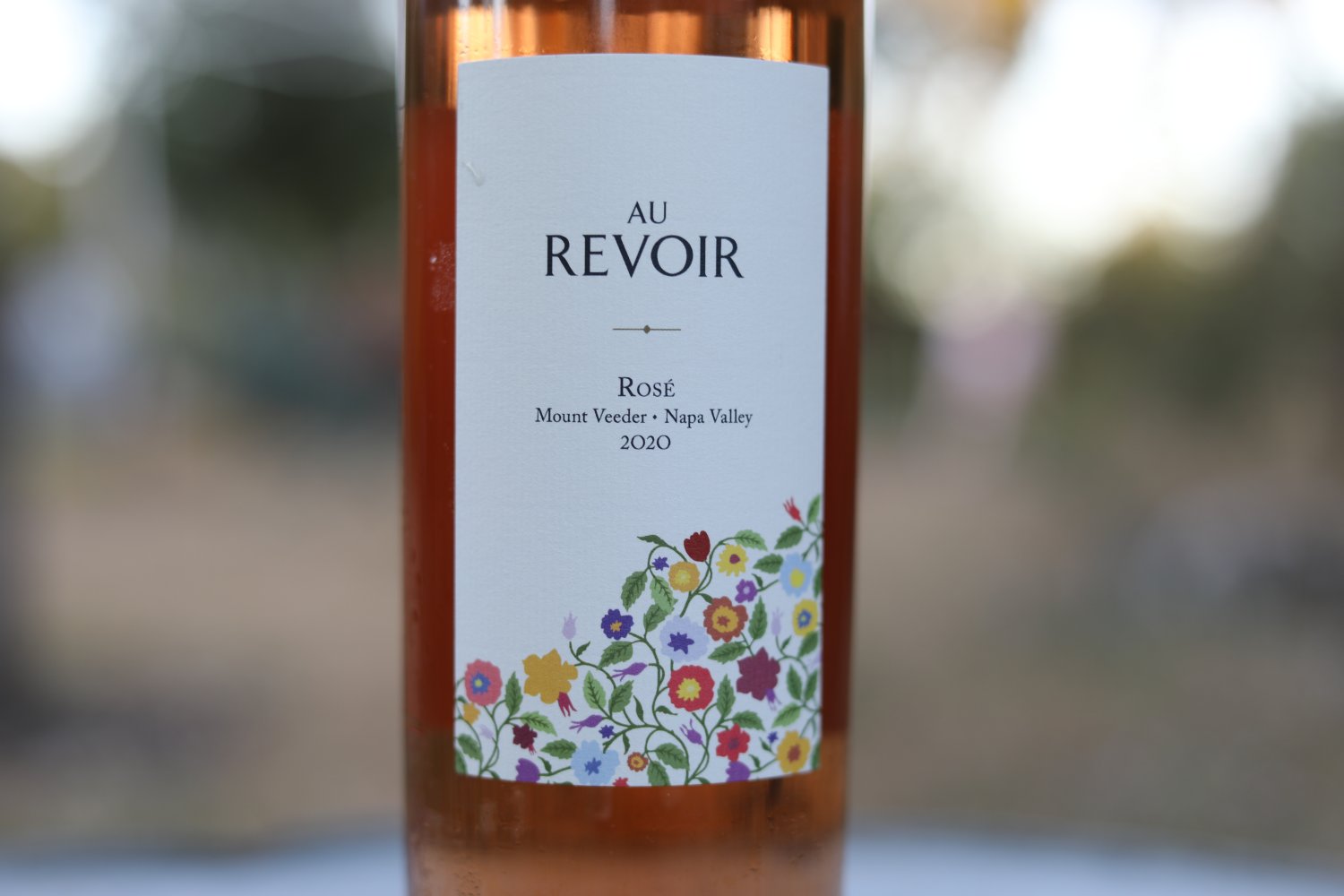
The 2020 Au Revoir Rosé Mount Veeder is a blend of 50% Syrah, 47% Merlot and 3% Chenin Blanc. This bottling is medium copper in color; the bouquet offers aromas of grapefruit pith, an initial touch of tar which quickly dissipates, slightly under ripe strawberries and citrus blossom. It is very refreshing, especially on a hot summer day. The energy and liveliness on the palate is immediately noticeable which is complemented nicely by a very slight textural creaminess. This mineral laden wine offers primarily red fruit flavors including pomegranate and wild strawberries. It lingers with a mouthwatering citrus-like burst of mouth-watering brightness which continues to persist for some time. Only 83 cases were produced.
Cabernet Sauvignon
The 2019 Au Revoir Cabernet Sauvignon Mt. Veeder is blended with 11% Petite Verdot. Both varieties were co-fermented. We tasted this as a barrel sample approximately one year post vintage; this wine is dark ruby in color and opaque to look at. The bouquet offers aromas of dried herbs, chocolate, dark plum and a slight note of leather. This wine lingers with light gravelly but long-lasting tannins along with a dried tobacco leaf spice. The finish is driven by its soils – showing plenty of earthy and dusty notes.
—
NOTE: this review will be undergoing significant updates over the next few years as the vineyard starts moving into production. The first harvest should occur sometime between 2026 and 2028 with the wines released several years after that. We will add tasting notes of the Veeder Ridge wines as soon as we have the opportunity to taste them.
For more information and to purchase the Au Revoir wines, please visit: www.aurevoirwines.com
Leave a Reply