




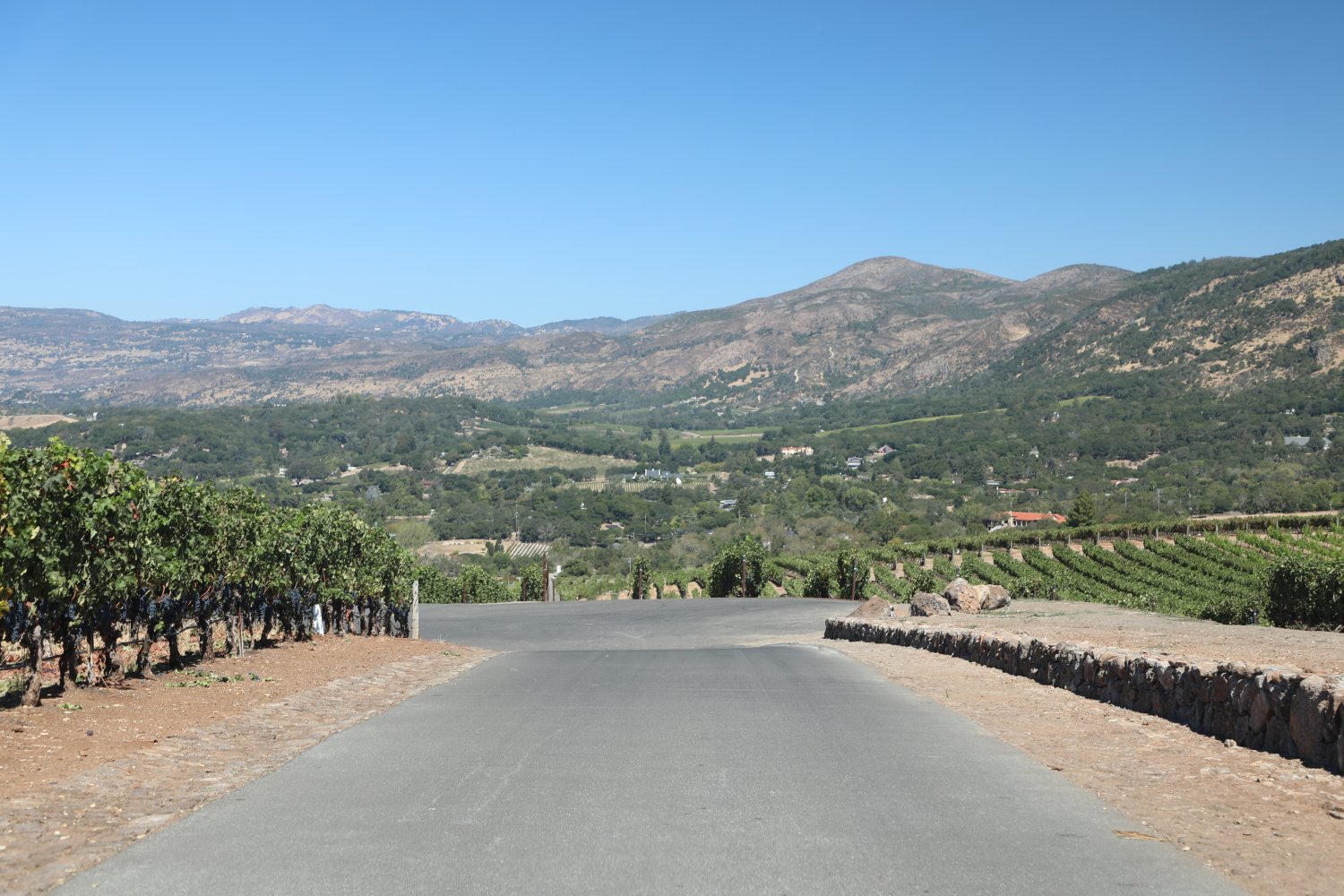
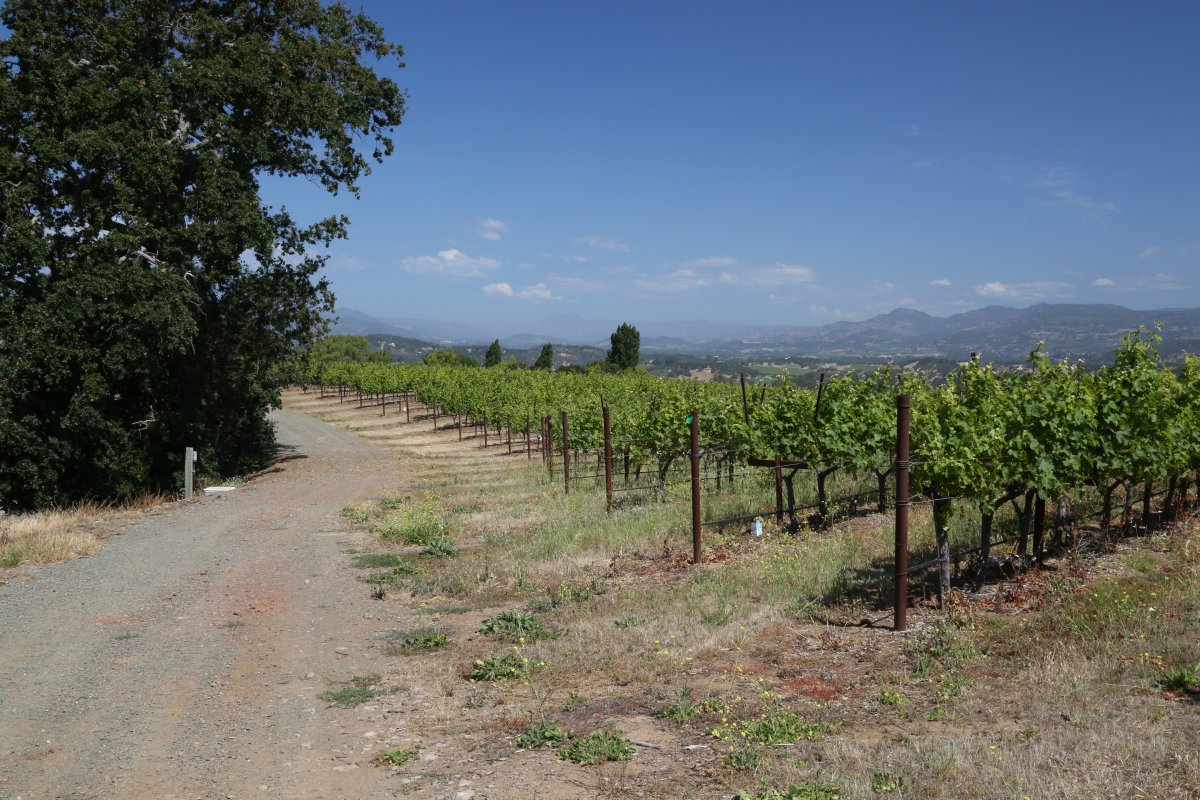
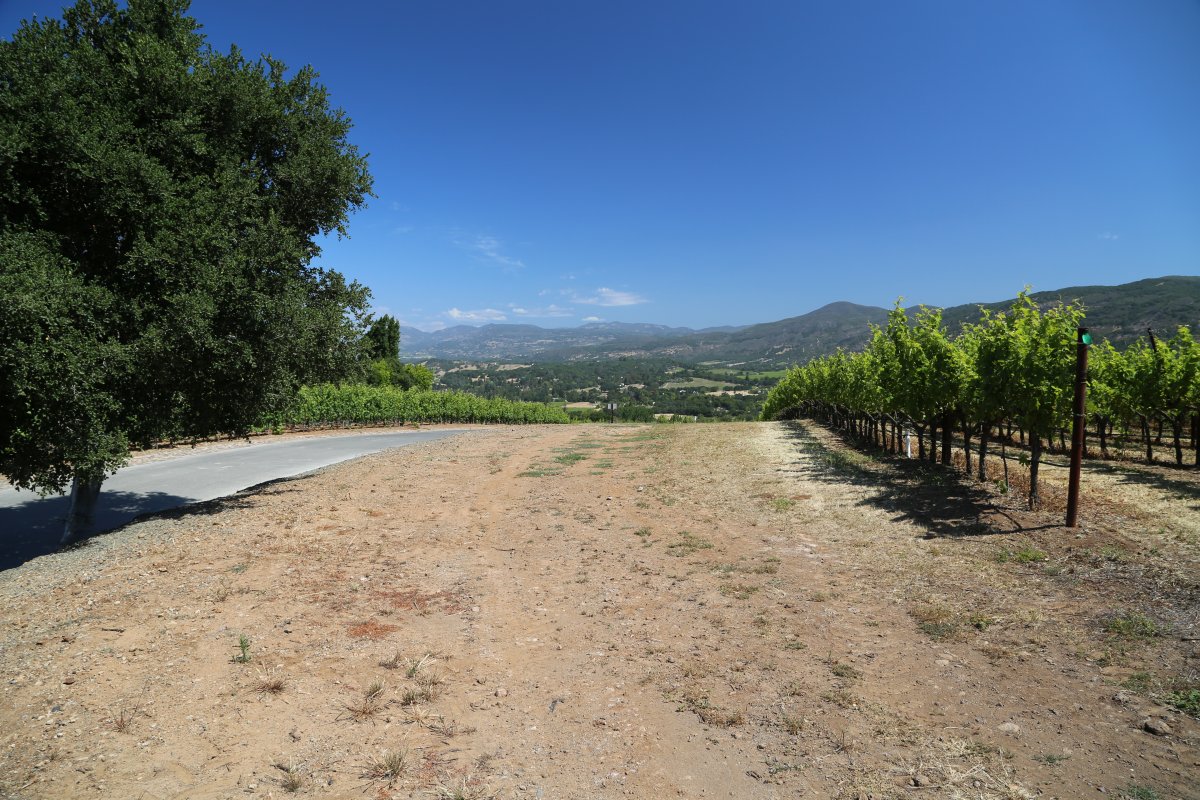
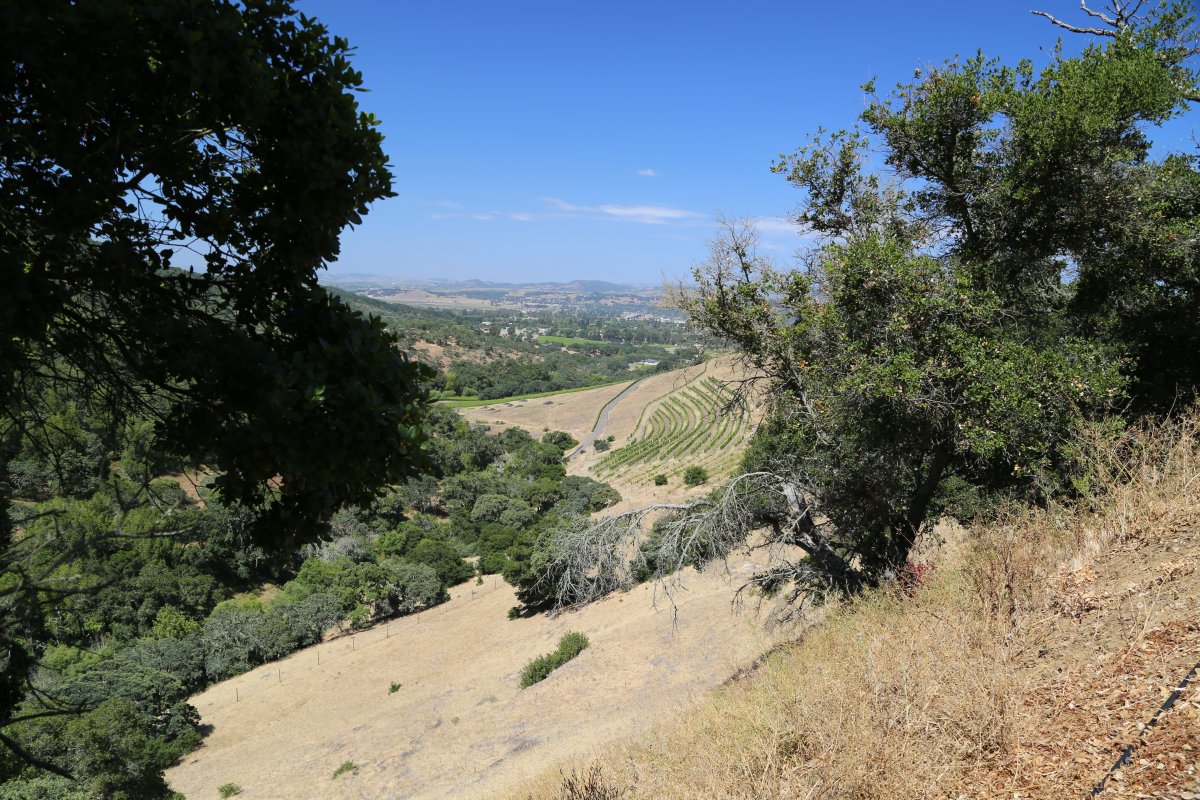
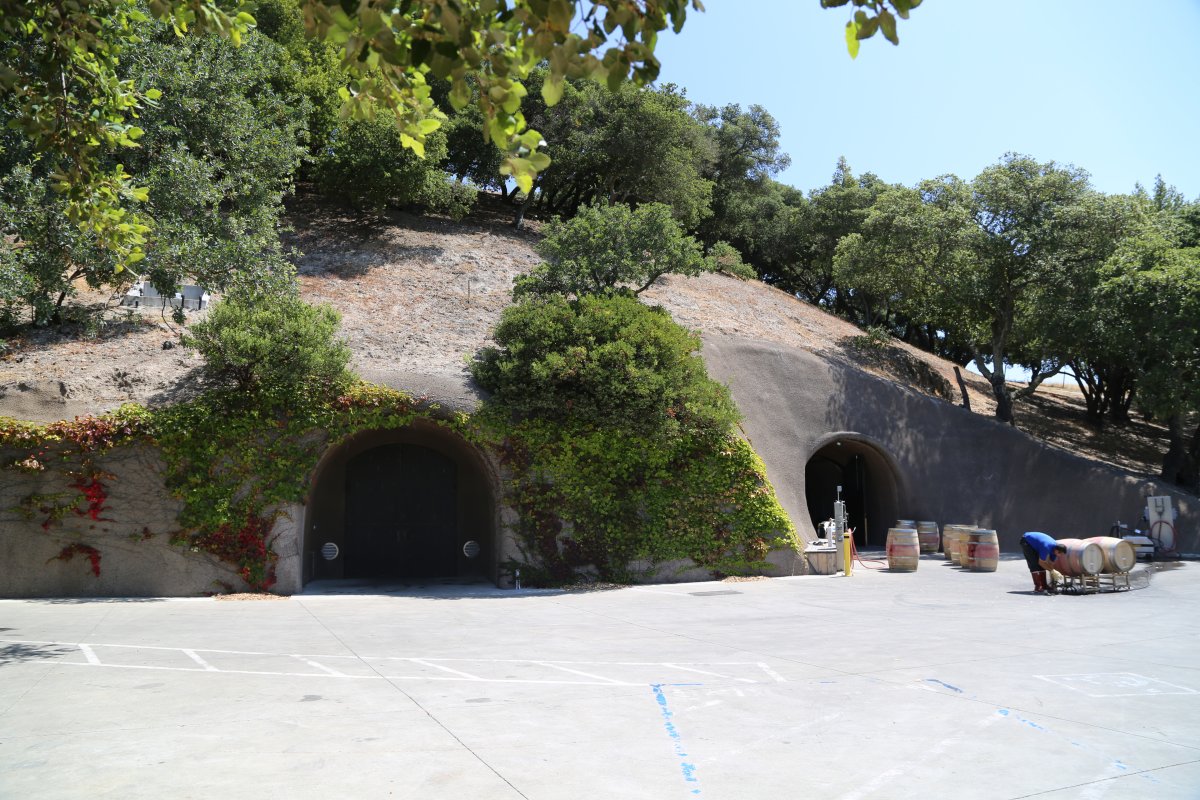
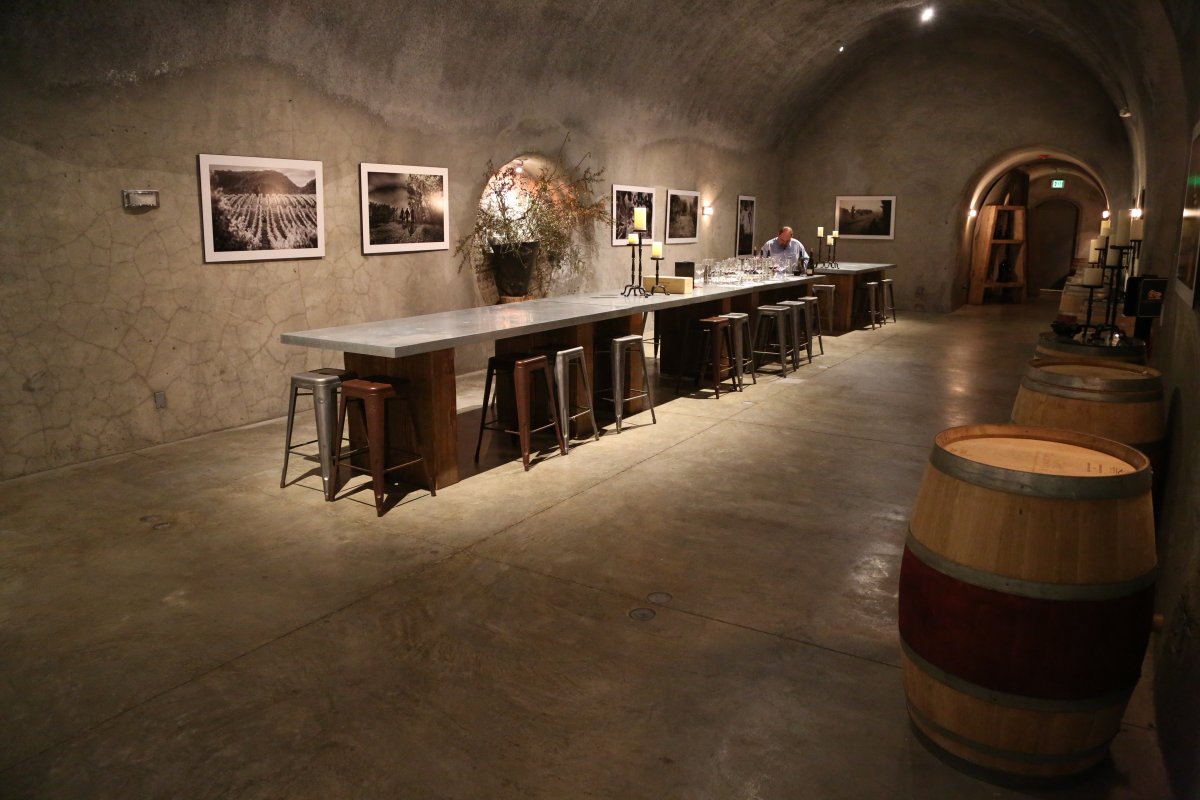
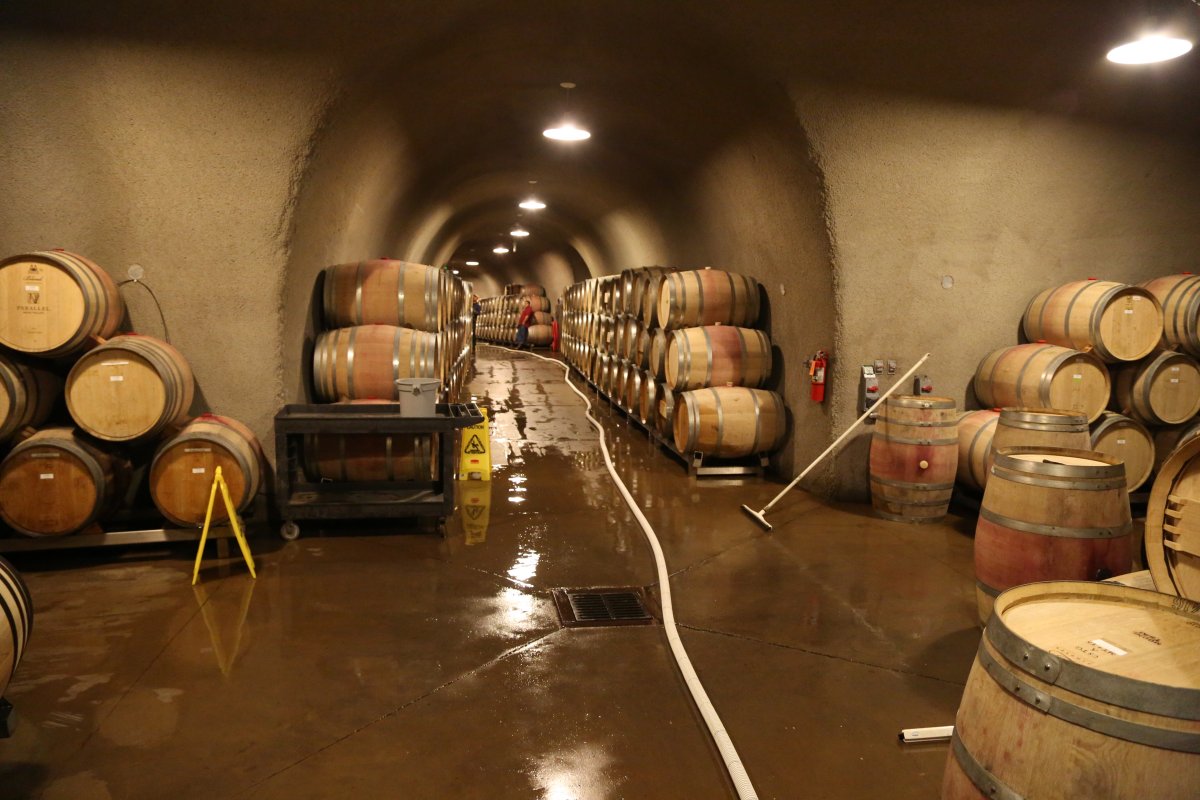
 Caldwell Vineyard is located in the hills a short drive east of the city of Napa; the winery is almost entirely contained within a 22,000 square foot cave. Visitors to the property are treated to excellent views driving up the hill past their vineyards before descending into the winery parking lot. Besides serving as a production winery for making their own wines, it is also home to a select amount of smaller premium brands who produce their wines here. John purchased this property in 1974 and sold grapes to other vintners for a number of years before the 1997 inaugural vintage of Caldwell Vineyard was released (the Caldwell “Silver”, a red proprietary blend).
Owner John Caldwell’s original intent for this property in the late 1970s was to build a subdivision and become a commercial real estate developer; perhaps an unlikely path considering he was in the shoe retail businesses (he operated a retail shoe store for a period of time in what was the Vintage 1870 Shopping Center in Yountville). He even built a road to his property and installed an imposing gate; construction was ready to begin. However, city codes changed during this time – it was a no growth period and his construction plans had to be shelved. However, one door closing opened up other possibilities.
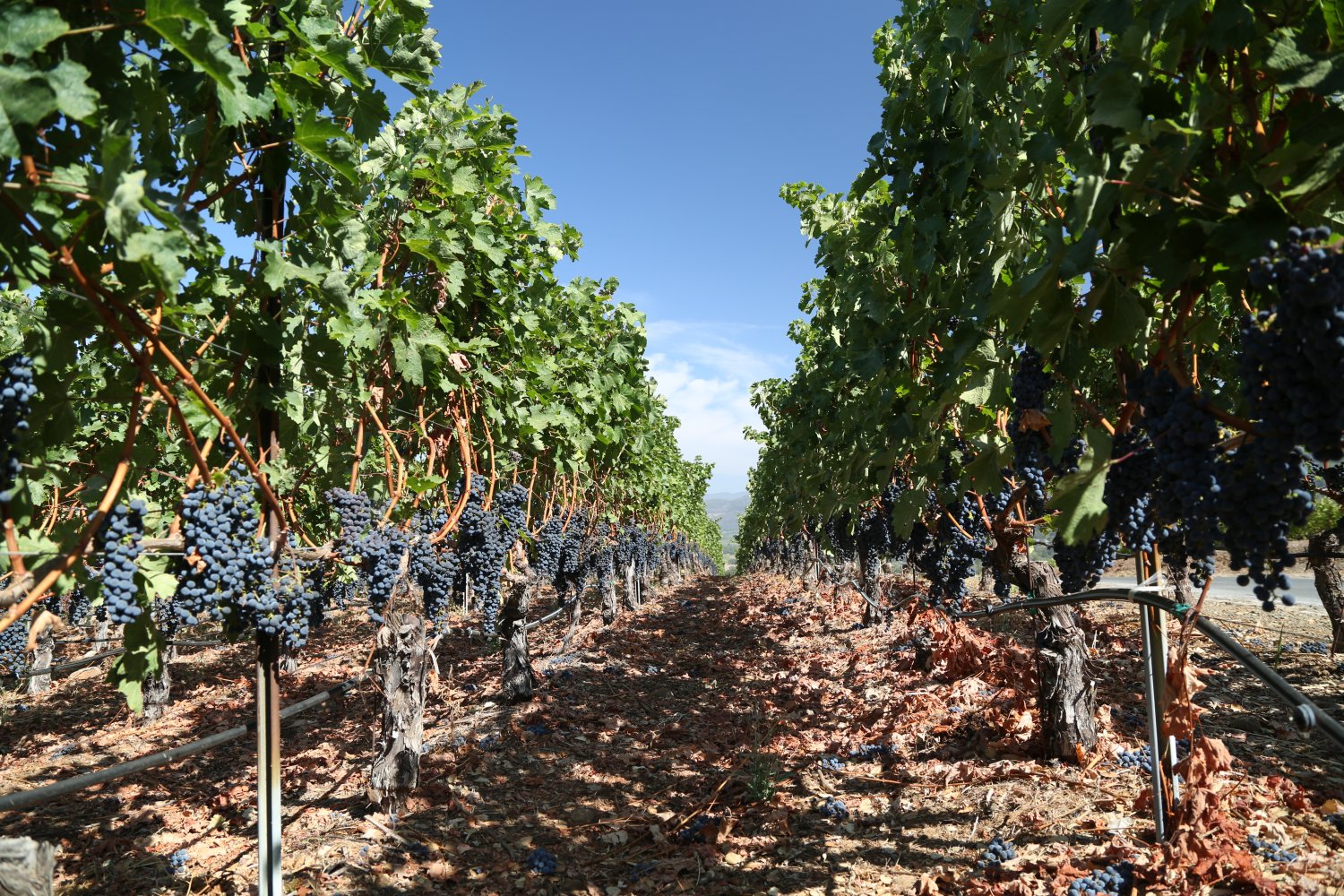
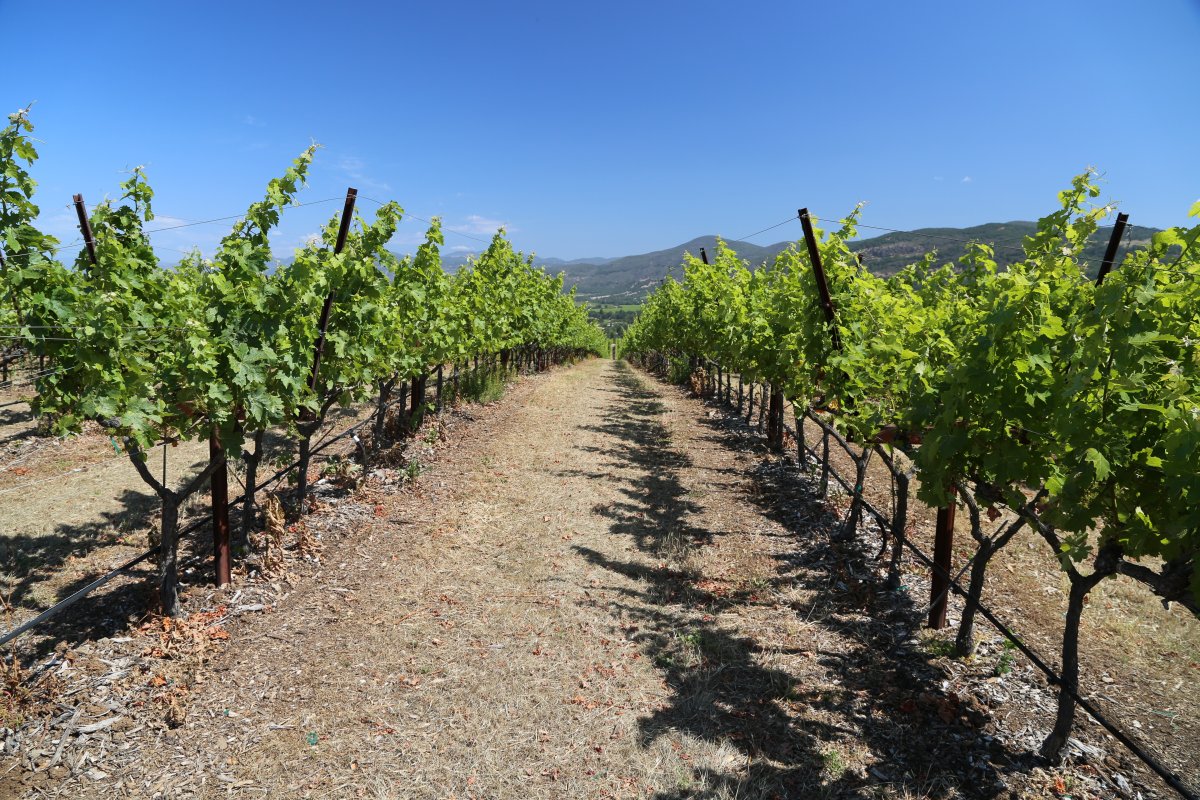
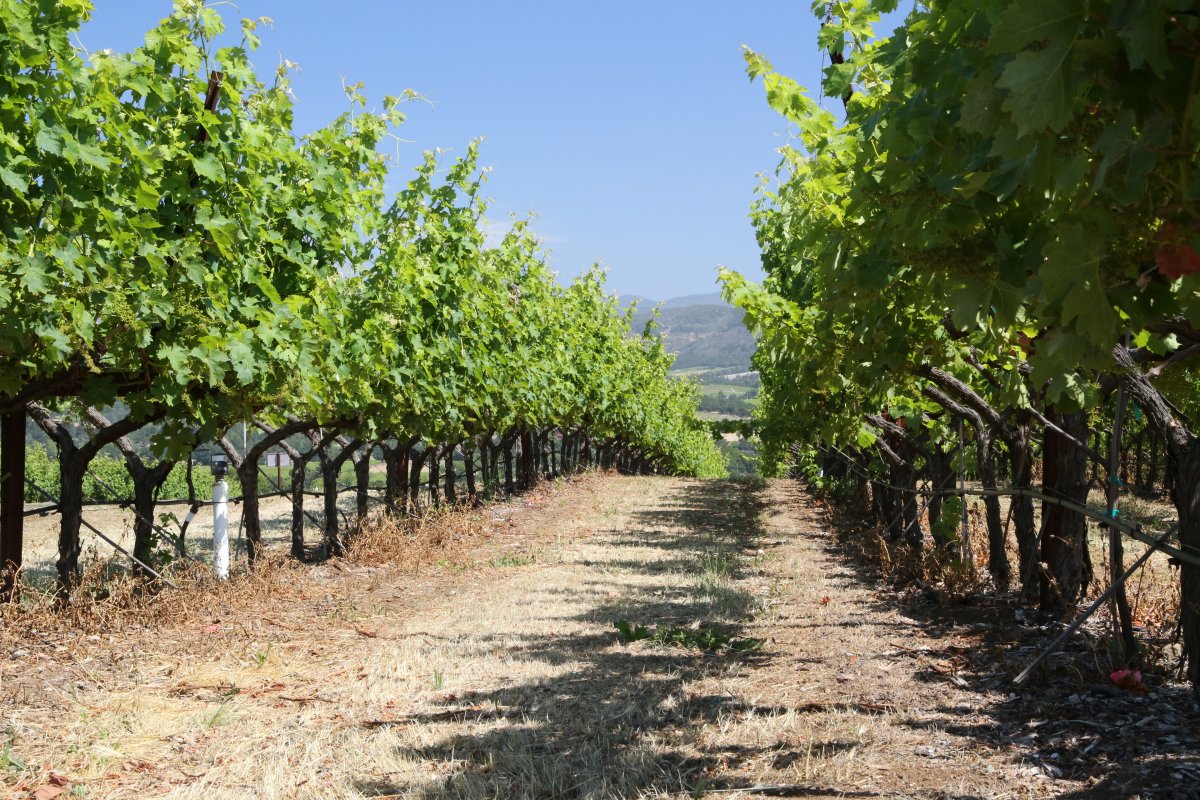
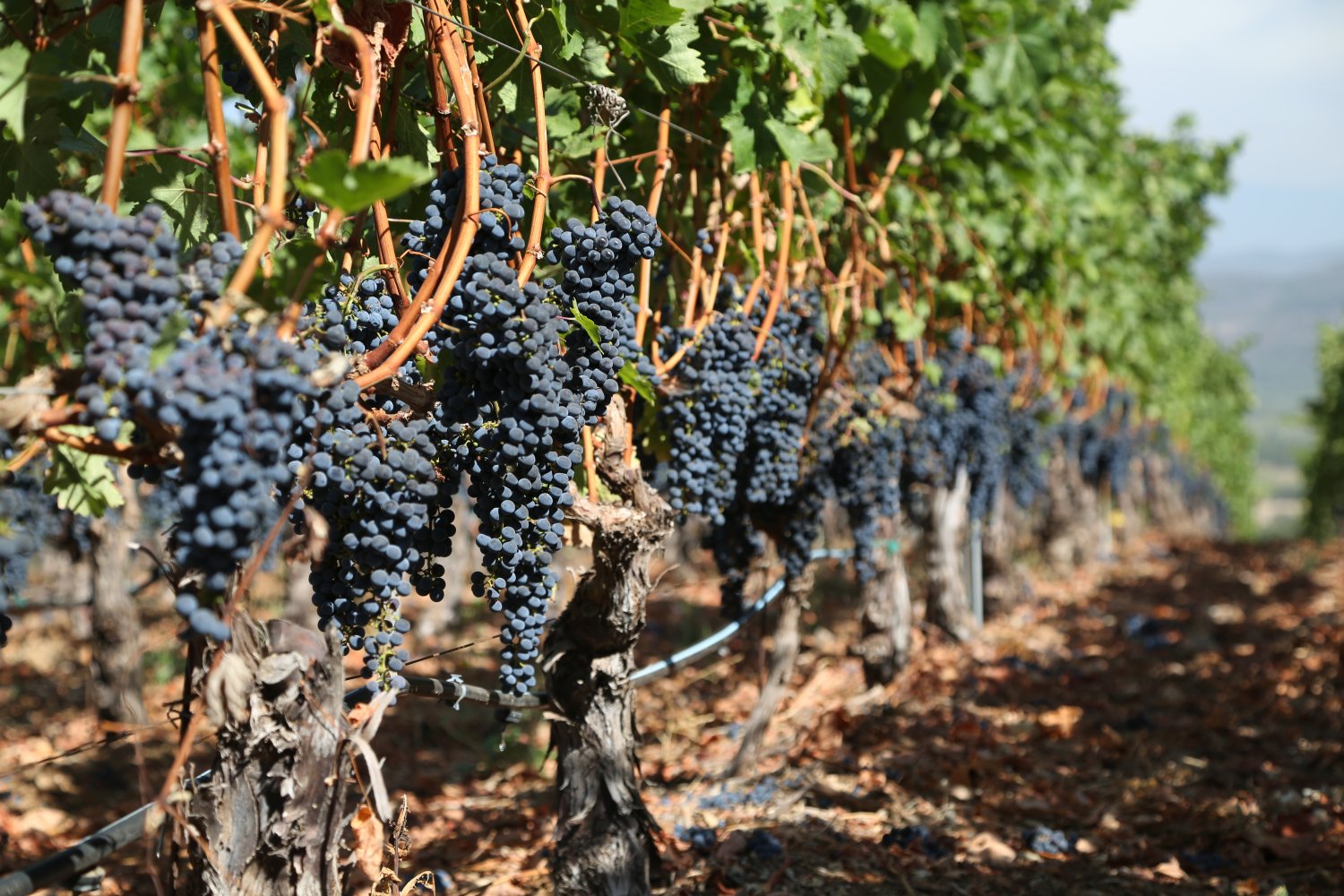
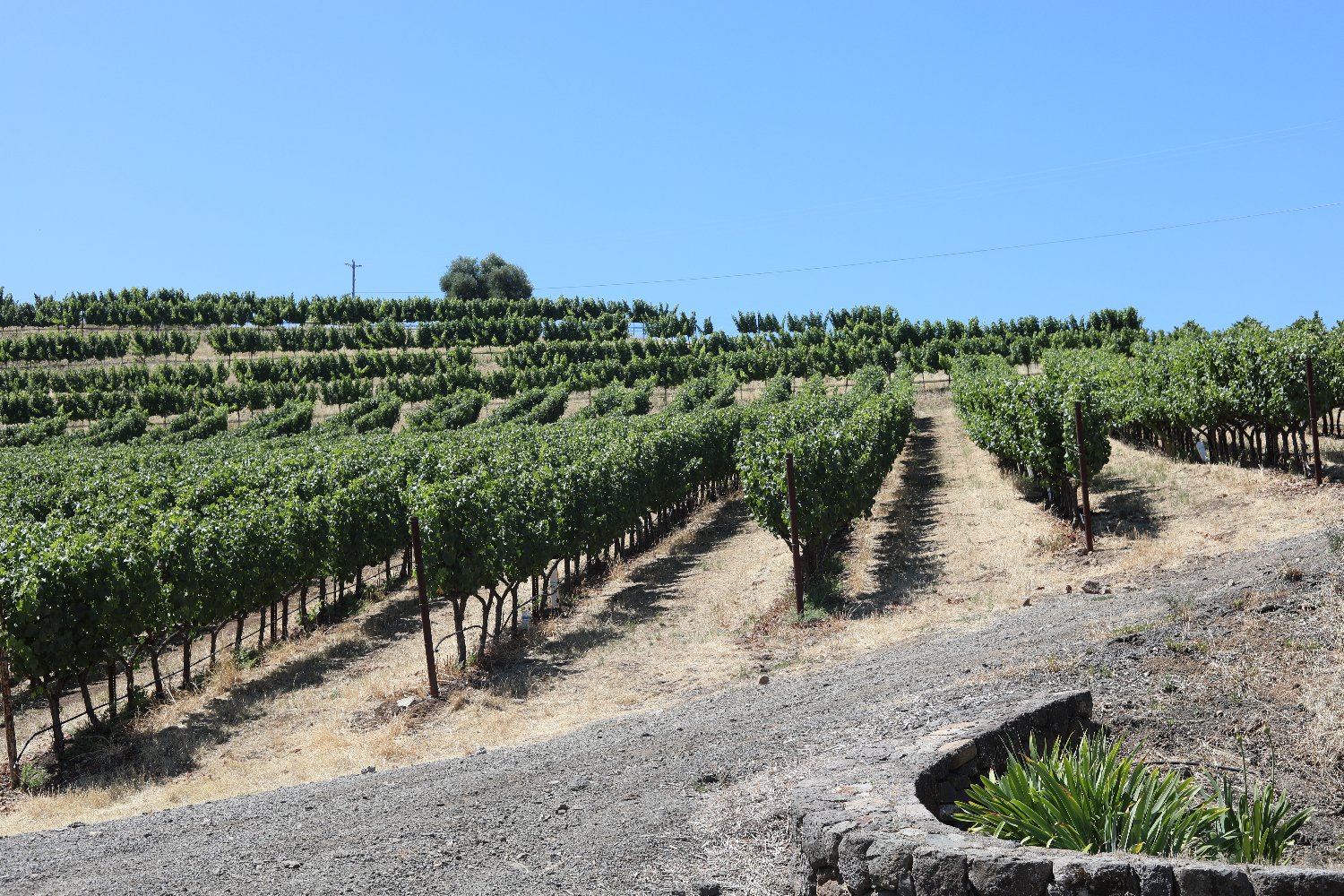
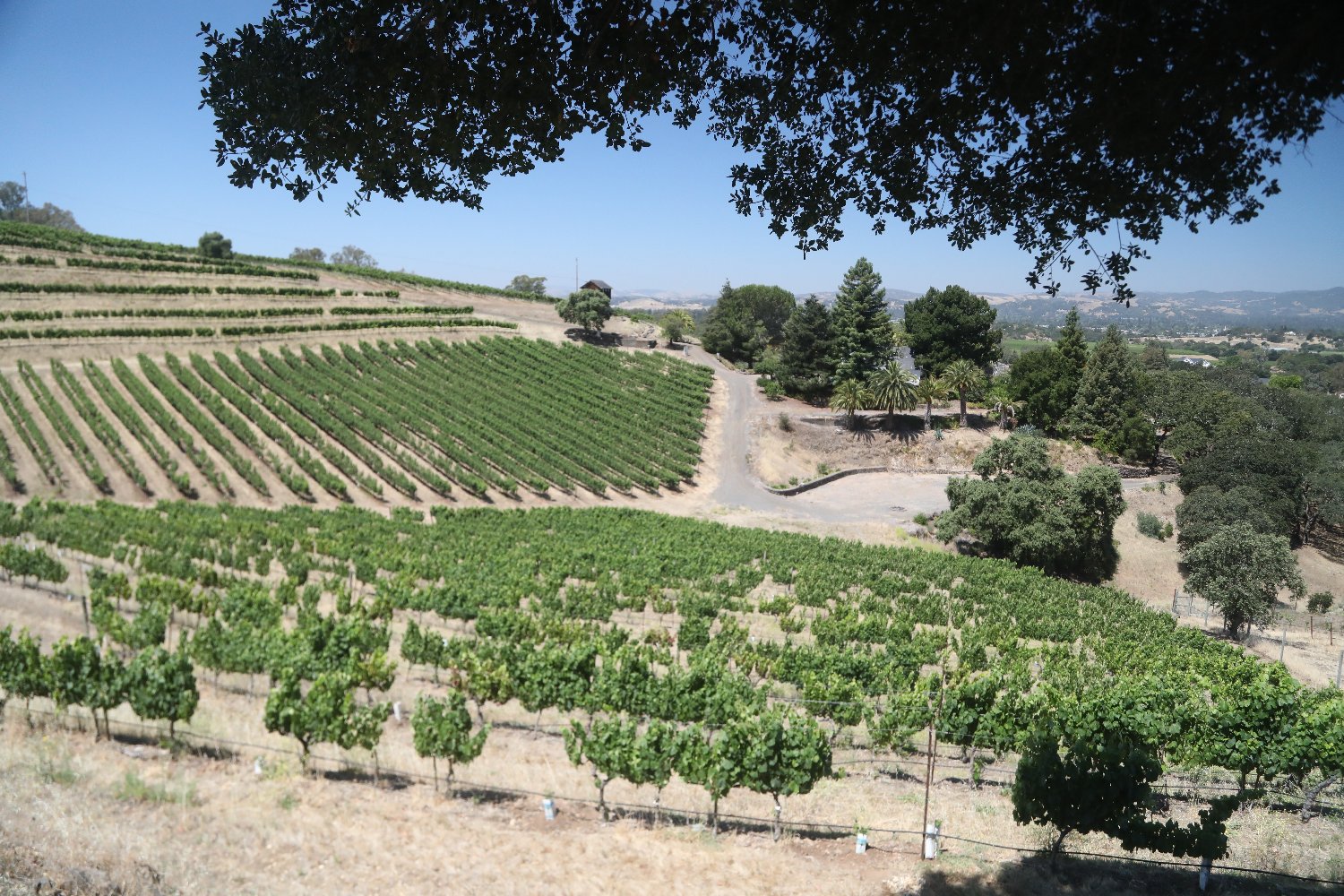
John’s family has a long history of growing grapes in California dating back to the 1880s. Perhaps drawing from his heritage, despite few vineyards being planted in this part of Coombsville in those years, John began to develop vineyards on his property with the help of his father Jack in 1980. Today the site is planted to 10 different varieties including two unusual varieties for Napa Valley, Carménère (planted in parts of Bordeaux with its largest plantings in Chile – interestingly, the leaves on this variety naturally turn red at the end of the growing season – not from any disease) and Tannat – a grape primarily associated with Uruguay (and a prominent variety at another Napa Valley ‘vintner’s winery in Uruguay, Alejandro Bulgheroni’s Bodega Garzon).
Prior to John’s ownership the property was owned by the Kreuzer family – they purchased the site in 1876. Kreuzer Lane (the road used to access the entrance to Caldwell Vineyard is named after them). Initially they raised beef cattle and later transitioned to a dairy operation. Today the Caldwell Ranch encompasses 123 acres of which about 65 are planted to vine.
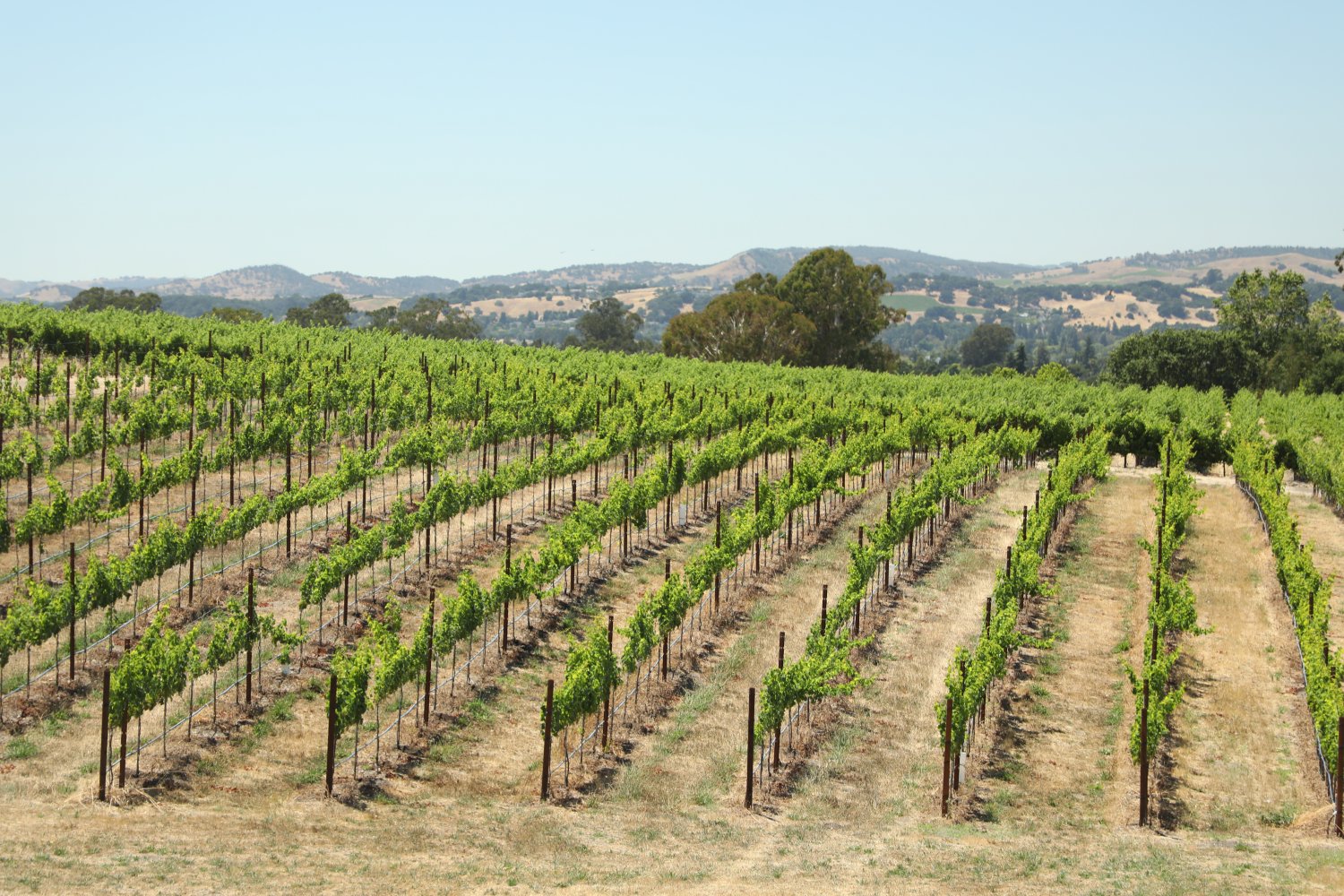
Caldwell Marselan block
And when shopping for wine grapes to plant a vineyard, one soon comes across ENTAV-INRA clones (Etablissement National Technique pour l’Amelioration de la Viticulture). His work with the French government in licensing these clones allowed them to be distributed across the country at very select number of nurseries.
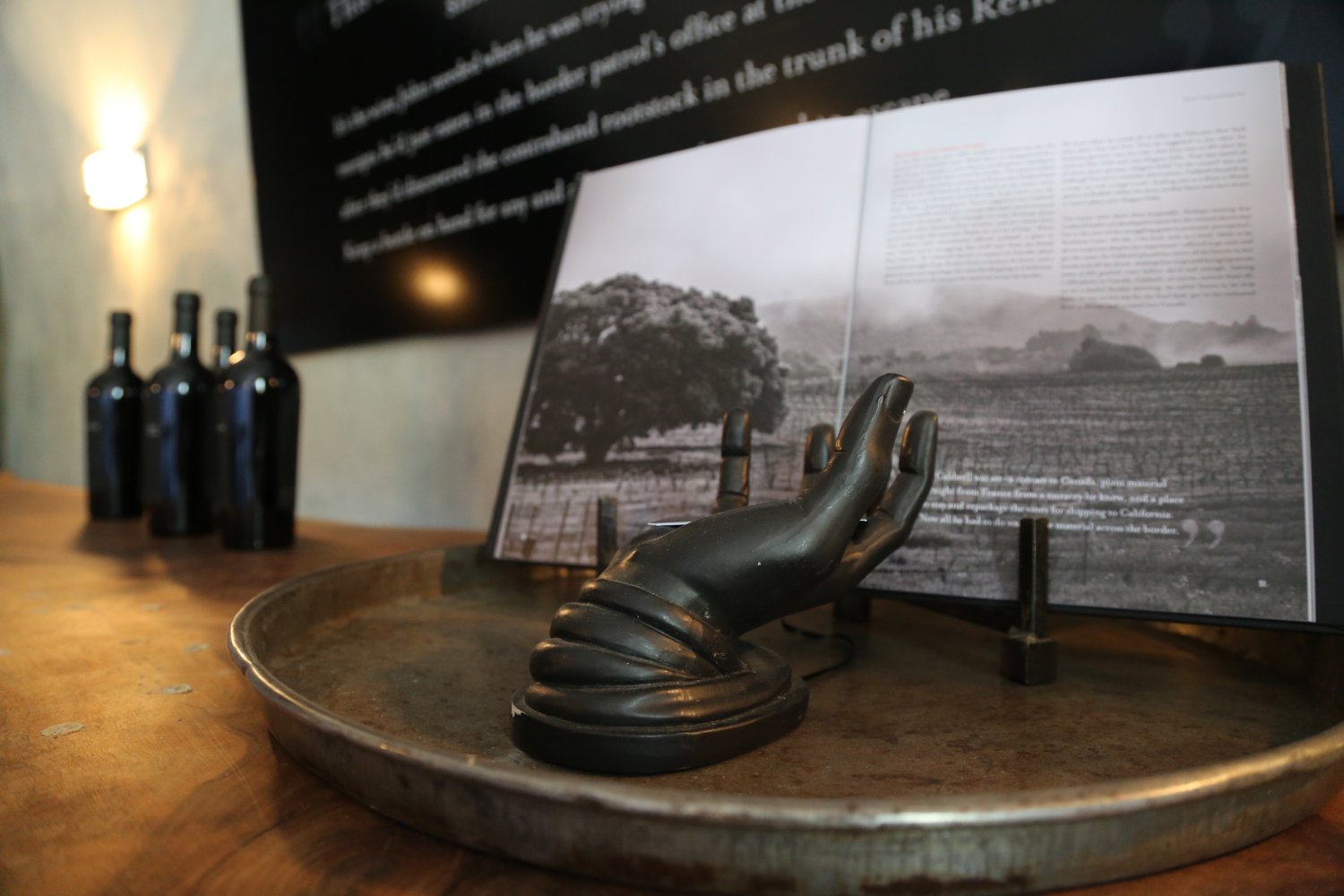
Based on years of growing grapes, John has compiled several criteria which are of the utmost importance when choosing a vineyard site: 1. Soil, 2. Weather, 3. Exposure, 4. Rootstock & clones and 5. Trellis design & row direction. In the mid 1990s he wrote a book (with some translation help from winemaker Philippe Melka) called A Concise Guide to Grapevine Clones for Professionals and still sells this through the Caldwell Vineyard website.
 Furthering his interest in growing grapes, John started his own local nursery on the property (the Quonset hut which was used in his early operations is still located on the property, now surrounded by vineyards). John sold his nursery in 2004 to Sunridge Nurseries Inc (who maintain a massive operation in Bakersfield).
Over the years, premium Napa Valley based wineries such as Viader, Pahlmeyer and Joseph Phelps have sourced fruit from the Caldwell Vineyard for some of their wines. Some of these wines have earned very high scores and critical acclaim from influential wine writers and other members of the wine media.
And John introduced us to Sunridge Nursery after we took a trip to Uruguay in 2019 and discovered the variety Marselan at Bodega Garzon (a cross between Grenache and Cabernet Sauvignon made in France in the 1960s). We convinced our friend in Calistoga to set aside part of his property to plant about 400 vines of this variety in Spring of 2021. Caldwell initially planted about 40 vines of Marselan and in late summer 2021 planted 1017 vines of this variety. First very tiny production wines should be made in 2023 or 2024.
Select Wines
Caldwell specializes in a number of low production wines – including several proprietary red wines bottled under the Signature Collection, Platinum (a Proprietary red only made in the best vintages and usually only a barrel or two), Gold and Silver (Cabernet Sauvignon or Cabernet Sauvignon based) and the Varietal Collection – focusing on specific 100% varietal wines including several not often seen varieties in Napa such as Carménère and Tannat.
Whites
Sauvignon Blanc
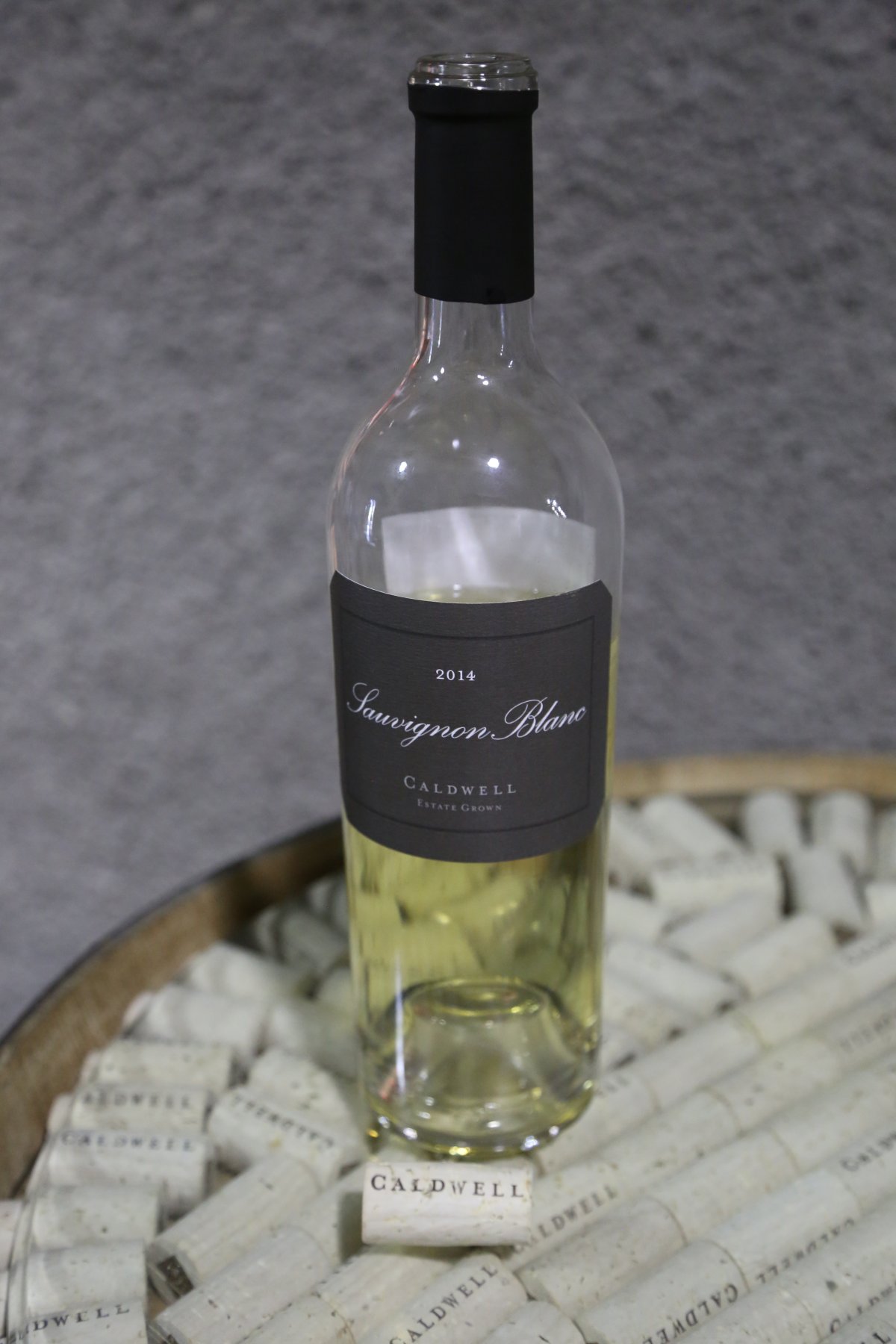
The 2019 Caldwell Vineyard Sauvignon Blanc (clones 317 and 376) is sourced from one of the coolest, lowest elevation blocks at Caldwell Vineyard, contributing to its freshness and poise. Pale to medium yellow in color, it offers very appealing and elegant aromatics, including citrus blossom along with hints of honeysuckle and jasmine that gently lift from the glass. On the palate, this is a beautifully balanced Sauvignon Blanc, embracing a touch of California ripeness while maintaining notable restraint, especially compared to the more overtly green, acid-driven styles often associated with cooler climate expressions of the variety. There is a subtle roundedness to the texture that adds dimension without detracting from its vibrancy, complemented by underlying minerality and flavors of lime and soft citrus. The wine carries itself with precision and harmony, finishing clean and lingering, with a refreshing brightness and a delicate floral echo that invites another sip.
Chardonnay
The 2017 Caldwell Vineyard Chardonnay was fermented in barrel and then aged in stainless steel tanks, a combination that lends both subtle texture and preserved freshness. Oaky, buttery? This wine is decidedly not made in that style. Medium gold in color, it opens with inviting aromatics of honeysuckle, honeycomb, and sweet citrus blossom, with a gentle floral lift that continues to evolve in the glass. On the palate, it offers flavors of tangerine and kumquat, along with hints of ripe citrus and a touch of orchard fruit. The texture is rounded and supple, yet never heavy, striking a pleasing balance between richness and restraint. There is a clarity to the fruit that keeps the wine focused and vibrant. What stands out most is its crispness; this is a Chardonnay with refreshing brightness and well-defined acidity, something not always typical of California examples. The finish is clean, lively, and persistent, leaving a lingering impression of citrus and subtle floral notes.
Reds
Carménère
The Carménère grape was originally planted in the Médoc region of Bordeaux, France and also is more widely planted in parts of Chile. There is at least one other Napa Valley based winery growing this variety – (O’Shaughnessy) and perhaps they are the only other one in the valley. Caldwell Vineyards is the only Napa Valley winery to produce a 100% varietal wine from Carménère. This variety is known for its pyrazines (greenness).
The 2017 Caldwell Vineyard Carménère is medium ruby in color; offers aromatics of Shishito peppers, dried herbs, hints of jalapeno and dried tobacco leaf. But the bouquet is not only about these aromas, but the fruit also shows through, especially as the wine continues to breathe. Very balanced with less of the greener characteristics showing on the palate. Red fruit flavors show including cherry. Elegant tannins – very nicely balanced – drinks well by itself in its youth. The 2018 Caldwell Vineyard Carménère initially shows earthy aromatics including notes of mushrooms. But give this wine just a few minutes to evolve in the glass and the fruit starts showing. The tannins are dusty and densely compacted. A lovely wine.
Tannat
The 2018 Caldwell Vineyard Tannat is dark ruby in the glass, nearly opaque at its core, with darker fruit-driven aromatics including plum and blackberry that immediately set a brooding tone. These are framed by notes of cedar along with subtle floral hints of violet, adding lift and complexity to the nose. The density of this wine is apparent from the first sip, with a concentrated front palate delivering flavors of cherry and dark berry fruit, supported by a firm structural backbone. As the wine moves through the mid-palate, the fruit begins to taper, giving way to its more assertive elements; the finish is driven less by fruit and more by structure, where the tannins take center stage. These tannins are dark, coarse, and tightly knit, offering a pronounced grip that speaks to the variety’s naturally robust character. Despite its power, there is excellent acidity providing balance and keeping the wine from feeling heavy. It lingers with notes of cedar, dark pepper-driven spice, and a savory edge, leaving a lasting impression of both strength and depth.
Cabernet Sauvignon
 The 2023 Caldwell Cabernet Sauvignon, Coombsville Napa Valley is deep ruby and opaque; the bouquet is a union of dark fruit and darker influences from its time in barrel. This wine smells like blackberry, boysenberry, dark cherry, and Himalayan purple mulberry which is one of our favorite fruits. In the spring we frequent Very Mulberry (yes a shoutout here) in Brentwood, CA, the largest u-pick mulberry farm in the country. And additional layers include toast, dark chocolate, coffee grinds, and espresso. A mouthful of ripe fruit and immediate deliciousness, perhaps showing riper than many of the 2023 wines of this variety from napa Valley from this vintage. It tastes like red plums, raspberry, red cherry, and mulberry. And there is plenty of acidity at play here, keeping the ripeness at bay. The tannins are rounded, ripe and already well resolved. They linger with a light dusty tug, a gentle handshake, finally pulling away from the fruit on the finish.
The 2018 Caldwell Vineyard Gold Cabernet Sauvignon is dark ruby in color, with a deep, насыщенный core that hints at its concentration; the bouquet is very fruit forward, offering riper—yet not jammy—notes of blackberry and boysenberry, complemented by subtle dusty nuances, dried herbs, and a faint savory edge that adds aromatic complexity. On the palate, it reveals darker cherry flavors along with layered black fruit, carried by a juicy, mouthwatering quality that keeps the wine lively and engaging. The structure is anchored by darker-toned tannins that show a noticeable grip, providing both texture and backbone without overwhelming the fruit. As it evolves, additional notes of cedar, cracked pepper, and dried tobacco leaf emerge, contributing to a more nuanced and slightly earthy profile. The finish is persistent and well-balanced, combining ripe fruit, savory accents, and firm structure in a way that suggests both immediate appeal and the potential to age gracefully.
Rocket Science
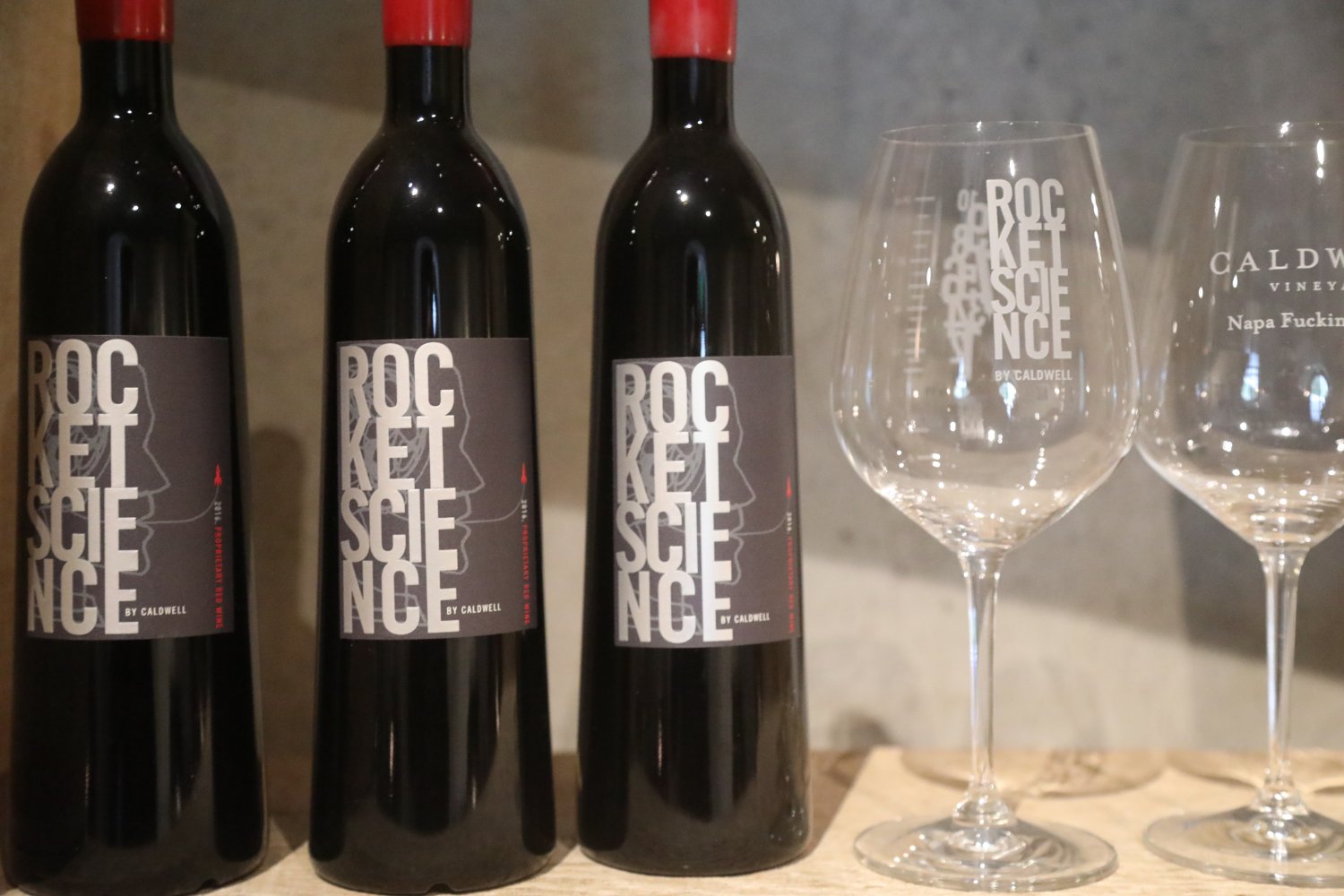
John came up with the name, Rocket Science name one evening to spoof those who said winemaking is not rocket science. Coincidentally his wife Joy’s father was also a rocket scientist. This wine is a proprietary red blend, predominately Syrah with lesser amounts of Cabernet Sauvignon & Merlot and other varieties. Several vintages we have tried over the years have been rich with a broad range of flavors and aromatics. This is a wine well worth pursuing and perhaps the wine that is most associated with Caldwell Vineyard. And every year Caldwell offers an opportunity for list members to get published on one of these bottles through their Rocket Science Label Contest (80 words or less). This wine is always served at the yearly inductions of astronauts into the United States Astronaut Hall of Fame in Florida.
The 2022 Caldwell Rocket Science is deep ruby and opaque; this wine smells forward fruited, ripe, fun and flirty. And if it was a woman, its aromatics would have lots of curvature. Its scents include raspberry jam, boysenberry spread, cherry pie, blackberry, dark plums and dark mulberries at peak of ripeness. And sweet baking spices. And chocolate. Plush across the palate with ripe fruits showing perhaps more mature than the vintage would indicate. Noteworthy is 2022 in Napa Valley was an exceptionally warm year with an extended heat spike centered around Labor Day. One can clearly smell and taste the ripeness of the vintage in this bottling. Sweetly fruited, this wine tastes like raspberry jam, cherry pie, ripe strawberries, licorice and chocolate. Soft, like cozying up to a warm fire in a cashmere blanket, the tannins are well tumbled; ripe, resolved and rounded, they linger with a gentle lightly gravelly feel.
The 2018 Caldwell Rocket Science offers bright, ripe fruit on the bouquet, immediately expressive and inviting, with layered notes of blackberry and red cherry complemented by subtle hints of cedar. As the wine breathes, it reveals additional complexity, including delicate aromas of dried rose petals and a touch of dessert spice, particularly clove, adding a softly perfumed and slightly exotic nuance. On the palate, this is a juicy, fruit-driven wine, delivering a generous mouthful of ripe berry flavors that feel both vibrant and approachable. The tannins are well integrated and polished, contributing structure without overshadowing the fruit, making the wine especially enjoyable in its youth. There is a pleasing balance between richness and freshness, with enough lift to keep the profile from feeling heavy. On the finish, both grape and wood tannins are present, lending texture and length, yet neither come across as harsh; instead, they are seamlessly woven into the wine’s framework, supporting a smooth, lingering conclusion marked by fruit, spice, and a touch of cedar.
Sparkling
Ever the ones to look overseas for alcohol partnerships, through a collaboration with Philippe Gamet, Caldwell offers several Champagnes bottled under the Caldwell label, including the non-vintage Caldwell Gamet Blanc de Noir, a blend of Pinot Meunier and Pinot Noir. We tasted this wine in 2021; pale yellow in the glass with a fine, persistent mousse, it opens with a fresh and lively bouquet featuring aromas of Granny Smith apple, pear, and hints of citrus blossom that become more expressive as the wine breathes. On the palate, it delivers crisp flavors of green apple and bright citrus, complemented by subtle yeast-driven notes that add a layer of complexity without overwhelming its freshness. The texture is clean and focused, with a refreshing acidity that keeps the wine vibrant and precise. It finishes dry and invigorating, making it an excellent palate cleanser, particularly after tasting through a lineup dominated by red wines, while still offering enough character to stand on its own.
And other Caldwell Champagnes are bottled under bottled under the label, JOY CALDWELL Champagne.
Their first Caldwell wine produced was in 1998, a Caldwell “Silver” Proprietary Red blend. Philippe Melka was their winemaker for many years followed by Marbue Marke although Marbue is no longer Caldwell’s winemaker.
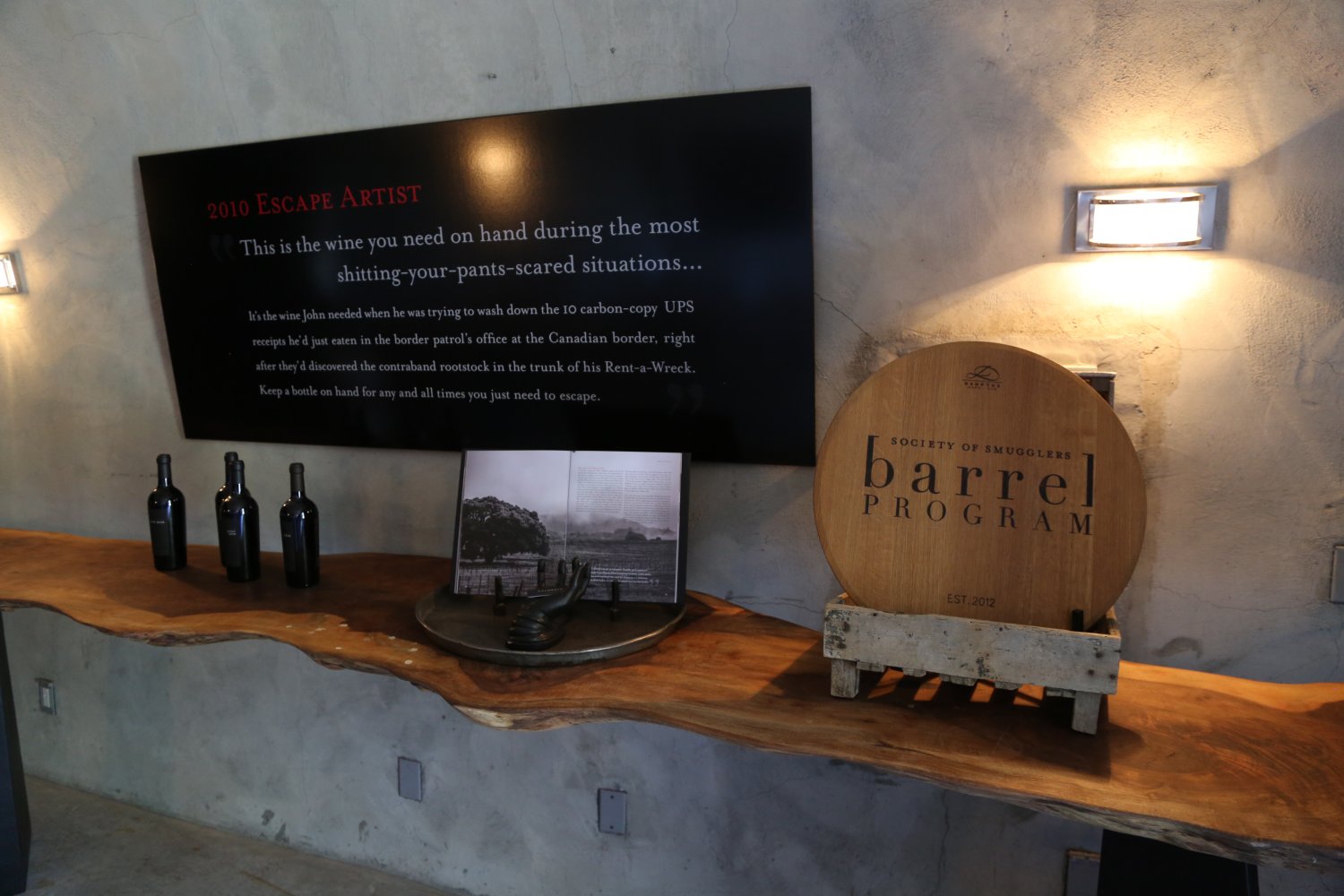
The Smuggling Story

This photo courtesy of Caldwell Vineyards
A friend had successfully smuggled more than 4000 cuttings through the Canada/USA border for John previously – but when it came time to make her final trips through the border – she wasn’t feeling well John offered to make the trip. Luck was not with him. He was in a lane that was backed up for some ways – seeing an open lane he quickly drove over. Perhaps a mistake. He was immediately stopped by one of the young border guards and told to open his trunk. Big problem. 1500 grape vine cuttings were clearly visible.
He was taken inside for further questioning – the temperatures in February in this part of the country were unforgiving – despite the frigid temperatures the room where he was taken was hot and John began sweating in advance of a potential shakedown. The guards found receipts indicating shipments just days earlier were of shoes and were to be sent to Yountville. More questions came. “Where is Yountville”? John was asked. “In the heart of Napa Valley,” he replied. “That is grape country, right,” they surmised.
They left the room to talk among themselves – John decided to make a command decision on the spot to eat the receipts. He frantically tore them apart and stuffed them down his throat gagging on their dryness and trying to produce enough saliva to swallow (we recall a few f bombs being dropped here as John related the story). He wasn’t able to completely swallow them all and just before they came back in the room, spat out a messy wad of wet paper and stuffed it in his pocket.
Seeing the receipts had gone “missing” the guards understandably became angry and decided to strip search him on the spot. Not a fun thing to have to go through anytime, but especially so in the brutally cold temperatures in an unheated bathroom. Ultimately, he was let go after requesting to make a phone call to his lawyer who in turn knew the guard’s boss. But they kept the 1,500 vines.
The story doesn’t end here. Some days after John returned from his smuggling trip – a line of cars including police and a representative from the California Department of Food and Agriculture showed up at his house and demanded to take the rest of the vines that they rightly suspected he had in his possession (successfully delivered to his property from the previous smuggling efforts of his friend). John did of course have these vines – boxed up in a barn, mere feet from where he was standing talking to the police and agents. On the spot, he came up with a clever story to buy himself 24 more hours before they returned – telling them his vines were in a cold storage warehouse in Sonoma, other growers were involved, and he needed 24 hours to retrieve the vines. Come back tomorrow he told them. They bought the story and indicated they would return first thing in the morning.
Creatively he then buried the vines in question beneath an oak tree on the property – purchased a similar quantity of cuttings from an area nursery – amazingly he still had the original boxes and put these “new” cuttings into the original boxes even measuring the exact weights to match the weights listed on each box. Voila – the agents returned the next day – took the boxes of the new cuttings none the wiser!
John was almost in the clear rescued entirely by his unbridled on-the-spot creativity. The story is almost over – but not quite. As spring came, the buried cuttings needed to be unearthed and planted. So, John did so – filling up his father’s old van and driving back to his home and parking the van in front of a low roof parking bay which was part of an old barn. He met his father there. Imagine both father and son’s surprise when a police car pulled in at that exact time.
Trying to hide the evidence, John backed the van into this low bay – hitting the roof of the van with the roof of the parking bay, crumpling up the top of the van in the process. The policeman parked right in front of the stuck van – observed John’s predicament and handed him a ticket to pay a fine. He said good day and left. We never asked John how much the fine was – we will ask next time we see him at the winery.
Run through the stress ringer for his actions, John eventfully planted the smuggled cuttings. And despite the legality of the situation, Napa Valley is richer for his efforts. We have come across a number of vines in Napa Valley taken from these original cuttings – they are simply referred to as the Caldwell Clones.
Master Cooper
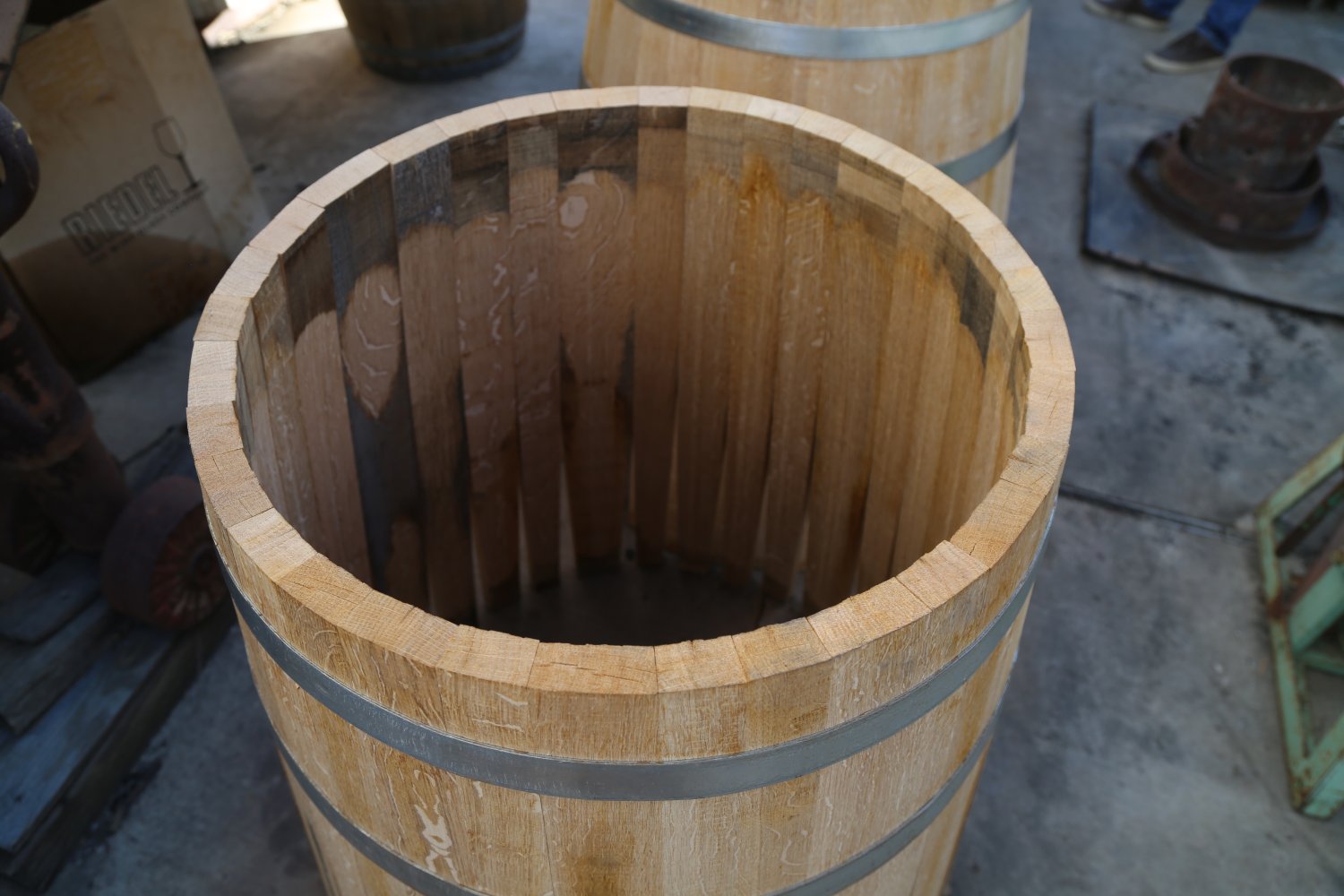
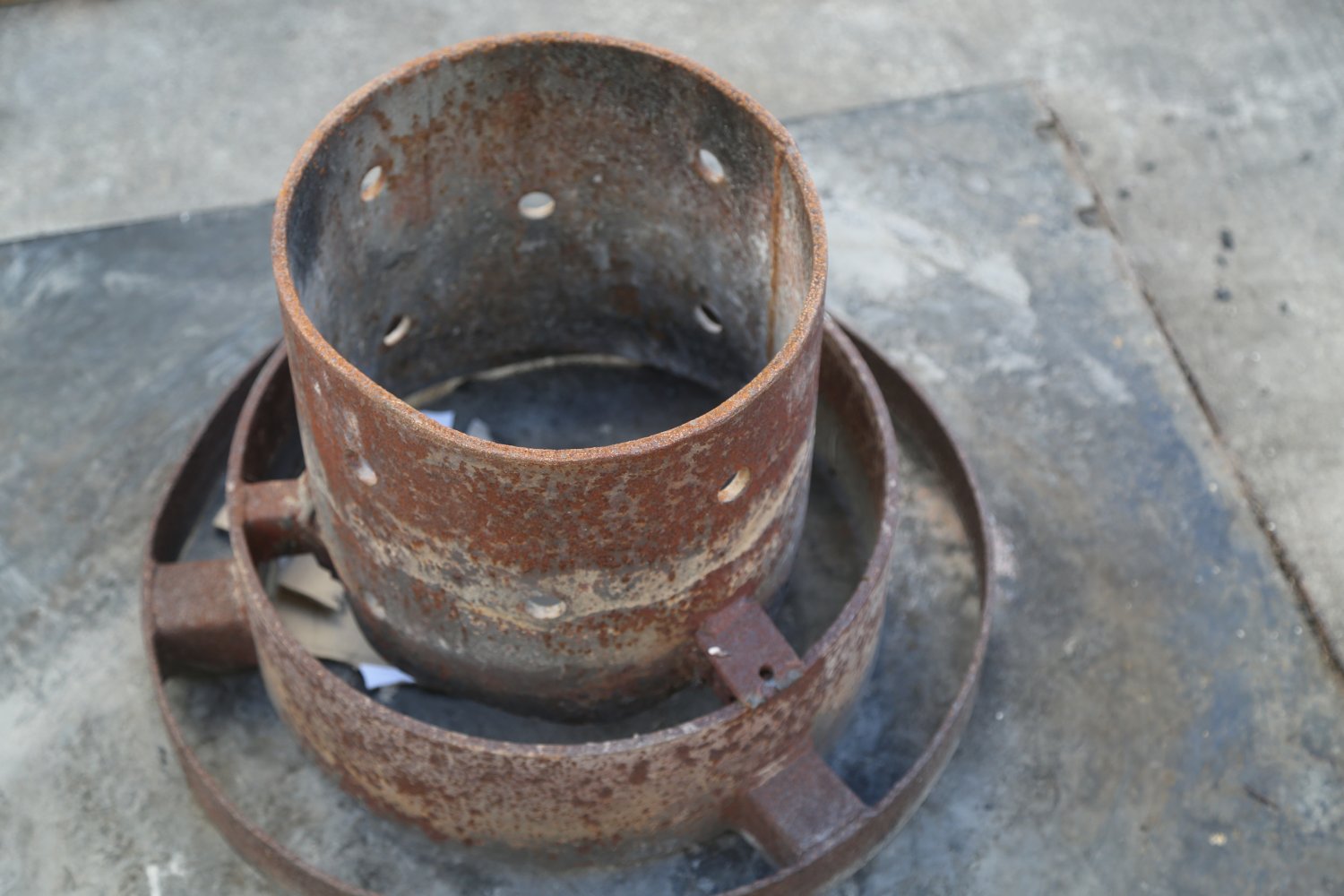
And what is extremely unique for a Napa based winery, Caldwell controls most aspects of the barrels they use for aging their wine (only Silver Oak Cellars has similar control of their barrels – owning a cooperage and white oak forests in central Missouri). Rather than selectively purchasing oak from cooperages, Caldwell Vineyard purchases oak wood from suppliers in France (which are then seasoned up to 36 months) and Caldwell’s former Master Cooper Ramiro Herrera spent two months in France every year and assembled approximately 300 barrels specifically to match Caldwell’s needs – including choosing the wood (selecting for grain and tannin levels in the oak) and selecting the toast levels inside the barrel. The barrels are then shipped to Caldwell Vineyard. Tragically Ramiro passed away in Mexico from complications as a result of internal injuries sustained while assisting in moving a large stone counter top.
The rigors of becoming a Master Cooper in an already very specialized craft are significant, there are less then 40 master coopers on the planet. Ramiro was the only one in the United States. He created his own tools for working with the barrels; his office was in a unique location, inside a Quonset hut surrounded by vineyards in the hills above Caldwell’s cave. His workshop was within a short walk of another Quonset hut of significance – where John began his nursery operations.
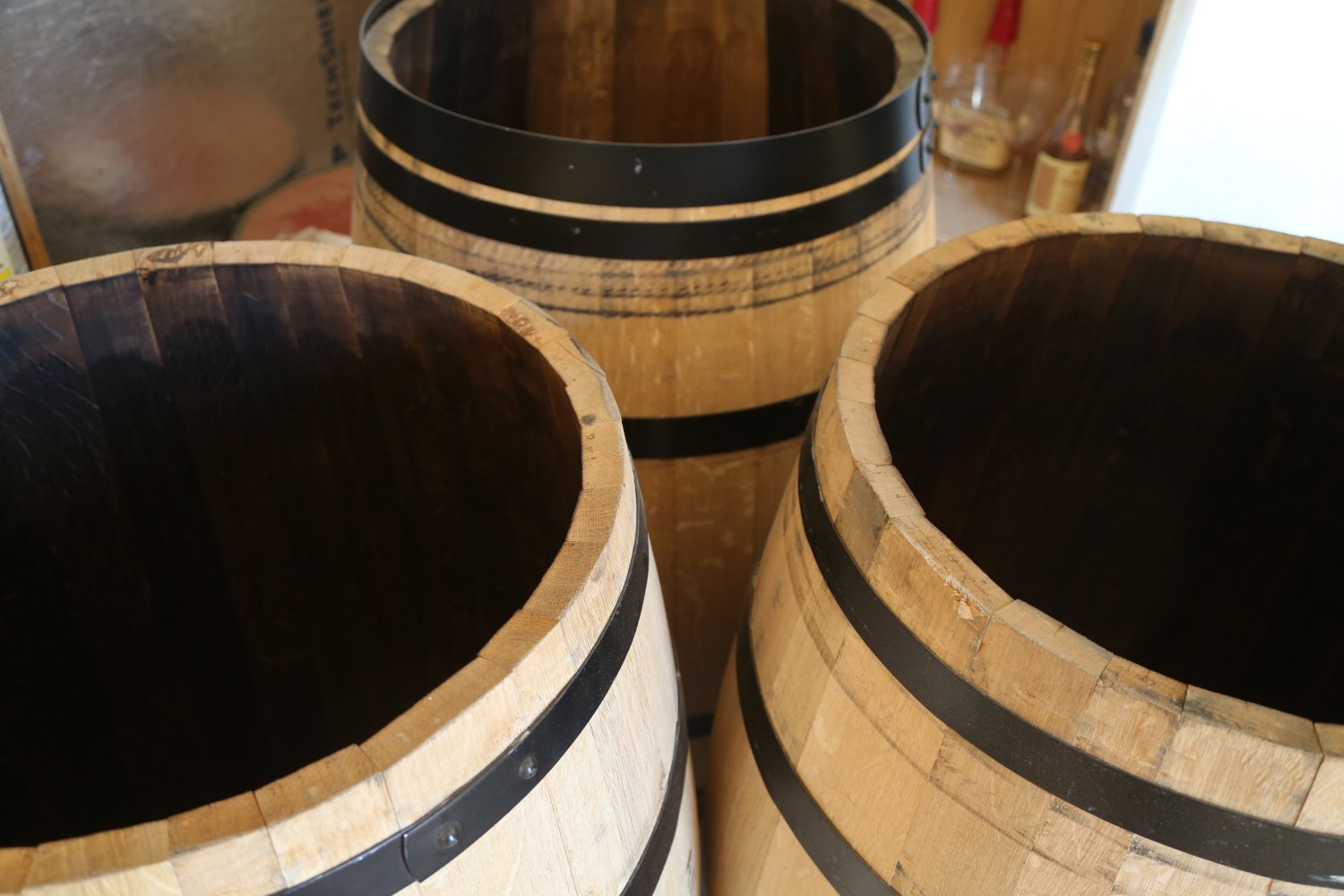
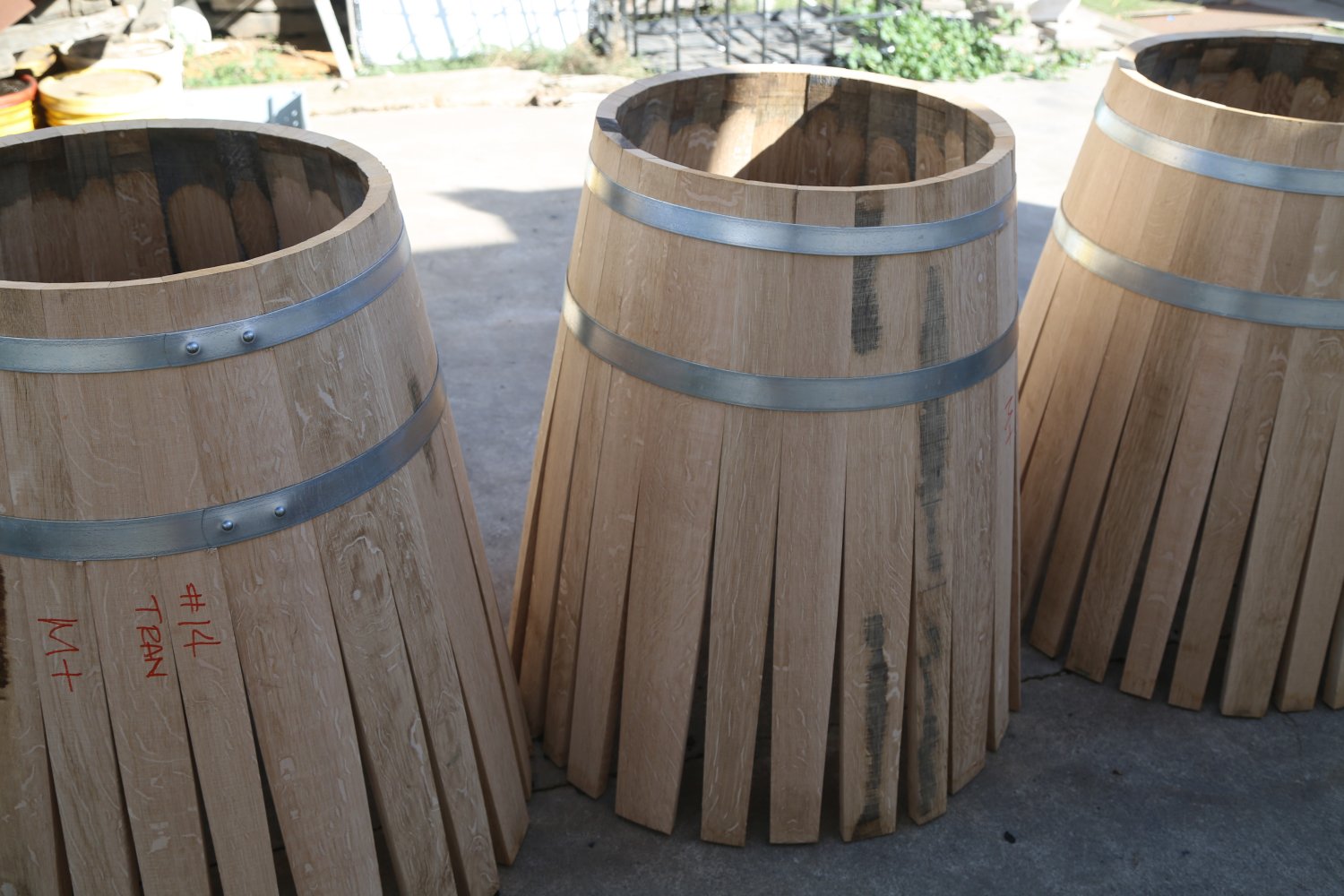
Wise Caldwell Distillers
One of Ramiro’s friends from Mexico, Mauricio visited Caldwell Vineyards and met up with Ramiro. Mauricio is a tequila distiller and brought some of his Tequila to share. Based on Caldwell’s creativity you might be able to guess what happened next. John and Ramiro soon traveled to Mexico for a Tequila tasting, visiting numerous producers. They realized these producers were aging their Tequila in old oak barrels, thus imparting no additional flavor or textural character.
Upon returning to Napa Ramiro constructed a new French oak barrel which they soon filled with Mauricio’s one-year old Tequila. Soon after they conducted a blind tasting of Tequila from the new barrel versus a 12-year-old Tequila from a used barrel. The consensus as clear; the new barrel was the better of the two products.
At that point Caldwell decided to produce Tequila and shipped barrels to Tequila. Their first release was in late 2022. This project is a joint venture between John Caldwell and Brion Wise (BRION & B Wise Cellars).
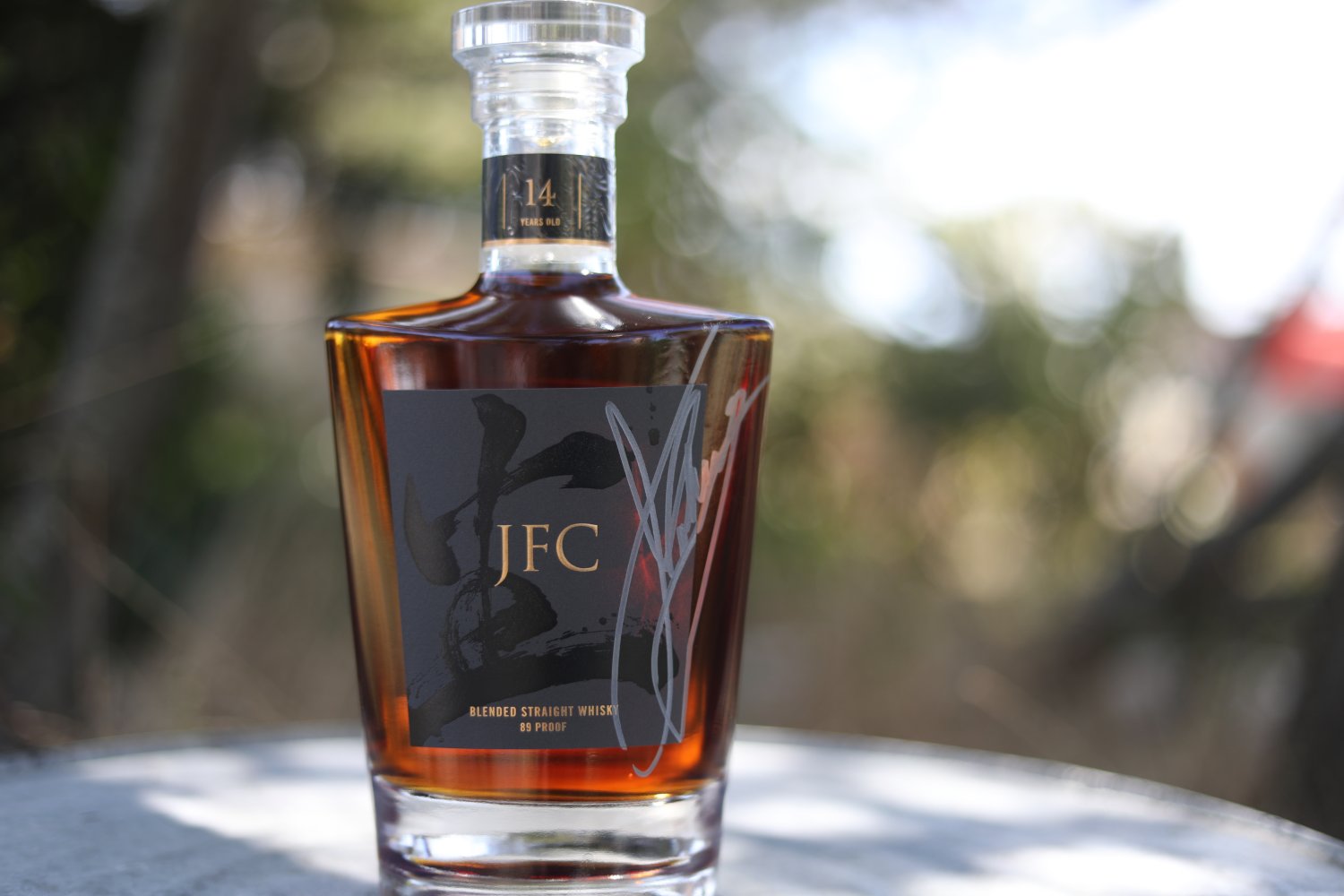
In 2021 Caldwell released a 14-year-old Blended Straight Whiskey (89 proof) in a sleek and handsome glass bottle, bottled under Wise Caldwell Distillers. The back label somehow was approved by the TTB because it reads: JFC, A.K.A JOHN FUCKING CALDWELL. As you can see, the ‘man’ himself signed this particular bottle for us. This whiskey is a deep amber color in our shot glass; the nose offers a diversity of pretty aromatics including caramel, toffee, coffee, chocolate, pipe tobacco, freshly tilled soil and a musky note. Smoothly textured with an intensity of flavor especially showing on the back of the palate along with a toasty warmth and a light sweetness – all of which persists for some time. Drink this slowly and carefully, it goes down easily by itself and a planned long sensuous night cozied up next to a beautiful woman watching a warm crackling fire somewhere in the mountains in the winter could quickly turn into a short one with you passed out and she wondering what just happened. Cheers to JFC.


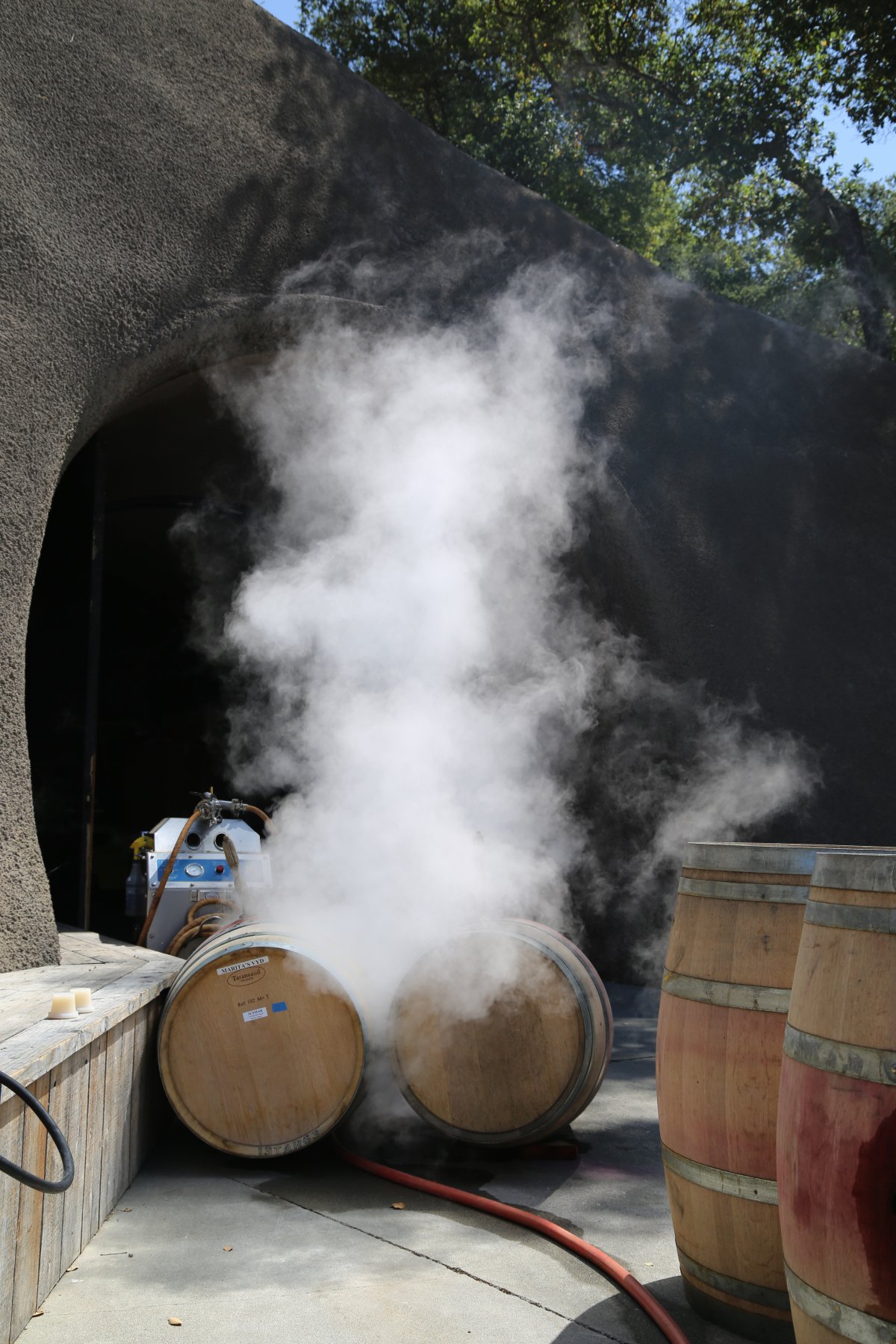
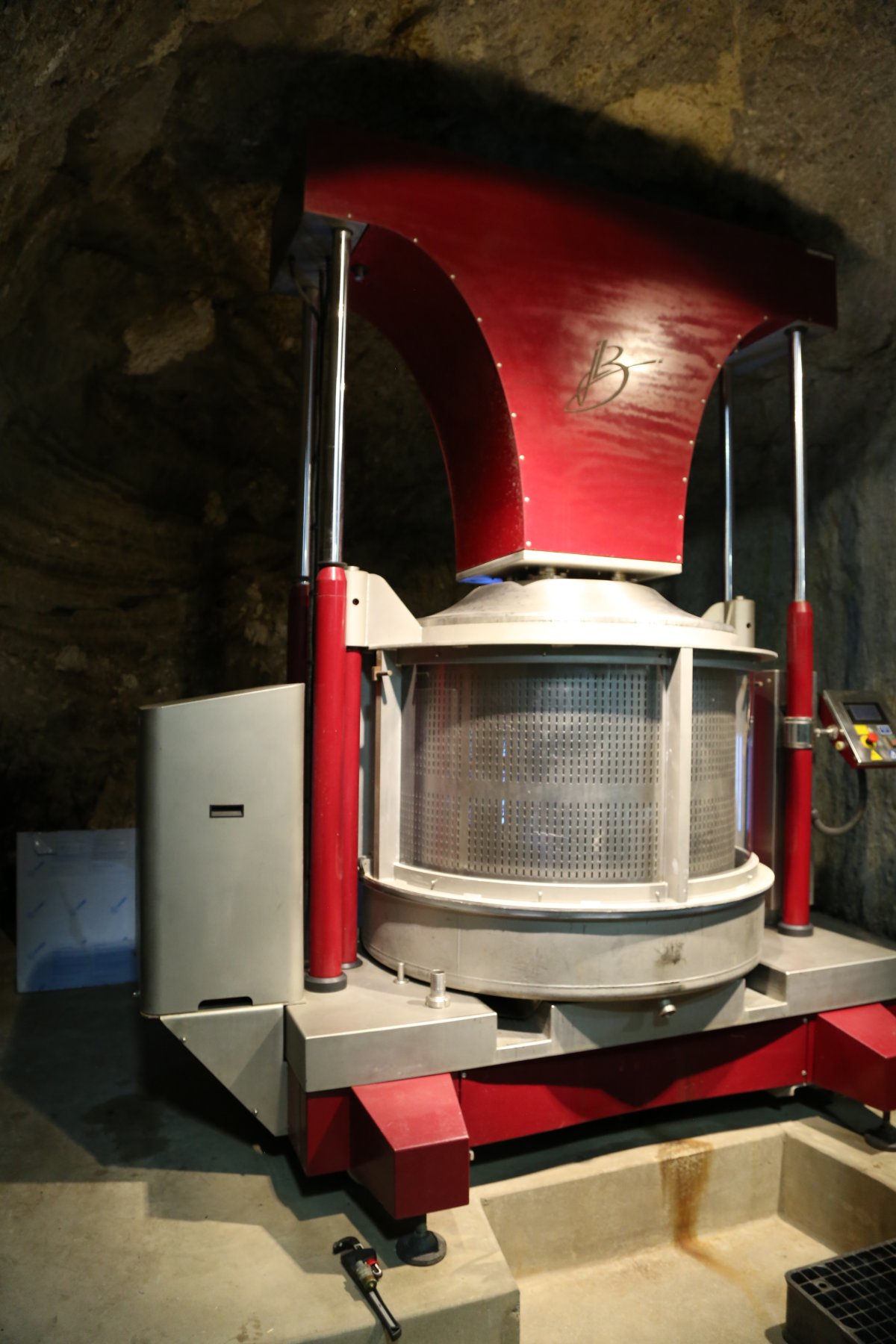
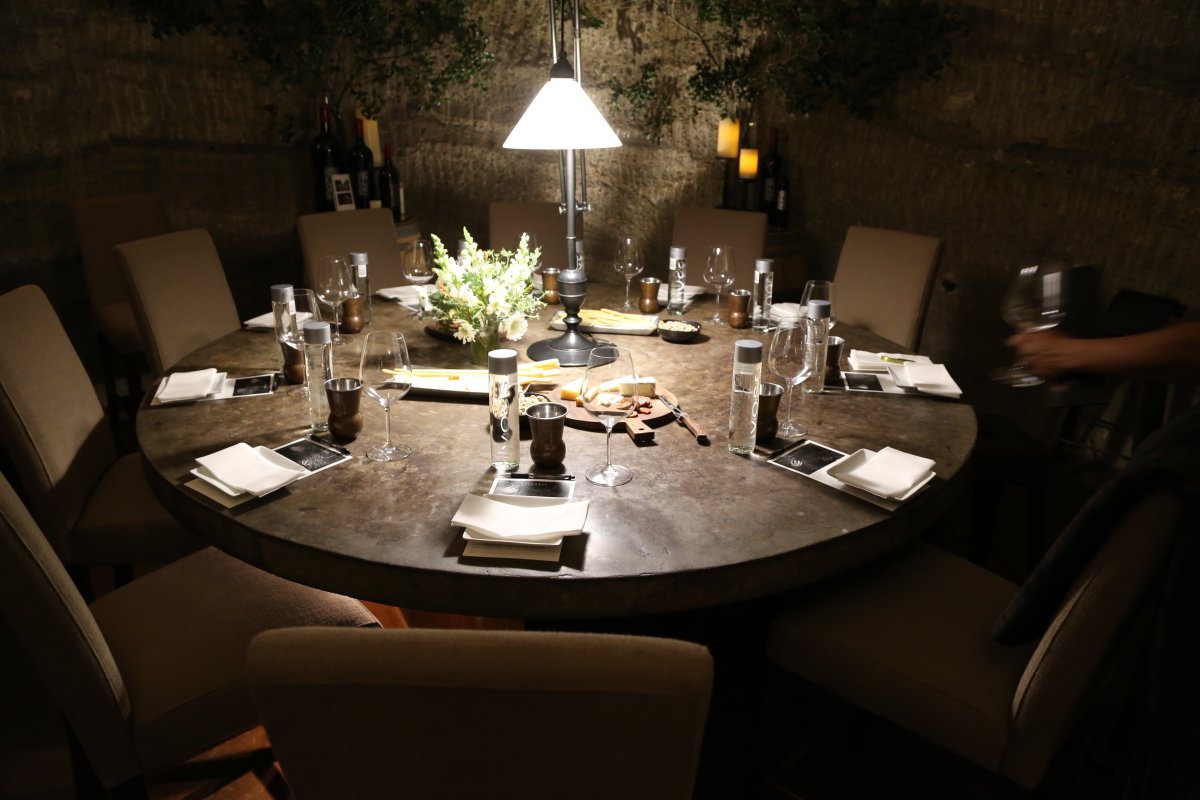
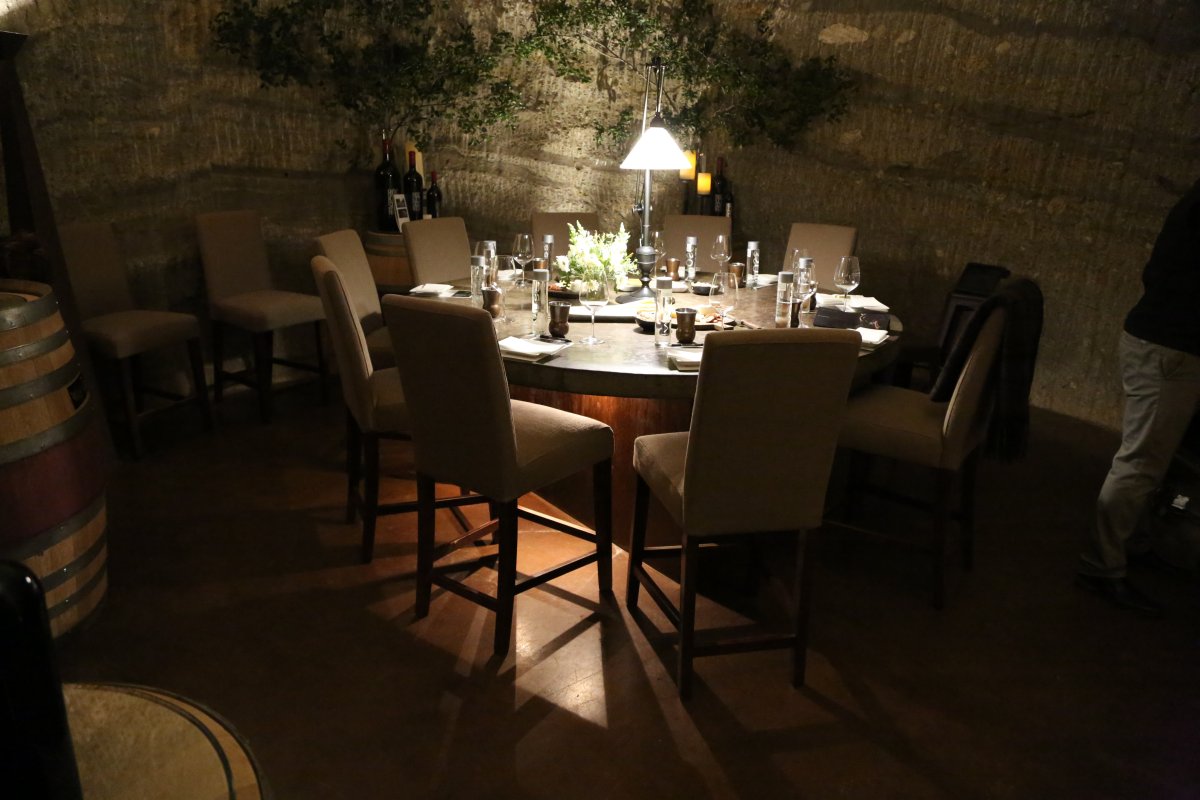
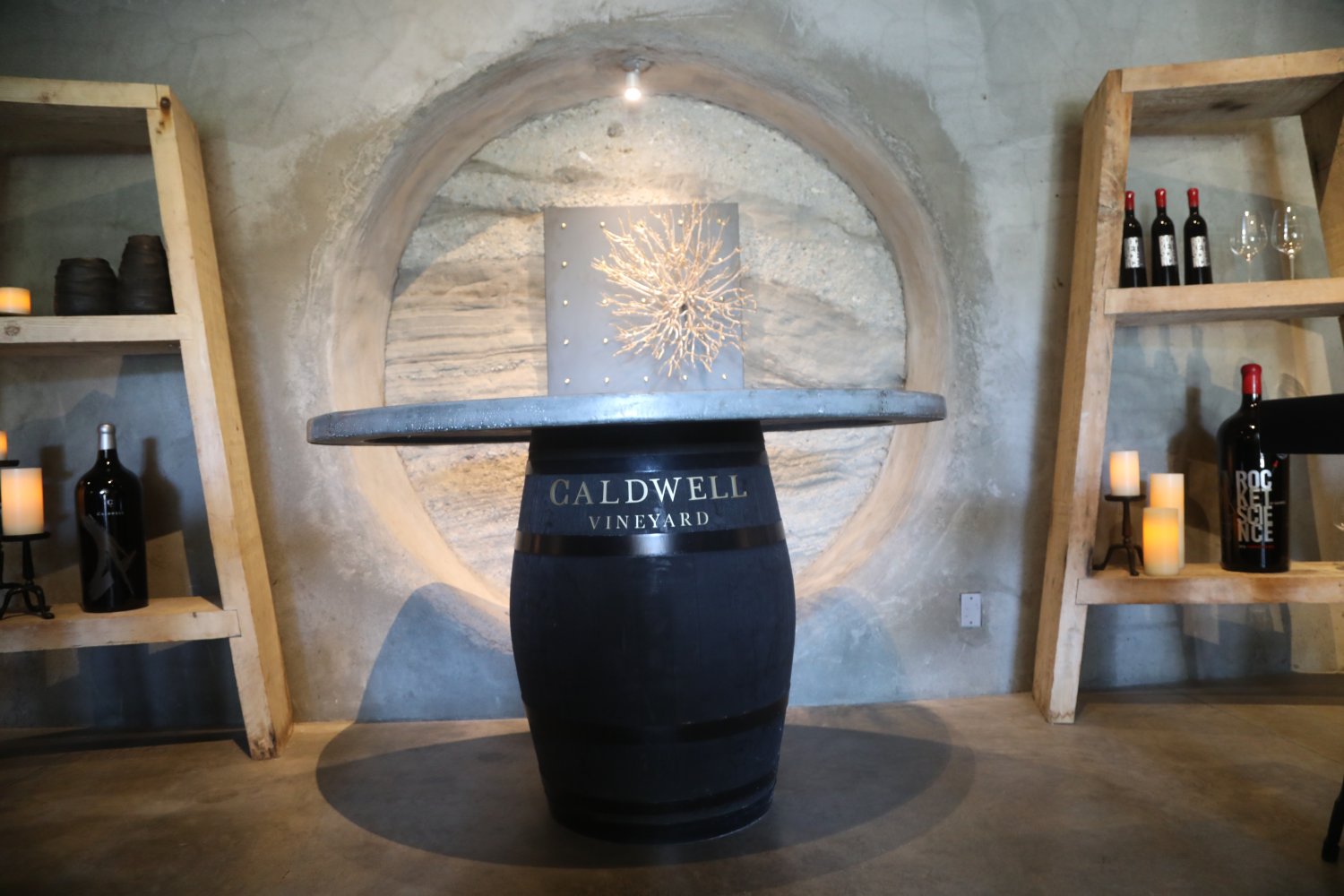
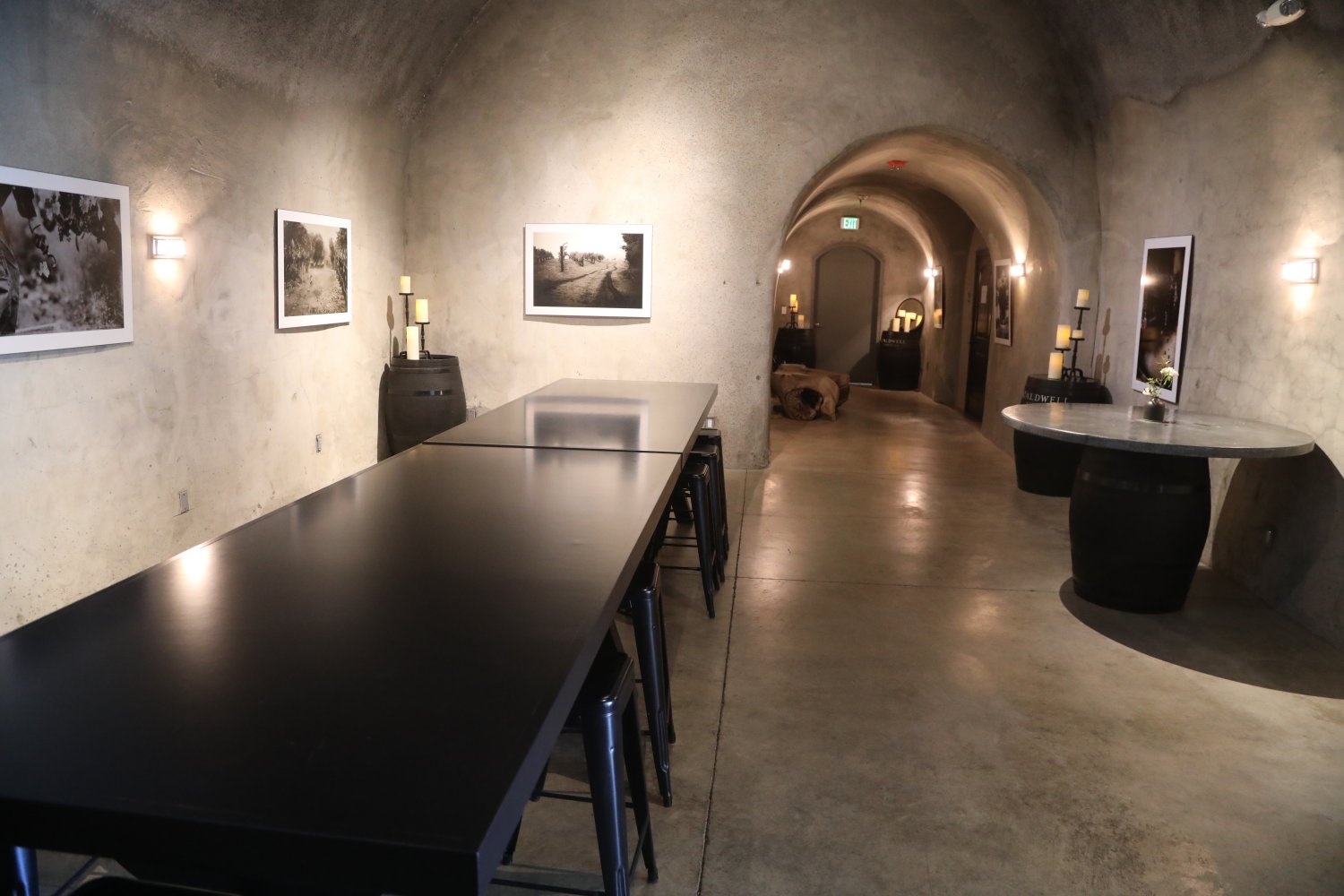
Visits are by appointment only. A tasting and tour include a walk through the winery including seeing a unique system Caldwell has in place for “racking” (cleaning) their barrels. Instead of having to take each barrel down from the racks they are setup so they can be manually turned and racked right in their place. The tour ends with tastes of their current releases in their elegant “cavern tasting room” – a room that is carved from solid rock and was originally intended to be a bathroom – but it’s far too nice of a space for that use. One can still see the drill marks in the rock from the bit that was used to carve out this room. Sometimes John pops in to say hi.
The tasting is paired with locally sourced artisan cheeses, charcuterie and delicious green olives – along with up to 9 or 10 wines, typically only available direct from the winery. Allow at minimum 90 minutes – and visits often will go longer than that. And in addition to wine, visitors can purchase a variety of memorably named stemware including some containing one of John’s favorite words – and also the R-rated Riedel glass.
For more information, to request an appointment and or to join the appropriately named Society of Smugglers wine club, or the Society of Weinsteins (Rocket Science only) visit: www.caldwellvineyard.com
Grounds/Vineyards
Cave
I’m trying to find the label on a bottle of rocket science which had to do with opening the dark obsidian liquid. Can you help me? It was wonderful wine and a great label. Thanks.
Tom, I just saw your request for an answer of the obsidian liquid. That discription came from Big Bang communications. It was put on our first commercial bottling of Rocket Science 2002. Its all long gone. A great bottle though. CS! CF! MERLOT And Syrah from Caldwell Vineyard. Hope this gets to you.
John Caldwell
Just cam across the expired patent for SQR. Did you ever get anything grafted on it and if so how did they do?
We had an entry in the label contest for the next Rocket Science and I was wondering whweher or not you have a summary of the outcome. What won the label contest.