




 MK Cellars bottles wines under the brand SummitVine. Born and raised in San Francisco, proprietor Michael Klopka’s first introduction to Napa Valley was in his youth during family vacations to Calistoga every year. He remembers his “I could live here” moment came when visiting Vichon Winery and enjoying the views of the valley from its location at the time on the Mayacamas mountains (now the site of Promontory Winery).
In 1998, he and his wife Susan purchased a 150-acre property on the upper slopes of Diamond Mountain across from what is now Diamond Mountain Vineyards (formerly Constant Vineyards). With a background in construction and contracting, Michael’s intent was to build a home for retirement. Plans changed. Two years later this part of Napa Valley became the Diamond Mountain sub appellation. His realtor encouraged him to plant vines on the property as did a friend from a long time Napa Valley based construction company who pointed out the soils would be conducive to growing wine grapes.
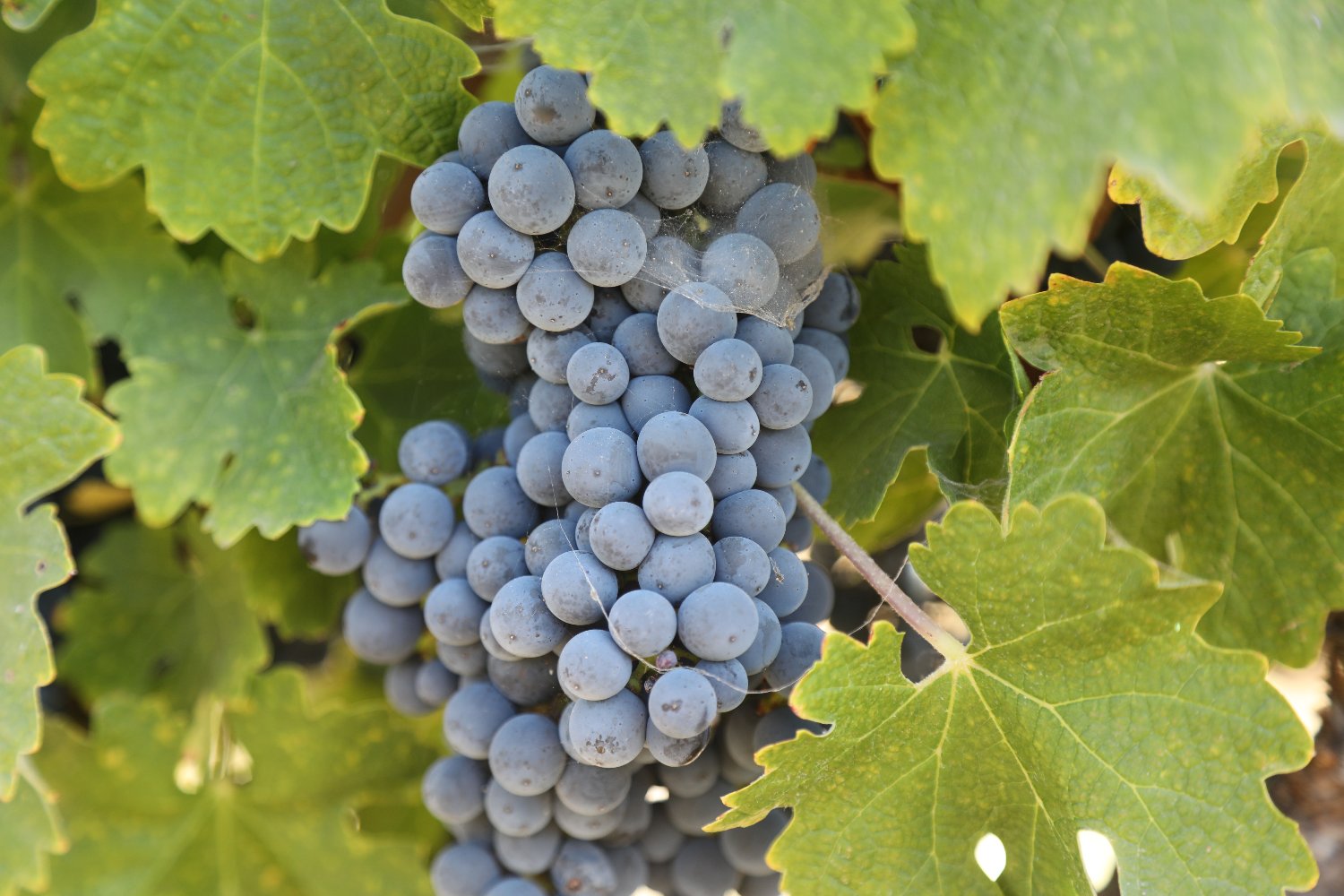
With the help of vineyard manager, Mario Bazan, 5.2 acres at SummitVine Ranch were planted to two separate vineyard sites starting in 2001, primarily Cabernet Sauvignon but also to Cabernet Franc, Merlot and Petit Verdot. The upper vineyard was planted first and is at an elevation of around 1,750 feet, while the lower site is at an elevation of around 1650 feet. Both were named after their dogs, Cori’s Vineyard and Sophie’s Vineyard. Remarkably the vines do not require much water here; they grow on an open knoll primarily north east facing and receive plenty of sun exposure throughout the day. The grapes consistently ripen evenly due to both elevation and exposure. Michael helped farm the site for nearly 20 years.
The first harvest from the property was in 2004. Bazan introduced Michael to winemaker Brooks Painter; at the time Brooks was a partner with Gary Lippe in the brand COHO. The grapes from SummitVine Ranch were used in the flagship COHO red blend, Headwaters and were also bottled as a SummmitVine Ranch vineyard designate. Michael also sold the grapes to HALL Winery. The Glass Fire significantly burned through many parts of the Diamond Mountain sub appellation in 2020 including on the upper reaches of the mountain. After the fire Michael sold the property. His last vintage from this property was his red blend from 2022.
In 2022 he purchased 20 acres off of Franz Valley School Road, a short drive from Calistoga. Nearby neighbors include a number of already established vineyards including those owned by Grgich Cellars and the site of Mike Grgich’s former home, Levy & McClellan and Heritage School Vineyards. Michael’s property has never been planted to grapes but he plans to grow several acres of vines.
Franz Valley School Road occupies a vital and geographically dramatic position within the Calistoga AVA, serving as a transitional corridor between the warm valley floor and the rugged Mayacamas Mountains. Located in the northwestern corner of Napa Valley, this winding road traverses a landscape defined by sharp elevation gains and complex geological shifts. While the eastern trailhead begins near the low-lying benchlands of the town of Calistoga, the road quickly ascends into a series of secluded canyons and ridgelines. This specific “Franz Valley” sub-pocket is renowned for its high concentration of volcanic soils—primarily rocky loam and tuff—which provide the intense drainage necessary for high-quality viticulture.
The relevance of this area within the Calistoga AVA stems from its unique mesoclimate. Although Calistoga is generally the warmest district in Napa Valley, Franz Valley School Road benefits from the “Chalk Hill Gap” to the west. This gap allows Pacific marine air to pull through the mountain range, creating a cooling effect that is more pronounced here than on the central valley floor. This influx of cool air, combined with the higher elevation of the hillside vineyards, results in a significant diurnal temperature swing. These conditions allow grapes to maintain essential acidity and structural elegance while still achieving the deep, ripe fruit character for which Calistoga is famous.
The wines from this district are often noted for their “mountain-style” intensity, featuring firm tannins and dark blue fruit profiles, yet they retain a polished core attributed to the Calistoga heat. Because the road eventually pushes toward the boundary of the Diamond Mountain District AVA, it represents a bridge between the classic valley floor power and the iron-fisted structure of true mountain fruit.
While attending a Christmas party for several Diamond Mountain vintners, he spoke to Dr. Frank Mueller who told him he was stopping producing his small brand, Mueller Family Vineyards and would probably start selling grapes. Michael didn’t think to much of that at the time, but later realized this might be an opportunity to continue to source grapes from Diamond Mountain. And the Mueller vineyard fit his profile of being high enough above the valley floor so that it is in the inversion layer (where warm air rises during the night during the growing season). SummitVine will be producing wine from this 1.4 acre site, planted primarily to Cabernet Sauvignon but also a small block of Petit Verdot.
Running a small wine brand in Napa Valley is never easy. SummitVine lost their 2017 and 2020 vintage due to the fires in the region followed by the 2021 and 2022 vintages which were much lower than average production. But there are always other reasons to persevere in the face of adversity; Michael enjoys the comradery he has built with other small producers, including the openness of which vintners share information with each other.
Diamond Mountain

 The Diamond Mountain District AVA, nestled within the northwestern folds of the Mayacamas Mountains, represents one of the most rugged and distinctive viticultural areas in the Napa Valley. Established as a formal American Viticultural Area in 2001, its name is derived not from precious gemstones, but from the shimmering shards of volcanic glass and obsidian that saturate its rocky soils. These volcanic deposits, primarily consisting of andesite and rhyolite, create a porous and well-draining environment that forces grapevines to struggle for survival. This natural stress is the foundation of the region’s reputation, as it leads to low yields of small, thick-skinned grapes that possess an extraordinary concentration of color, tannin, and flavor.
Elevation is the defining characteristic of Diamond Mountain, with vineyards carved into the hillsides at altitudes ranging from 400 to 2,200 feet. This height places much of the district above the dense marine fog that typically blankets the valley floor. While the lower elevations of Napa may experience cooler morning temperatures due to this “fog layer,” Diamond Mountain enjoys more consistent sunlight throughout the day. However, it remains significantly cooler than the neighboring valley floor of Calistoga because of its altitude and the cool air drainage provided by Diamond Creek. These unique climatic factors result in a smaller diurnal temperature swing than is found in the valley below, allowing for a long, steady growing season that promotes full phenolic ripeness without the risk of late-season heat spikes.
The viticultural history of the mountain dates back to the late 19th century when Jacob Schram established his winery, Schramsberg, in 1862. His work proved that the steep, forested slopes were capable of producing world-class fruit, a legacy that was revitalized in the 1960s and 70s by modern pioneers like Al Brounstein of Diamond Creek Vineyards and the Davies family. These winemakers recognized that the “mountain fruit” from this area produced wines with a singular personality. While the terrain is so severe that much of it remains uncultivated and covered in dense redwood and fir forests, the small pockets of vineyard land are almost exclusively dedicated to Bordeaux varieties.
Cabernet Sauvignon is the undisputed king of Diamond Mountain, often characterized by its profound structure and “blue fruit” profile. Unlike the plush, opulent red fruit often found on the valley floor, Diamond Mountain Cabernets frequently display notes of blackcurrant, lead pencil, and dark plum, backed by firm, savory tannins and a distinct minerality. These wines are celebrated for their longevity, often requiring several years of cellar aging to soften their rugged mountain edges. While Cabernet dominates, the AVA also produces exceptional Cabernet Franc, Merlot, and even small amounts of Chardonnay. Today, wineries like Diamond Mountain Vineyards, Diamond Creek and Dyer Vineyard continue to showcase the power and elegance that define this unique volcanic terroir.
Select Wines
The first vintage of SummitVine was produced in 2013 and released in 2016. Winemaker Brett Adams has made all vintage of SummitVine since the inaugural vintage. Adams is a graduate of the University of California Davis with a degree in Fermentation Science. He has consulted and made wine for a number of Napa Valley based producers including Honig, Smith-Devereaux and Hundred Acre.
Pinot Noir
In 2020 SummitVine produced their first Pinot Noir from a 1 acre site located at about 1,000 feet in elevation growing in the hills near the town of Sonoma. These vines were planted in 2001. From the vineyard on a clear day there are views of the San Pablo Bay in the distance. This is a low yielding site growing in an abundance of gravelly soils; the vines are given very little water throughout the year. And based on the limited number of vintages produced to date, the site yields consistency in terms of the wines regardless of the year.
The 2023 SummitVine Pinot Noir, Bogart Vineyard Sonoma Coast is medium ruby in color; fresh, expressive, ripe and forward fruited this wine smells bright and alive. It sports scents of cranberry, cherry cola, red licorice, currant, Tonka bean (look that one up if you need to, we first noticed that scent in some of the Burgundian Pinot Noirs tried during one trip to that part of France), root beer, sweet anise, vanilla and white pepper. And some floral notes, underlying, these are expressed as purple lilacs, violets and lavender. Perhaps dialing in the expression of both vineyard and variety, this year might be the most Pinot-esque of the vintages we have tried to date. Vibrant across the palate, we particularly enjoy its focused and lively acidity. Red fruited with some lingering spices, this wine tastes like currants, cranberry, Icelandic crow berries (another one to look up if you aren’t’ familiar with those low lying berry fruits), tart cherry, raspberry, strawberry and not fully ripe red plums. Very balanced. This wine finishes with notes of dried sage and tea leaf accompanied by both a brightness from the acidity but also a perceived sweetness from the fruits. And its tannins are lightly gravelly, and while a year younger than the 2022, already more integrated than that vintage.

 The 2022 SummitVine Pinot Noir, Bogart Vineyard Sonoma Coast is medium ruby in color; the bouquet smells fresh, fruity – yet also bright and invigorating, sporting plenty of aromatic energy. Its scents include dark raspberry, Santa Rosa plum, cherry cola, a hint of root beer, cranberry, Persian mulberry, red-vine licorice, white pepper, cloves, dried sage and tea leaf. The star of the show is the fruit, with the barrel influence a back seat supporter. As refreshing on the palate as on the bouquet at this age, 3 years post vintage, this wine somewhat mimics the bouquet and tastes like boysenberry, mulberry, red cherries, raspberries, currant, tea leaf, white pepper and blood orange, with an also light note of orange bitters. This California Pinot Noir shows a present texture, not something we always mention when it comes to this variety grown in this state. Too often texture is lost in over ripeness in terms of this variety. The tannins are well tumbled, sporting a dusty and lightly drying grip fully coating the palate, lingering beyond the fruit on the finish. Medium acidity.
The 2021 SummitVine Pinot Noir, Bogart Vineyard Sonoma Coast was the second vintage of Pinot Noir bottled under SummitVine. The aromatics are initially a bit shy; the bouquet is fruit driven including raspberry, and cherry cola, currant and cranberry. As it opens it reveals a sweetly fruited aromatic thread. Brightly lit across the palate, this bottling is balanced with flavors somewhat echoing that of the bouquet including of dark raspberry, red cherry and red licorice. The focus on both the bouquet and the palate is on the fruit rather than any overt spice characteristics often associated with this variety. The tannins are grainy, granular and gravelly and persist beyond the fruit on the finish. There is also a lasting note of white pepper. Tasting this wine made us want to pair it with lamb chops off the BBQ. In 2022 this Pinot Noir was fermented 20% whole cluster. With this wine in particular, preserving the fruit characteristics and its texture is an important part of their winemaking philosophy.
Red Blend
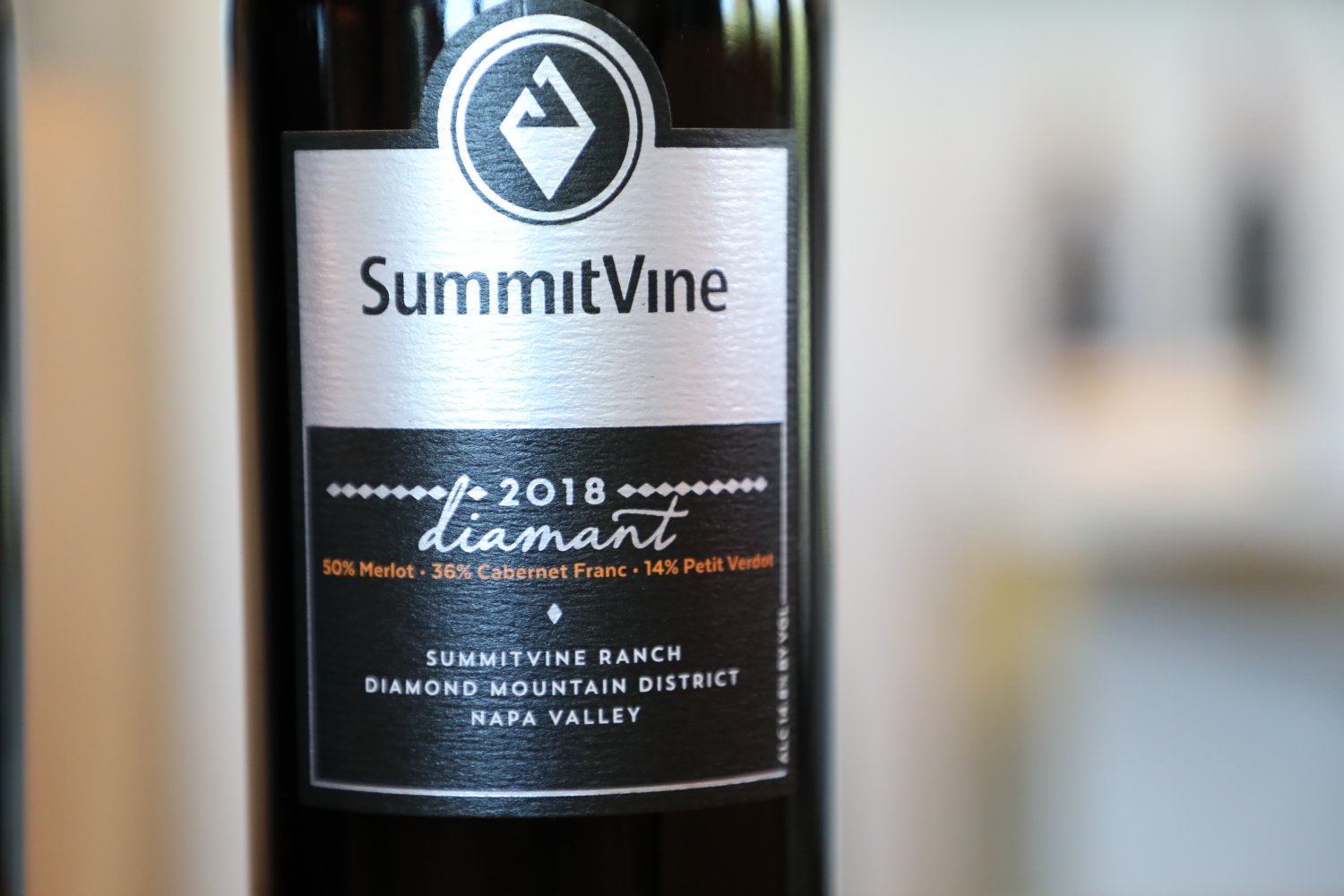
The 2018 SummitVine diamont Red Blend is a blend of 50% Merlot, 36% Cabernet Franc and 14% Petit Verdot. Every year the varietal percentage changes. This wine is deep ruby in color; the bouquet offers darker aromas including of sweaty baseball mitt leather being used on a hot day, dark olive, an herbal character (dried herbs) but not a vegetal one which is an important distinction, blackberry, dark cherry and dark raspberry. Give this wine time to open and the fruit will become more expressive. Balanced across the palate, it reveals more red fruited than dark flavors including of red cherry, raspberry and red plum. The tannins are grainy and pixelated and still show plenty of energy 6 years post vintage at the time of our tasting, felt more on the front of the palate than the back. The finish lingers with a persistent drying/dusty character. This wine has plenty of age ahead of it.
Petit Verdot
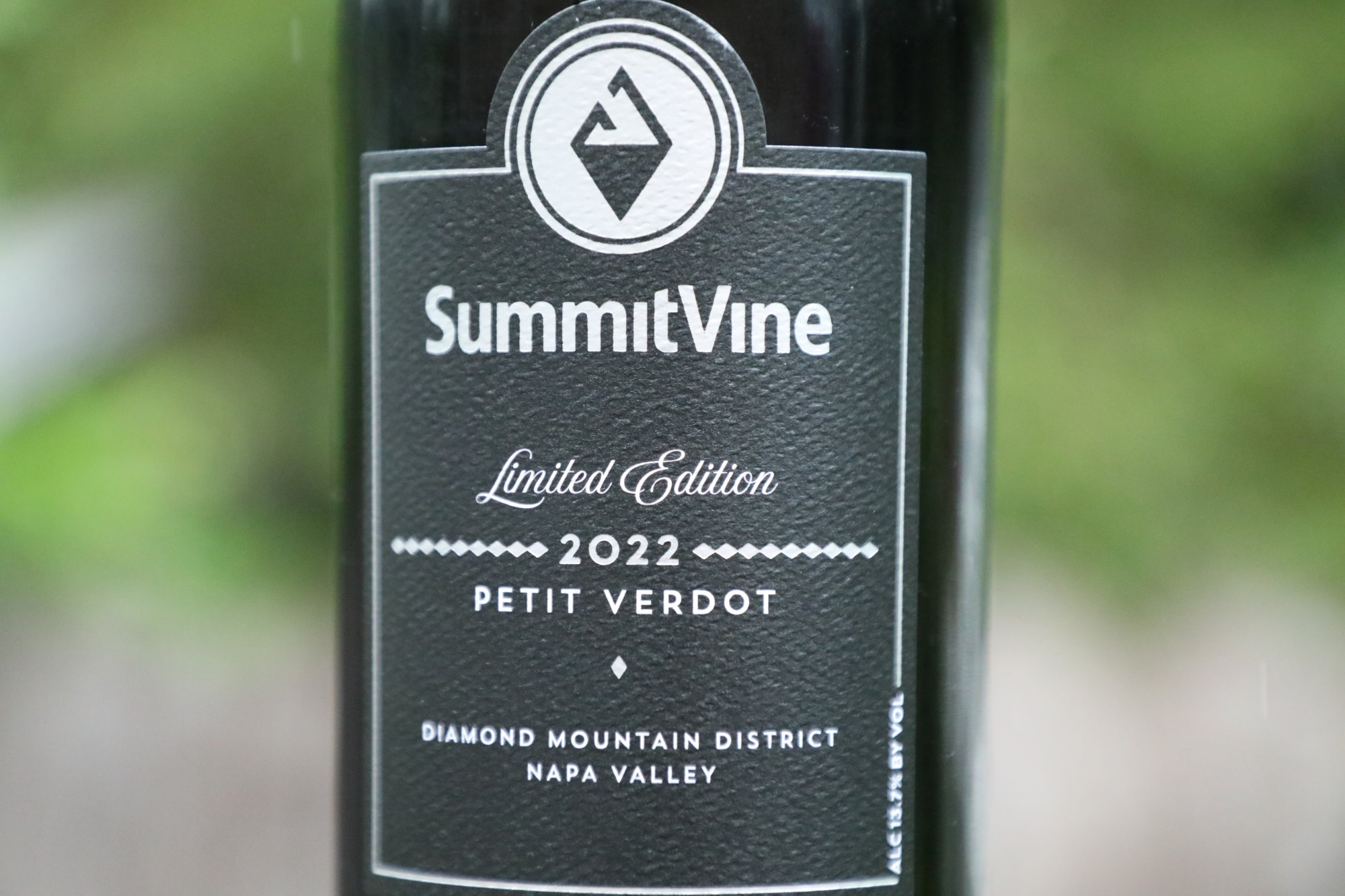
The 2022 SummitVine Petit Verdot Cabernet Sauvignon, Diamond Mountain District is 100% varietal aged in 50% new French oak barrels. This wine is deep ruby with purplish hues in the glass and opaque. Inky dark, color extraction was not an issue with this bottling. On the nose there are aromas of both floral and fruits including rose petals, lilacs and violets; its fruits include ripe Satsuma plum, blackberry, boysenberry, dark mulberry and cherry. The oak is complementary, contributing a light note of old cedar box and pipe tobacco. This is a vivid, energetic and fresh expression of the variety, perhaps somewhat surprising considering 2022 was a very hot year in Napa Valley including a significant heat spice, this wine stays saddled far on the side of freshness rather than ripeness. The palate is a union of both fruit and spice including flavors of blueberry, blackberry, Persian mulberry, dark currant, cranberry and tart cherry with additional notes of crushed peppercorn, cured meats, smoked sage and dried bay leaf. For reference, we tasted this 3.5 years post vintage. And the tannins show a dusty, gravelly and grainy texture which persist with a pronounced and fully coating mountain chalky character. The acidity holds the reigns here, and does not let go anytime soon. Still a teenager at this age, the finish persists red fruited with a crunchy, juicy and persistent tartness which parallels texture with neither letting their grip go anytime soon. Its listed ABV is a refreshing 13.7%.
Cabernet Sauvignon
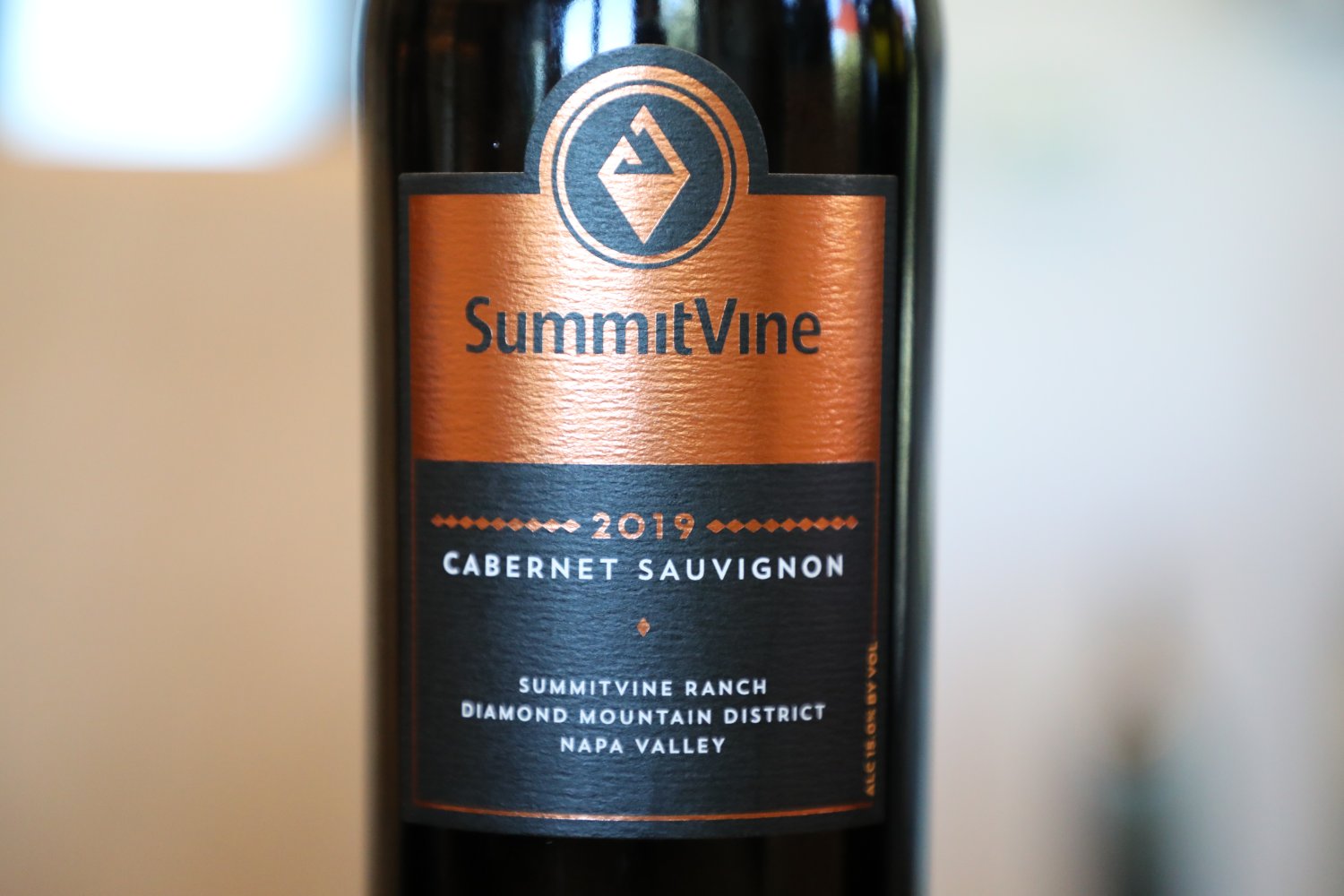
The 2019 SummitVine Cabernet Sauvignon, Diamond Mountain District is 93% Cabernet Sauvignon and 7% Petit Verdot – with both varieties harvested from the lower vineyard. This wine is deep ruby and opaque; the attractive and dark fruited bouquet offers scents of dark plum, blackberry, and dark cherry accompanied by a sweet tobacco spice, chocolate and a light note of toasted oak – but is in no way dominated from its oak aging. It is a balanced wine with intensity of flavor including plum, dried herbs, blackberry and cherry. It has texture, length and complexity. The tannins are gravelly and grainy and persist for quite some time on the extended finish. This is the variety that attracted Michael to the potential of Diamond Mountain. And we must add, for us, this is the highlight wine of the SummitVine portfolio and well worth seeking out. This wine’s release was delayed because SummitVine did not produce any wines in 2020 due to the Glass Fire. Like the diamont blend, this wine was also sourced from the lower block at the SummitVine property.
—
Total production varies each year but is usually around 500 cases. The wines are selectively distributed in both northern and southern California primarily in restaurants and a few retail shops. For more information, to join one of their three wine clubs, Prospector, Discoverer and Trailblazer, or to purchase wine, visit: www.summitvine.com
Is Summit Vine Pinot noir still
Available.