
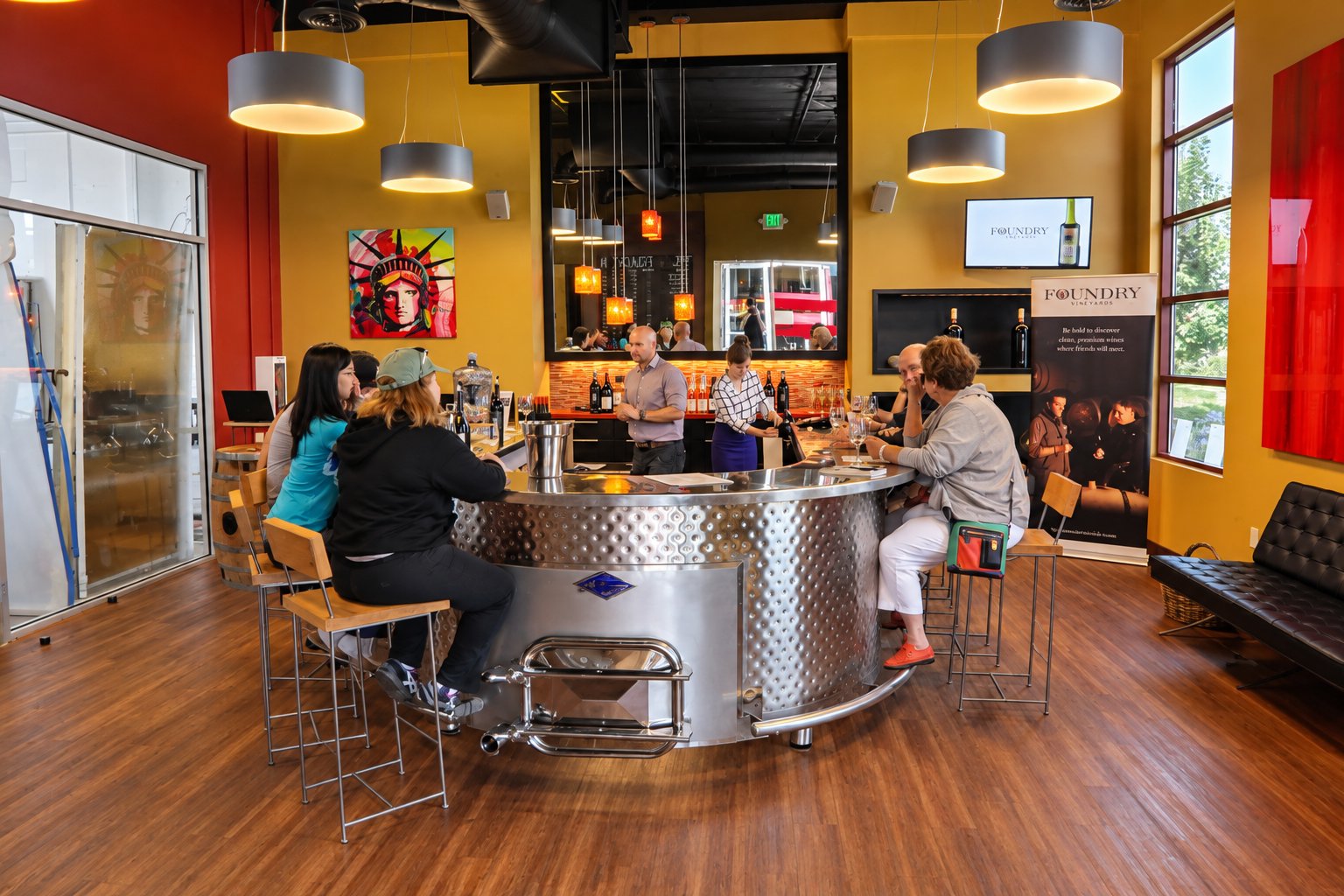
Most wine producers in Napa Valley never pour for walk-in visitors. The majority of commercial producers here are private, selling through mailing lists, allocations, restaurants and wine shops instead of a tasting room on Highway 29. That model works once a label has a following. Getting the first sip into a stranger’s glass is the hard part.
For labels without a public tasting room, and for wineries trying to reach drinkers in Denver or Atlanta, one answer is to take the tasting to the customer. Sampling tours put a branded vehicle, a trained pourer and a few open bottles in front of shoppers at grocery stores, wine shops, festivals and trade events. They are regulated more tightly than most marketing, and the rules change at every state line.
Image by maricicmihajlo on Freepik
What a wine sampling tour looks like
A sampling tour is a planned route of in-person tastings run over weeks or months. A typical stop is a Saturday afternoon at a retailer that already carries the wine, with a table or a converted van parked near the entrance and staff pouring small tastes while explaining where the grapes grew. Someone tastes the Cabernet, likes it, and walks inside to buy the bottle sitting on the shelf a few feet away.
The same vehicle can do different work on weekdays. Wineries selling into distribution need buyers, sommeliers and restaurant managers to taste the lineup, and a mobile setup can visit several accounts in a day. Experiential marketing agencies often run both sides under one program. Michigan-based Activate Experiential is one example, and in the words of its own service listing, Activate specializes in Sampling Tours and B2B Engagements, pairing consumer pours at retail with trade visits that help a sales team open new accounts. For a small producer, that split mirrors how the wine sells, with some cases going through shops and some through restaurant lists.
The federal rules behind a free pour
Federal tied-house law, enforced by the Alcohol and Tobacco Tax and Trade Bureau (TTB), limits what a producer can give a retailer, because free goods and services can be used to buy shelf space. Consumer tastings are one of the listed exceptions. Under 27 CFR 6.95, an industry member may conduct tasting or sampling activities at a retail establishment, and it may buy the wine for the tasting from that retailer, but not for more than the ordinary retail price.
The price cap closes an obvious loophole. A winery that overpaid a store for tasting stock would be slipping the retailer cash, which is the kind of inducement the tied-house rules were written to stop.
Federal law sets the floor, but alcohol sampling is mostly governed by the states, and a national tour has to follow each state’s rules at each stop. Some states let producers pour in grocery stores, while others limit tastings to licensed liquor stores or require a permit for each event.
California’s instructional tasting rules
Section 25503.56 of the California Business and Professions Code lets winegrowers and certain other licensees run “instructional tasting events” at off-sale retailers that hold an instructional tasting license. The event has to teach something about the wine, such as its history, its characteristics or how to serve it, and it can include tastes for adults of legal drinking age.
Each person may have no more than three tastes of wine per day, and a single taste cannot exceed one ounce. No charge of any sort can be made for the tastings. Nobody under 21 may pour, and tastes must be served by the winery’s employees or its designated representative, not by store staff. The winery either supplies the wine or buys it from the store at the original invoiced cost, and it has to take any unused wine off the premises when the event ends.
Those rules shape the staffing plan. A pourer at a Napa producer’s table in a San Diego wine shop has to be of age, hold to the one-ounce pour, and explain the vineyard and the vintage well enough to meet the instructional standard.
Why small producers are looking past the tasting room
Napa’s tasting rooms have moved toward appointments and paid experiences. The Napa Wine Project’s guide to wine tasting in Napa Valley notes that general tastings often run $40 to $75 per person and that complimentary tasting has largely disappeared at walk-in wineries. That rewards visitors who already made the trip and does little for a drinker in Ohio who has never heard of the label.
Small wineries feel this most. The newly formed Micro-Winery Guild for Napa and Sonoma family producers represents wineries making fewer than 5,000 cases a year, many of which host guests on working farms instead of commercial tasting rooms. Those visits depend on people reaching Napa or Sonoma. A sampling program in the markets where a distributor has placed the wine gives the same producers a way to meet drinkers who may never book a flight to California.
A winery pays for staff, travel, the vehicle and the wine itself, and under rules like California’s it cannot charge for the pour. The return comes from bottles sold on the day, new retail accounts, and names added to a mailing list, the channel many private Napa producers depend on.
Planning a tour that holds up
Routing should follow distribution, because pouring in a city where no store carries the wine creates interest nobody can act on. Each stop should be confirmed in writing with the retailer, including who supplies the wine. The compliance file should list each state’s pour limits, permit requirements and server age rules, and every pourer should carry a copy.
Useful measures include tastes poured, bottles sold during the event, reorders from the store in the following weeks, and sign-ups for a mailing list or wine club. Those numbers show whether a market deserves a second visit.
A producer weighing its first program can start small: one region, one retail partner with several locations, and a single wine that shows the style of the house, poured within each state’s limits and backed by a follow-up plan for every store on the route.