
Roughly one-third of wineries in both Napa Valley and Sonoma County lowered their tasting fees in 2025, according to Sfchronicle, making each the highest-share region among all U.S. wine areas surveyed. That figure, set against tasting fees that have doubled industry-wide since 2018 and Wine Country visitation numbers that have been falling since 2022, signals something more durable than a seasonal pricing adjustment. It reflects a sustained contraction in the discretionary budgets households are willing to commit to leisure experiences.
A Croatian Parallel to Napa’s Budget Squeeze
Tvrtko Horvat, a casino expert and iGaming industry advisor who follows leisure-spending patterns in his home Croatian market, sees the Napa data as part of a wider pattern. The fee-doubling since 2018 and the multi-year visitation decline running from 2022, he argues, are not uniquely American symptoms — they are what happens when a category pushes its price point past what a fixed household entertainment allowance can comfortably absorb.
“The household’s entertainment budget is allocated before any single category gets funded. When one category prices itself out, the allocation simply goes elsewhere.”
Horvat frames the Croatian market in similar terms. There, HR Sport draws on the same finite leisure pool that households weigh against travel and experiential spending, competing for a share of a budget that does not grow to accommodate every category that raises its prices. The recalibration Napa wineries are now attempting, he observes, is what any leisure category faces when it has priced ahead of what that fixed allocation will support.
Regional Fee Cuts Mask a Stubborn Napa Average
The 2026 Direct-to-Consumer Wine Report, which drew on 2025 data from 450 wineries across 16 states, provides the data backbone for the pricing picture. The majority of respondents were small wineries producing fewer than 5,000 cases a year, and most were based in California. That sample gives the regional comparisons particular weight.
About 29 to 30 percent of Napa and Sonoma wineries each reported cutting fees in 2025, against roughly 16 percent of all U.S. wineries. Yet the Napa average tells a strikingly compressed story. The region’s average tasting fee landed at $79 in 2025, only $1 below the 2024 figure, even as nearly three in ten Napa wineries reported lowering prices. Nationally, the standard tasting fee fell roughly $3.
Sonoma County illustrates why averages can obscure as much as they reveal. There, the average standard fee dropped $7 to $47 while reserve fees rose $3 to $95. That divergence points to a deliberate restructuring — lowering the entry point while holding or lifting the premium tier — rather than a broad retreat on pricing.
Entry-Level Flights and Off-Peak Pricing Lower the Door
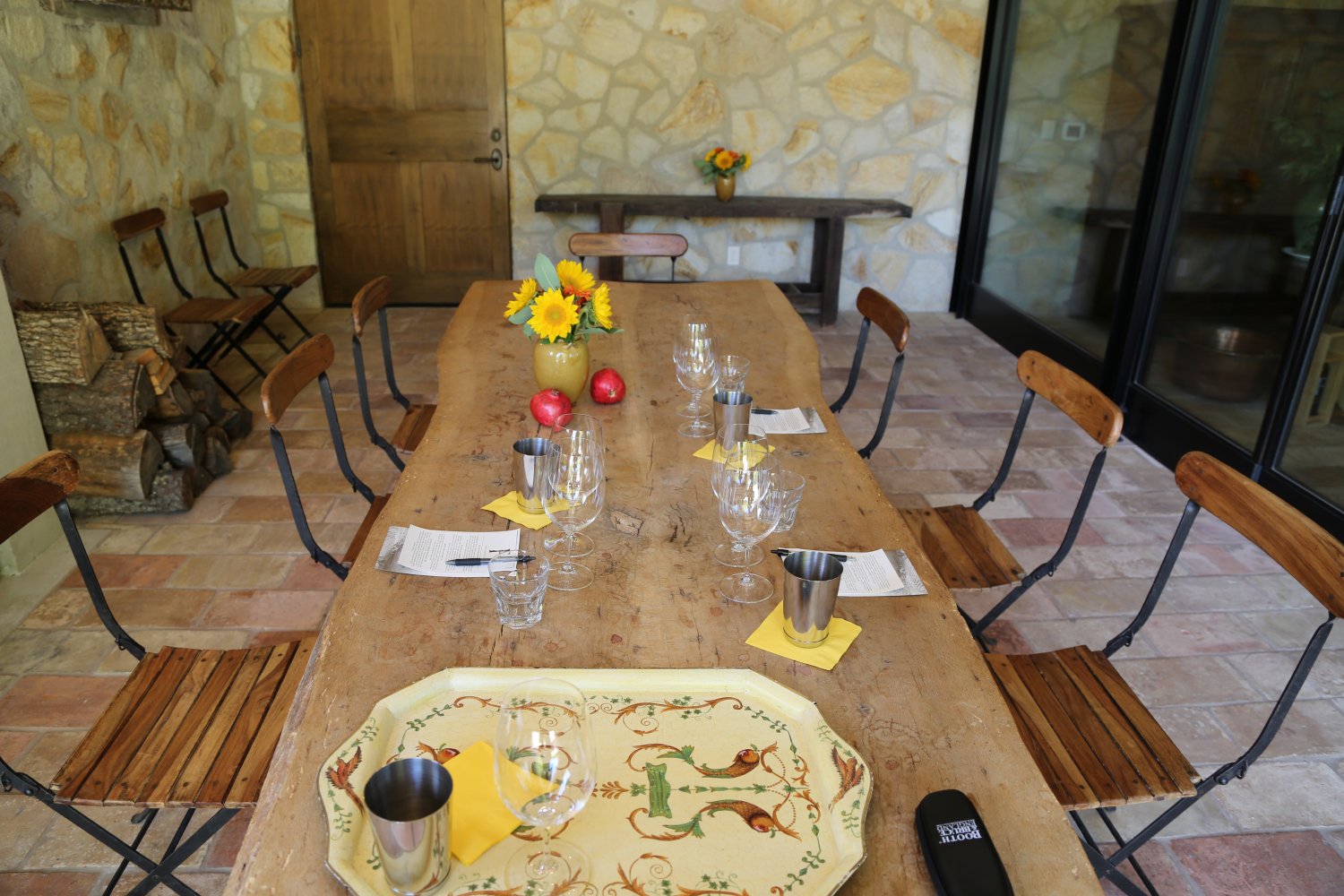
Wineries that have moved on fees are not simply slashing their listed prices. Many are creating new access points designed to attract visitors who would not have booked a standard tasting. Honig Vineyard and Winery’s “Fly by Flight” experience offers a 30-minute tasting of three wines for $30. Michael Honig, the winery’s co-owner, described it as drawing “first-time guests who wouldn’t otherwise have walked through our doors.”
Visitors planning a trip can consult tasting resources for Napa Valley visitors to understand what current fee structures and experience formats are on offer across the valley. The range of options has expanded meaningfully. Goosecross Cellars and Whitehall Lane have each introduced matinee or buy-one-get-one pricing during weekday mornings — time slots that would otherwise generate no revenue at all. Clif Family and Raymond Vineyards have gone further, offering free tastings on select days. The commercial logic in each case is the same: any revenue from an otherwise empty tasting room beats none.
The Fee Cuts Show Mixed Results, and One Analyst Points Elsewhere
Whether the pricing moves are working remains an open question. Among U.S. wineries that lowered their fees, only 25 percent reported an improvement in tourism. Another 25 percent said visitation stabilized. The largest single group — 47 percent — said it was too soon to tell. That three-way split is not the decisive signal a struggling tasting-room business needs.
The retreat on fees also runs alongside a retreat on bottle prices. The average retail price for a Napa Valley bottle fell to $103 in 2025, down from a record $109 in 2024. In Sonoma County, the average fell to roughly $64 from $69 the prior year. Price pressure, in other words, is not confined to the tasting room.
Rob McMillan, founder of Silicon Valley Bank’s wine division and author of the 2026 DTC Wine Report, has argued that the industry’s focus on tasting-room traffic may itself be the wrong frame. More than 70 percent of U.S. winery revenue in 2025 came from direct-to-consumer sales. The tasting room accounted for just 27 percent of that. Yet off-site events — farmers markets, urban pop-ups, regional tastings held outside wine country — produced less than 2 percent of direct-to-consumer sales in 2025.
McMillan is direct about what that gap means.
“It’s a strange business model to double down on a declining market. If you were starting from scratch, you probably wouldn’t dive into that.”
His earlier assessment of the industry’s response to date was equally unvarnished: “The (wine industry) has spent the past seven years or so denying that there’s an issue to face, and I don’t think you can fix an issue until you identify it or are willing to accept it.” The concession, he added, is at least now broadly shared. The solutions, however, remain work in progress — and the off-site channel that his own data suggests is underused still accounts for less than two cents of every direct-to-consumer dollar earned.