



 FUTO Estate was founded by Tom and Kyle Futo. Tom was a standout basketball player in high school; he attended the University of Kansas to play college basketball, but a knee injury derailed his ambitions of continuing to play the sport. His interest in wine began when he started collecting premium wines. Originally from Wichita, Kansas the Futo’s have lived in Napa Valley for several decades. For reference, another former Wichita resident Leslie Rudd, is the namesake of Rudd Winery, like FUTO, also located in Oakville.
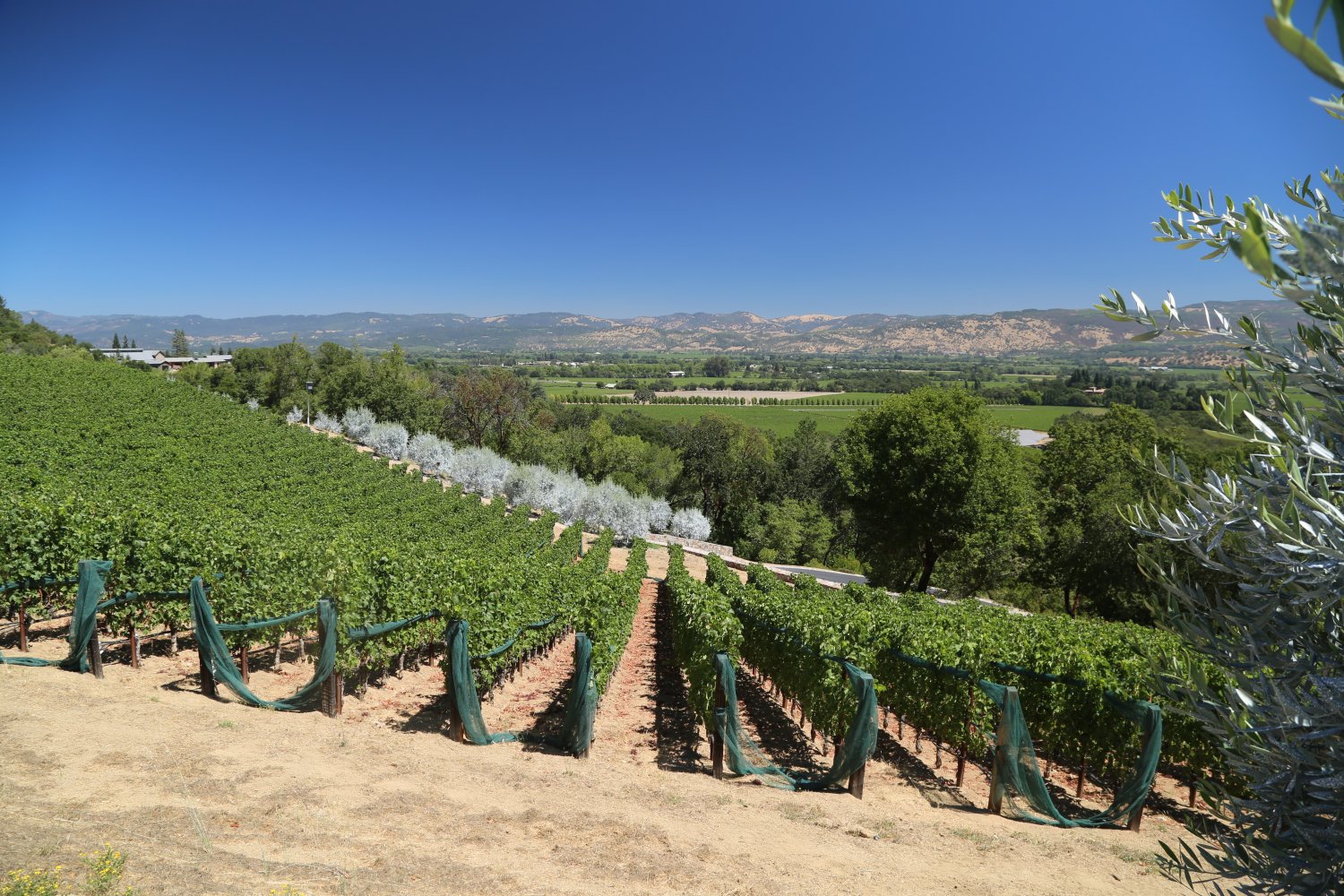
There have been very few new wineries built in the Oakville appellation since 2000. If one is determined to acquire land in Oakville, one must either purchase a winery or existing vineyards. And there are very sites in in Oakville that have not yet been planted to grapevines. In 2004 the Futo’s purchased 120 acres divided into two parcels (never before planted); today 14 of the 155 total acres on their western Oakville property are planted to vine with the majority of the estate located on steep wooded hillsides. And their vineyards include a diversity of micro terroir, featuring differences based on elevation, aspect, soil types and drainage or what former FUTO’s General Manager Joshua Lowell calls, “the tenderloin region of Cabernet Sauvignon”. Aside from this being home to some of Napa Valley’s most premium vineyards, from an aesthetic point of view, this “hidden” part of Oakville is one of Napa Valley’s more picturesque locations.
It is clear there is a strong emphasis and attention to making the best wines as possible from the estate. Since he began collecting wines, Tom realized that the wine business is a long term proposition. Prior to the physical winery being constructed, this estate already had a proven pedigree in terms of its vineyard. Part of FUTO Estate is the former Oakford Vineyard property; respected winemakers who made wine for Oakford included Heidi Peterson Barrett and Marco DiGuilio. Oakford Cellars was founded in 1986 and during its time in business was also used as a custom crush winery for other brands to make their wine. Oakford’s first wine released under its own brand was a 1990 Cabernet Sauvignon. Oakford was one of the first six wine brands represented at Napa Wine Co when they first opened their retail space in 1995. Other coveted producers in this vineyard neighborhood include Harlan Estate, BOND, Promontory and Far Niente.
FUTO Estate produces terroir expressive wines representative of their particular properties. Their wines are rich and expressive yet also balanced and fairly approachable upon release; they are never over extracted. Élevage is always thoughtful and judicious with a careful selection of various types of oak and sized vessels with their inputs never dominating the wines but always complementing. With excellent structure and bright acidity, these wines are also built to age.
Producers should not only be measured by wine growing and wine making during ‘comfortable’ vintages, but rather the results during challenging vintages. FUTO embraces a philosophy of adaptation based on each vintage; we have found that the wines from some of the most difficult vintages are some of their most intriguing.
FUTO Estate produces several limited production wines including the estate Oakville Cabernet Sauvignon and the FUTO 5500 Stags Leap District Estate Cabernet Sauvignon, named in homage of this properties’ address. OV was a second wine for a number of years – all sourced from their Oakville Estate however in 2012 this became the OV | SL wine with the addition of grapes from their own Stags Leap Vineyard. The last wine bottled under that SKU was in 2019.
The Futo’s purchased their Stags Leap property in 2011; this is 40 acres of which approximately 8 are planted to vines on steep terraces that wrap around 180 degrees including a small block of Sauvignon Blanc. The oldest vines on the property, Merlot and Cabernet Sauvignon, date from 1982. The soils here are compressed volcanic ash. Nearby winery neighbors include Chimney Rock, Clos du Val and Regusci.
From a vineyard standpoint their Oakville property is a unique part of Napa Valley in that it is tucked away from the main valley floor and the soils are a combination of both benchland as well as true hillside slopes (Mayacamas mountains). The soils here are primarily uplifted seabed material (shale and sandstone), are very rocky and well drained. Due to the steep nature of the slopes, much of their property is forested. For reference, land greater than 30% slope in Napa Valley cannot be legally planted to commercial vineyards due to erosion concerns. FUTO’s Oakville vineyard is separated into 26 different blocks.
David Abreu planted many of the vines on site; Clark Vineyard Management, a well-respected vineyard management company based in Napa Valley, helped FUTO transition to their own vineyard management team. Their in-house vineyard management team makes the extra steps in terms of quality – hand selecting only the grapes they want to ripen, keeping the grapes from the vines at the end of the rows separate during the wine making process and not using these grapes in their own wines, and only using free run juice in their red wines (no pressing).
Their attention in the vineyard is all about the details: here is one example. A small patch of vines grows in a slight depression on the hillside in soils which are richer than the surrounding soils. The vines here are de-leafed immediately after the fruit is picked. If you see this particular block after harvest it certainly stands out as the vines are leafless surrounded by the normal looking vines still full of green vegetation. They plant cover crops among the vines and prepare their own compost teas. And they utilize shade clothes as needed, helping protect grapes during particularly hot periods.
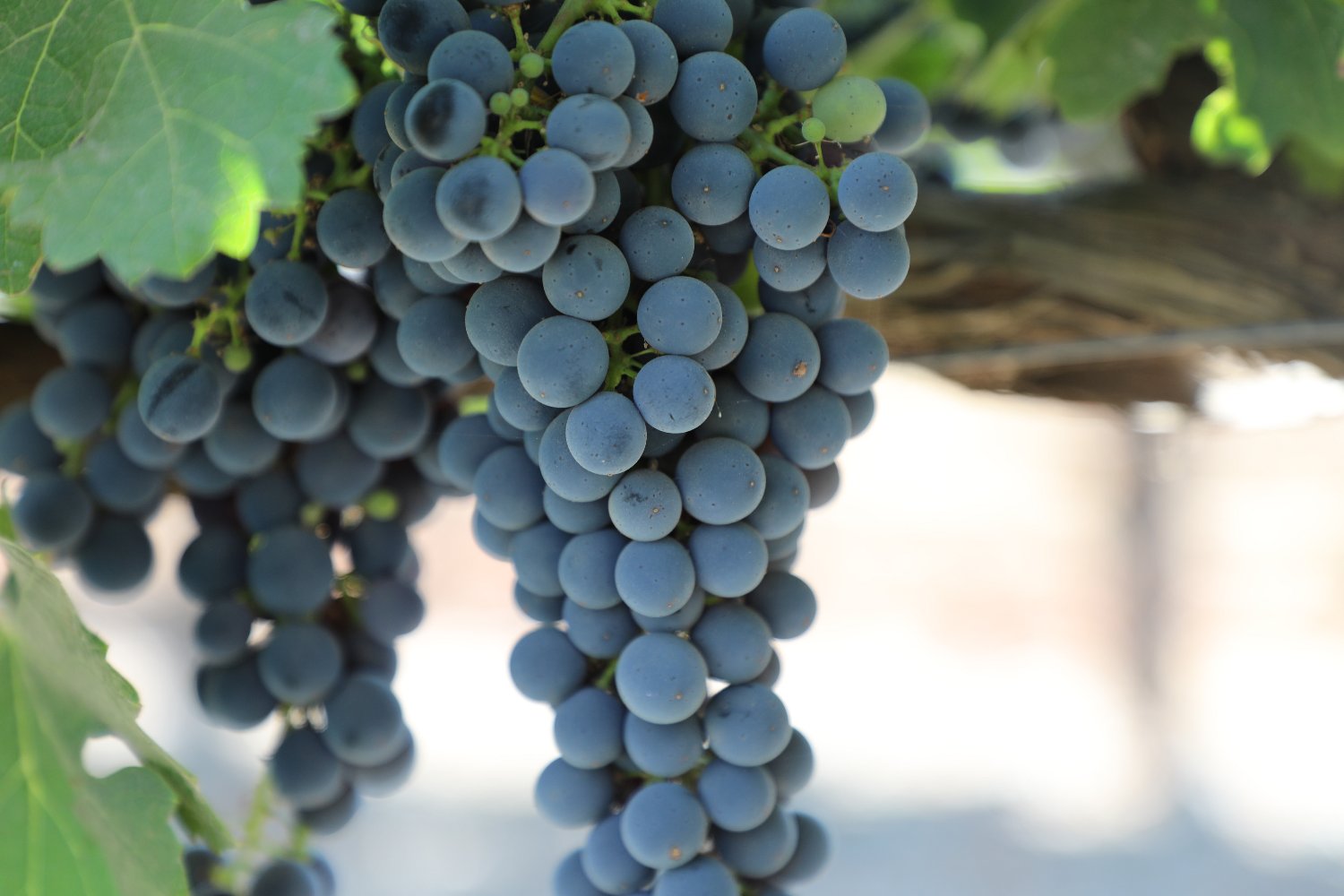
Cabernet Sauvignon is the predominate variety on their Oakville estate with Cabernet Franc, Merlot and Petit Verdot also growing. Great attention to detail has been put into the vineyard block locations and their exposures. When you examine Oakville closely you realize the diversity in microclimate and soils ranges dramatically from the eastern side of the appellation to the western side where FUTO is located. This distance is approximately only 2 miles apart.
The western side has less sun exposure than the eastern side and the vegetation differs between the two sides. Instead of the drier slopes and sparser vegetation found on the east, this western side is heavily forested. Their vineyards are at an elevation of between 300 to 500 feet; this is not benchland and not quite Mayacamas mountain vineyards either. While not receiving as much sun as the eastern hillsides of Oakville, FUTO’s site tends to remain fairly warm during the growing season. The fog breaks sooner here and because of their slight elevation above the valley floor they tend to be exposed to the warmer air that rises due to an inversion layer.
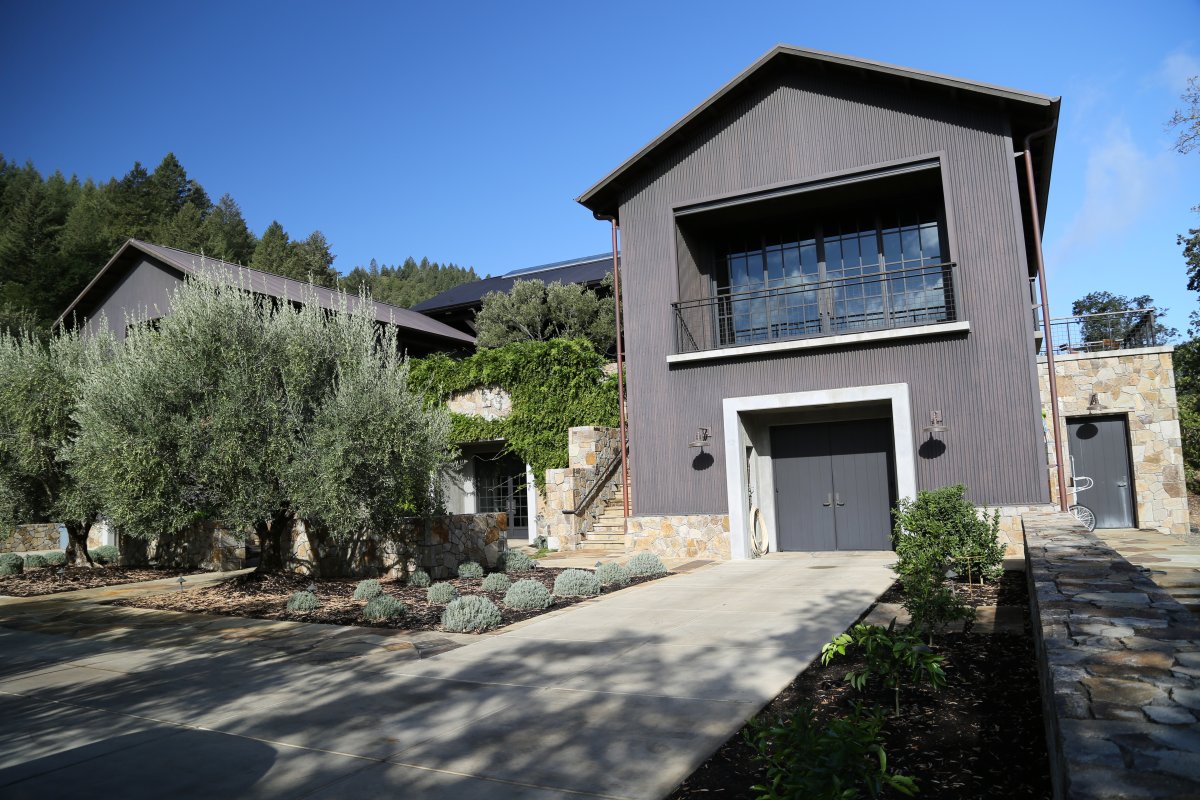
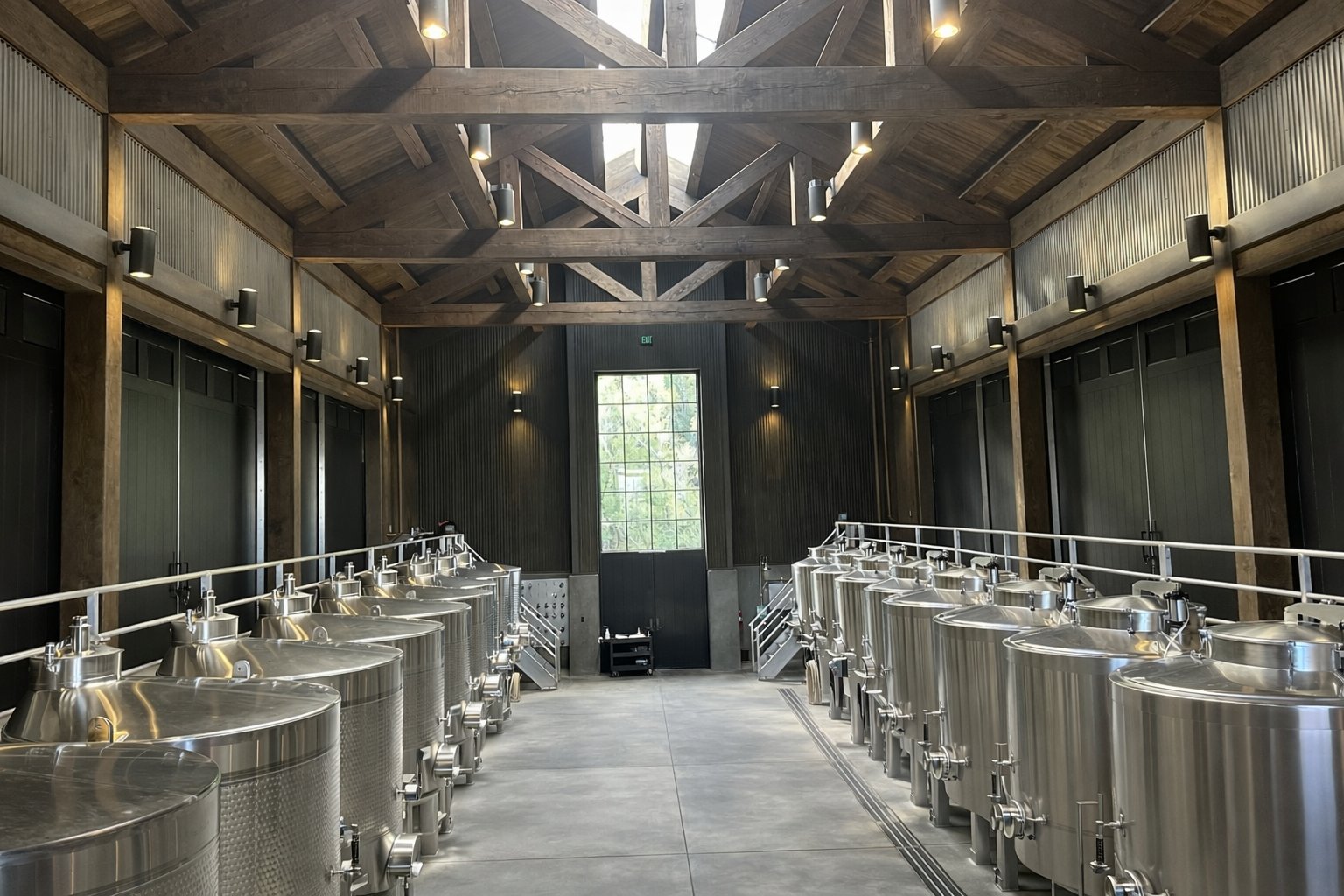
 The winery itself was designed by renowned architect Howard Backen (died 2024), the man responsible for designing nearby Harlan Estate, Poetry Inn, Ovid Winery and Dana Estate near St. Helena as well as other prominent international buildings. Backen has worked on a number of select wineries but input also came from their winemaker at the time, Mark Aubert. The winery was designed with the property in mind; it is compact and very functional. With a number of small tanks FUTO has the flexibility to ferment individual blocks on their own. The tanks are conveniently located right above the cellar rooms and the wine is fed via gravity down to this lower level. And rather than manual punch downs, pump overs are only used during fermentation (a more gentle approach to pass the liquid over the skins). A small library room contains vintages back to their inaugural bottling (2004).
Aubert was FUTO’s first winemaker; he brought on winemaker Jason Exposto as an assistant winemaker in 2008. Until leaving FUTO in early 2026, Jason was an integral part of the team since he was hired both in the cellar and in the vineyard. In 2025 Jason launched his own brand, Sounds, focused on premium coastal California Chardonnay.
Select Wines
Historically the FUTO Cabernet Sauvignon bottlings were blended with other varieties, but starting with the 2019 vintage, their Oakville Estate Cabernet Sauvignon has transitioned to 100% varietal. Their first vintage of this wine was in 2004, a mere 80 cases with their first commercial release in 2005; the 2005 Cabernet Sauvignon earned a score of 96 points from Wine Spectator.
Their wines undergo extended maceration up to 30 days and sometimes longer. Perhaps counterintuitive, this is a process that actually helps to soften the hillside tannins. And their judicious use of oak is impressive; these are wines where the oak always complements rather than dominates regardless of vintage. The winemaking team uses a variety of vessels for aging including an approximately 70/30 regiment of new versus used French oak including custom designed oak casks, and even a clay amphorae vessel.
FUTO Oakville Estate Cabernet Sauvignon
The 2023 FUTO Oakville Estate Cabernet Sauvignon is deep ruby and opaque; the bouquet smells immediately crowd friendly, yet also shows some restraint. Its scents are of blood orange, boysenberry, blackberry, a light dusting of dried tobacco leaf, and some floral layers including of rose petals and lavender. An expression of fruit at the perfect peak of ripeness, this wine tastes both red and dark fruited. On the palate there are flavors of raspberry, dark cherry, boysenberry and blackberry. And darker non fruited notes including dried sage and dark chocolate. The tannins build slowly, but with a significant crescendo on the finish that is both layered and girthy. Their texture persists far beyond the fruit at the end with a broadly palate coating, dusty, chalky and chewy feel. We would love to see where this is at in the 10-15 year window.
The 2022 FUTO Oakville Estate Cabernet Sauvignon is 100% varietal; this wine is deep ruby and opaque. The nose is a little shy initially and needs time to evolve. It smells like dark cherry, baker’s chocolate, blackberry, blueberry and plum. A union of both red and darker fruits, there is nothing shy about its flavor and textural profile. The palate tastes like cherry, currant and tart plum. The broadly spread and chewy tannins are grainy, gritty and still very pixelated at this age; they out run the fruit on the long finish by far. Girthy, they linger with a drying and pronounced chalky character. This wine is clearly built to age, which is not always the case from Napa Valley Cabernet Sauvignon from this challenging vintage which featured an extreme and sustained heat spike centered around Labor Day weekend. Decant early before consumption in its youth or pair with a well marbled Wagyu steak.
The 2019 FUTO Oakville Estate Cabernet Sauvignon is 100% varietal; like all of the FUTO wines this wine is not lacking in color. It is deep ruby and opaque; the immediately compelling bouquet is a union of both fruit and floral. Its scents include African violets, lavender, dried rose petals, blueberry, boysenberry, Himalayan purple mulberry, blackberry, dark chocolate and cocoa powder. The palate is intensely flavored with both depth of dark fruits and a memorable texture. Its flavors include dark plum, blackberry, boysenberry, dark cherry and dark mulberry. The tannins provide a firm and long tasting tug, lingering well beyond the fruit with their dusty, gravelly and grainy grip. This wine can be a long-term cellar play if you want it to be, as is in several decades, not just years. While this bottling is 100% varietal Cabernet Sauvignon, it is a ‘blend’ of their property in terms of both Cabernet Sauvignon blocks and clonal selections. Small sections of the vineyard are harvested and fermented and aged separately before any blending takes place.
The 2006 FUTO Oakville Estate Cabernet Sauvignon is even a darker wine than the 2005 bottling. It also has Merlot as well as some Cabernet Franc in the blend. It was just released prior to our tasting. This wine has an exotic nose with big, bold and dark fruit complemented by an earthiness representative of this side of Oakville including a minerally character and even a hint of pencil shavings. The mid palate is rich, well layered and opulent displaying a nice balance of black cherry, black licorice and dusty blackberry. This vintage has a larger backbone than the 05′ with broad shouldered expressive tannins. Like the 2005 this wine has an extended finish.
The 2005 FUTO Oakville Estate Cabernet Sauvignon is predominately Cabernet Sauvignon with the remainder of the blend Merlot. The bouquet shows concentrated ripe aromas of black fruit, black currant, blackberry and a hint of espresso. The entry is surprisingly soft but quickly gains in complexity; it features a remarkable depth of flavor complemented by plenty of power in terms of texture. Sweet and firm tannins begin to form just past the mid palate and lead to a long and satisfying finish. This wine has plenty of structure but also plenty of bright natural acidity; the key to the finish is the complement and interplay of both tannins and layered flavors.
Even during a challenging year in Napa Valley such as 2011, FUTO Estate produced a beautiful wine. For reference, that vintage was cooler than normal and featured rainfall at inopportune times including all the way until early June and then again during harvest. We remember rain falling during the annual Napa Valley Wine Auction held the first weekend in June that year. This bottling is dark, chewy, dense and complex. With lively acidity, structure and fruit, this particular vintage should age extremely well. And we did not often use the words cellar worthy in conjunction with 2011 Napa Valley wines.
FUTO OV|SL Estate Red Wine
 The 2019 FUTO OV|SL Estate Red Wine is 55% Cabernet Sauvignon, 21% Cabernet Franc, 16% Merlot and 8% Petit Verdot. This wine was historically made from approximately 60% grapes from their Oakville estate and 40% from their 5500 estate. For reference we tasted this bottling 6 years post vintage. This wine is deep ruby and opaque; elegant, the bouquet is a union of dark fruits, savory notes and earth. Its scents include chalk, lavender, African violets, dark raspberry, boysenberry, dark plum and a light layer of dark cocoa powder as the wine evolves. Superbly balanced, this wine tastes like blackberry, dark plum, raspberry, boysenberry and a lingering savory edge with dried herbs including bay leaf. The finish is a seamless integration of fruit, acidity and texture. Like all the FUTO wines, the oak is a complement. The texture sports a gentle textural feel, with a tumbled and light gravelly and dusty character running in parallel with the fruit.
Oakville Estate Red Wine
The 2015 FUTO Oakville Estate Red Wine, Oakville Napa Valley is deep ruby and opaque with a slightly brickish hue in the glass. For reference we tasted this 11 years post vintage. The nose smells mature and with some bottle bouquet with scents of dried blackberries, dark raspberries, Santa Rosa plum, plum compote, sweet pipe tobacco, and a light note of dried tobacco leaf. Very friendly at this age, and on the ripe side of the spectrum, but not over ripe, this wine tastes like red plums, cherry, blackberry, mulberry and boysenberry. Still in a sweet spot in terms of its primary fruit and textural grip, the tannins persist with a broadly dispersed mouth coating chalky character. They are ripe, rounded and resolved at this age. But still with plenty of lasting presence.
FUTO 5500 Stags Leap District Estate Cabernet Sauvignon
The 2018 FUTO 5500 Stags Leap Estate Cabernet Sauvignon is 92% Cabernet Sauvignon and 8% Merlot (old vine); this wine is deep ruby and opaque. At 7 years post vintage, this wine is showing in a sweet spot right now. Still very much primary fruited both on the bouquet and a palate, its scents include raspberry, red plums, blueberry compote and a sweet tobacco spice. Be patient with this wine; the fruit becomes more expressive as the wine opens. Easy drinking, balanced and more red fruited than dark, this wine tastes like red cherry, plums, raspberry, blueberry, and Persian mulberry. And a finishing savory thread of assorted dried herbs including sage and bay leaf. The broadly coating, gravelly and lightly dusty tannins continue to persist for some time beyond the fruit. Their feel is integrated, but their persistence is high. This bottling is balanced and still very much youthful. The first vintage of this bottling was in 2012.
FUTO SETA Red Wine
The 2022 FUTO SETA Red Wine is deep ruby and opaque; the bouquet offers darker fruits including aromas of Satsuma plum, black cherry, boysenberry, blackberry and dark mulberry. And additional layers including a concrete-like minerality, dark cocoa powder and a hint of cinnamon stick. Layered, dark fruited and superbly balanced this wine tastes like dark plum, cherry, boysenberry and a savory dried herb edge including of sage and bay leaf along with crushed peppercorn. And like the palate there is as minerally, almost chalky character, not in terms of texture but in terms of its flavor. The finish offers tannins sporting a well-tumbled, lightly gravelly character and an accompanying light dusty presence. Not one aspect of the finish draws ahead of each other. This is one of the better put together red wines from Napa Valley from this particular vintage. Will shine with a steak covered in a dry rub of assorted spices to match some of the darker spices in this wine.
FUTO SETA Sauvignon Blanc
The 2023 FUTO SETA Sauvignon Blanc is made with grapes from both their Oakville and Stags Leap properties. This wine is medium gold in color; bright and expressive this wine sings soprano at this age, two years post vintage. Distinctive, we would like to think we could identify this in a blind tasting of other 2023 Napa Valley Sauvignon Blancs. The bouquet smells like apricot, honeysuckle, white nectarine, orange blossom, thyme and a light note of lemongrass. It is neither green nor grassy, but expresses the typicity of the variety very well. On the palate there are flavors of Gravenstein apple, lime, white nectarine, Babcock peach, not fully ripe pineapple, guava, passion fruit and lemon juice. Vivacious and filled with energy, this wine is like a coiled spring in terms of its acidity. The finish is mouth watering, juicy and crunchy. Each sip begs another one. And while this wine is fresh now, it has all the cadence to retain its freshness for years to come and is a wine that can be laid down for many more years. Pair with lightly seared scallops.
Less than 1 acre of Sauvignon Blanc is planted at their Oakville estate, all on the lower part of their property. And this was their second vintage of this wine. After pressing, the grapes are transferred into 2-3 French oak barriques and kept in one of the coldest parts of their cellar for a slow fermentation. The insides of the barrels are steamed rather than flame charred. After 6 months on the gross lees the wine is then racked for a short time into stainless steel vessels before it is bottled.
And FUTO produces a very limited production Sauvignon Blanc from their 5500 Estate called FUTO Blanc. Like the FUTO SETA, the inaugural vintage of this wine was also in 2018.
—
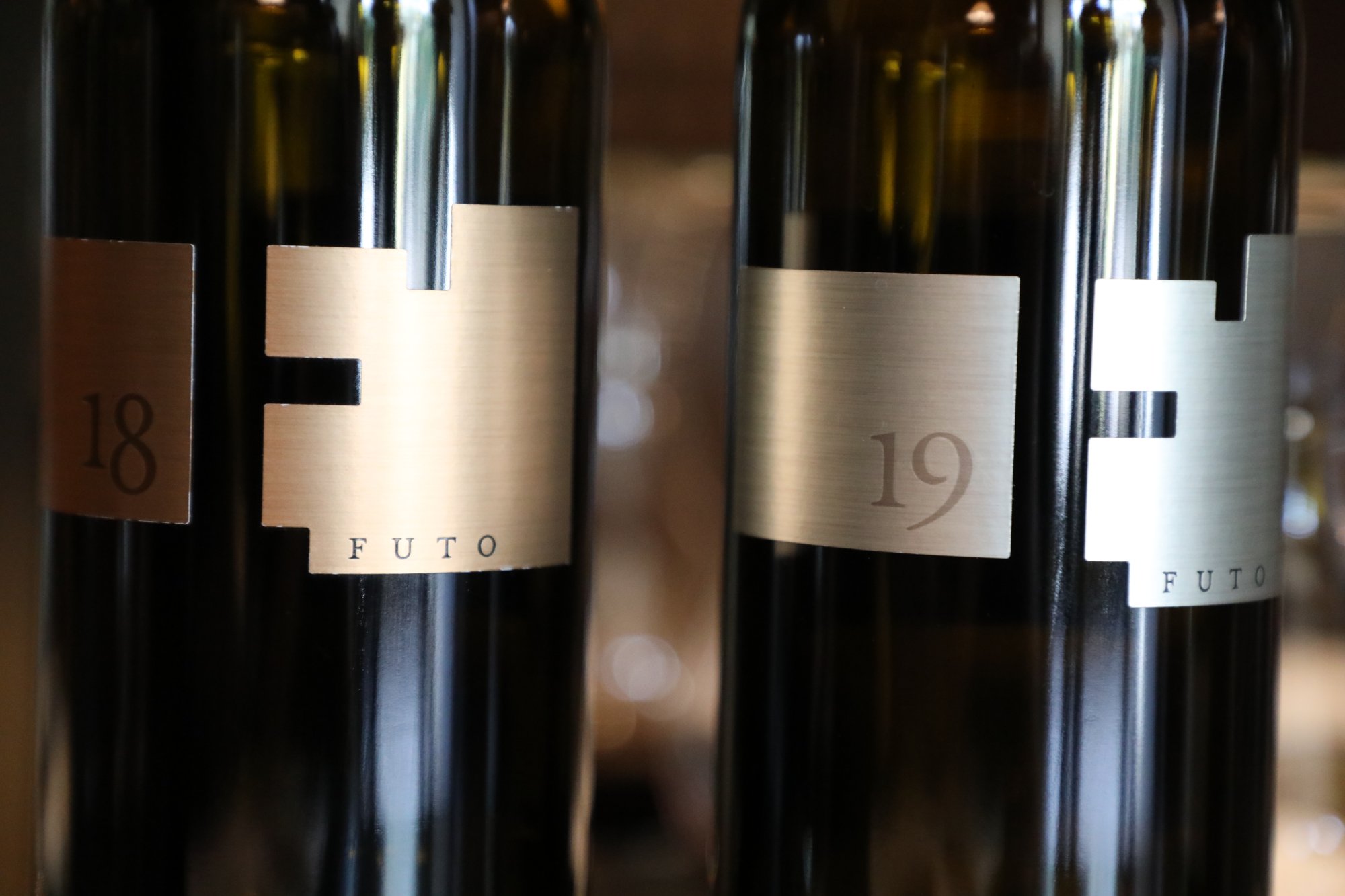
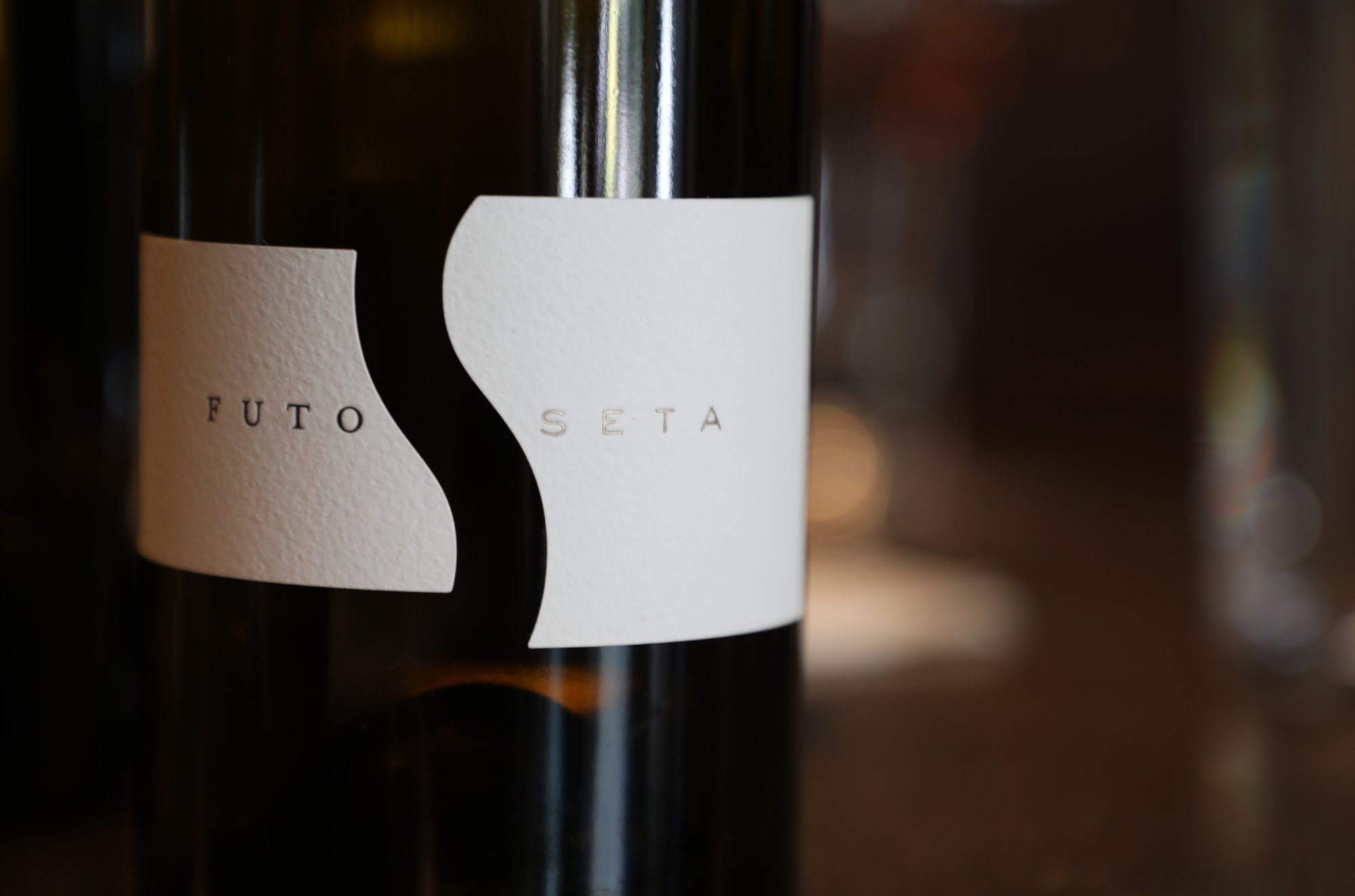
FUTO is a label one will certainly recognize at first glance. It is creative and innovative and stands out without being flashy. An “F” for FUTO is created in the empty space between the two pieces of the silver-colored label.
FUTO’s wine is distributed almost entirely direct to consumer, via a mailing list; such was the demand for this wine that there was a number of people on this list well before their first vintage was even released. Locally we have seen select bottlings available at the nearby Oakville Grocery, at K. Laz in Yountville and in St. Helena at ACME Wines. And numerous online retailers sell the wines. For more information and to join their mailing list visit: www.futowines.com
My Friends visited you yesterday! Nick Cambas and Mike Campagana. They are still raving!!!! Look forward to visiting you next trip to Napa!
A visit to Futo is always a memorable experience for both the wines, very personalized hospitality and the picturesque property. Glad to hear you had a great visit, say hi to Tom, Jason & Daniel for me if you see any of them.